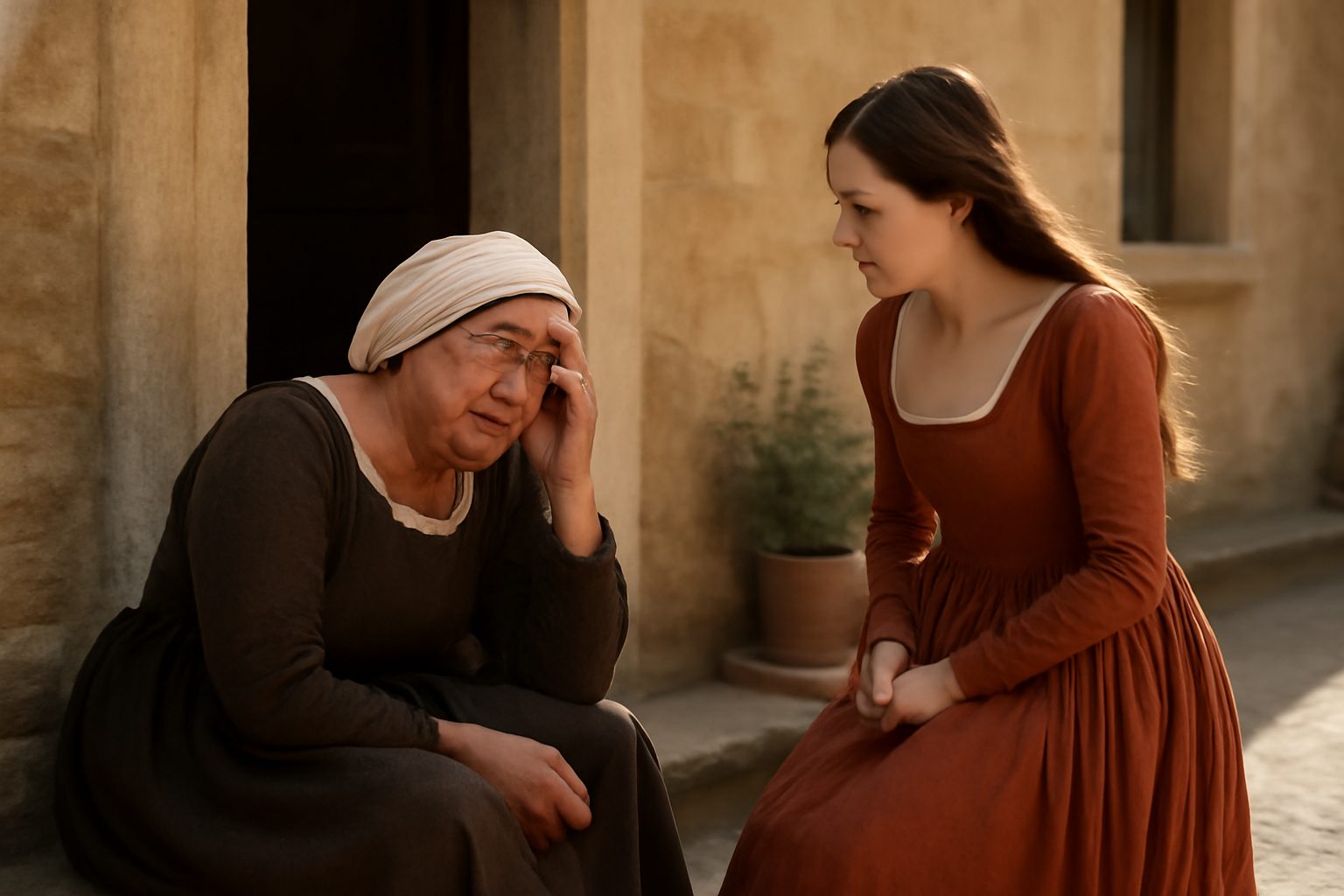
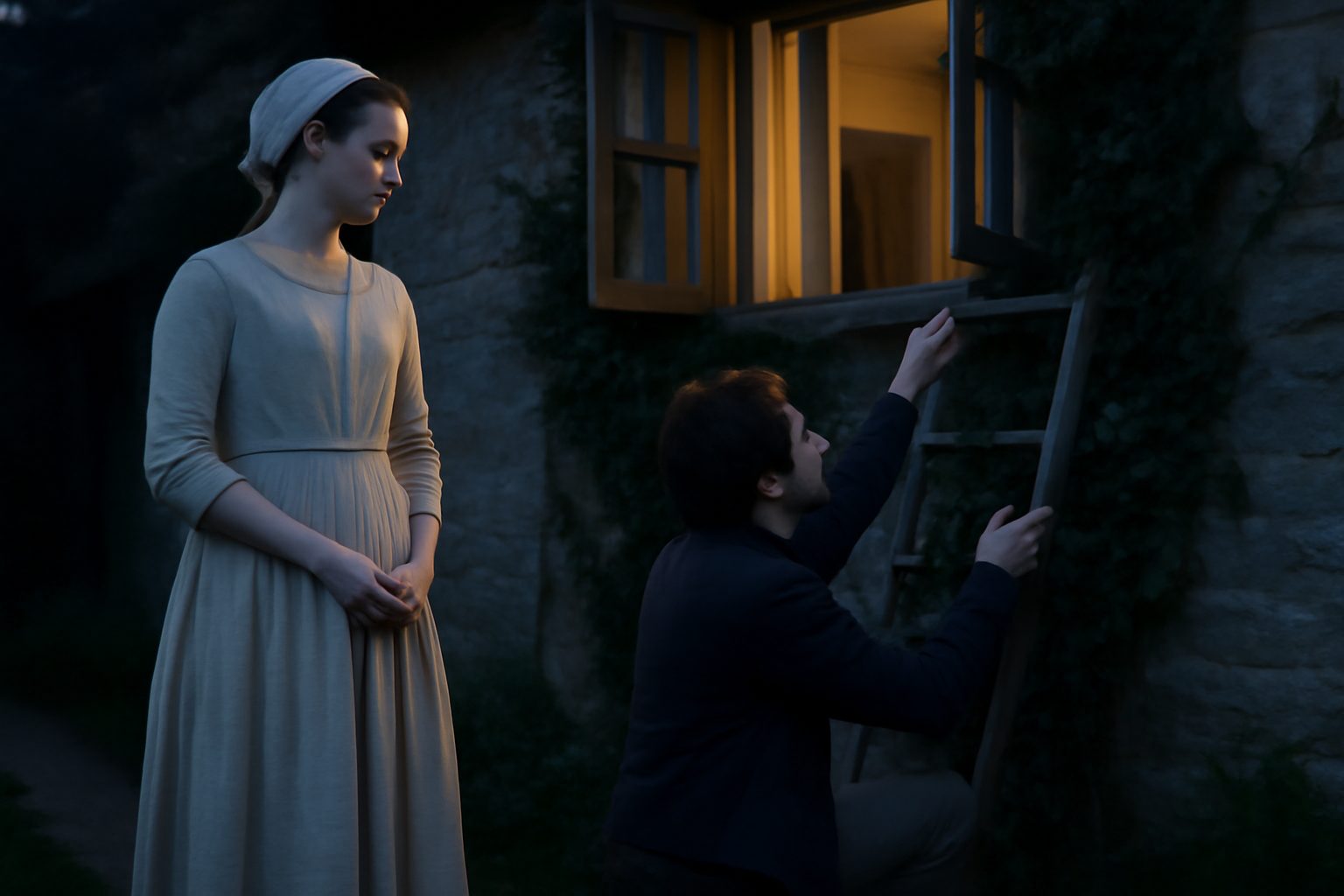
In Act 2, Scene 5 of Romeo and Juliet, the Nurse returns to Juliet after meeting Romeo, teasing her impatient young mistress before delivering his message. When Juliet praises Romeo's manners, the Nurse playfully undercuts her admiration with a sarcastic remark, suggesting he falls short of perfect courtesy. This moment highlights the Nurse's earthy humor and Juliet's eager idealism as she awaits news of her love.
Nurse: "past compare: he is not the flower of courtesy,"
In modern day english, we would say:
There’s no comparison—he isn’t exactly the model of good manners.
Frequently Asked Questions
What does the Nurse think about Romeo's manners in this line?
The Nurse thinks Romeo is not the most polite or well-mannered person.
Connections to other verses:
Connections to "past compare: he is not the flower of courtesy"
The line "past compare: he is not the flower of courtesy" is part of the Nurse's teasing description of Romeo, and it connects thematically and structurally to several other verses in Act 2, Scene 5.
Contrast with Positive Descriptions
This line contrasts with the Nurse's earlier praise of Romeo's qualities. For instance, she describes him as "gentle as a lamb" and later as "courteous, and a kind, and a handsome", creating a playful tension between criticism and admiration.
Juxtaposition with Juliet's Impatience
The Nurse's delay in delivering Romeo's message, highlighted by lines like "Do you not see that I am out of breath?" and "Fie, how my bones ache!", contrasts with Juliet's urgency, underscoring the generational and temperamental differences that make the Nurse's teasing possible.
Reflection on Love's Messengers
Juliet's lament that "love's heralds should be thoughts" criticizes the slowness of physical messengers like the Nurse, indirectly commenting on the imperfection of Romeo's courtesy through the medium of his message-bearer.
Connection to Honesty and Character
The Nurse assures Juliet of Romeo's honorable intentions, stating "Your love says, like an honest gentleman", which contrasts with the playful criticism in the focal verse, yet both serve to affirm Romeo's sincere, if imperfect, devotion.