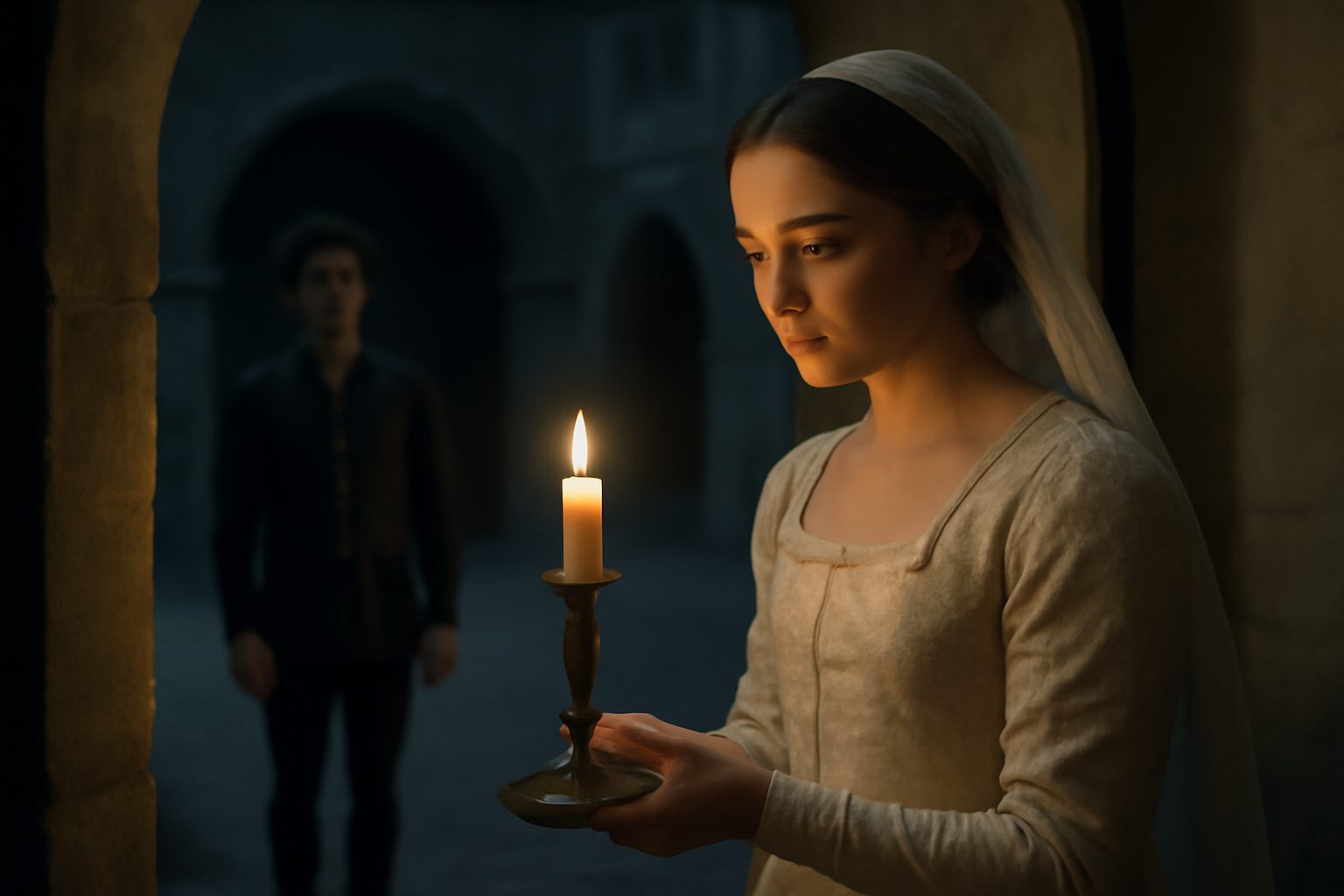
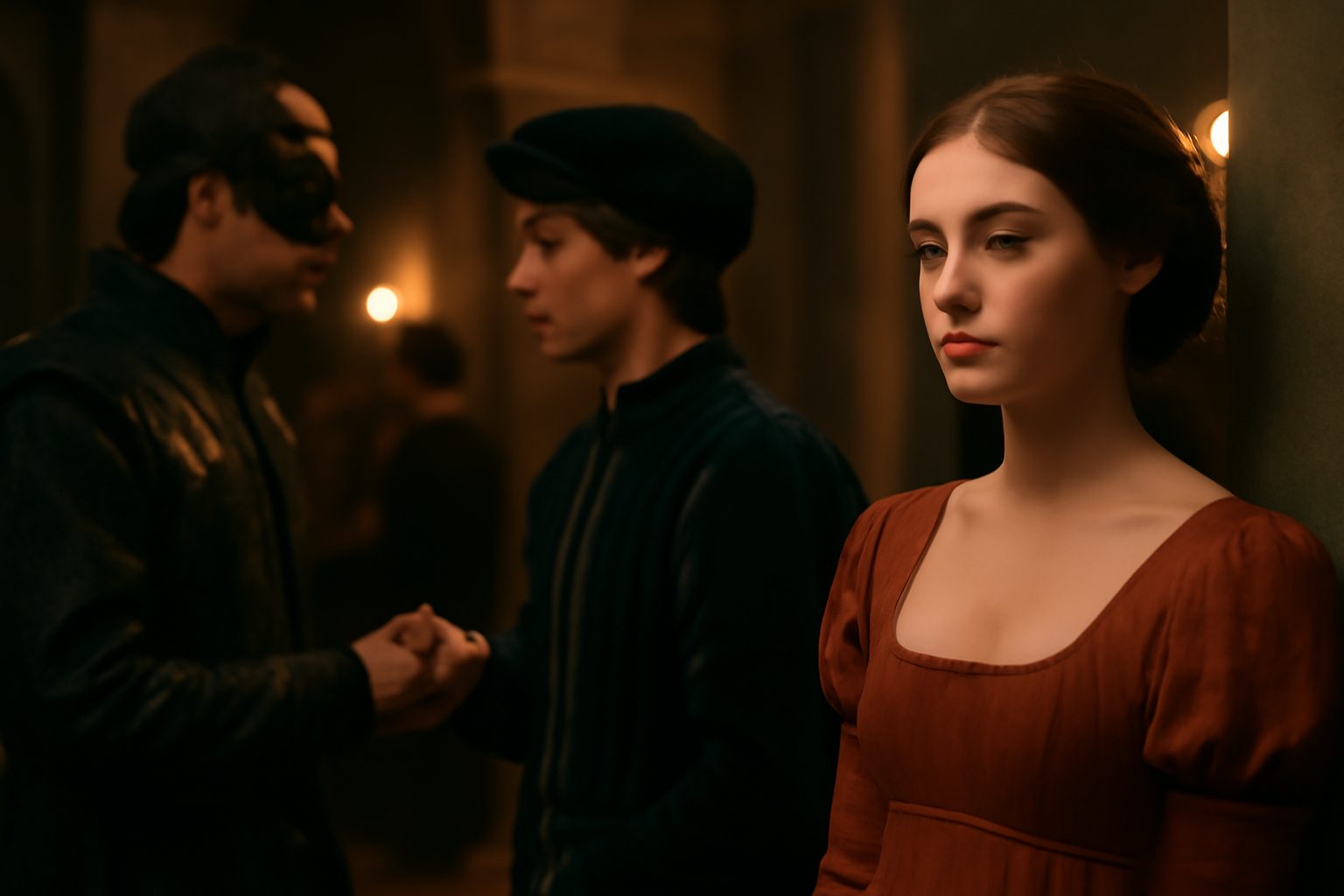
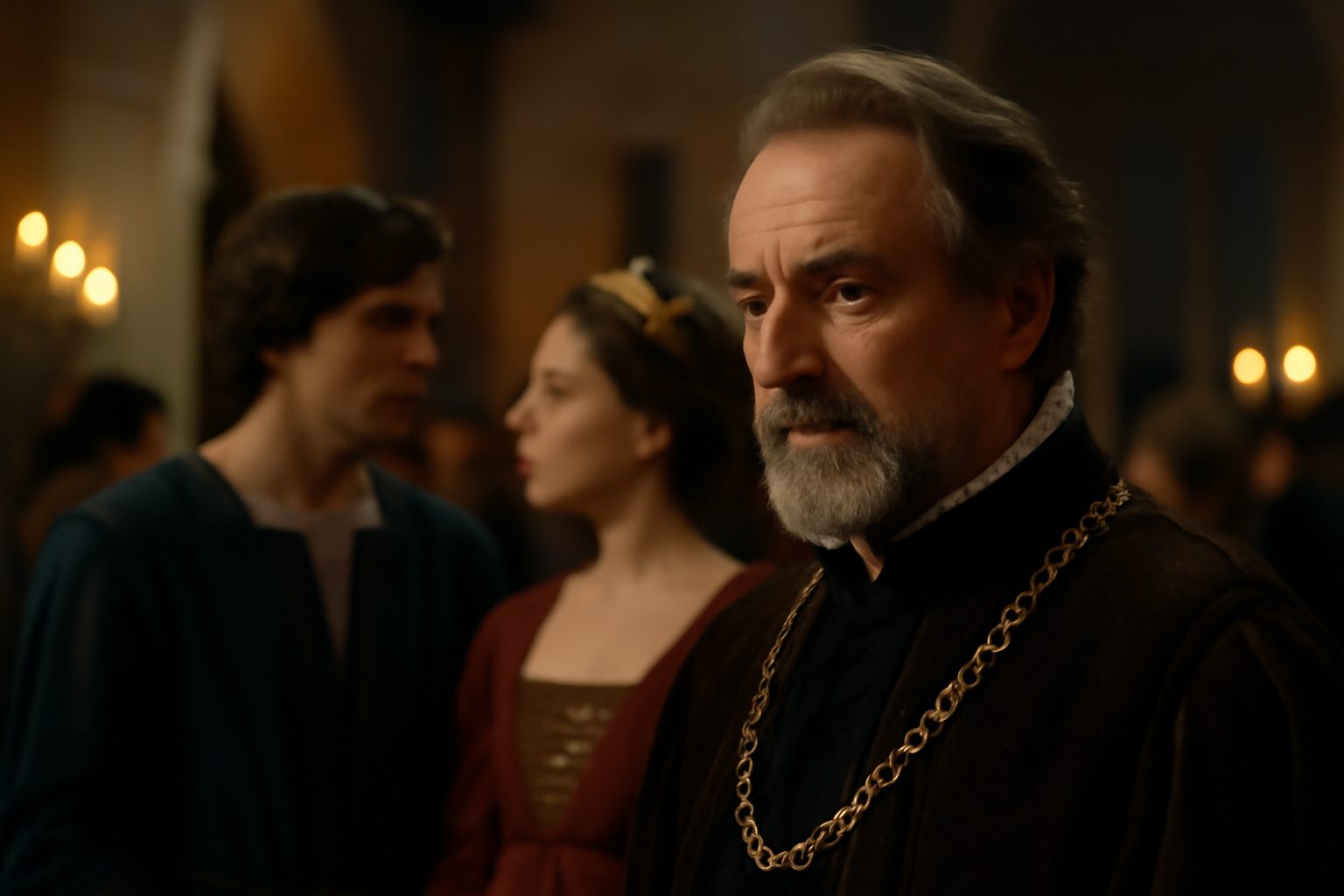
In Act 1, Scene 5 of Romeo and Juliet, Capulet hosts a grand feast where Romeo, a Montague, has secretly attended. During the celebration, he sees Juliet for the first time and is instantly captivated by her beauty. The line reflects Capulet's lighthearted remark as a fleeting moment of music fades, contrasting with Romeo's intense, lingering infatuation.
Capulet: "Such as would please: 'tis gone, 'tis gone, 'tis gone:"
In modern day english, we would say:
It’s over, it’s over, it’s gone—just like something that was delightful but has now passed.
Frequently Asked Questions
What is Capulet feeling when he says 'tis gone, 'tis gone, 'tis gone?
Capulet is feeling a sense of loss or that something enjoyable has ended.
Connections to other verses:
Connections to "Such as would please: 'tis gone, 'tis gone, 'tis…"
Immediate Context and Mood
The verse "Such as would please: 'tis gone, 'tis gone, 'tis…" is part of Capulet's nostalgic reflection on his youth and the fleeting nature of joy. This sentiment is echoed in his earlier line, "Welcome, gentlemen! I have seen the day", where he contrasts past vigor with present decline. The theme of transience is reinforced by his admission, "For you and I are past our dancing days", emphasizing the passage of time and lost pleasures.
Musical and Festive Atmosphere
Capulet's call for music and celebration, "You are welcome, gentlemen! come, musicians, play", sets the scene where his lament occurs. The energy of the party is captured in his earlier exhortation, "A hall, a hall! give room! and foot it, girls", creating a juxtaposition between lively activity and his personal melancholy. The servants' bustling preparations, such as "Away with the joint-stools, remove the", highlight the effort to maintain festivity, contrasting with Capulet's wistful tone.
Contrast with Youthful Passion
While Capulet dwells on faded joys, Romeo's instant infatuation with Juliet introduces a new, urgent passion. His awe, "Did my heart love till now? forswear it, sight!", contrasts Capulet's resignation. The romantic exchange, including "And palm to palm is holy palmers' kiss", underscores a vibrant, present emotion against Capulet's nostalgic loss.
Underlying Tension
Capulet's momentary sadness also contrasts with the scene's underlying conflict, such as Tybalt's rage at Romeo's presence: "A villain that is hither come in spite". Capulet's insistence on peace, "Therefore be patient, take no note of him", shows his desire to preserve the evening's joy, yet his own lament hints at the fragility of such moments.