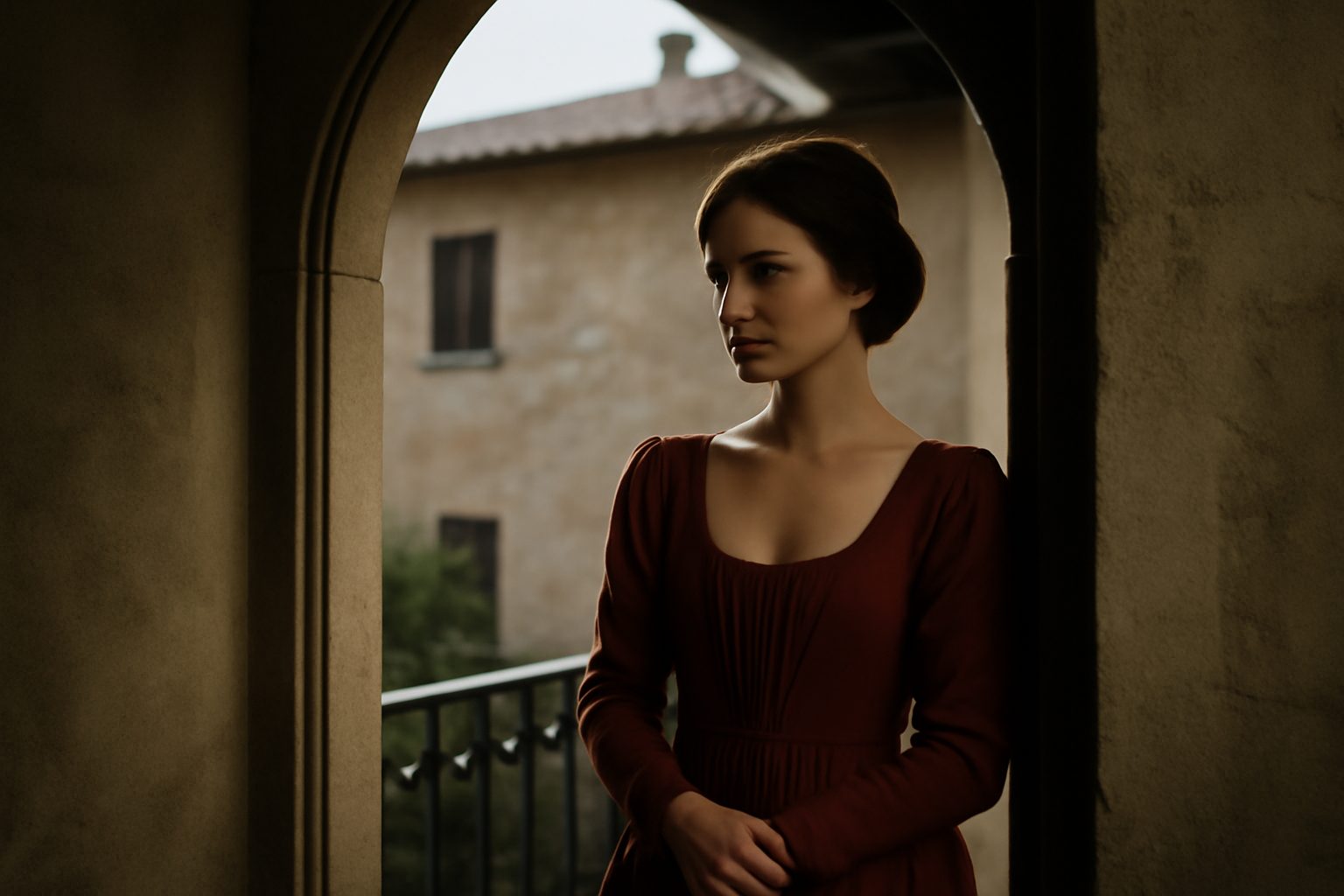
In Act 1, Scene 5 of Romeo and Juliet, the Capulets host a lavish masquerade ball, where Romeo has secretly entered in disguise. When Tybalt notices Romeo's presence, he reacts with anger, but Capulet intervenes, dismissing Tybalt's aggression. This line is Capulet's remark about Romeo's dignified demeanor, suggesting he carries himself like a respectable gentleman rather than a threat.
Capulet: "He bears him like a portly gentleman;"
In modern day english, we would say:
He carries himself like a dignified and respectable gentleman.
Frequently Asked Questions
What does Capulet think about the way the gentleman behaves?
Capulet thinks the gentleman behaves in a dignified and respectable manner.
Connections to other verses:
Connections to "He bears him like a portly gentleman"
The line "He bears him like a portly gentleman" is spoken by Capulet in response to Tybalt's agitation upon recognizing Romeo at the feast. It reflects Capulet's attempt to maintain decorum and control, emphasizing Romeo's respectable demeanor despite his unwelcome presence.
Contrast with Tybalt's Aggression
This verse directly contrasts with Tybalt's hostile reaction in "Uncle, this is a Montague, our foe" and "Tis he, that villain Romeo". While Tybalt sees Romeo as a threat, Capulet's observation highlights Romeo's composed behavior, downplaying the danger.
Capulet's Authority and Restraint
Capulet's insistence on tolerance is further evident in "Therefore be patient, take no note of him" and "He shall be endured". His description of Romeo as "portly" (dignified or well-mannered) supports his argument that Romeo is not causing disruption, reinforcing his authority to quell Tybalt's anger.
Irony and Dramatic Tension
The praise of Romeo's gentlemanly conduct is ironic in light of "This, by his voice, should be a Montague", where Tybalt identifies him as an enemy. This tension between appearance and reality foreshadows the conflict that will arise from Romeo and Juliet's love across familial lines.
Connection to Social Expectations
Capulet's focus on demeanor aligns with his earlier emphasis on hospitality and propriety, such as in "Show a fair presence and put off these frowns". By describing Romeo as "portly," Capulet underscores the importance of maintaining social grace, even toward adversaries.