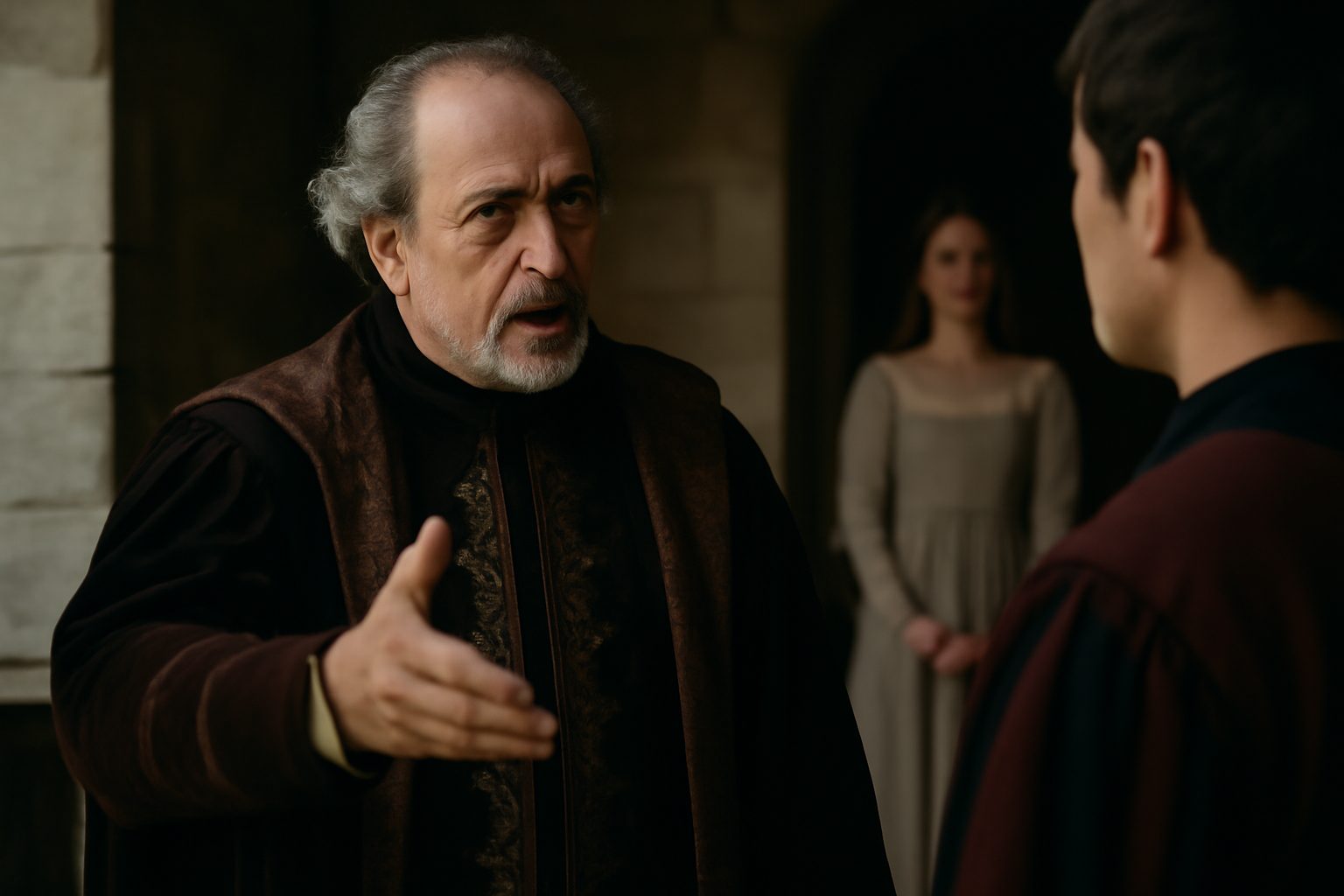
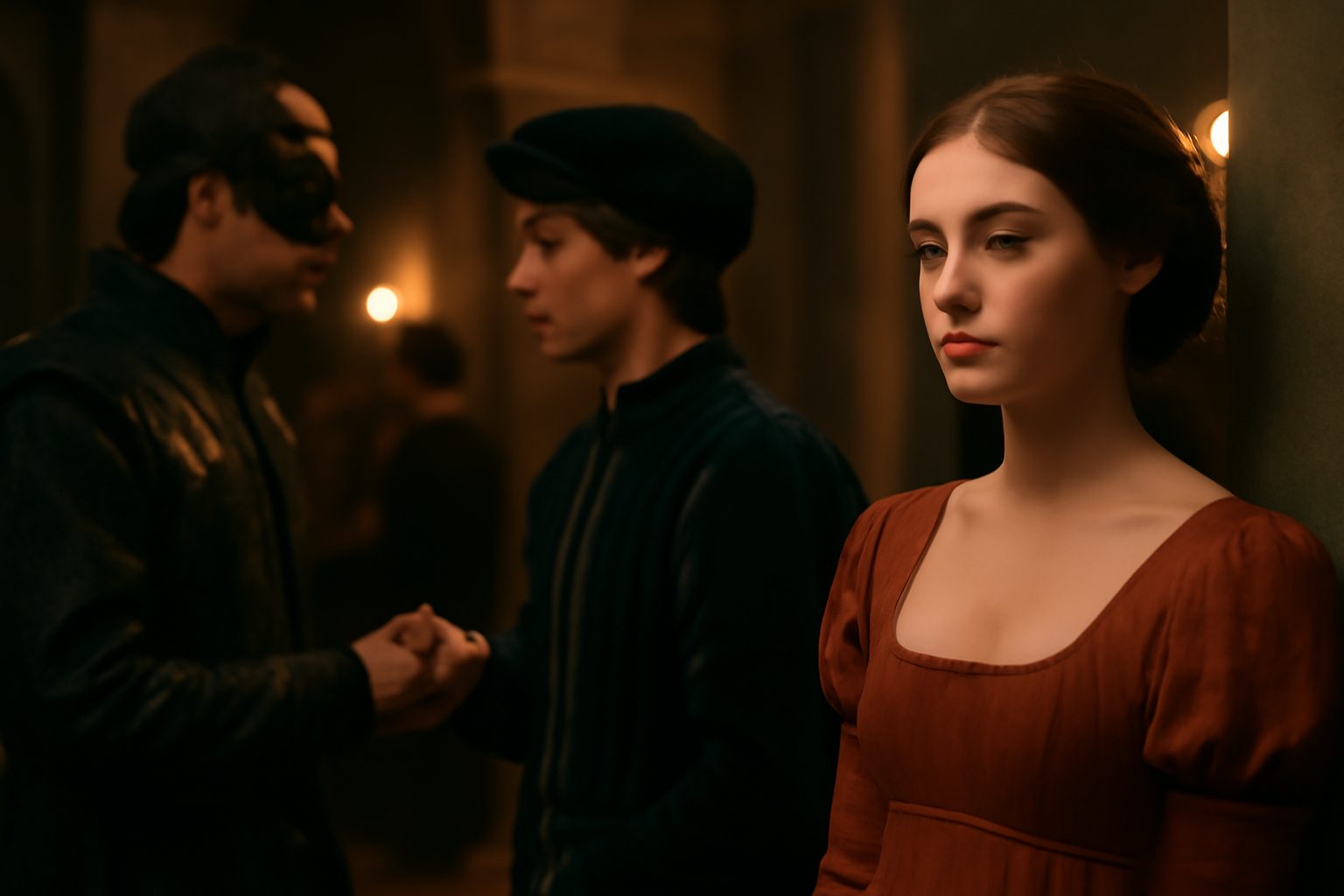
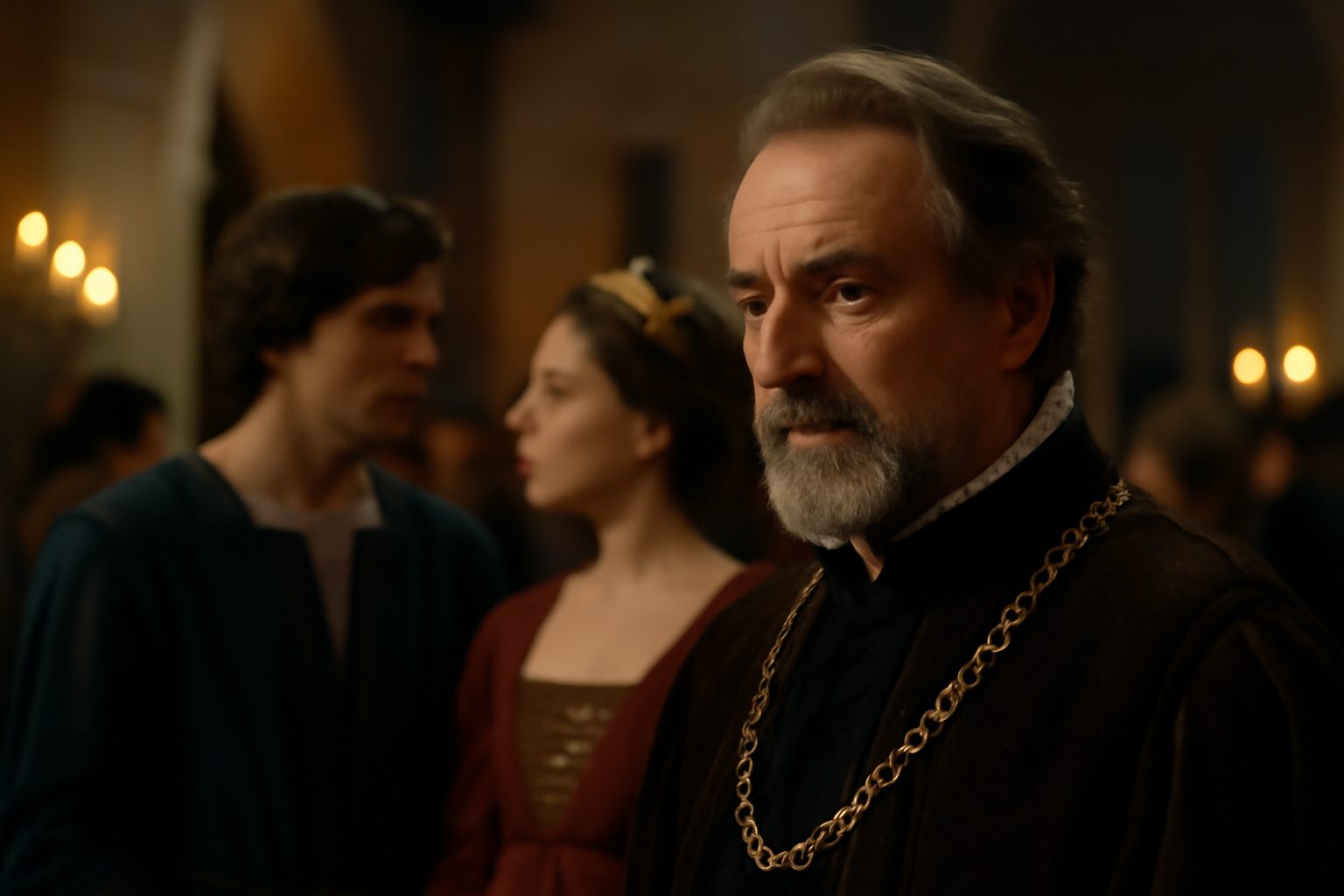
In Act 1, Scene 5 of Romeo and Juliet, the Capulets are hosting a masquerade ball, where Tybalt recognizes Romeo, a Montague, among the guests. Furious at the intrusion, Tybalt wants to confront Romeo, but Lord Capulet intervenes, urging his nephew to remain calm and not cause a disturbance. This line is spoken as Capulet attempts to defuse the tension, insisting that Romeo be left alone for the sake of the festivities.
Capulet: "Content thee, gentle coz, let him alone;"
In modern day english, we would say:
Calm down, dear cousin, just leave him be.
Frequently Asked Questions
Who is speaking in this line from Romeo and Juliet?
Capulet is speaking.
What does Capulet tell his cousin to do in this line?
He tells his cousin to calm down and leave someone alone.
Connections to other verses:
Connections to "Content thee, gentle coz, let him alone"
This line, spoken by Capulet to Tybalt, serves as a pivotal moment of restraint in the scene. It connects thematically and dramatically to several other verses:
Immediate Context and Conflict
Capulet's plea for peace directly responds to Tybalt's aggressive recognition of Romeo: Tis he, that villain Romeo. This exchange highlights the tension between youthful impulsiveness (Tybalt) and experienced diplomacy (Capulet).
Tybalt's hostility is further emphasized when he declares I'll not endure him, showing his refusal to accept Capulet's calming words. Capulet's authority is asserted in his retort He shall be endured, reinforcing his command over the household.
Capulet's Reasoning and Character
Capulet justifies his tolerance by praising Romeo's reputation: And, to say truth, Verona brags of him and He bears him like a portly gentleman. This shows his pragmatic desire to avoid dishonor: Here in my house do him disparagement.
His insistence on maintaining peace is clear in Therefore be patient, take no note of him, urging Tybalt to overlook the intrusion for the sake of decorum.
Contrast with Romeo's Experience
While Capulet diffuses conflict, Romeo is simultaneously experiencing love at first sight, declaring For I ne'er saw true beauty till this night. This juxtaposition highlights the scene's dual tones: impending violence versus budding romance.
Romeo's poetic admiration (Beauty too rich for use, for earth too dear!) contrasts sharply with Tybalt's vengeful anger, emphasized by Capulet's intervention.
Foreshadowing and Irony
Capulet's attempt to prevent strife ironically foreshadows the tragedy to come. His command Show a fair presence and put off these frowns temporarily suppresses violence but cannot prevent the fatal consequences of the feud.
Juliet's later realization My only love sprung from my only hate! echoes this moment, as Capulet's tolerance allows the lovers' meeting that ultimately dooms them.