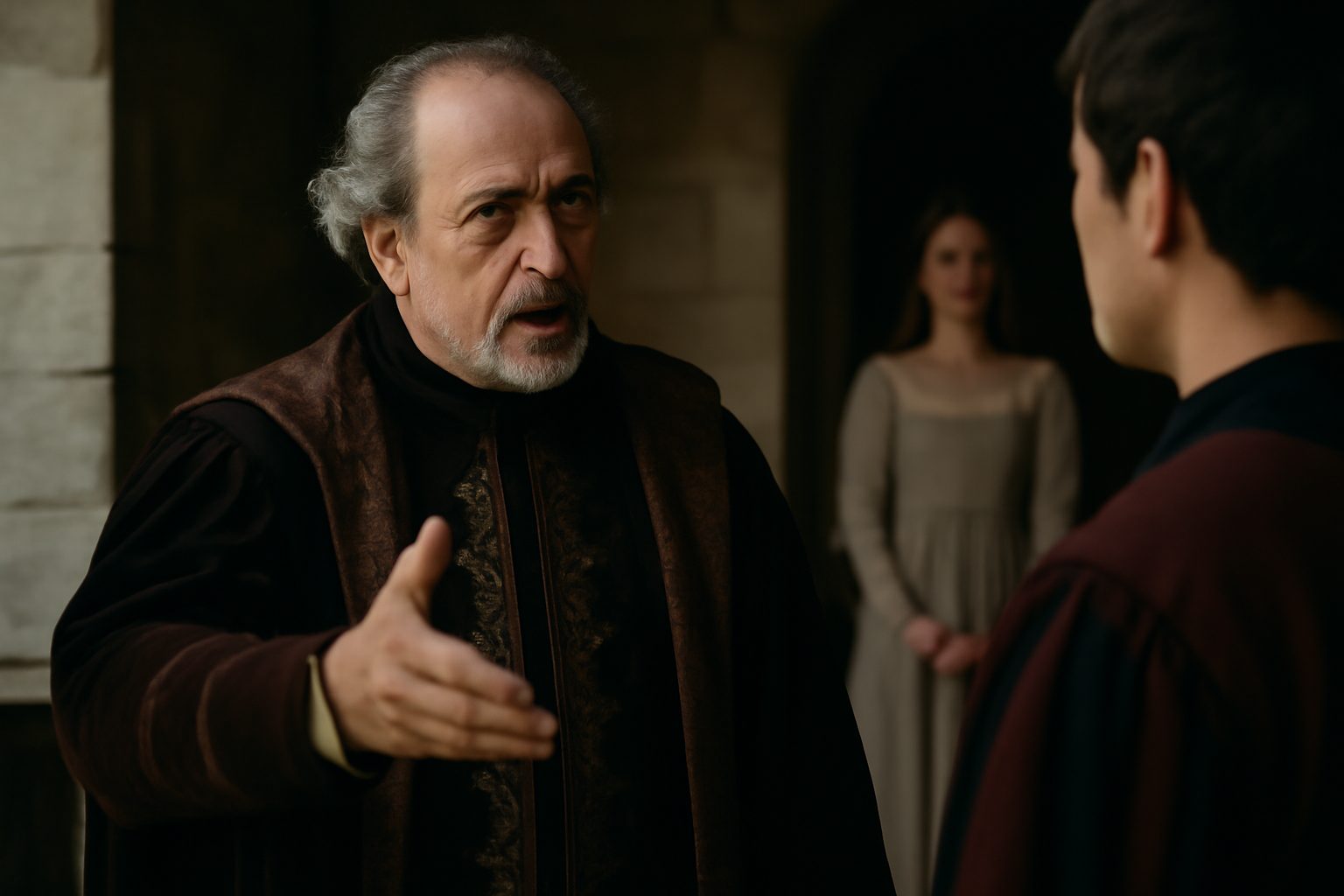
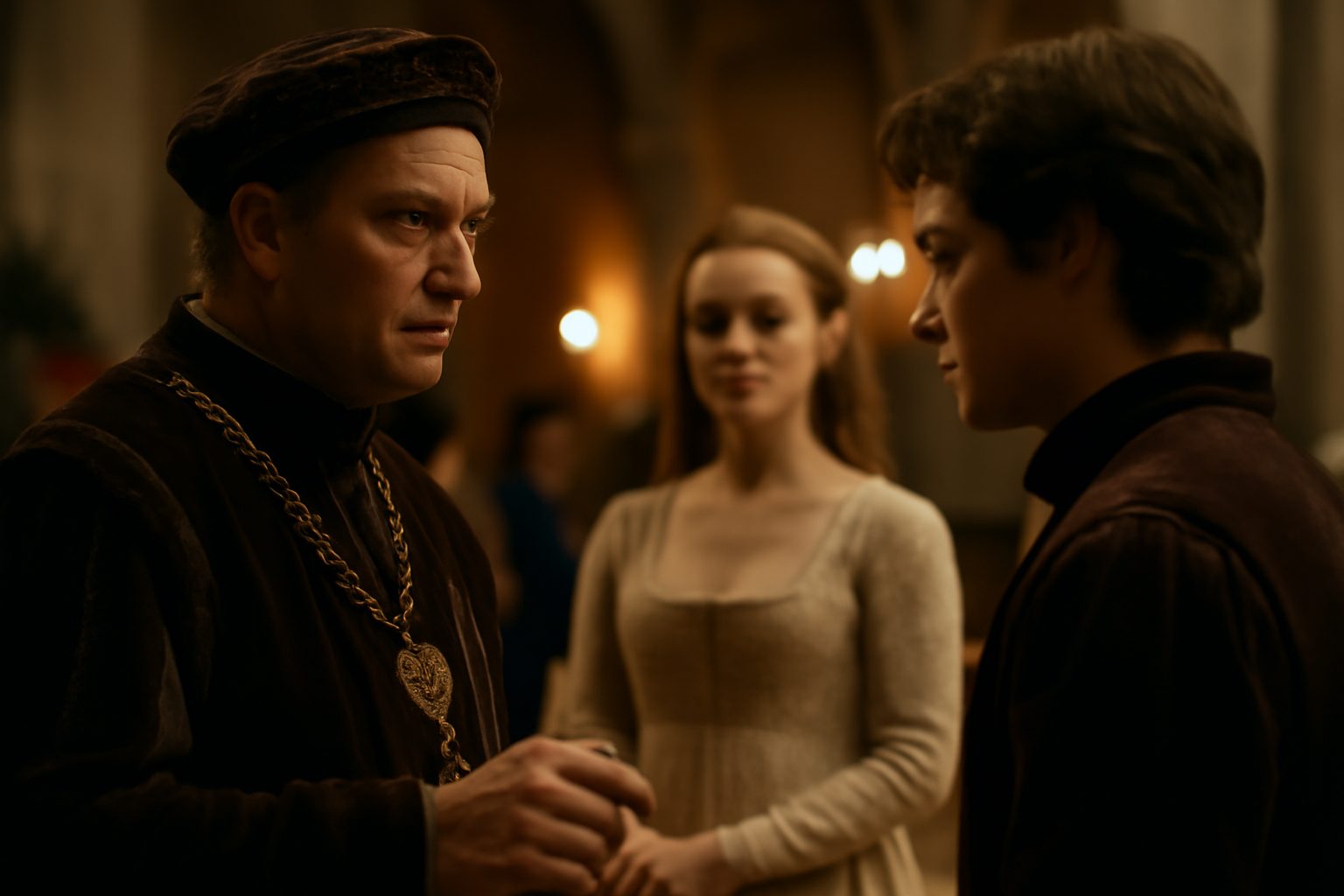
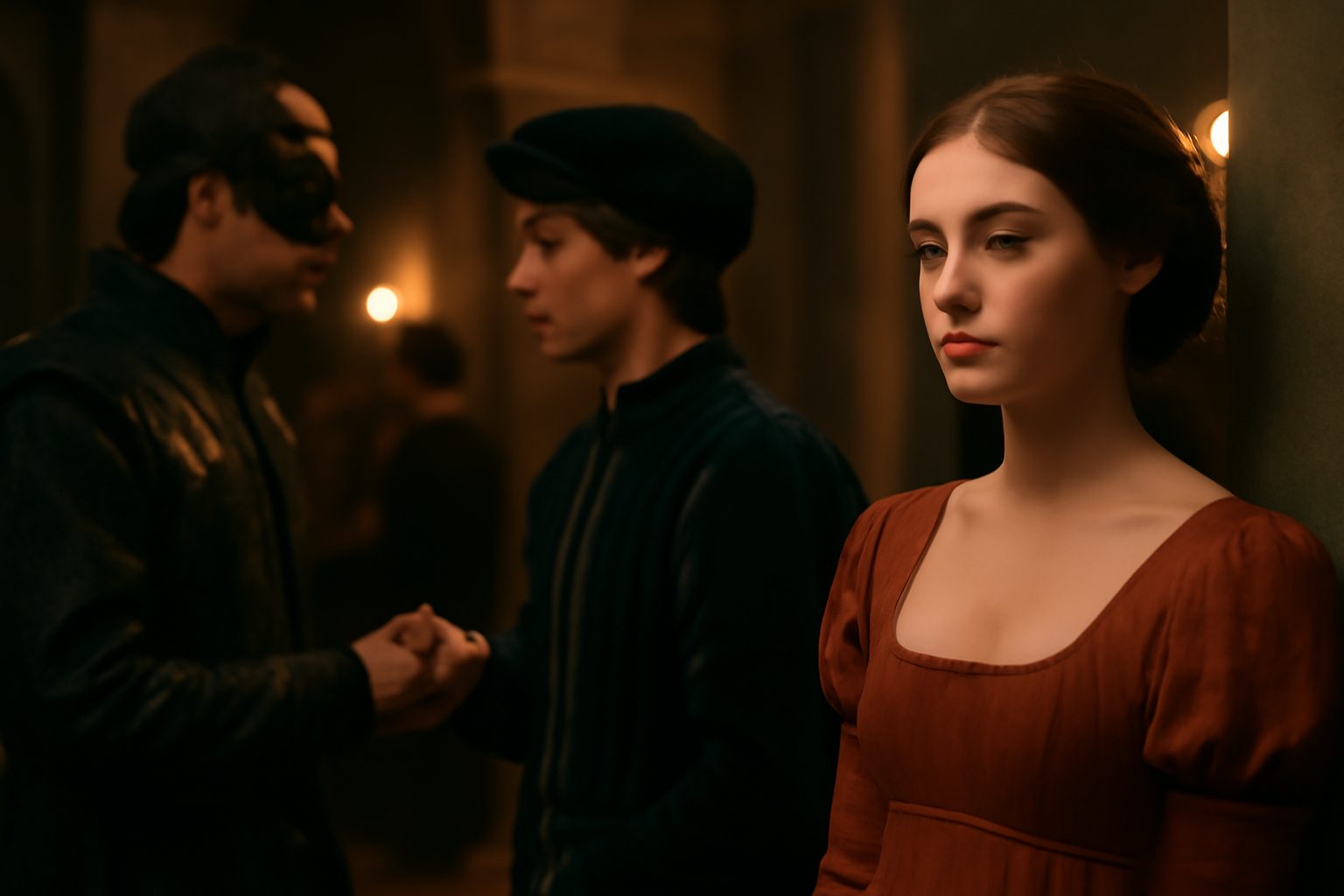
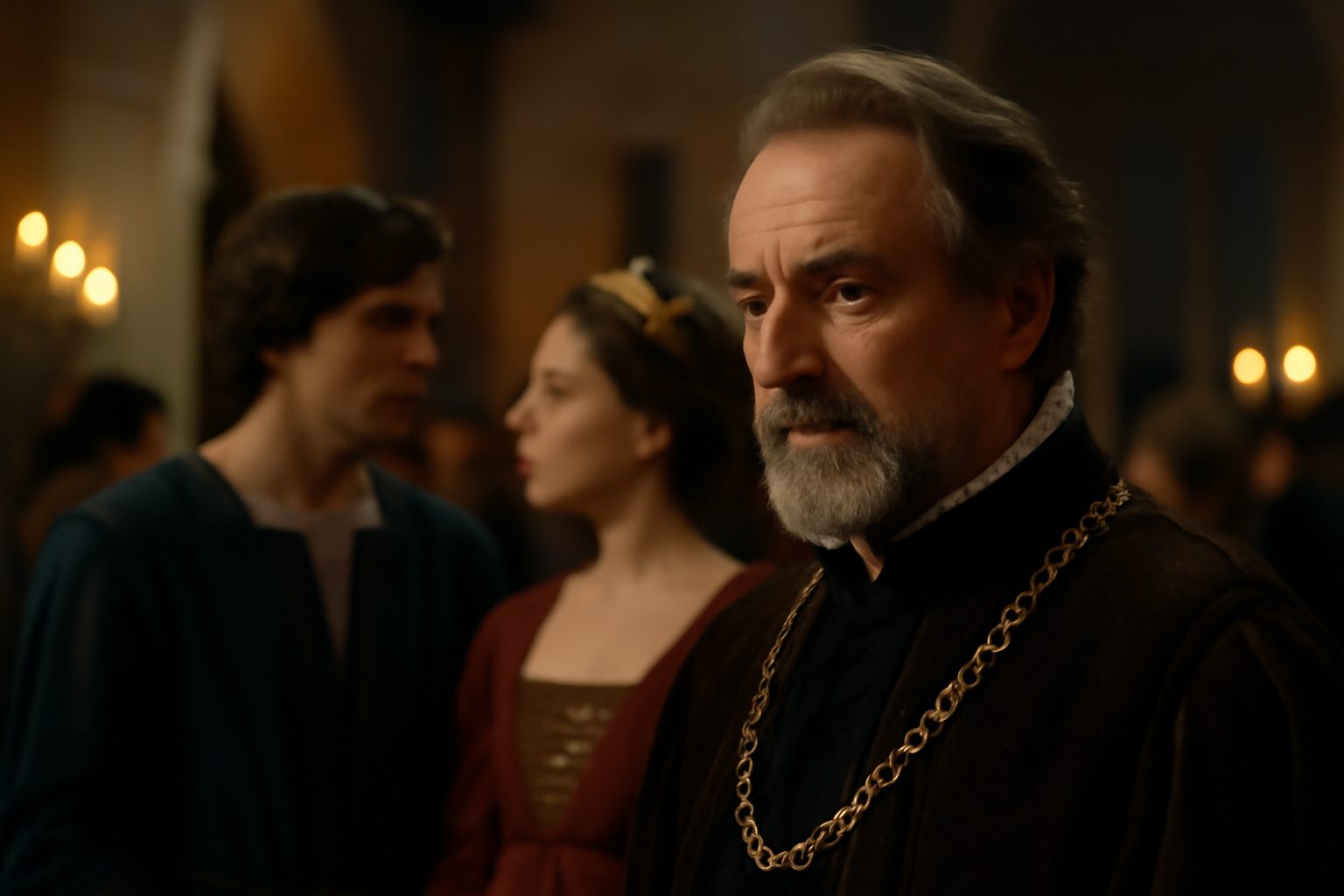
In Act 1, Scene 5 of Romeo and Juliet, the Capulets host a masquerade ball where Romeo, a Montague, has secretly attended. During the festivities, he spots Juliet and is instantly captivated by her beauty. Overcome with infatuation, he asks a servingman about her, eager to learn whether she is bound to another.
Juliet: "Go ask his name: if he be married."
In modern day english, we would say:
Go find out his name and whether he’s already married.
Frequently Asked Questions
What does Juliet want to know about the man she just met?
She wants to know his name and if he is married.
Connections to other verses:
Connections to "Go ask his name: if he be married."
Juliet's Immediate Concern
This line, spoken by Juliet to the Nurse (/romeo-and-juliet/one/1-5/act-1-scene-5-142/), reveals her urgent curiosity about Romeo's marital status after their instant connection. It directly follows their first meeting and kiss, highlighting her practical worry amid newfound affection.
Preceding Romantic Exchange
Juliet's inquiry is precipitated by the intimate sonnet shared with Romeo, where they use religious imagery to justify their physical contact. Key lines include Romeo's initiation: "If I profane with my unworthiest hand", Juliet's response: "Good pilgrim, you do wrong your hand too much", and the culmination in their kiss: "Give me my sin again".
Revelation of Identity
The Nurse's reply to Juliet's question unveils the tragic conflict: "His name is Romeo, and a Montague" and "The only son of your great enemy". This directly contrasts with Juliet's hopeful query about marriage, heightening the dramatic irony.
Juliet's Foreboding Response
Upon learning Romeo's identity, Juliet delivers her despairing realization: "My only love sprung from my only hate!" and the prophetic "My grave is like to be my wedding bed", which echoes her initial concern about his marital status and foreshadows their fate.
Contrast with Earlier Hostility
Juliet's romantic interest starkly contrasts with Tybalt's aggressive reaction to Romeo's presence: "Fetch me my rapier, boy. What dares the slave" and "Tis he, that villain Romeo", emphasizing the tension between love and familial feud.
Capulet's Unwitting Role
Capulet's insistence on tolerating Romeo ("He shall be endured") allows the encounter to occur, enabling Juliet's question. His praise of Romeo as "Verona brags of him" and "a virtuous and well-govern'd youth" ironically supports the very union he would later oppose.