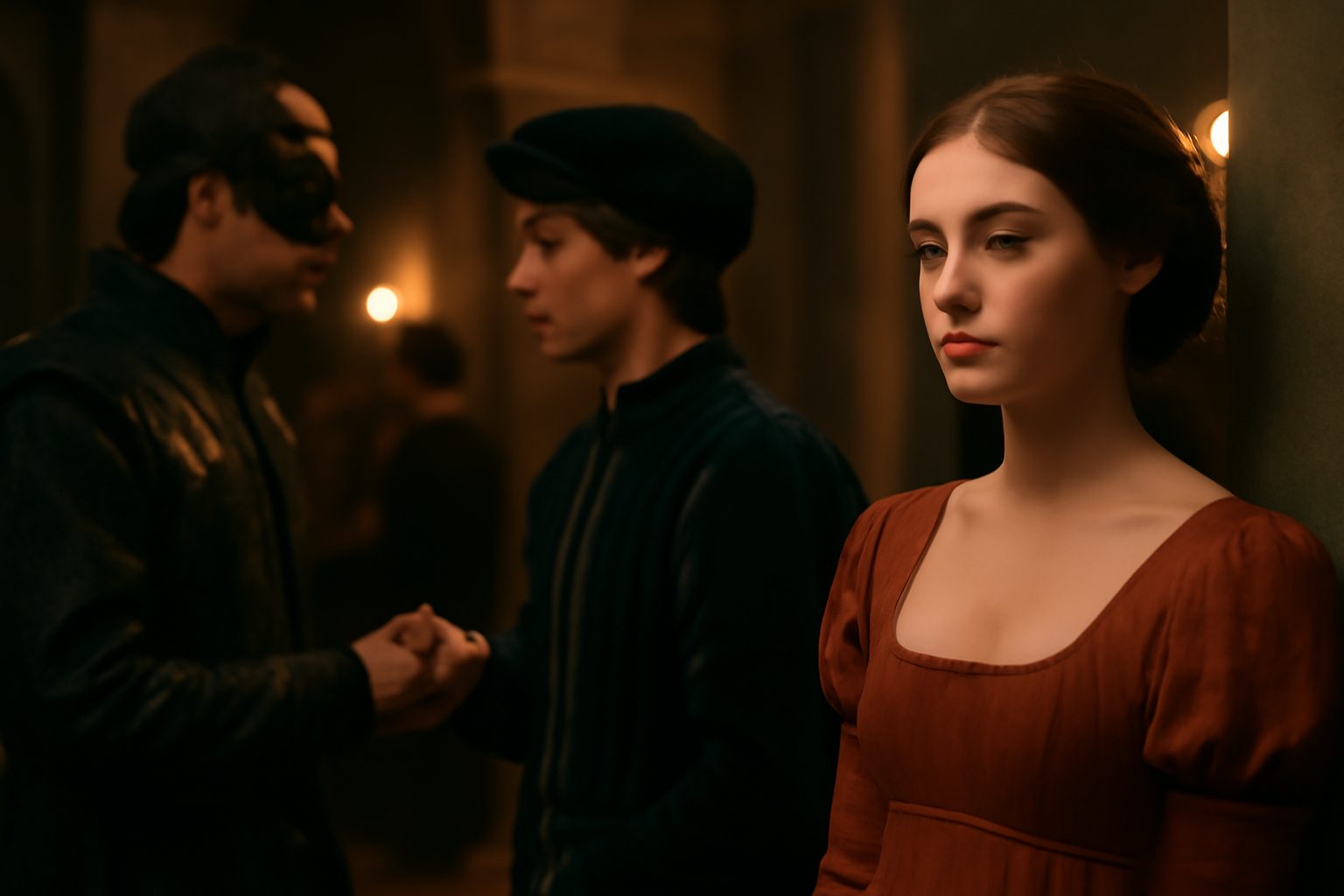
In Act 1, Scene 5 of Romeo and Juliet, the Capulet household is bustling with guests at a masked ball. Tybalt, Juliet’s hot-tempered cousin, recognizes Romeo, a Montague, and demands that Lord Capulet eject him. Capulet rebukes Tybalt with this sharp retort, asserting his authority and dismissing Tybalt’s aggressive insistence.
Capulet: "Am I the master here, or you? go to."
In modern day english, we would say:
Am I in charge here, or are you? Cut it out.
Frequently Asked Questions
Who is speaking in this line from Romeo and Juliet?
Capulet is speaking.
What is Capulet asserting in this line?
Capulet is asserting his authority as the master of the house.
In which act and scene does this line appear?
This line appears in Act 1, Scene 5.
Connections to other verses:
Connections to "Am I the master here, or you? go to."
This line, spoken by Capulet to Tybalt, establishes Capulet's authority and control over the feast. It connects to several other verses in the scene that highlight themes of authority, conflict, and social order.
Authority and Control
Capulet's assertion of his role as master is echoed in his earlier command: Show a fair presence and put off these frowns, where he insists on maintaining a harmonious atmosphere. Similarly, his declaration It is my will, the which if thou respect reinforces his expectation of obedience.
Conflict with Tybalt
Tybalt's defiance is evident in I'll not endure him, directly challenging Capulet's authority. Capulet's response, He shall be endured, further emphasizes the tension and Capulet's insistence on his command.
Social Order and Propriety
Capulet's concern for propriety is seen in And ill-beseeming semblance for a feast, where he criticizes Tybalt's behavior. The phrase Go to, go to; is another instance of Capulet dismissing Tybalt's objections, reinforcing his role as the decisive figure.
Contrast with Other Characters
While Capulet asserts control, other characters like the servants exhibit disorder, as in shift a trencher? he scrape a trencher!, highlighting the chaos Capulet seeks to manage. Romeo's poetic and romantic language, such as Did my heart love till now? forswear it, sight!, provides a stark contrast to the conflict between Capulet and Tybalt.