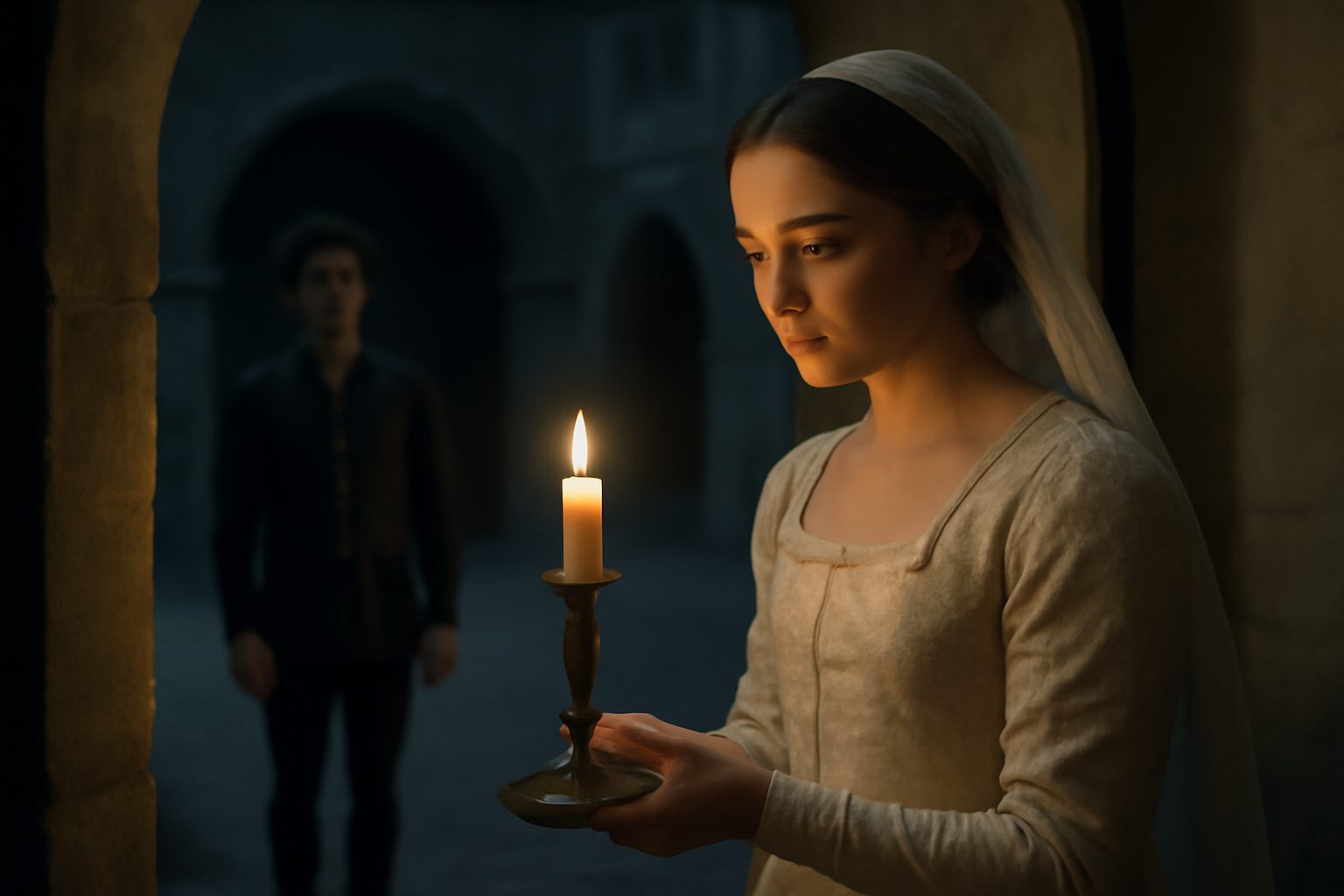
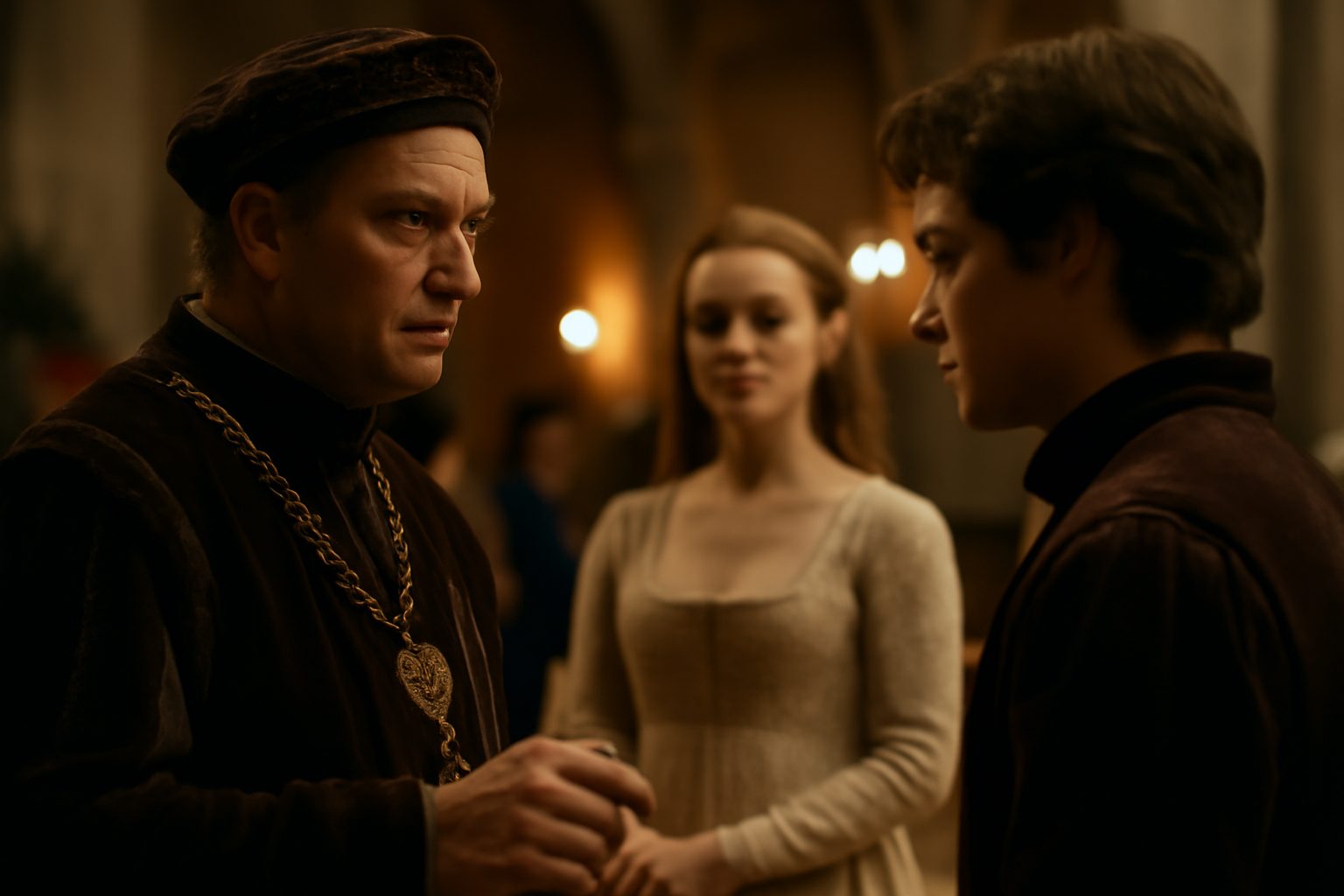
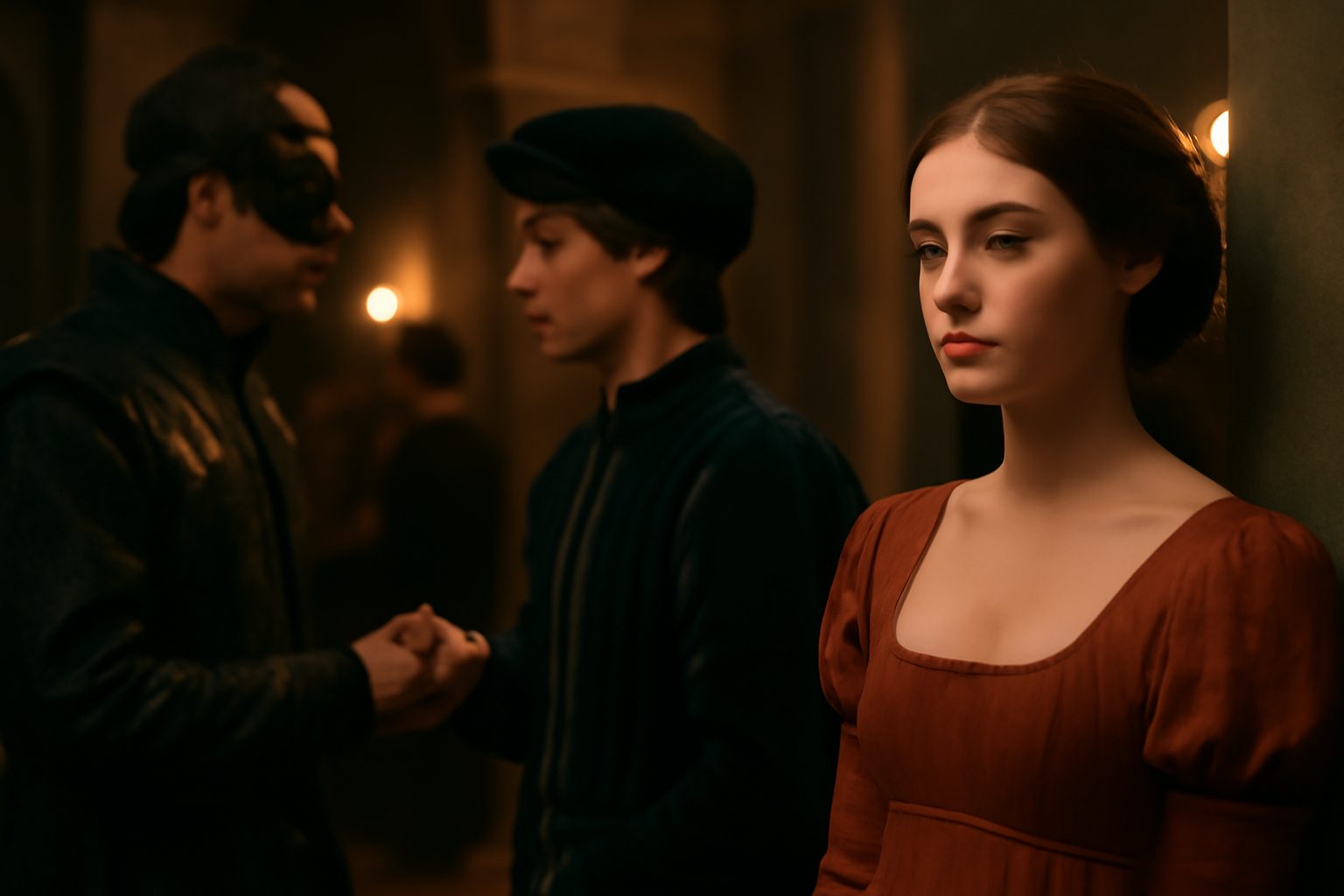
In Act 1, Scene 5 of Romeo and Juliet, Romeo has just seen Juliet for the first time at the Capulet's feast and is instantly captivated by her beauty. When he approaches her, their dialogue takes on a playful, religious metaphor, comparing their meeting to a pilgrim venerating a saint. This line reflects Romeo's attempt to woo Juliet by framing their touch as a sacred, reverent act, blending devotion with flirtation.
Juliet: "For saints have hands that pilgrims' hands do touch,"
In modern day english, we would say:
Holy people let pilgrims touch their hands as a sign of devotion.
Frequently Asked Questions
What is Juliet comparing when she talks about saints and pilgrims?
Juliet is comparing Romeo's hand to a saint's hand and her own hand to a pilgrim's hand, suggesting a sacred and pure connection between them.
Connections to other verses:
Connections to "For saints have hands that pilgrims' hands do..."
The verse "For saints have hands that pilgrims' hands do..." is part of the extended religious metaphor in Romeo and Juliet's first meeting. It connects to several other verses in the scene:
Religious Metaphor Continuation
This line directly follows "Which mannerly devotion shows in this" and precedes "And palm to palm is holy palmers' kiss", forming a continuous metaphor where Romeo portrays Juliet as a saint and himself as a pilgrim.
Response to Juliet's Rebuke
Romeo's saint/pilgrim imagery responds to Juliet's earlier line "Good pilgrim, you do wrong your hand too much", where she first engages with his religious metaphor while maintaining proper decorum.
Kiss Request Development
The hands/pilgrims reference leads directly to Romeo's request for a kiss in "O, then, dear saint, let lips do what hands do", showing how the hand imagery progresses to lips throughout their exchange.
Initial Metaphor Setup
This religious metaphor begins with Romeo's approach in "If I profane with my unworthiest hand" where he first establishes the pilgrim/saint dynamic that culminates in this verse.
Juliet's Witty Response
Juliet continues the metaphor while maintaining her cleverness in "Have not saints lips, and holy palmers too?", showing how she actively participates in the wordplay Romeo initiates with this line.
Contrast with Tension Elsewhere
This intimate, poetic exchange contrasts sharply with Tybalt's aggressive recognition of Romeo in "This, by his voice, should be a Montague", highlighting the scene's tension between love and conflict.