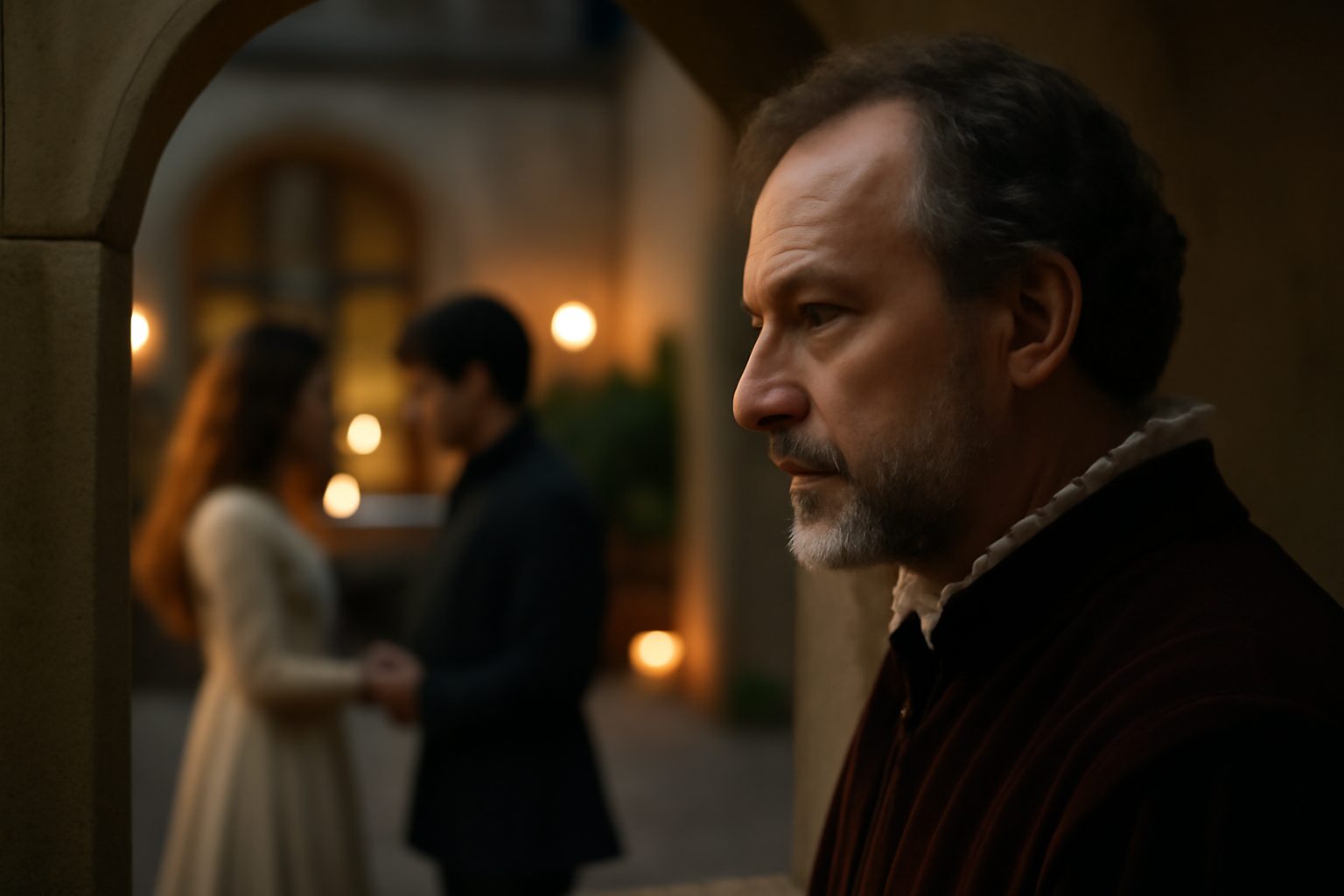
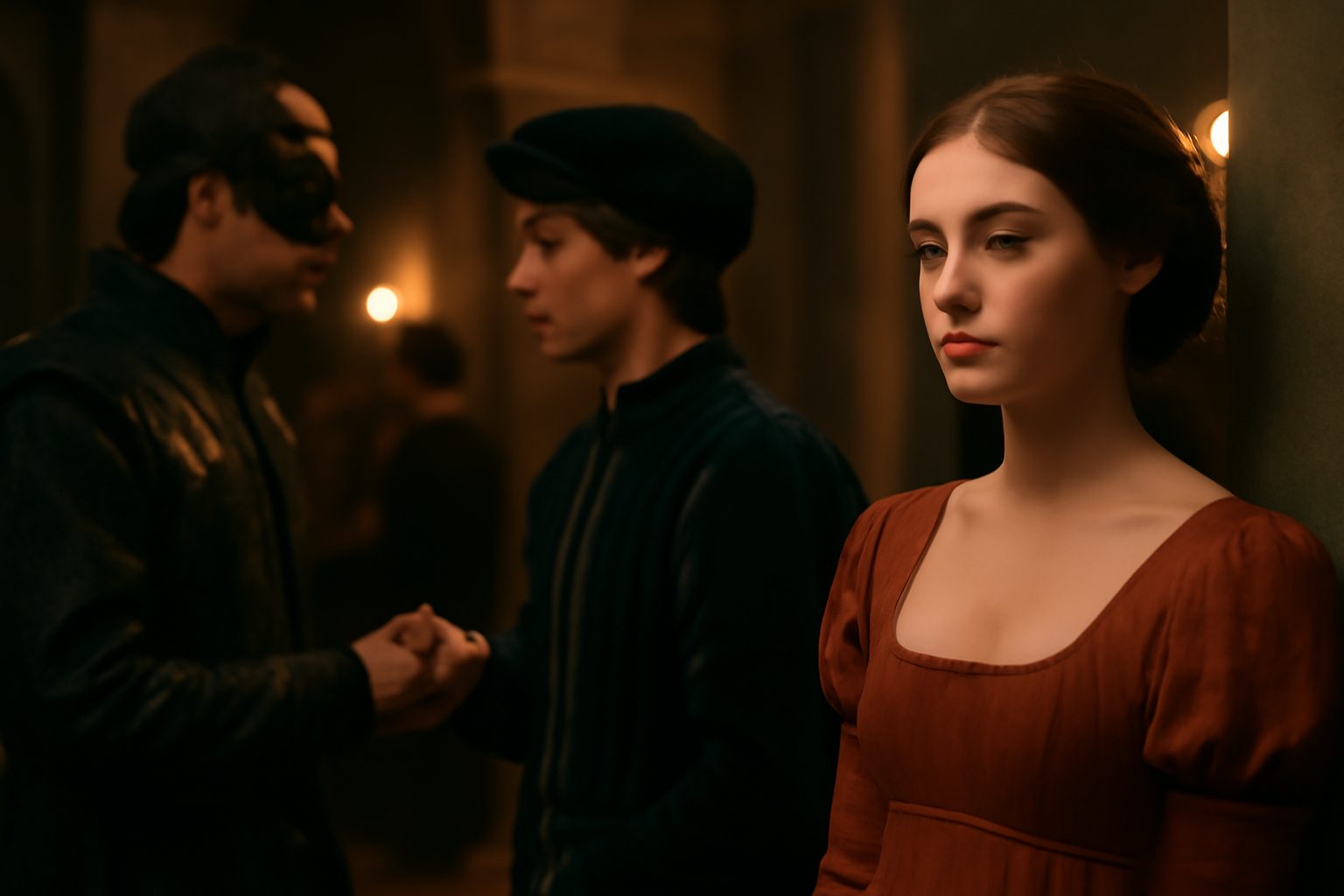
In Act 1, Scene 5 of Romeo and Juliet, the Capulets are hosting a lavish masquerade ball where Romeo has secretly entered in disguise. When Tybalt recognizes Romeo's voice and realizes a Montague has intruded, he reacts with anger, but Lord Capulet rebukes him, dismissing his temper as youthful arrogance. This line is Capulet's sharp retort, urging Tybalt to stand down and avoid causing a scene at the festivities.
Capulet: "Well said, my hearts! You are a princox; go:"
In modern day english, we would say:
Good job, my friends! You’re acting like an arrogant brat—now get out of here.
Frequently Asked Questions
Who is Capulet calling a princox in Act 1 Scene 5 of Romeo and Juliet?
Capulet is calling Tybalt a princox because Tybalt is being arrogant and causing trouble at the party.
Connections to other verses:
Connections to Other Verses in Act 1 Scene 5
The verse "Well said, my hearts! You are a princox; go:" is spoken by Capulet as he attempts to maintain order and decorum at his feast. It reflects his authority and his effort to quell disruptions, particularly those involving Tybalt's anger.
Authority and Order
Capulet's assertion of control is evident in Am I the master here, or you? go to., where he directly challenges Tybalt's defiance. Similarly, in You'll make a mutiny among my guests!, he warns Tybalt against causing a scene, reinforcing the theme of maintaining hospitality and peace.
Tybalt's Defiance
Tybalt's rebellious response is captured in I'll not endure him., showing his refusal to accept Romeo's presence. This defiance escalates in Fetch me my rapier, boy. What dares the slave, highlighting his readiness for violence.
Capulet's Restraint
Despite Tybalt's provocation, Capulet insists on tolerance in He shall be endured:, emphasizing his desire to avoid conflict. He further advises patience in Therefore be patient, take no note of him:, underscoring his diplomatic approach.
Atmosphere of the Feast
The lively, yet tense, atmosphere is set early in the scene with You are welcome, gentlemen! come, musicians, play., which contrasts with the underlying friction. The heat and excitement are mentioned in And quench the fire, the room is grown too hot., metaphorically reflecting the rising tensions.
Romeo and Juliet's Encounter
Amidst this conflict, Romeo's first meeting with Juliet occurs, beginning with [To JULIET] If I profane with my unworthiest hand, initiating their poetic exchange. This romantic interlude starkly contrasts with the animosity brewing elsewhere in the scene.