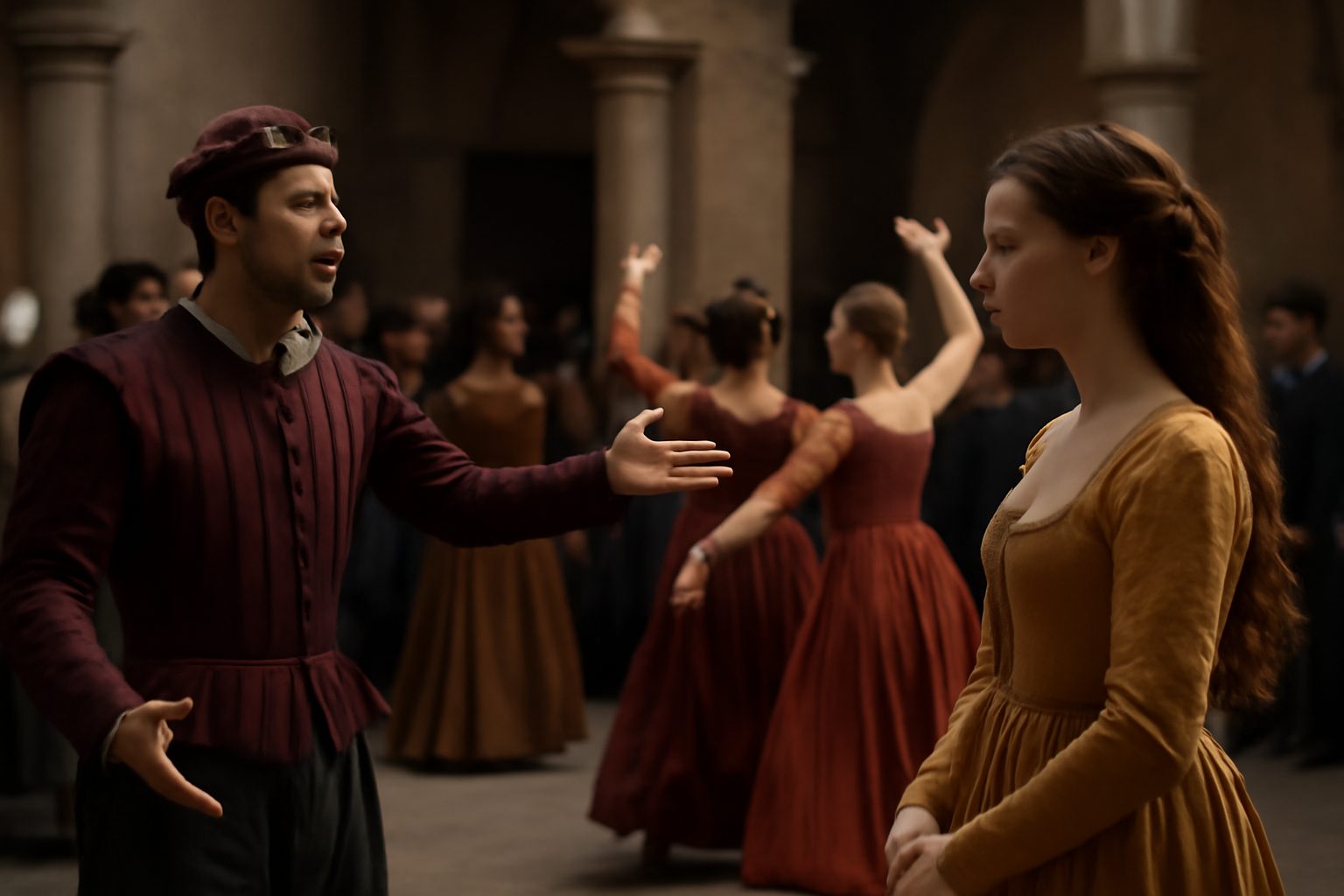
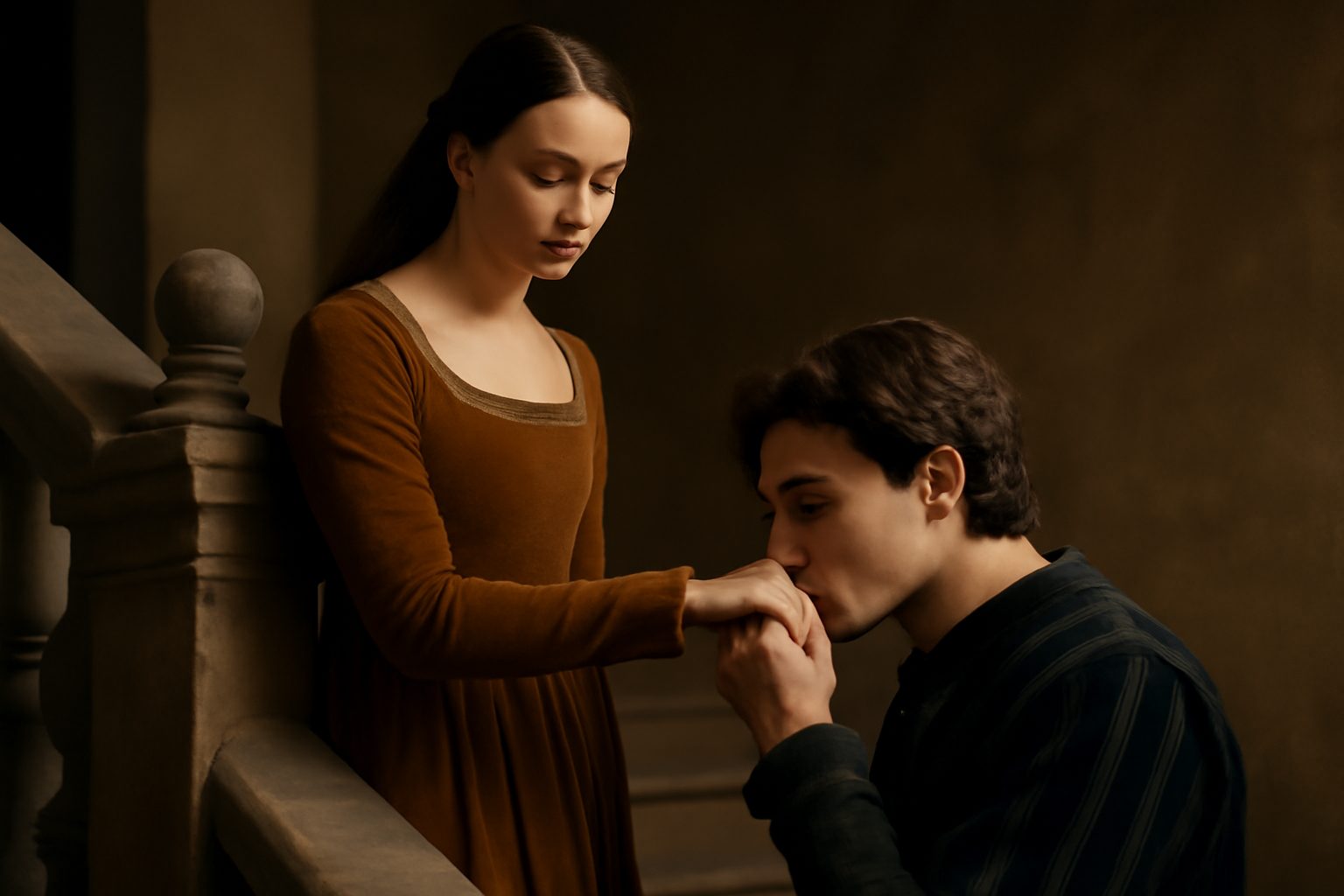
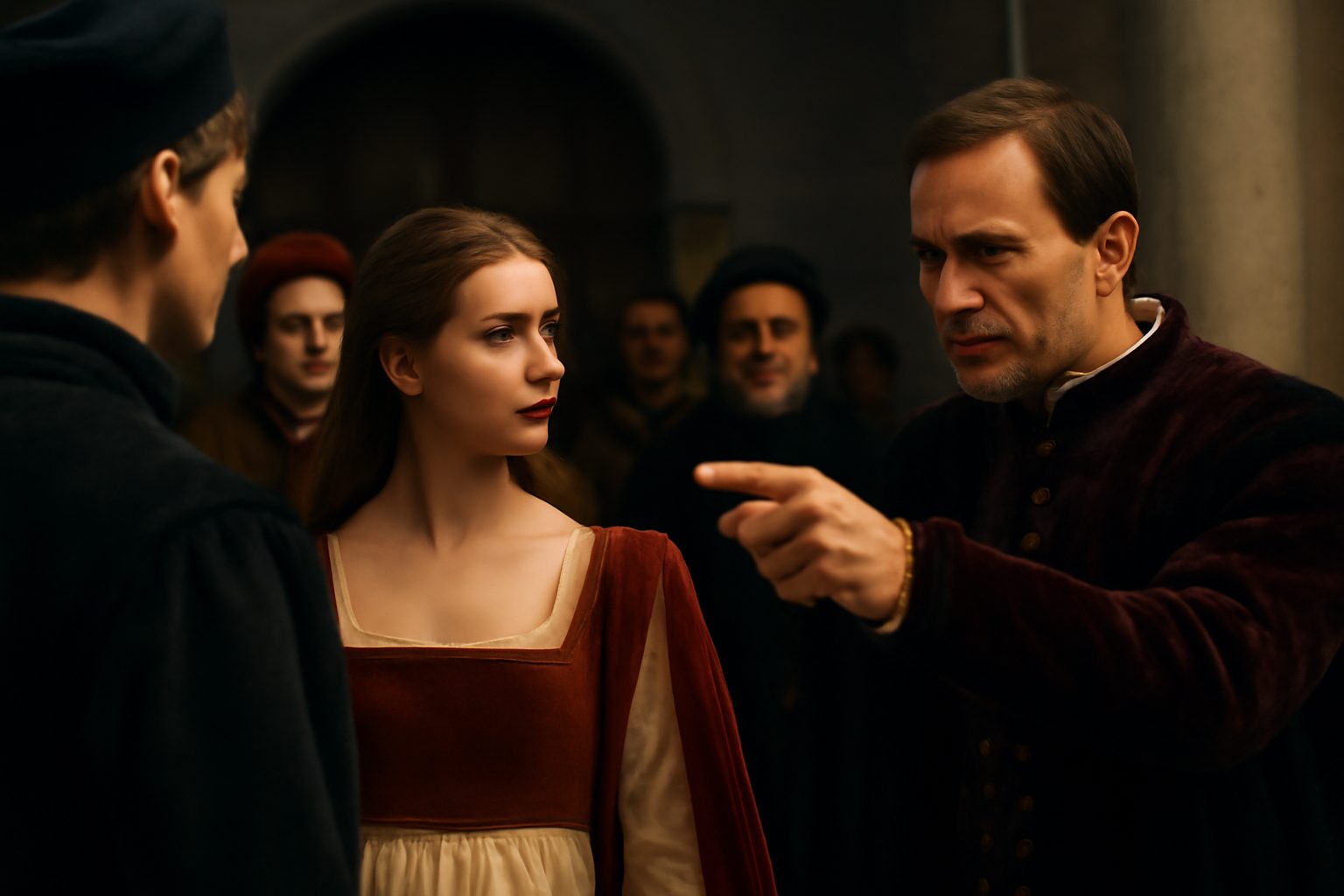
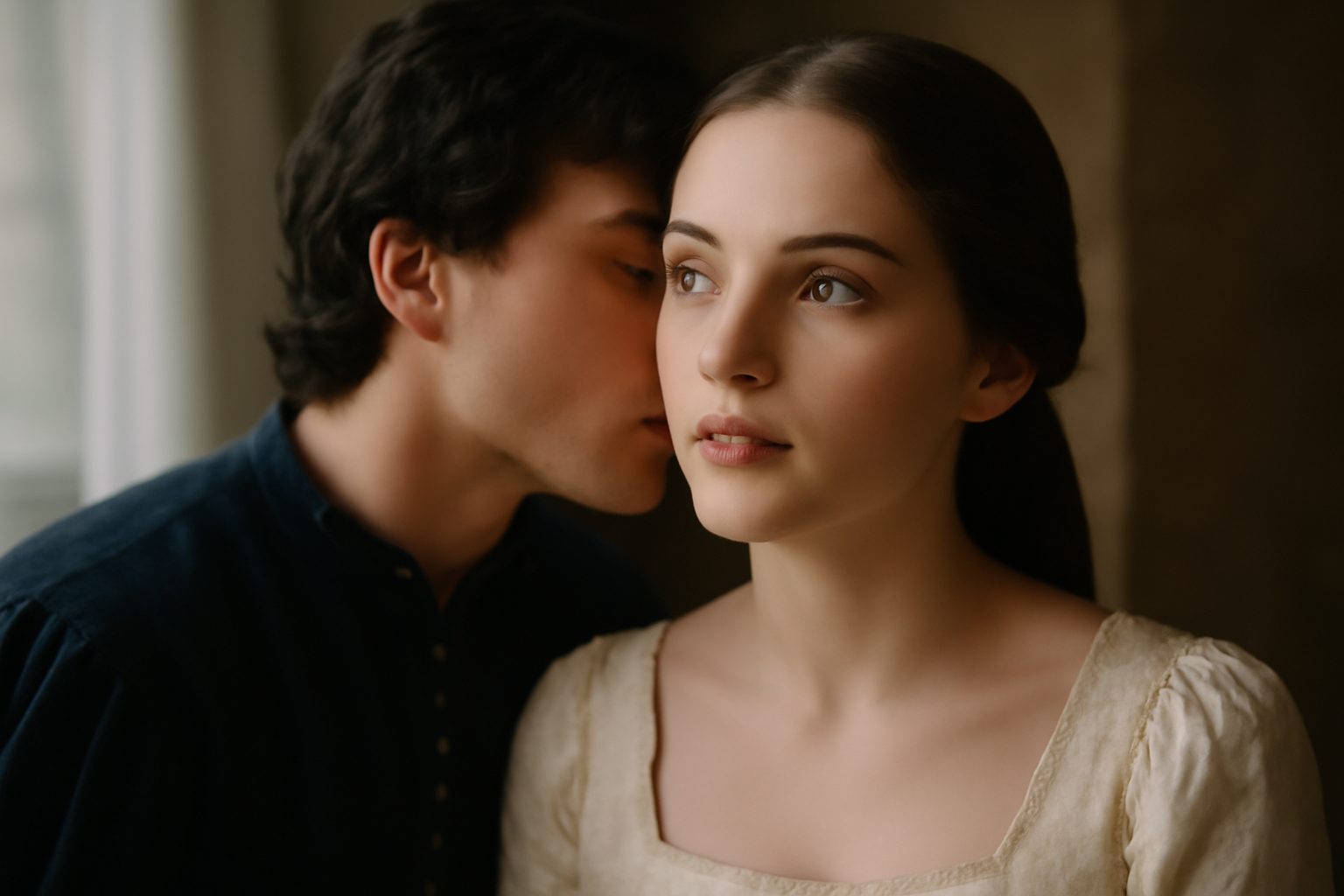
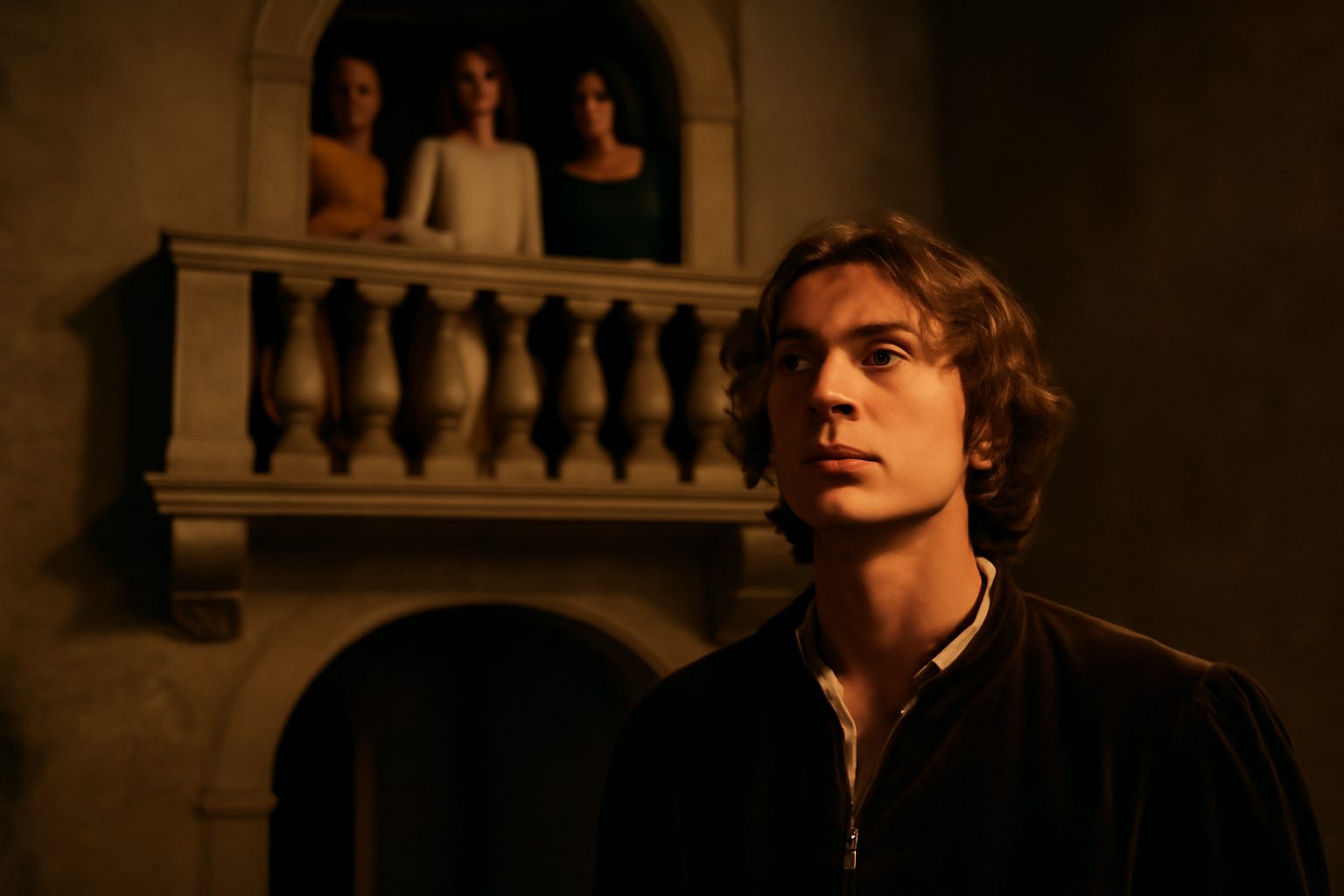
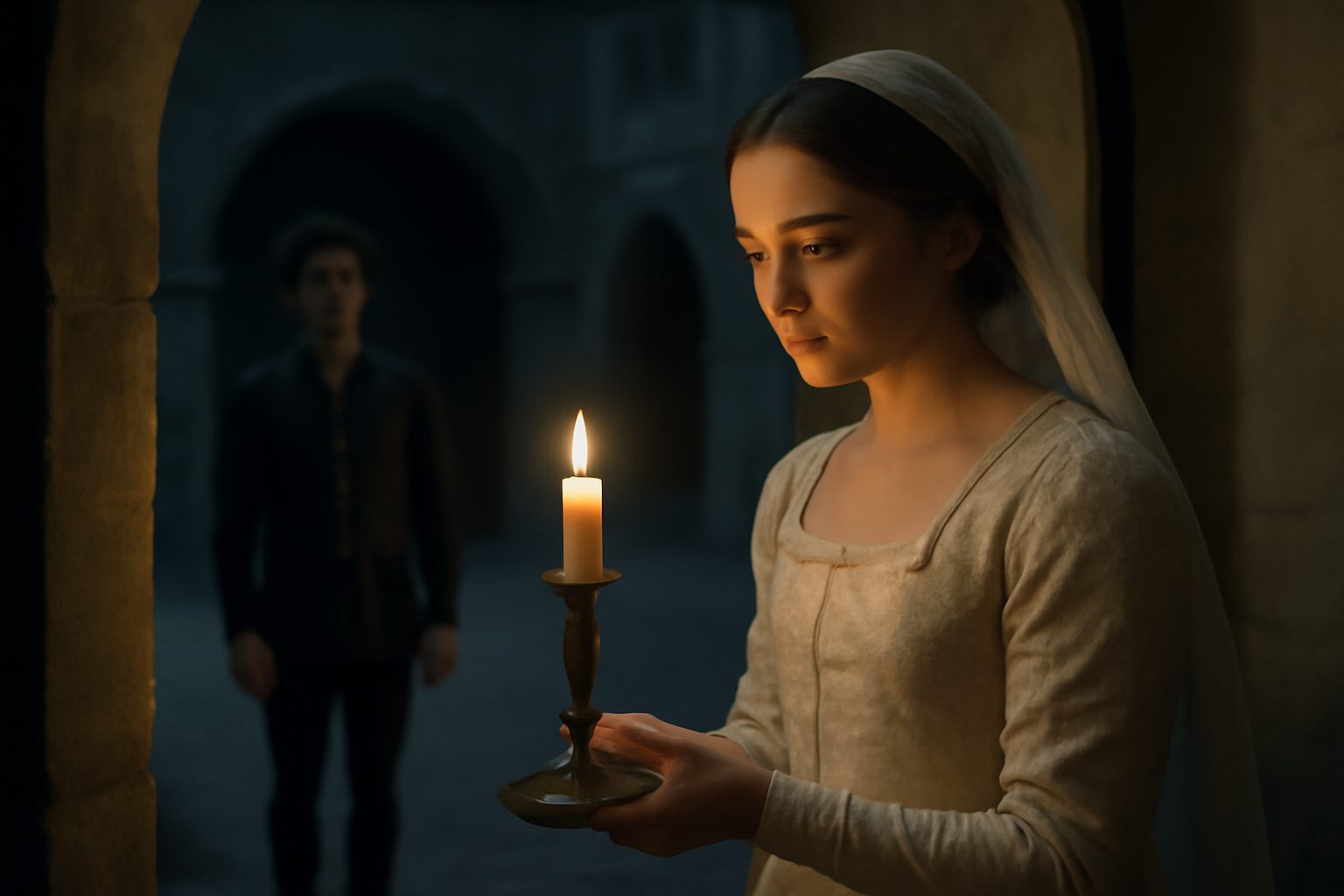
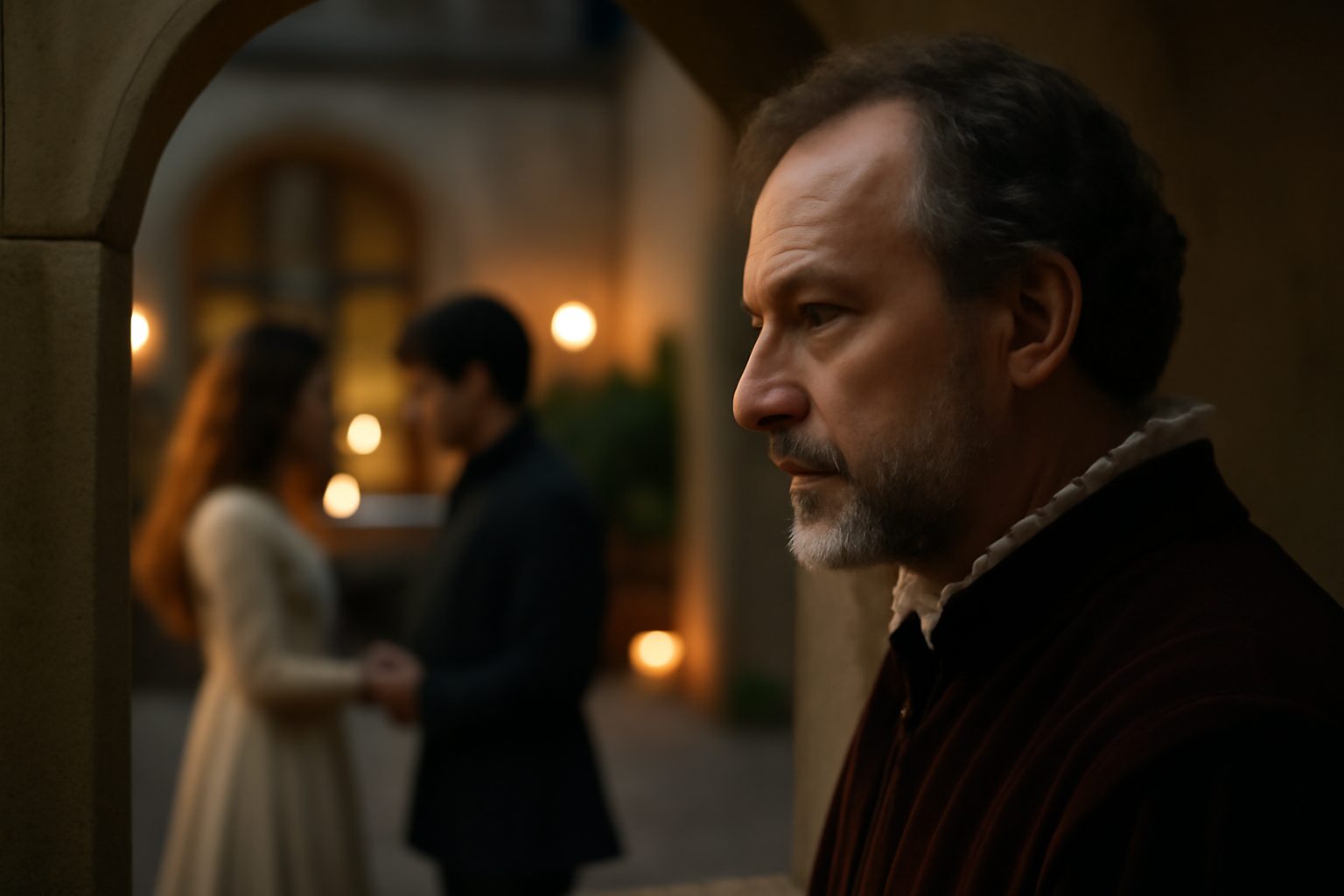
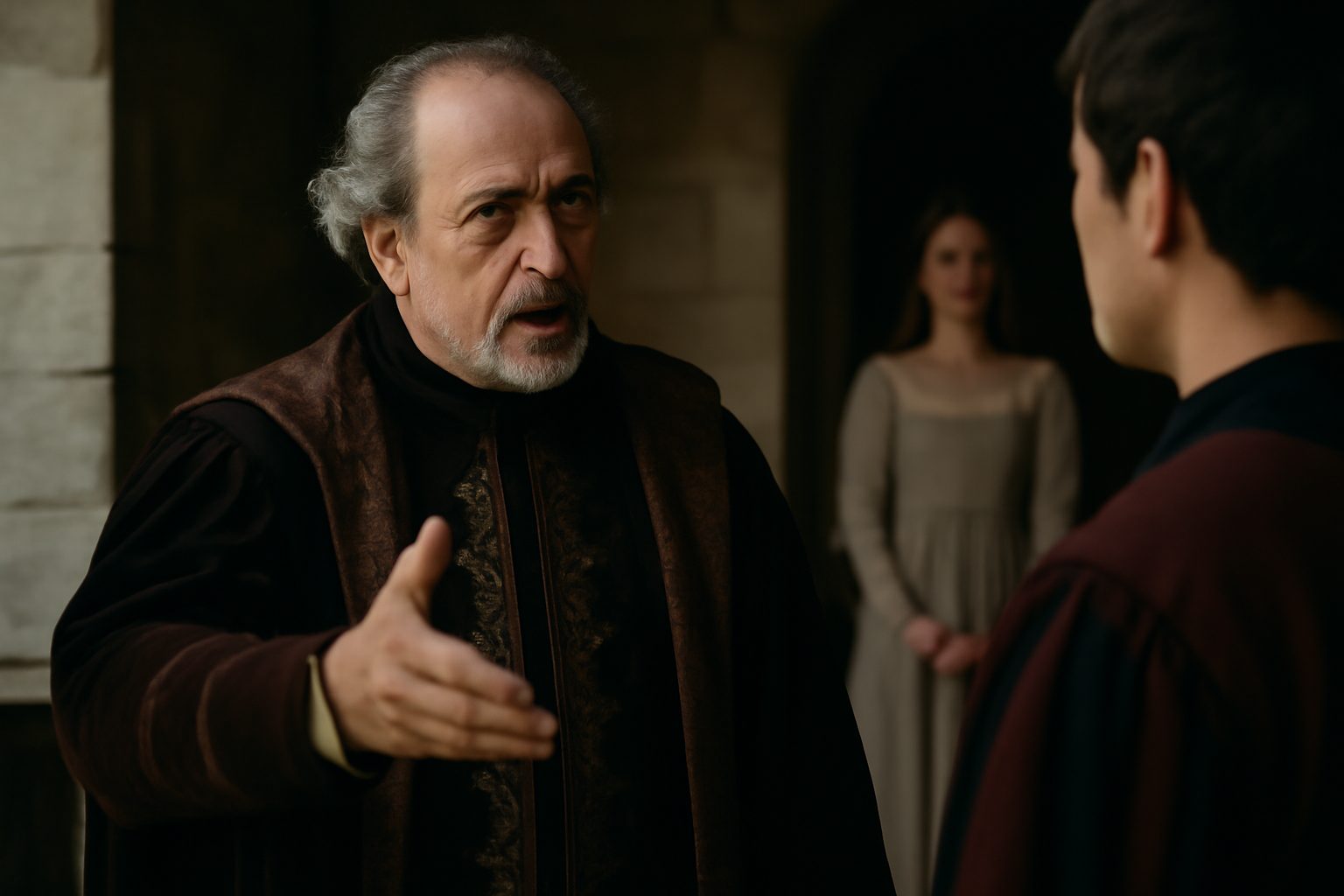
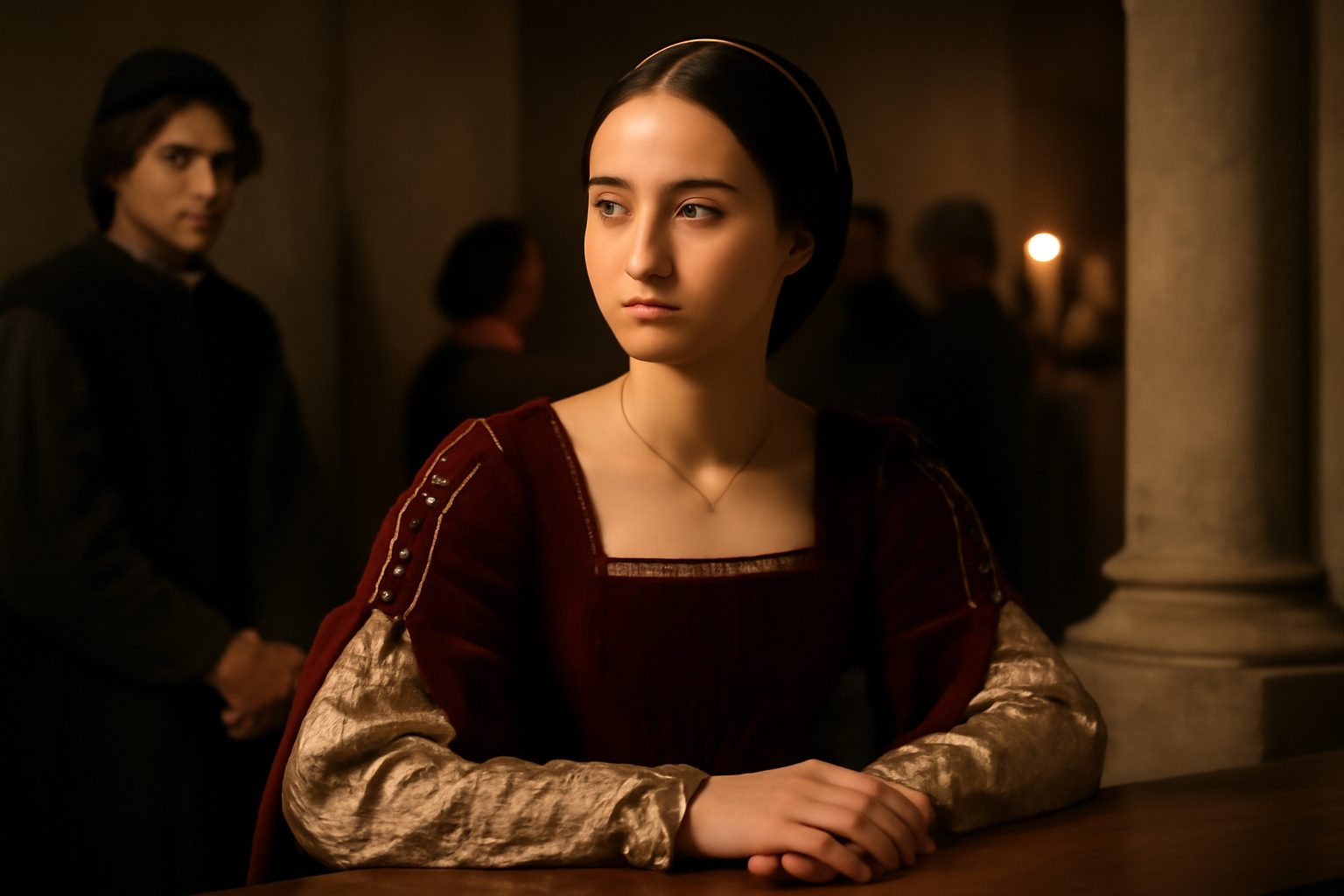
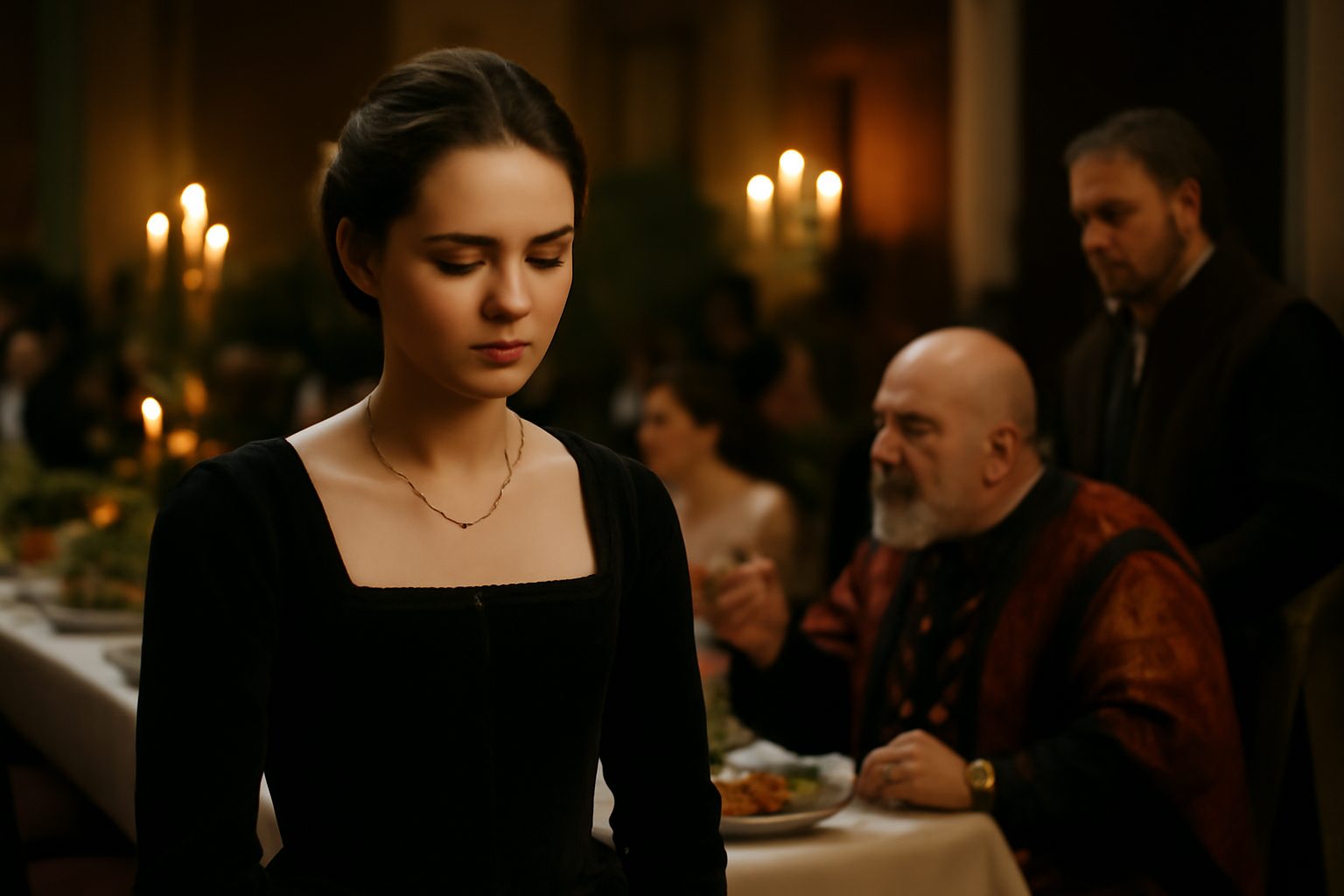
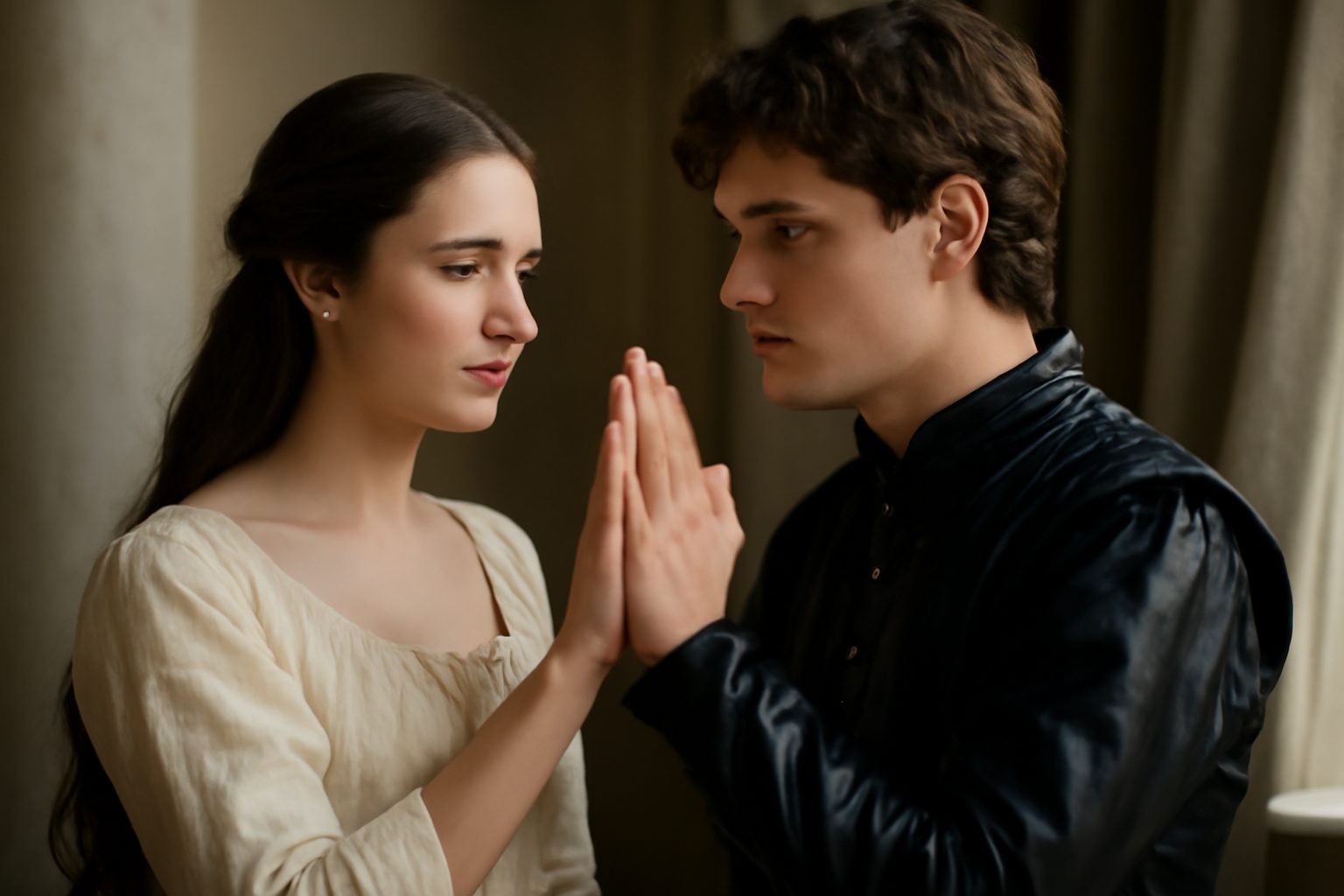
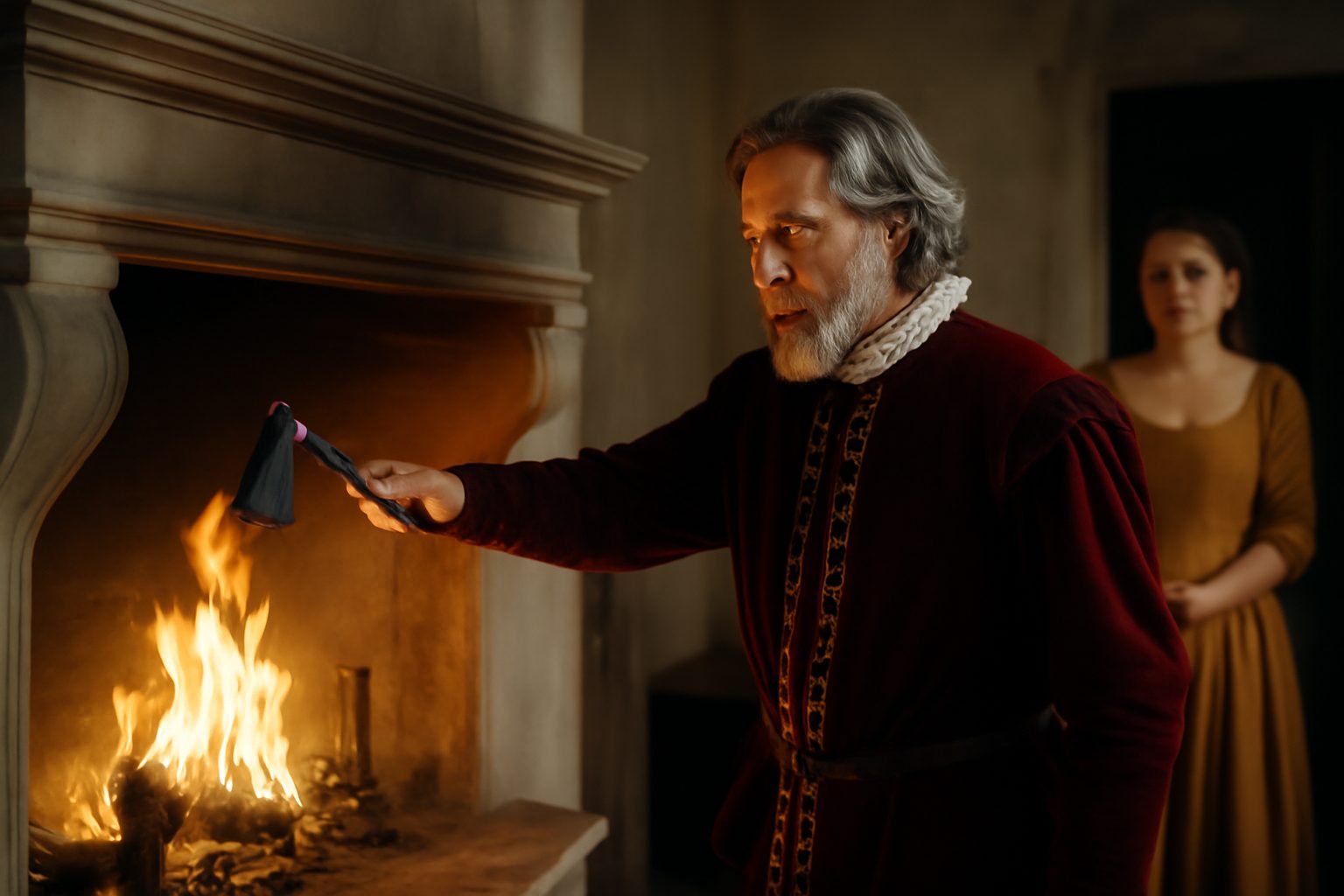
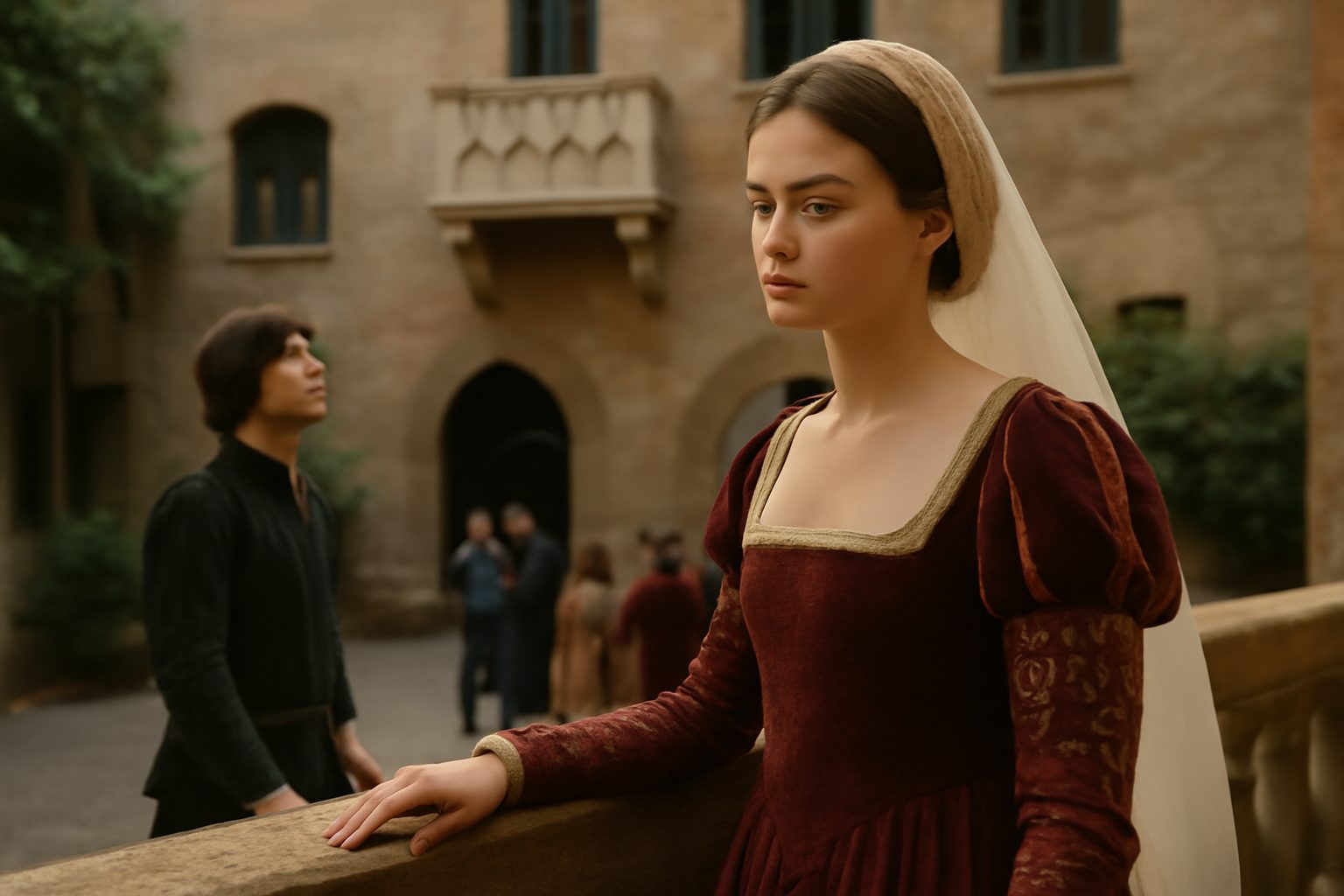
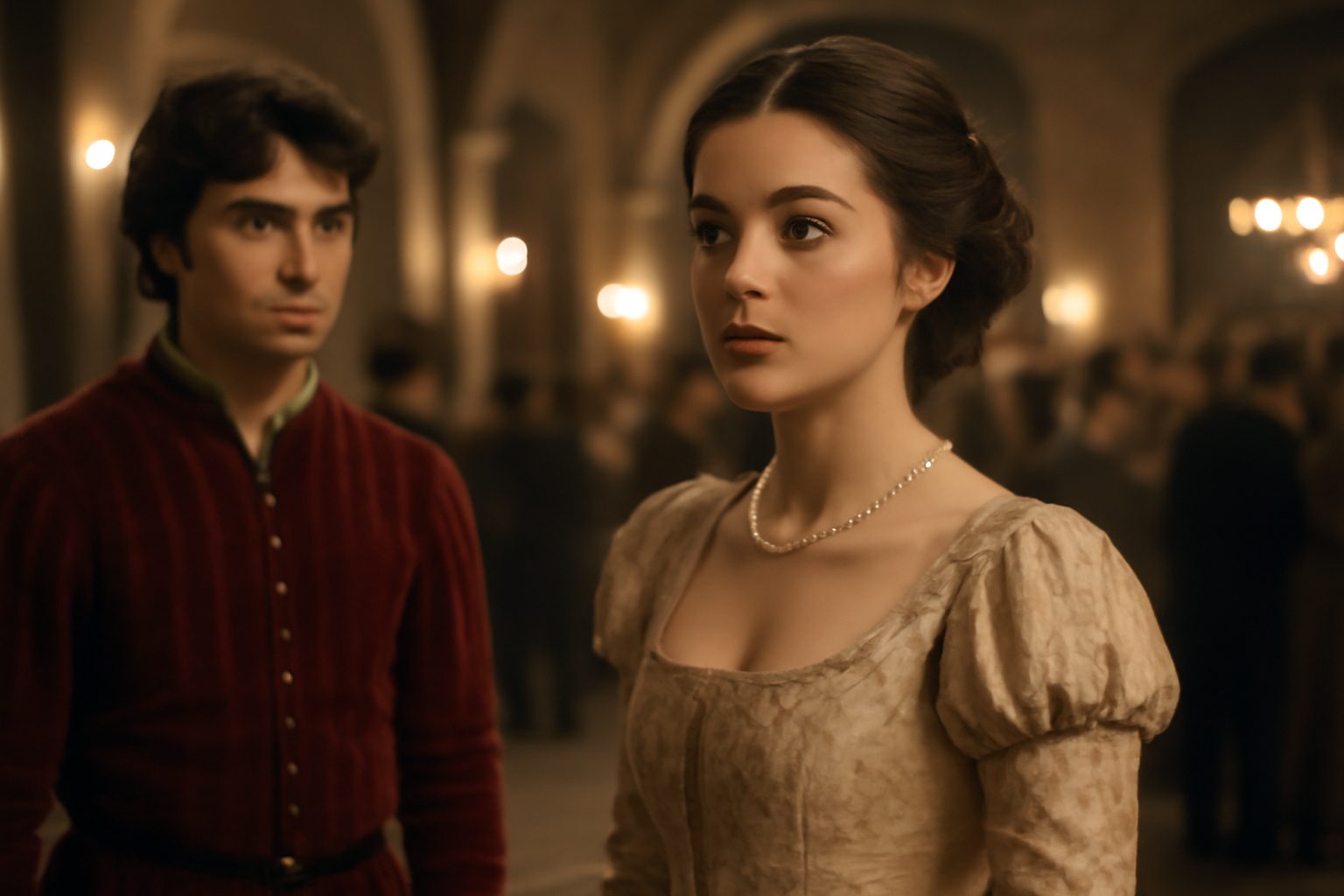
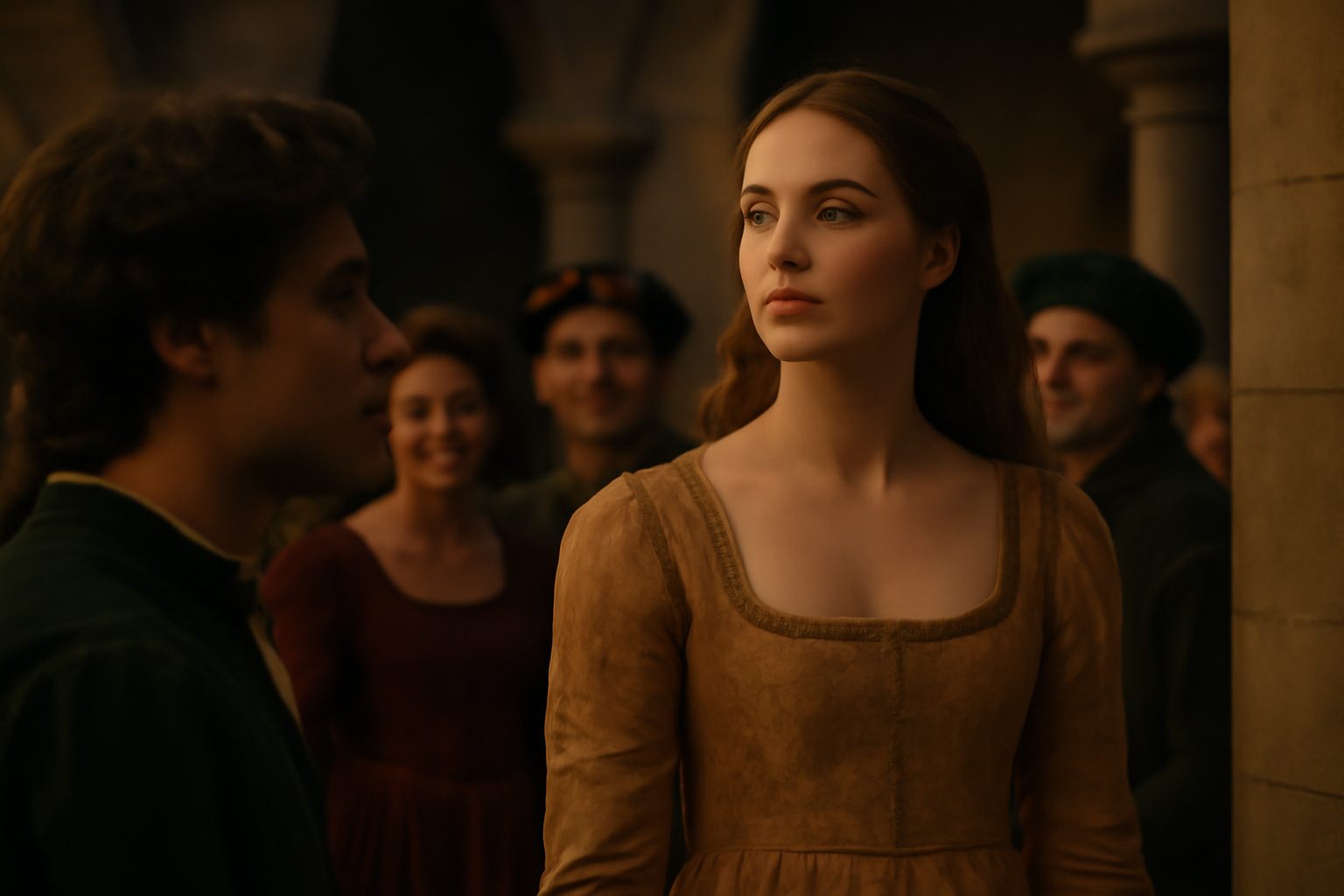
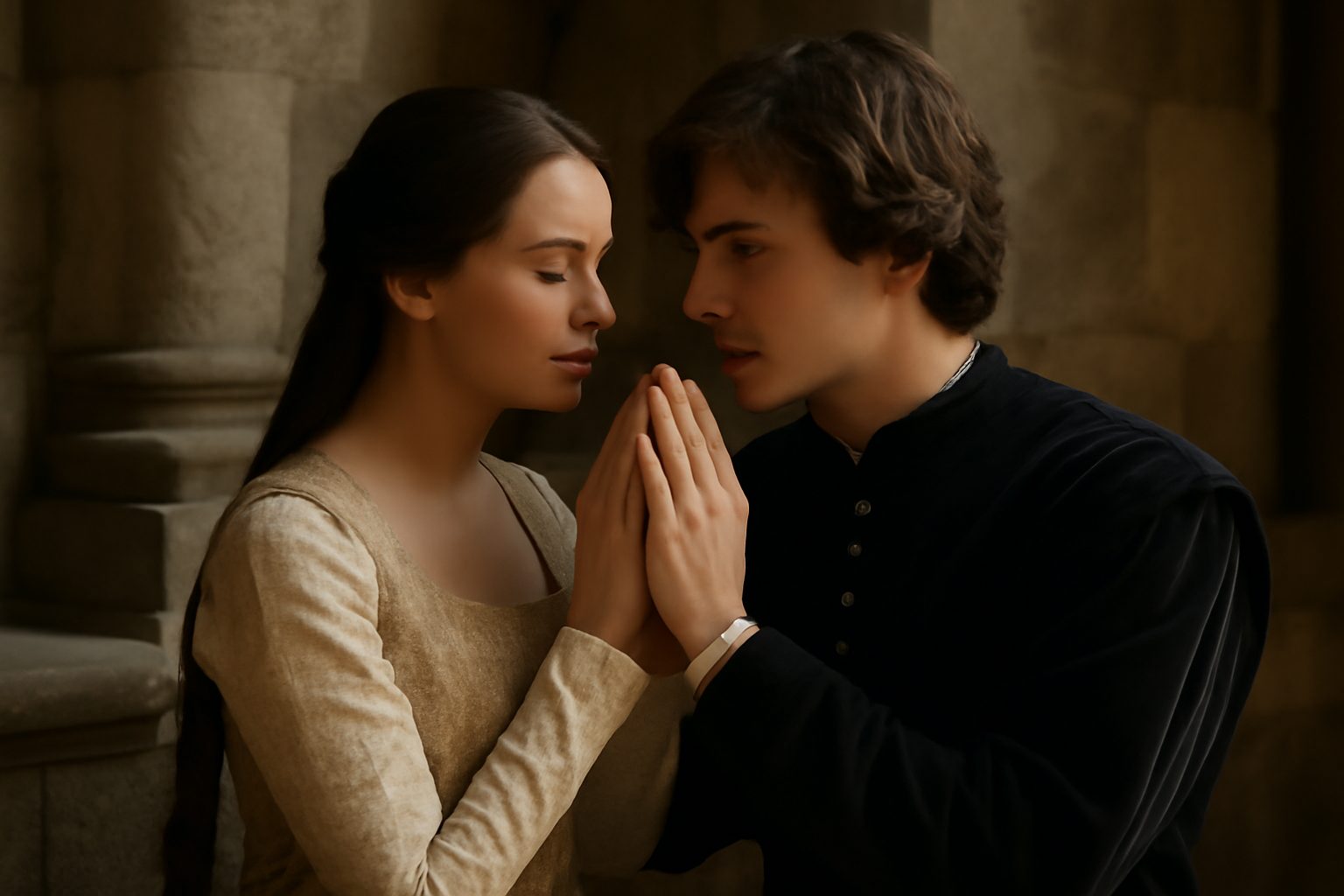
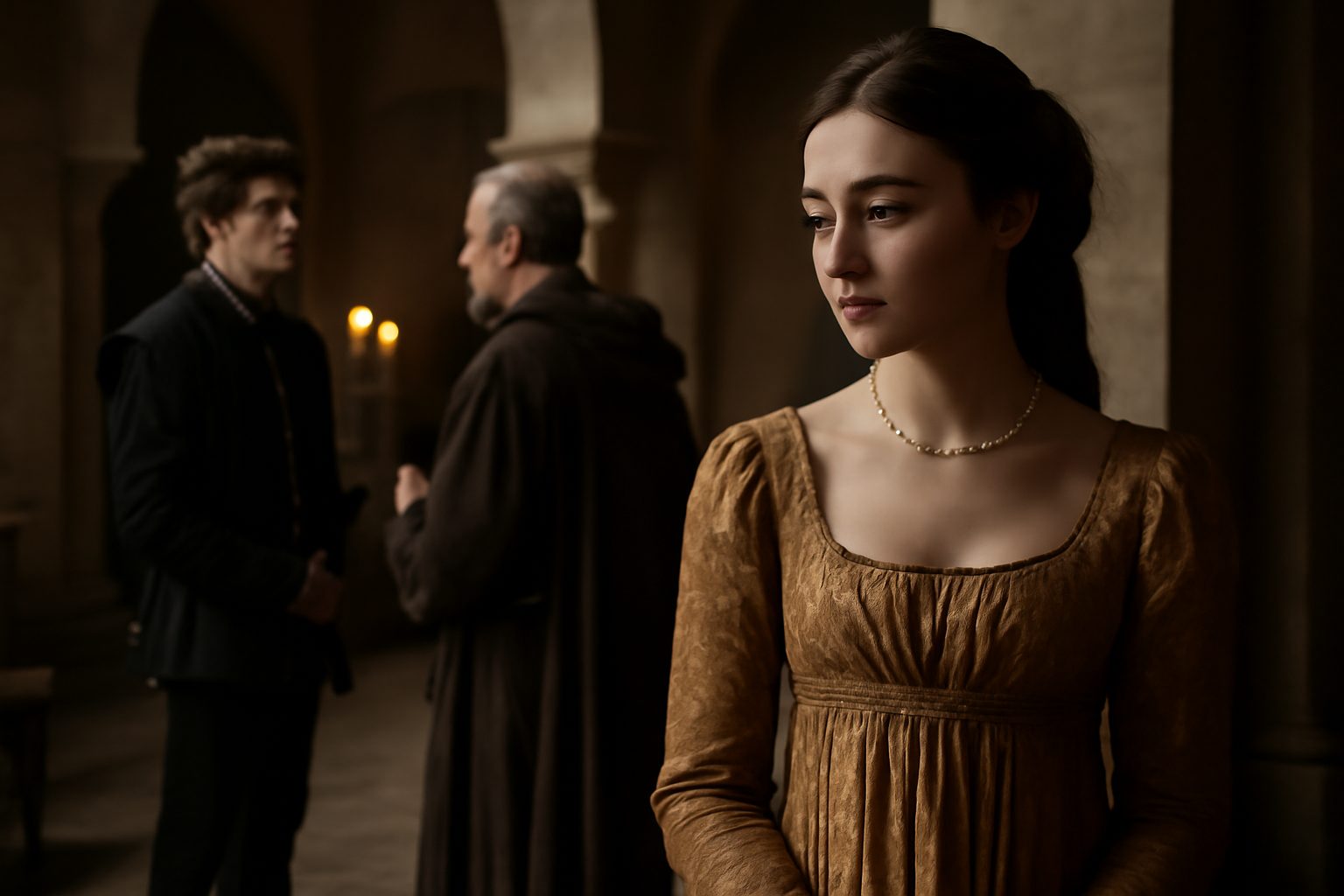
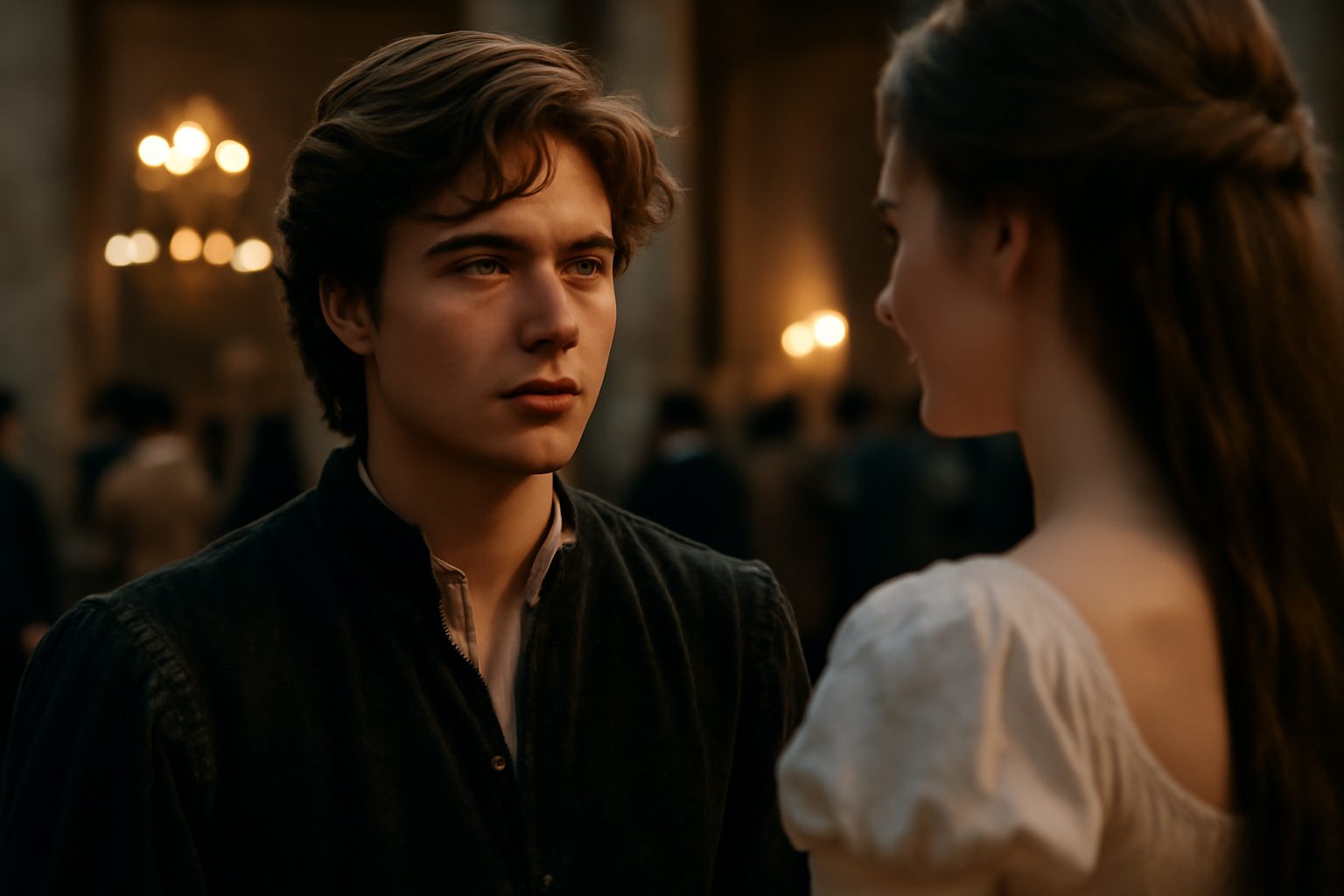
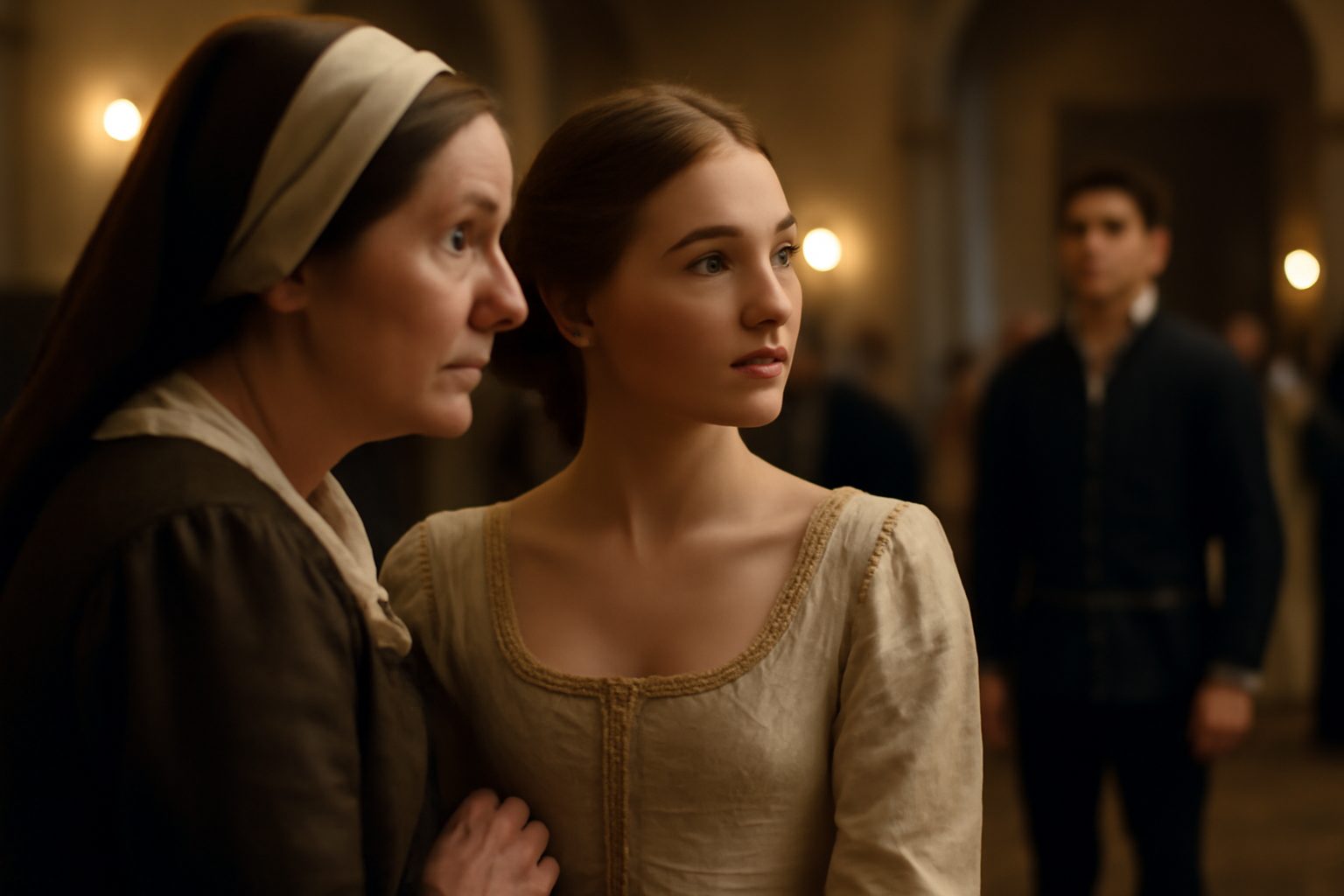
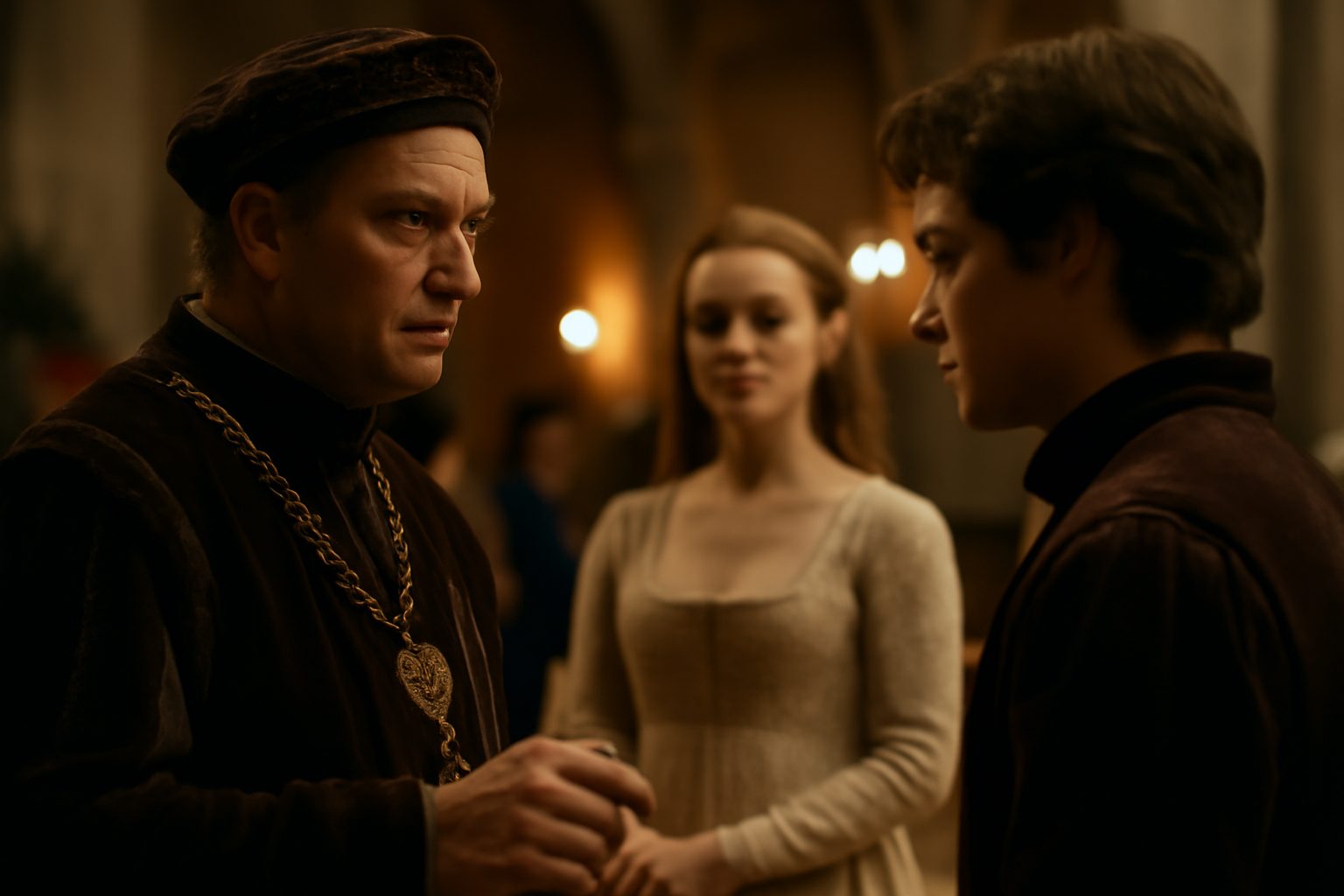
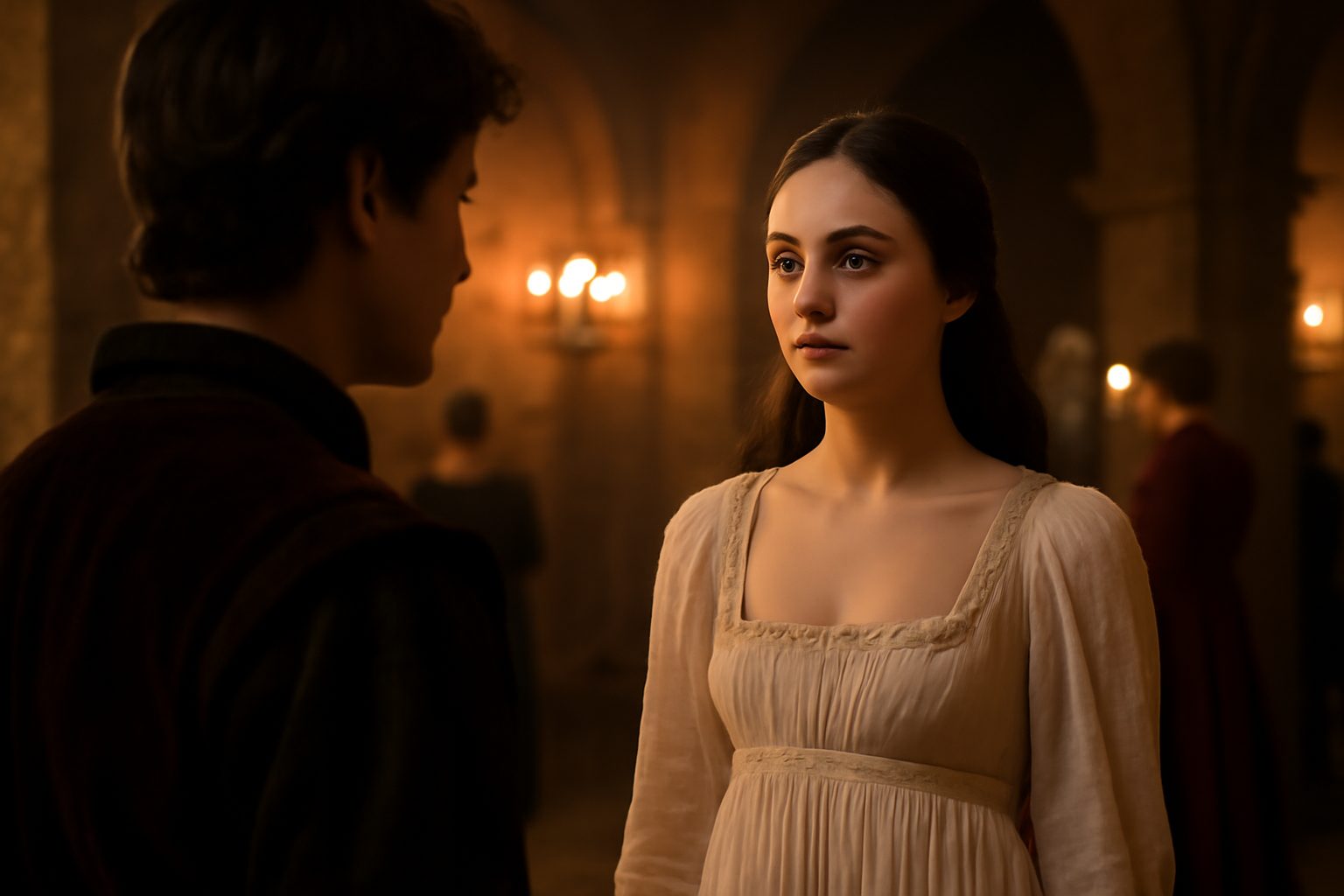
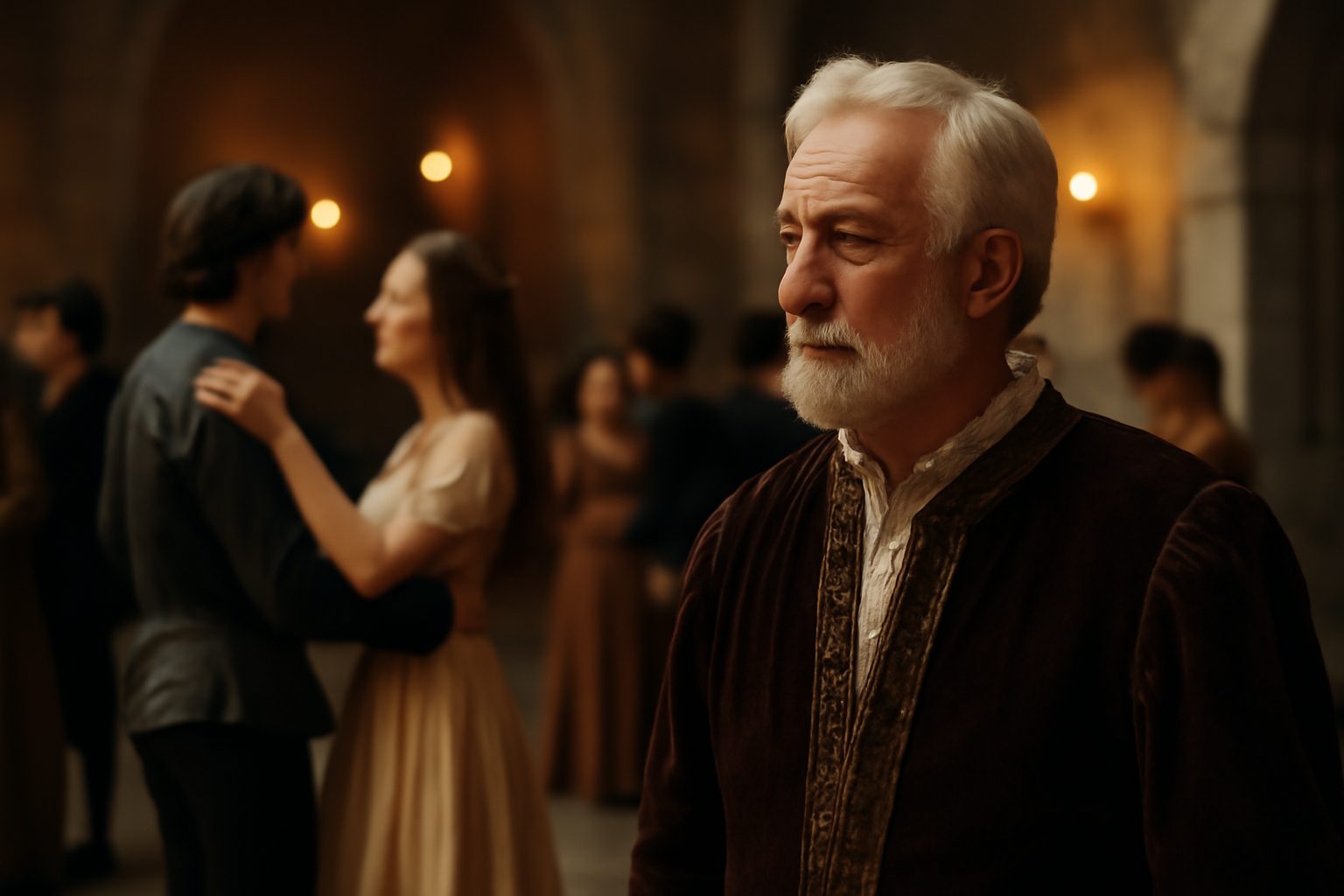
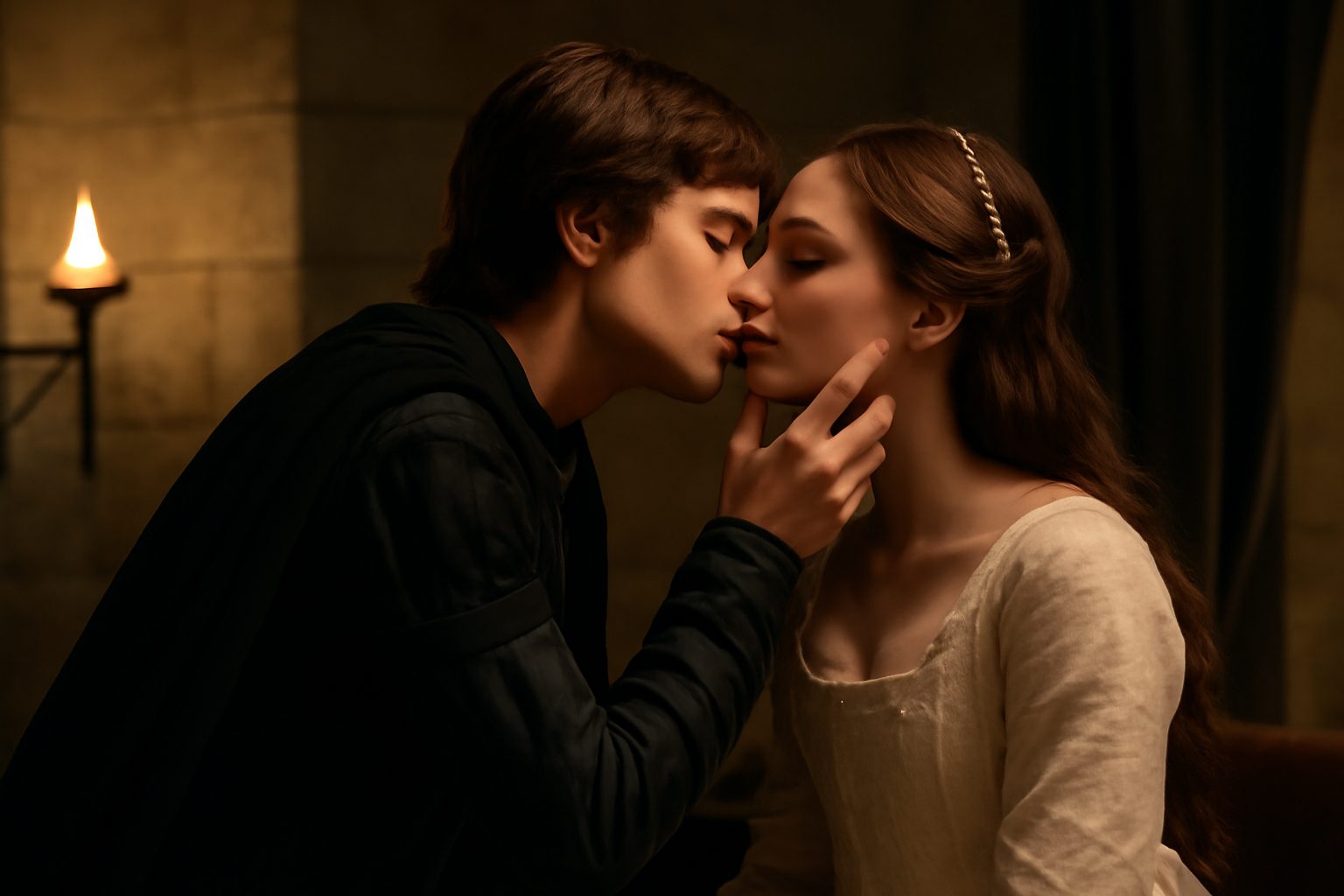
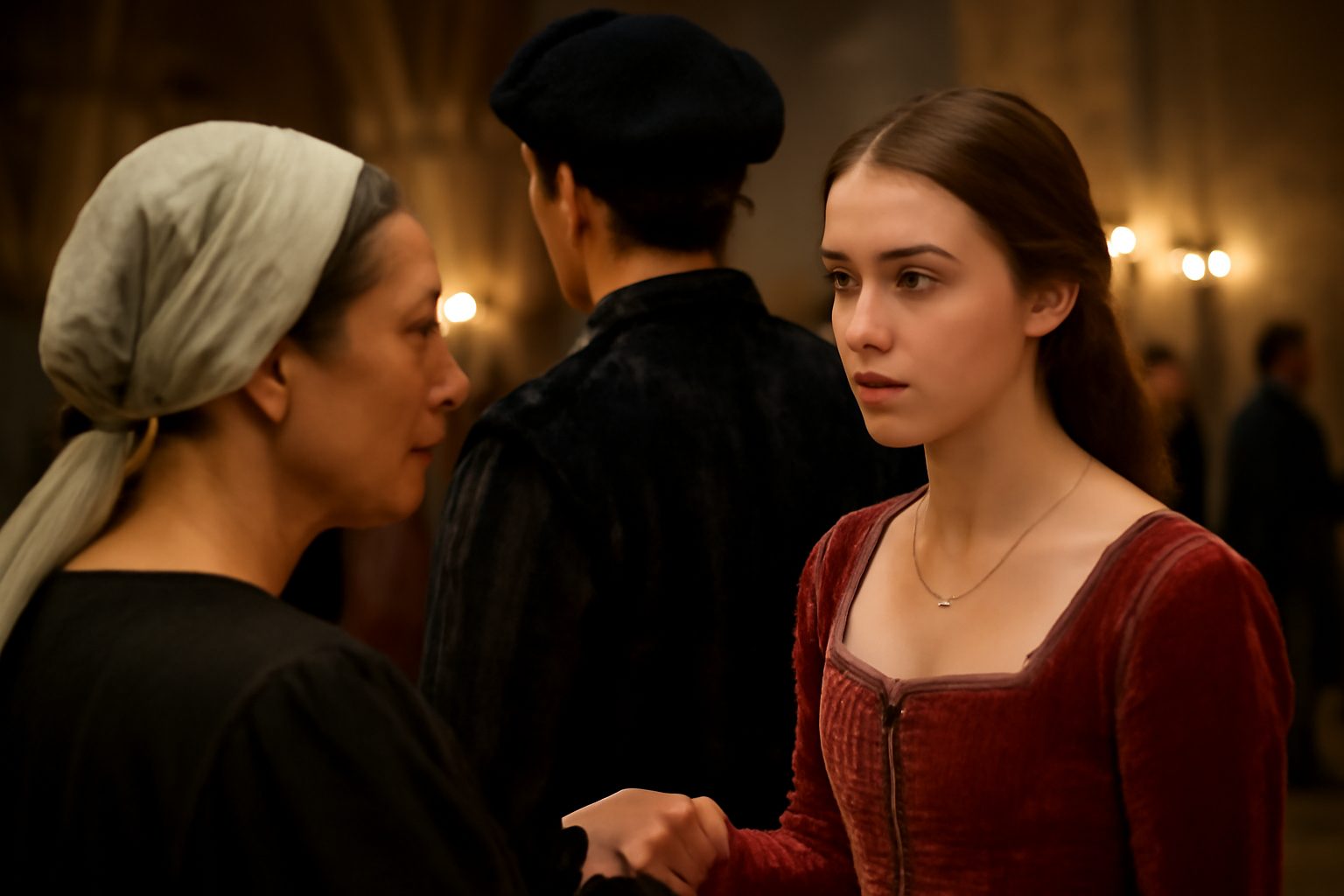
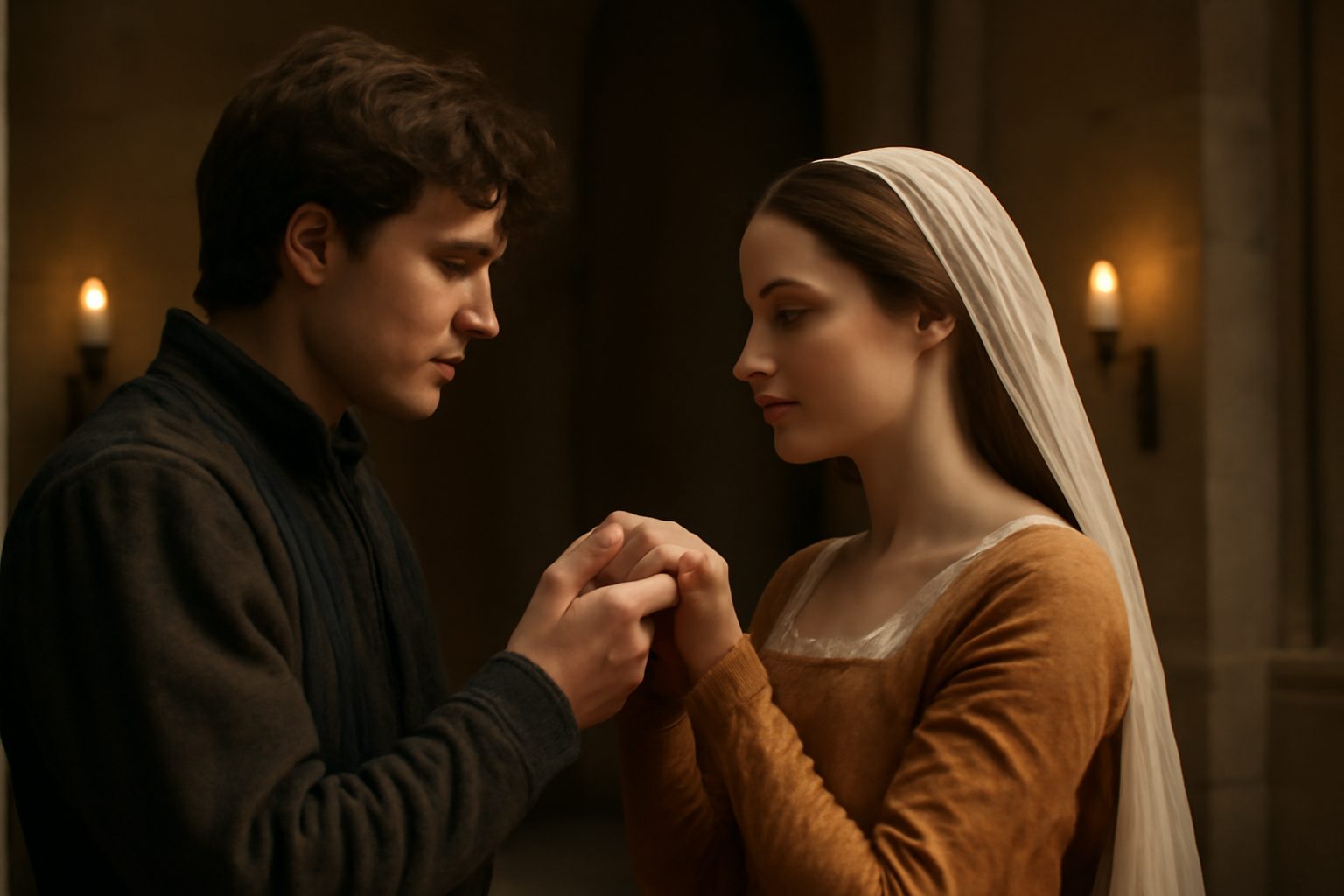
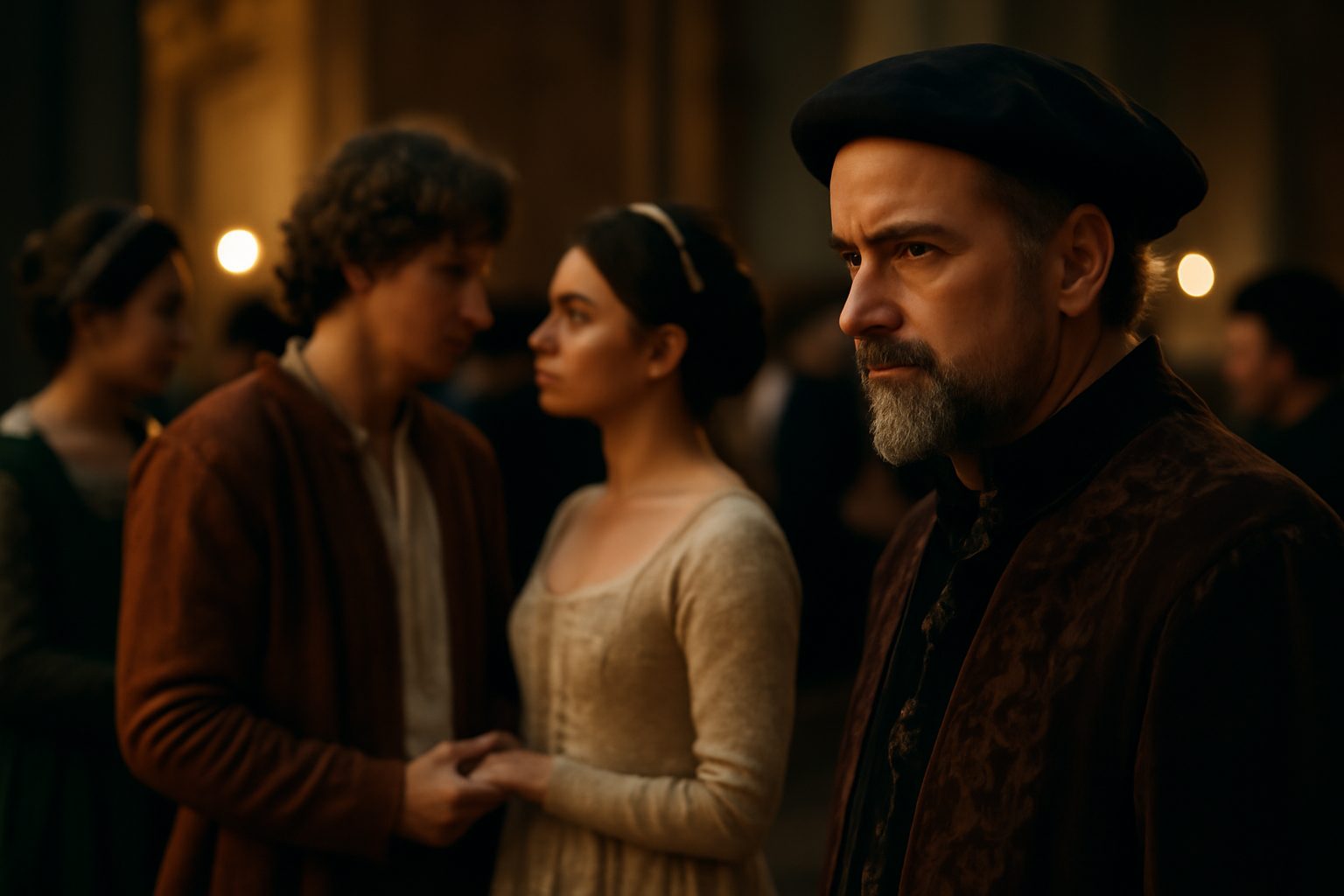
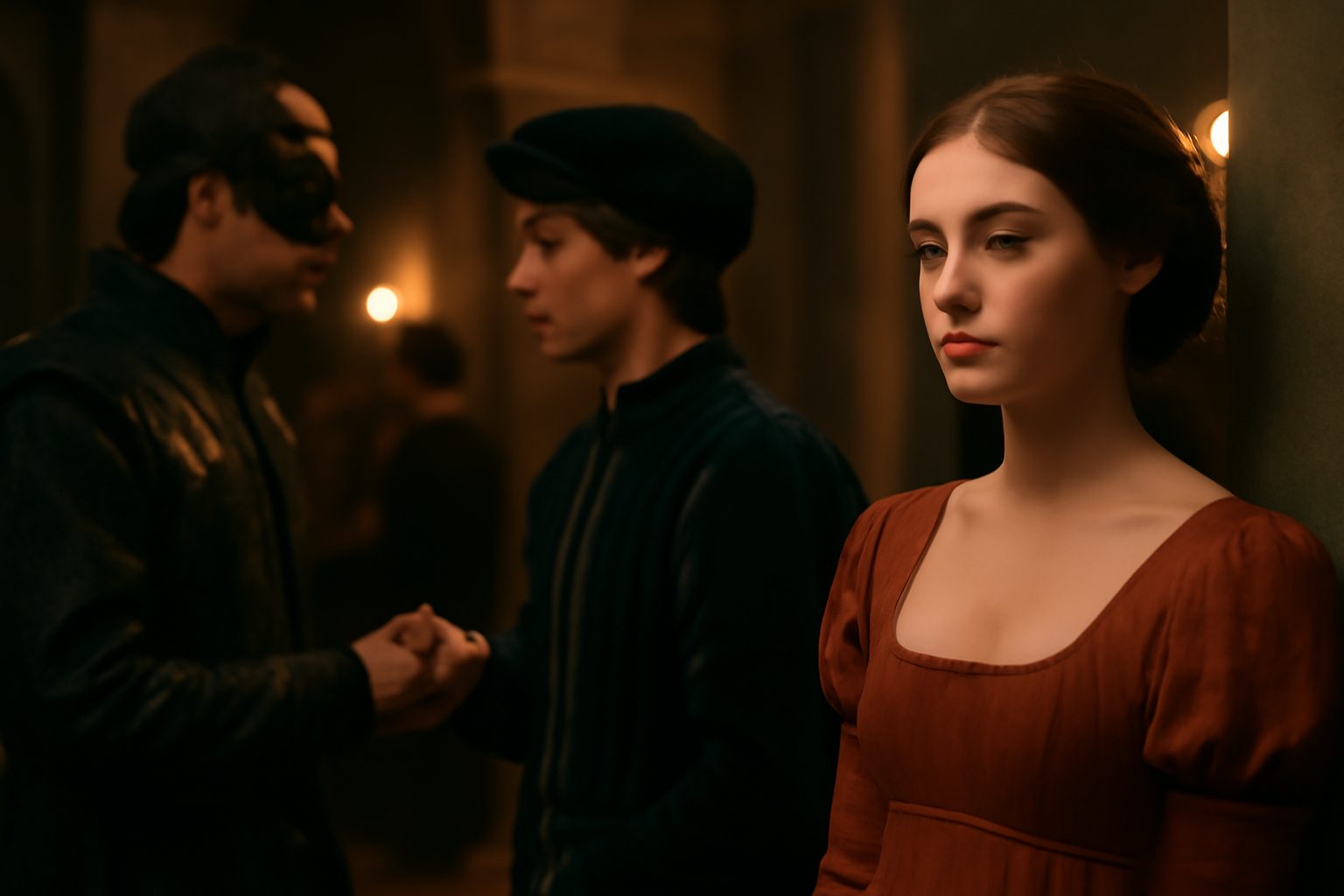
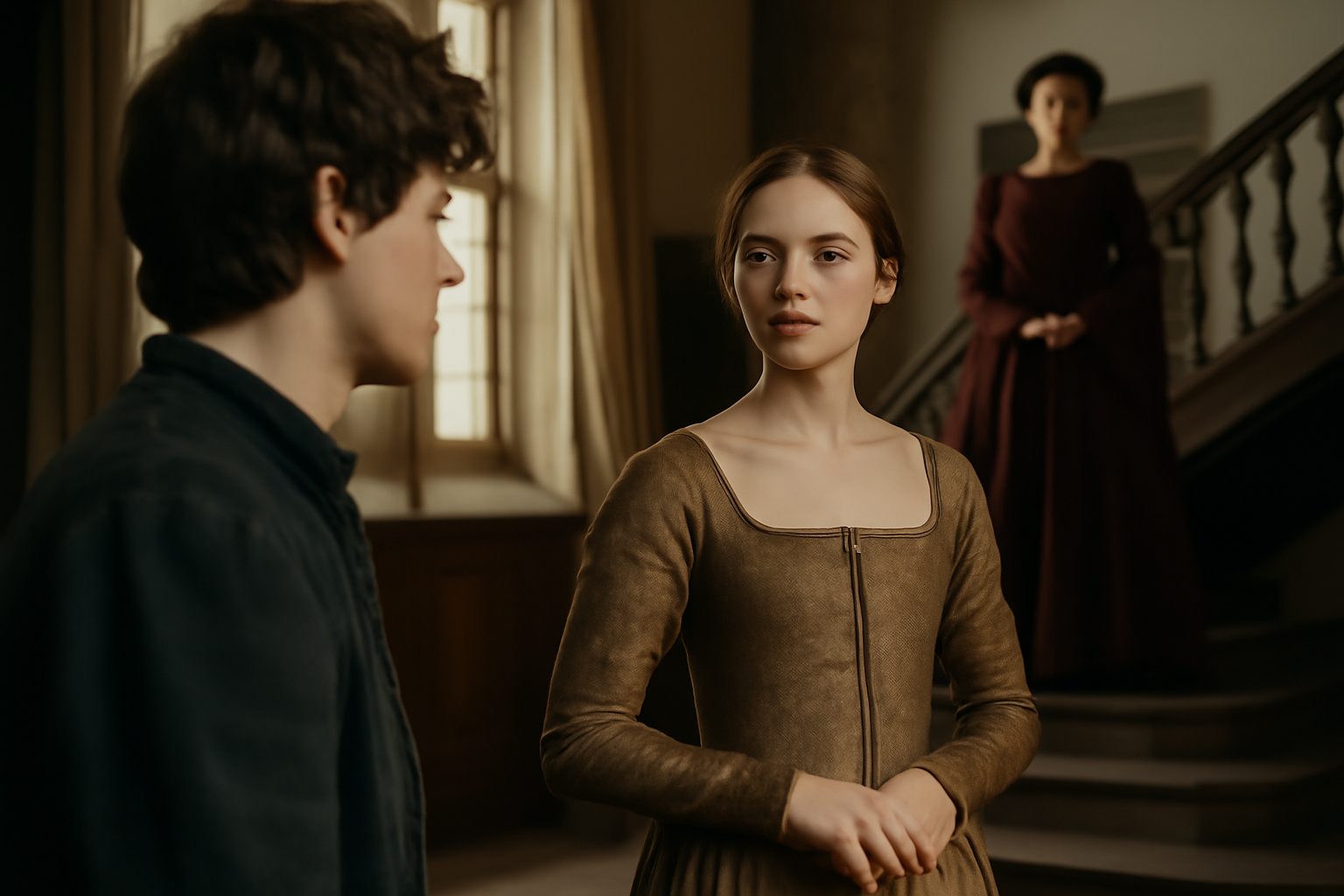
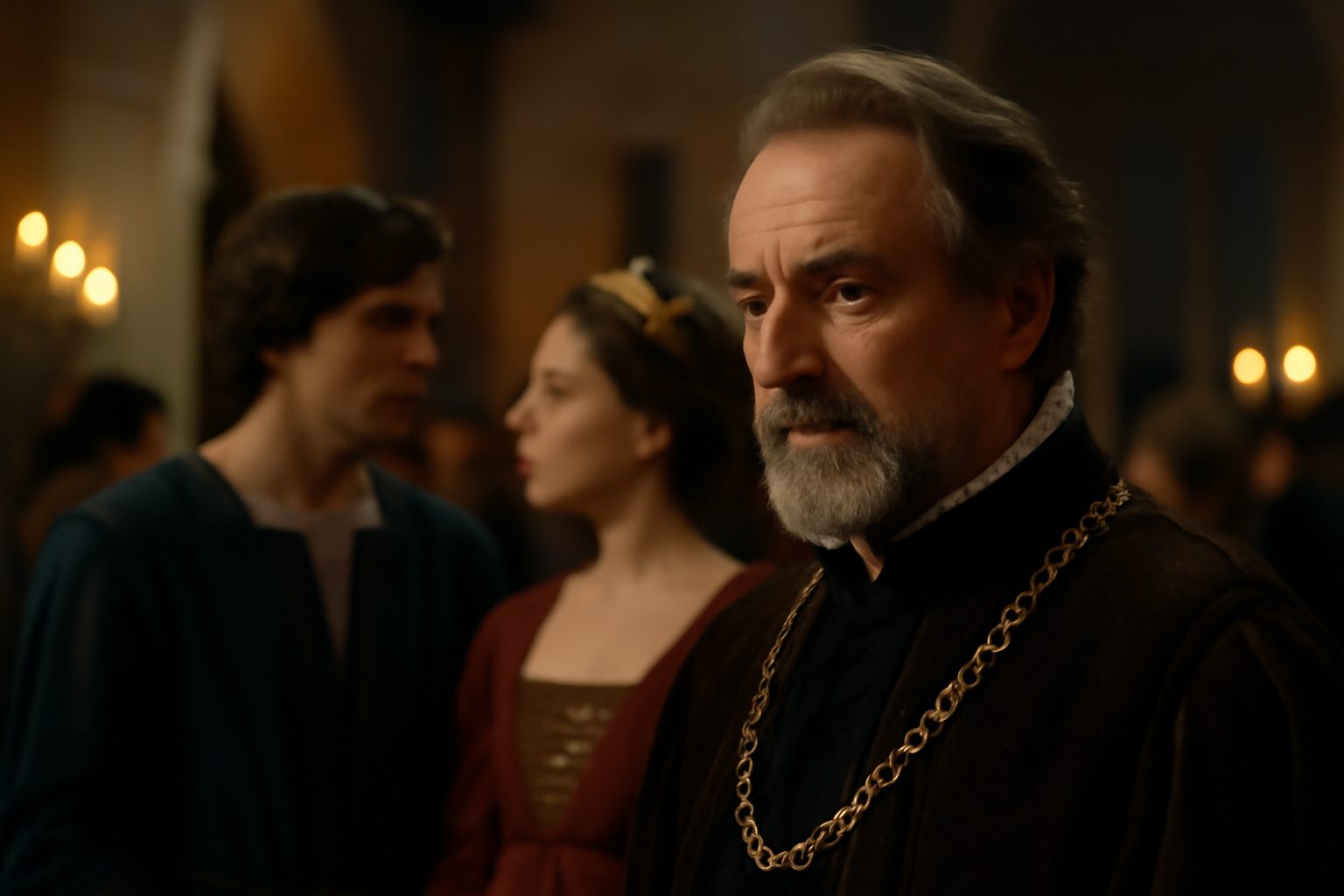
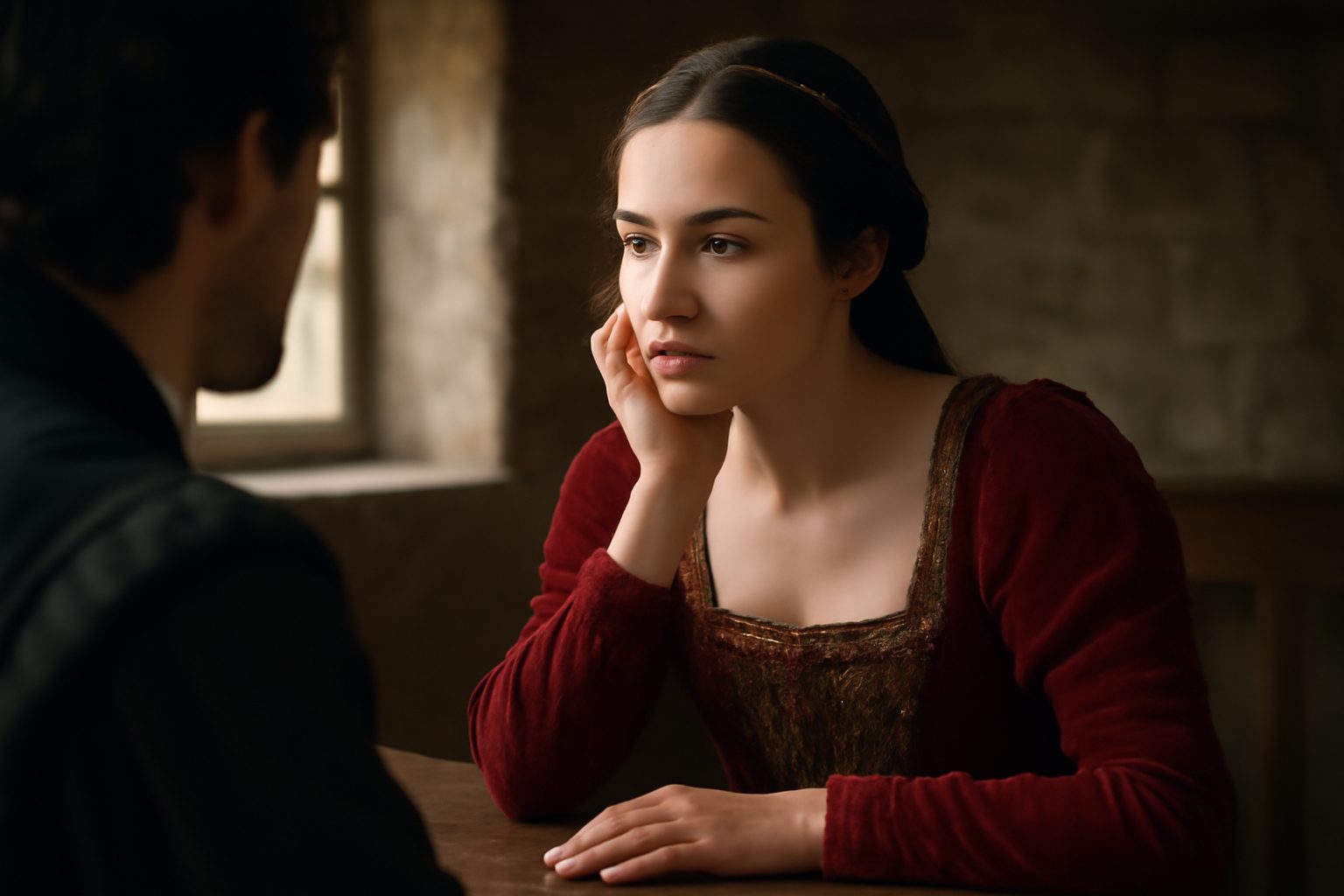
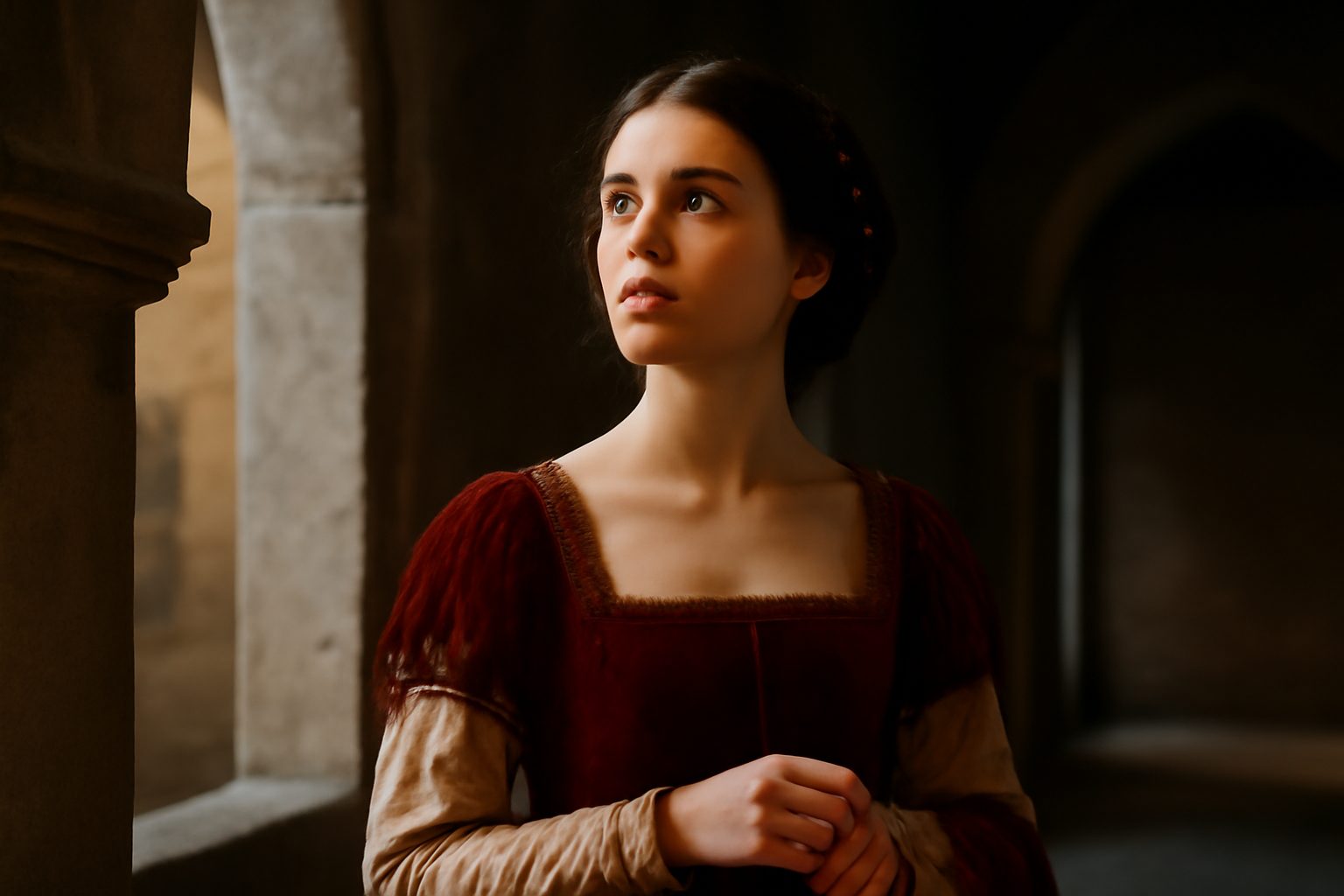
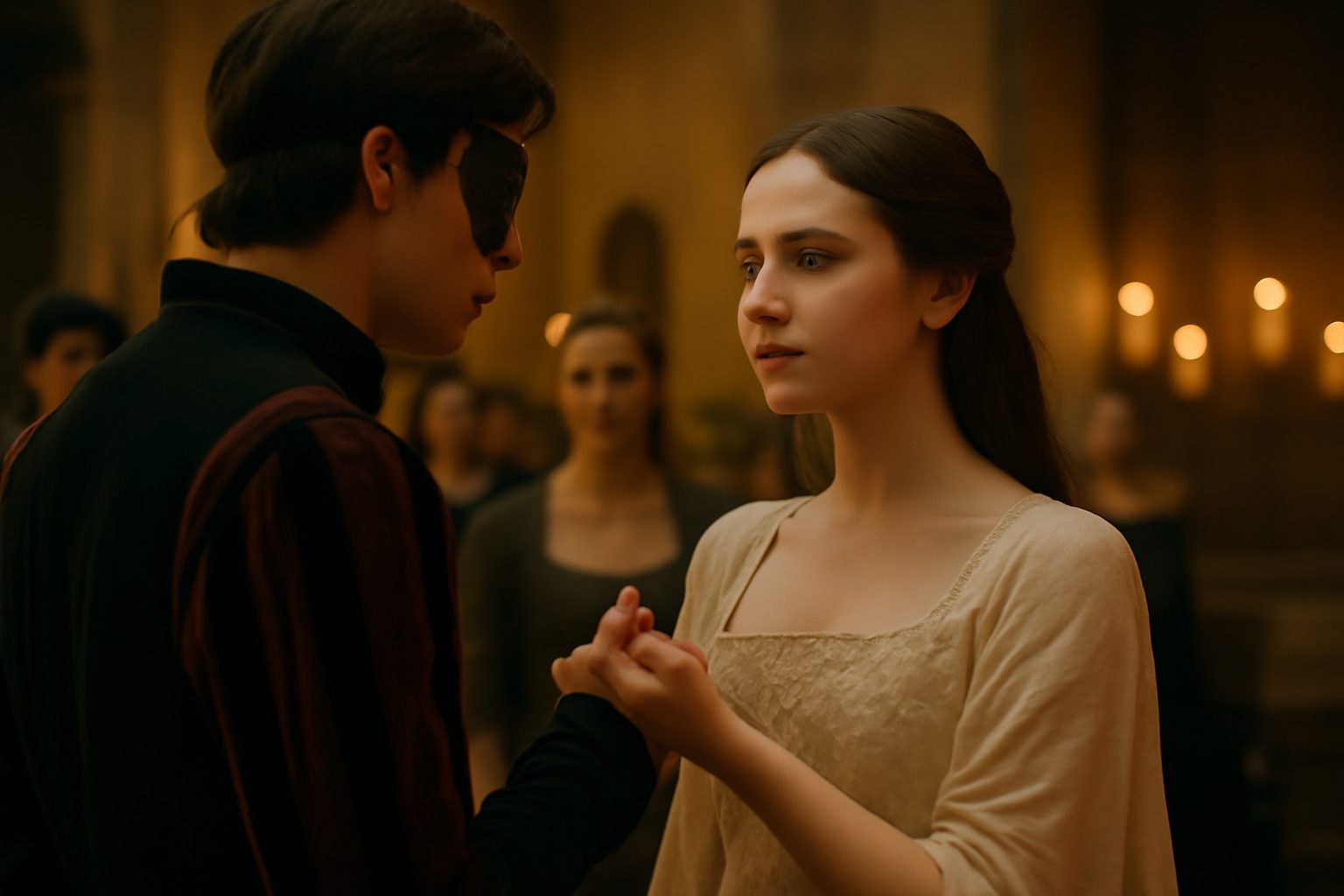
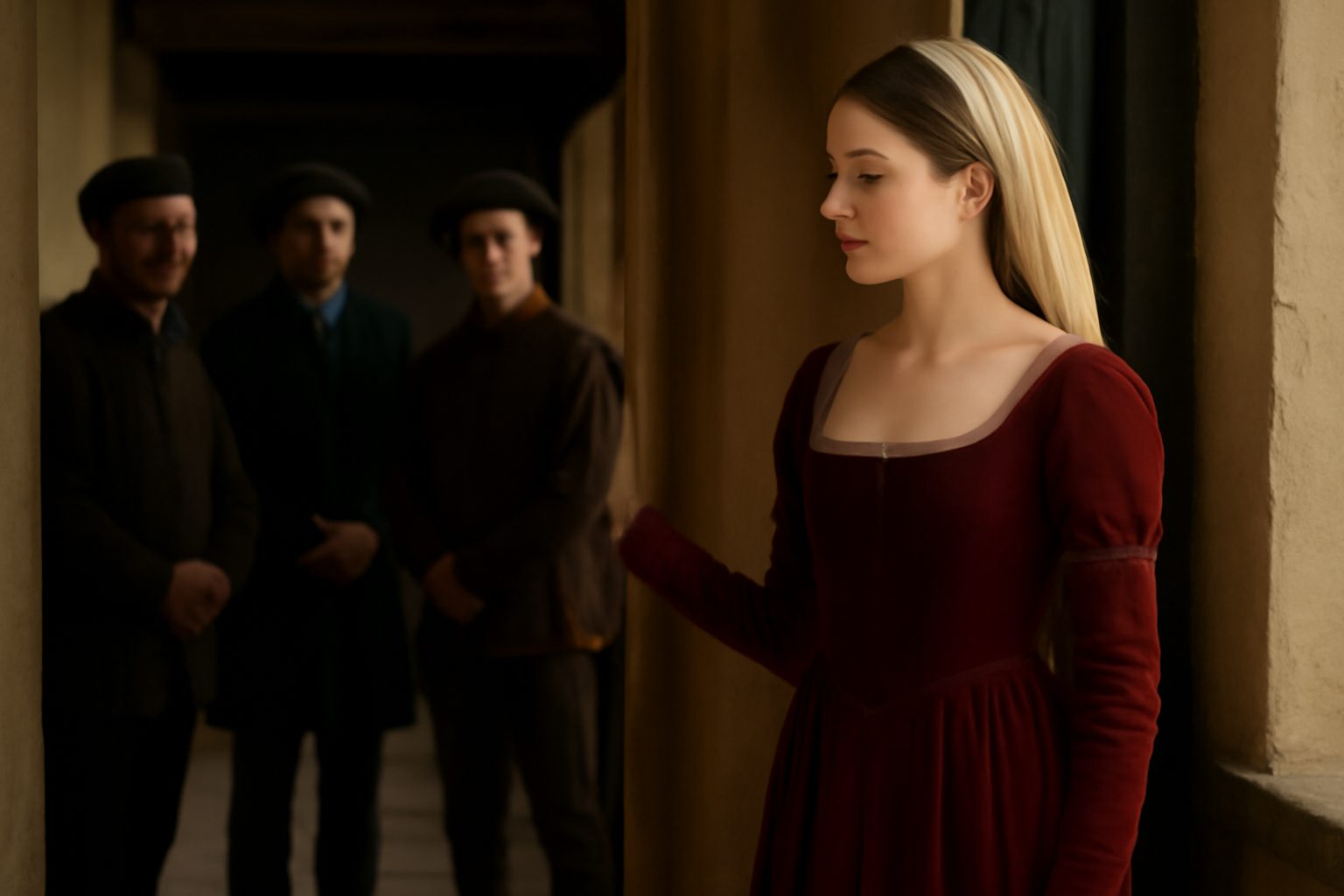
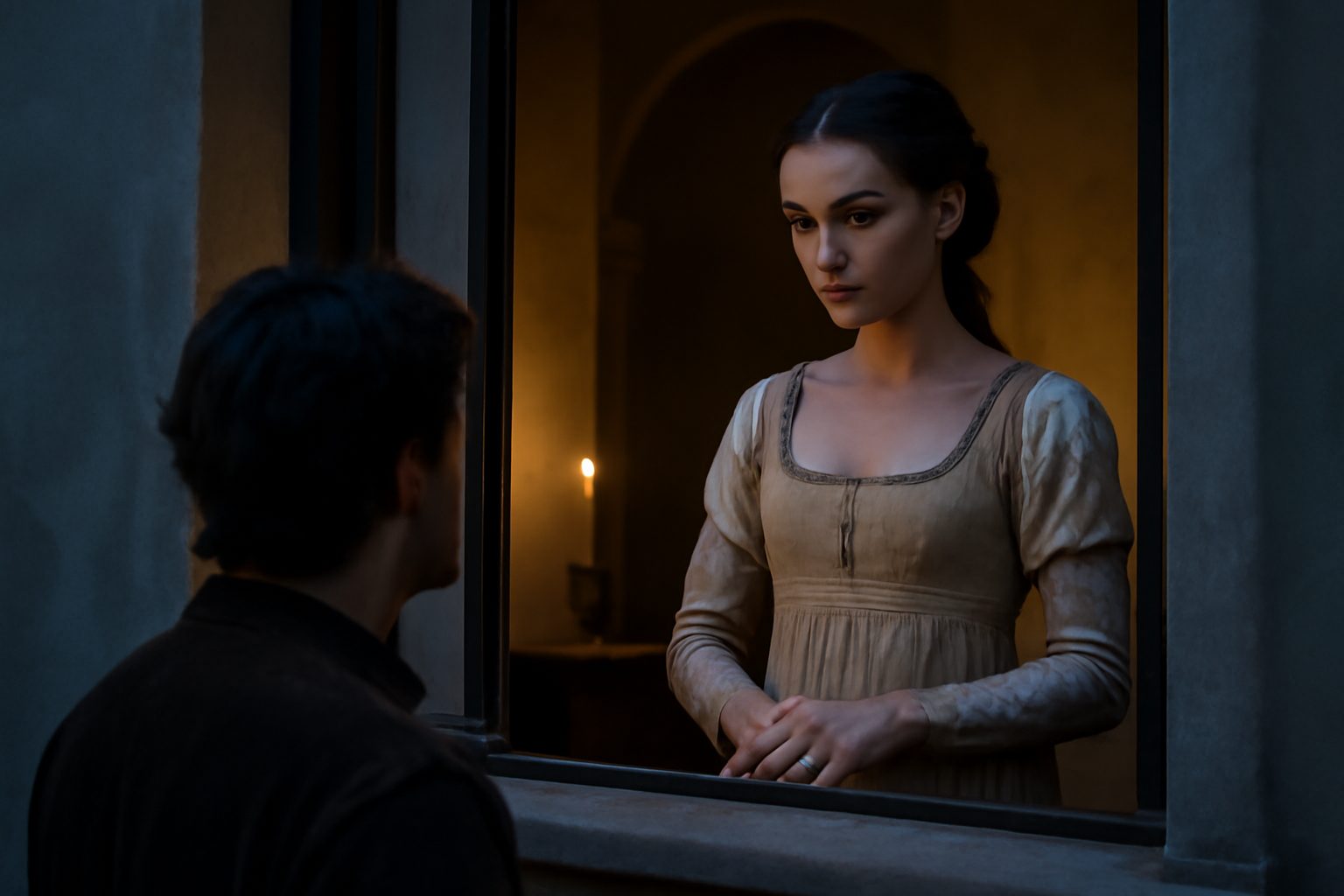
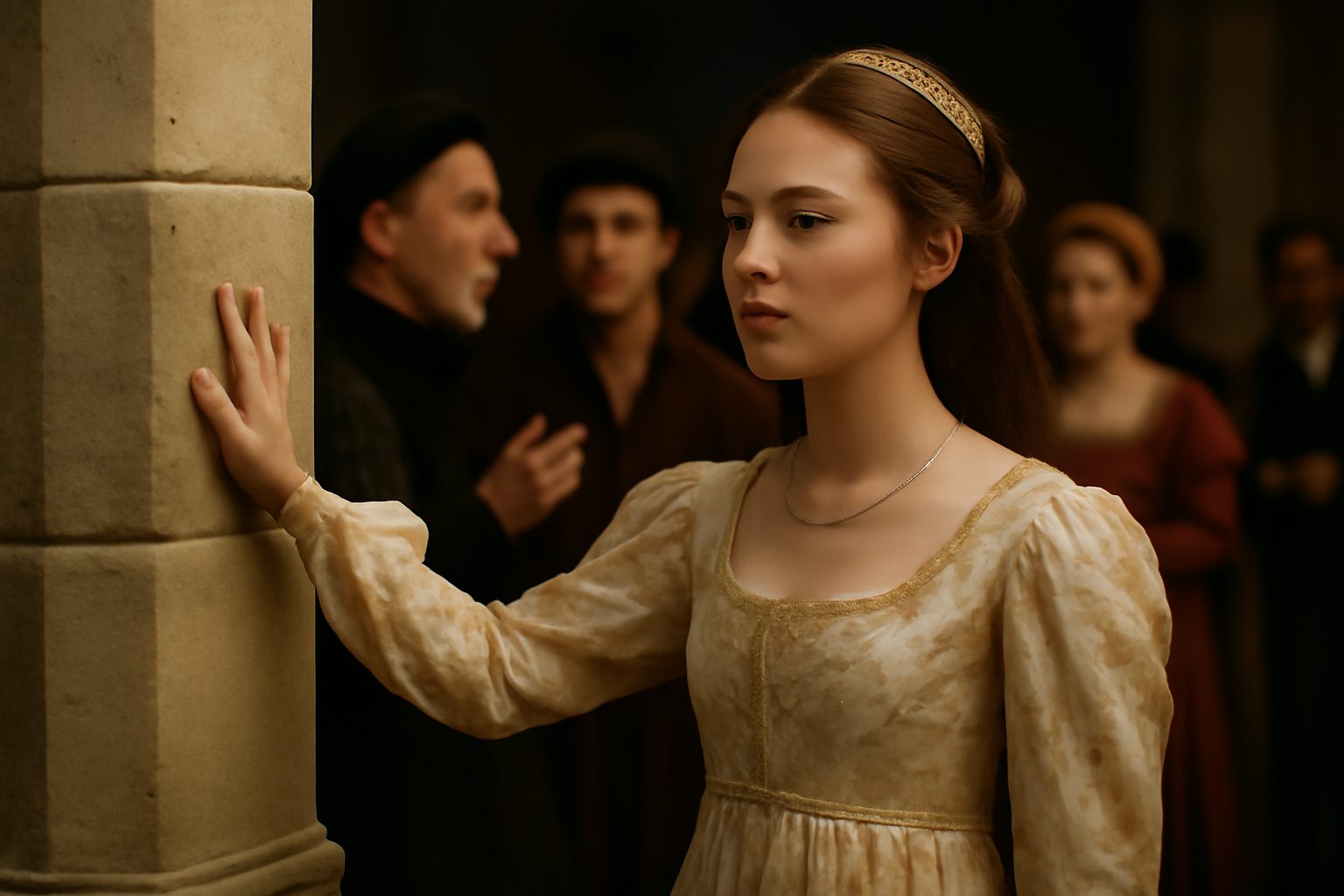
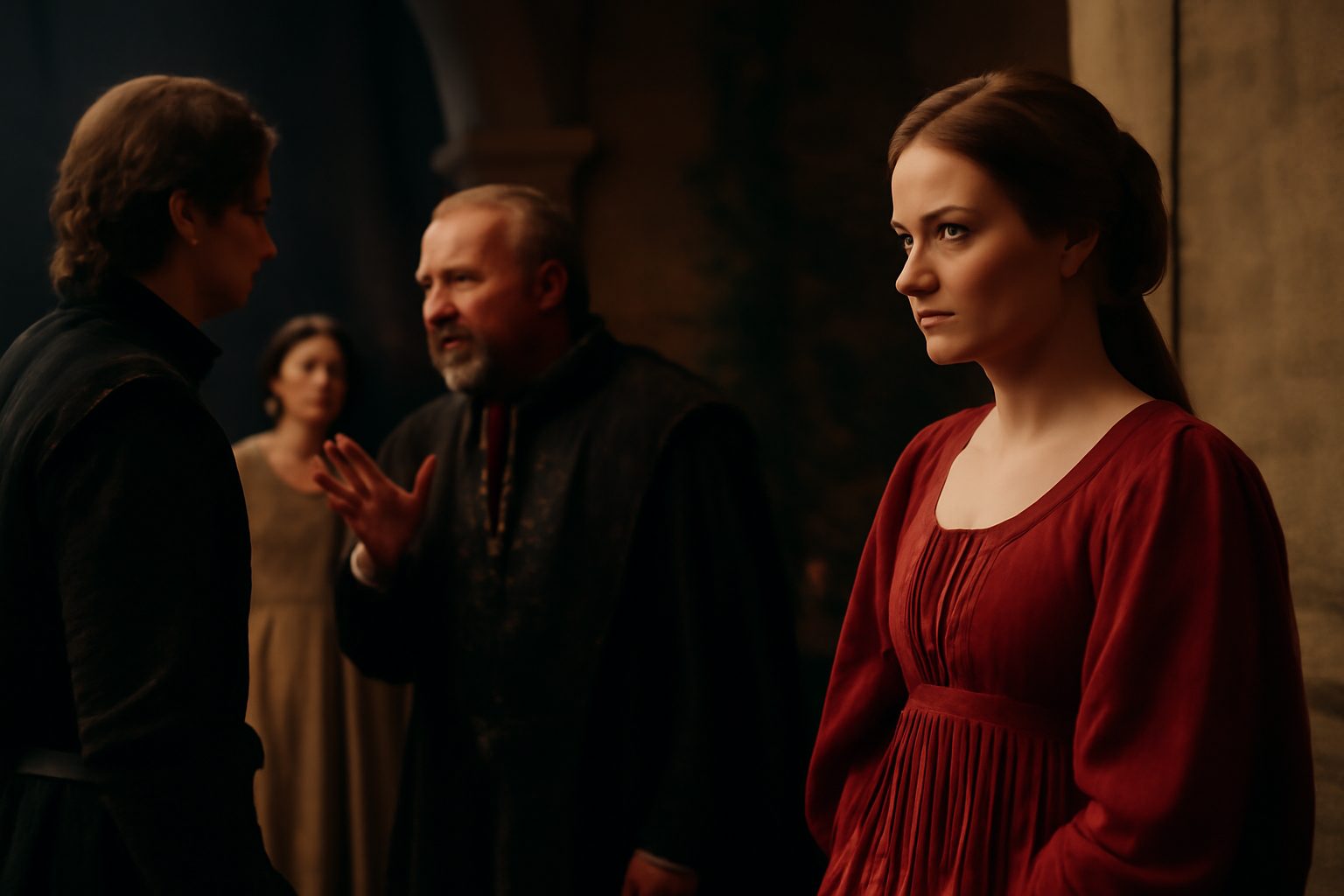
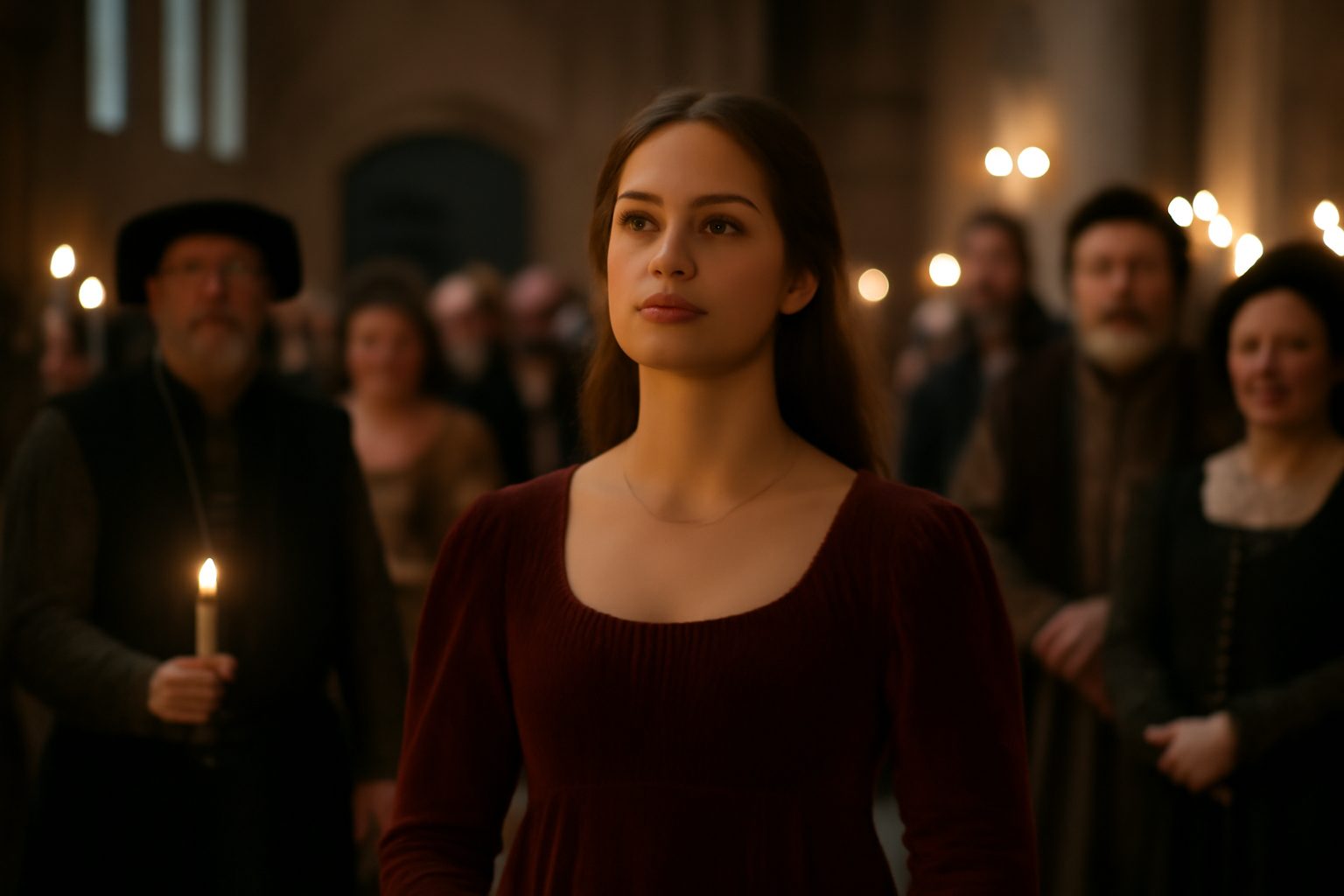
In Act 1, Scene 5 of Romeo and Juliet, Romeo has just caught sight of Juliet at the Capulet's feast and is instantly captivated by her beauty. As he approaches her, he uses this poetic metaphor to introduce himself, comparing his lips to devoted pilgrims eager to worship at a sacred shrine. The line reflects both his infatuation and the play's recurring theme of love intertwined with religious devotion.
Romeo: "My lips, two blushing pilgrims, ready stand"
In modern day english, we would say:
My lips are like two shy pilgrims, waiting to show their devotion.
Frequently Asked Questions
What does Romeo compare his lips to in this line?
He compares his lips to two blushing pilgrims.
Connections to other verses:
Connections to the Pilgrim Metaphor
Romeo's line, "My lips, two blushing pilgrims, ready stand," from Act 1 Scene 5 Line 100, initiates a religious metaphor that Juliet continues and refines. She responds with "Ay, pilgrim, lips that they must use in prayer", reinforcing the sacred imagery and subtly challenging Romeo's advances by framing lips as instruments of devotion rather than passion.
Extension of the Religious Imagery
This exchange deepens with Juliet's question, "Have not saints lips, and holy palmers too?", which Romeo uses to justify his desire for a kiss. He cleverly references "For saints have hands that pilgrims' hands do touch", equating physical contact to a pious act, and later pleads, "O, then, dear saint, let lips do what hands do", urging their lips to meet as pilgrims' hands might in prayer.
Contrast with Tension and Conflict
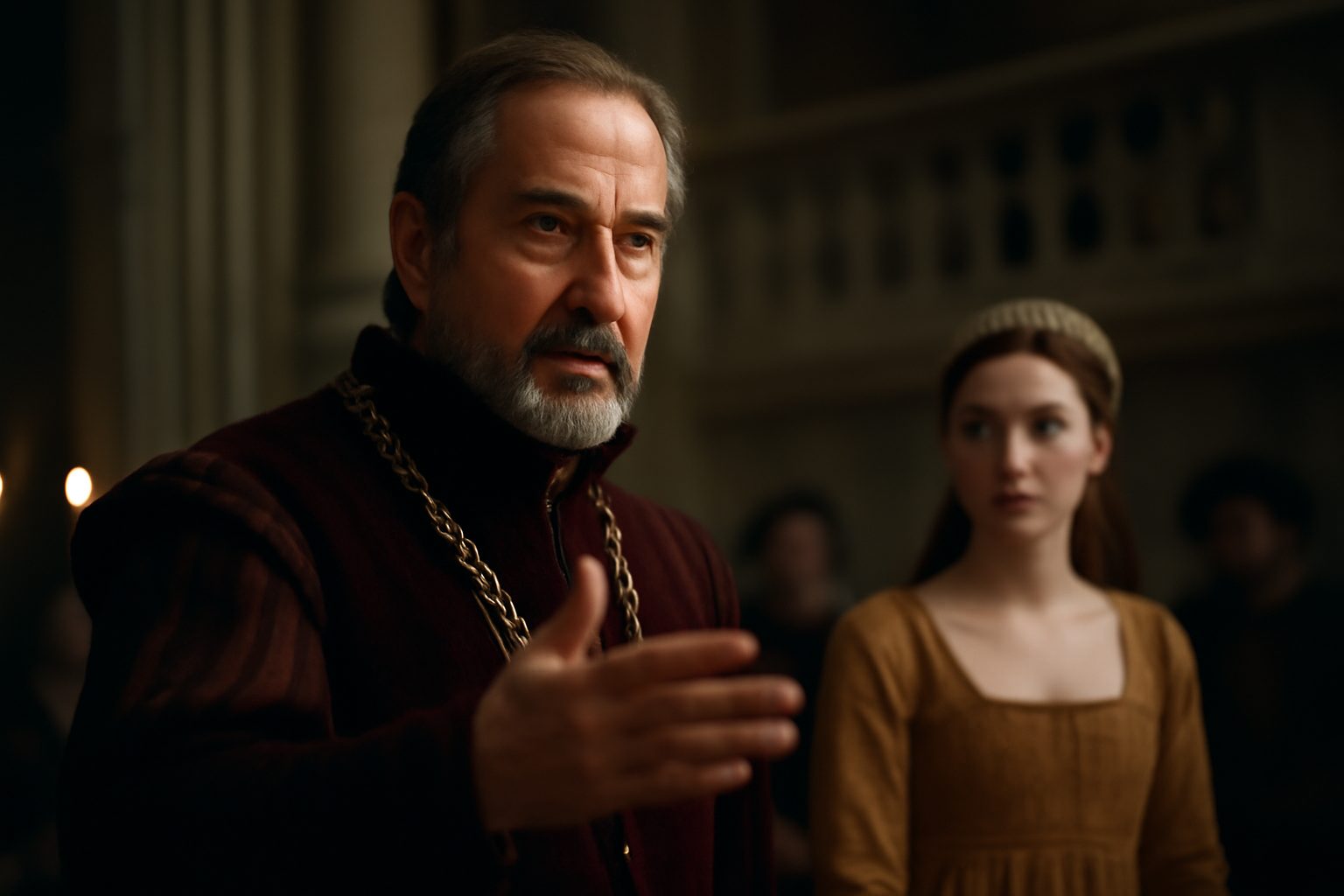
This intimate, poetic dialogue starkly contrasts with the scene's underlying tension. Tybalt's recognition of Romeo's voice—"This, by his voice, should be a Montague"—and his subsequent rage, "Fetch me my rapier, boy. What dares the slave", foreshadows the conflict that will thwart their love. Capulet's attempts to calm Tybalt, "Content thee, gentle coz, let him alone", momentarily contain the violence but cannot erase the familial hatred that defines their world.
Juliet's Realization and Foreshadowing
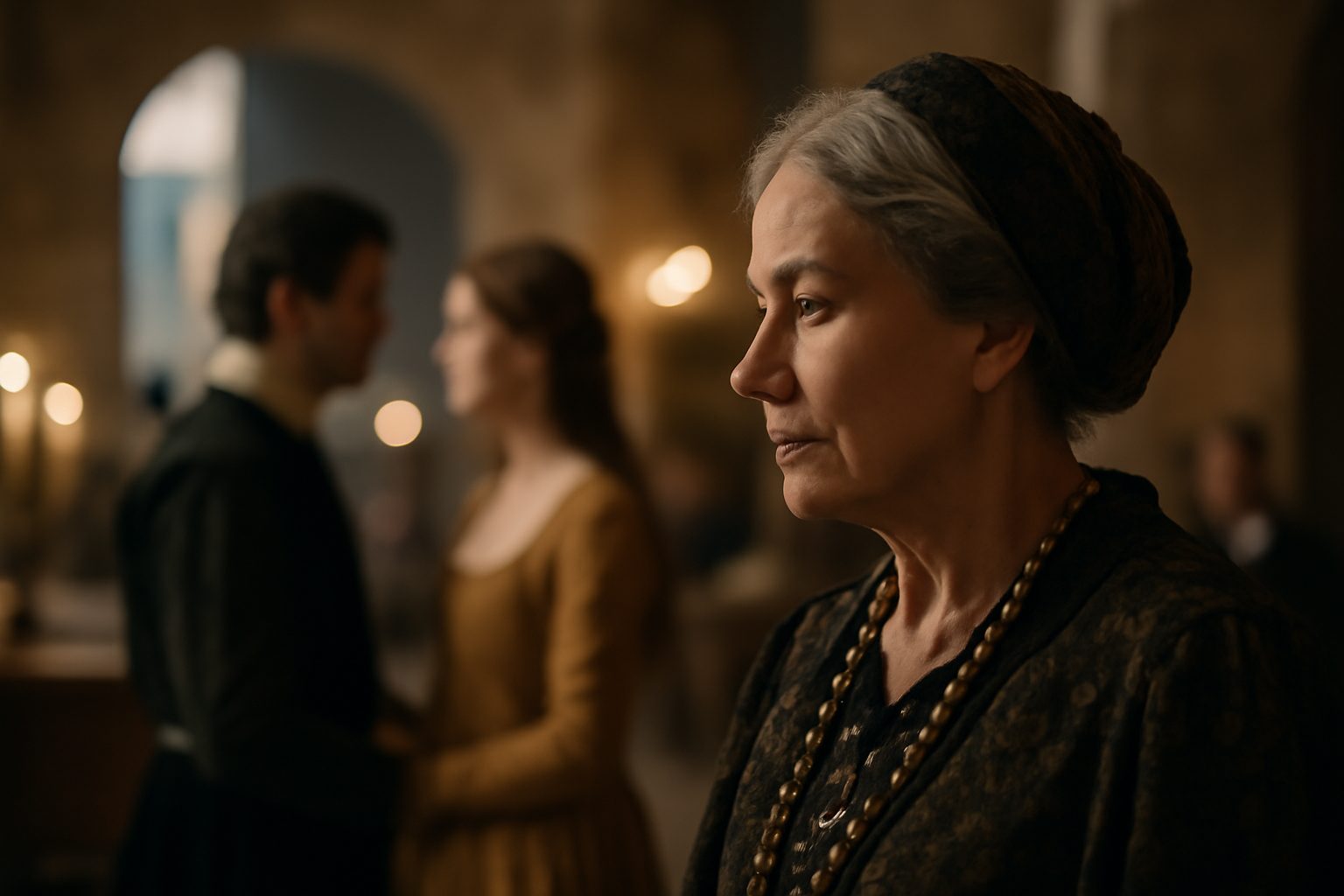
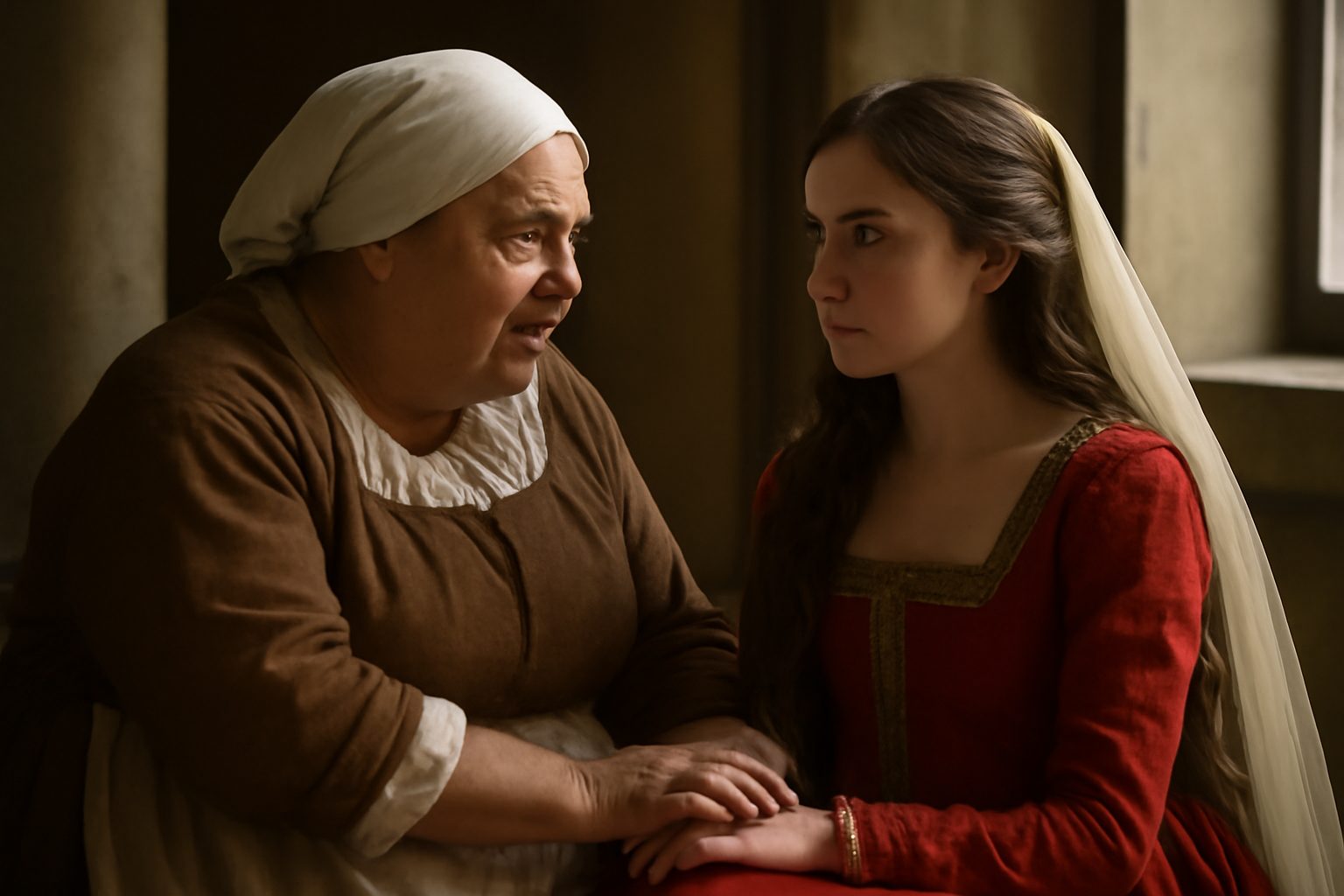
The scene's conclusion reveals the tragic irony of their meeting. After the kiss, Juliet learns Romeo's identity from the Nurse and laments, "My only love sprung from my only hate!", a realization that echoes Romeo's earlier awe upon seeing her: "For I ne'er saw true beauty till this night". Her foreboding words, "My grave is like to be my wedding bed", ominously intertwine love and death, a theme that permeates the play.