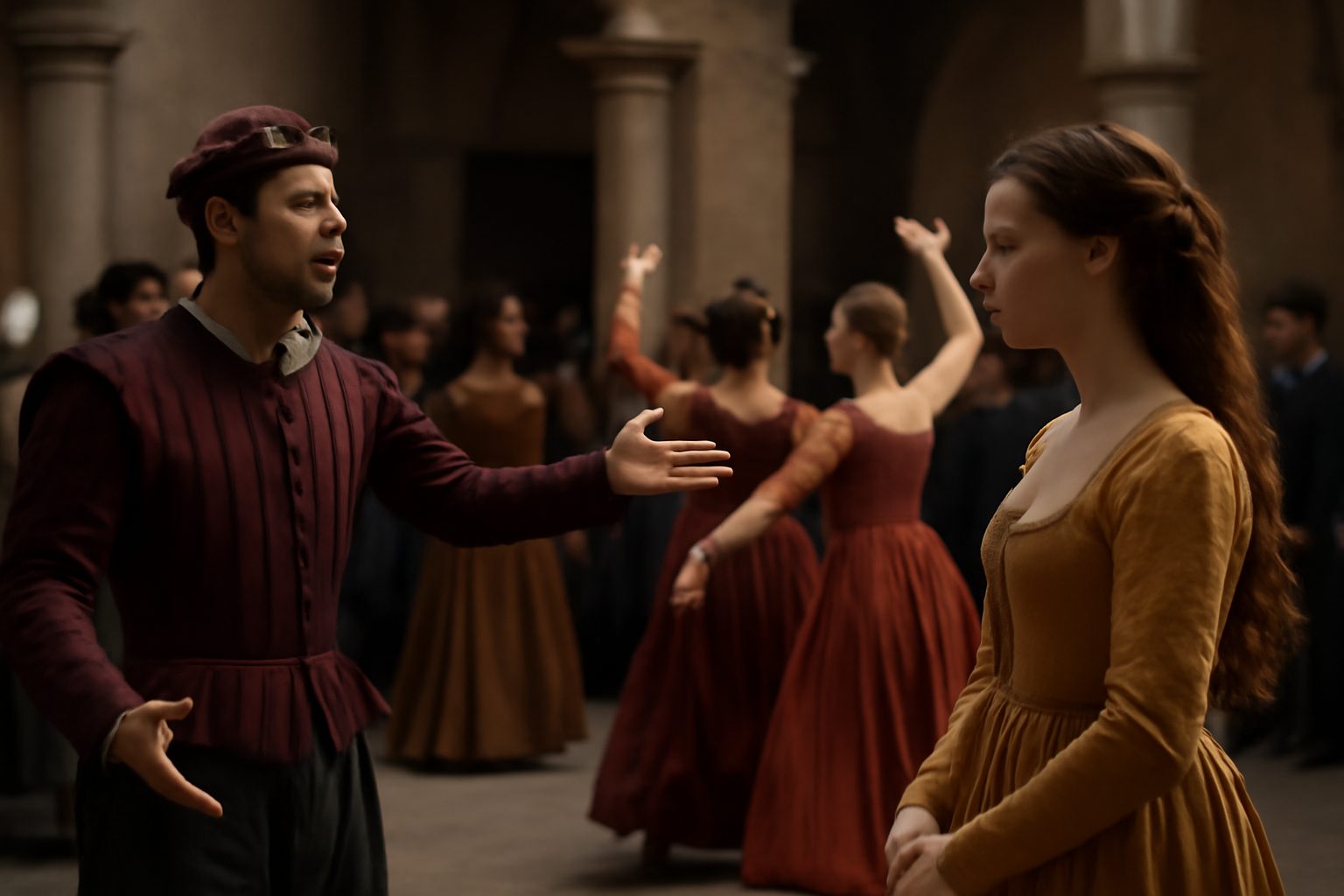
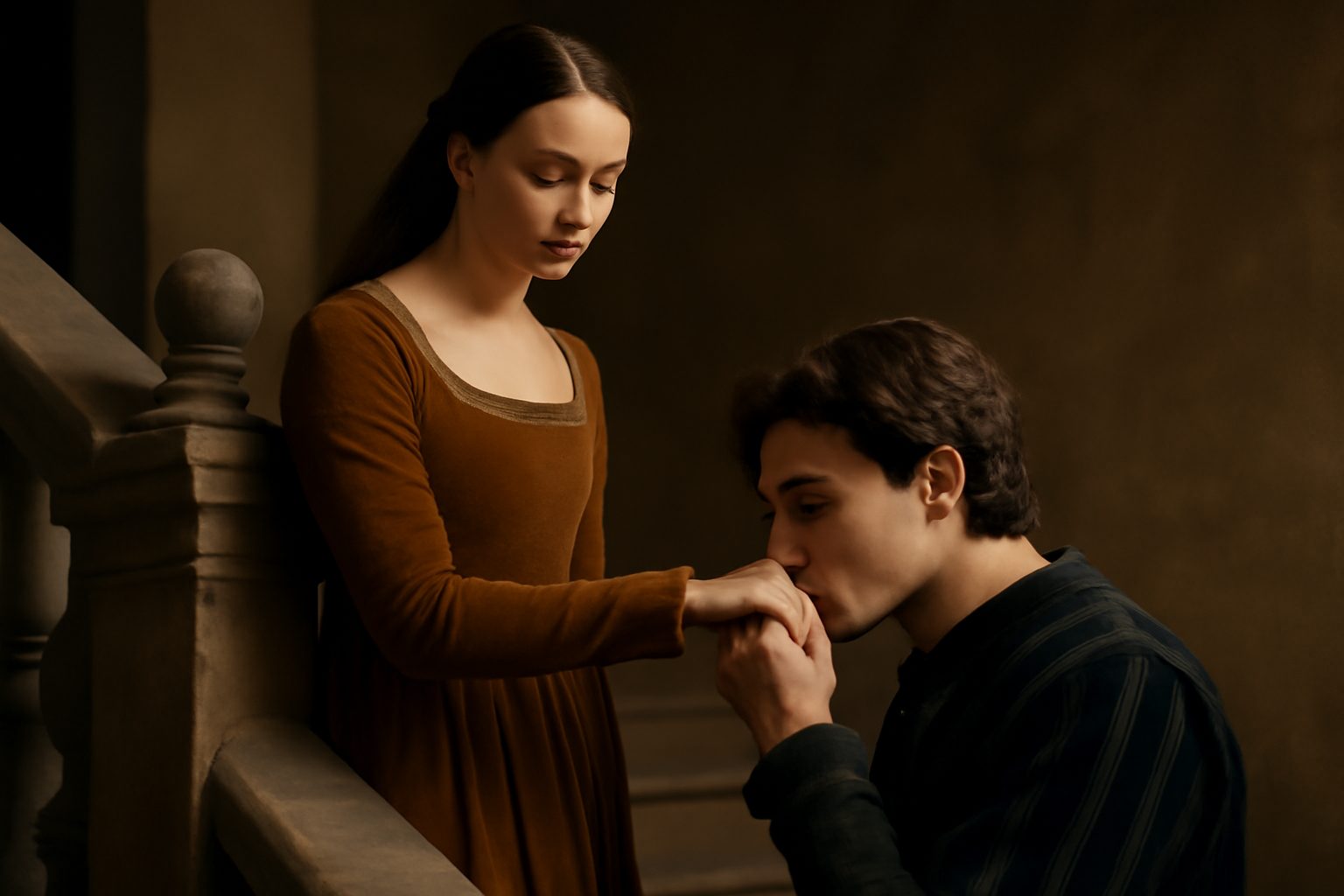
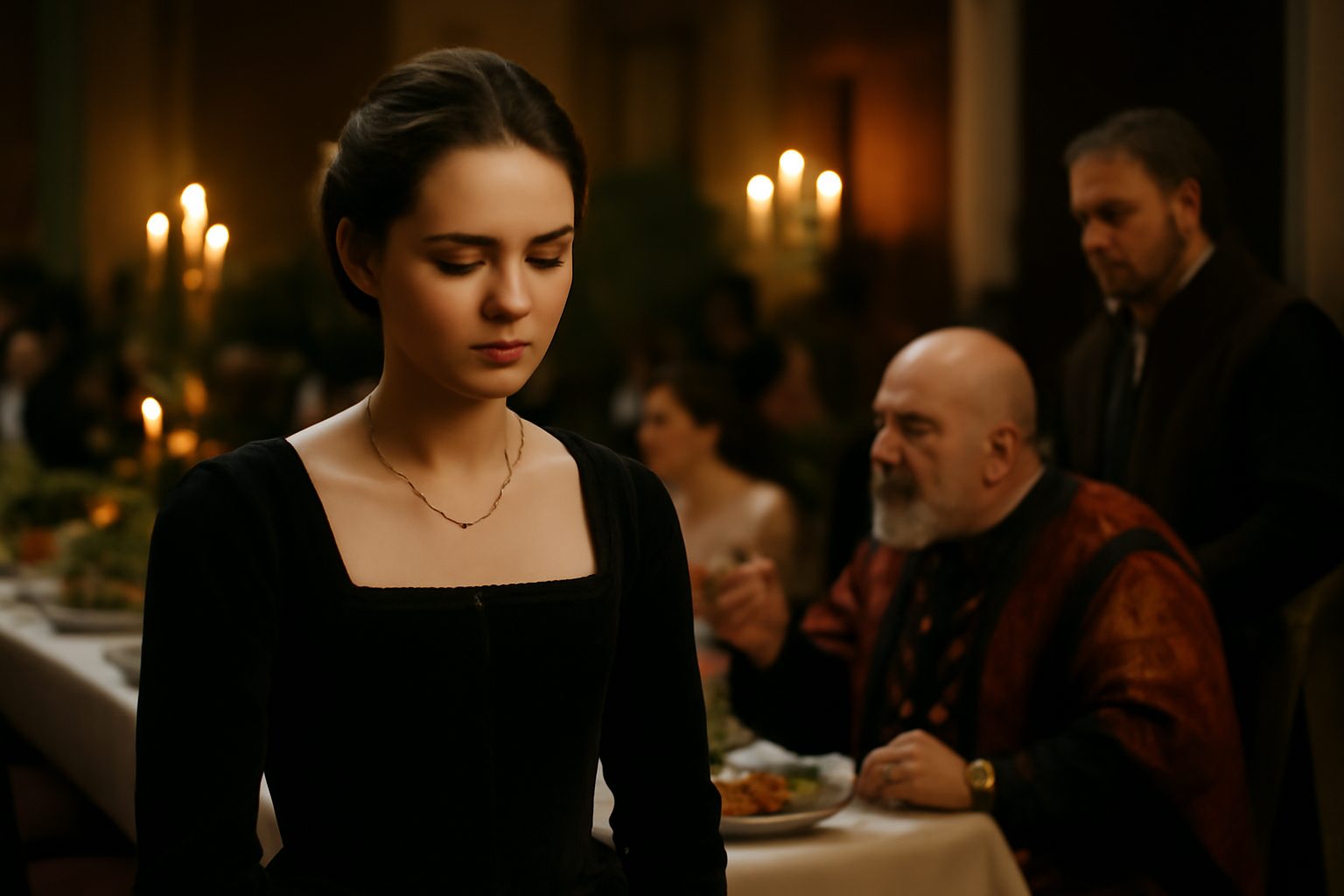
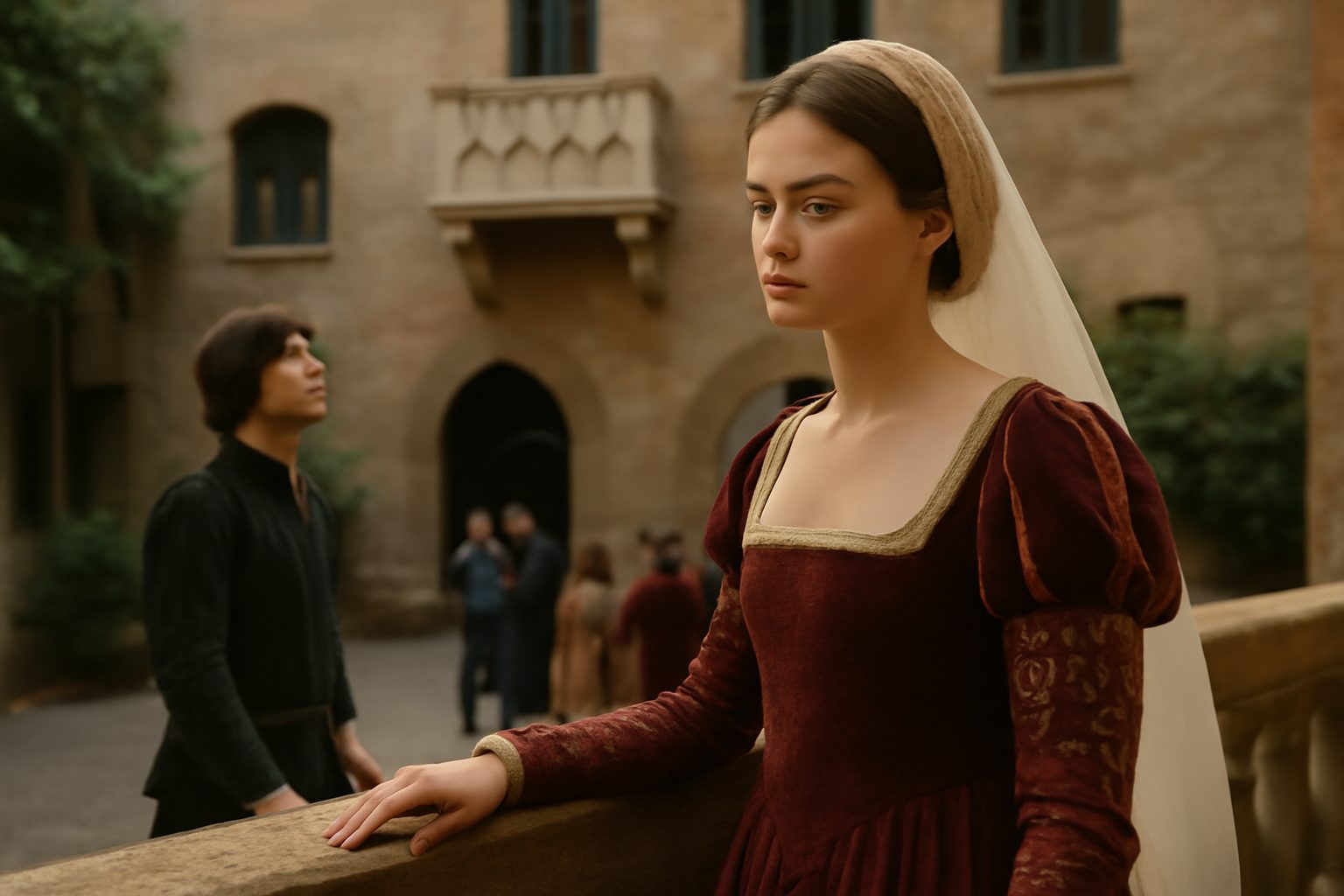
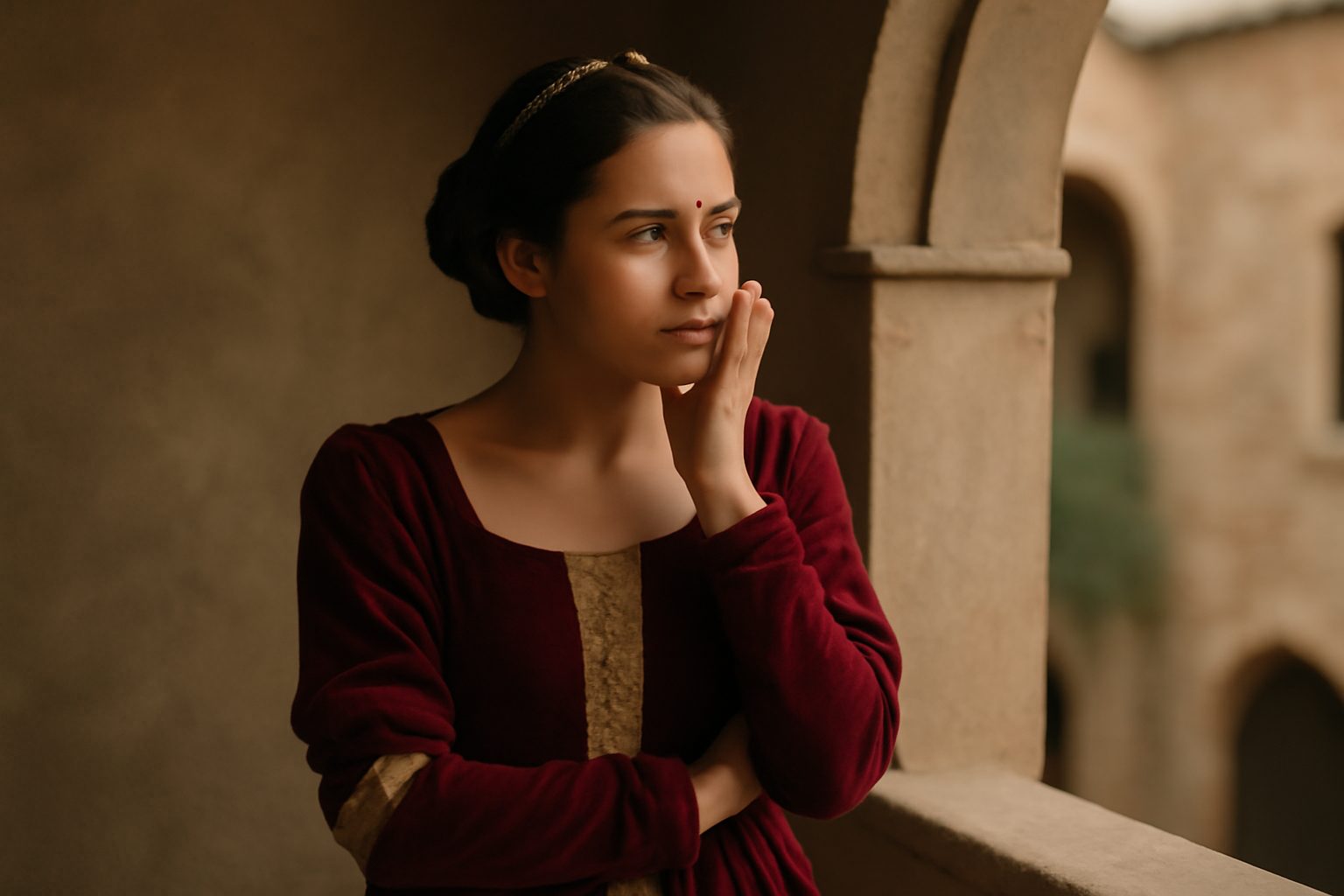
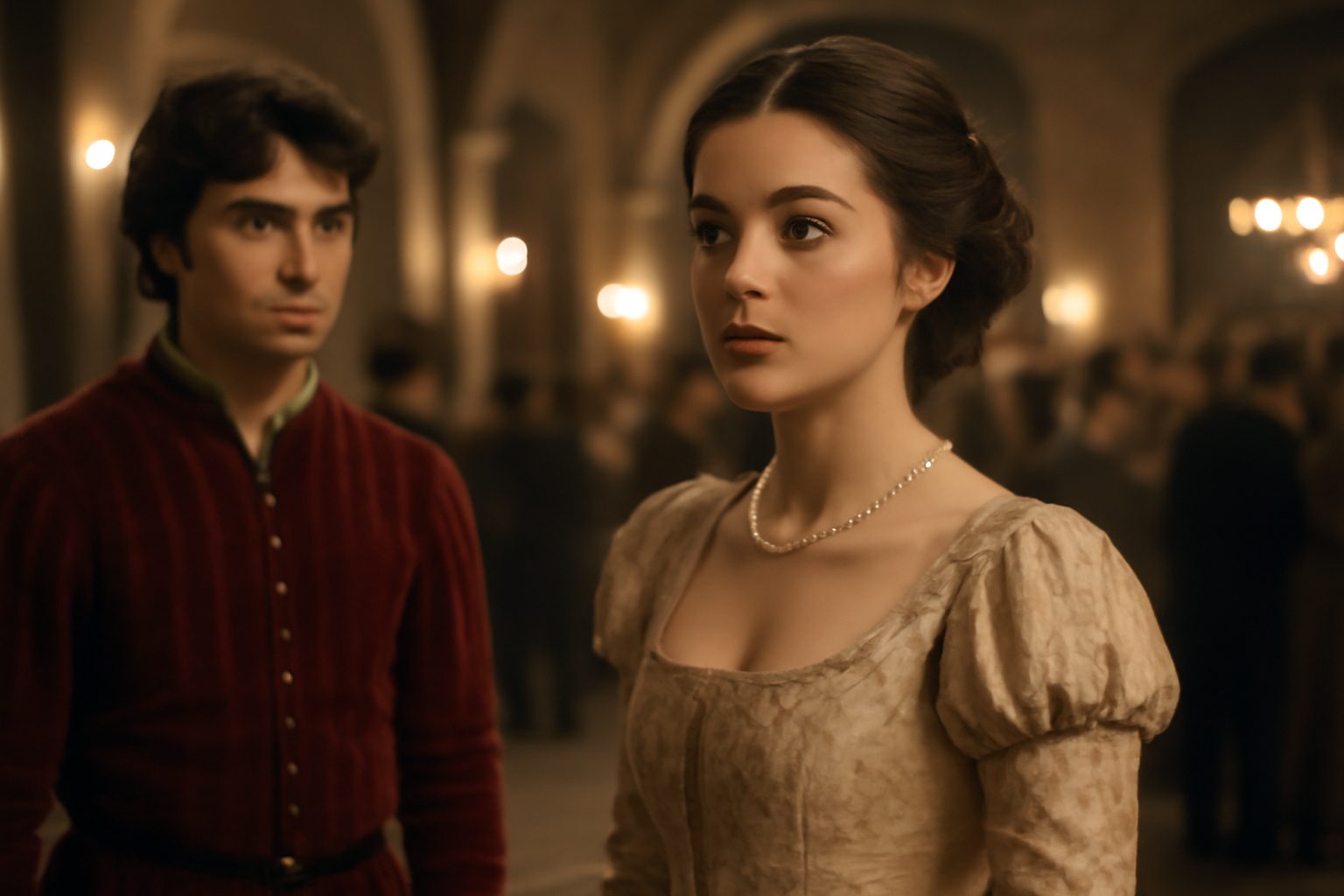
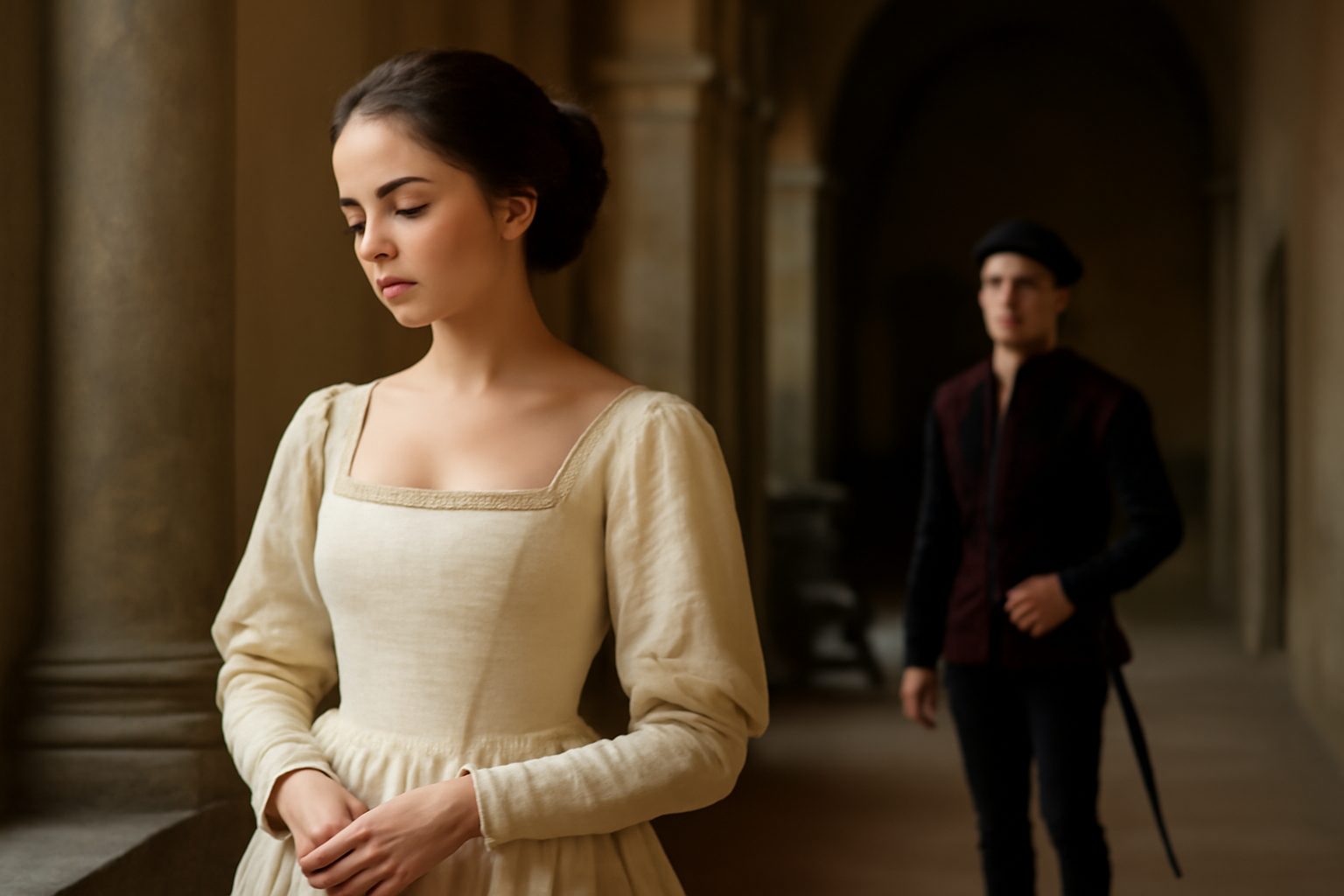
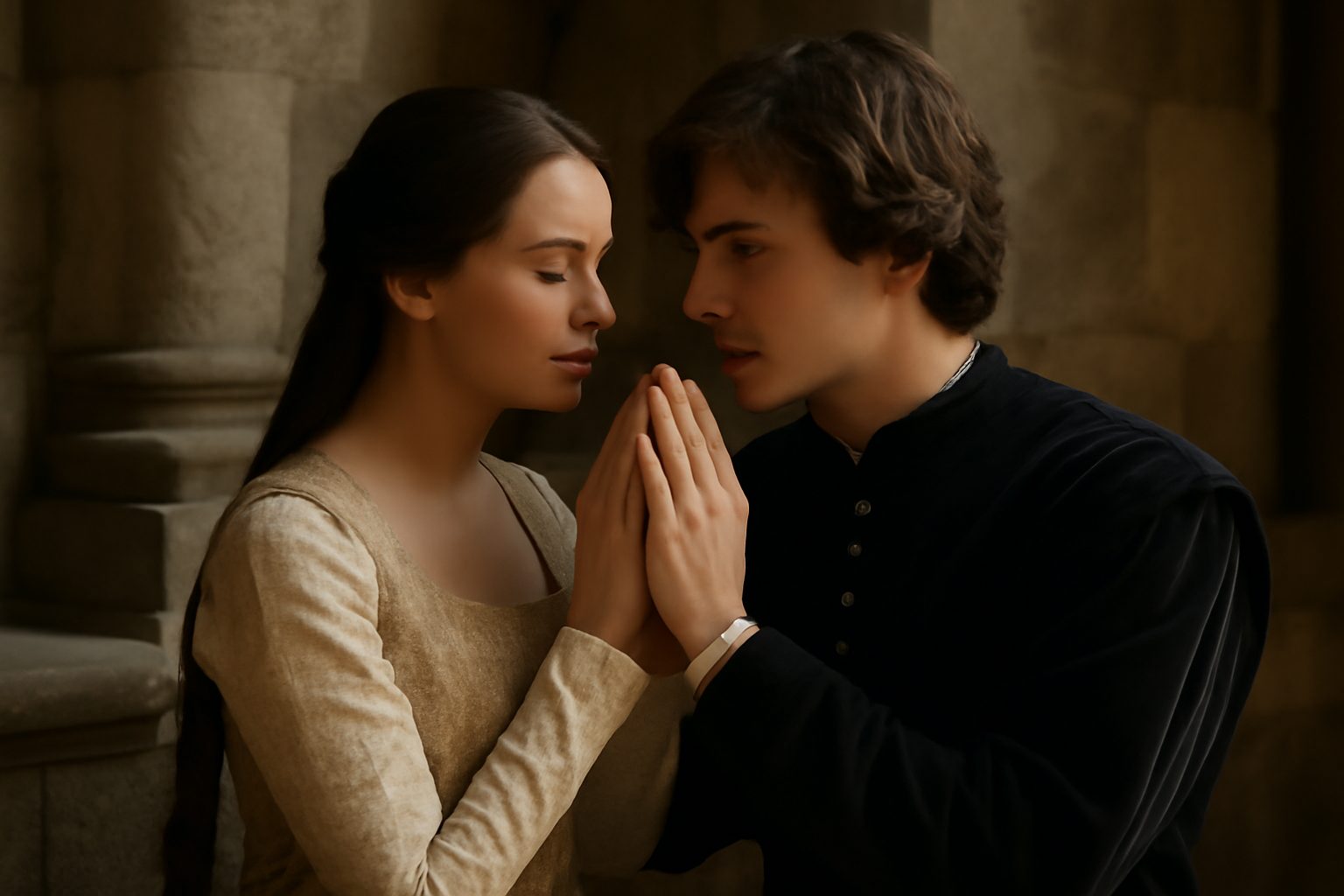
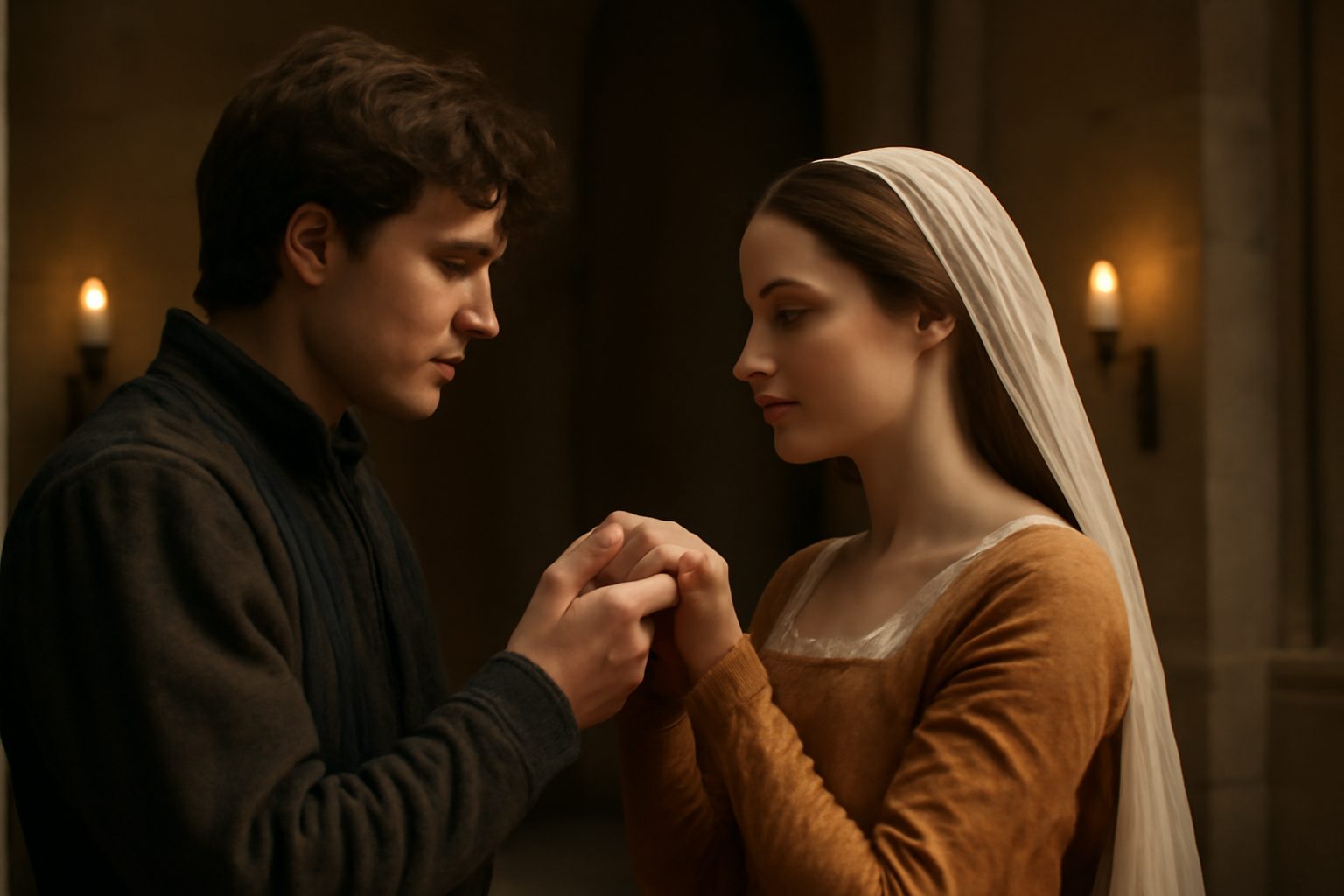
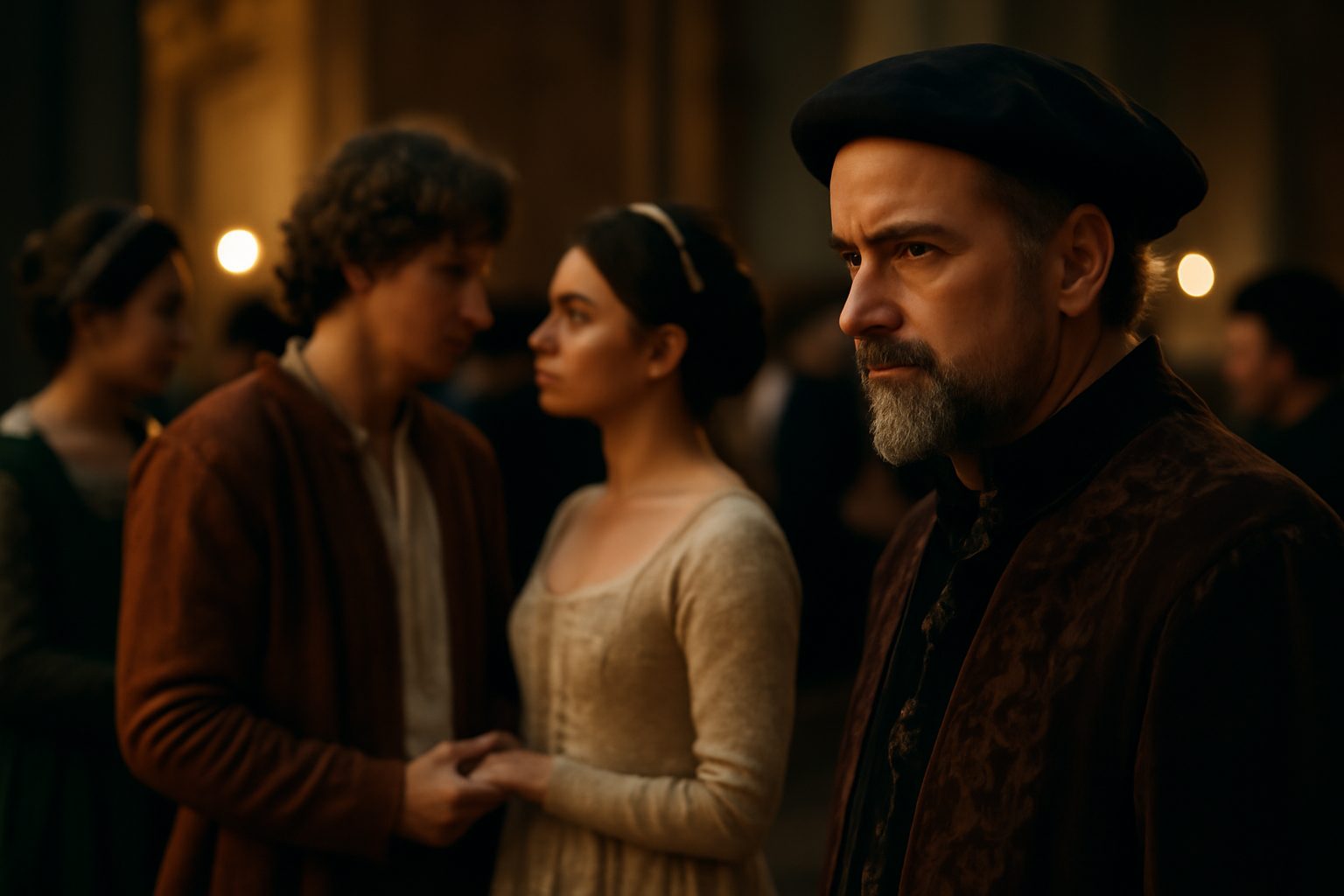
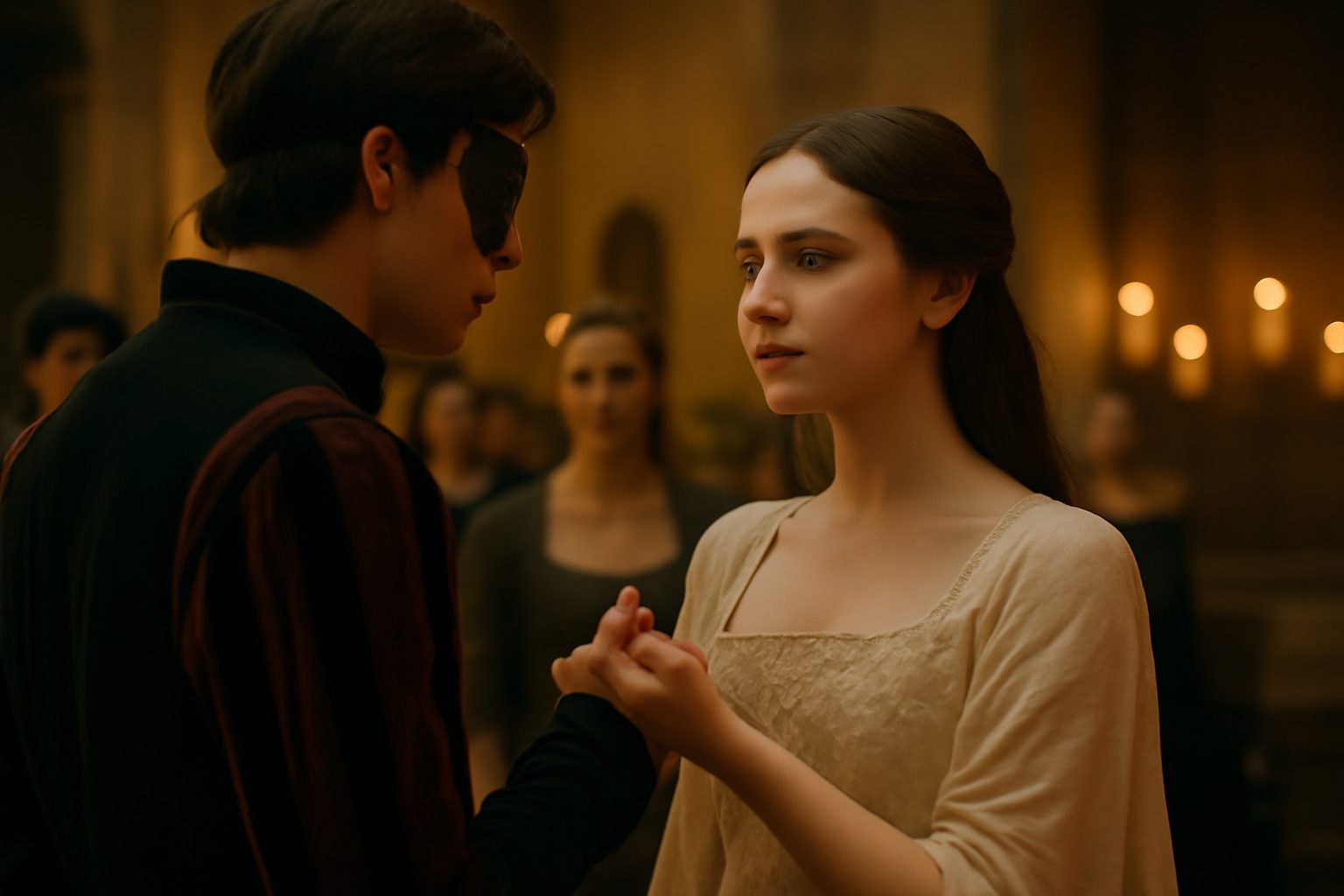
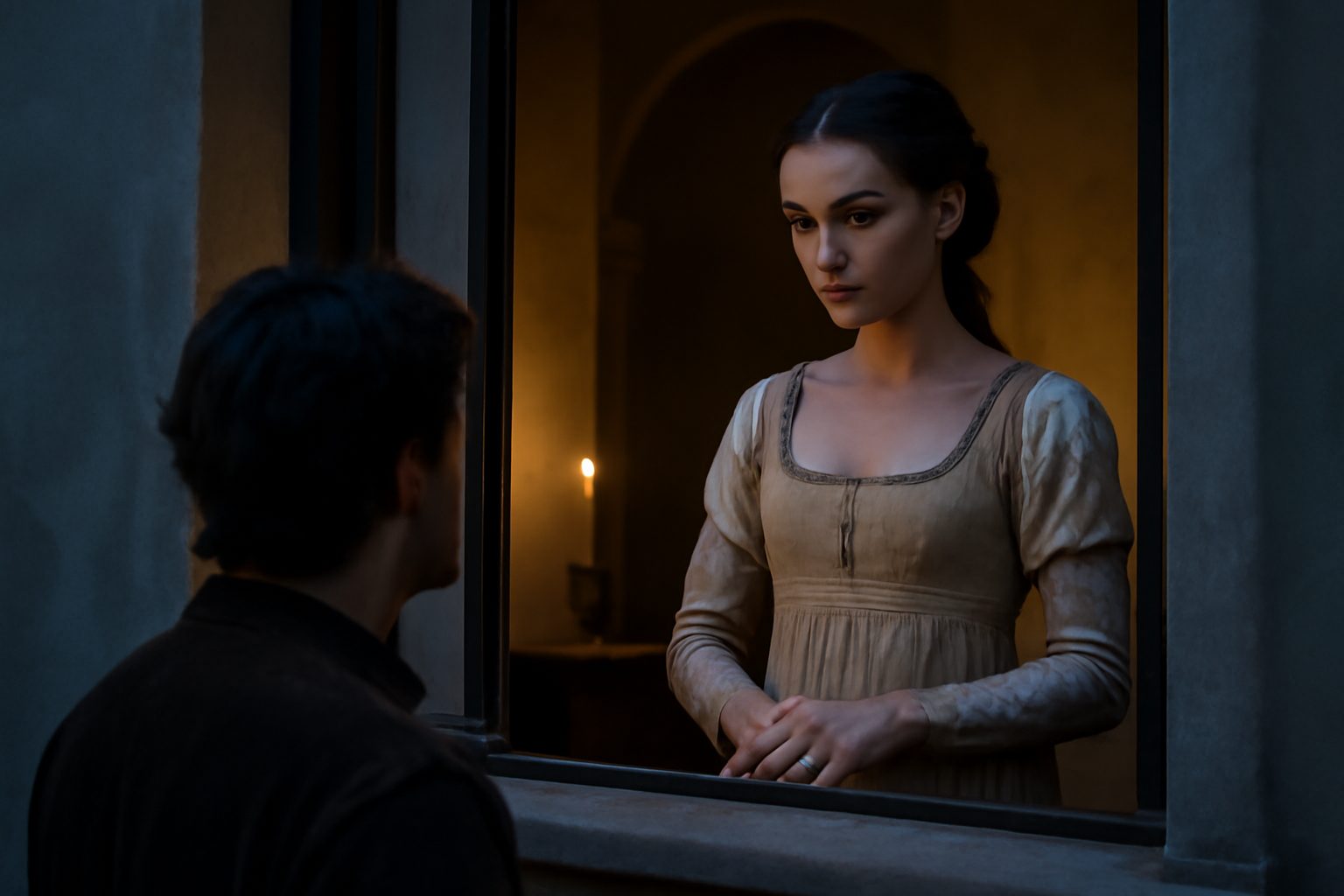
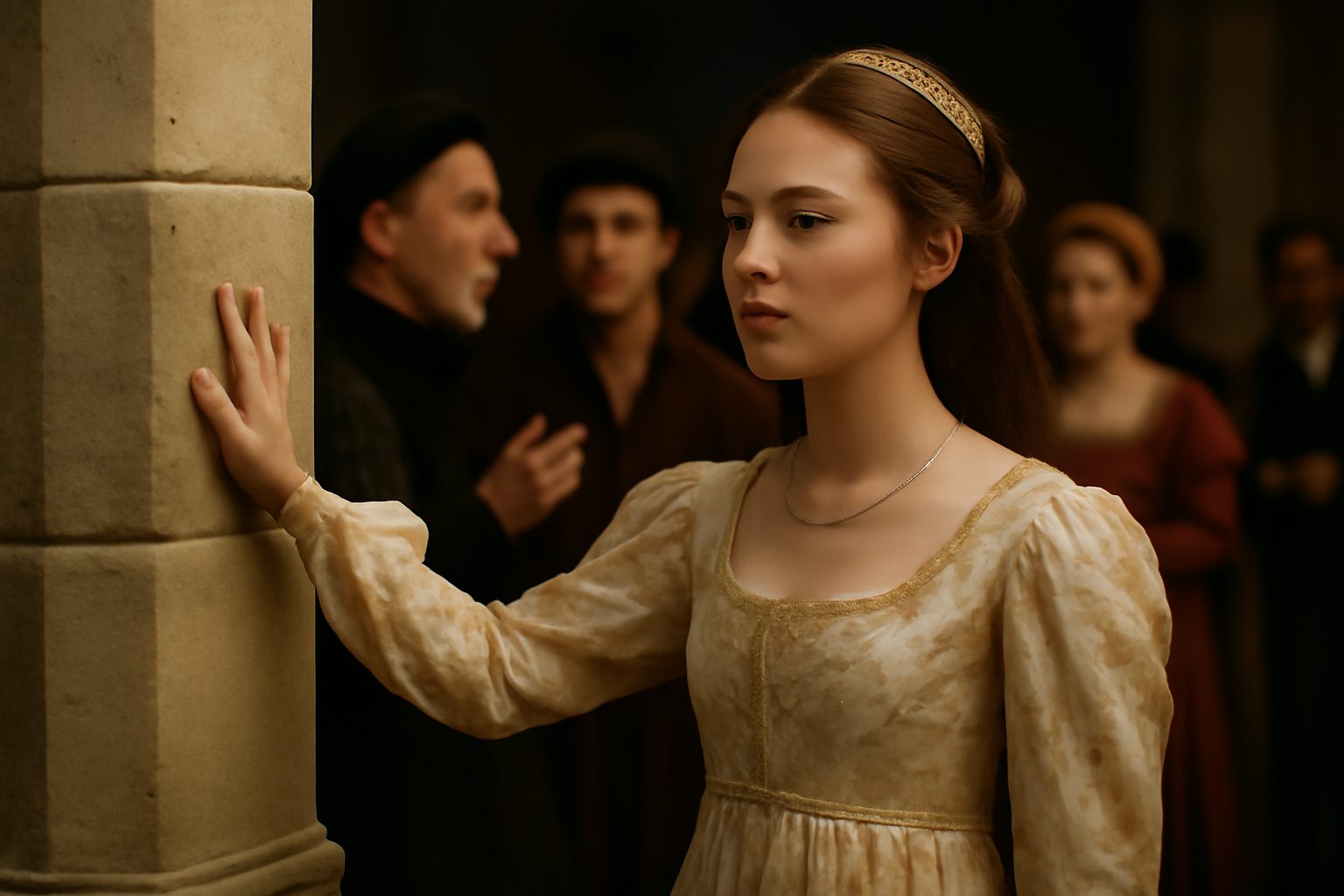
In Act 1, Scene 5 of Romeo and Juliet, Romeo attends the Capulet feast and first encounters Juliet. As they meet, their dialogue weaves religious imagery into their flirtation, comparing their touching hands to a pilgrim's reverent gesture. This moment marks the beginning of their instant connection, blending devotion with budding romance.
Juliet: "And palm to palm is holy palmers' kiss."
In modern day english, we would say:
When our hands touch, it’s like a pilgrim’s gentle kiss.
Frequently Asked Questions
What does Juliet compare holding hands to in this line?
She compares holding hands to a holy kiss between pilgrims.
Connections to other verses:
Connections to "And palm to palm is holy palmers' kiss"
This verse is part of the famous sonnet exchange between Romeo and Juliet, where they use religious imagery to flirt. It connects to several other verses in the scene:
Religious and Pilgrim Imagery
- Directly follows "For saints have hands that pilgrims' hands do touch", establishing the metaphor of hands as pilgrims.
- Leads to Juliet's response in "Ay, pilgrim, lips that they must use in prayer", extending the metaphor to lips.
- Romeo continues this theme in "O, then, dear saint, let lips do what hands do", suggesting a kiss.
Hand and Touch Imagery
- Echoes Romeo's earlier line "And, touching hers, make blessed my rude hand", showing his desire to touch Juliet's hand.
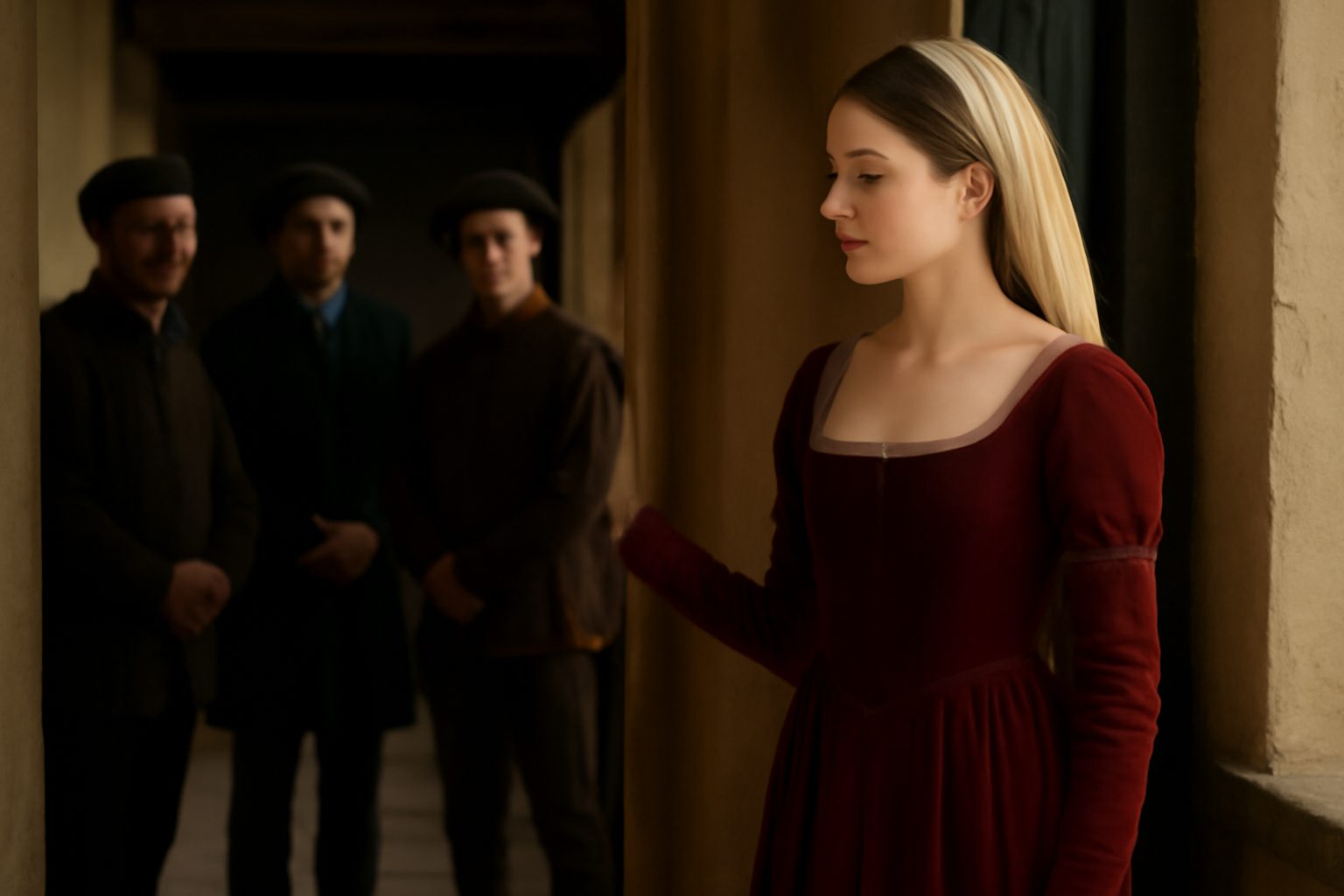
- Contrasts with the servants' concern about unclean hands in "hands and they unwashed too, 'tis a foul thing", highlighting the purity of Romeo and Juliet's interaction.
Romantic and Poetic Context
- Follows Romeo's awe at Juliet's beauty in "For I ne'er saw true beauty till this night", setting the tone for their poetic exchange.
- Precedes Juliet's playful yet chiding response in "Good pilgrim, you do wrong your hand too much", showing her engagement in the metaphor.