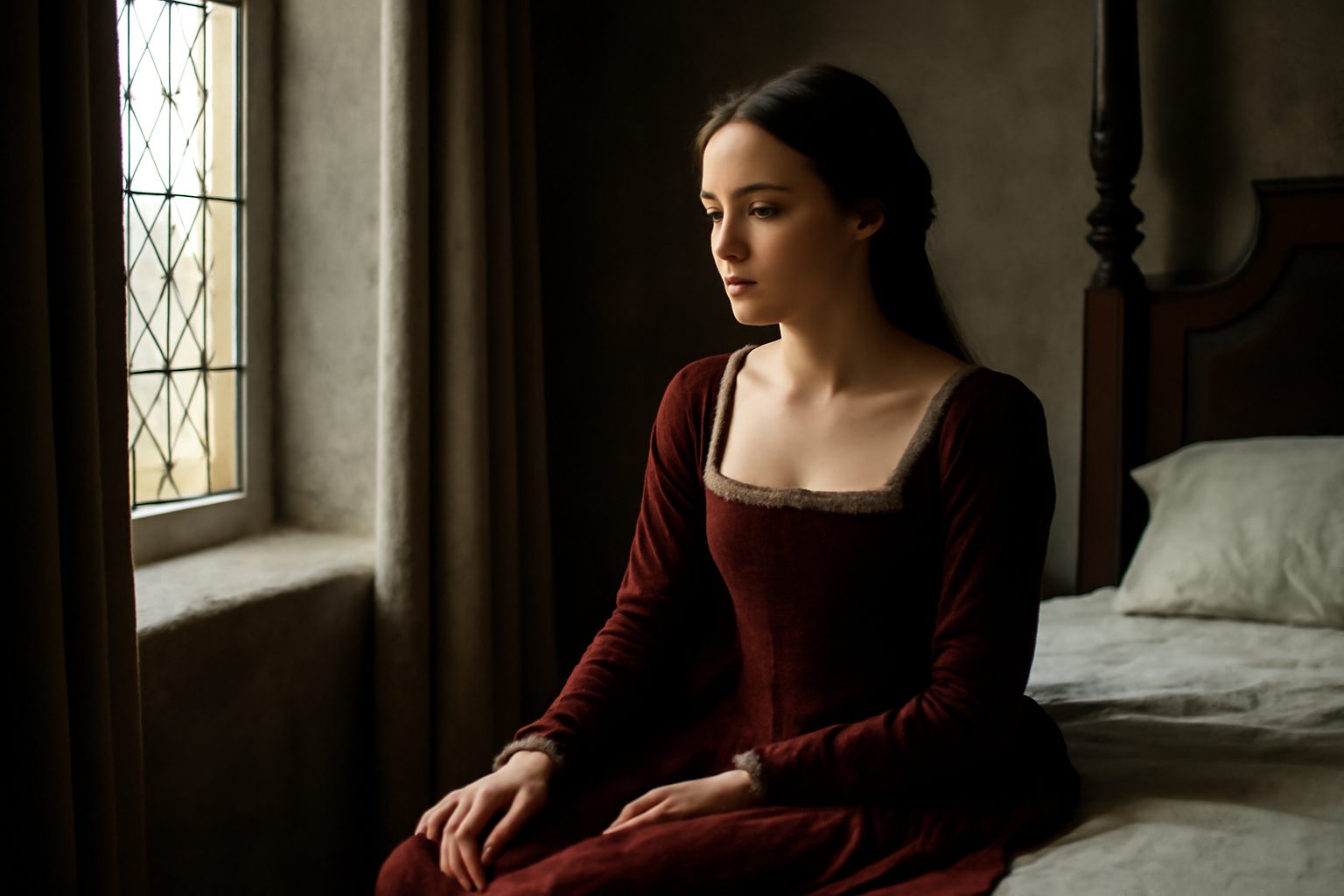
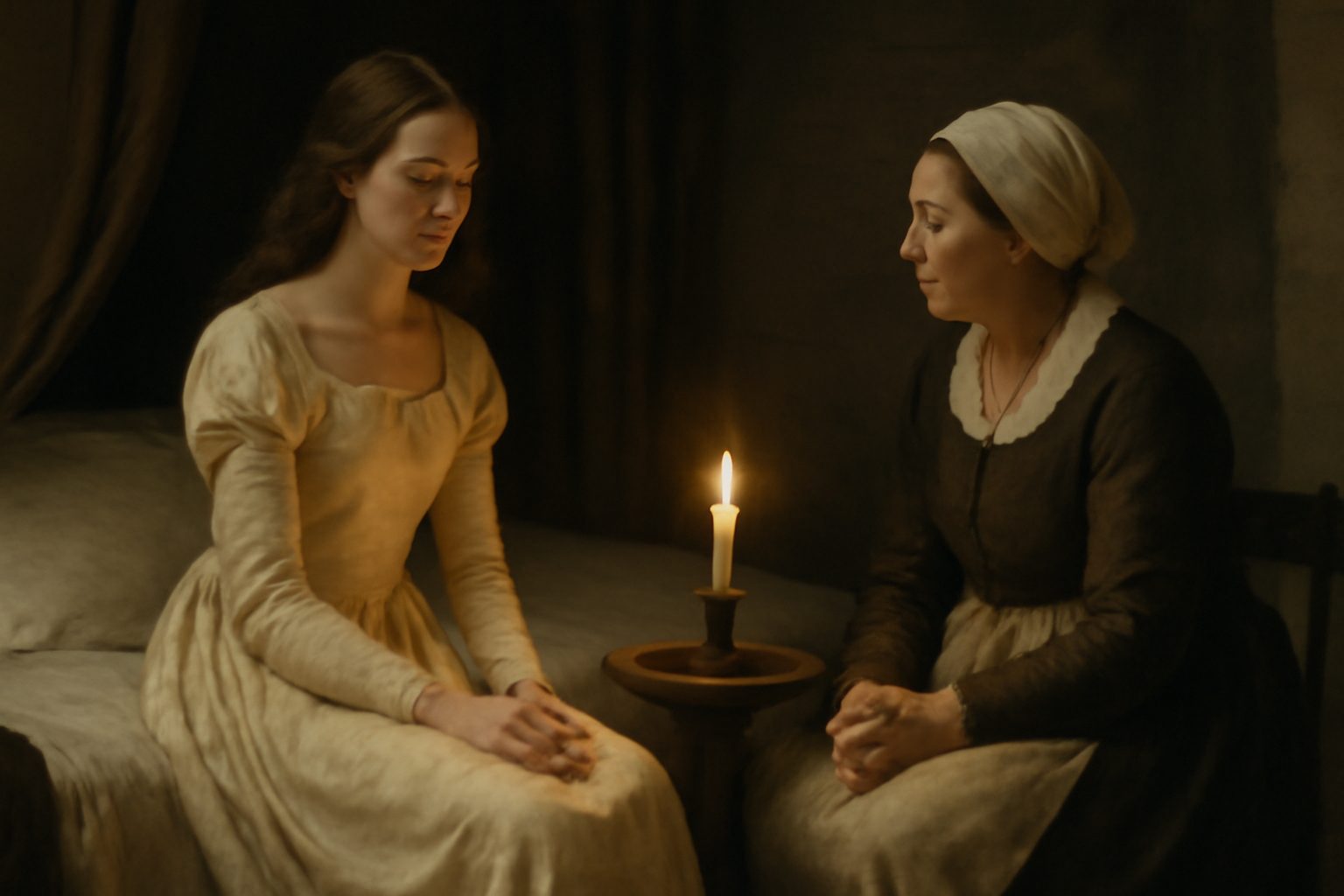
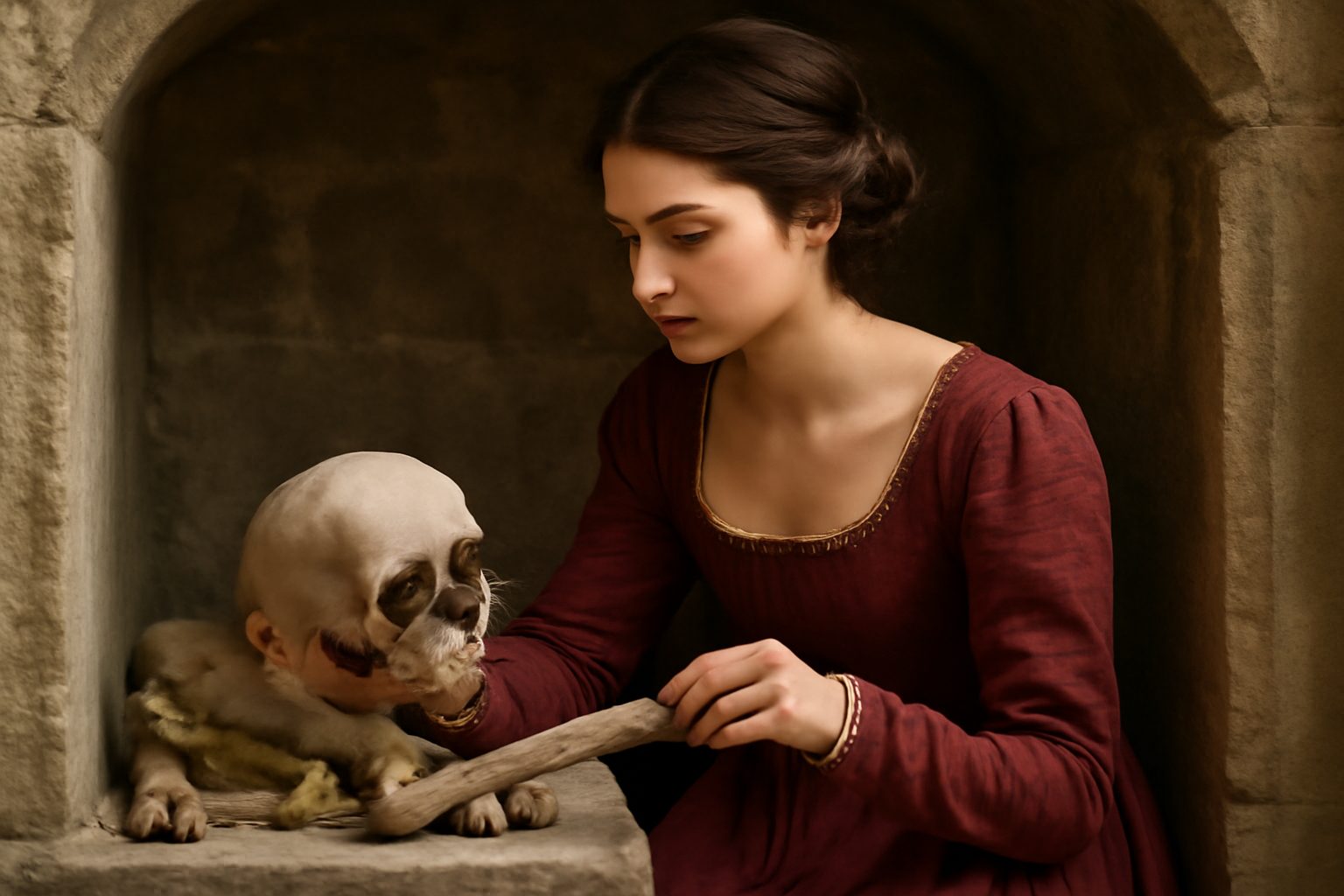
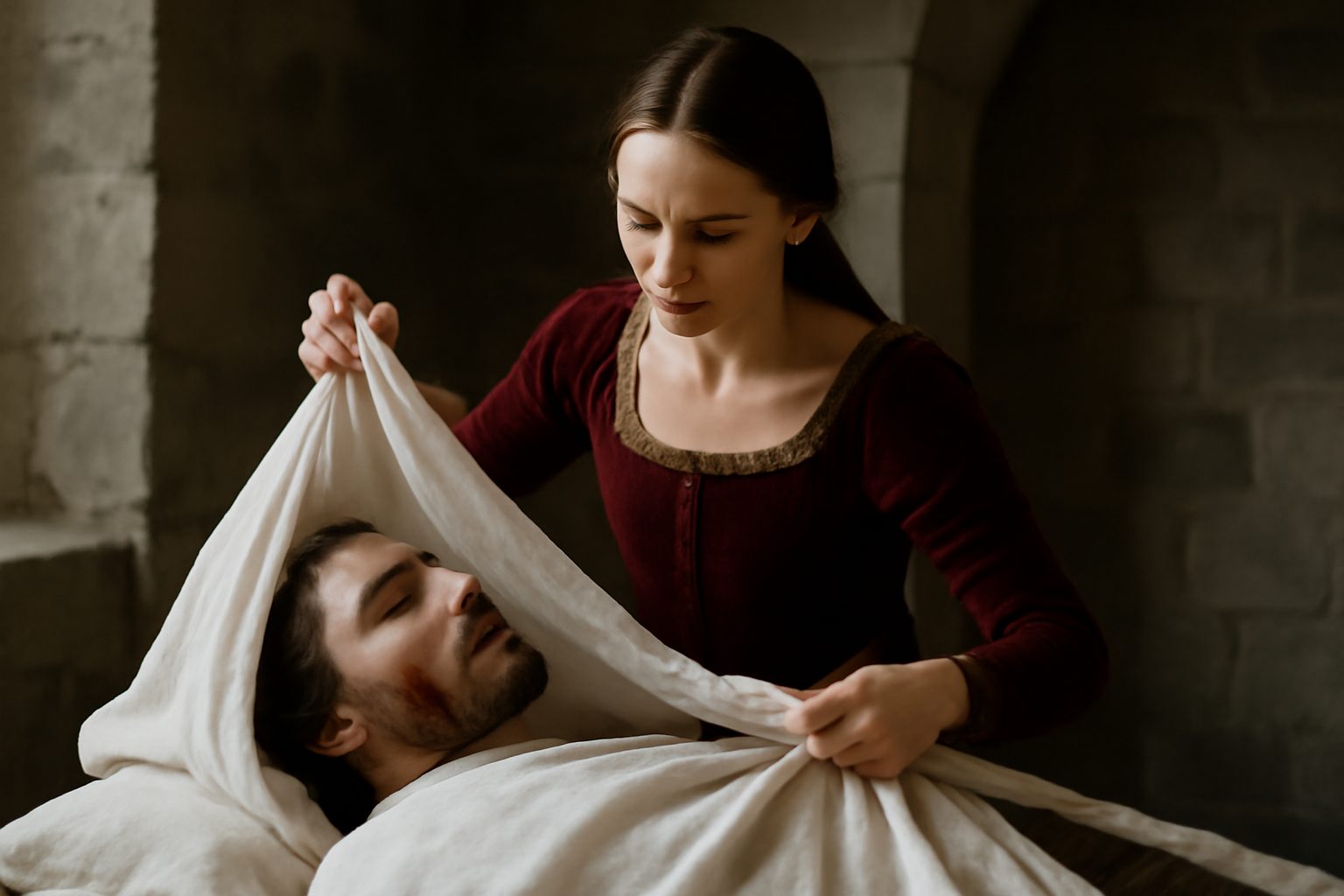
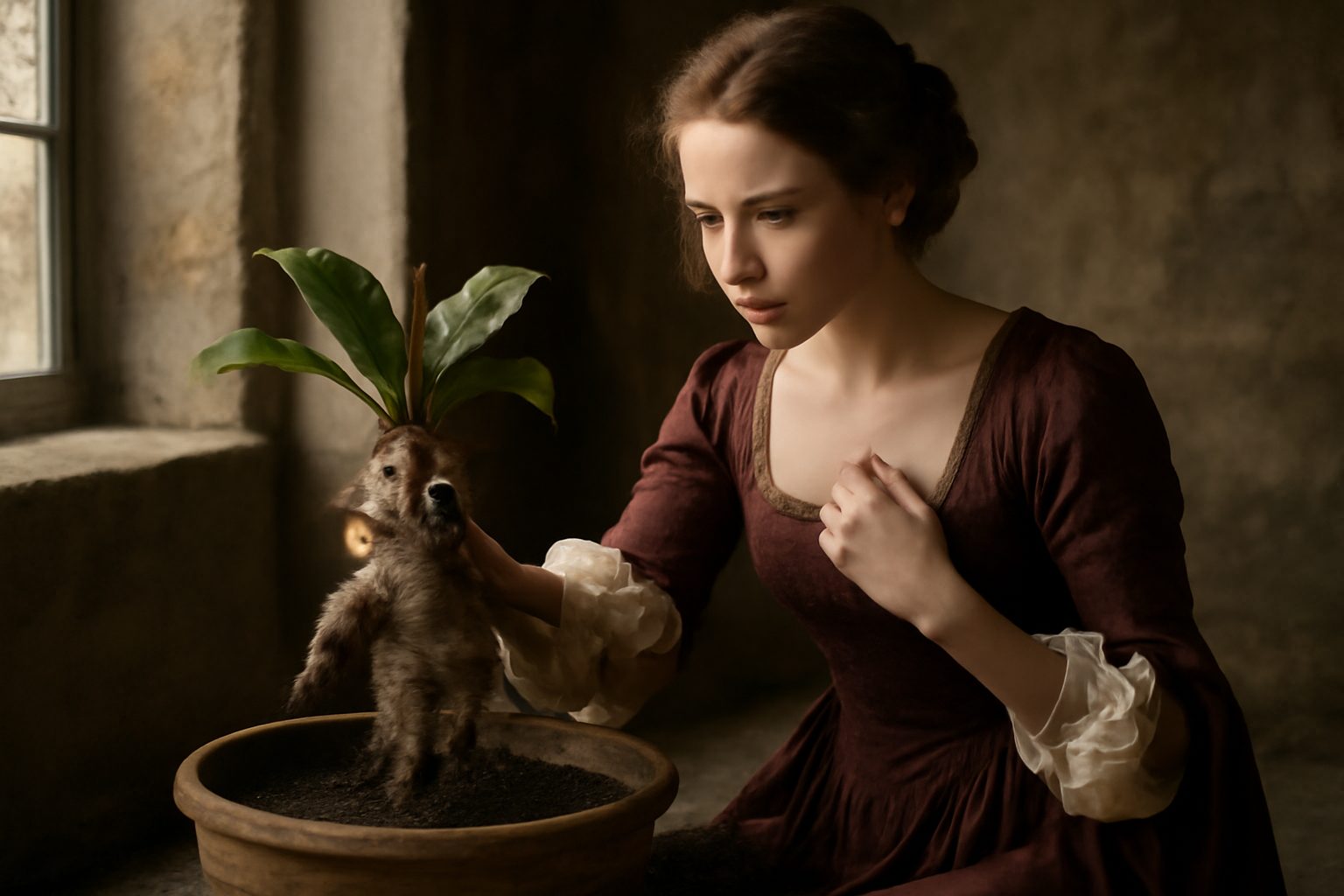
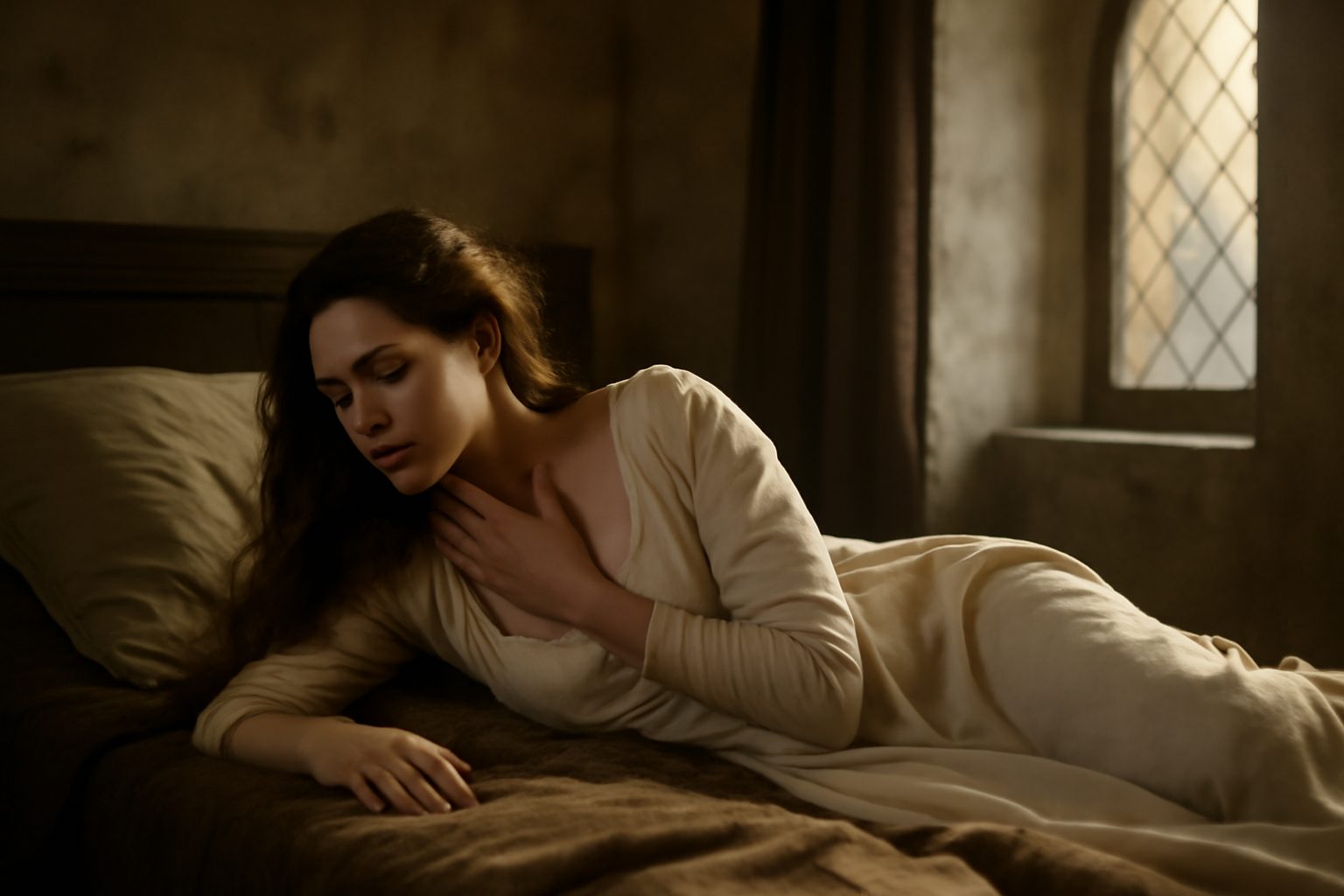
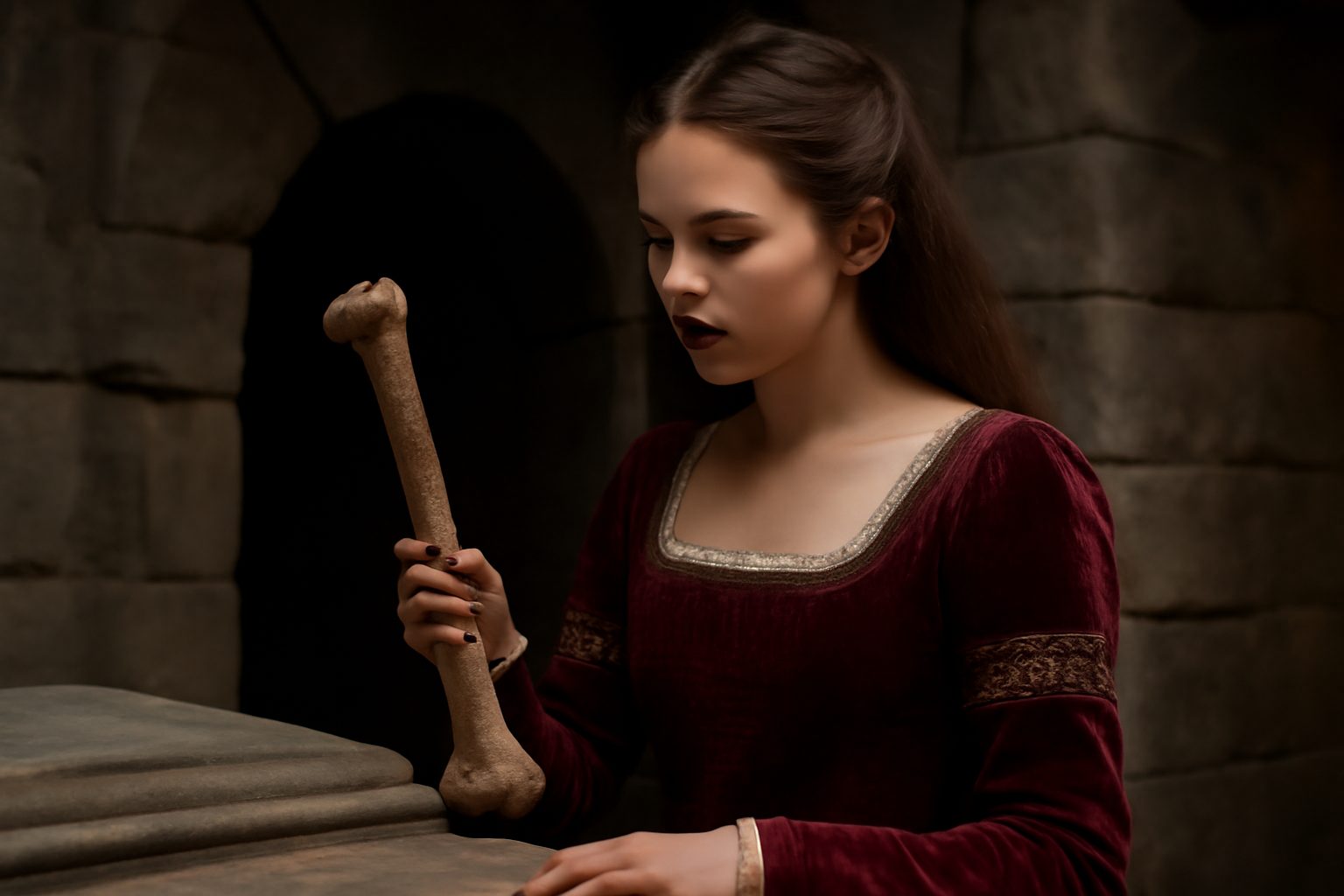
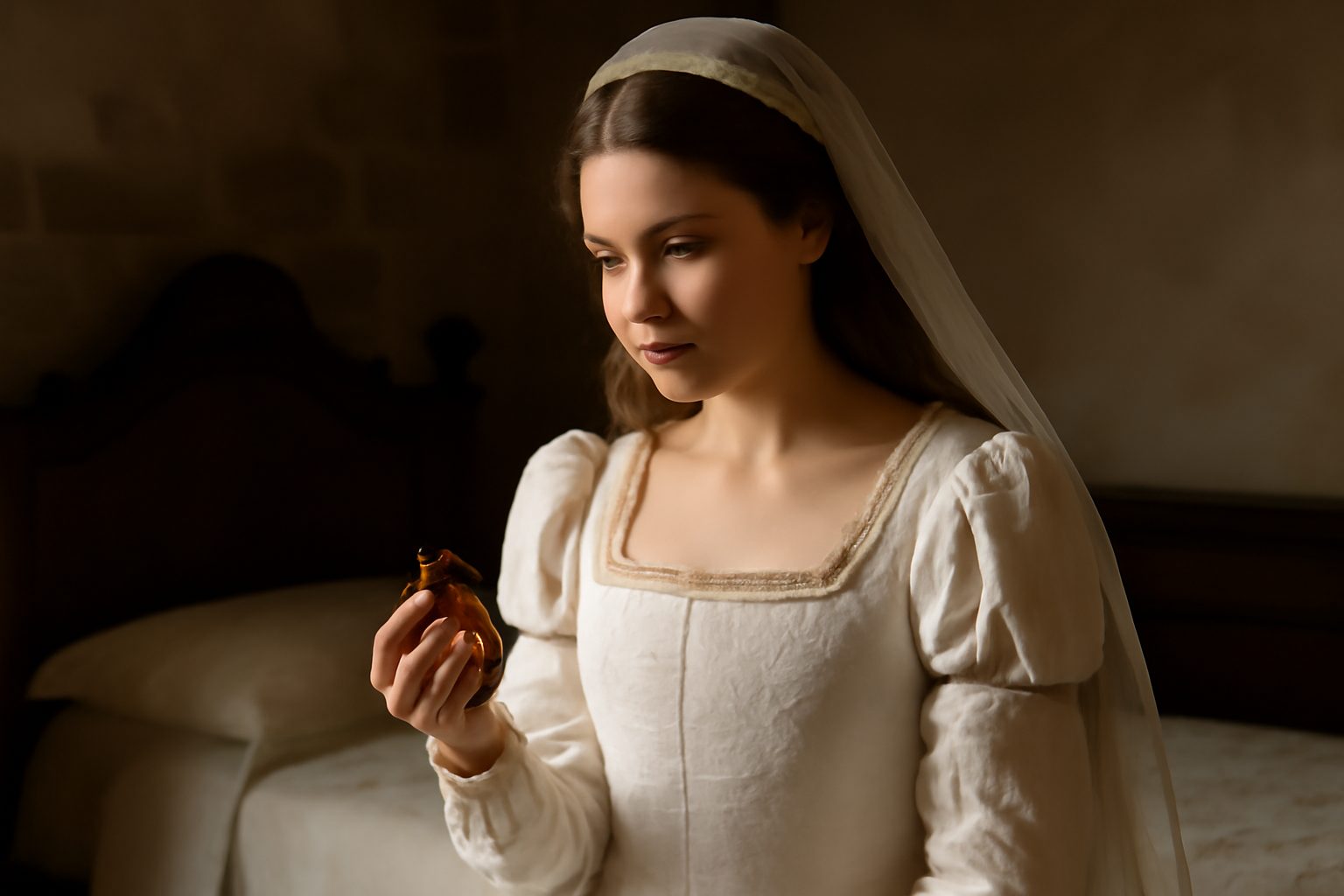
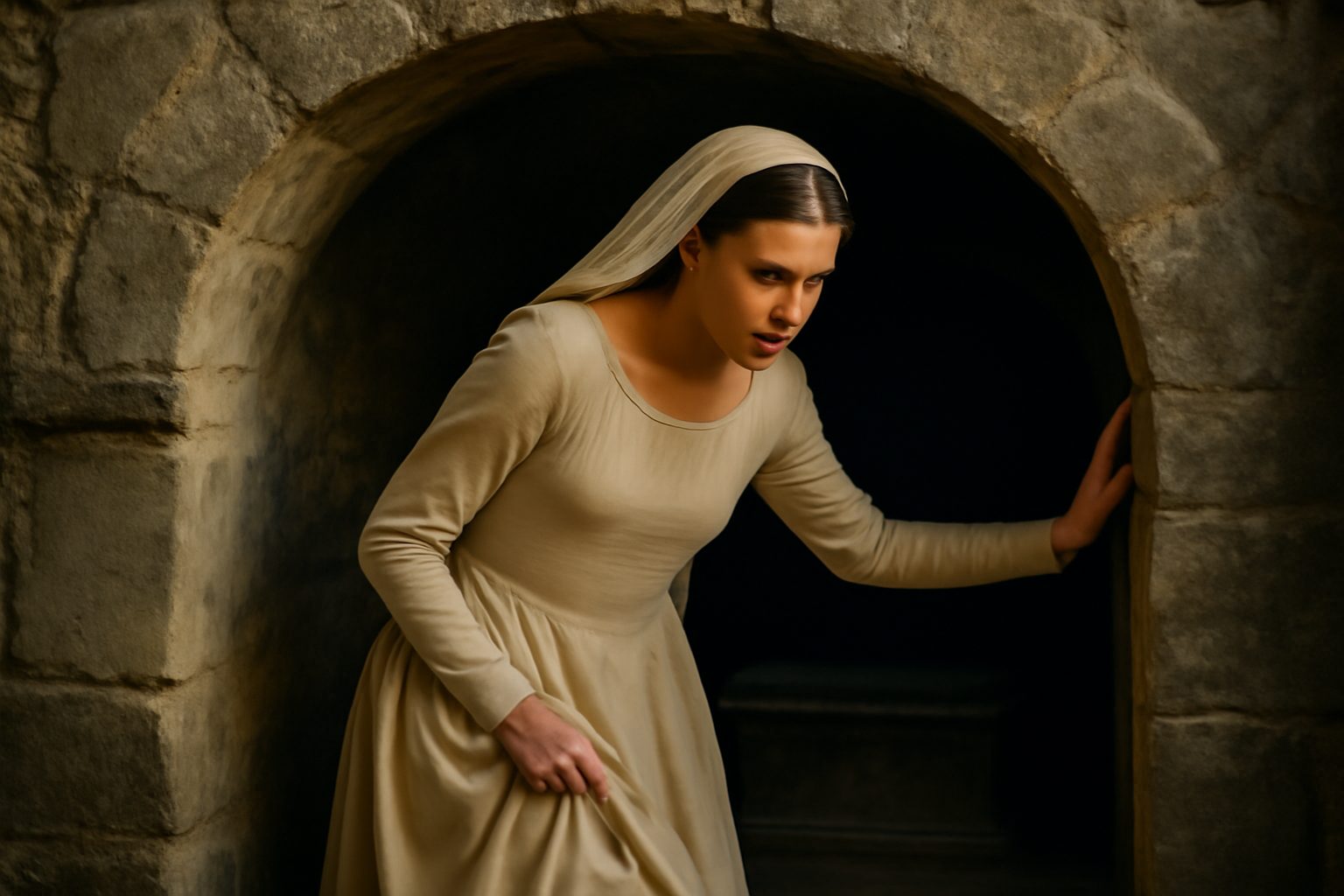
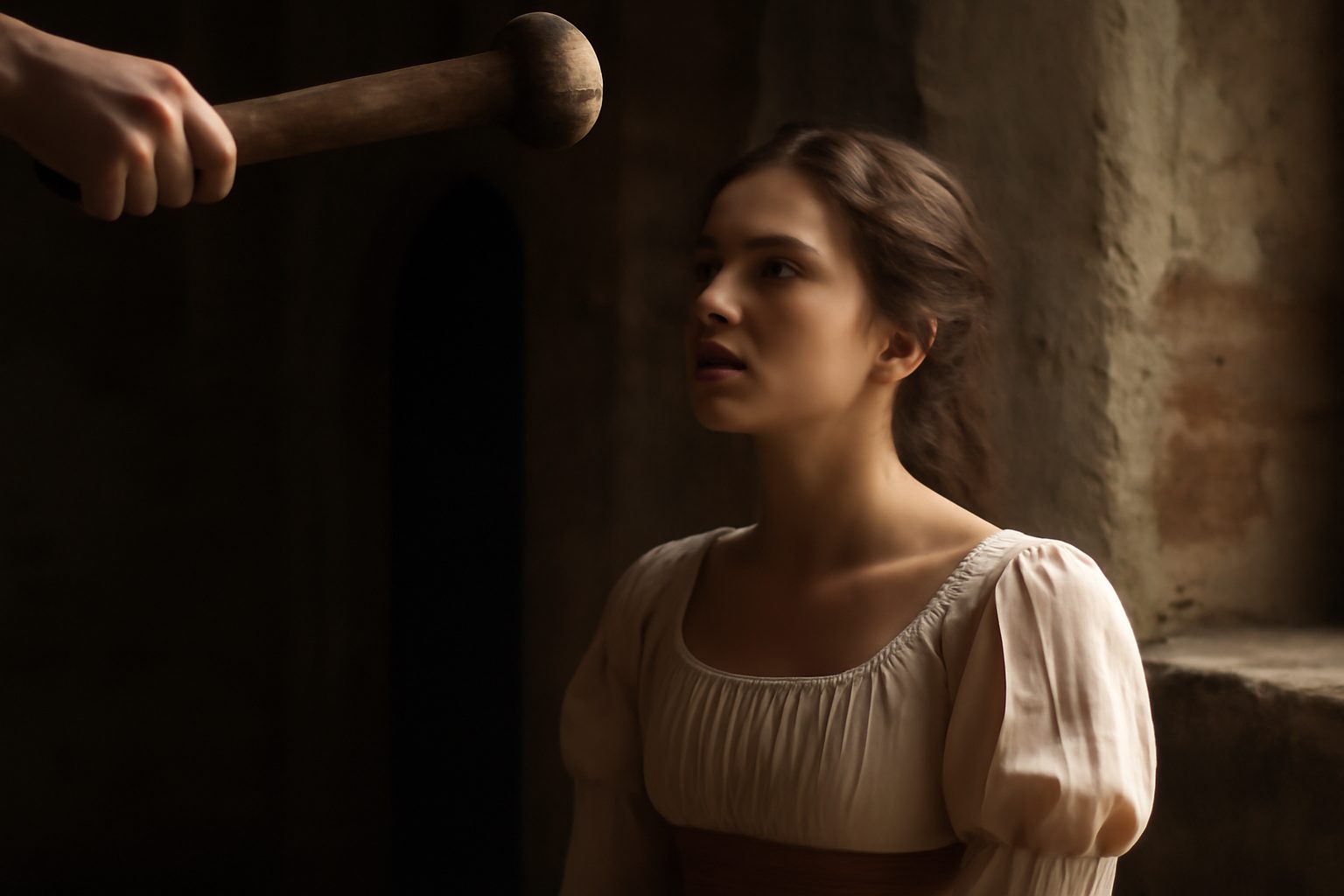
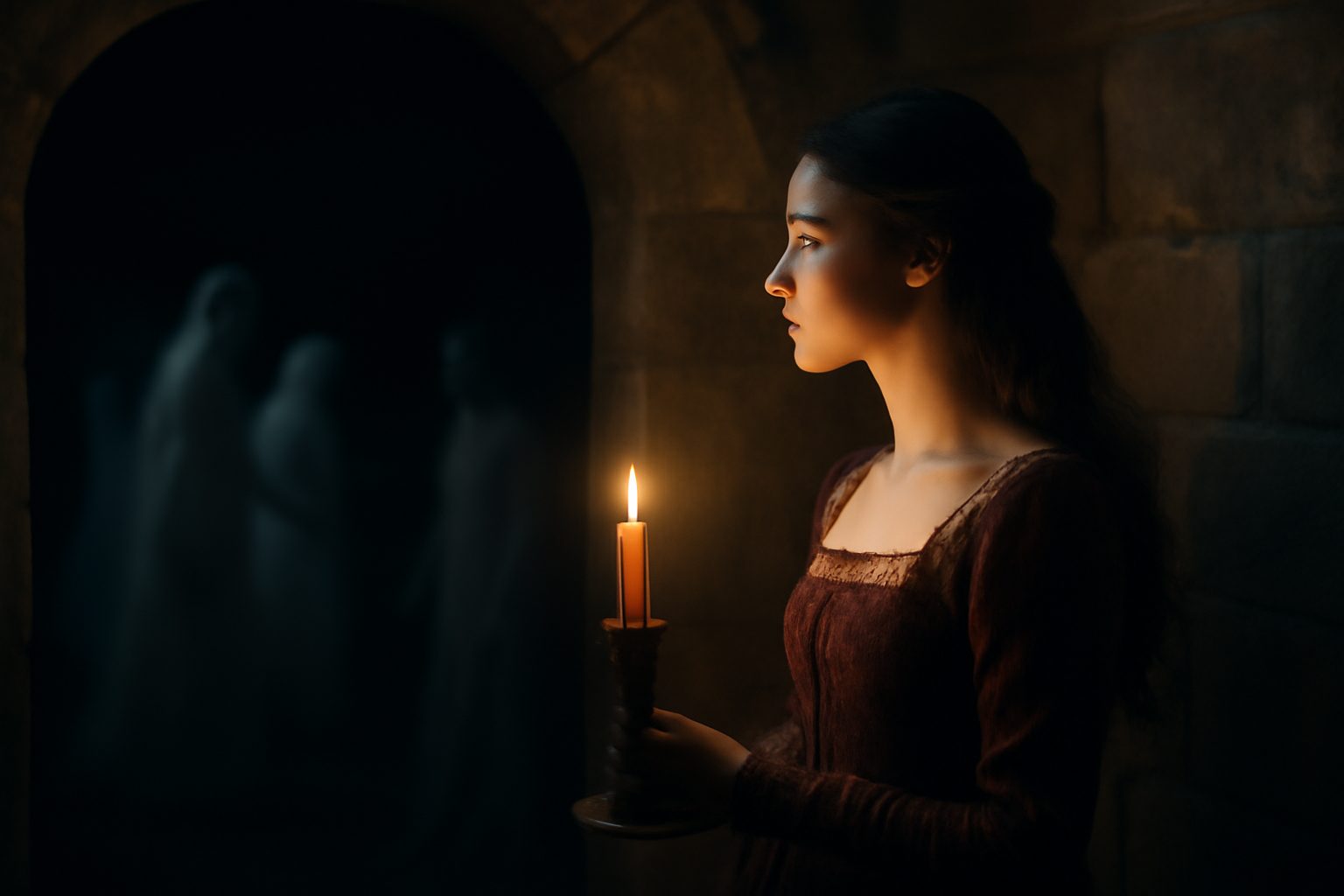
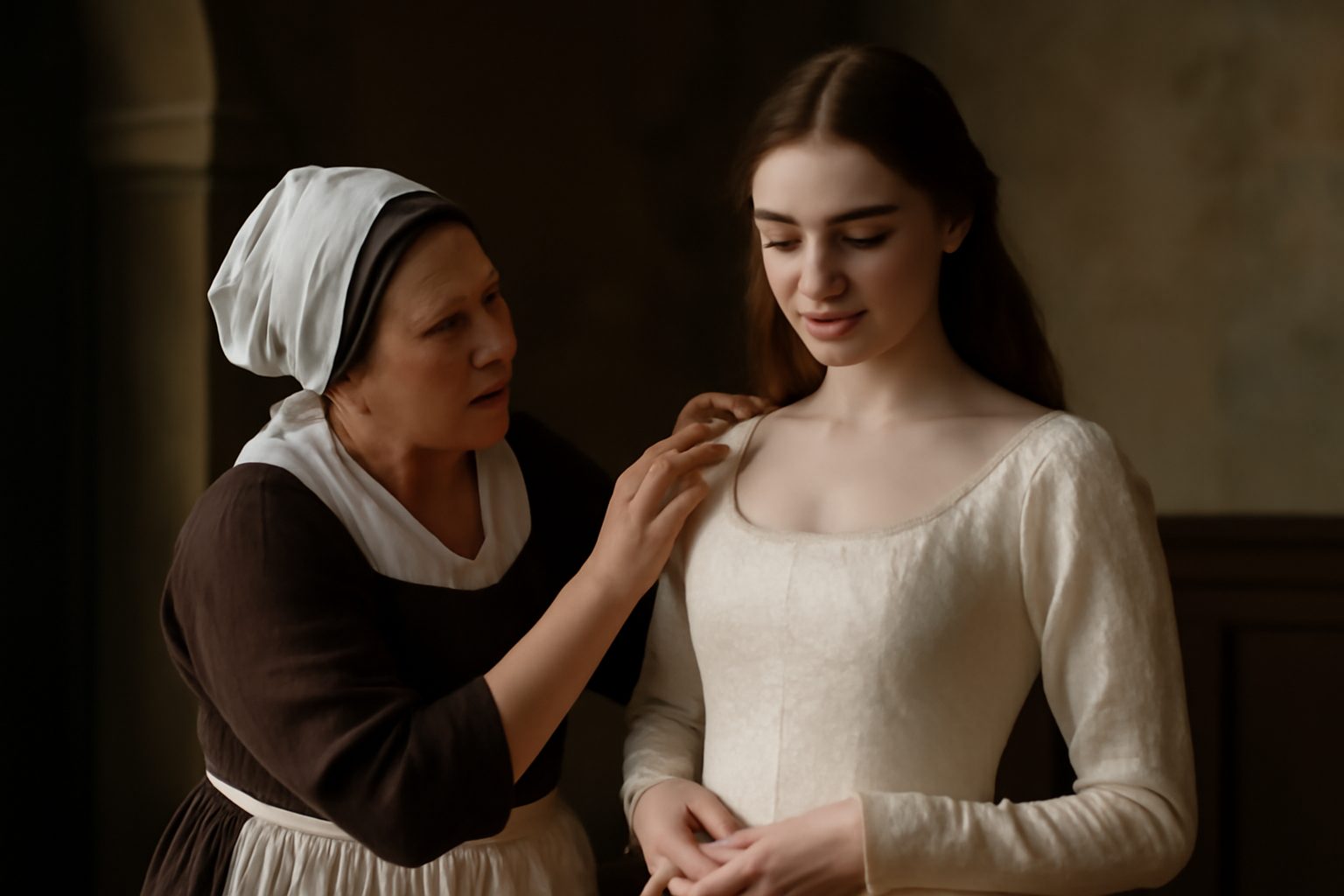
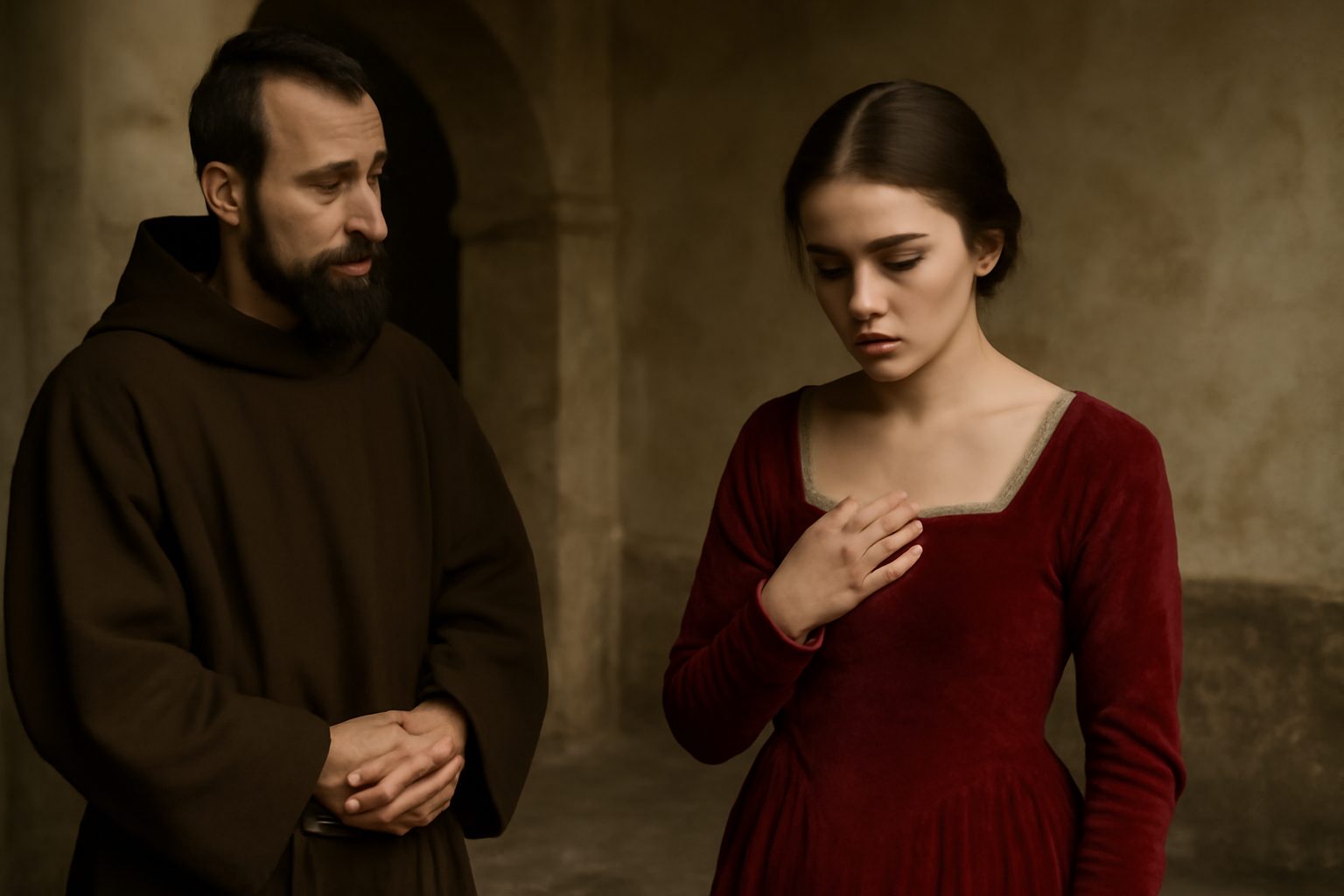
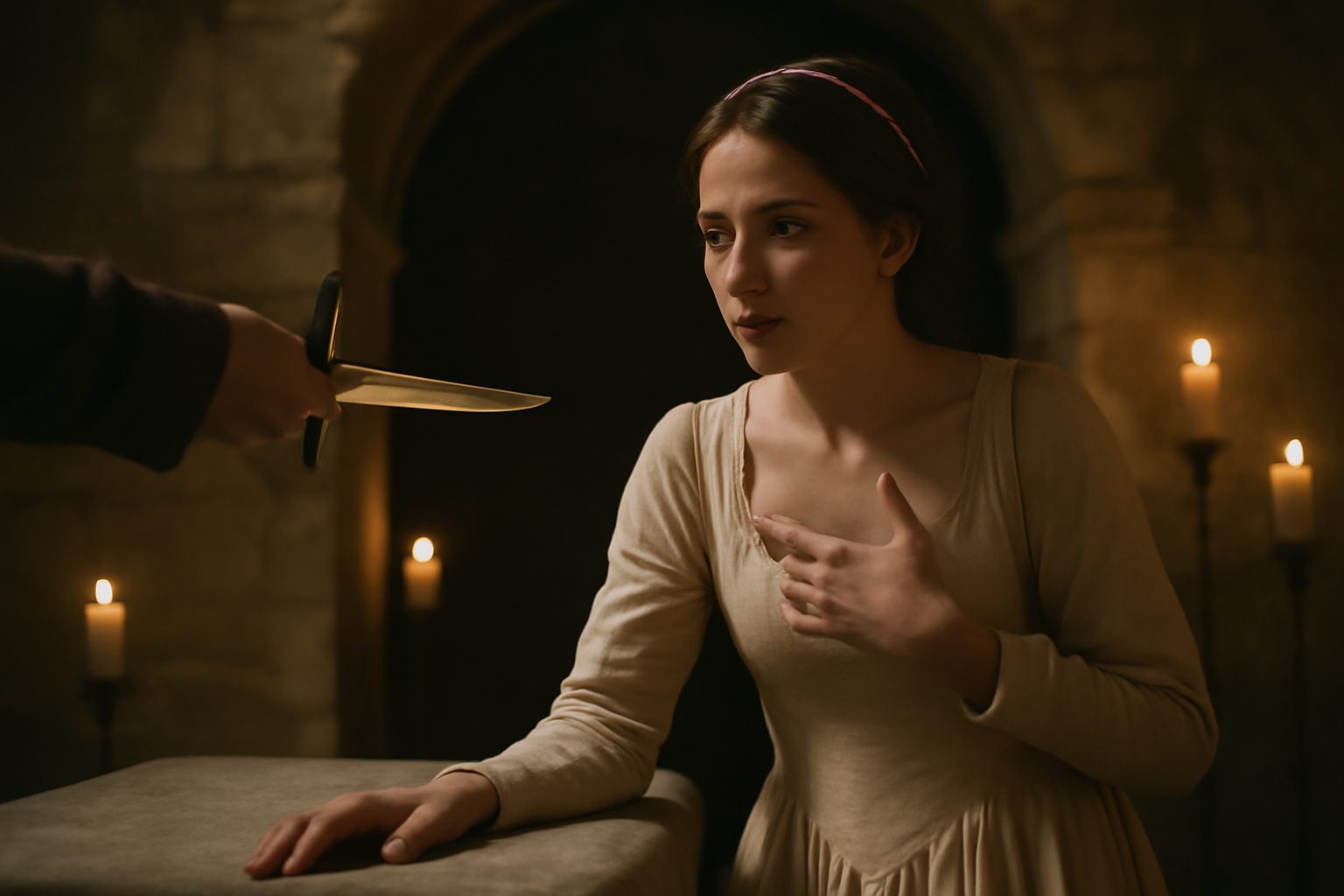
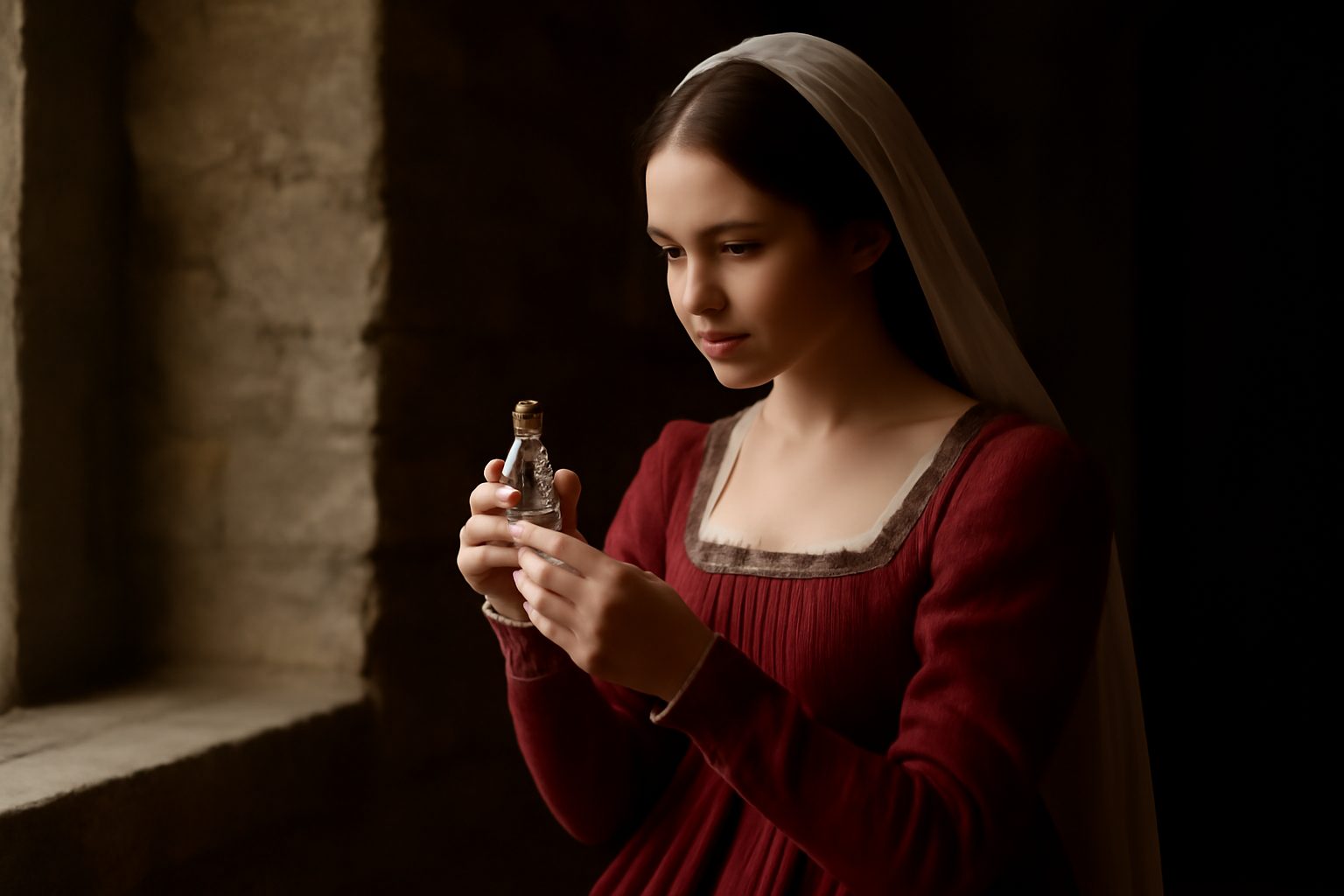
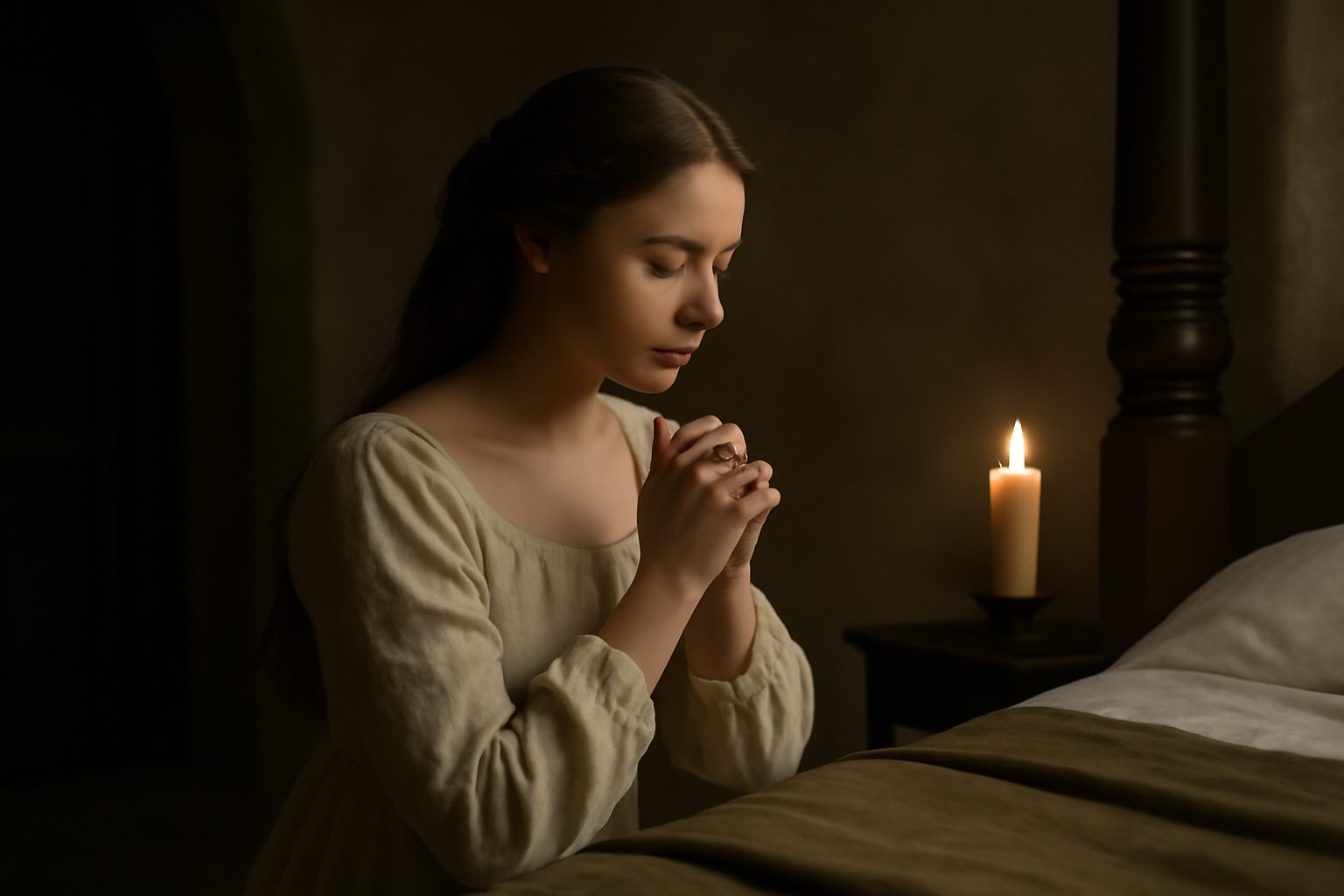
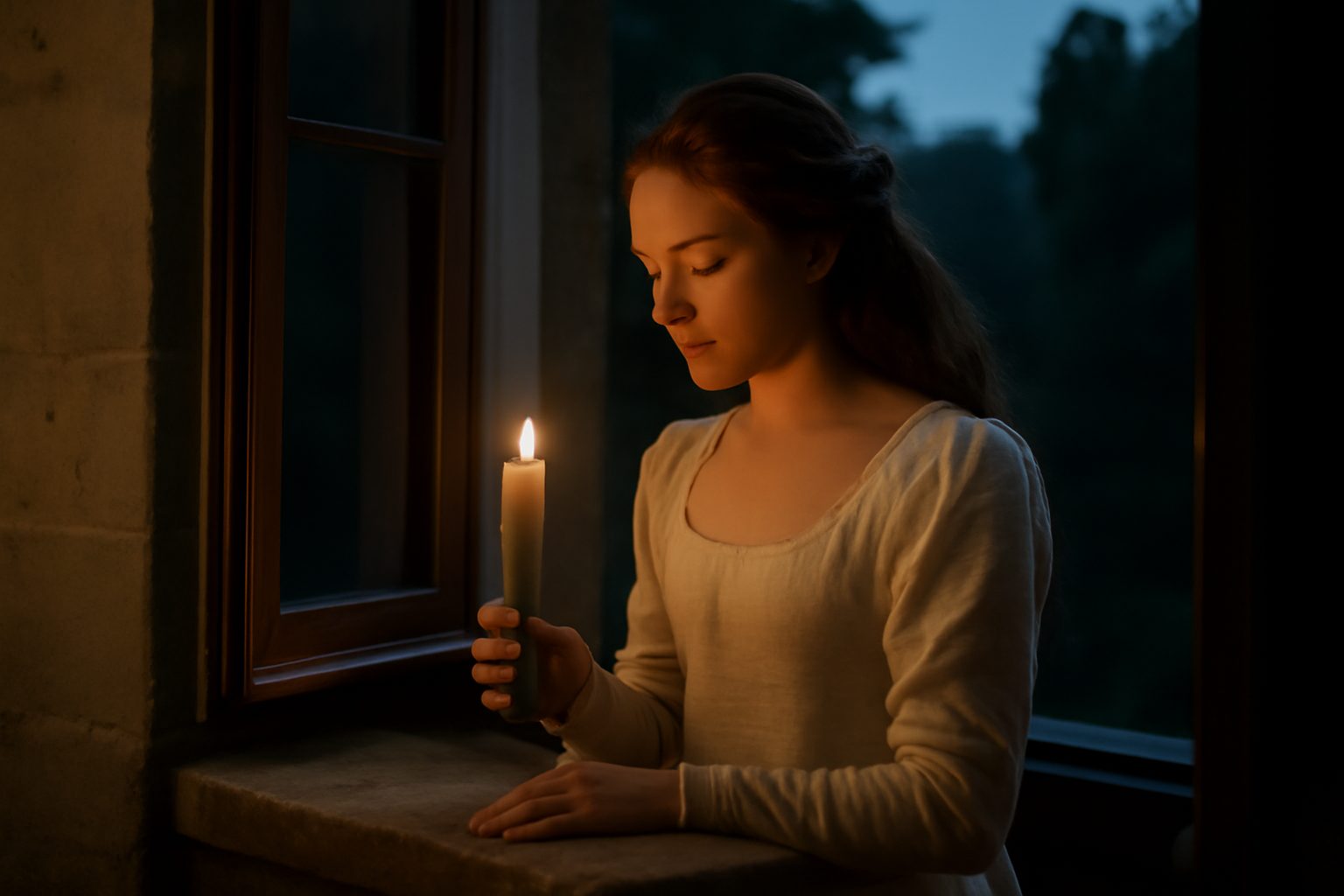
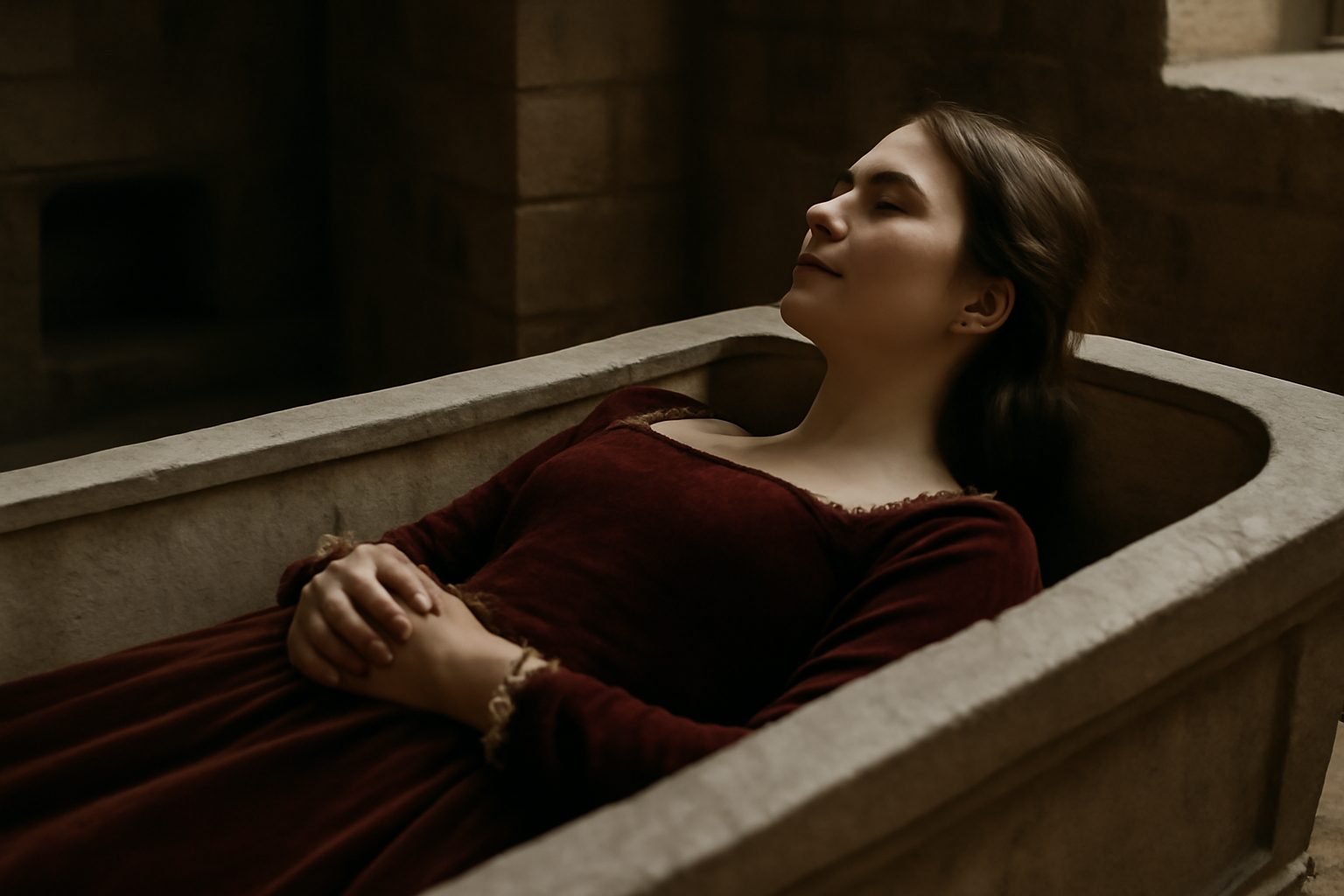
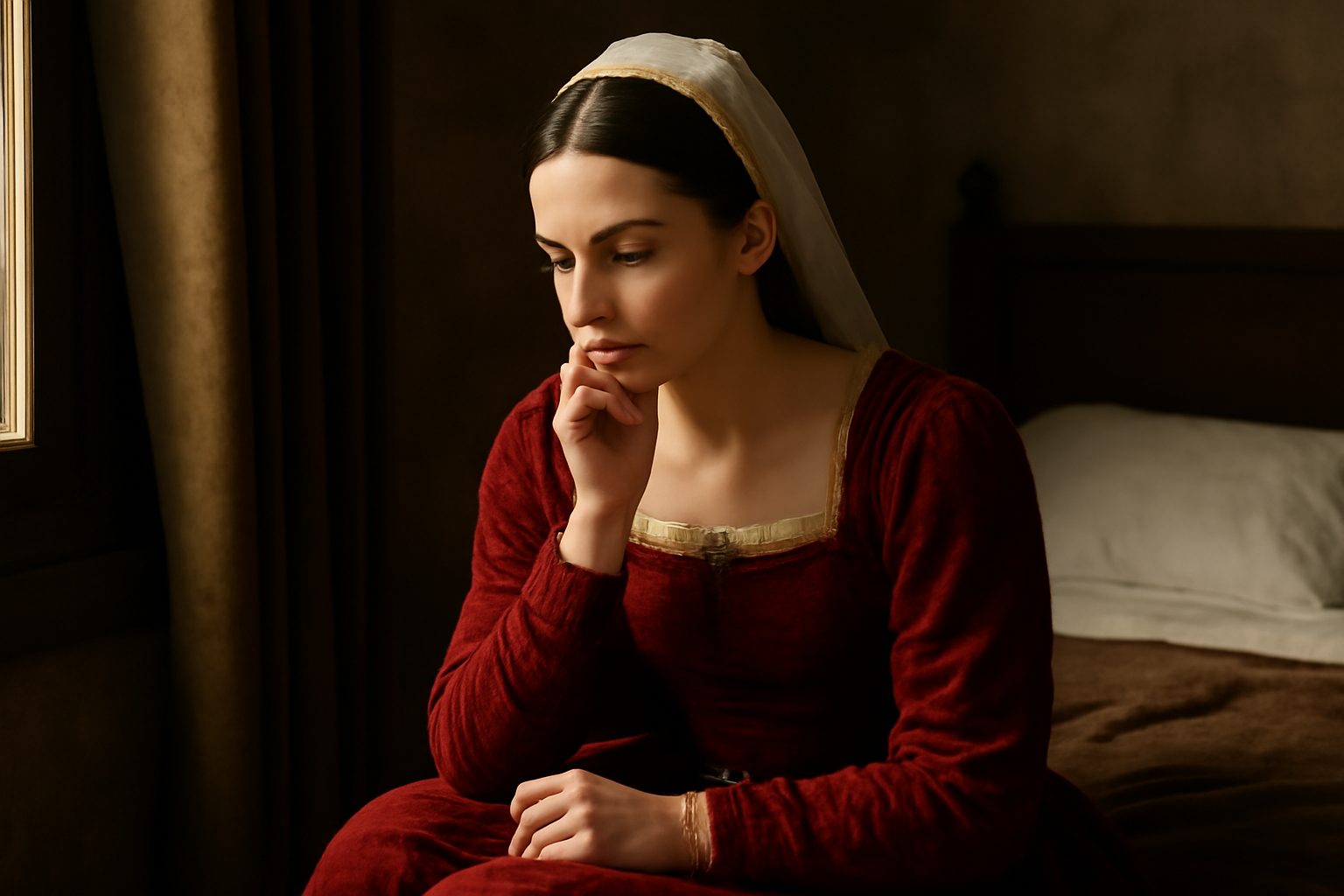
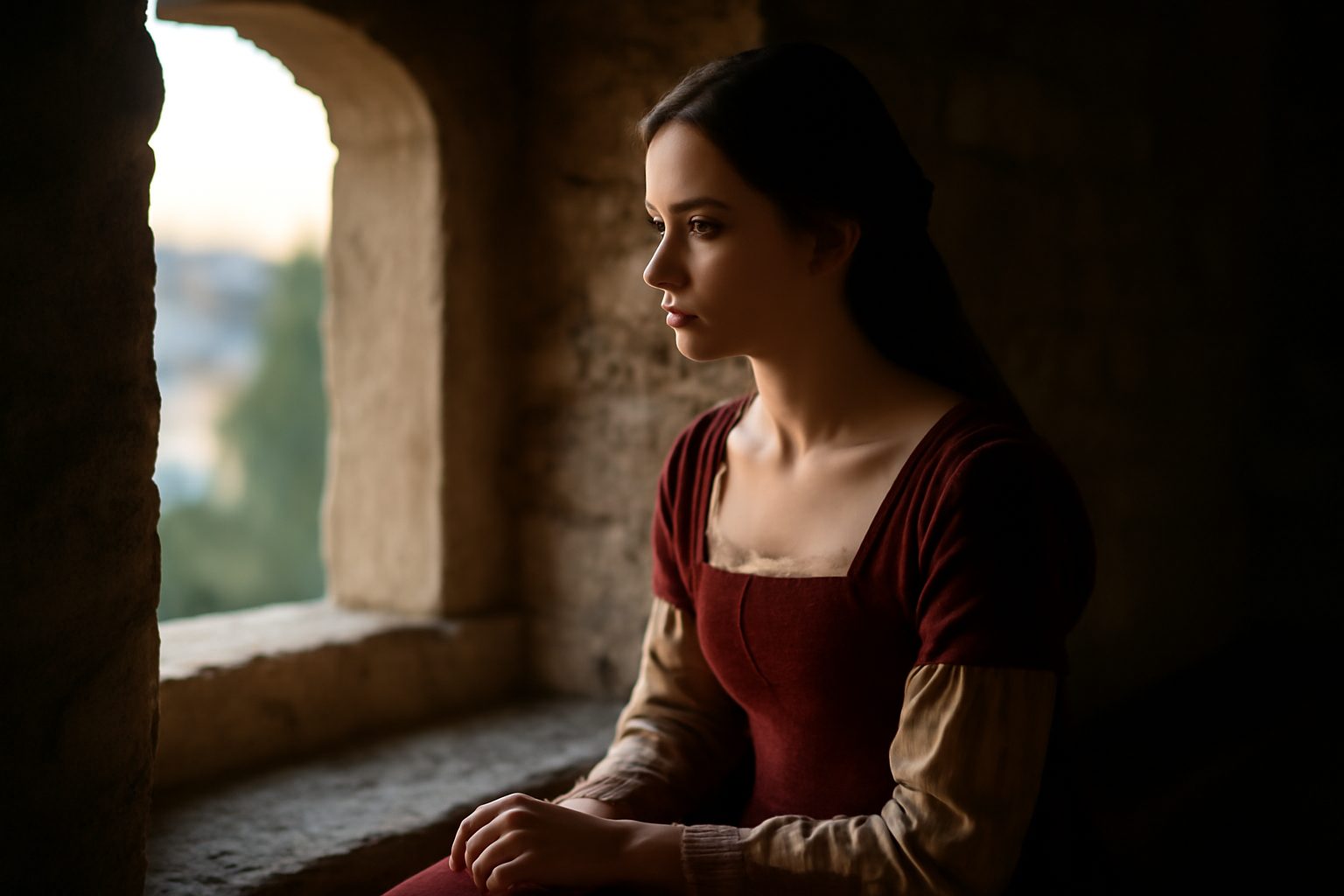
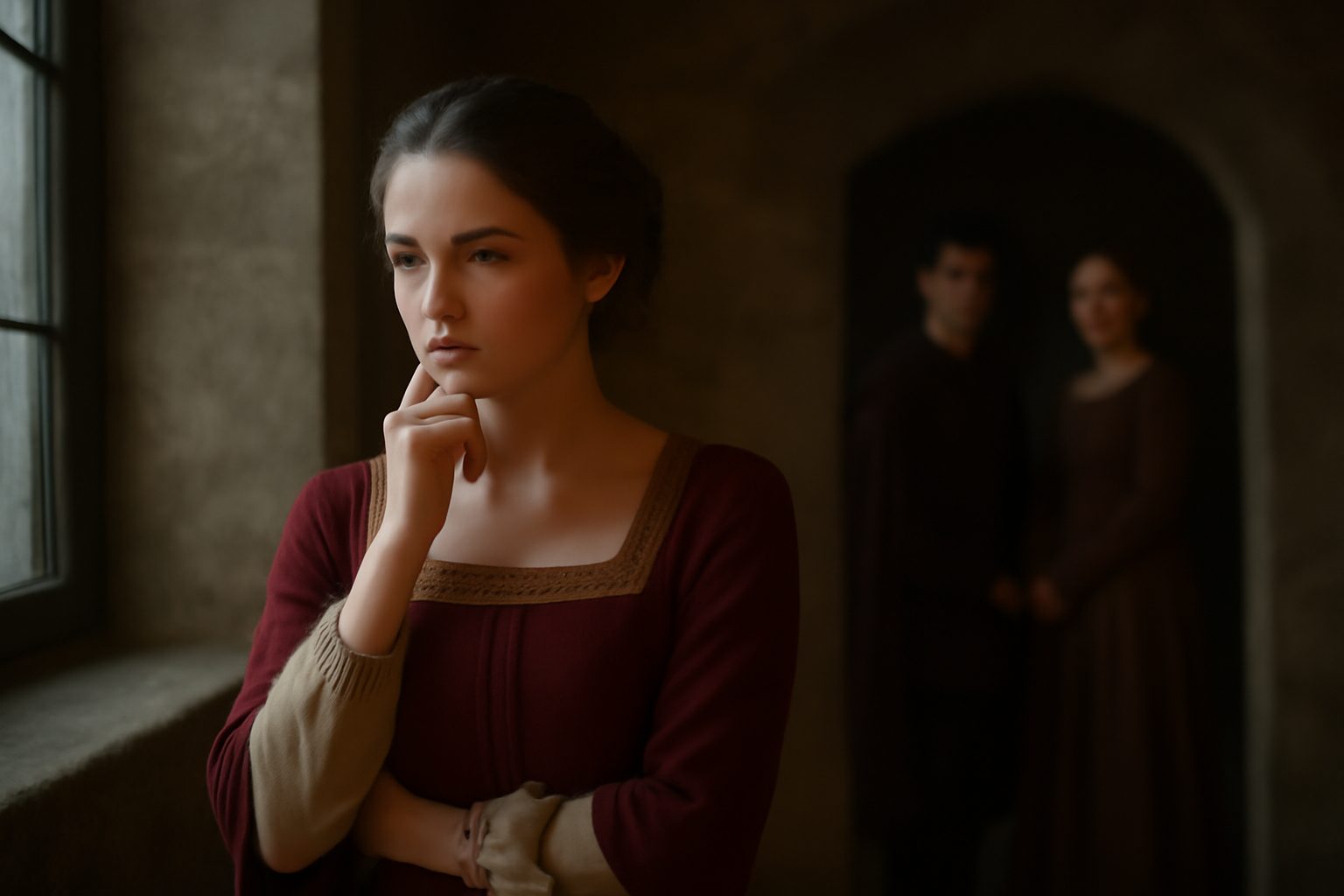
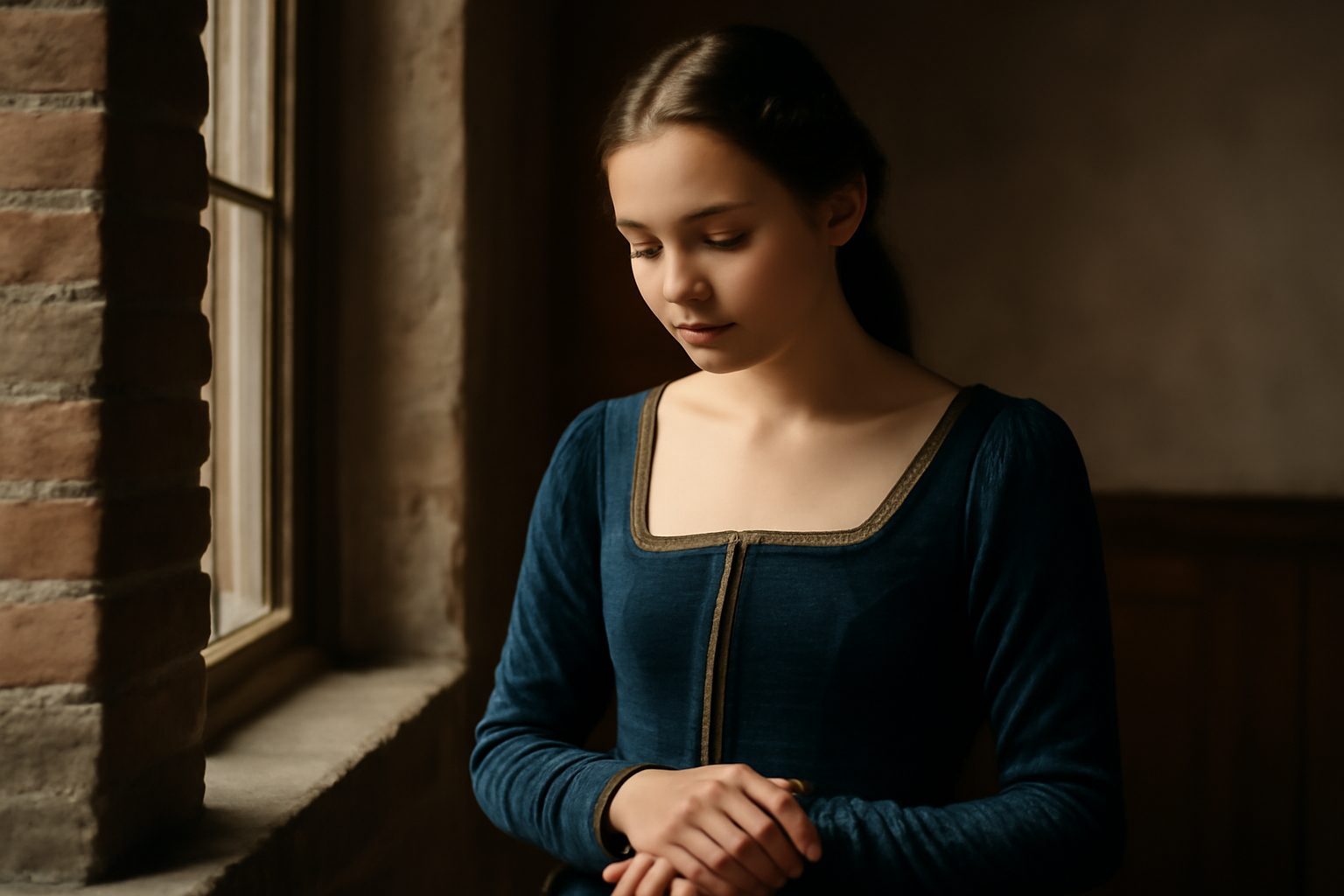
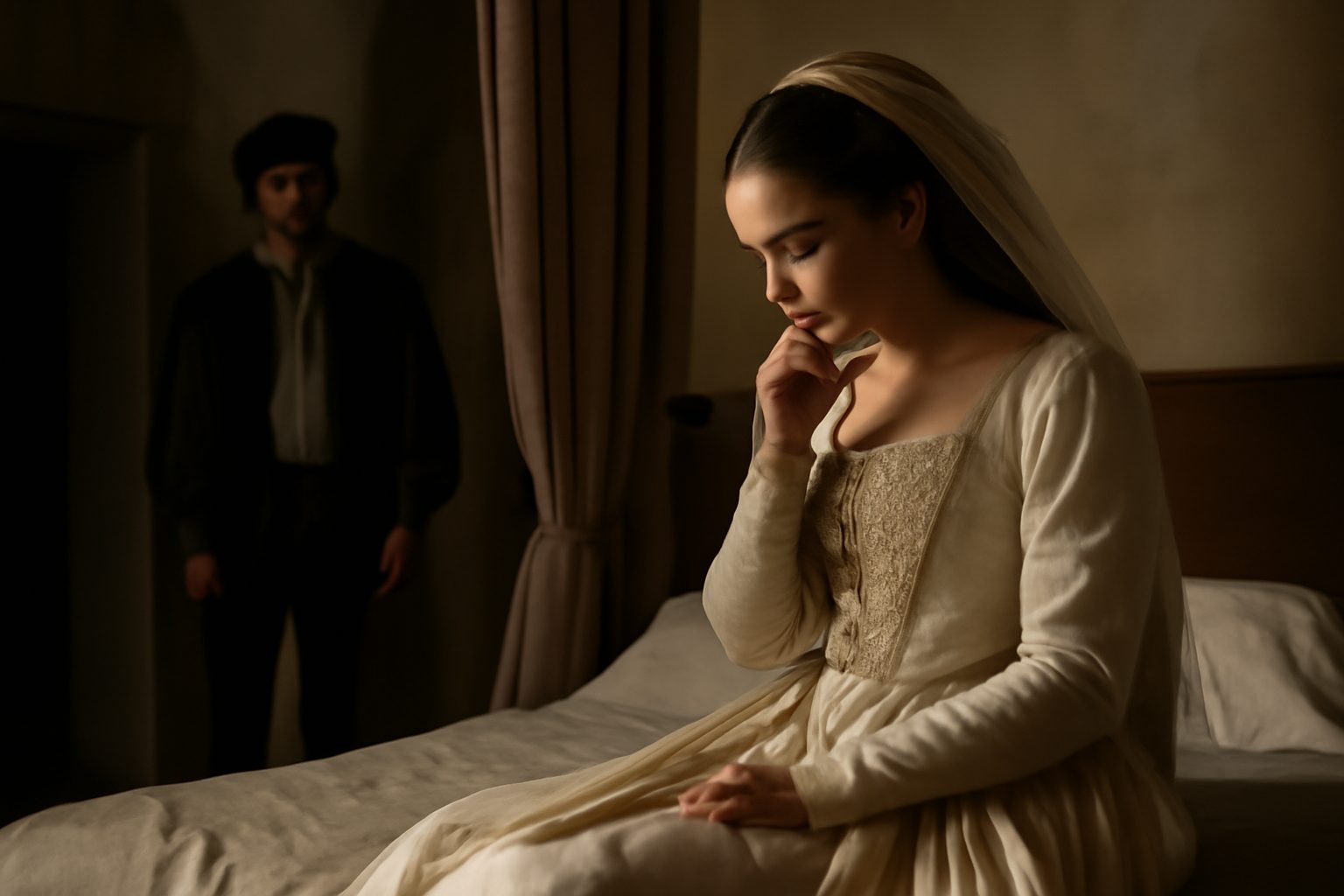
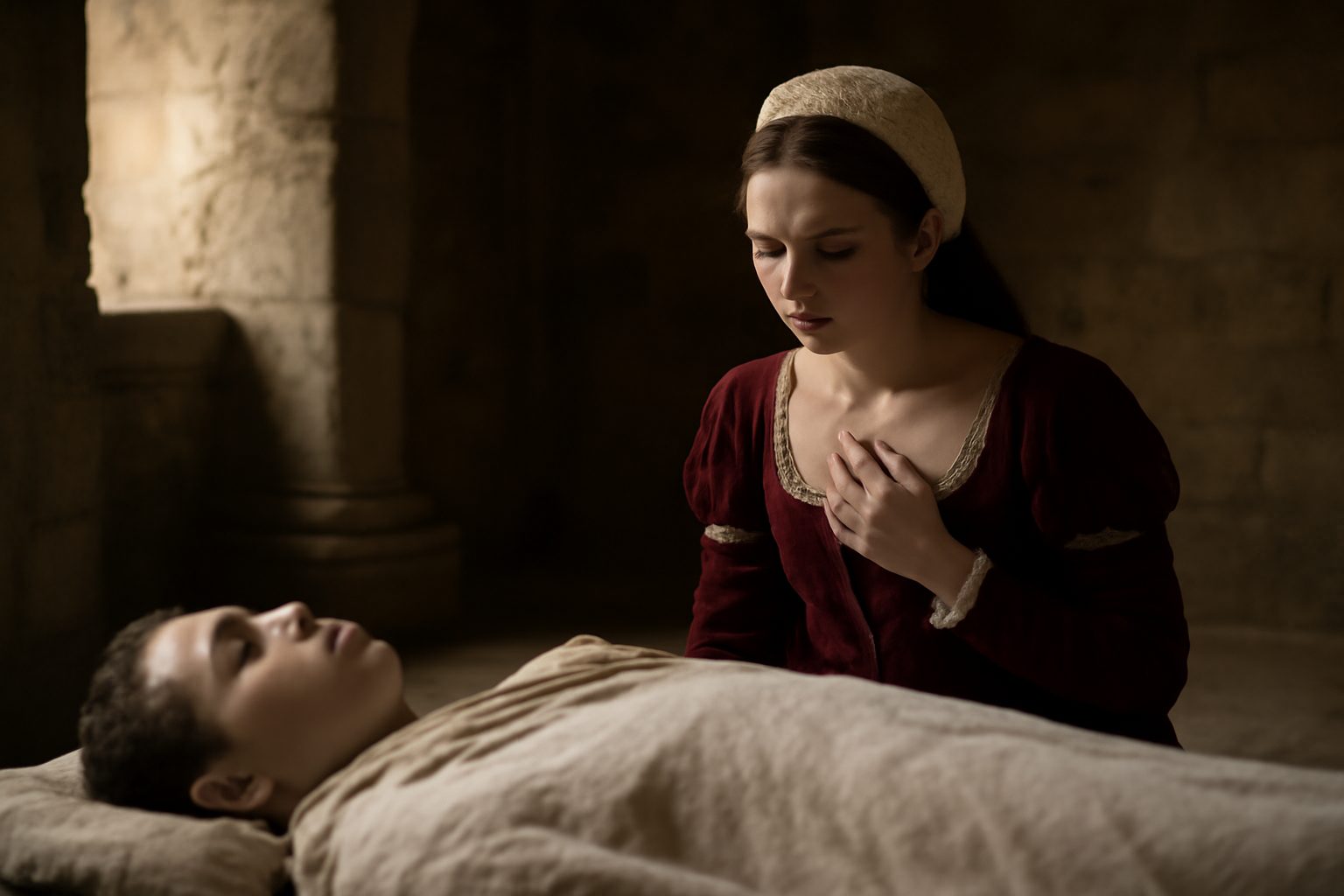
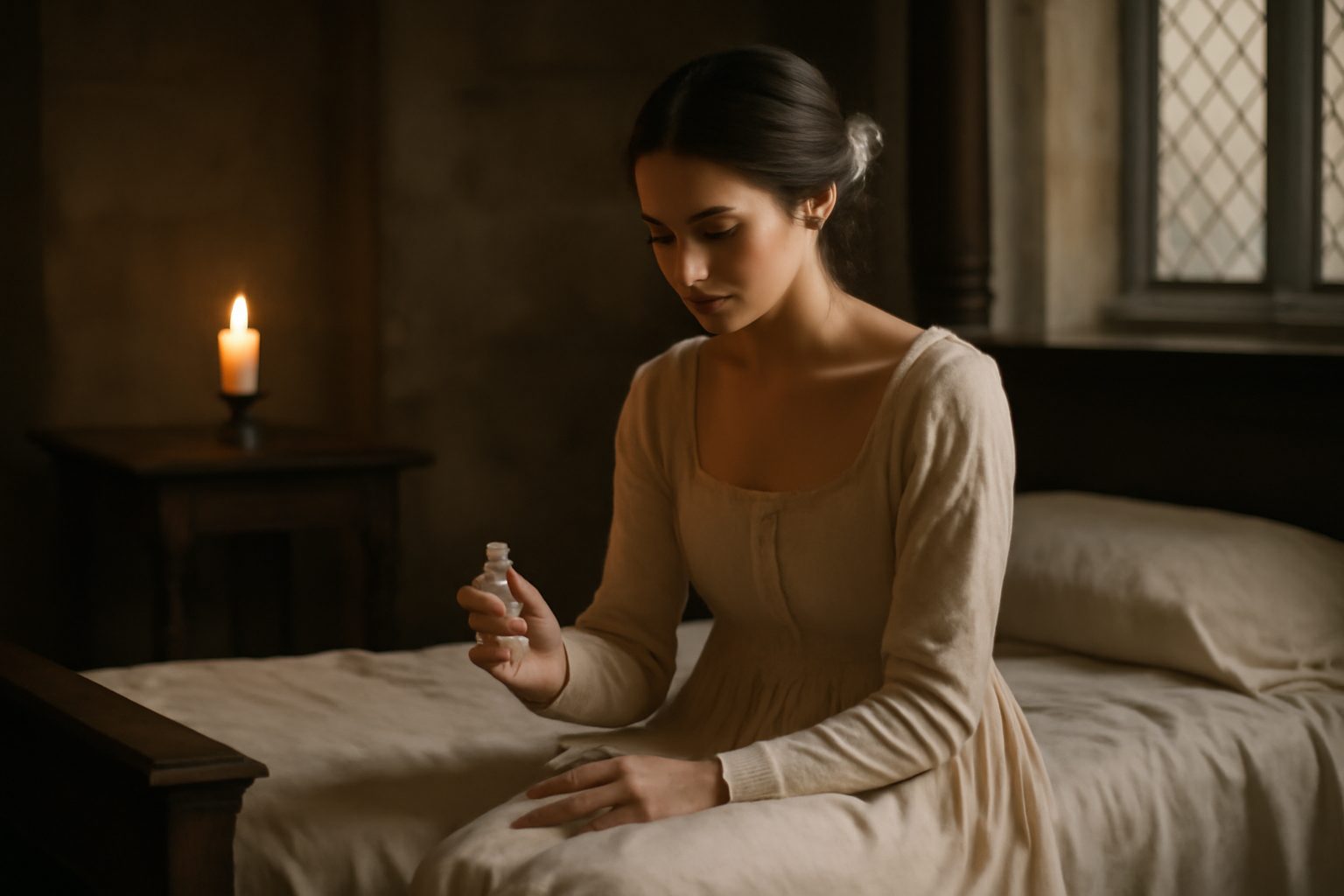
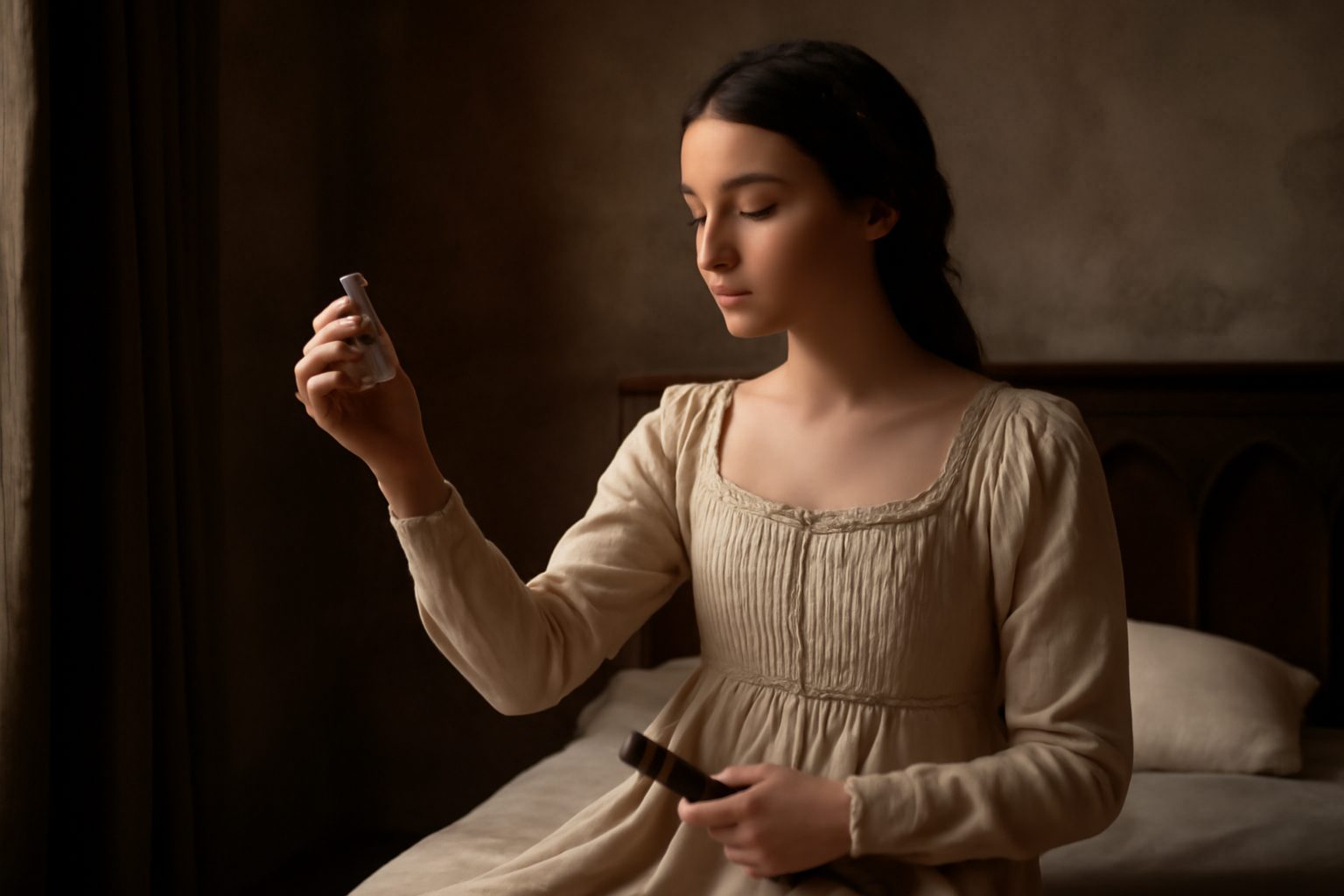
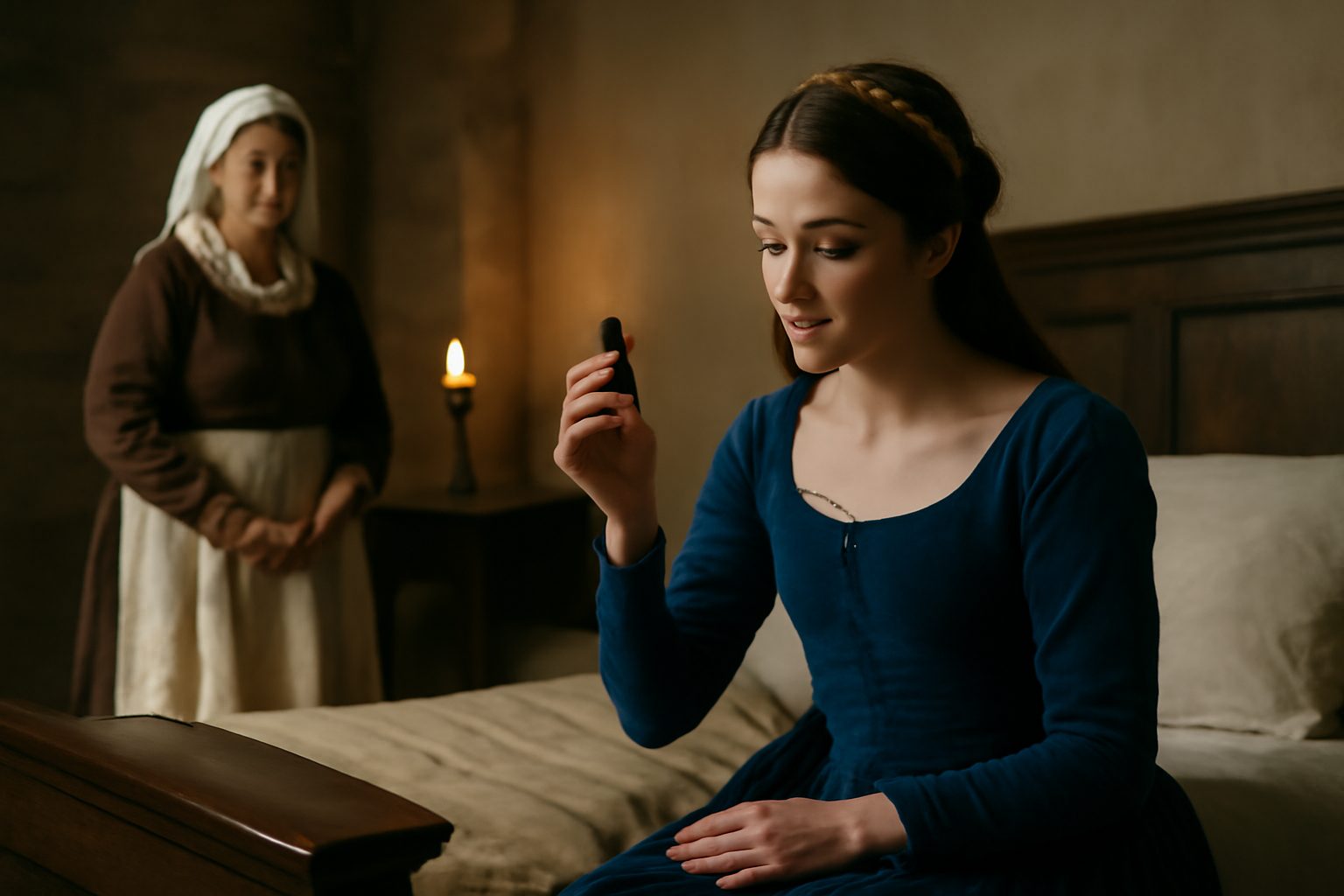
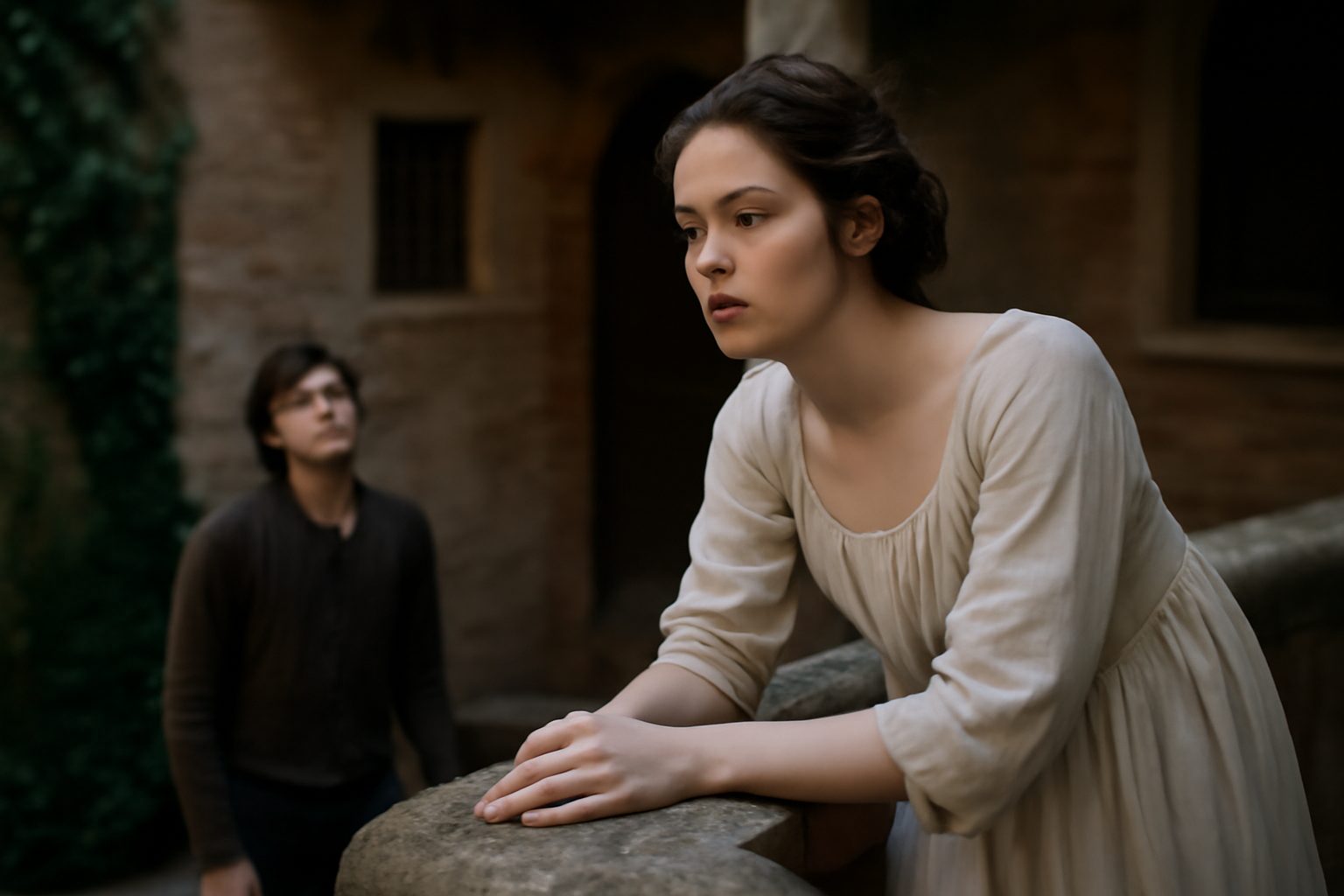
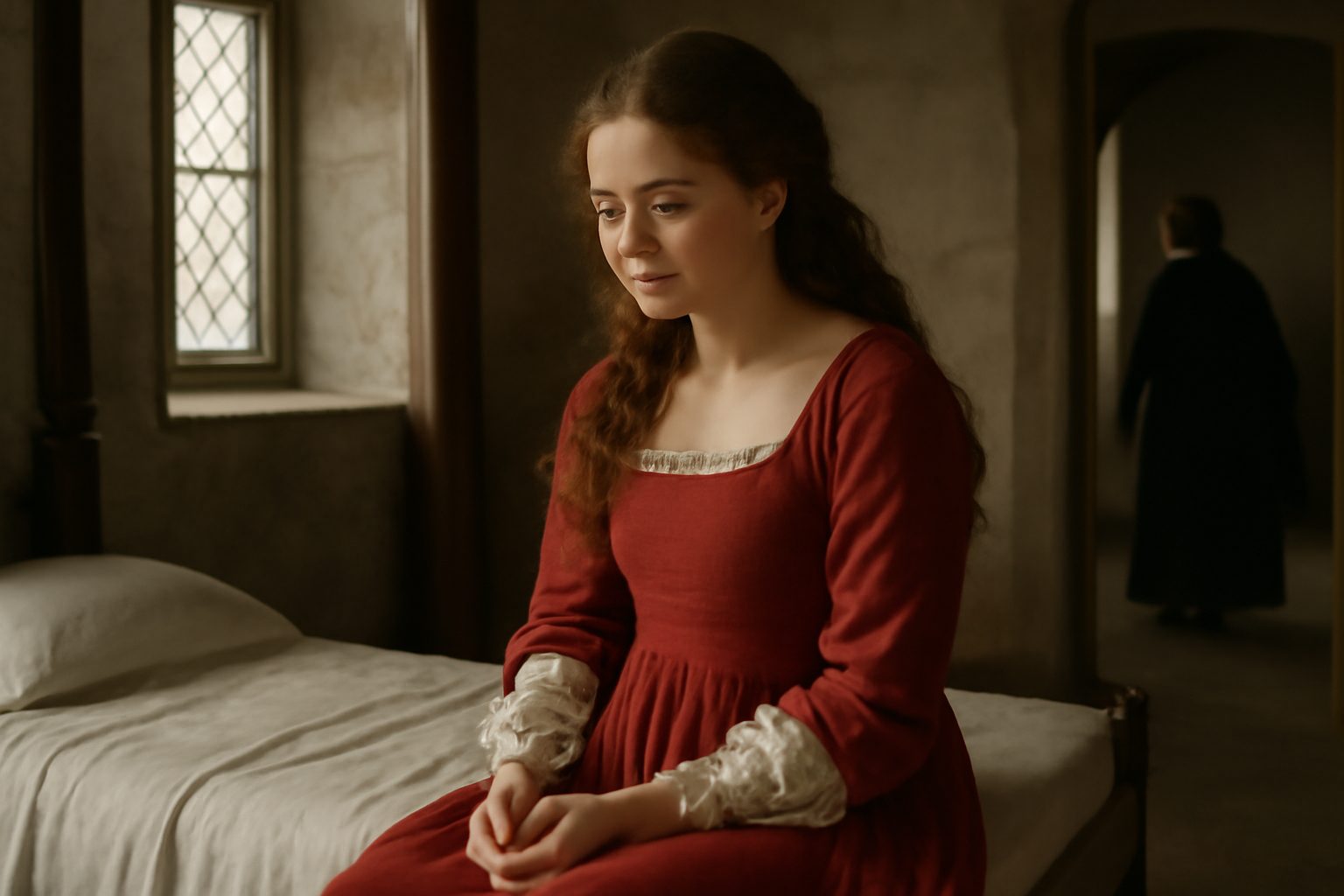
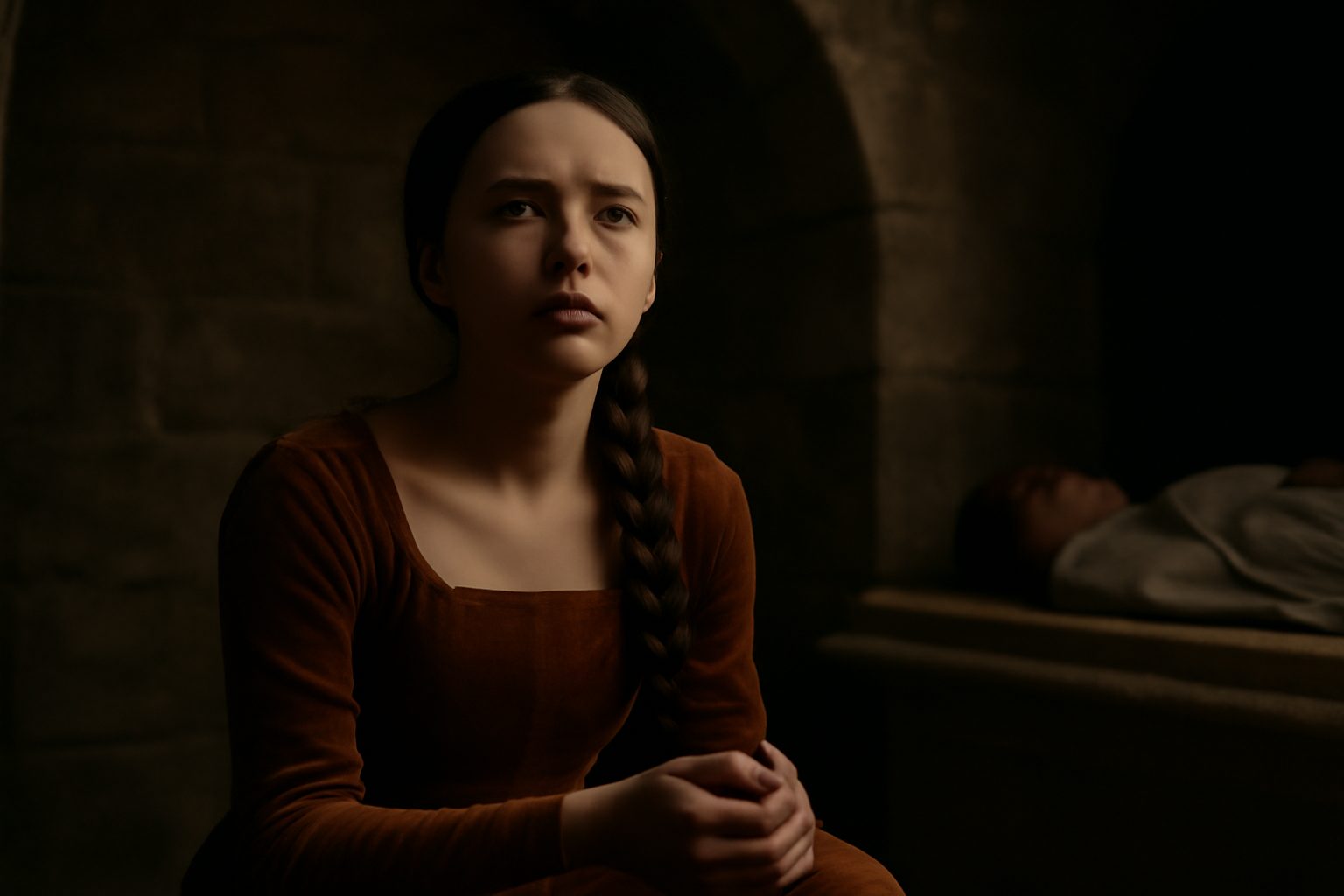
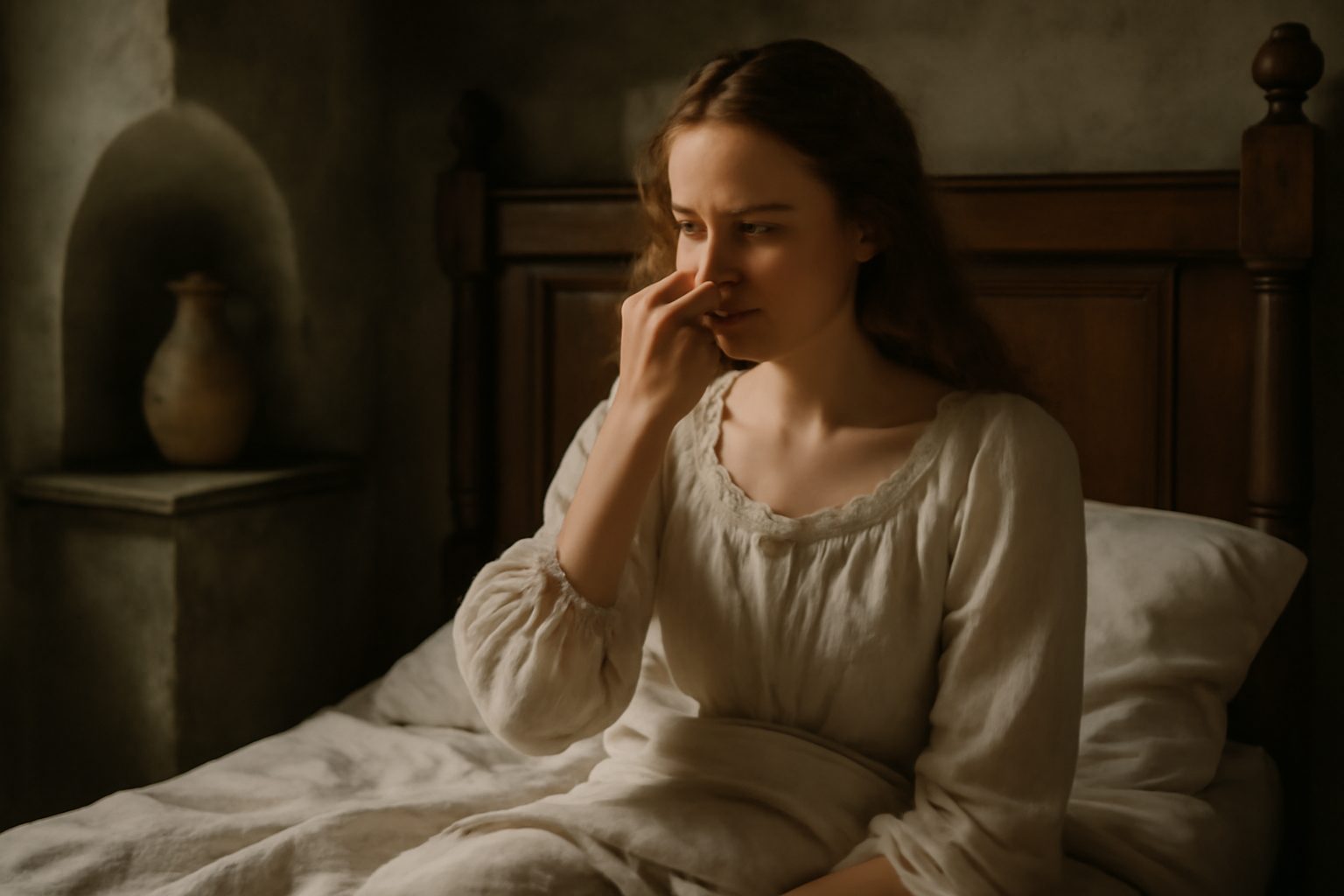
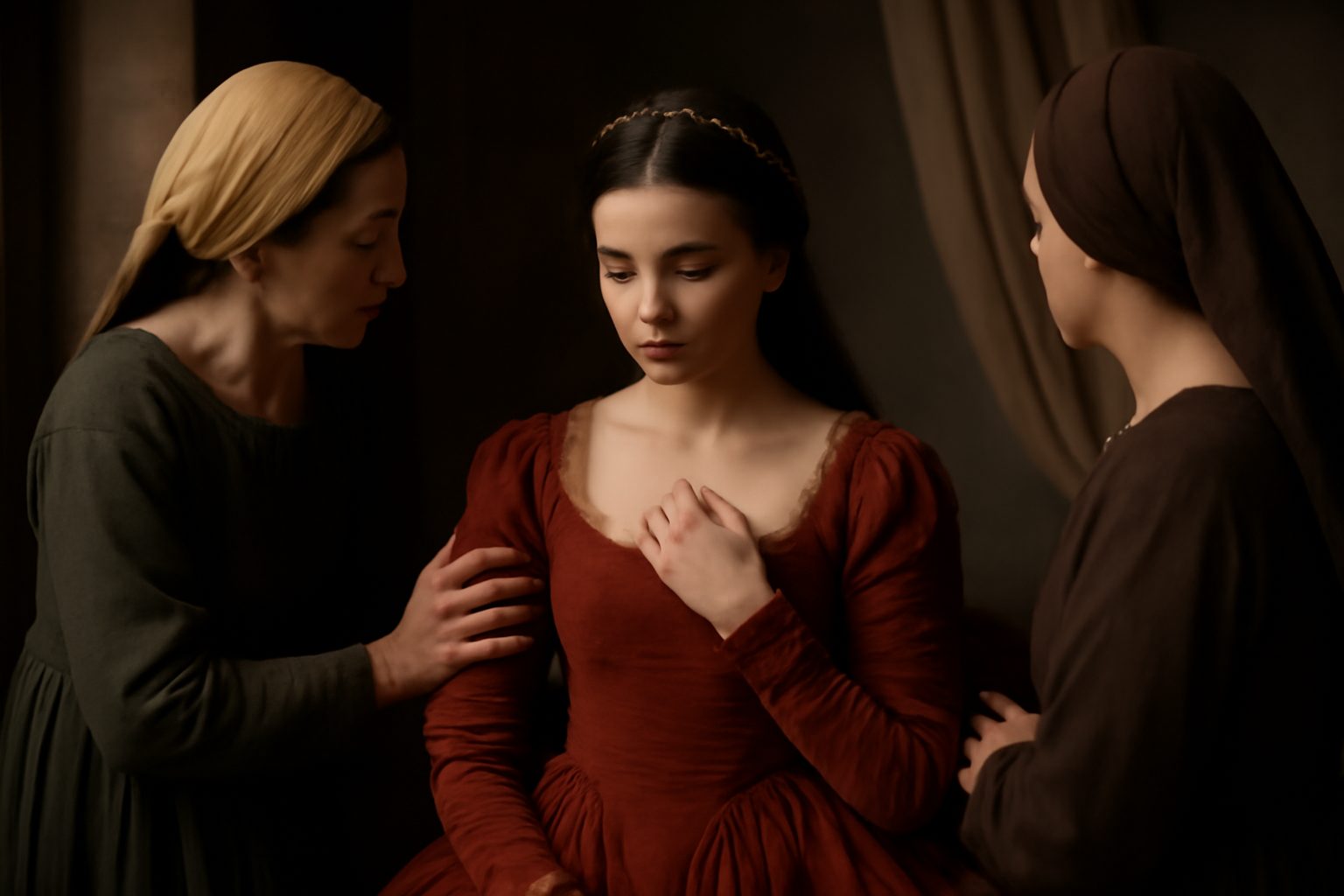
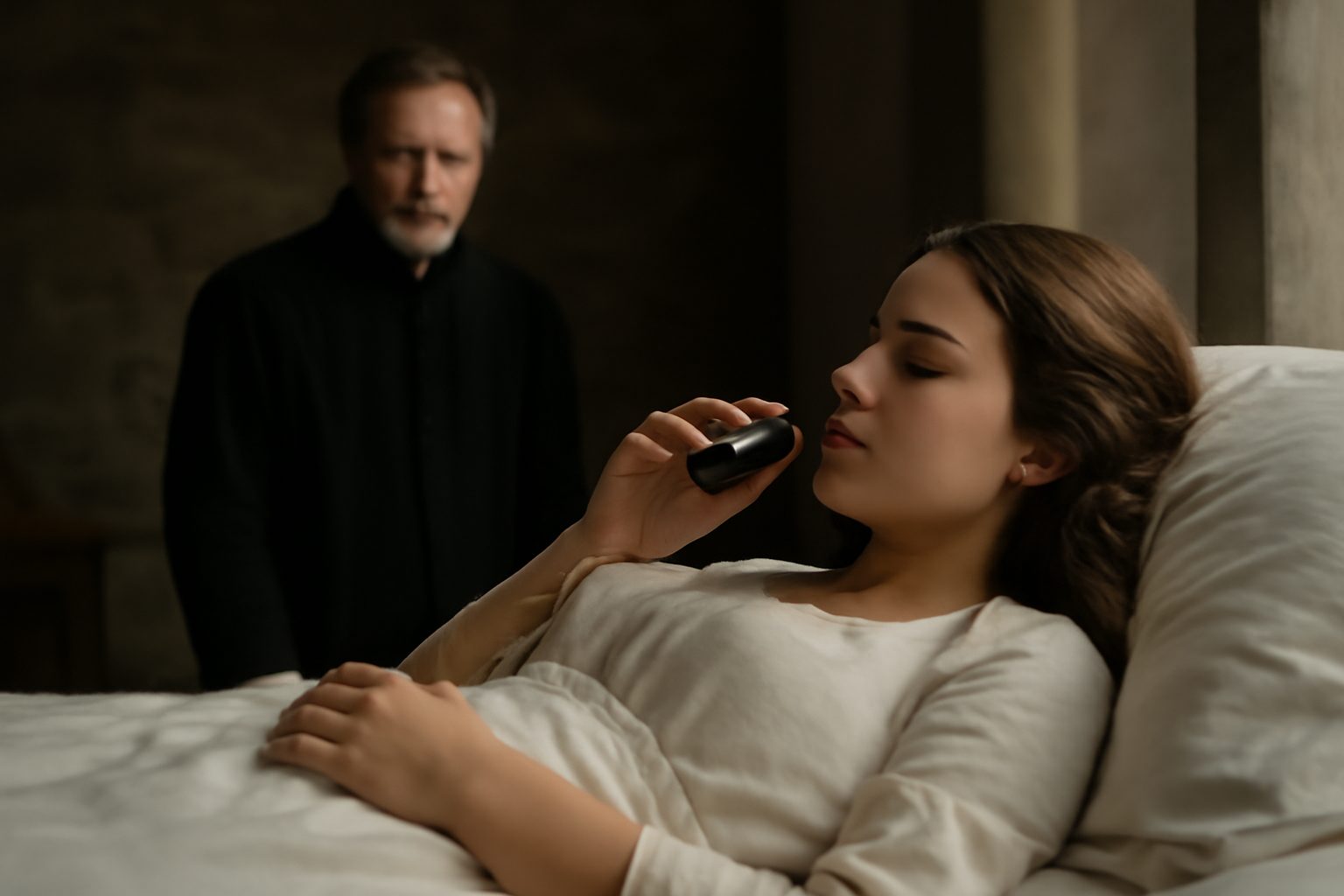
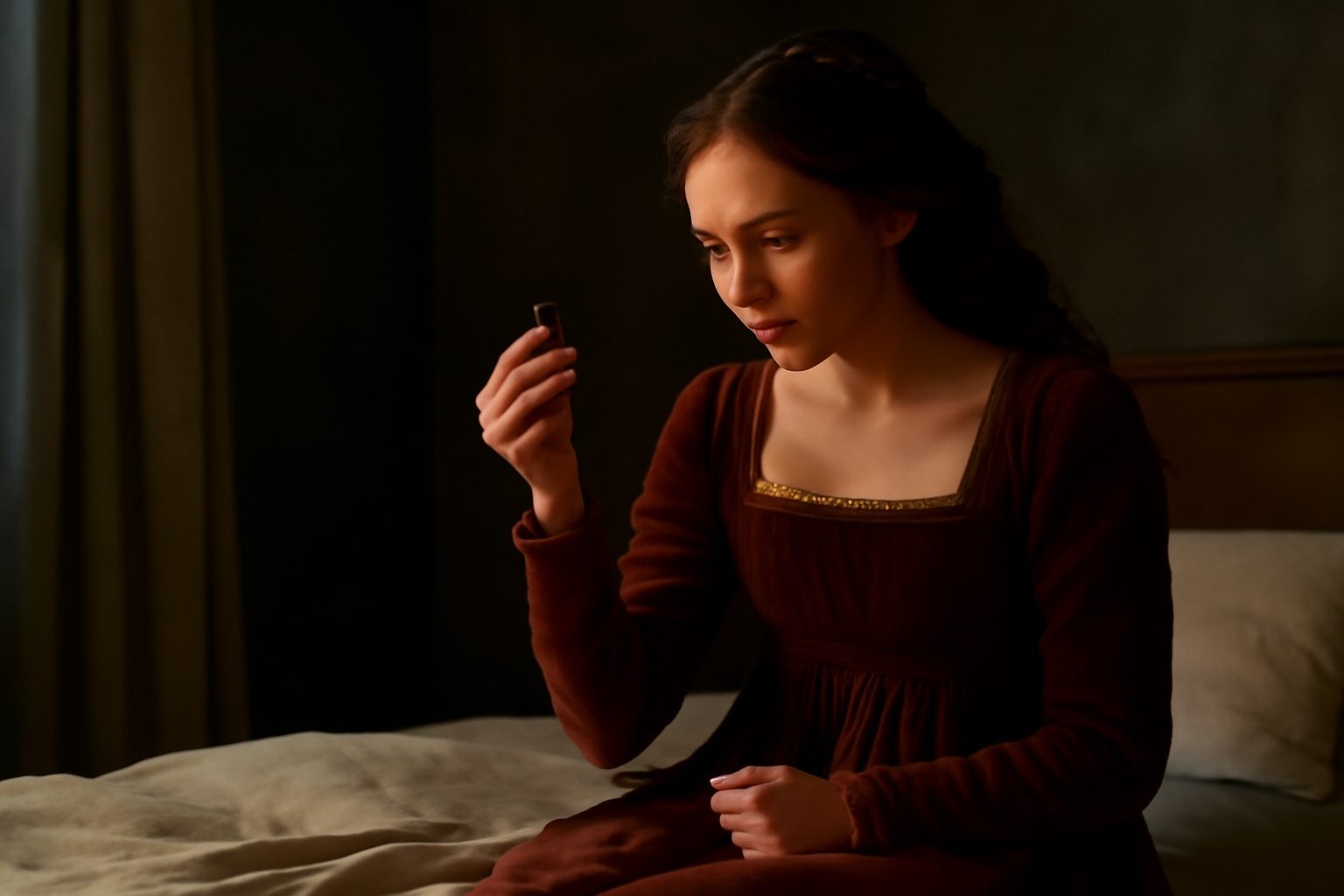
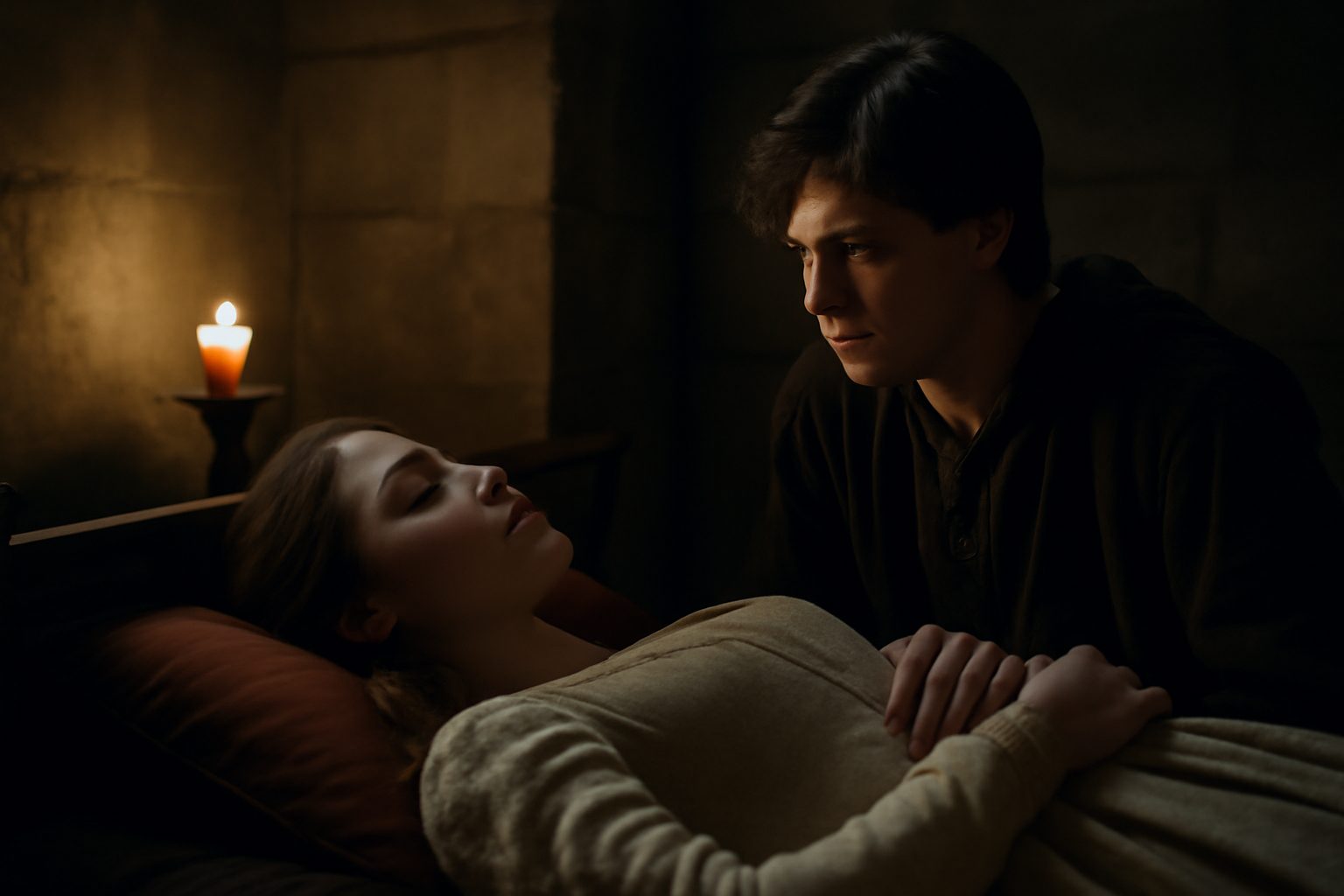
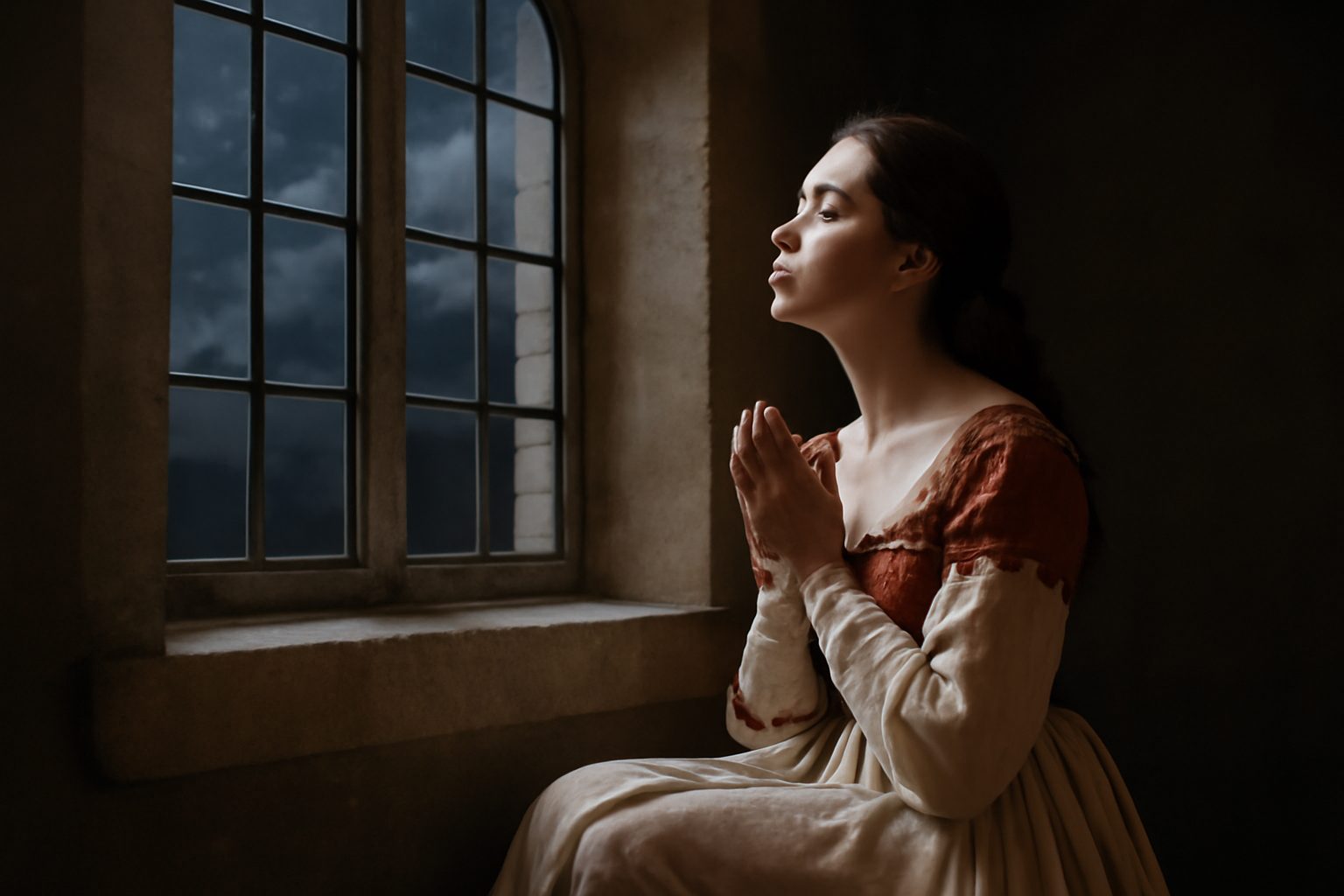
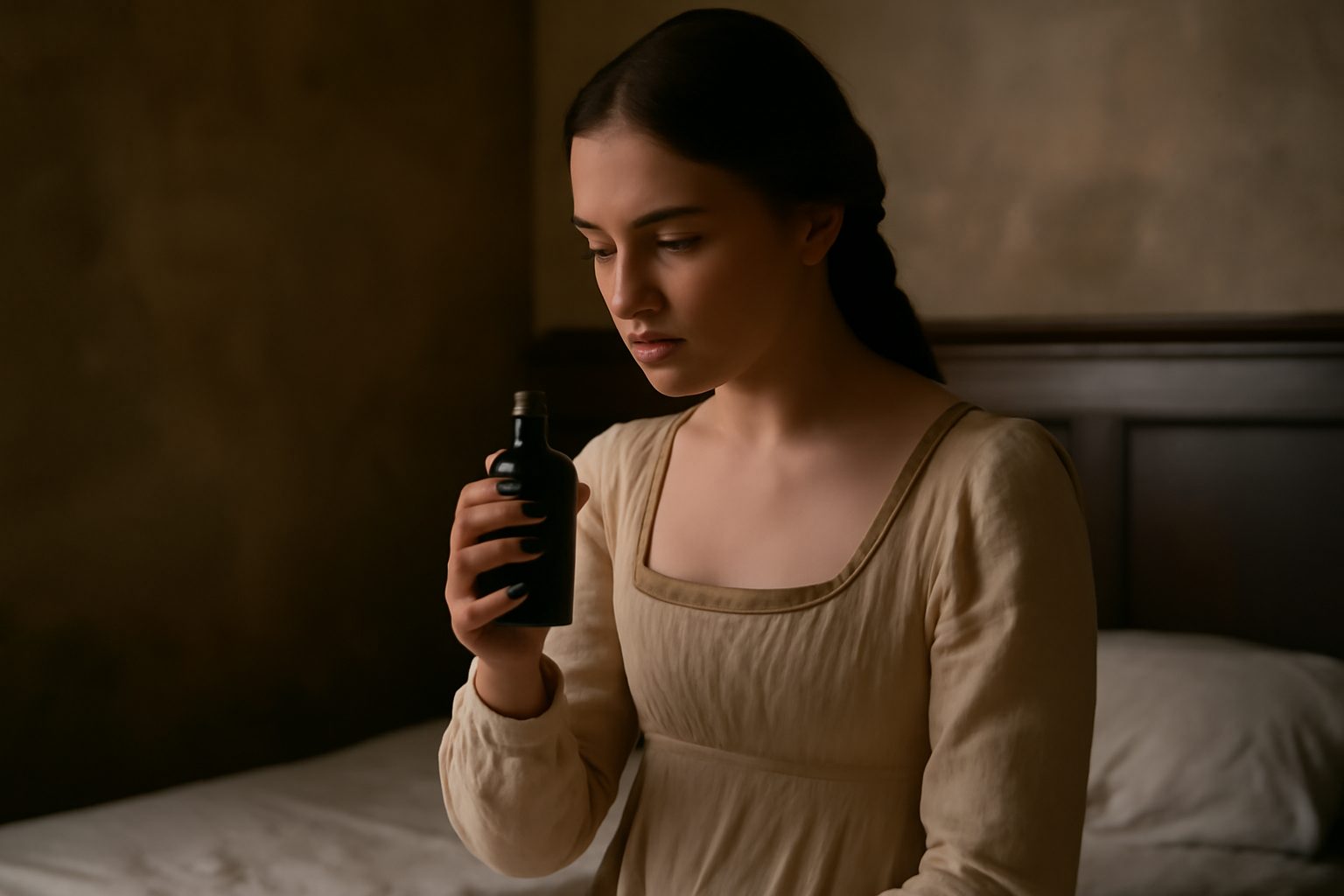
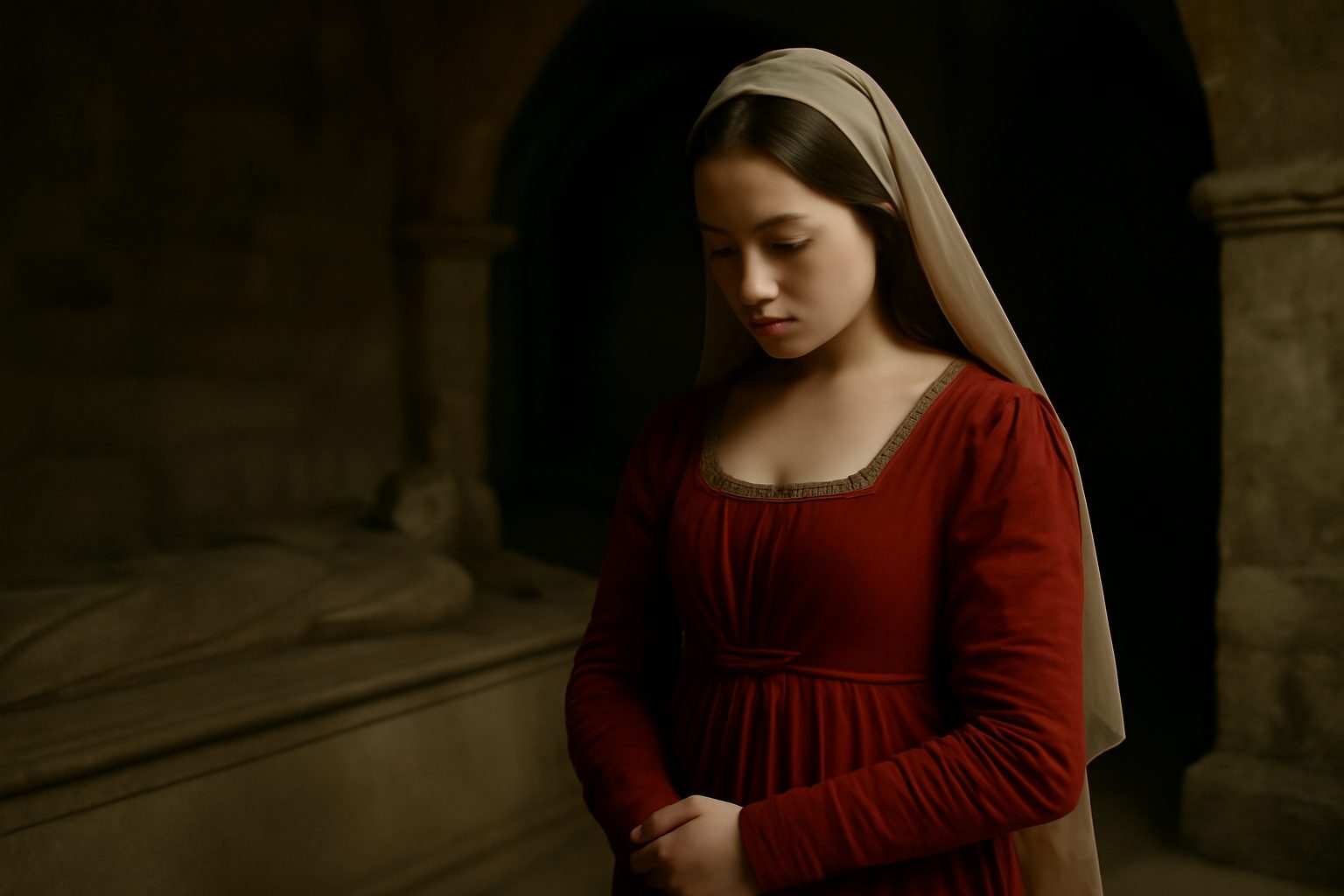
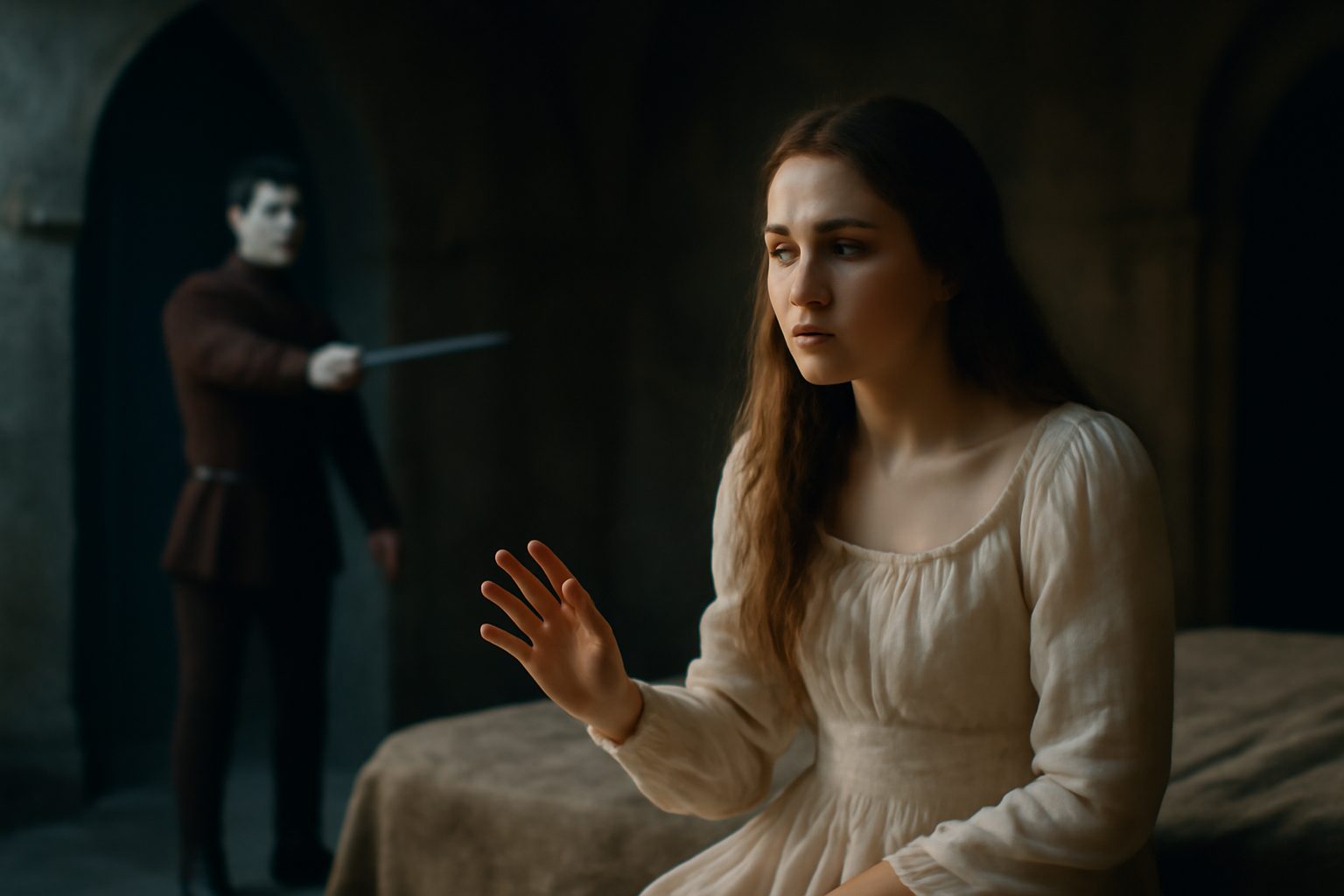
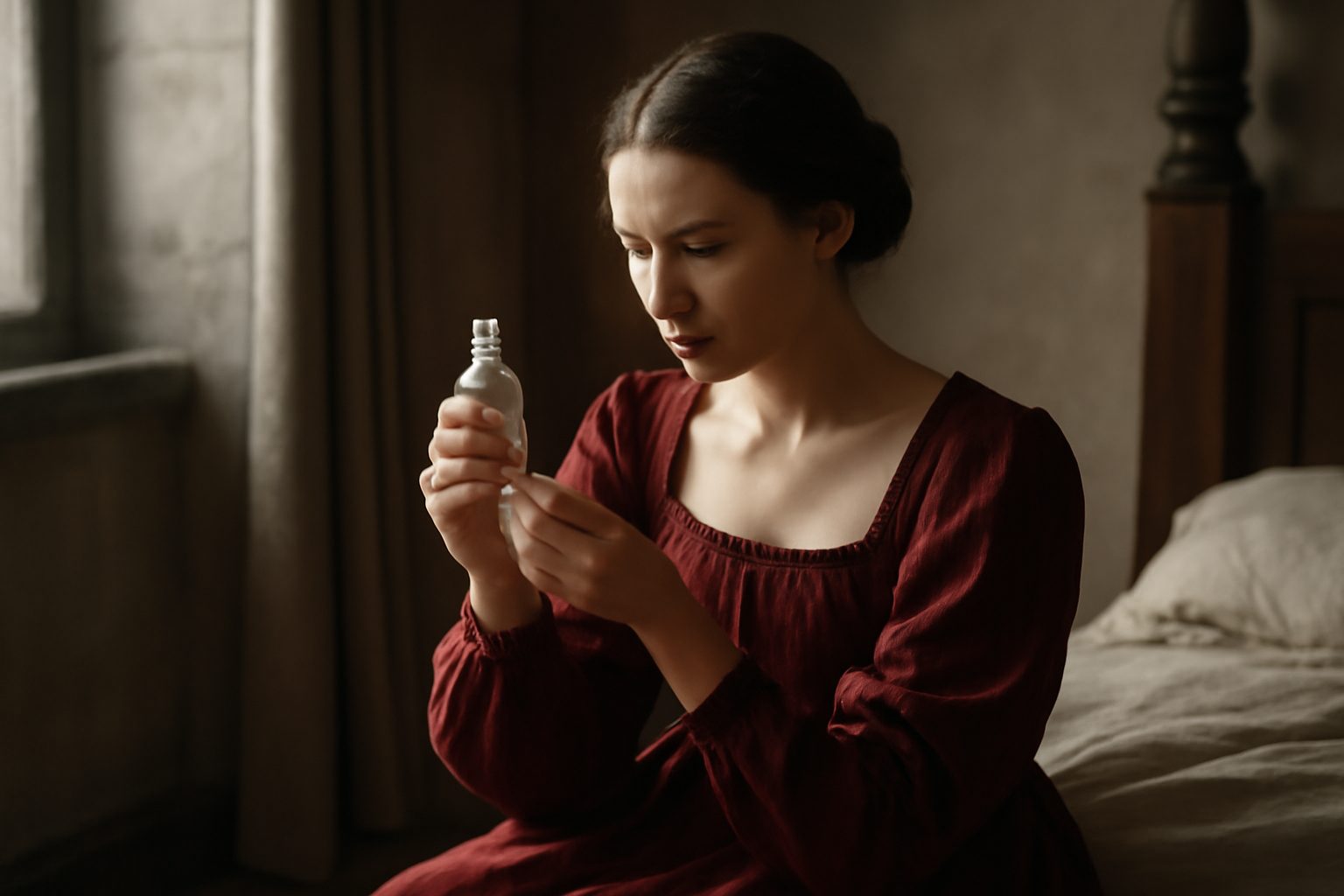
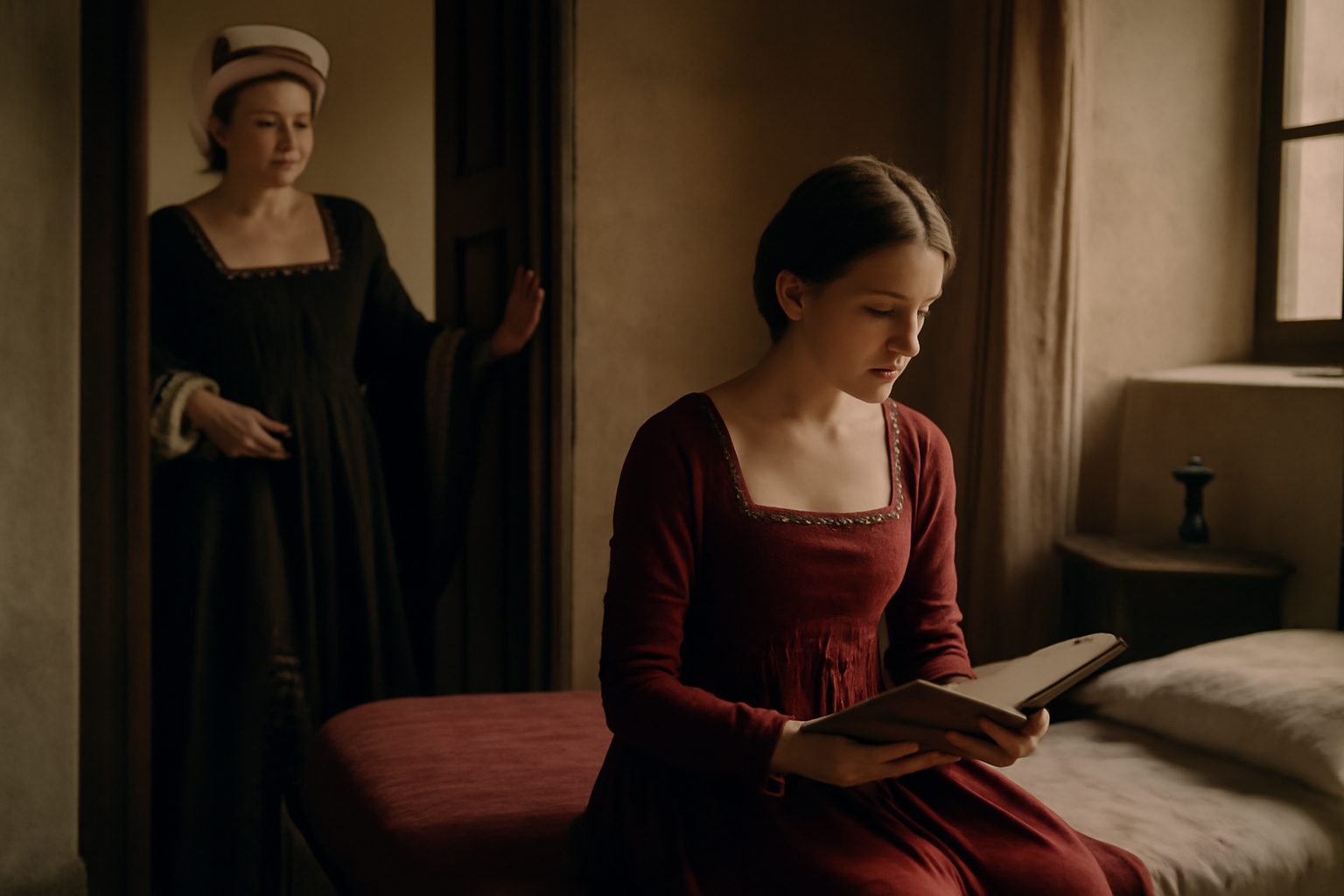
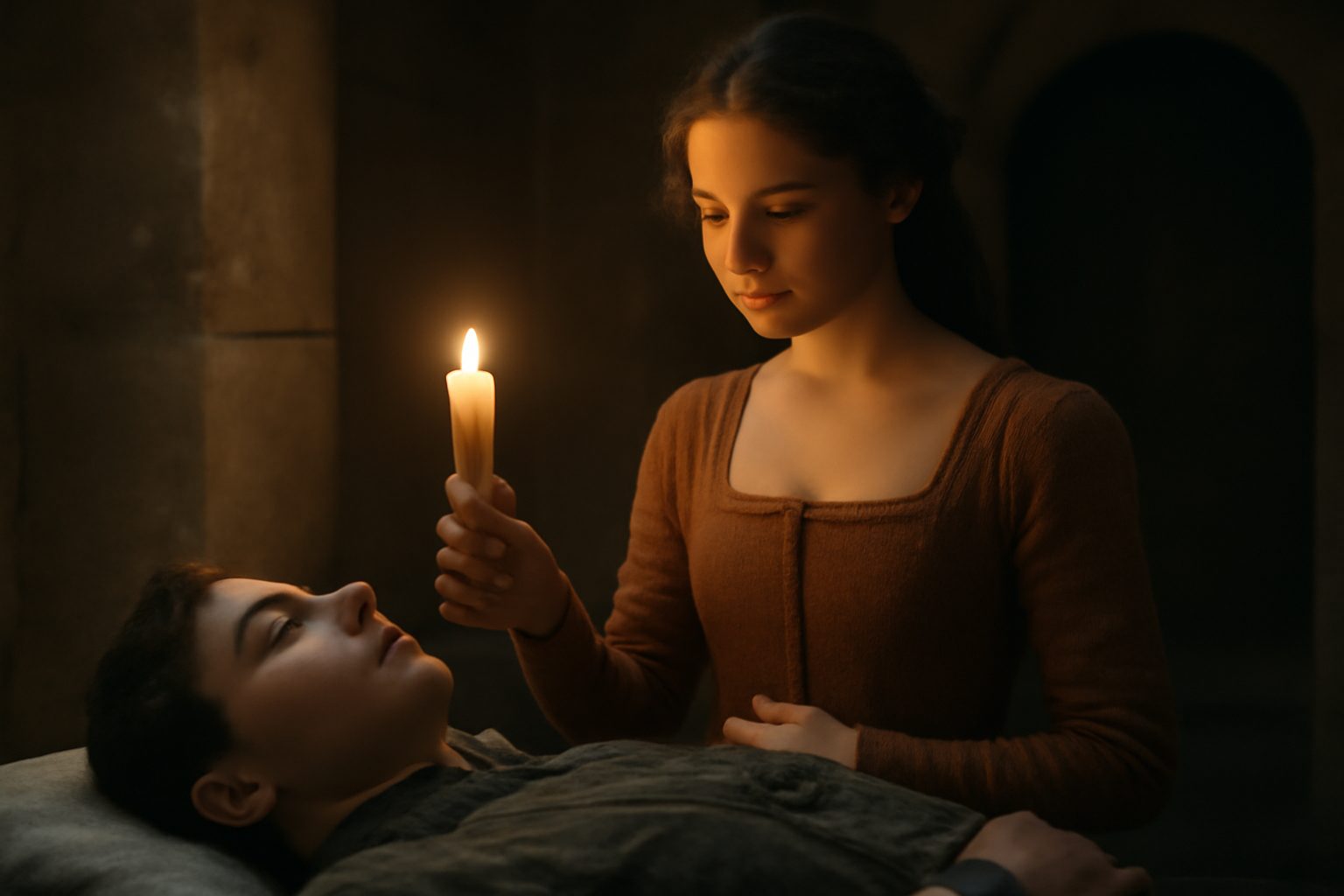
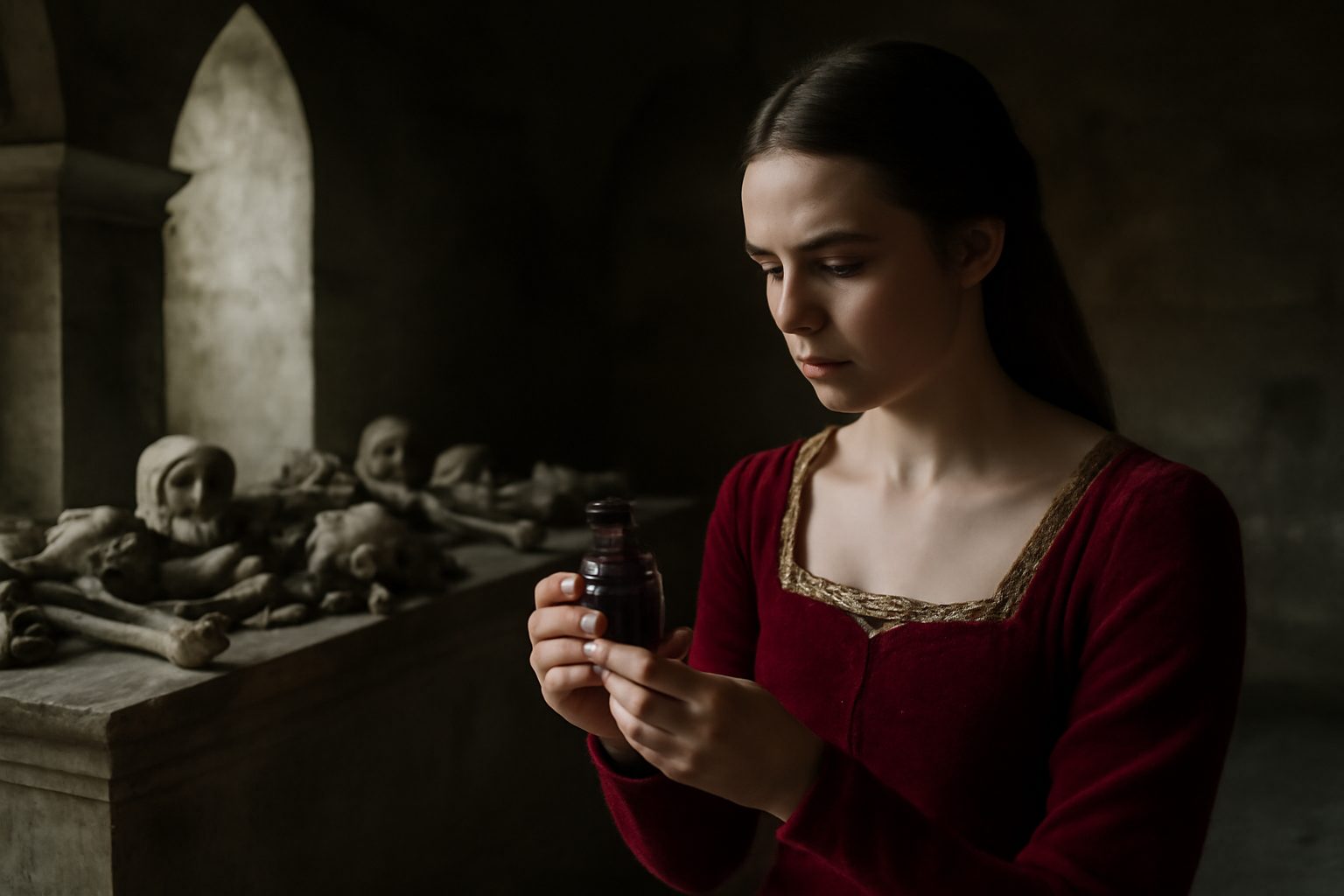
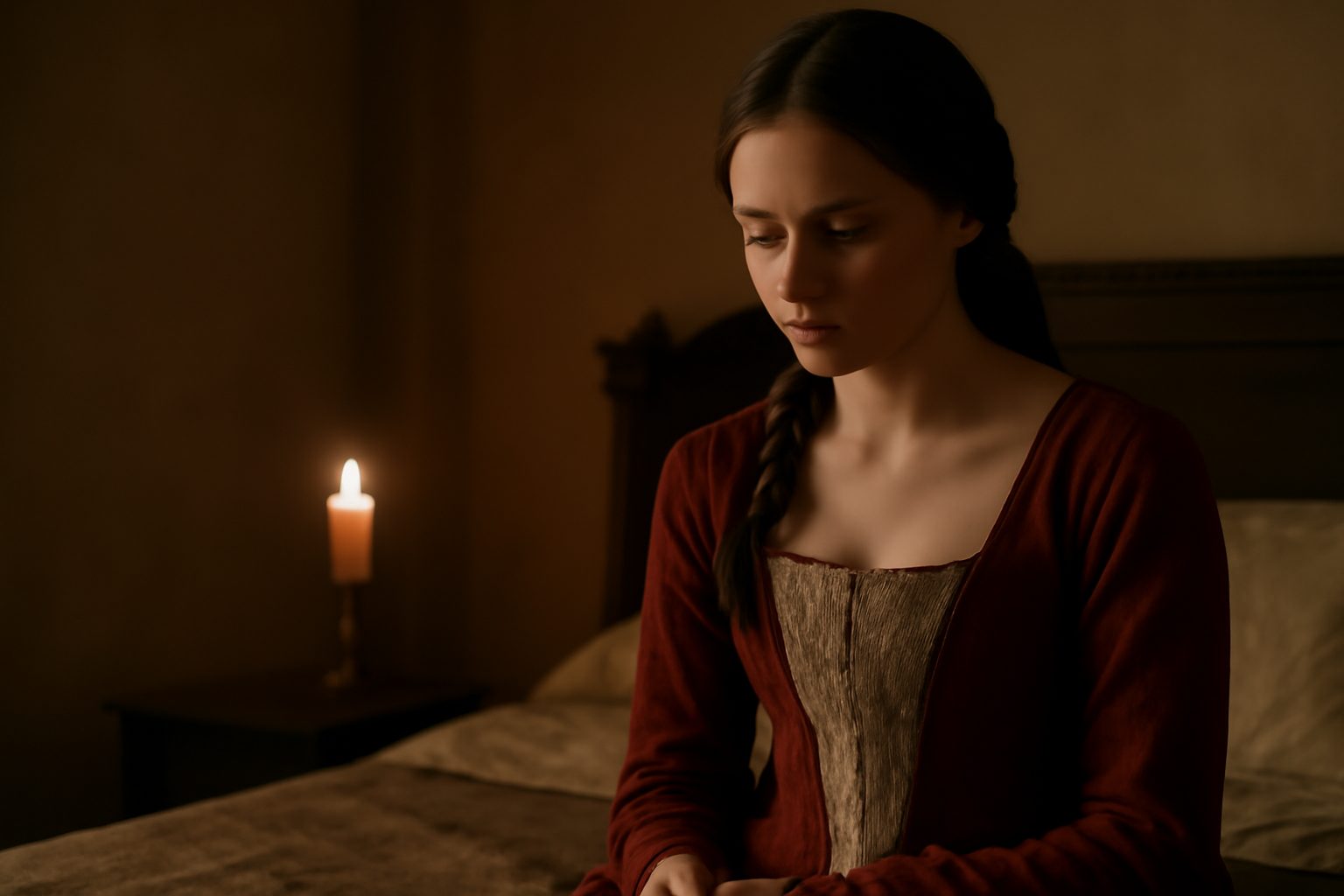
In Act 4, Scene 3 of Romeo and Juliet, Juliet prepares to take the potion given by Friar Laurence, which will make her appear dead. Overwhelmed by fear and doubt, she dismisses her Nurse and Lady Capulet, wanting solitude to gather her courage. This moment captures her vulnerability as she faces the terrifying uncertainty of her plan to reunite with Romeo.
Juliet: "I pray thee, leave me to my self to-night,"
In modern day english, we would say:
Please just let me be alone tonight.
Frequently Asked Questions
What does Juliet ask someone to do in this line?
She asks to be left alone for the night.
Connections to other verses:
Connections to "I pray thee, leave me to my self to-night"
Juliet's plea for solitude in this verse sets the tone for her private turmoil and foreshadows the solitary act she must undertake. It connects thematically and emotionally to several other verses in the scene.
Desire for Solitude and Prayer
Her request aligns with her stated need for spiritual preparation, as seen when she says, "For I have need of many orisons", emphasizing her desire to pray alone. This is reinforced when she politely insists, "So please you, let me now be left alone", showing her determination to face her fears without company.
Fear and Isolation
Her solitude amplifies her fears, as expressed in "I have a faint cold fear thrills through my veins", highlighting the physical manifestation of her anxiety. The chilling effect of this fear is detailed in "That almost freezes up the heat of life", illustrating how her isolation intensifies her dread.
Confronting the Tomb Alone
Her solitary state foreshadows the grim reality she must face alone in the Capulet tomb, as she questions in "How if, when I am laid into the tomb", and later in "Shall I not, then, be stifled in the vault". This culminates in her resolve in "My dismal scene I needs must act alone", directly echoing her initial plea for solitude.
Final Resolve and Action
Her isolation leads to her decisive moment, as she takes the vial with "Come, vial", and drinks to Romeo with "Romeo, I come! this do I drink to thee", completing the solitary journey she insisted upon at the scene's start.