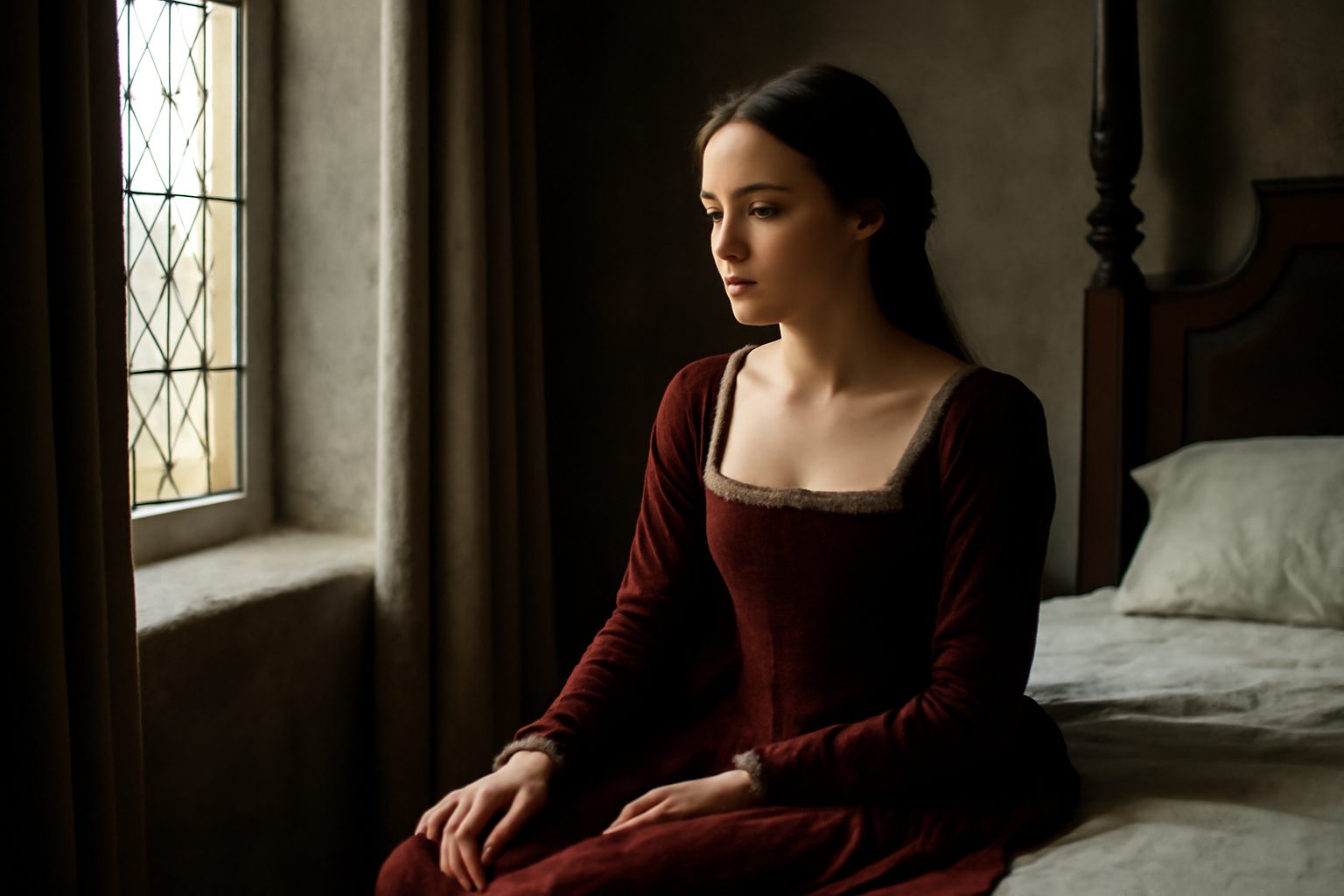
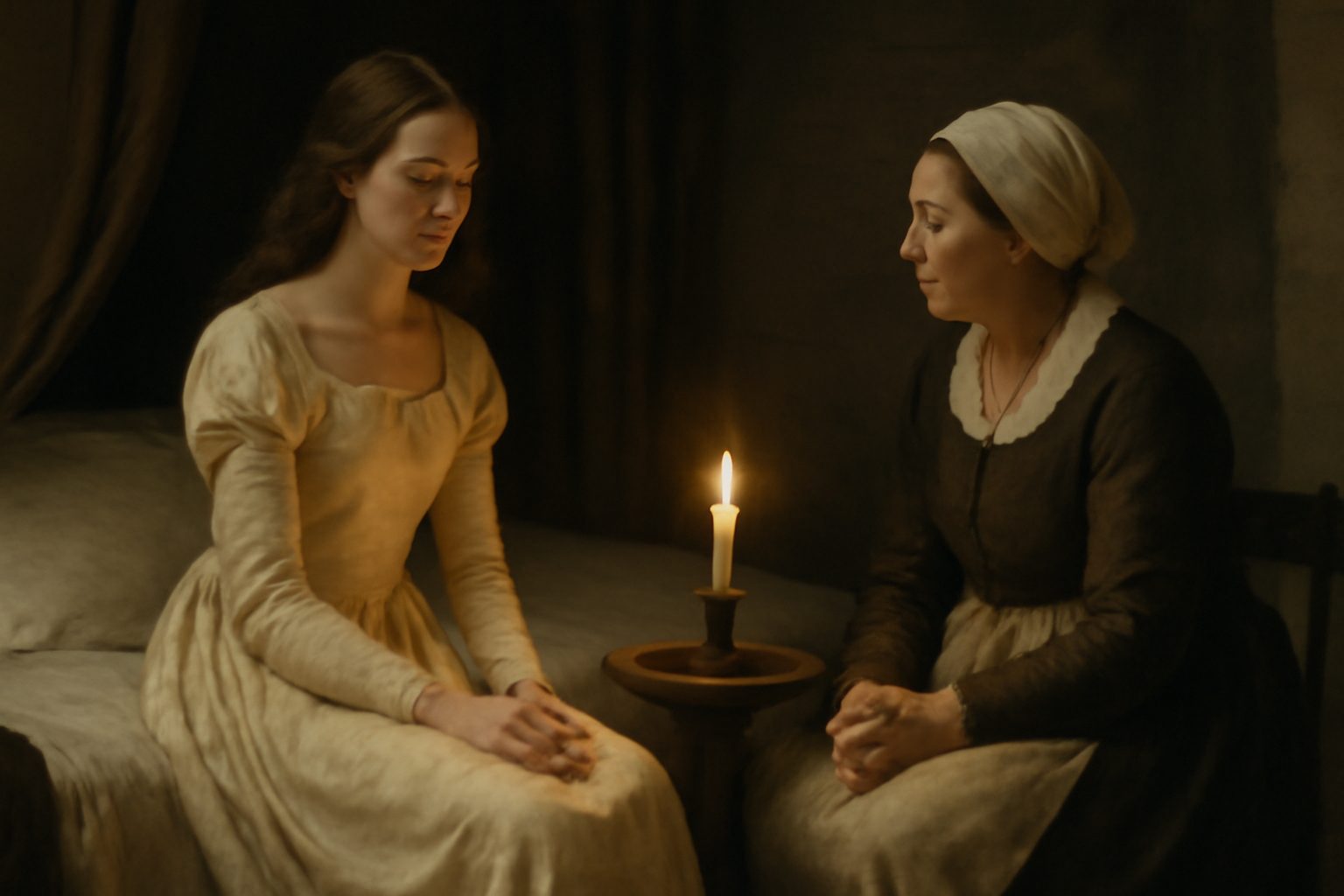
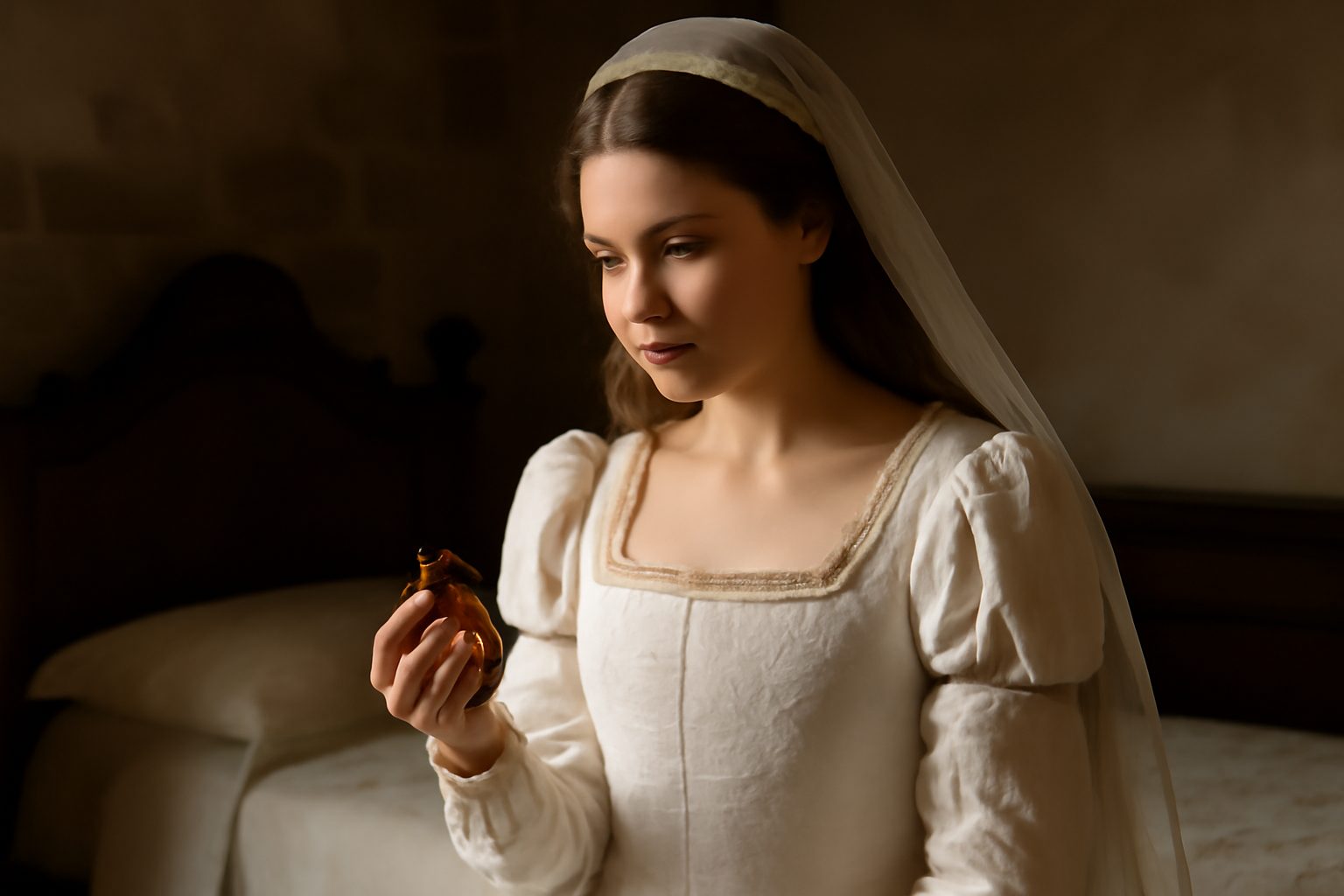
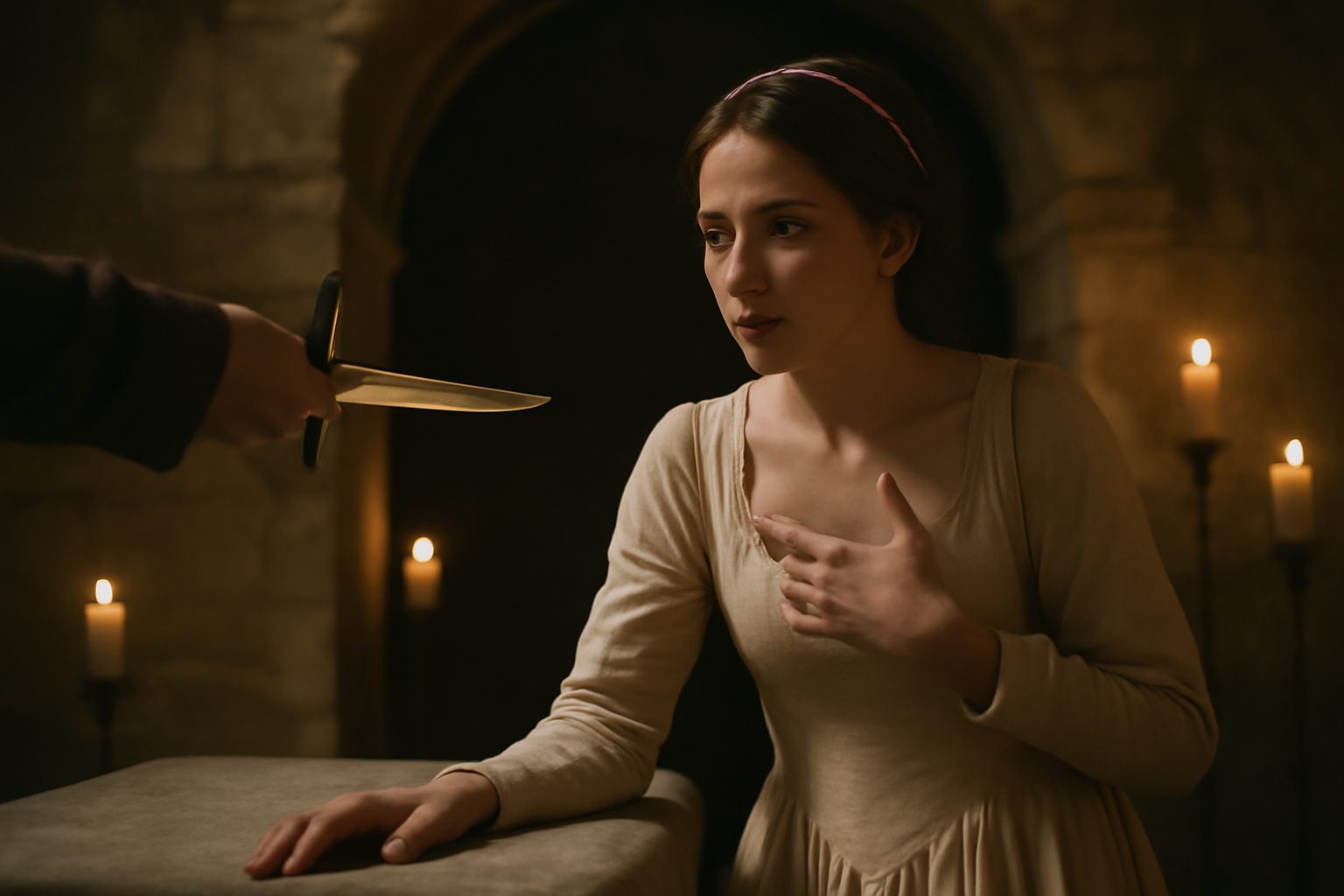
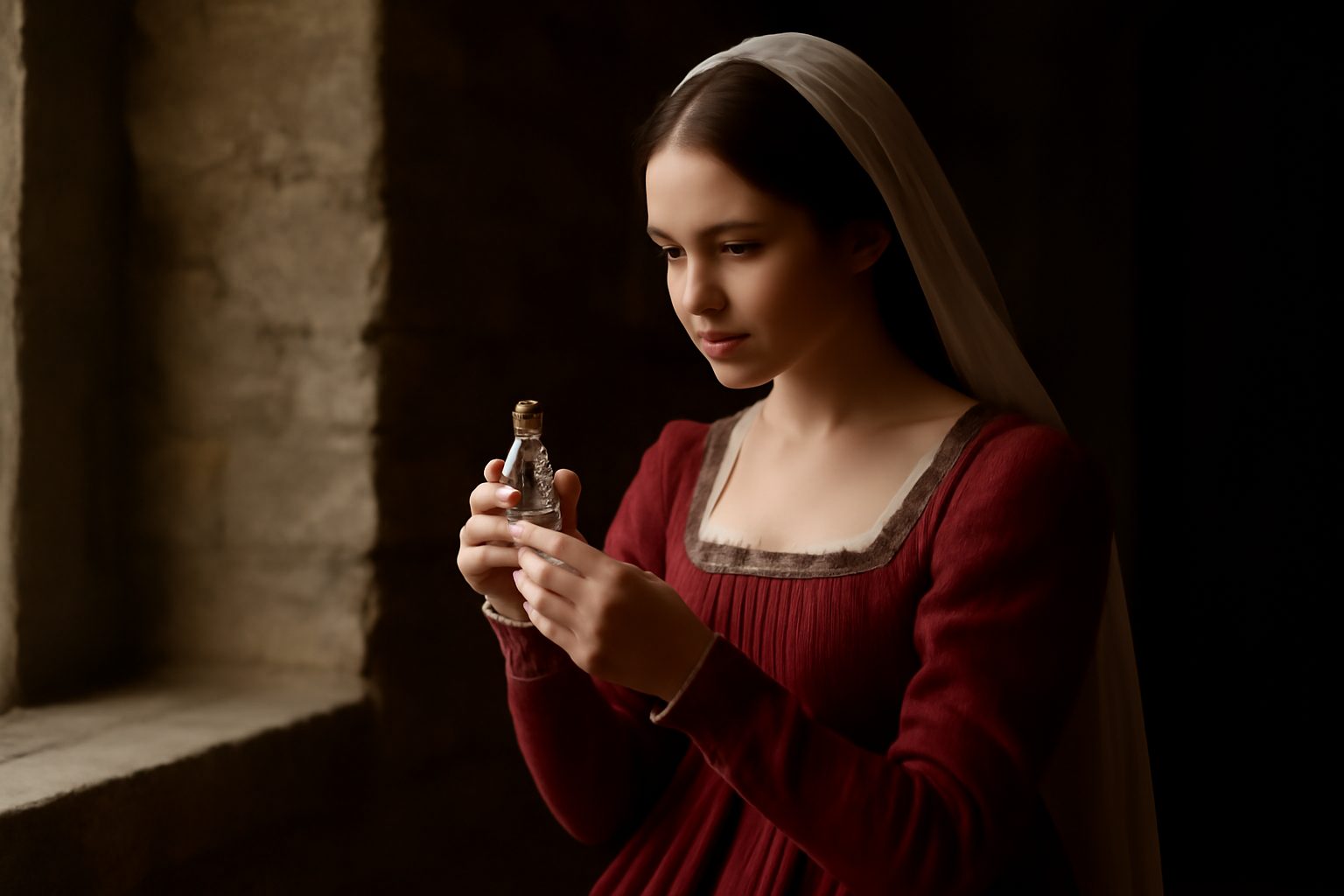
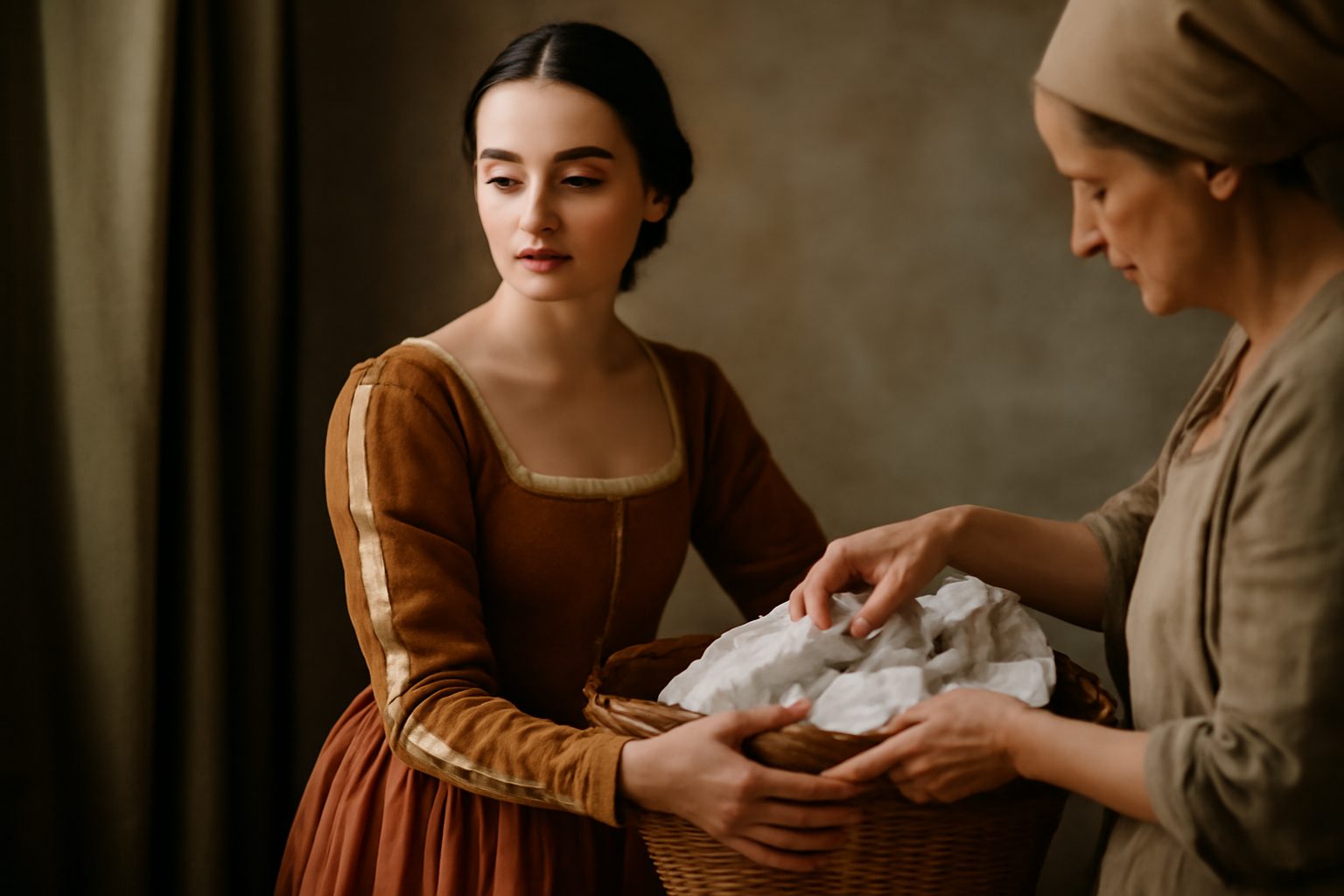
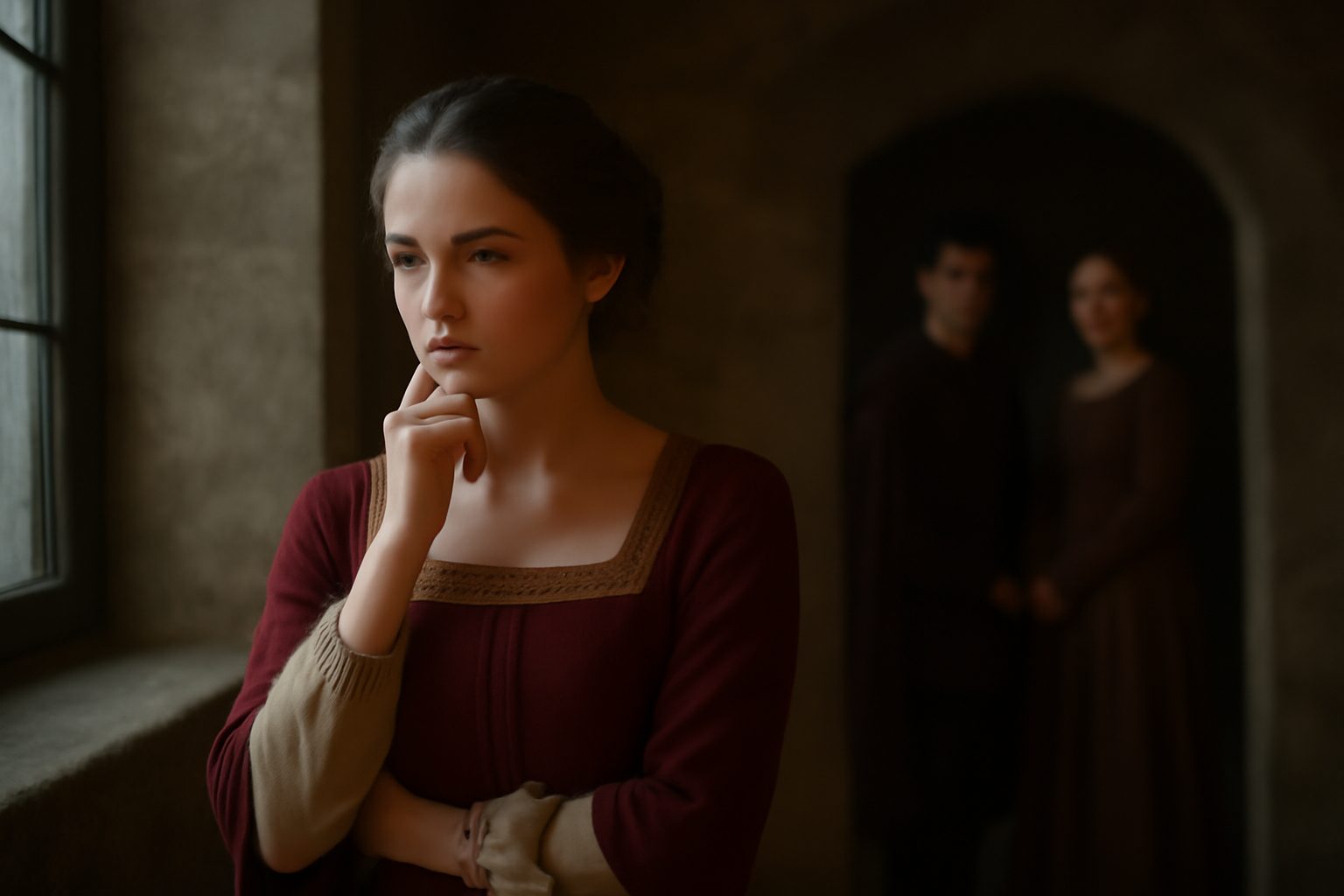
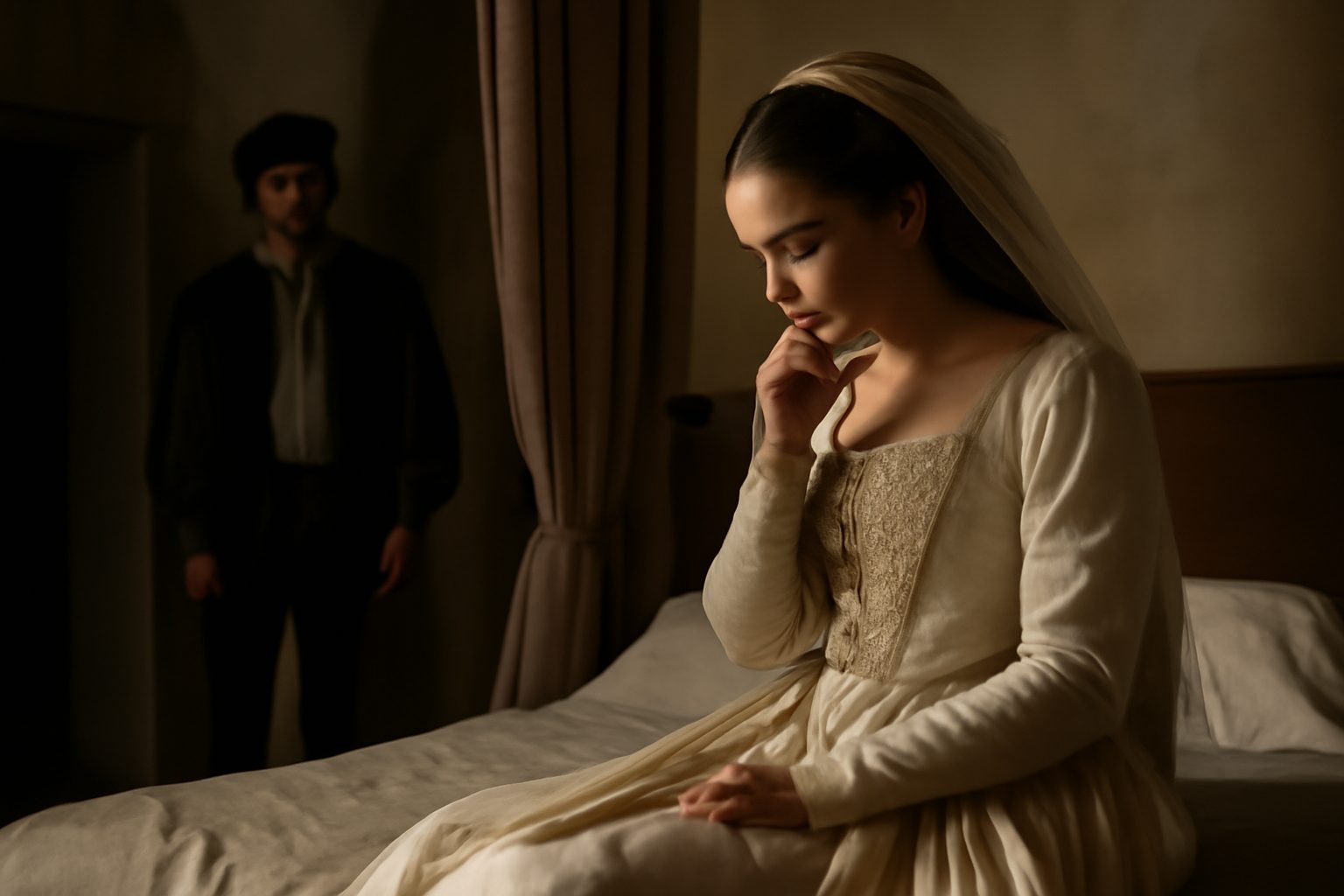
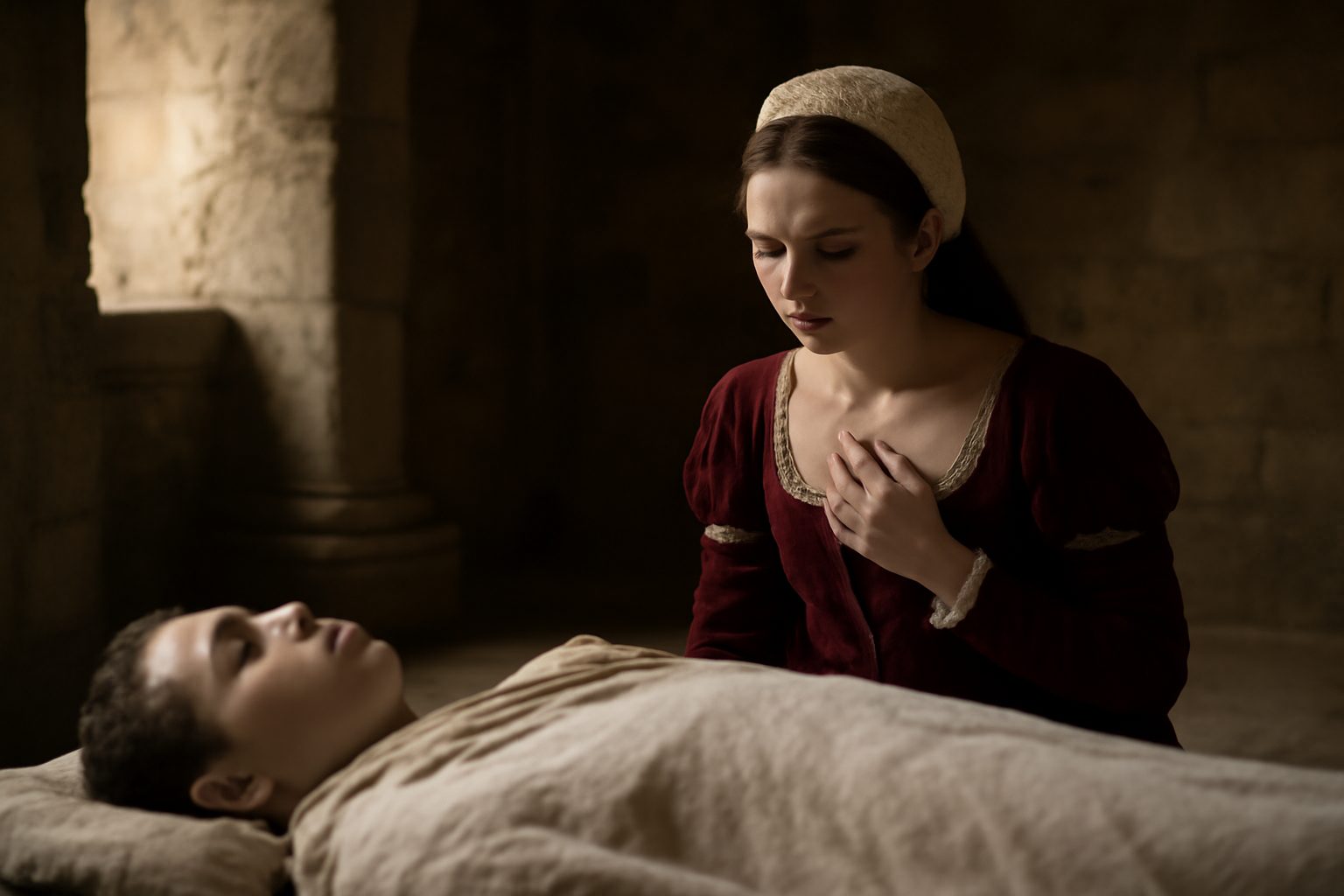
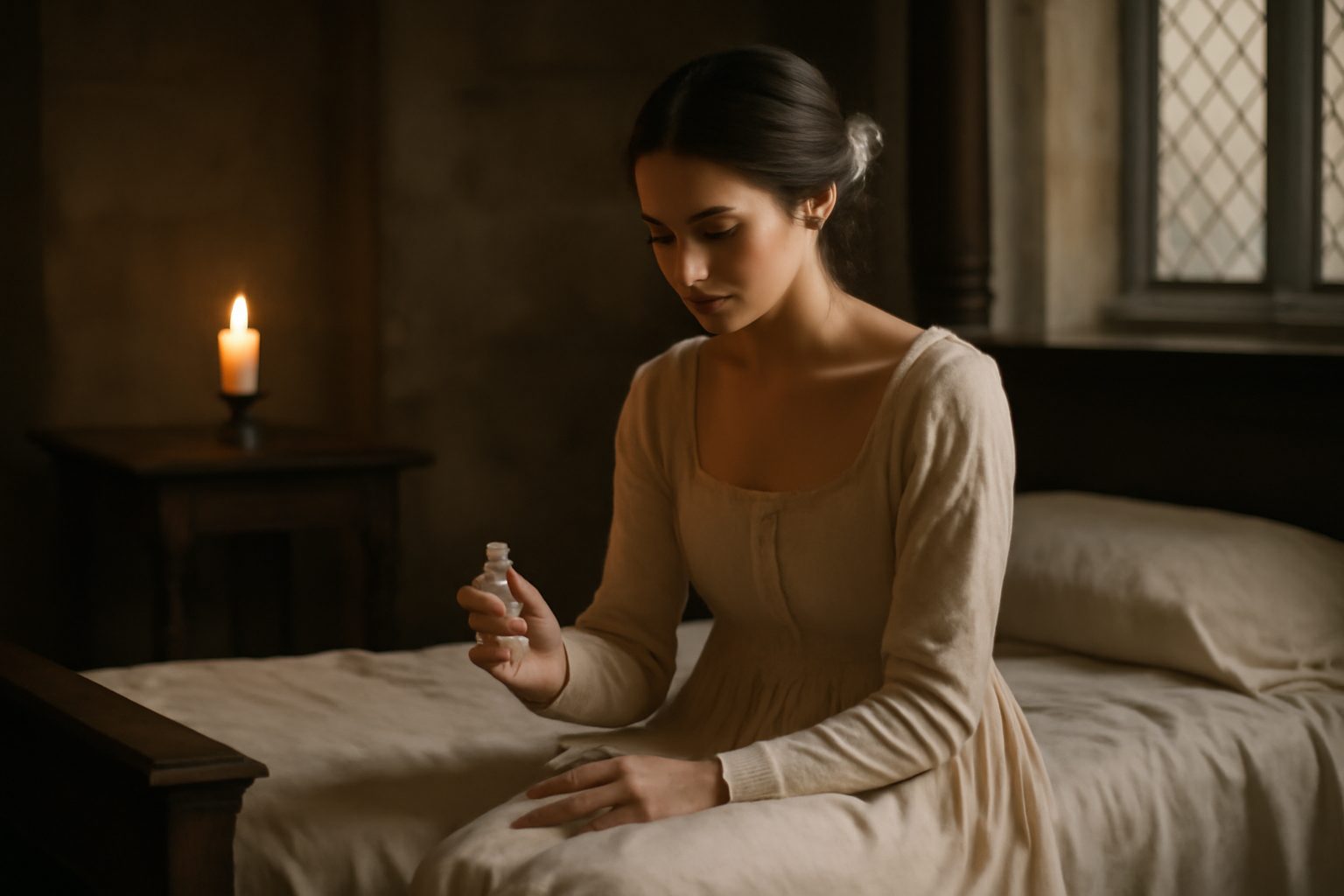
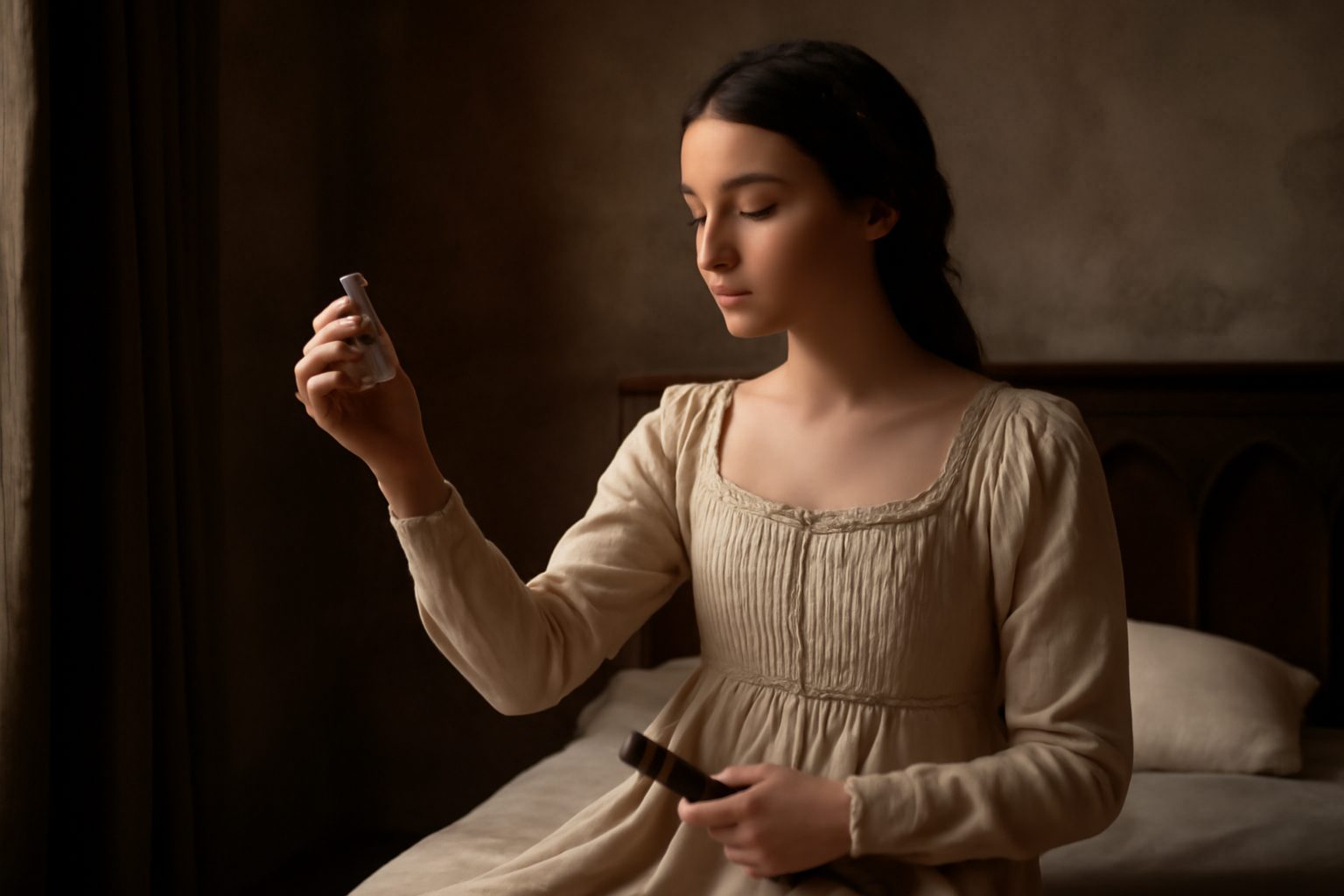
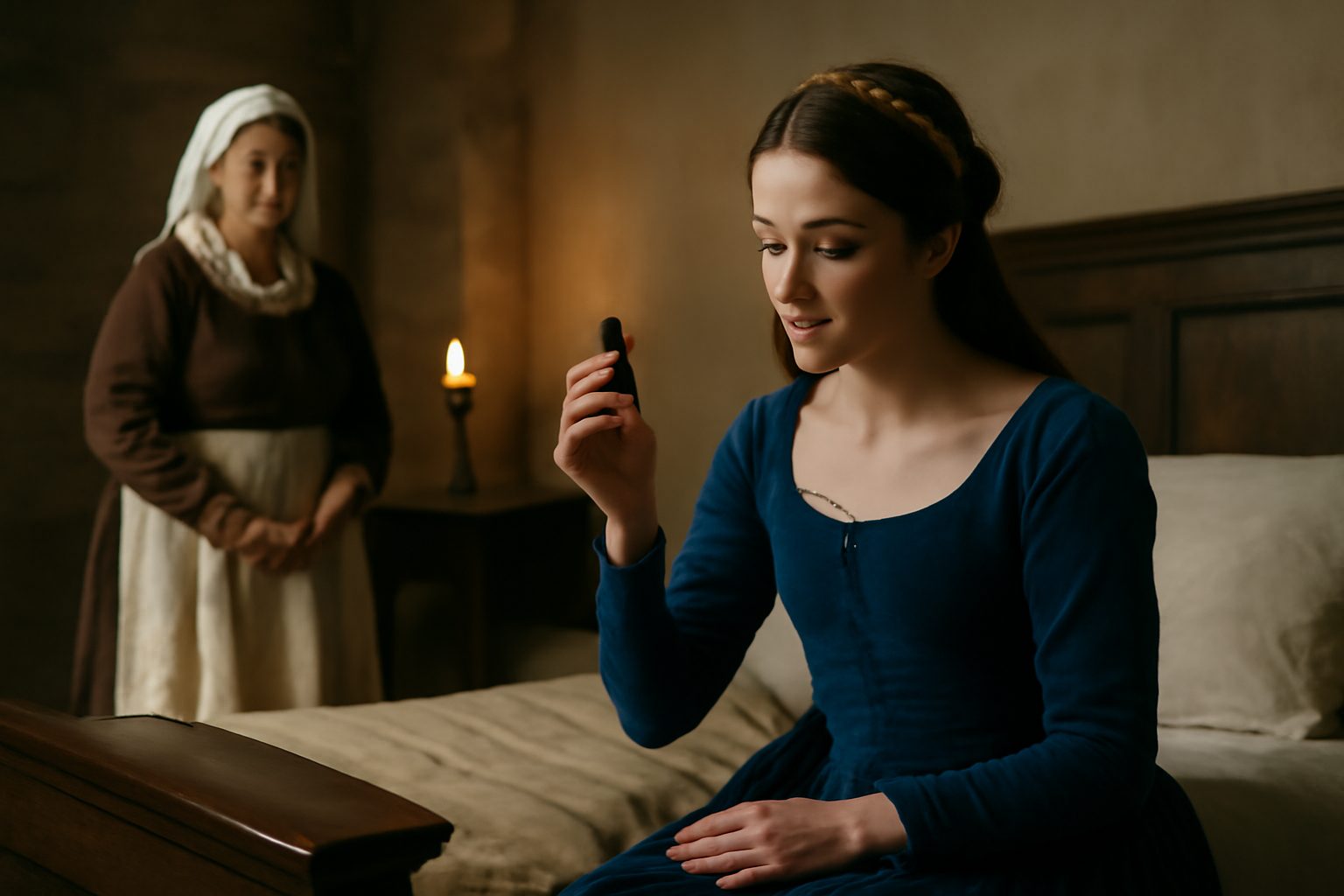
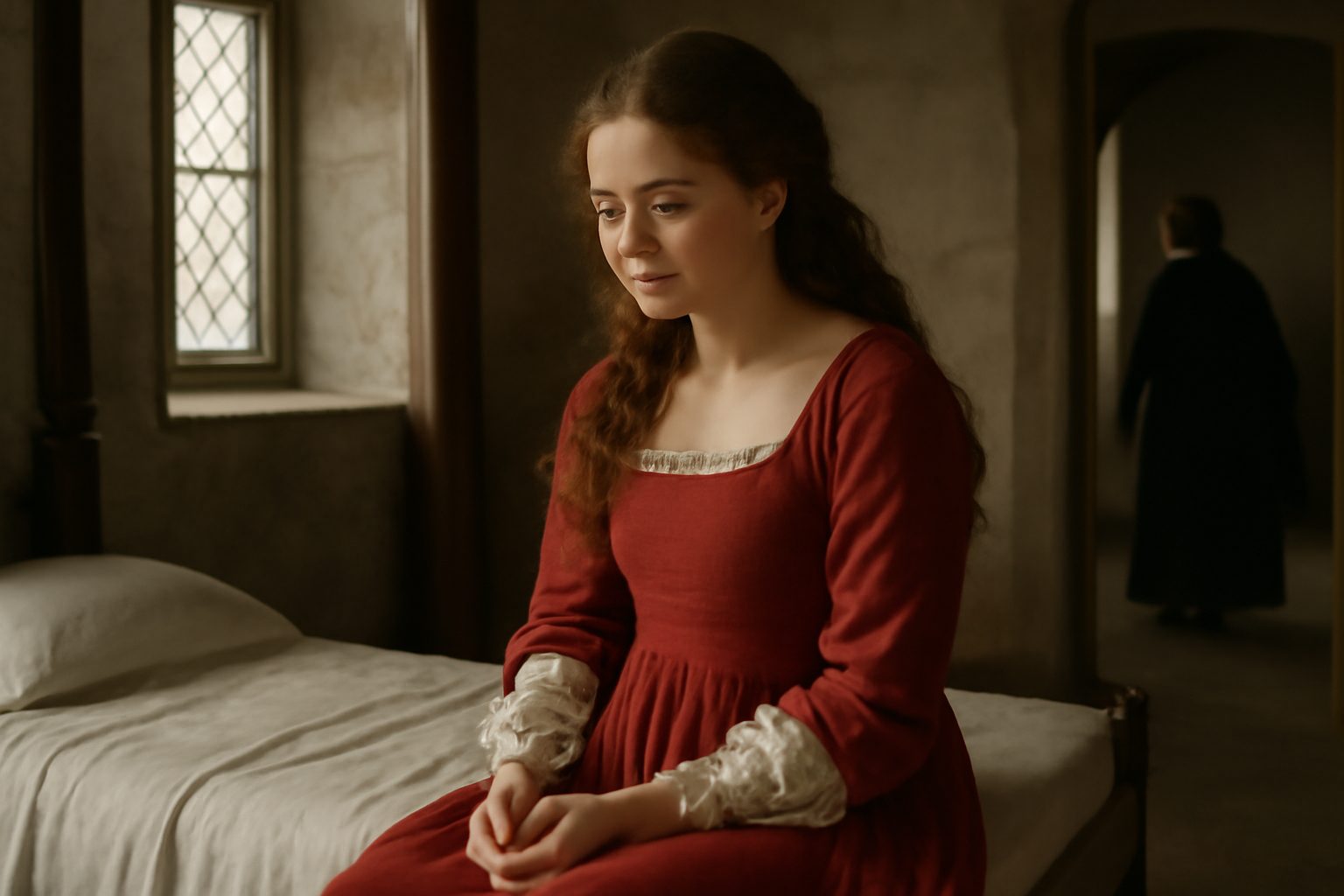
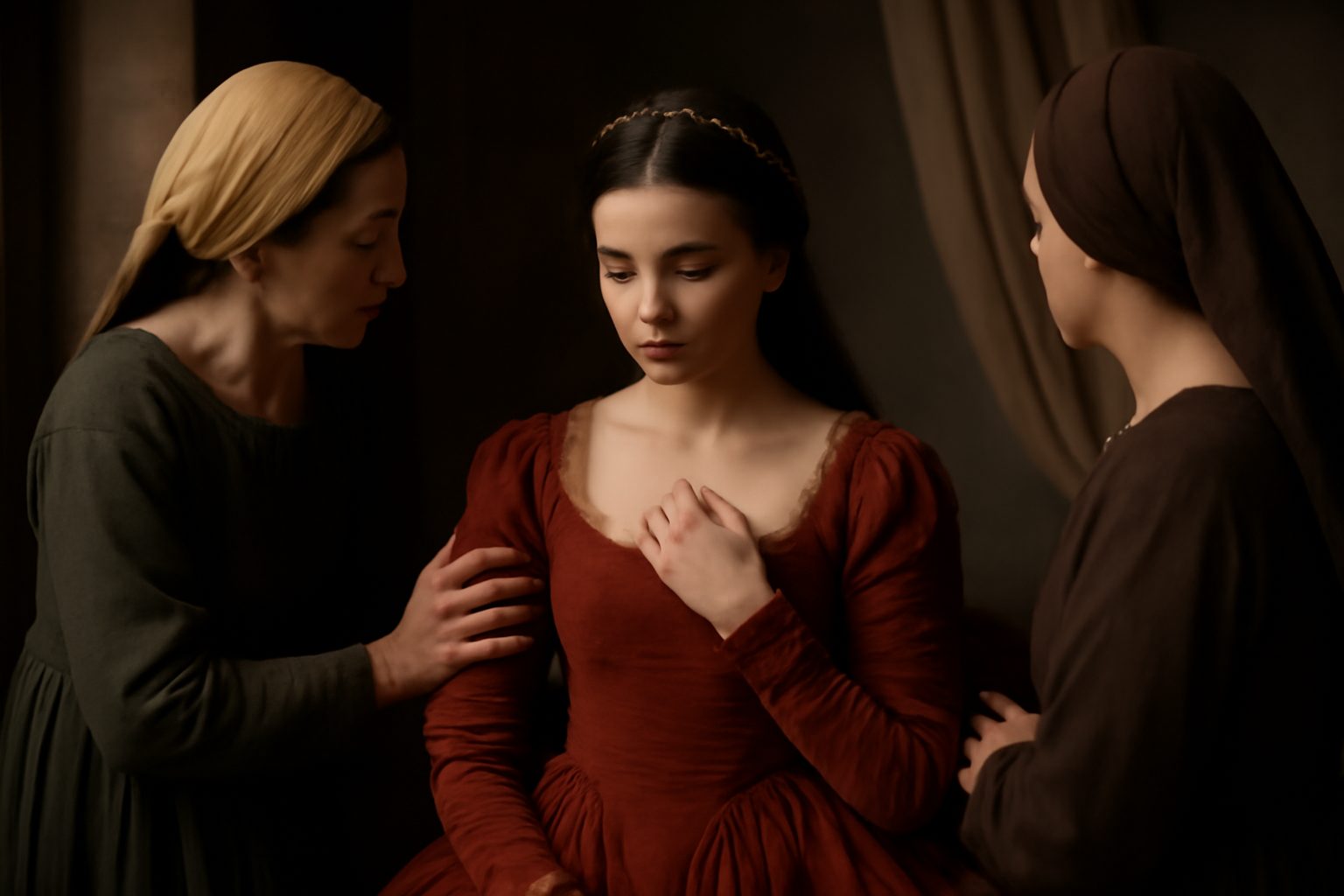
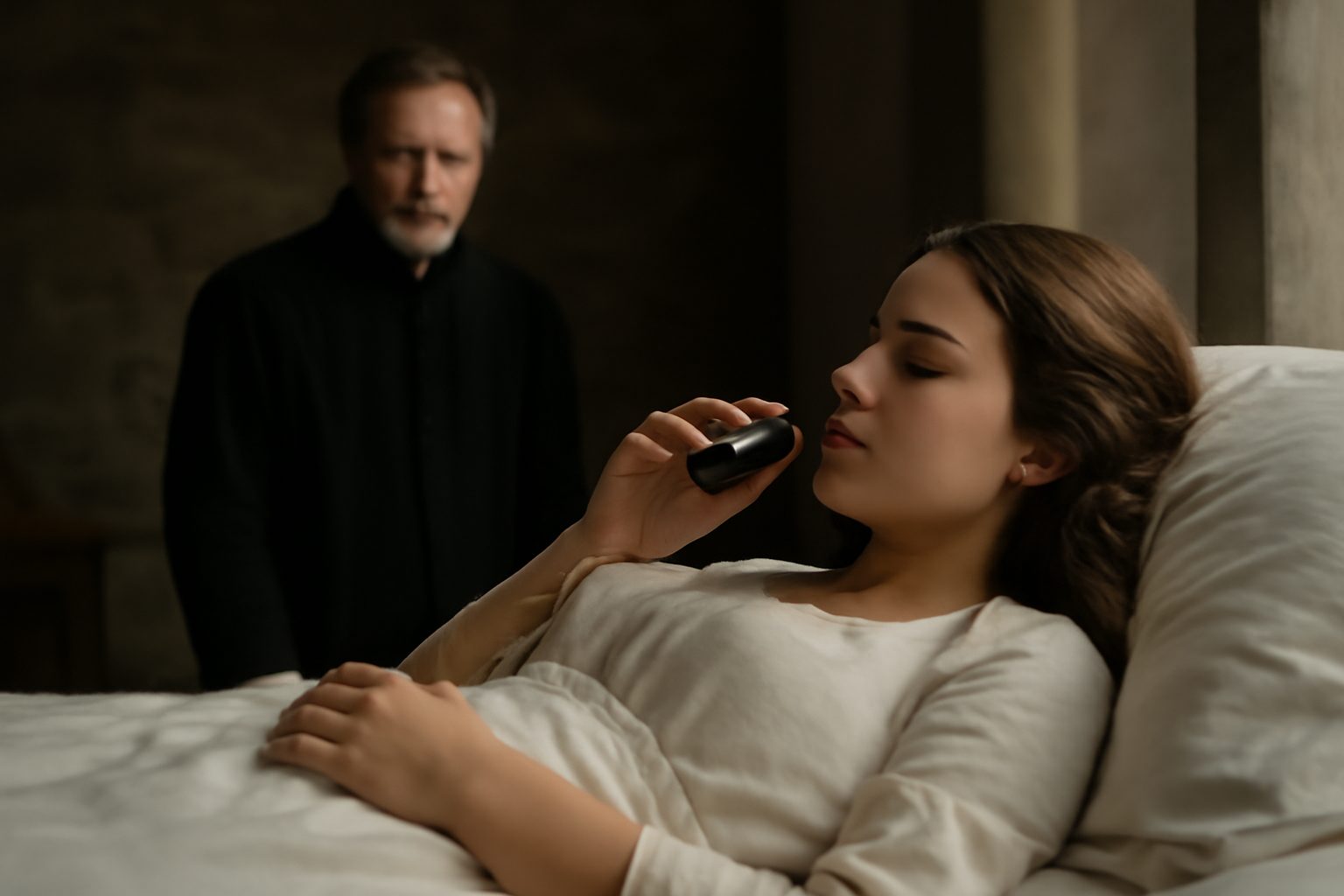
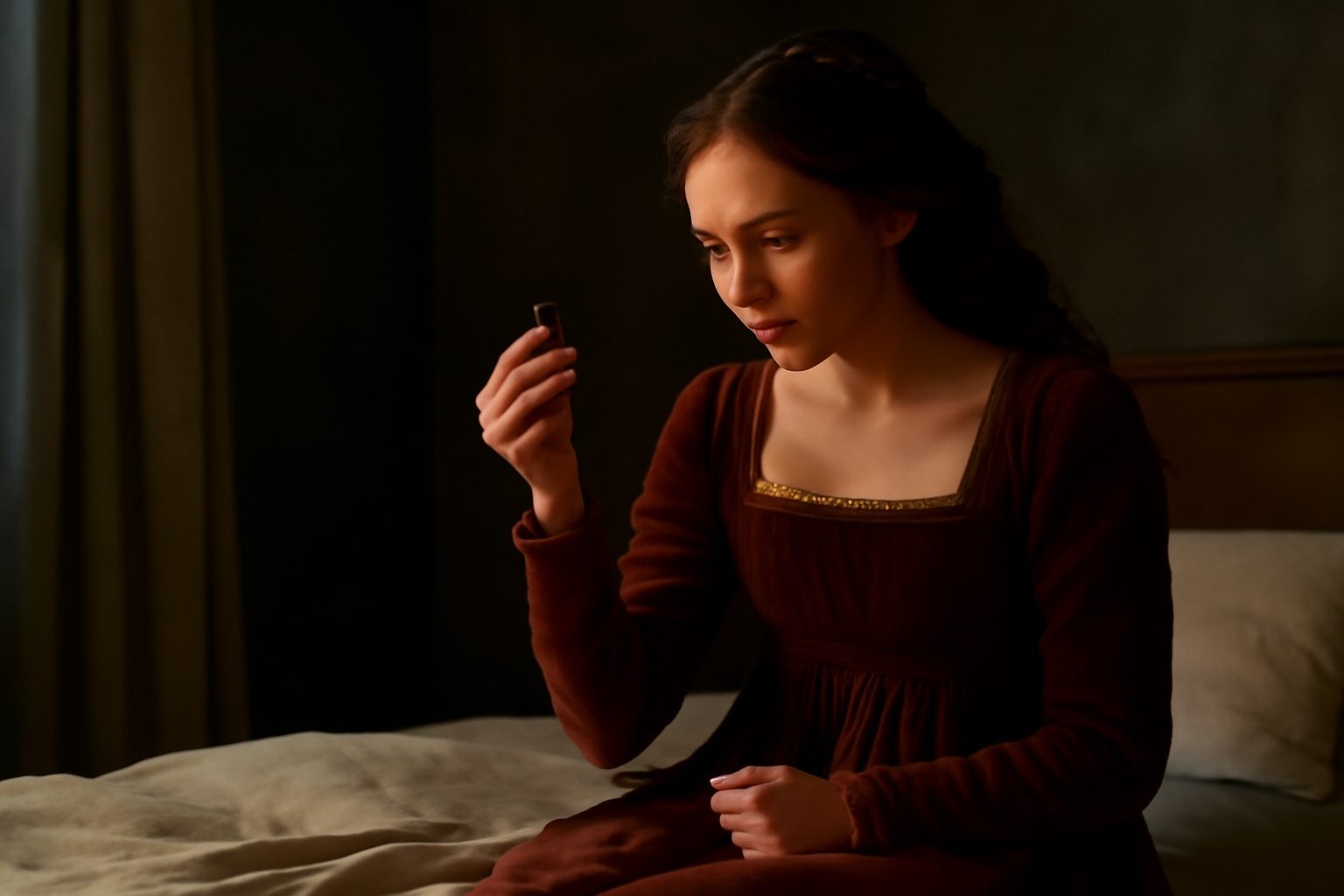
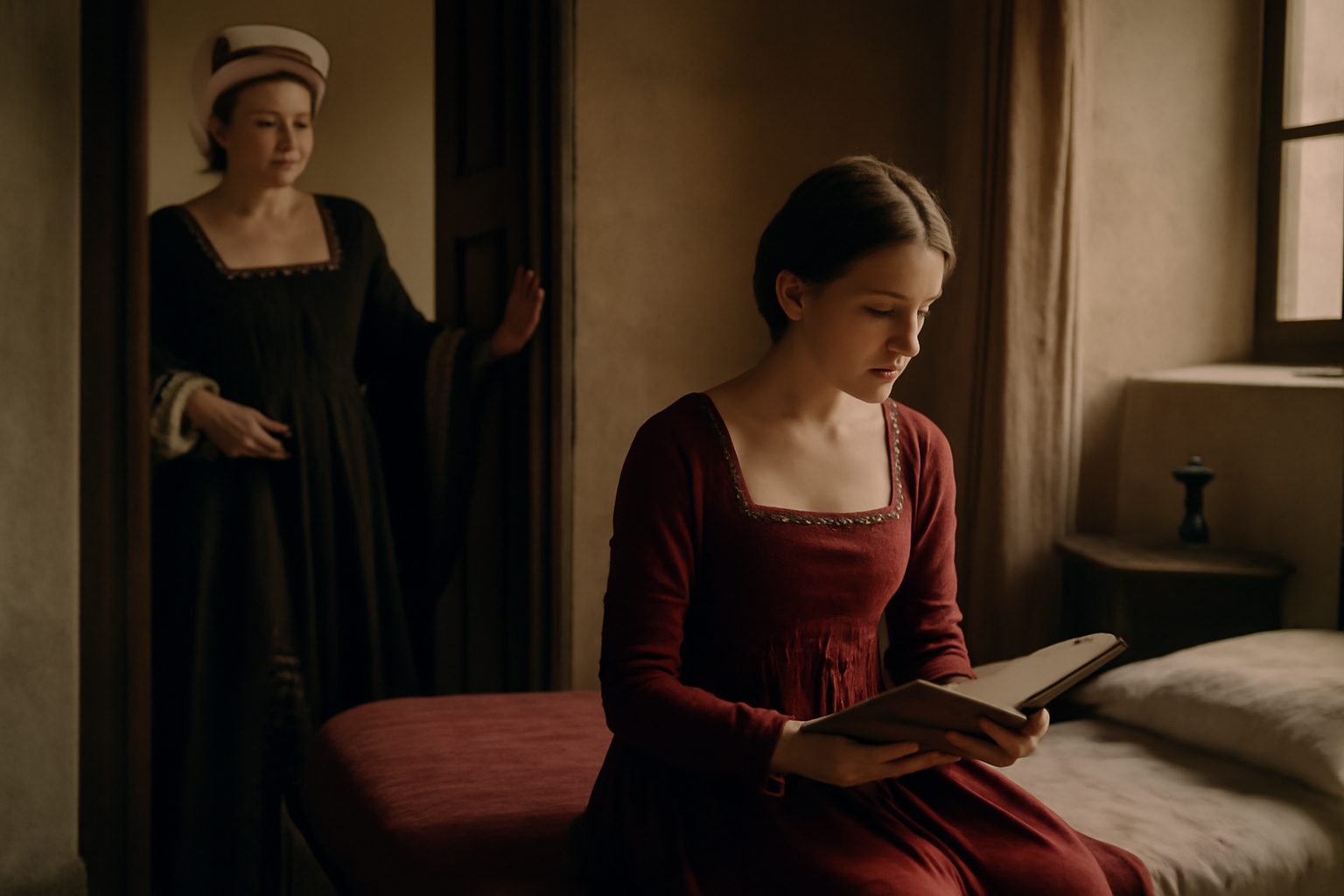
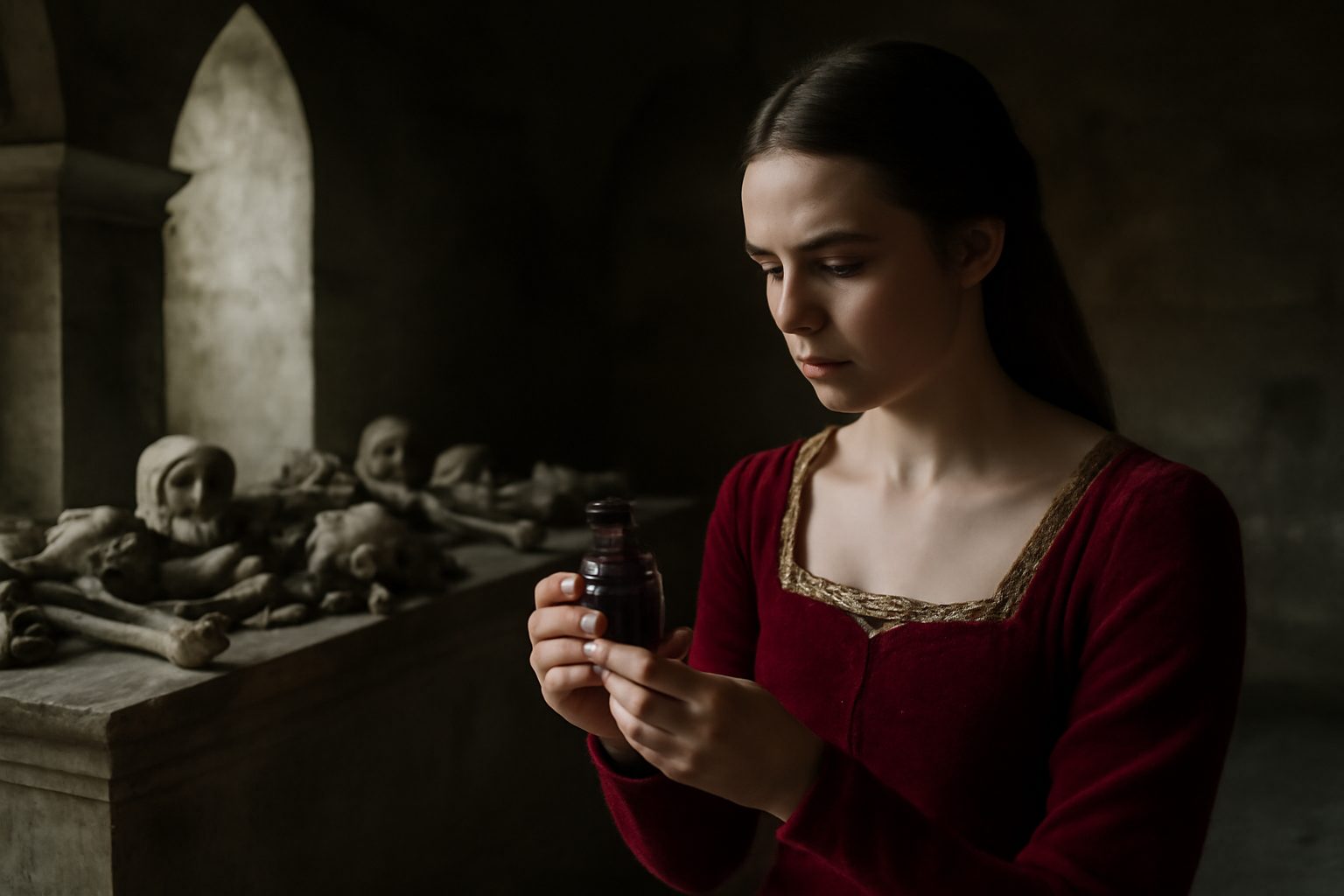
In Act 4, Scene 3 of Romeo and Juliet, Juliet prepares to take the potion that will make her appear dead, a desperate plan to avoid marrying Paris and reunite with Romeo. As she speaks to the Nurse, she comments on the suitability of her attire, masking her fear and resolve beneath seemingly casual words. This moment highlights Juliet's isolation, as even her trusted Nurse is unaware of the true stakes of her actions.
Juliet: "Ay, those attires are best: but, gentle nurse,"
In modern day english, we would say:
Those outfits are the best, but please, kind nurse.
Frequently Asked Questions
What is Juliet talking about when she says those attires are best?
Juliet is referring to her wedding clothes, which she is preparing to wear for her marriage to Paris, though she is secretly planning to fake her death to avoid the wedding.
Connections to other verses:
Connections to "Ay, those attires are best: but, gentle nurse,"
This line, found at /romeo-and-juliet/four/4-3/act-4-scene-3/, is part of Juliet's conversation with her mother and the Nurse about preparations for her wedding to Paris. It reflects the external compliance she shows while internally planning her desperate escape.
Connection to Preparations and Deception
Juliet's mention of "attires" ties directly to "No, madam; we have cull'd such necessaries", where the Nurse confirms the selection of items for the wedding, reinforcing the theme of outward conformity. Similarly, "As are behoveful for our state to-morrow" underscores the societal expectations Juliet is superficially adhering to.
Connection to Isolation and Solitude
Juliet's address to the "gentle nurse" contrasts with her later desire for solitude, as seen in "I pray thee, leave me to my self to-night" and "So please you, let me now be left alone". This shift highlights her need to execute her plan without interference.
Connection to Fear and Foreboding
While discussing attire, Juliet masks her inner turmoil, which erupts in soliloquy with lines like "I have a faint cold fear thrills through my veins" and "That almost freezes up the heat of life". Her calm exterior here belies the dread explored later.
Connection to the Friar's Plan
The practicality of choosing clothes contrasts with her contemplation of the potion's risks, such as in "What if this mixture do not work at all?" and "What if it be a poison, which the friar", showing the duality of her actions—outward obedience versus inner desperation.
Connection to Final Resolve
This line's focus on surface details is ultimately overshadowed by her determination, culminating in "Romeo, I come! this do I drink to thee.", where she abandons pretense for action, tying the mundane (attires) to the tragic (her fate).