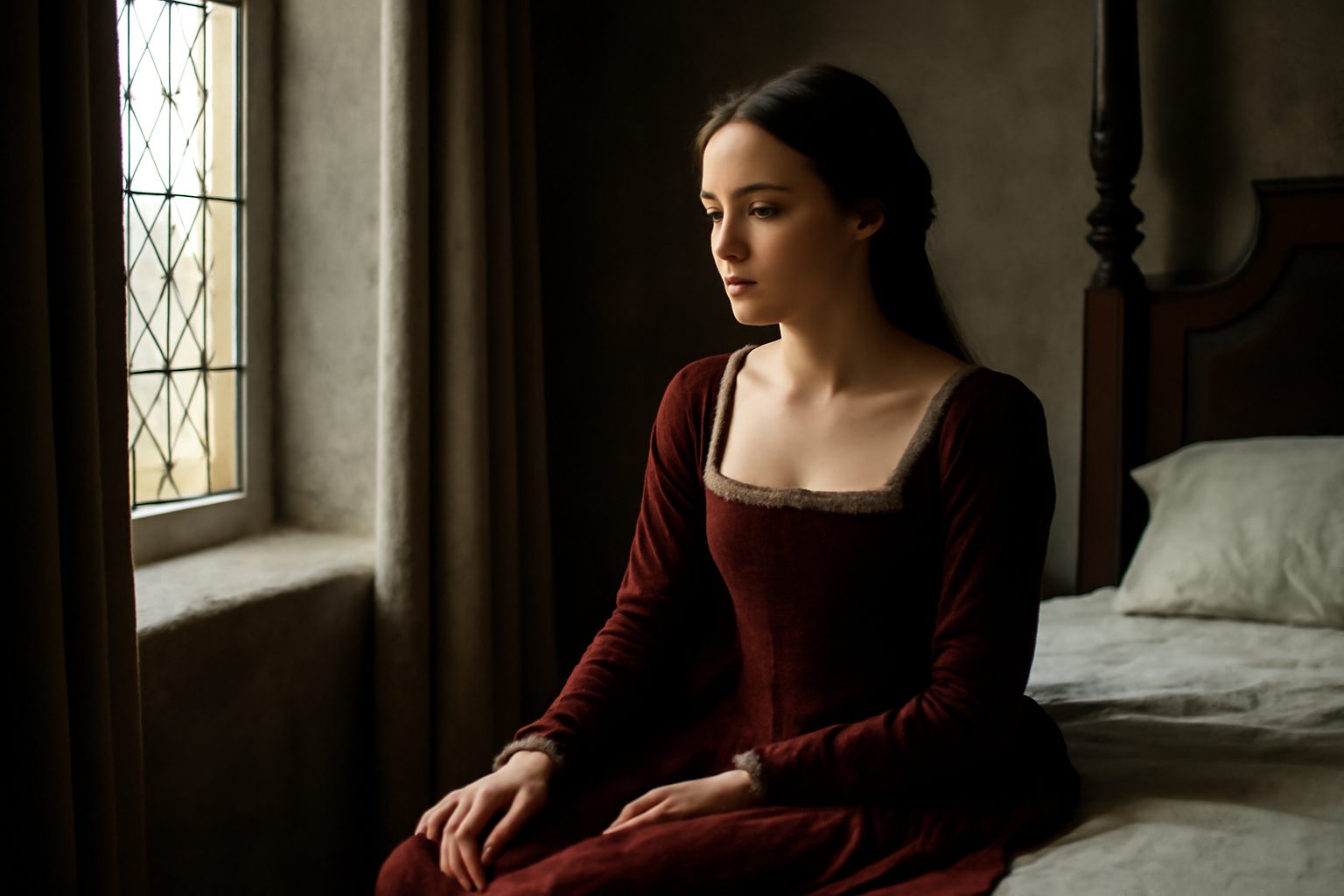
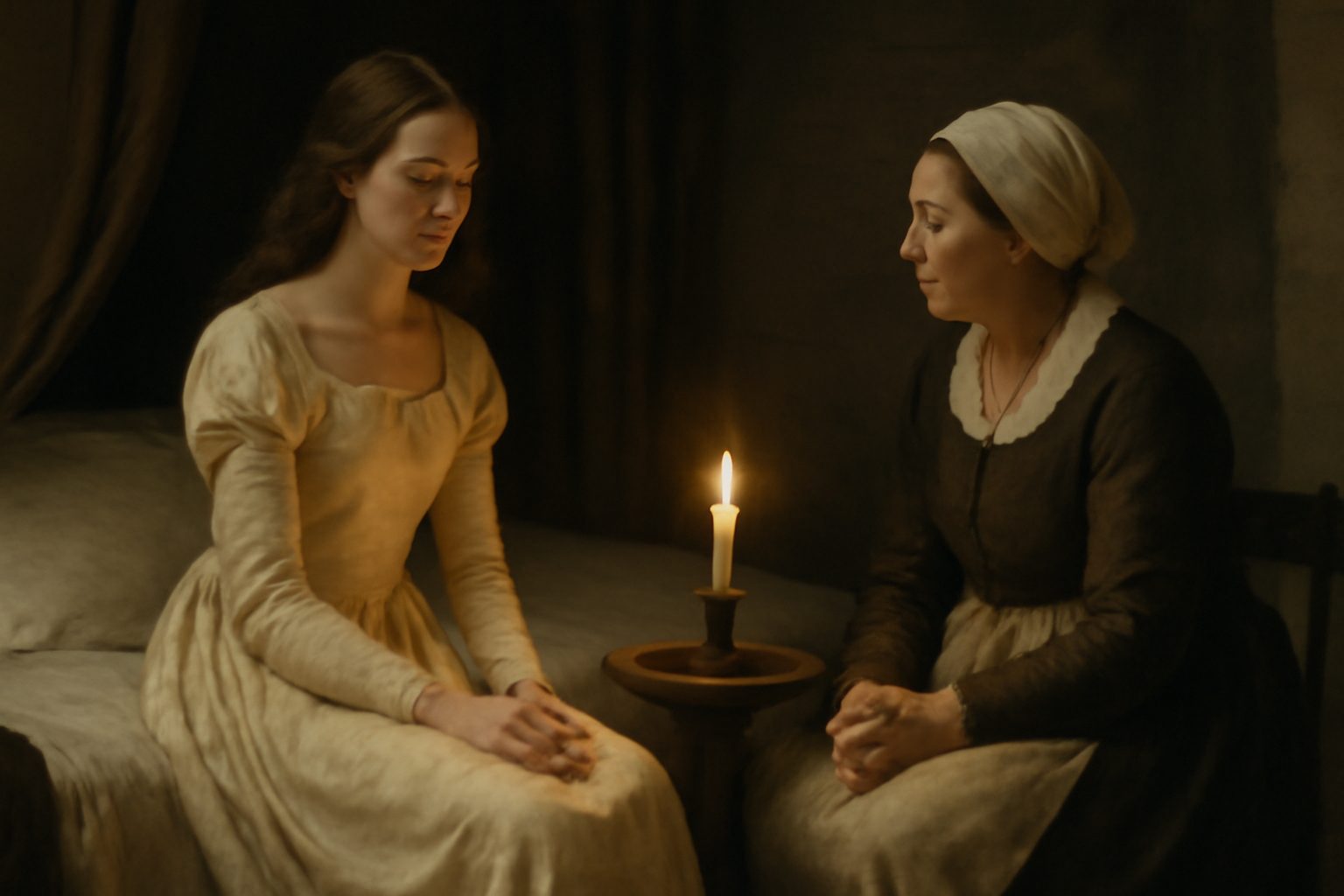
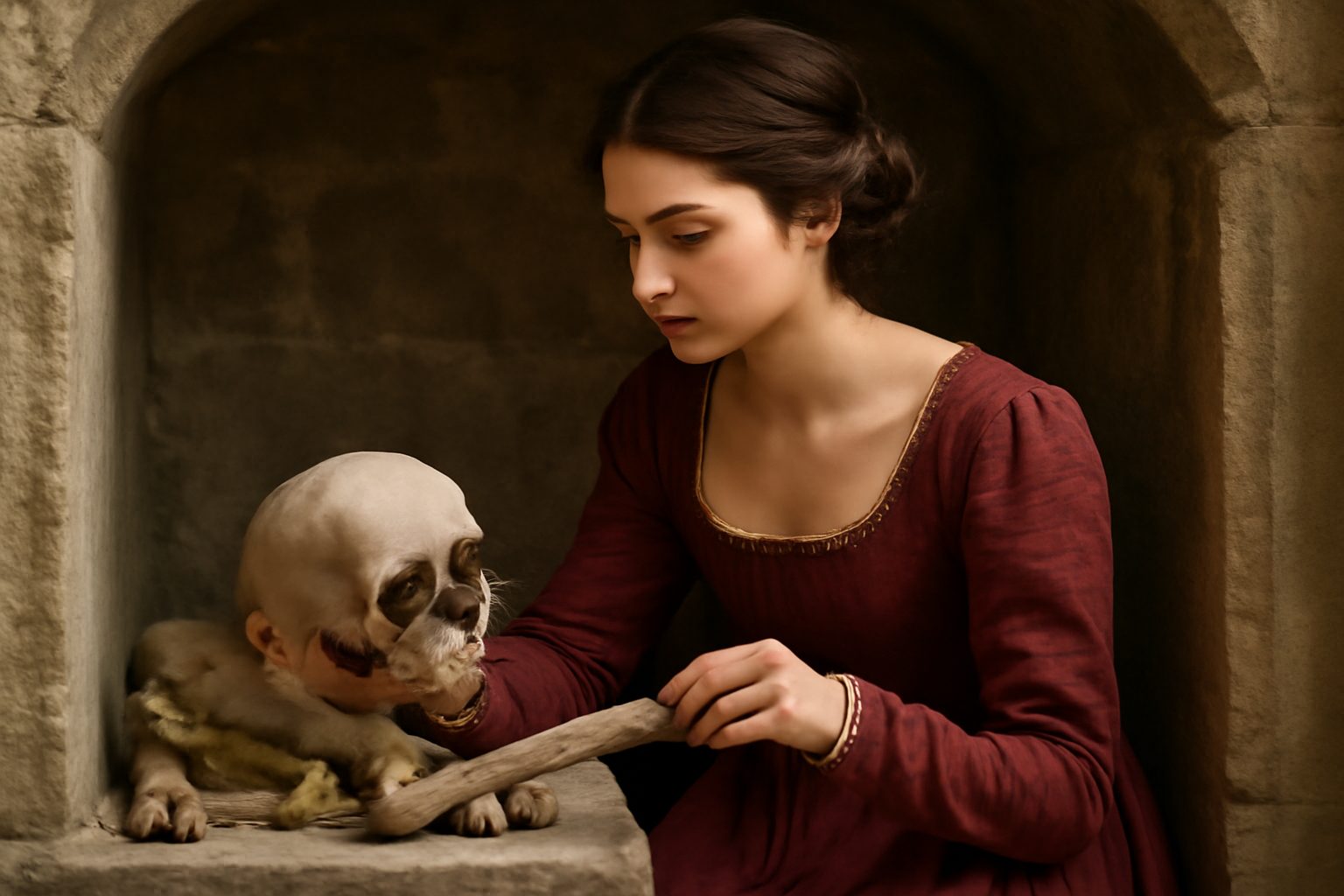
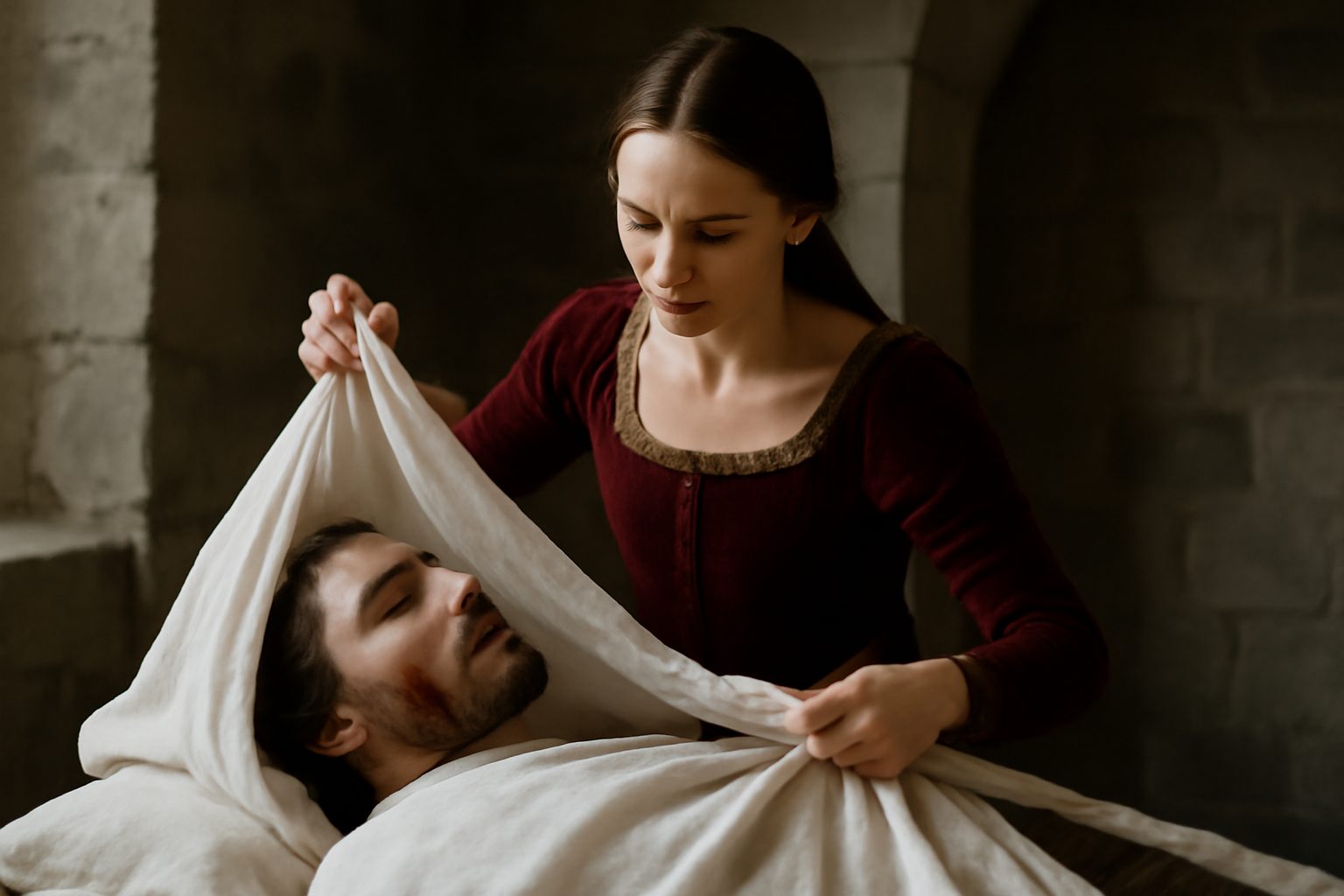
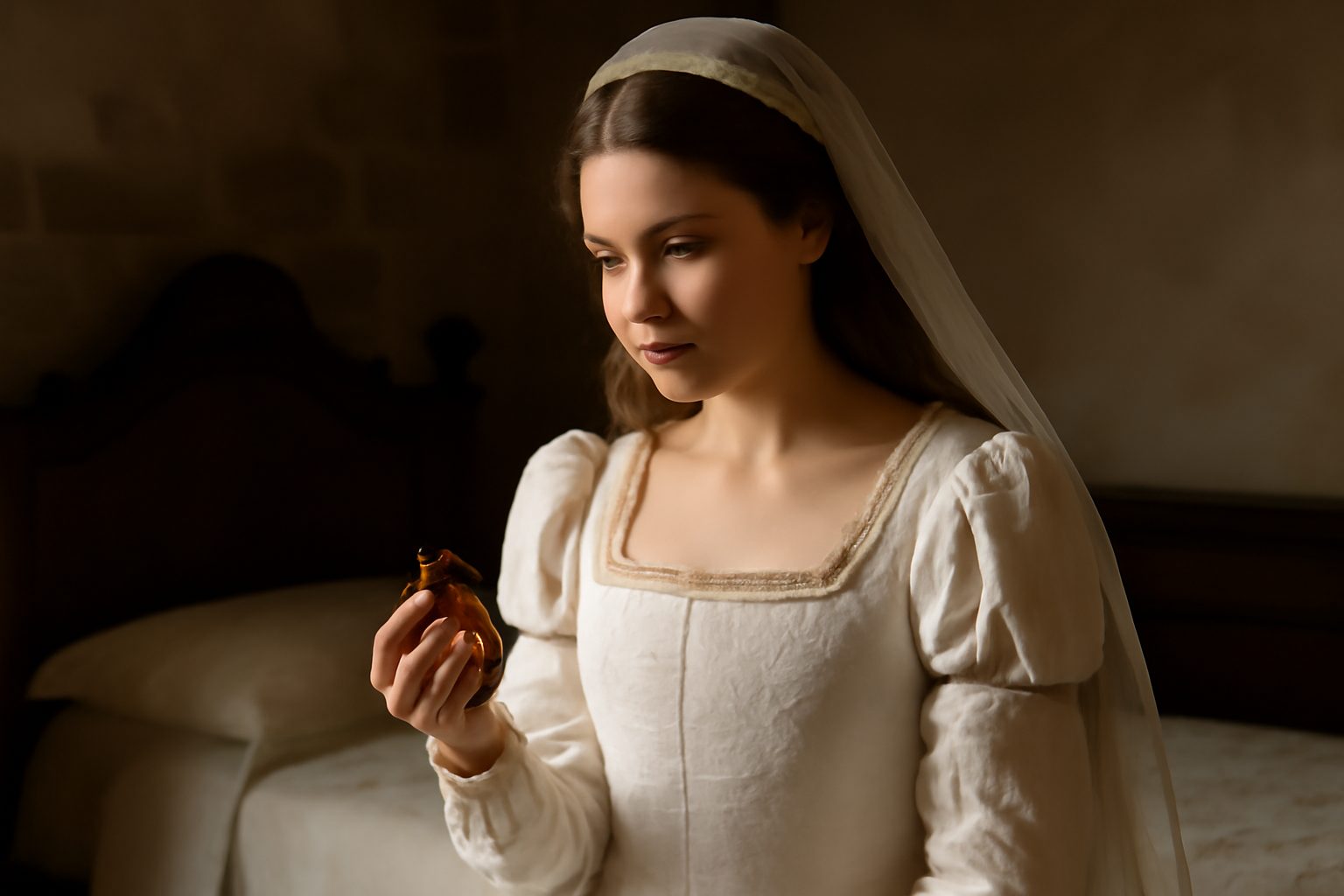
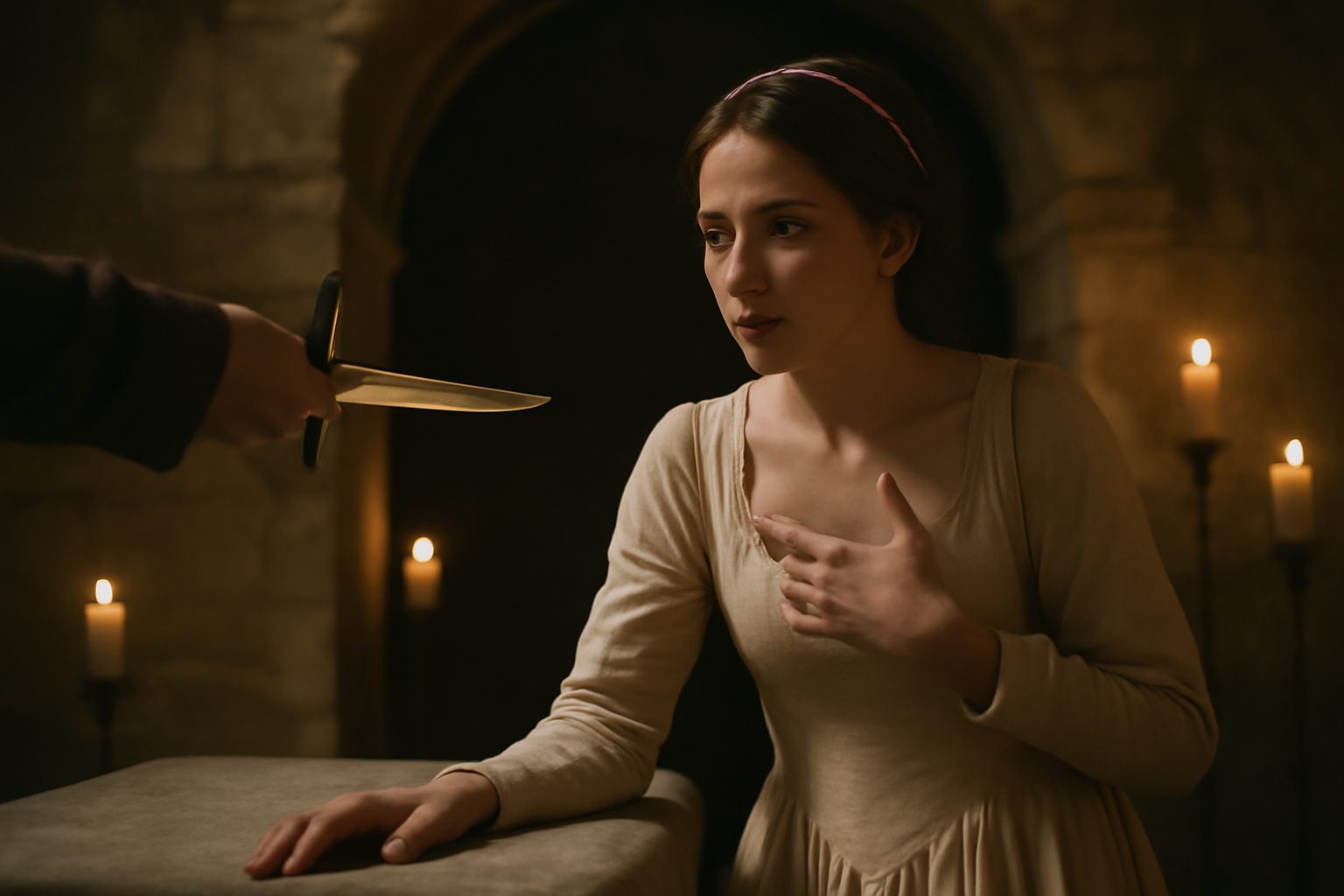
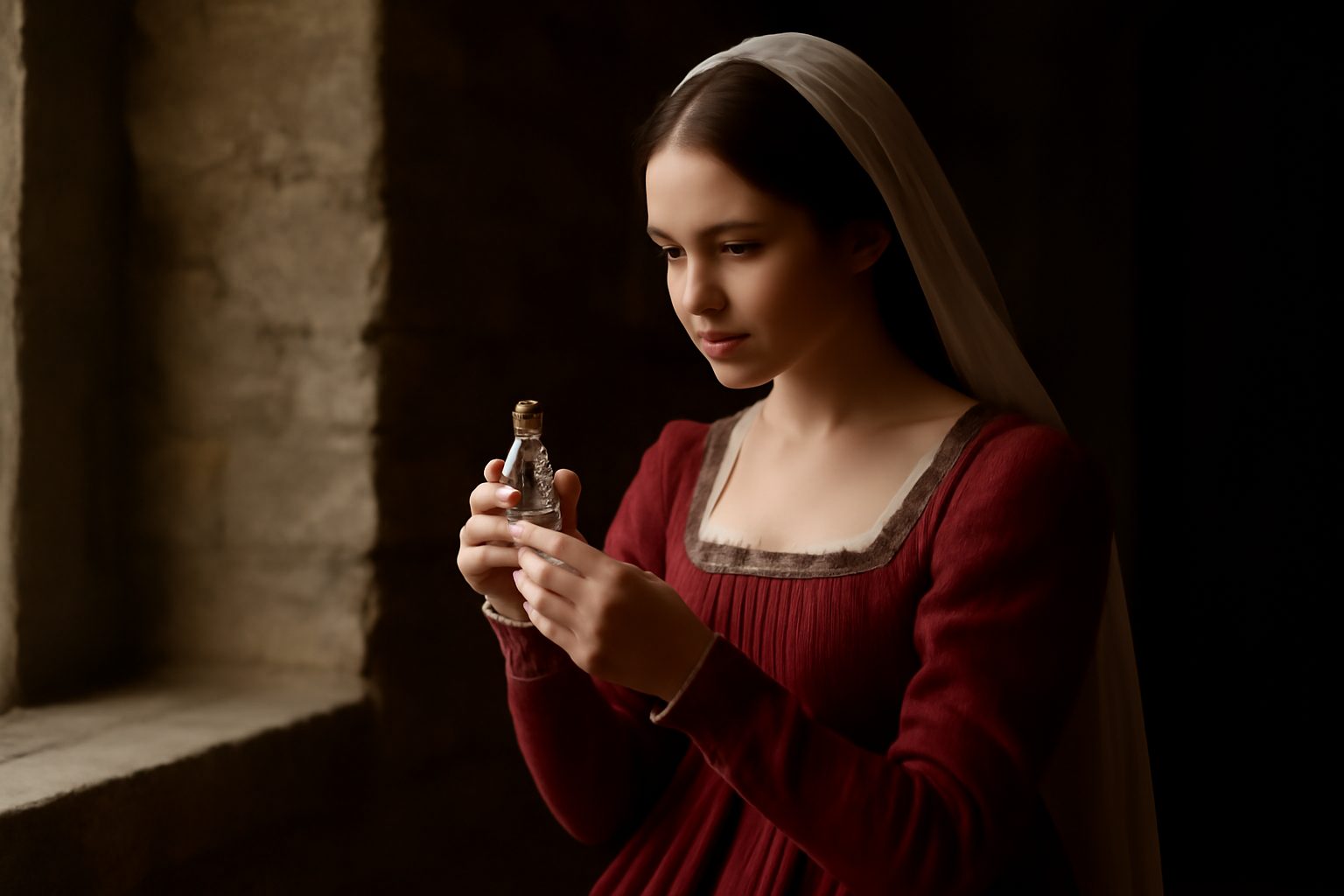
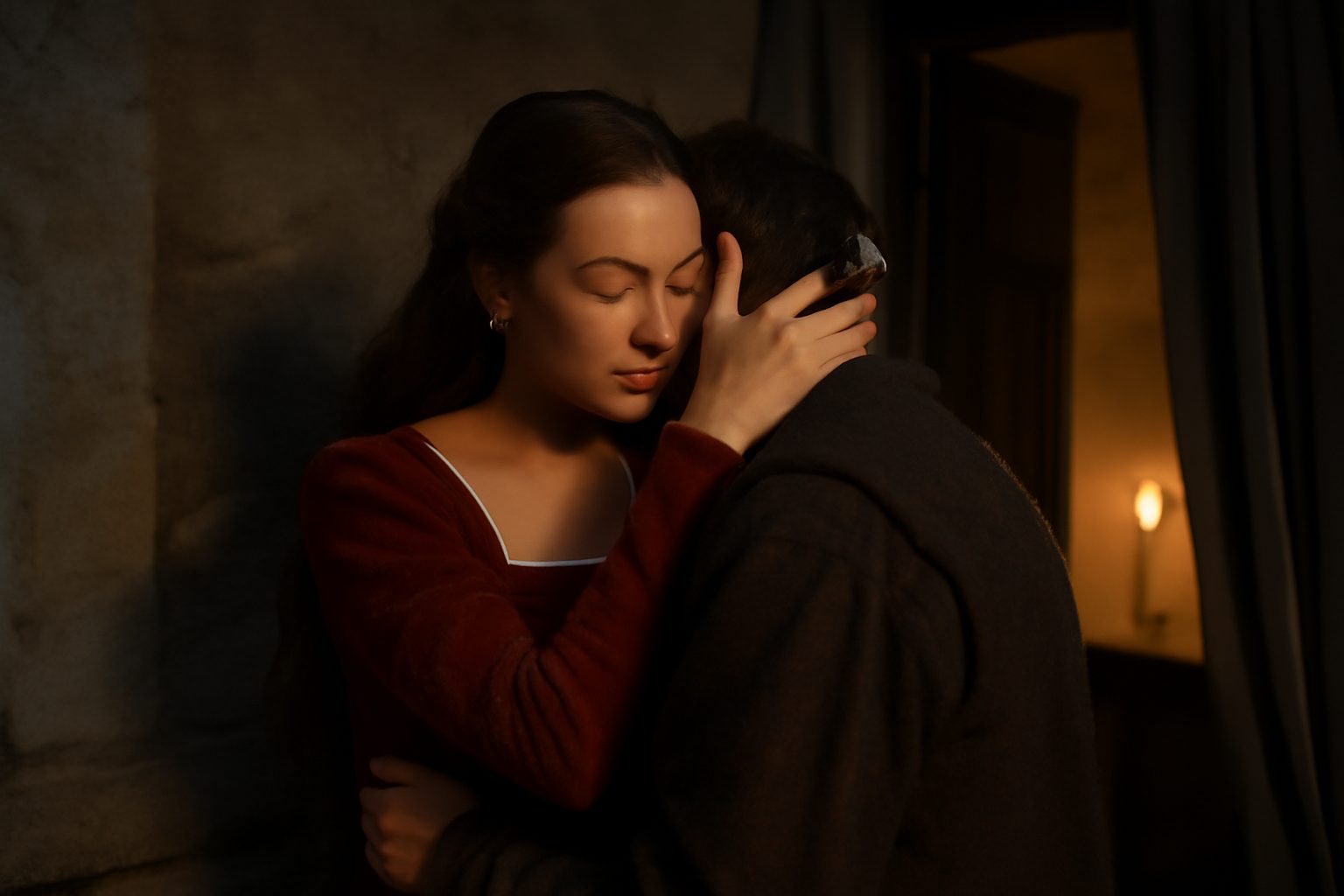
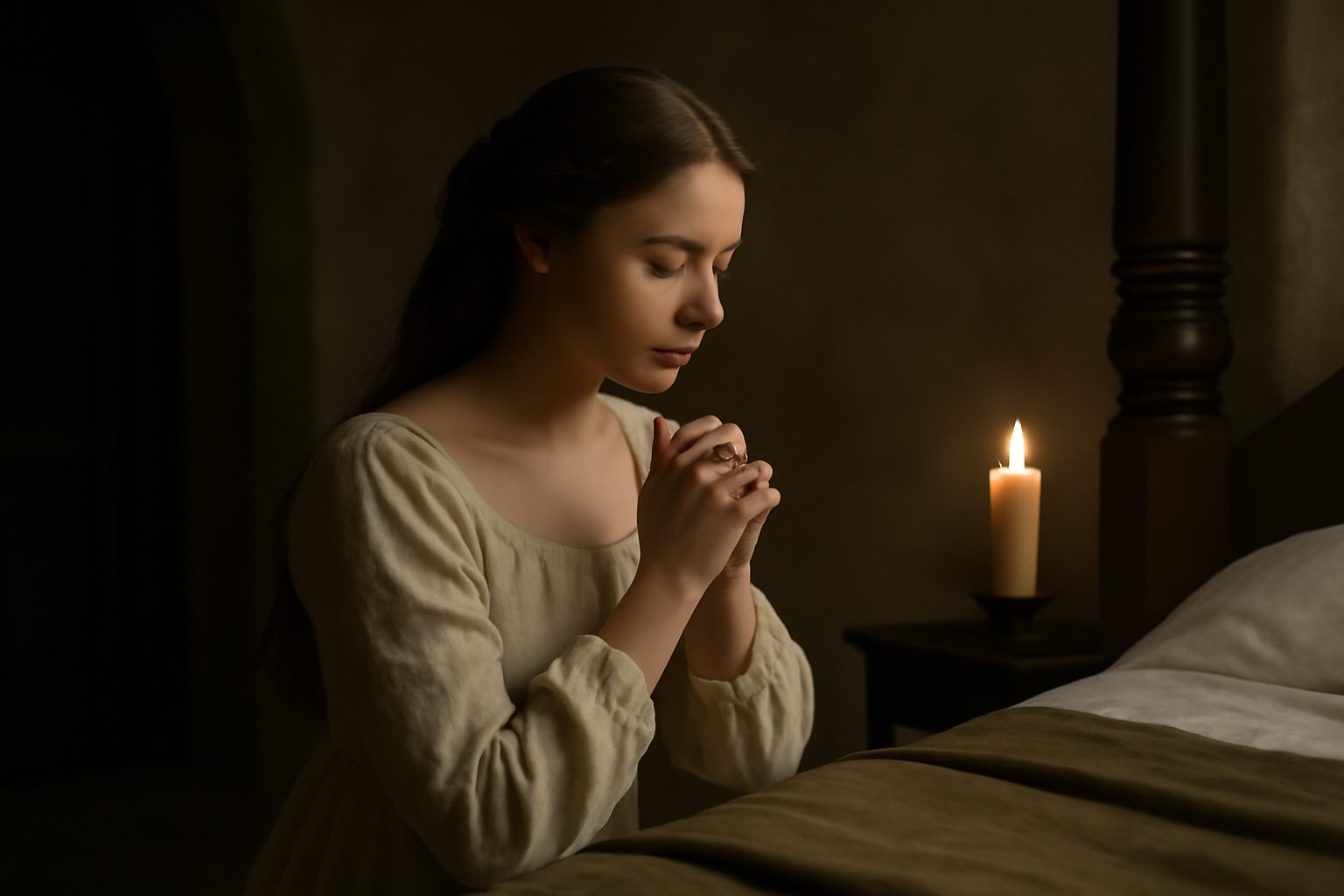
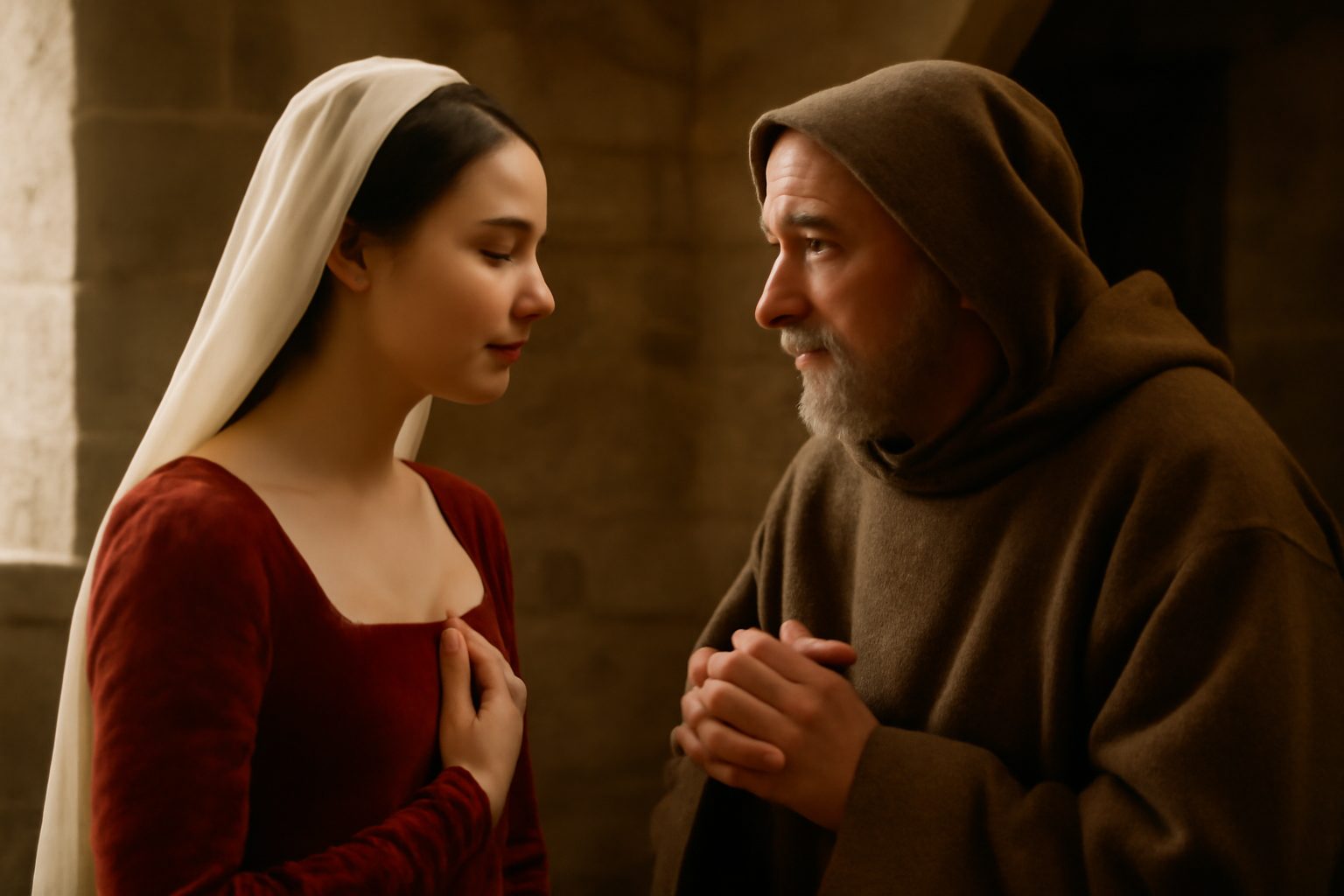
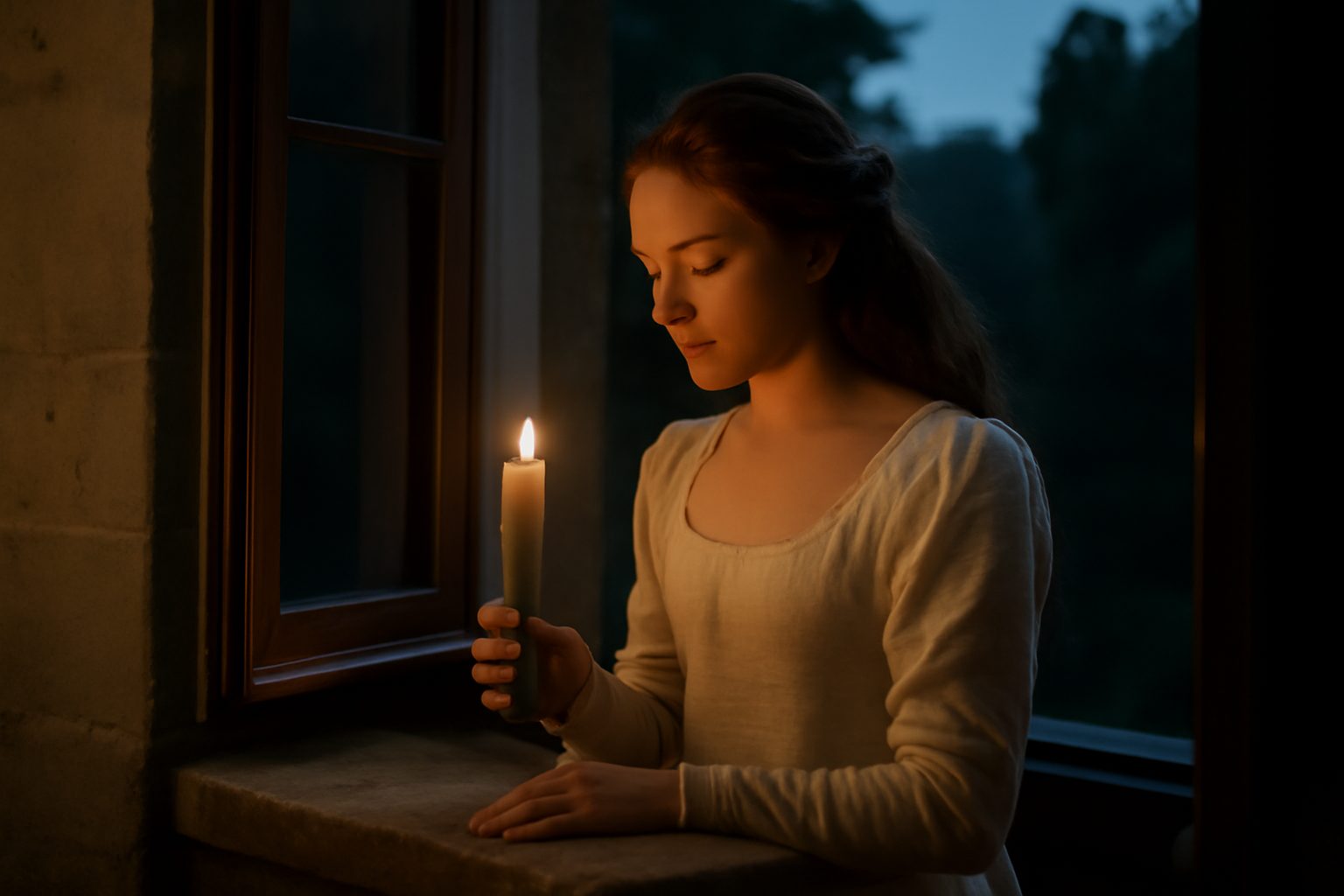
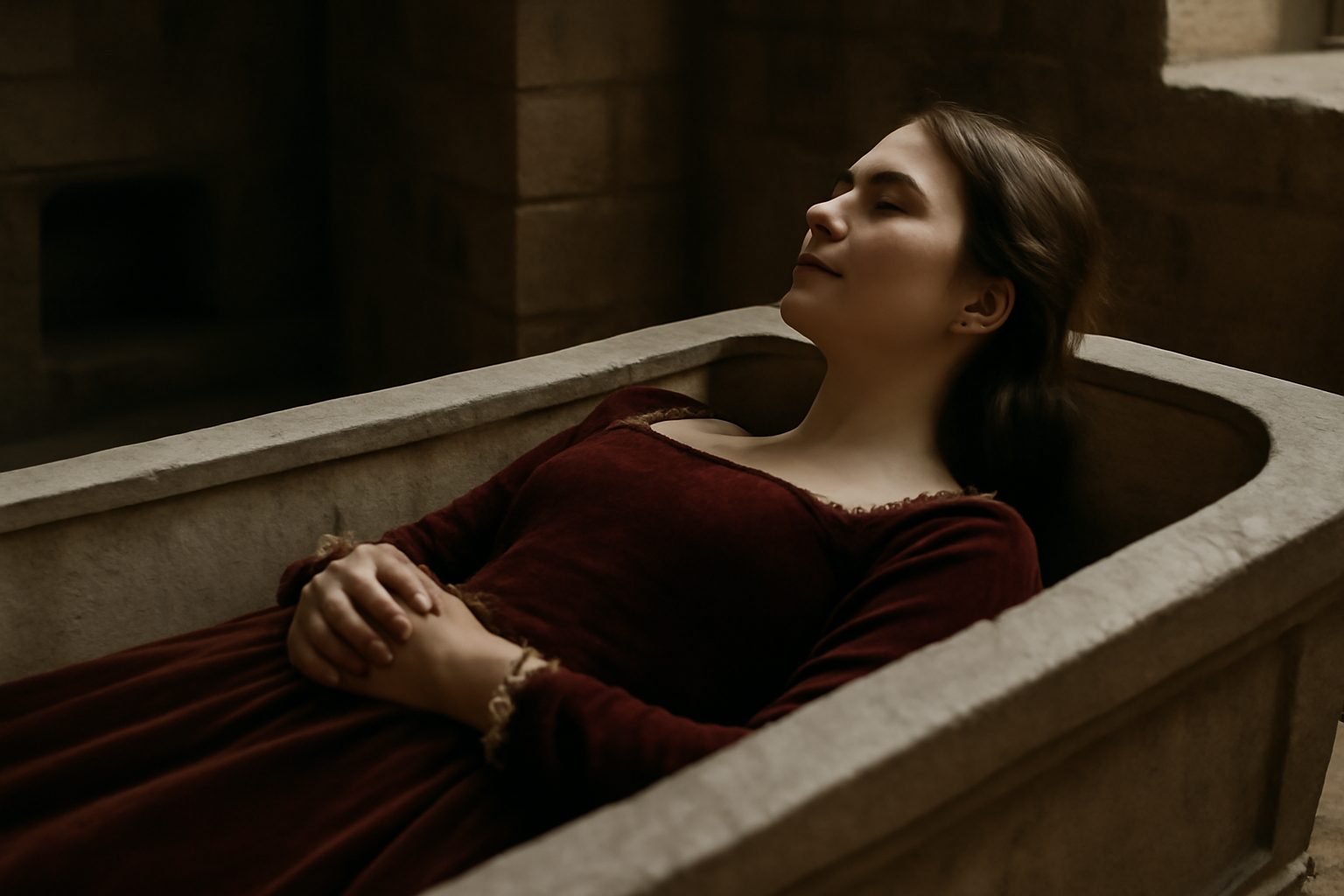
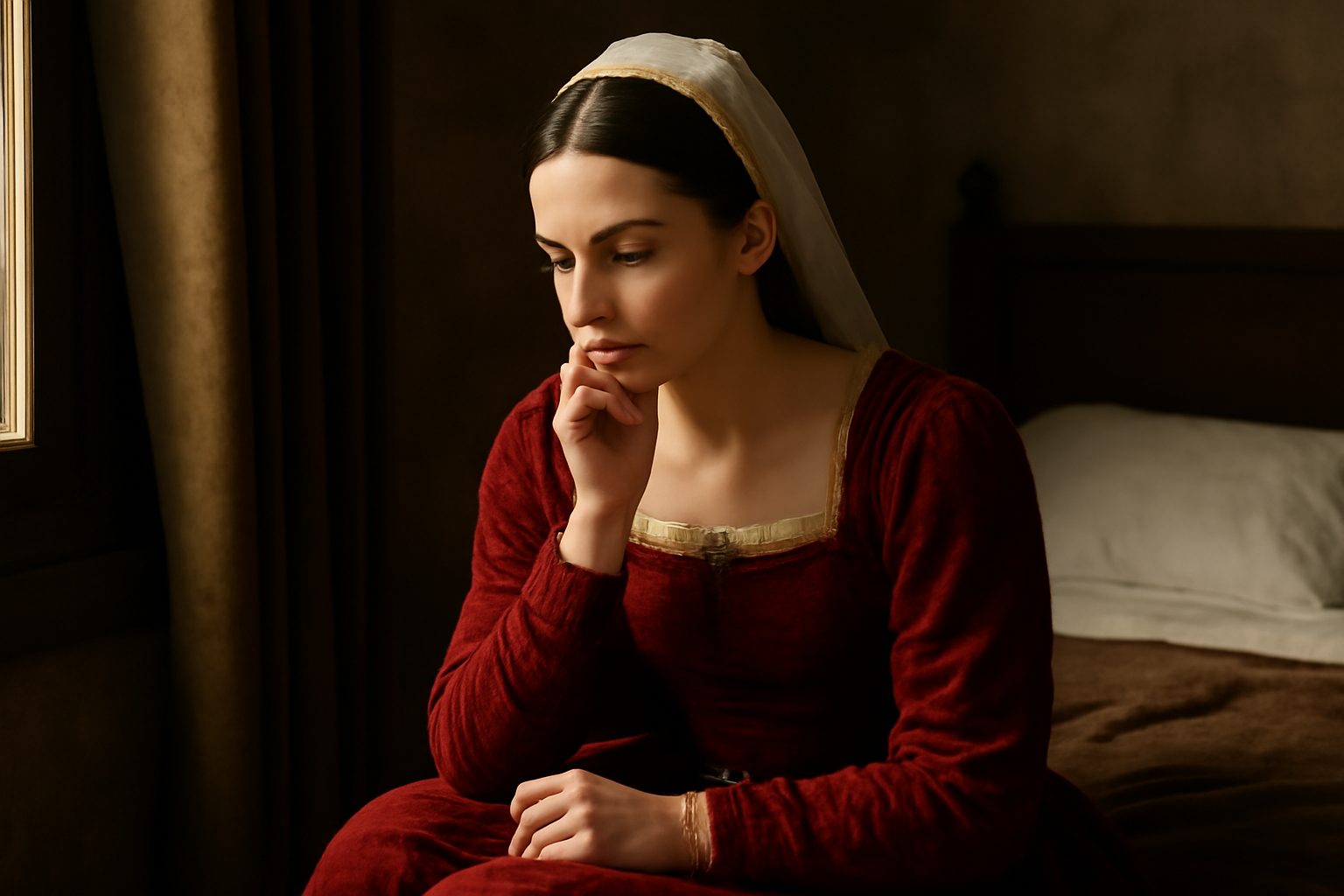
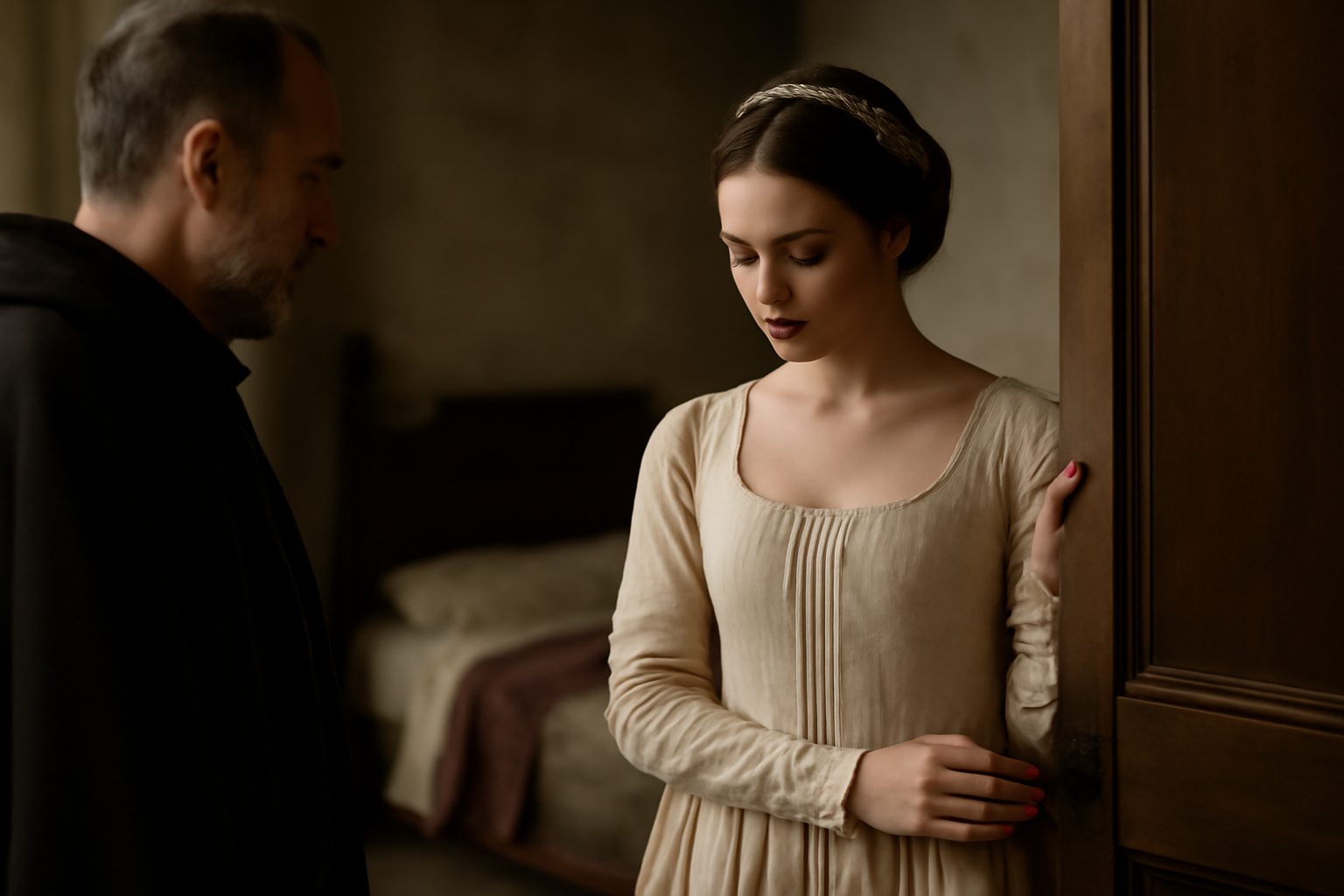
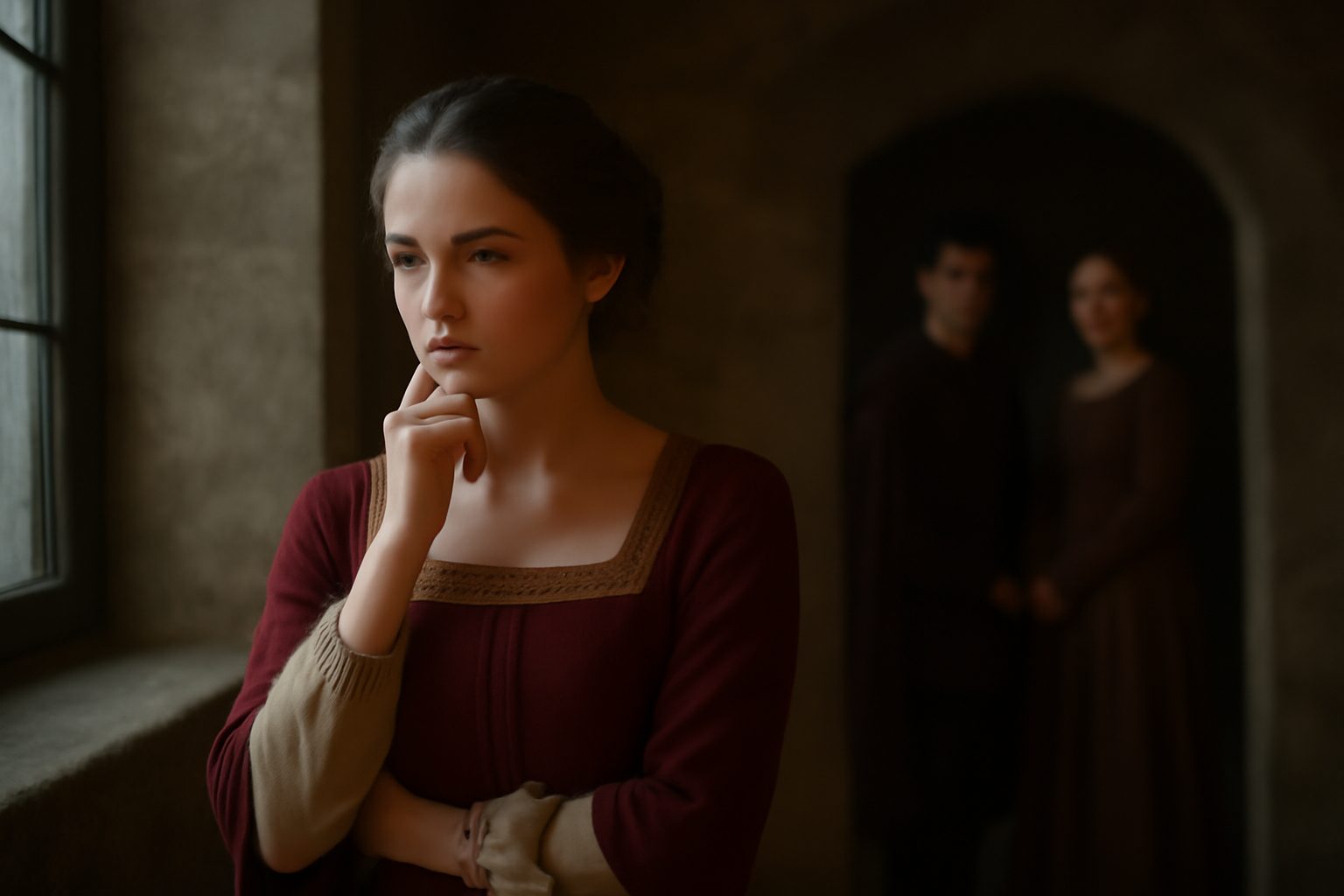
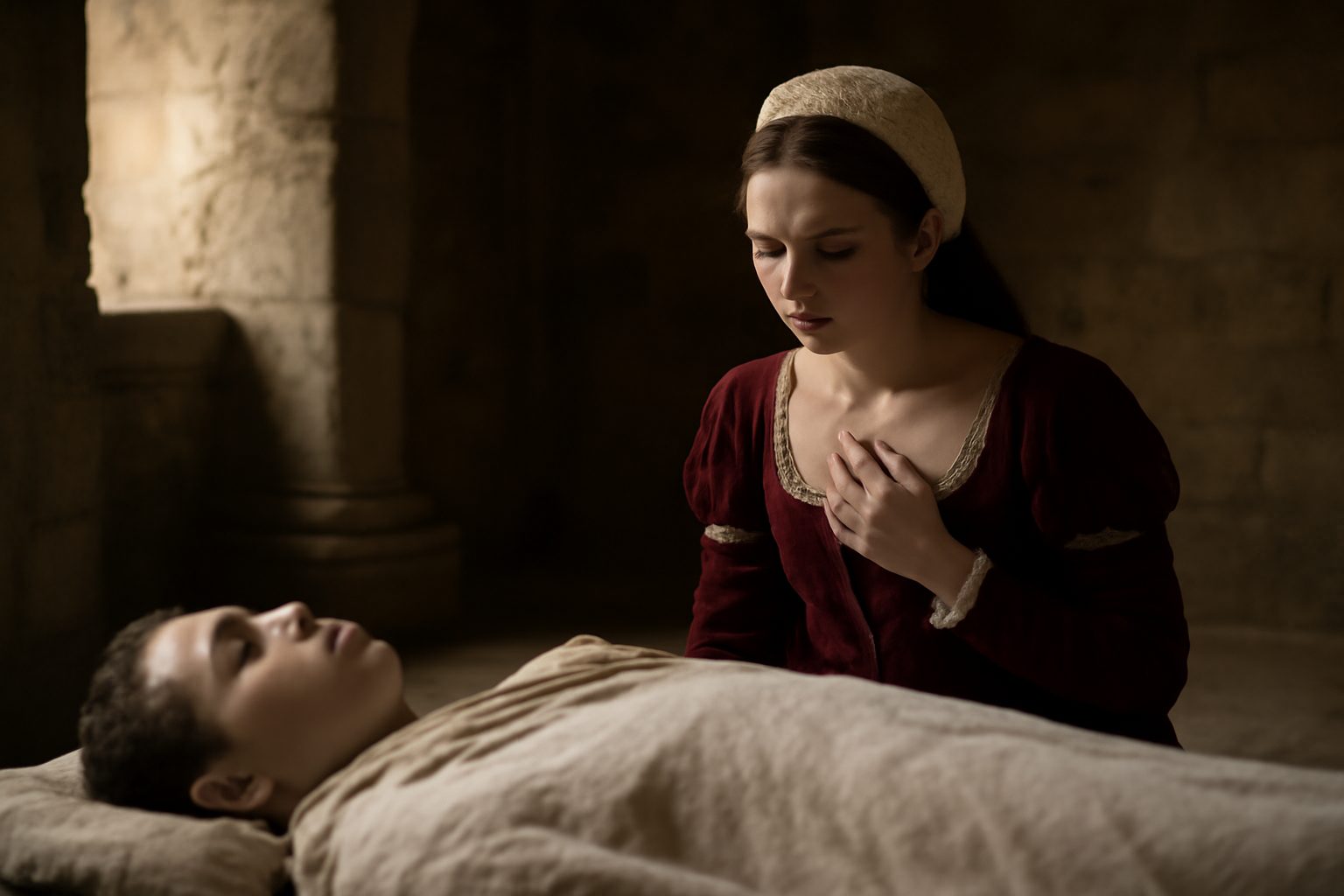
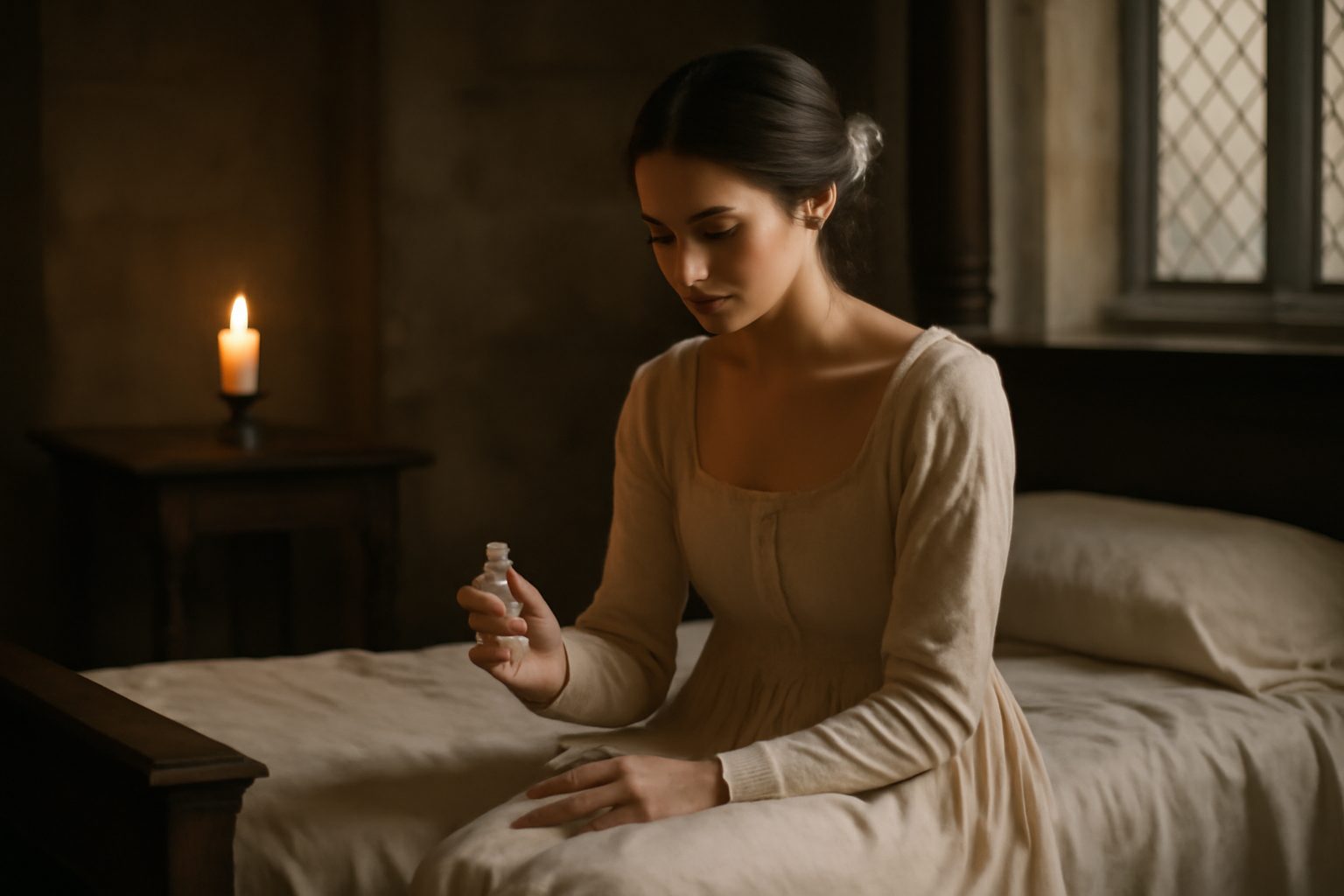
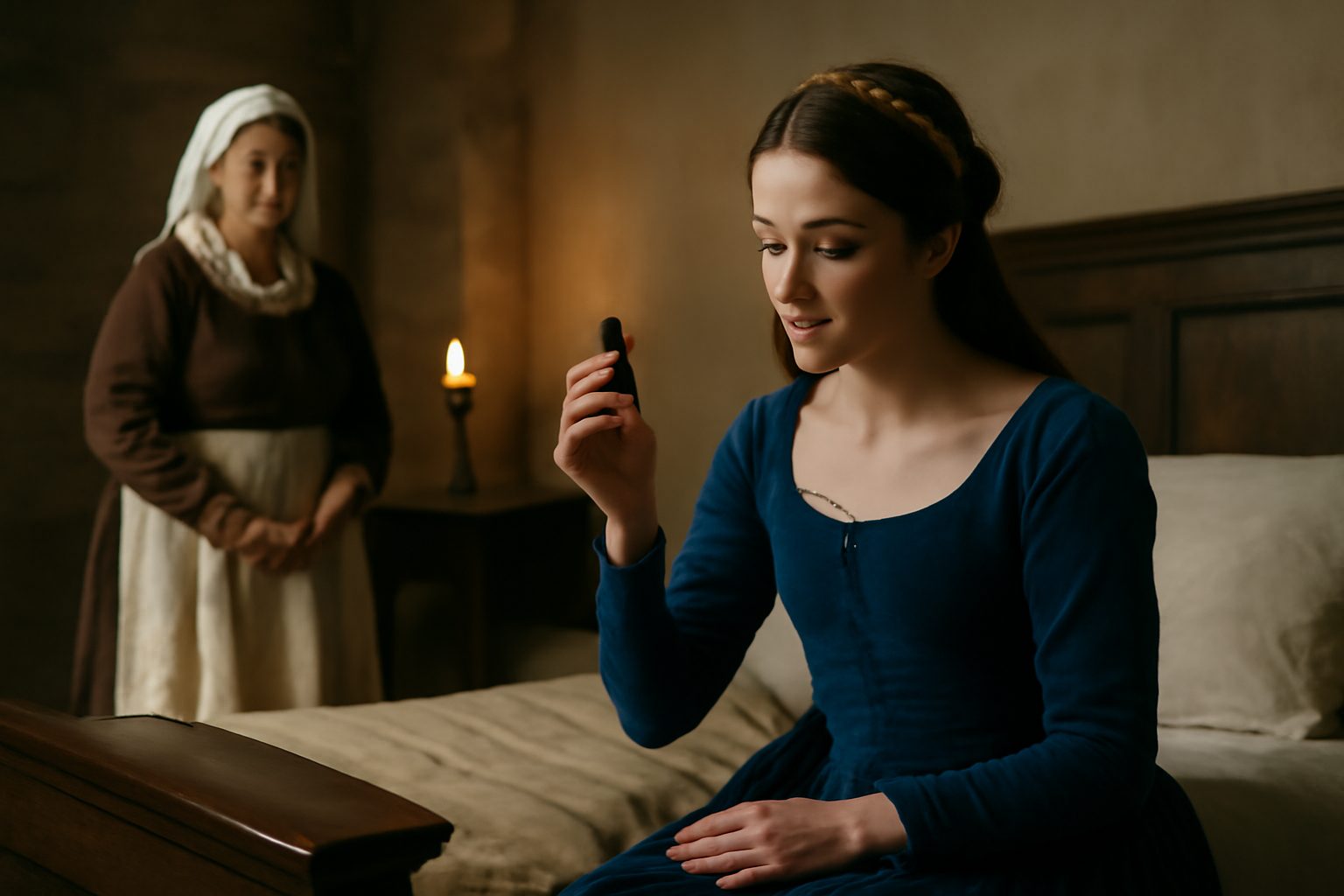
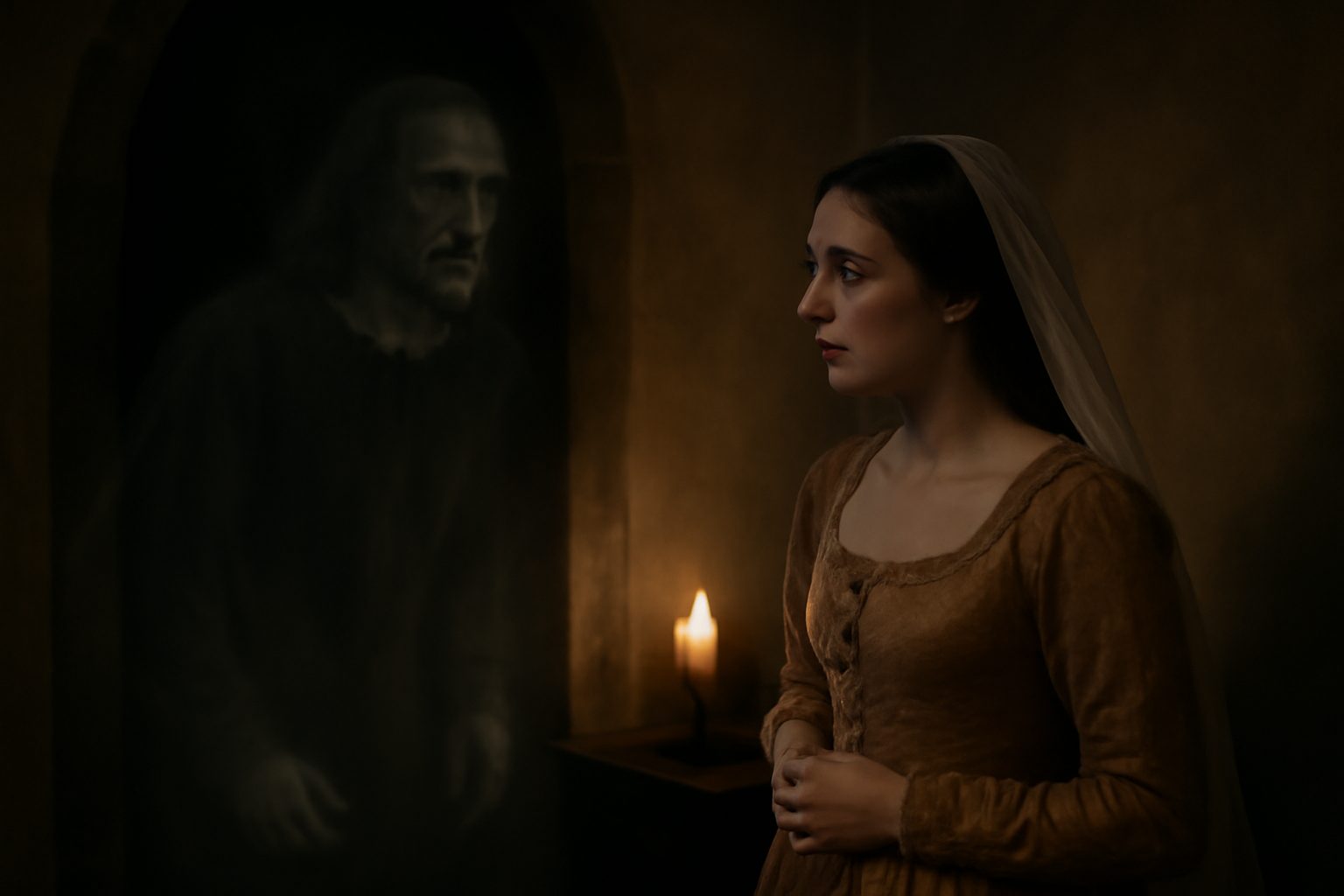
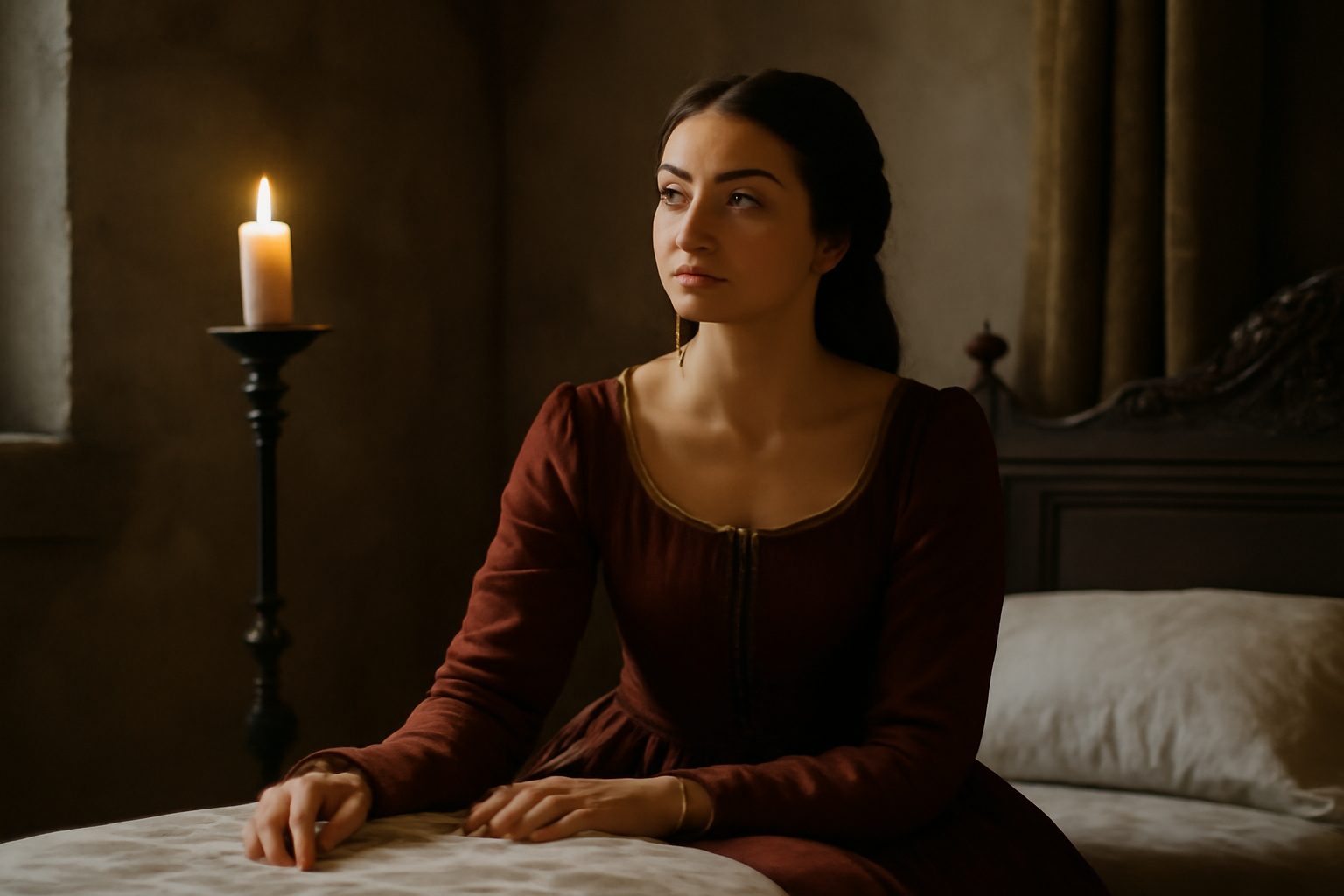
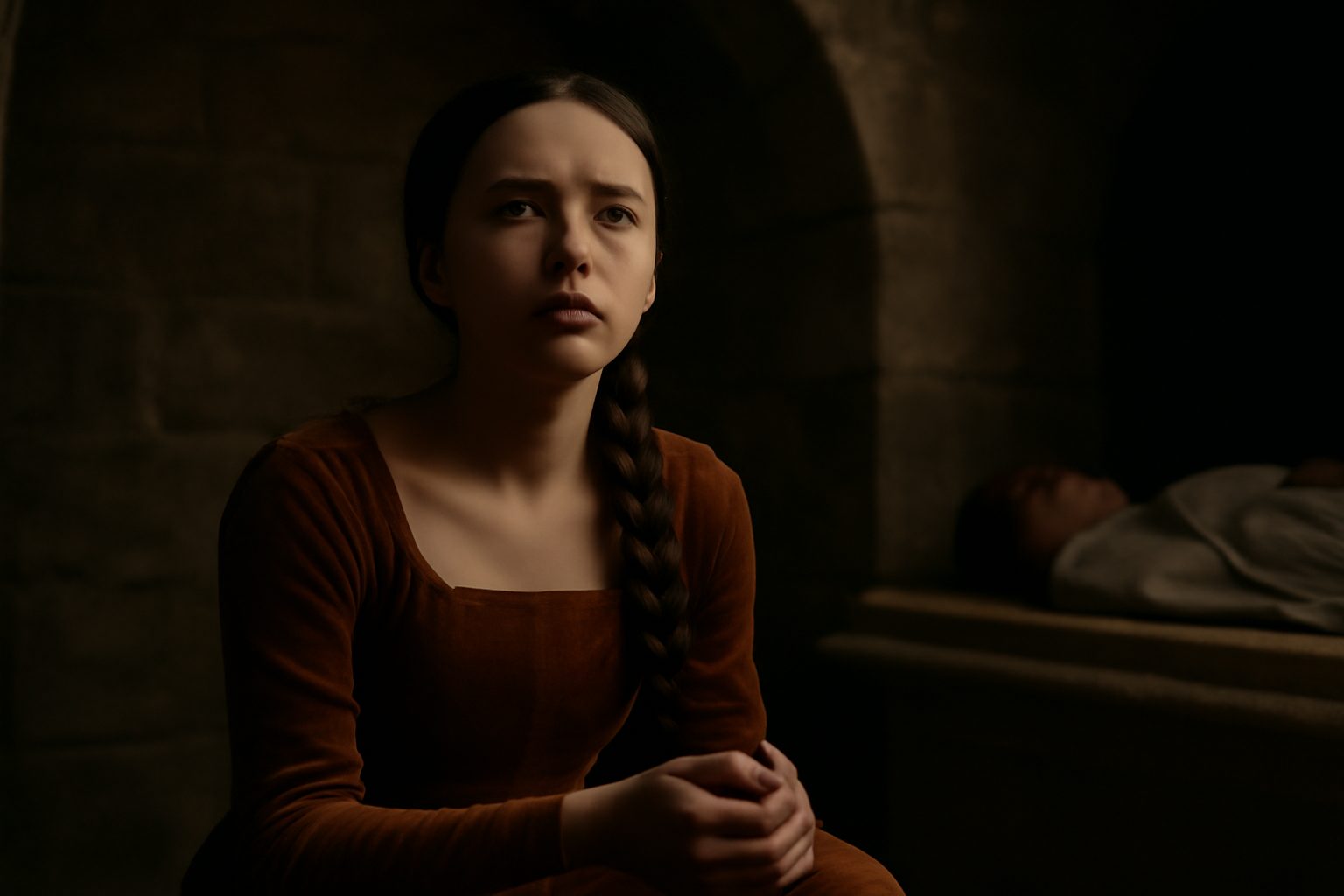
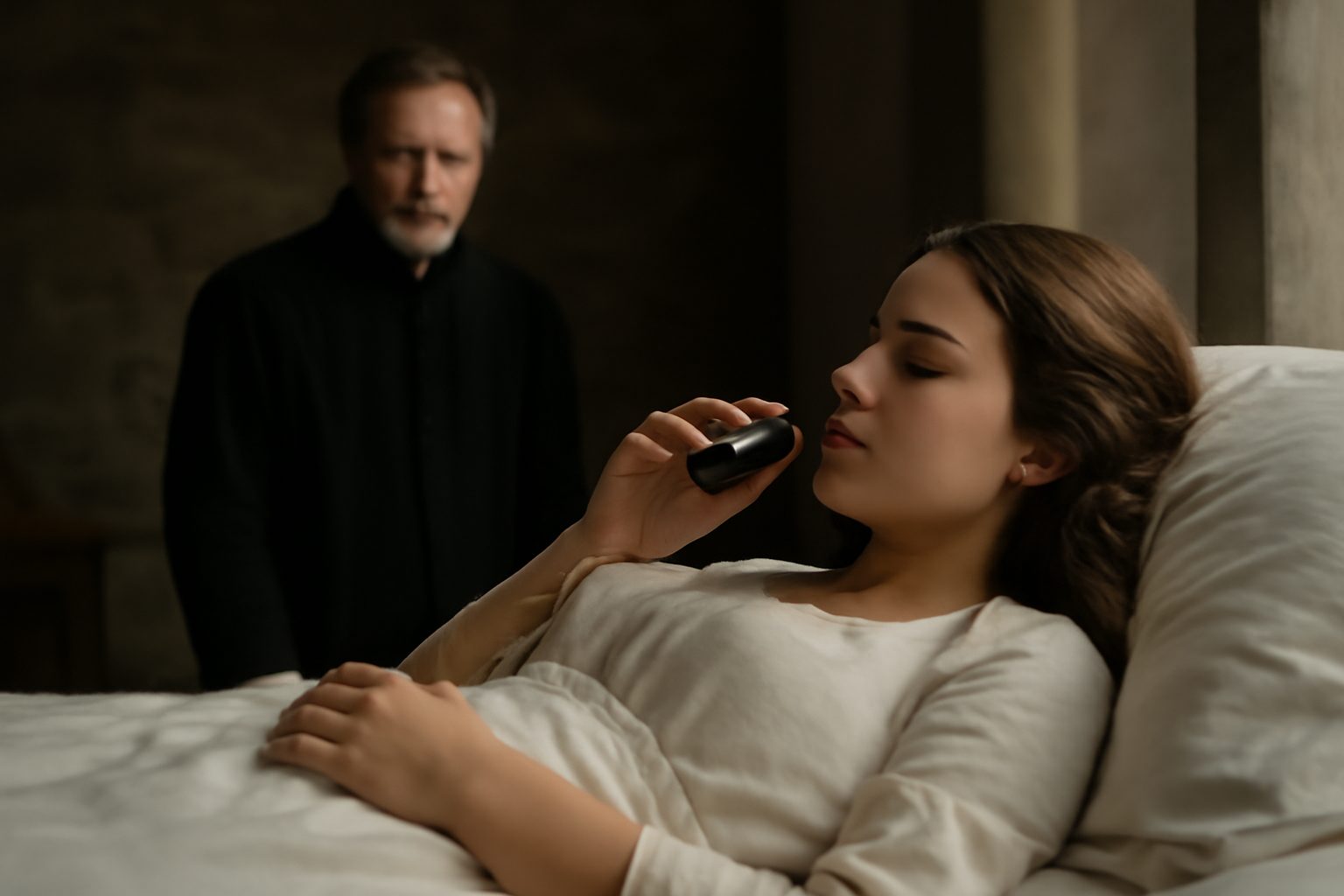
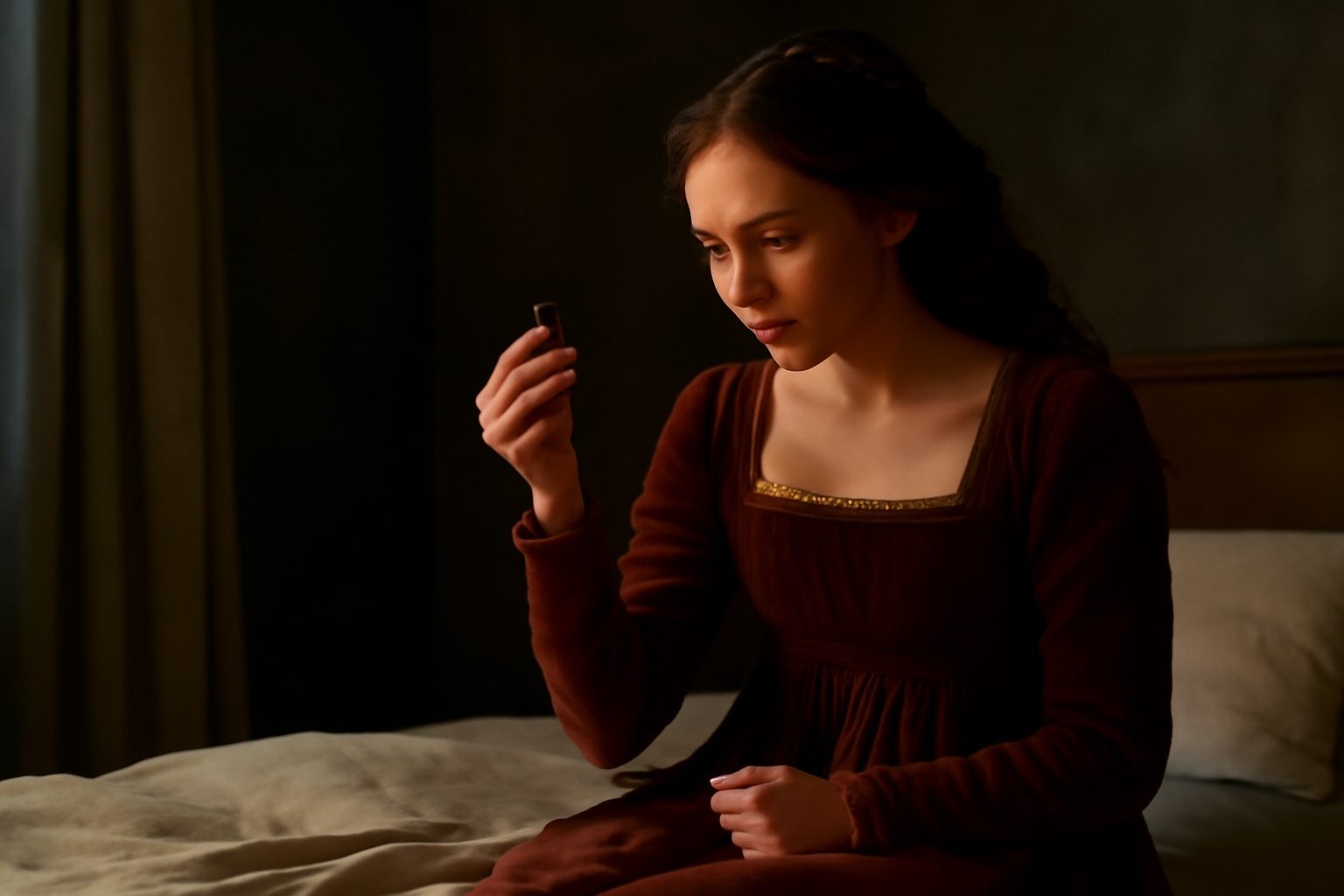
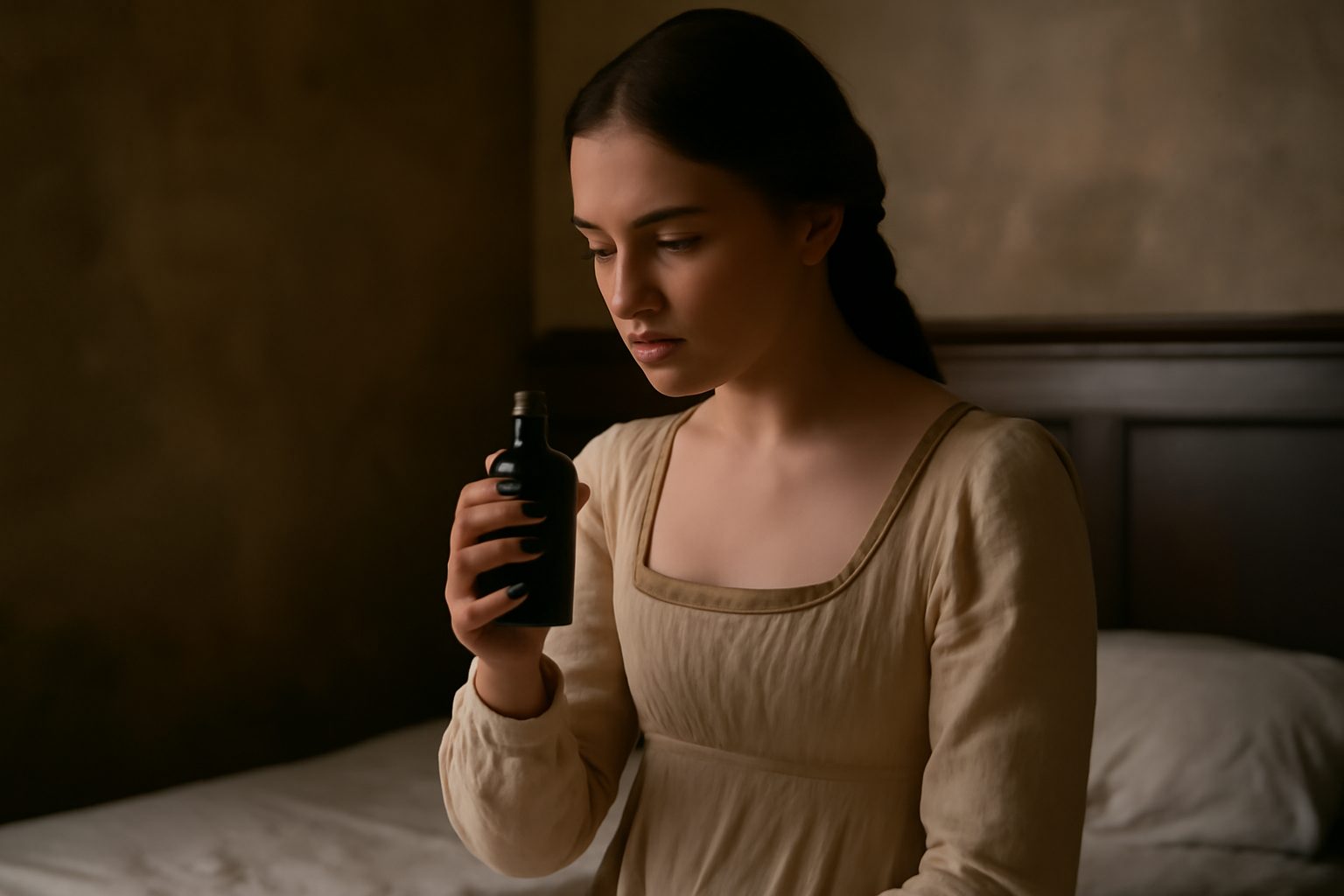
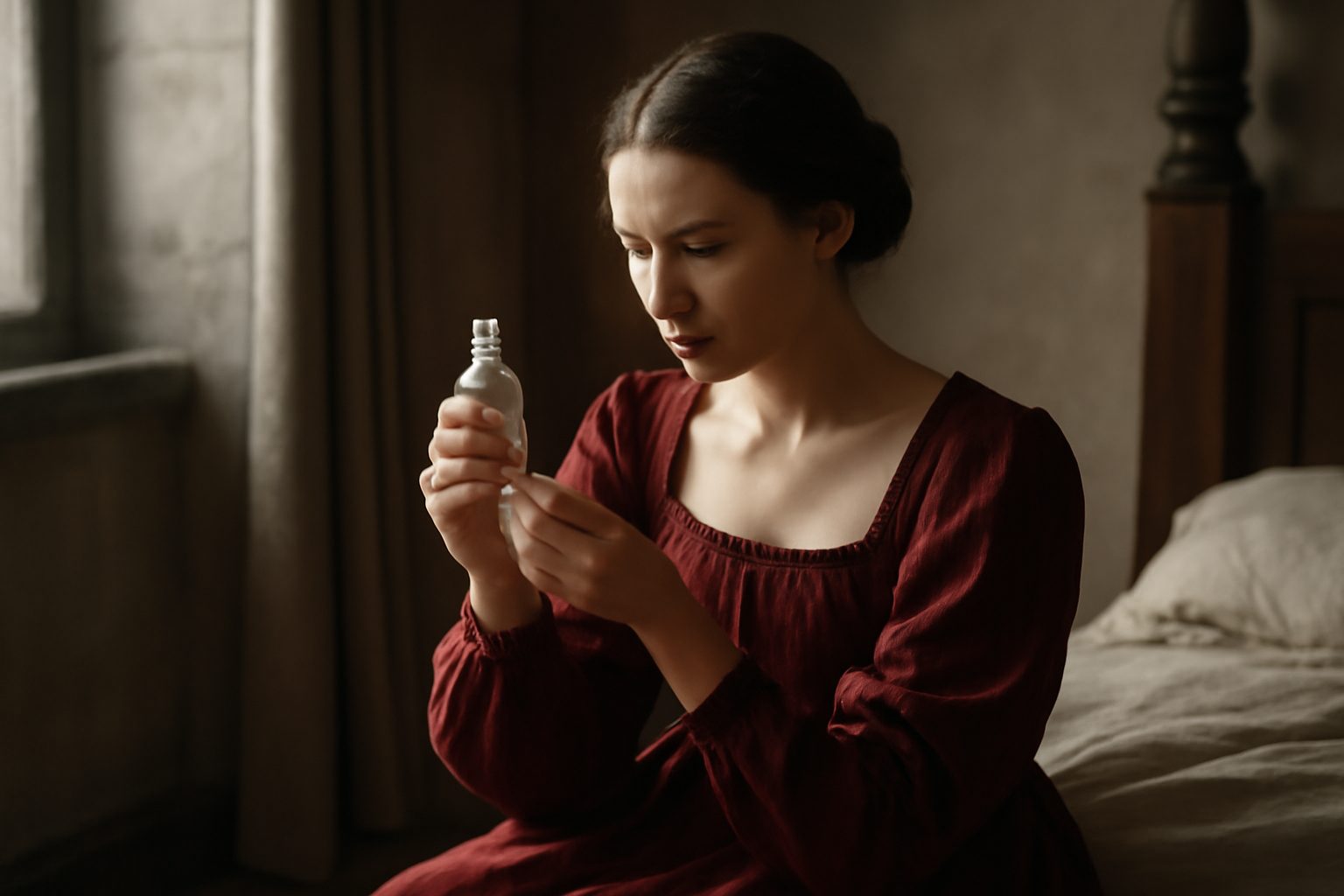
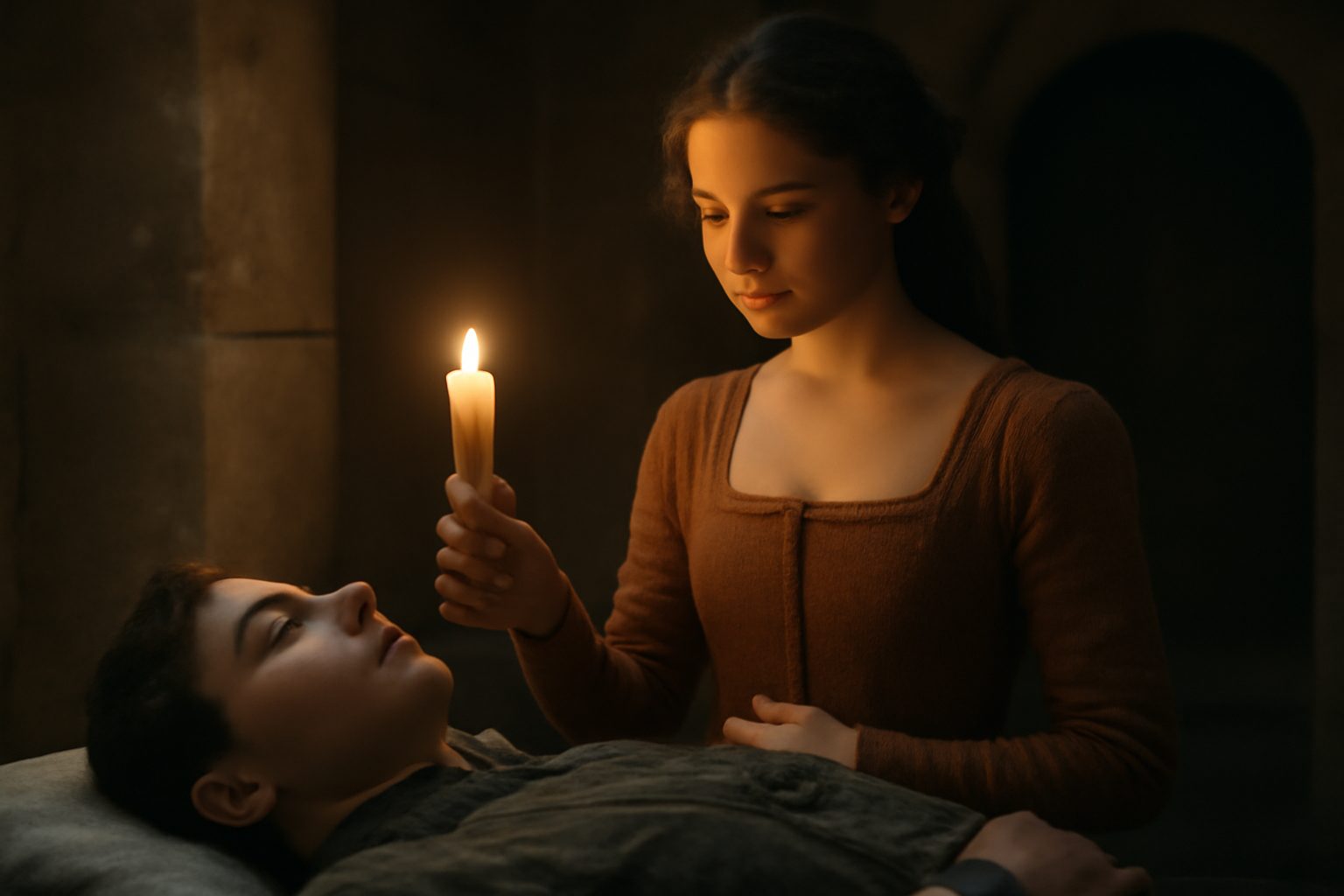
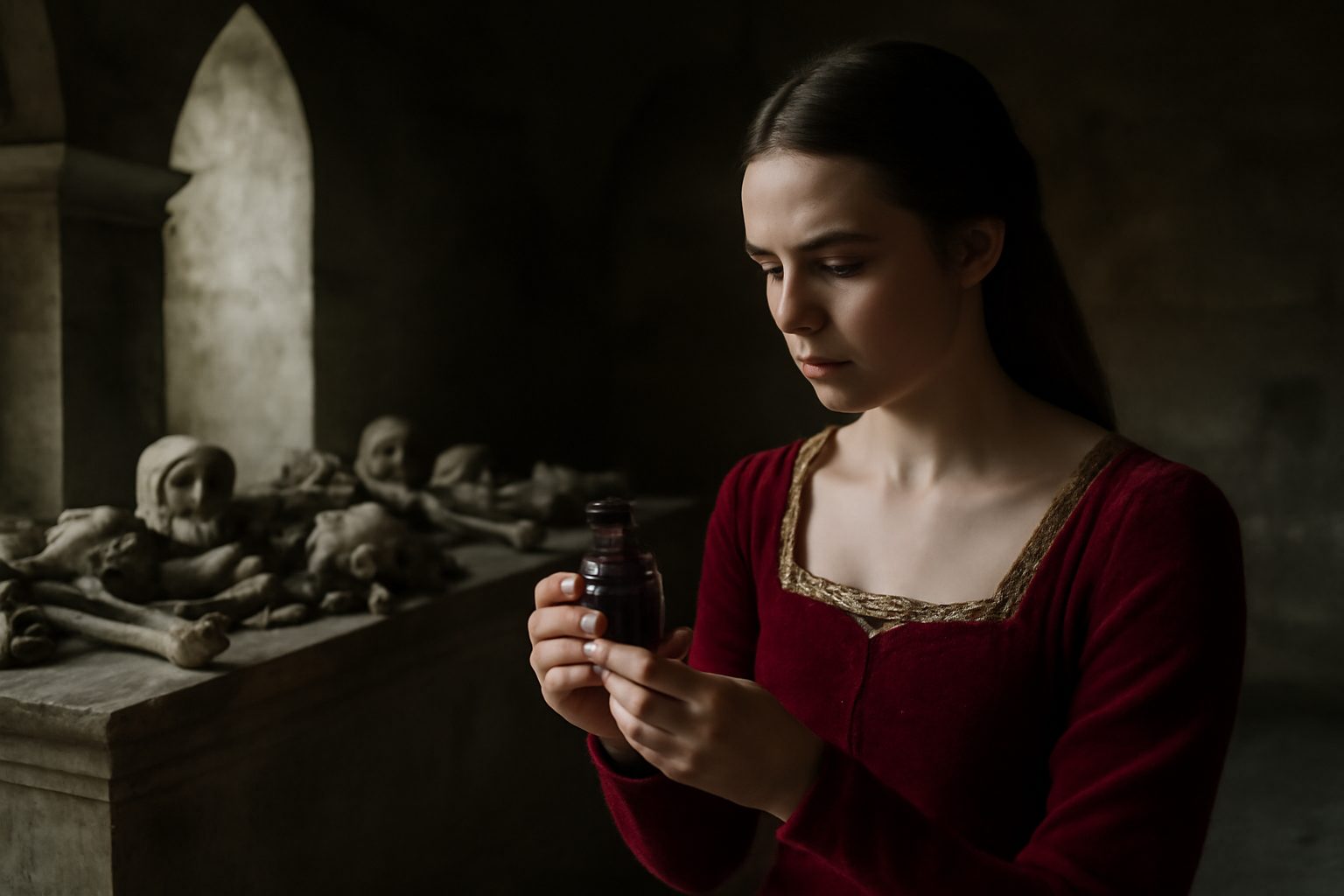
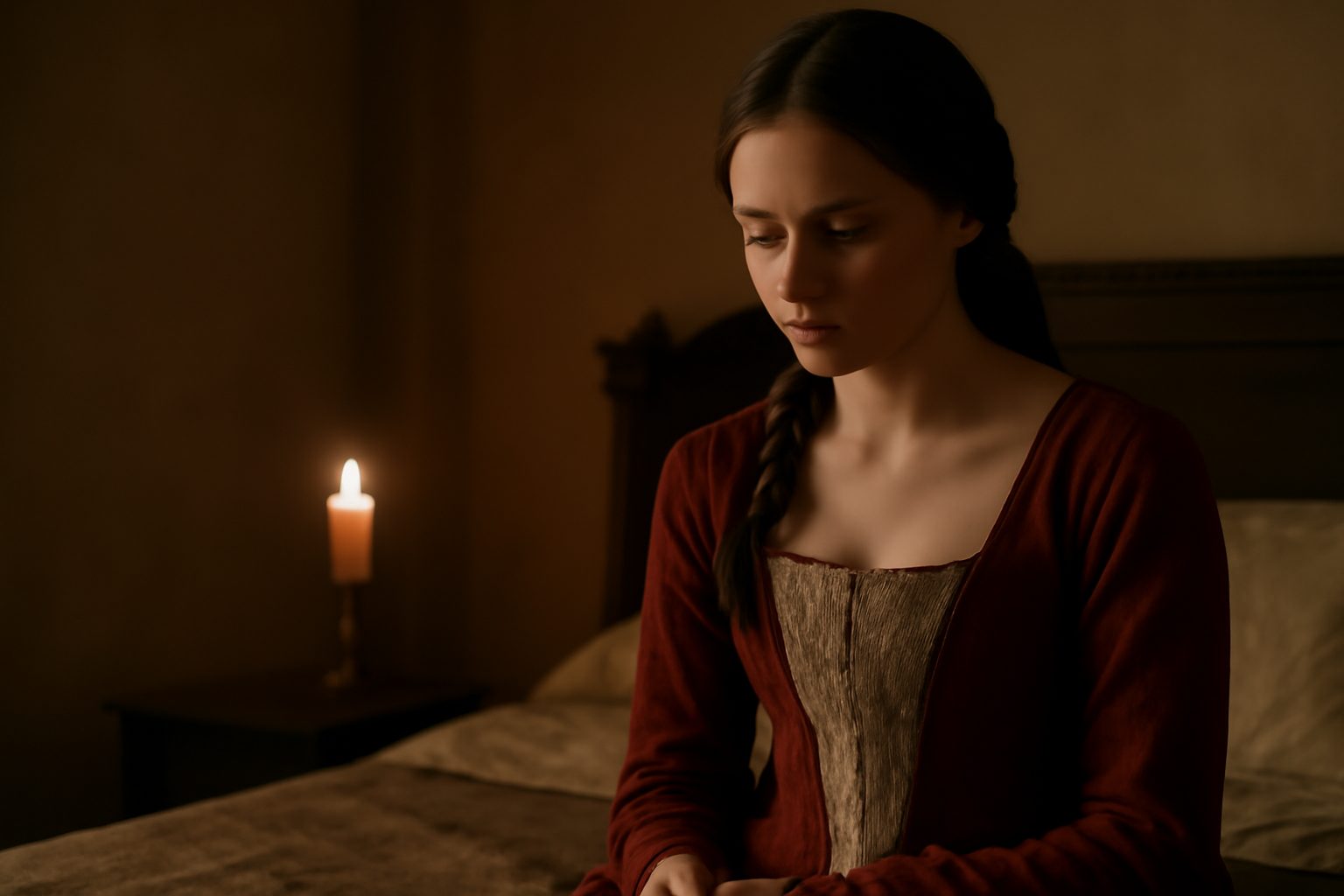
In Act 4, Scene 3 of Romeo and Juliet, Juliet prepares to drink Friar Laurence's potion, which will make her appear dead to avoid marrying Paris. As she hesitates, she considers the potential consequences, including the dishonor that Paris might face if their marriage were to proceed under false pretenses. This moment reveals Juliet's conflicted emotions and her awareness of the broader social implications of her actions.
Juliet: "Lest in this marriage he should be dishonour'd,"
In modern day english, we would say:
Otherwise, this marriage would bring shame to him.
Frequently Asked Questions
Why is Juliet worried about dishonor in the marriage?
Juliet is worried that if she marries Paris, her true husband Romeo might be dishonored because she would be breaking her vows to him.
Connections to other verses:
Connections to "Lest in this marriage he should be dishonour'd"
The verse "Lest in this marriage he should be dishonour'd" reflects Juliet's concern for Friar Laurence's reputation if her secret marriage to Romeo is revealed through her forced union with Paris. This ties directly to her suspicion in "What if it be a poison, which the friar / Subtly hath minister'd to have me dead", where she questions whether the friar might be betraying her to avoid dishonor.
Fear and Distrust
Juliet's anxiety about dishonoring the friar amplifies her broader fears of the potion's effects, as seen in "What if this mixture do not work at all?" and her terror of waking alone in the tomb, expressed in "How if, when I am laid into the tomb". These verses collectively highlight her isolation and desperation.
Imagery of Death and the Tomb
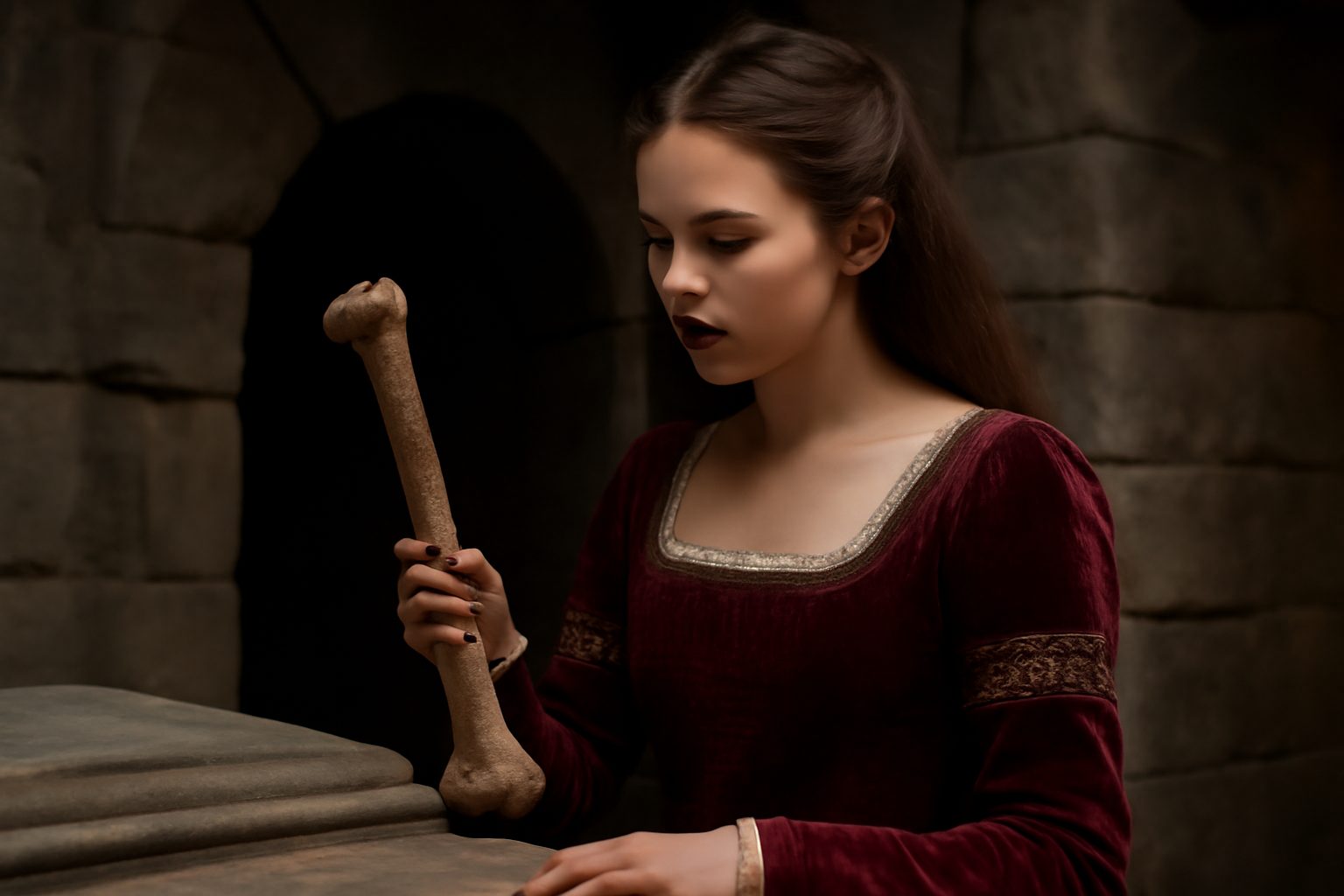
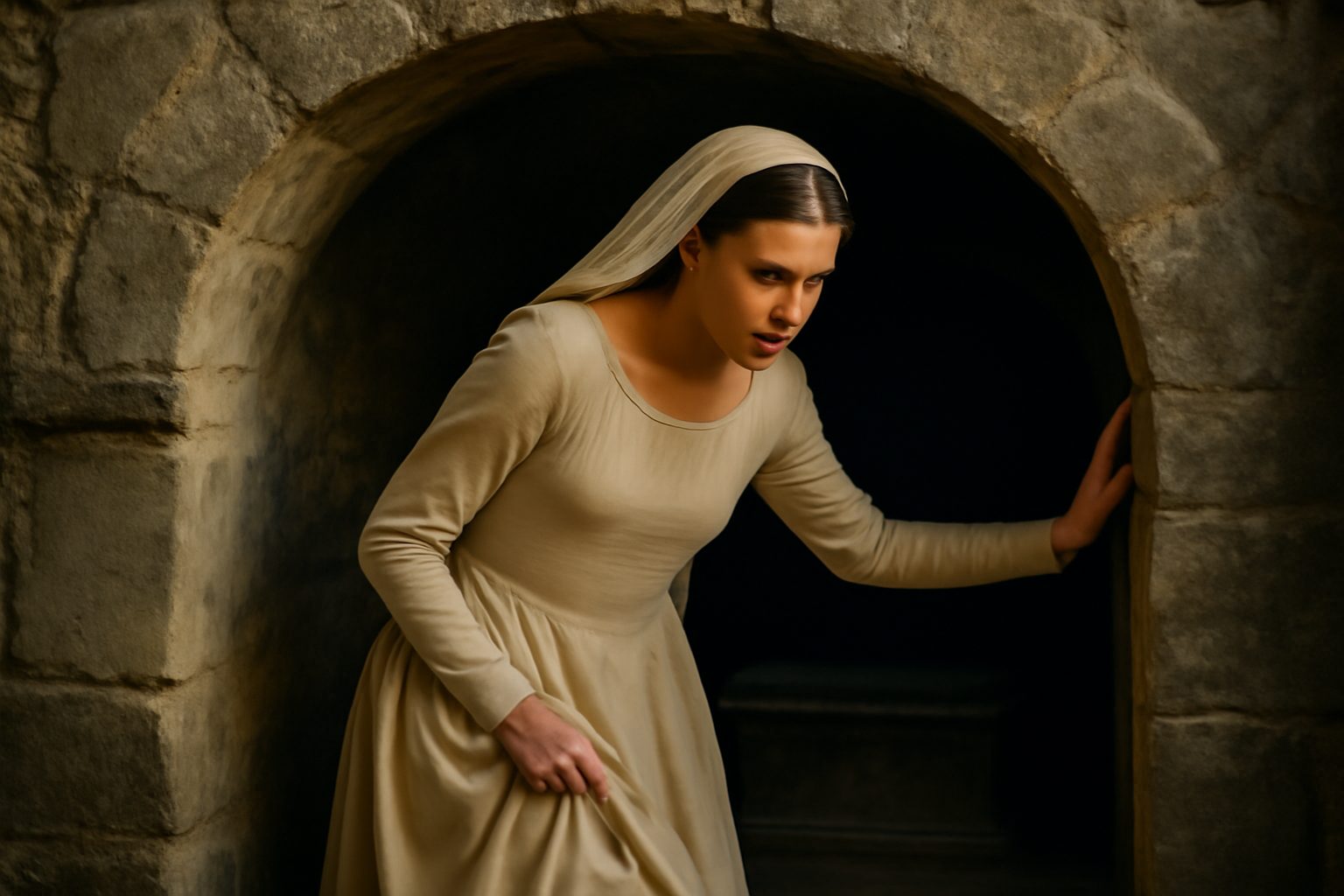
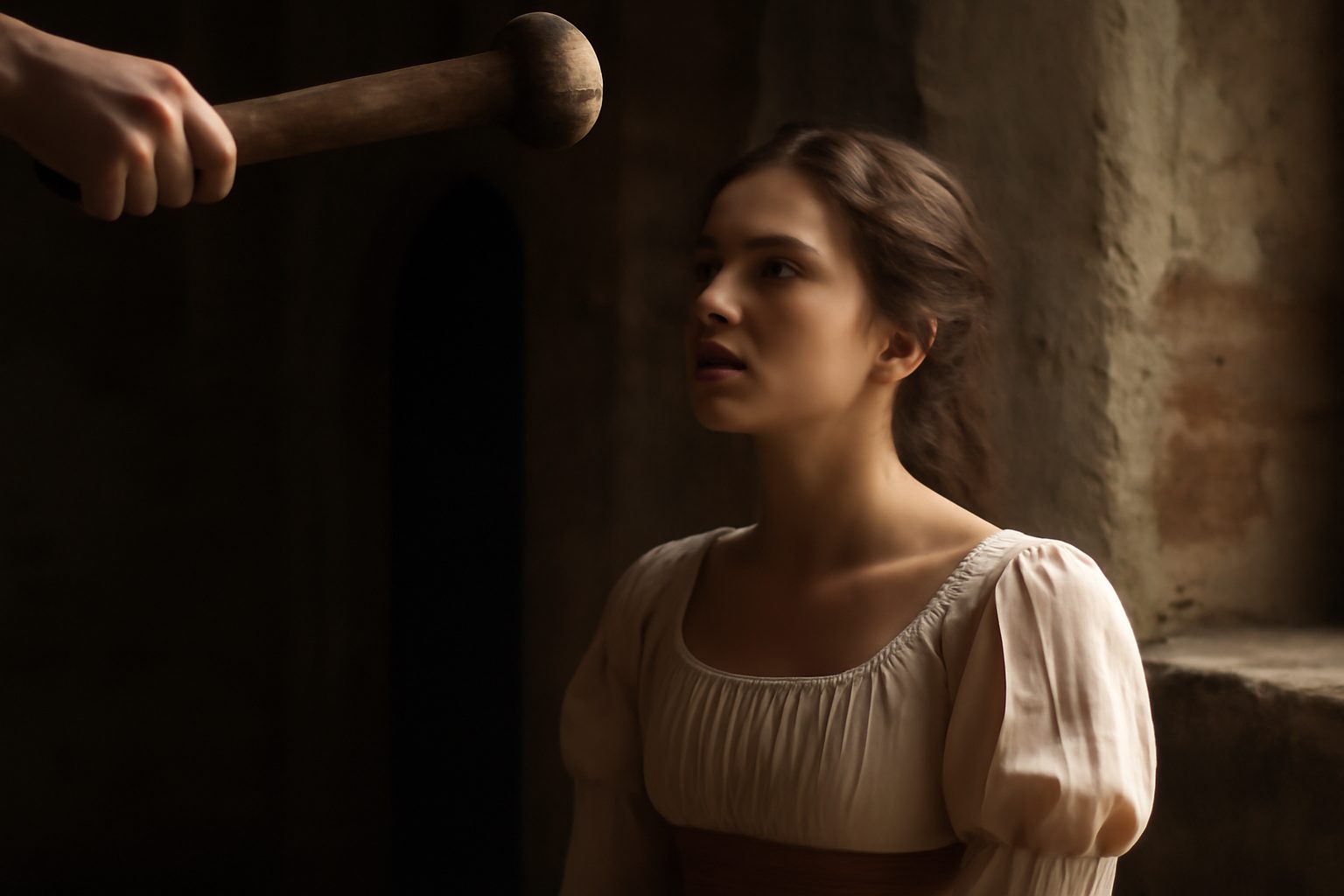
The dishonor motif connects to Juliet's vivid hallucinations of the Capulet vault, where she imagines encountering Tybalt's corpse in "And pluck the mangled Tybalt from his shroud?" and the horror of the ancestral tomb described in "Where, for these many hundred years, the bones / Of all my buried ancestors are packed". Her fear of dishonor extends to a fear of desecrating this sacred space.
Resolution and Devotion
Despite these fears, Juliet's commitment to Romeo overrides her doubts, leading to her resolve in "Romeo, I come! this do I drink to thee". The dishonor she seeks to avoid for the friar parallels her own determination to avoid dishonoring her true marriage, even at the cost of facing death-like sleep.