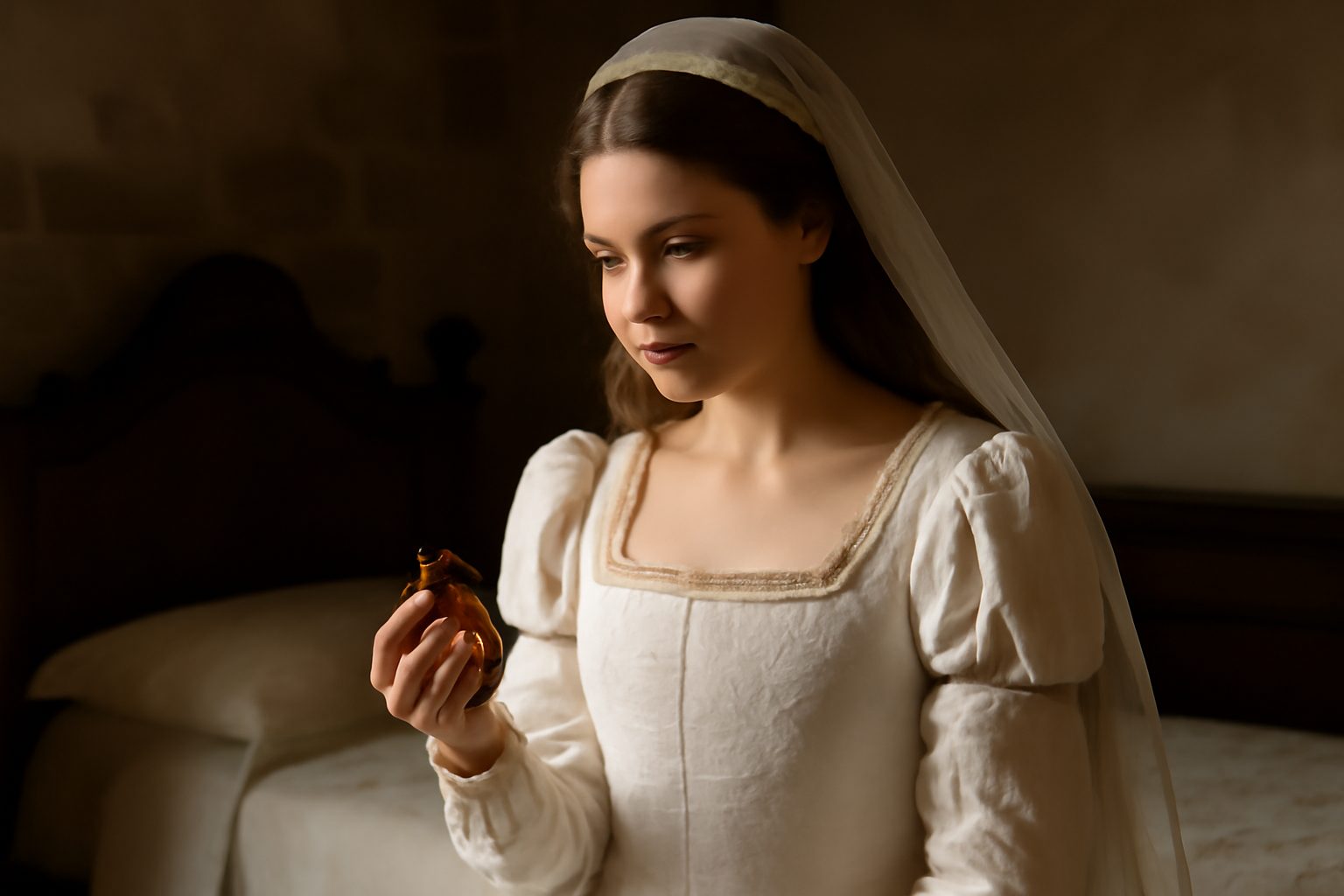
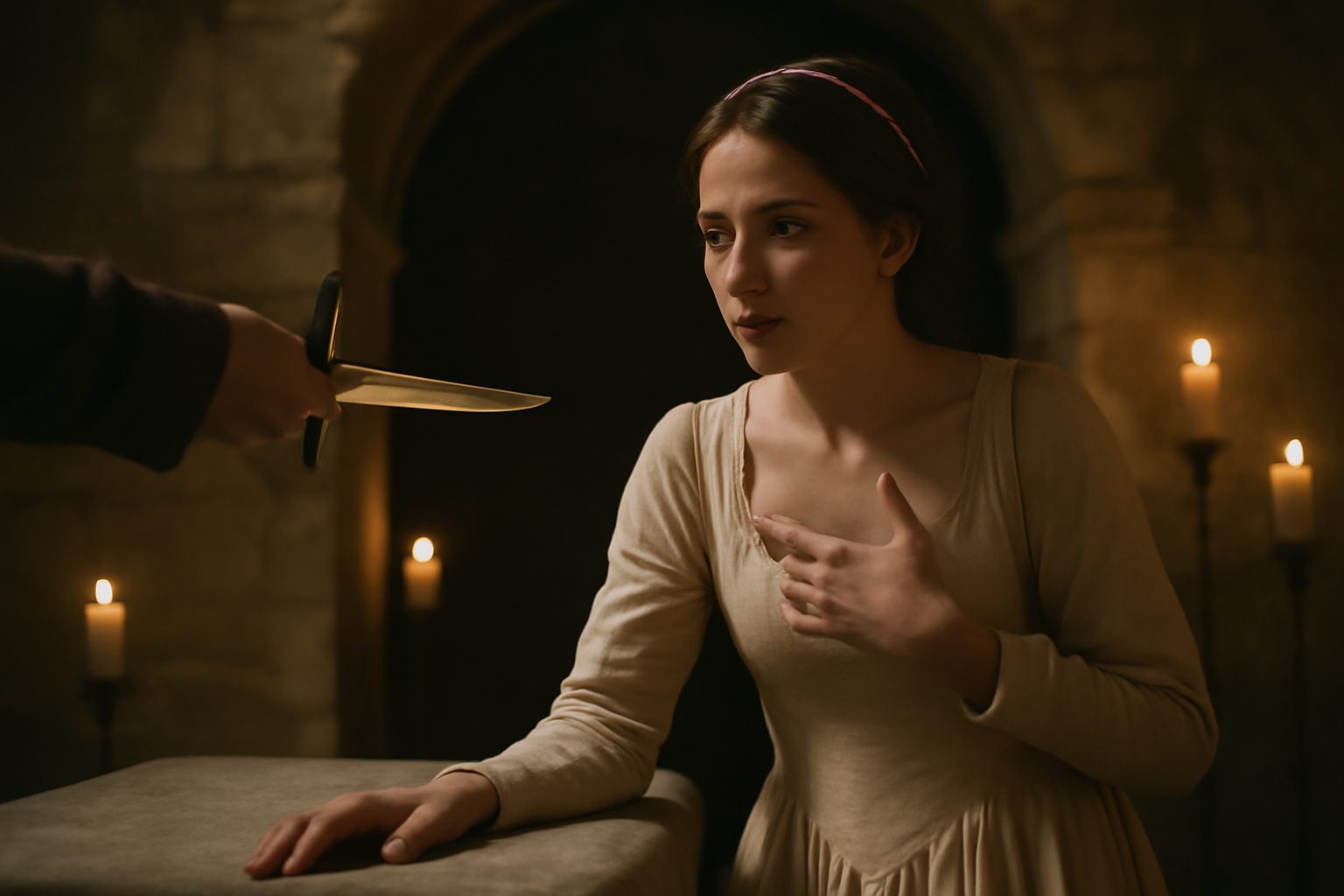
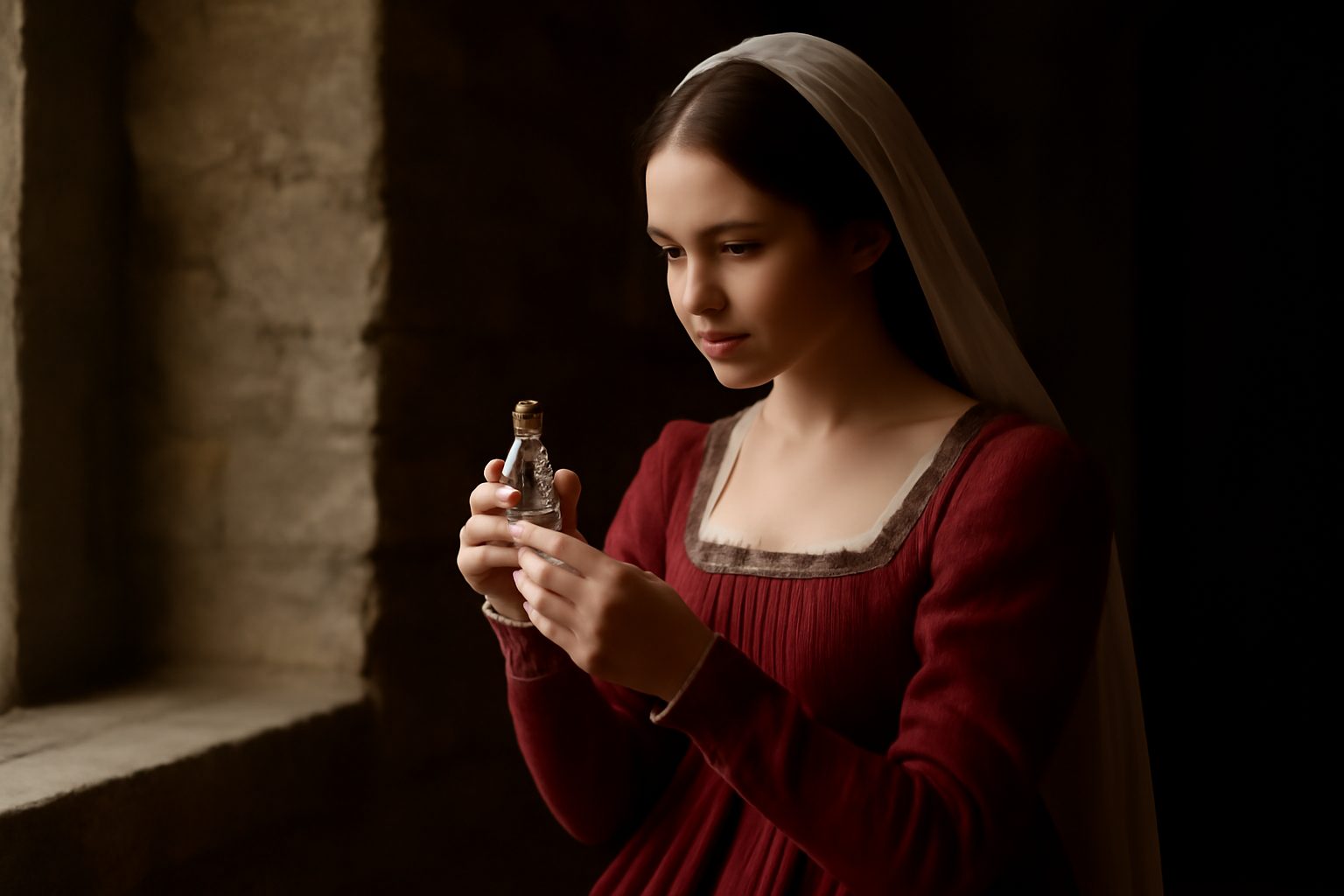
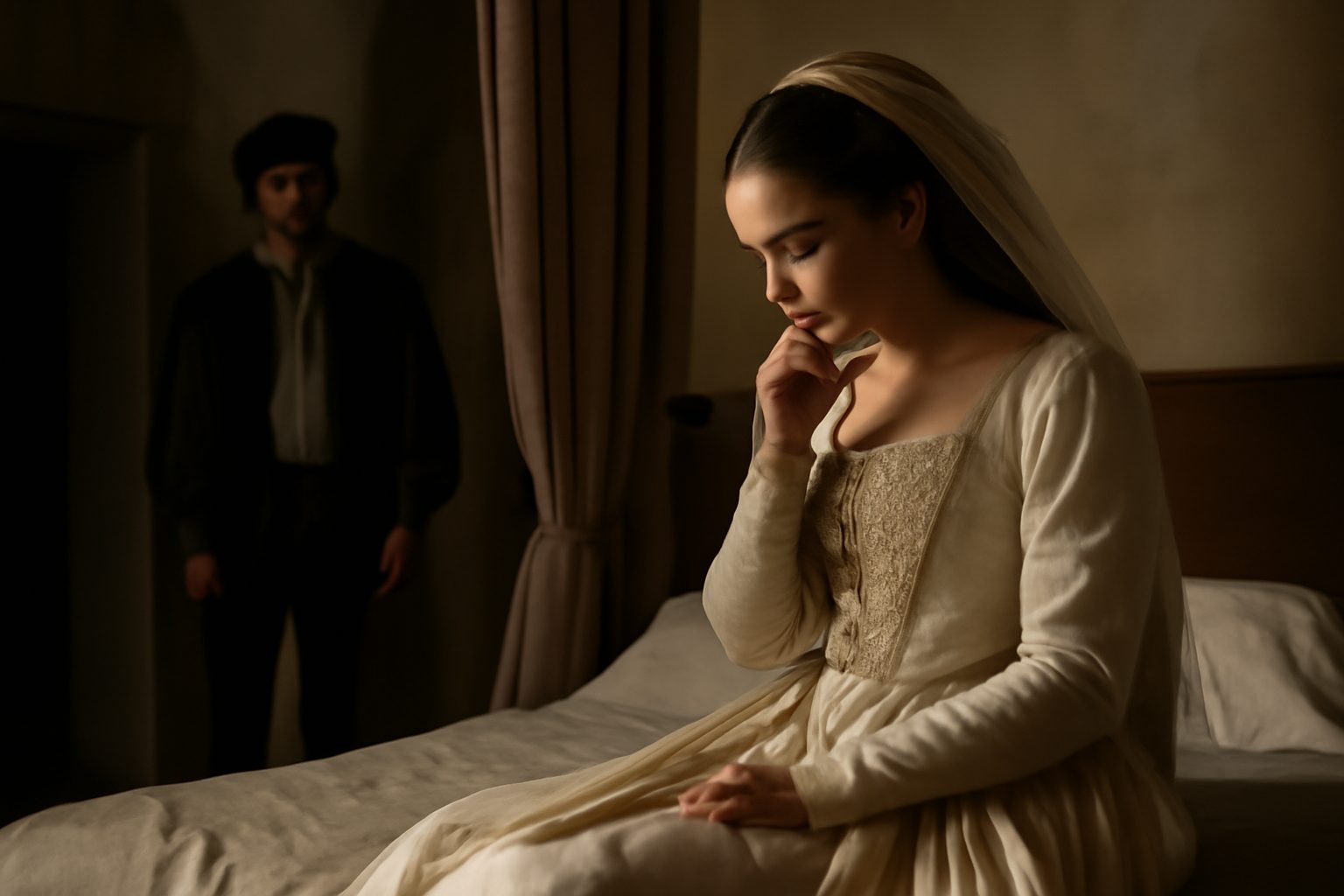
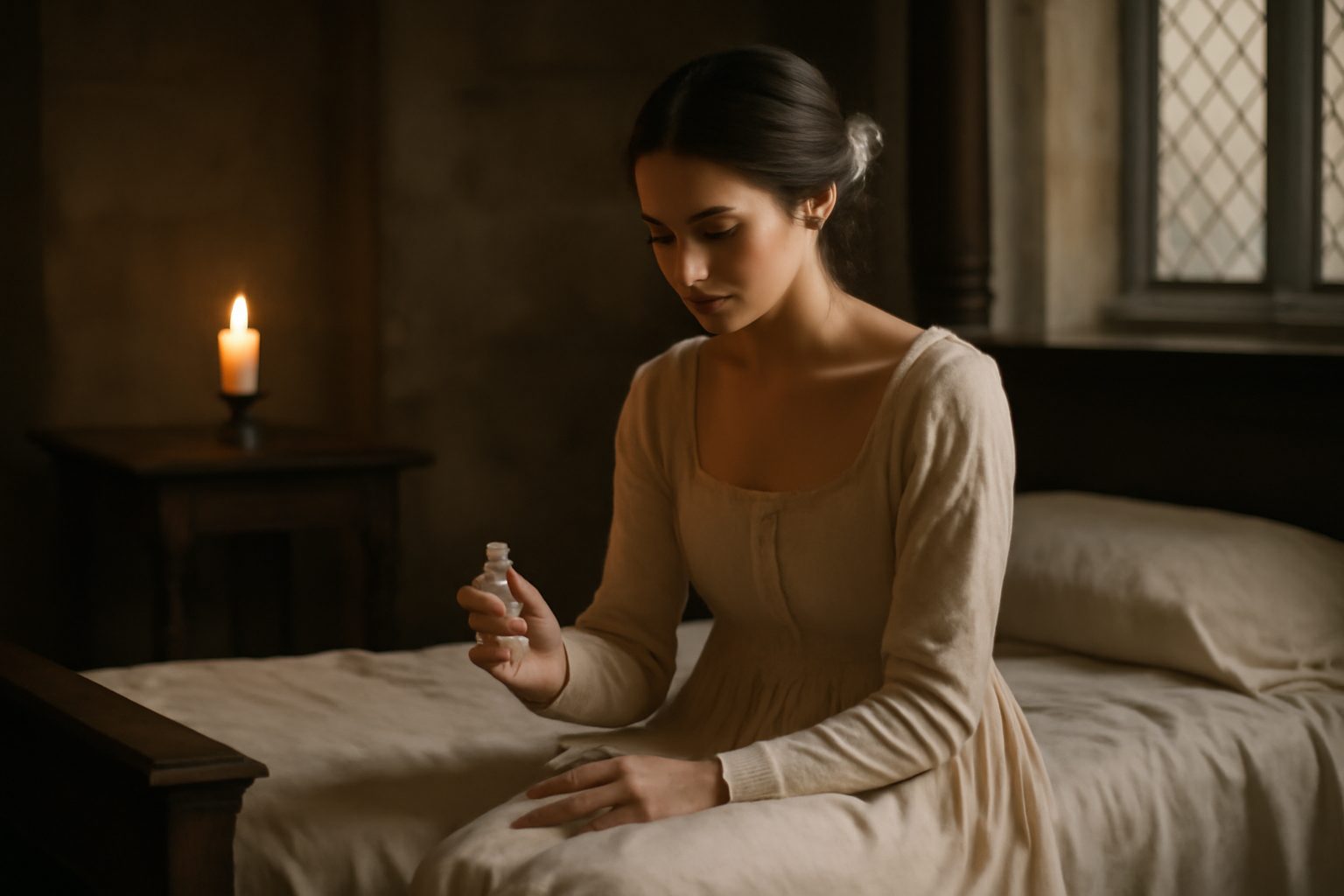
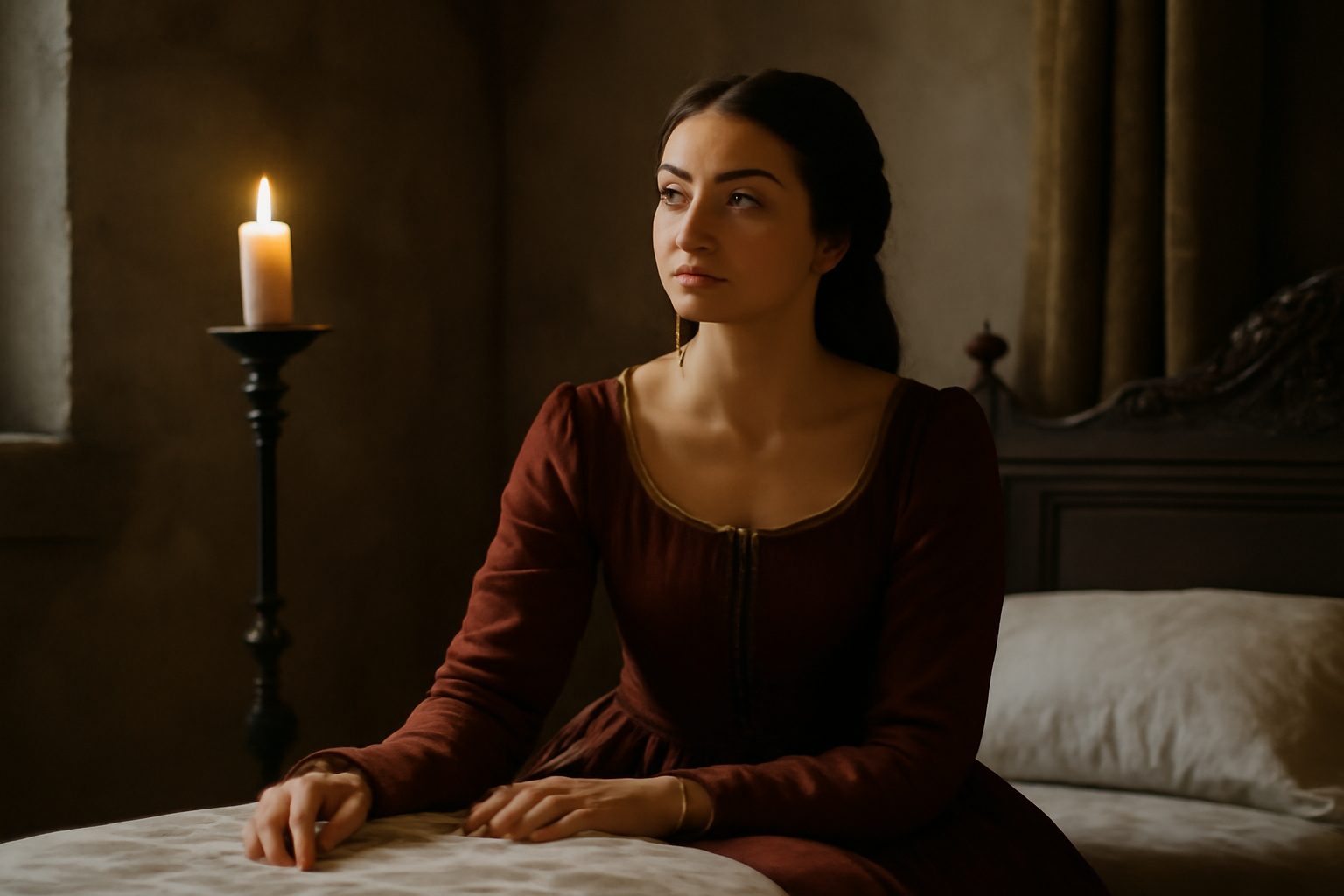
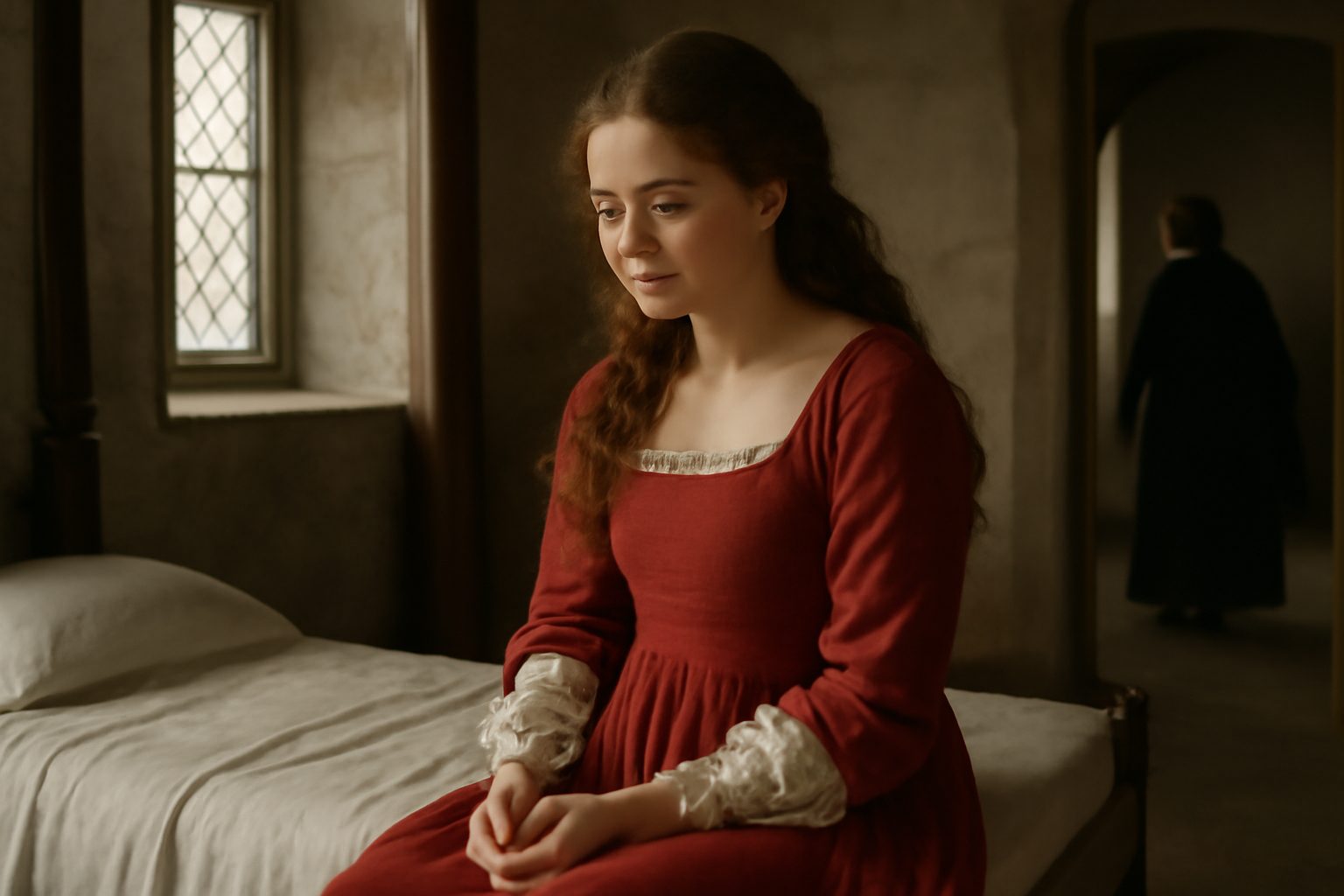
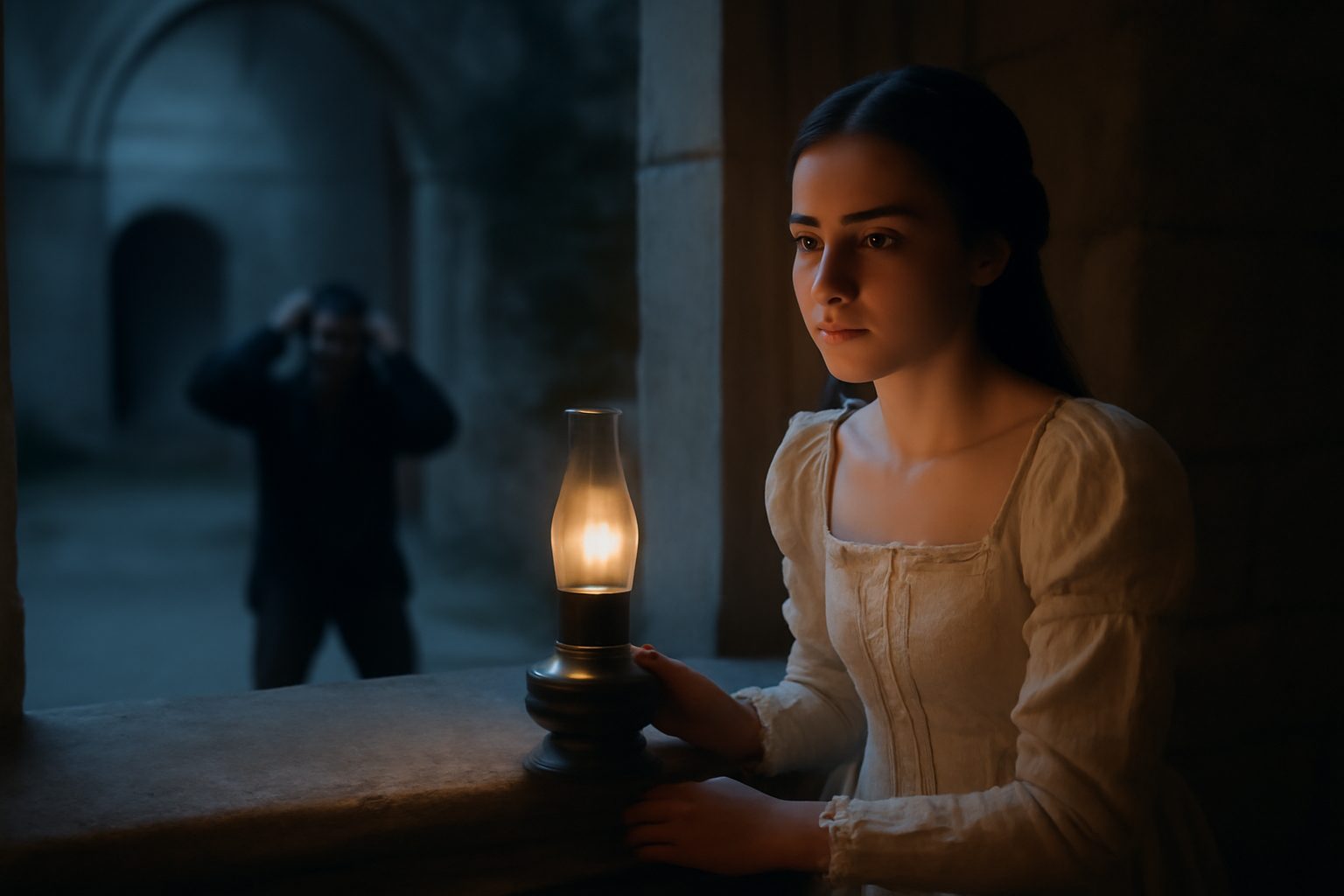
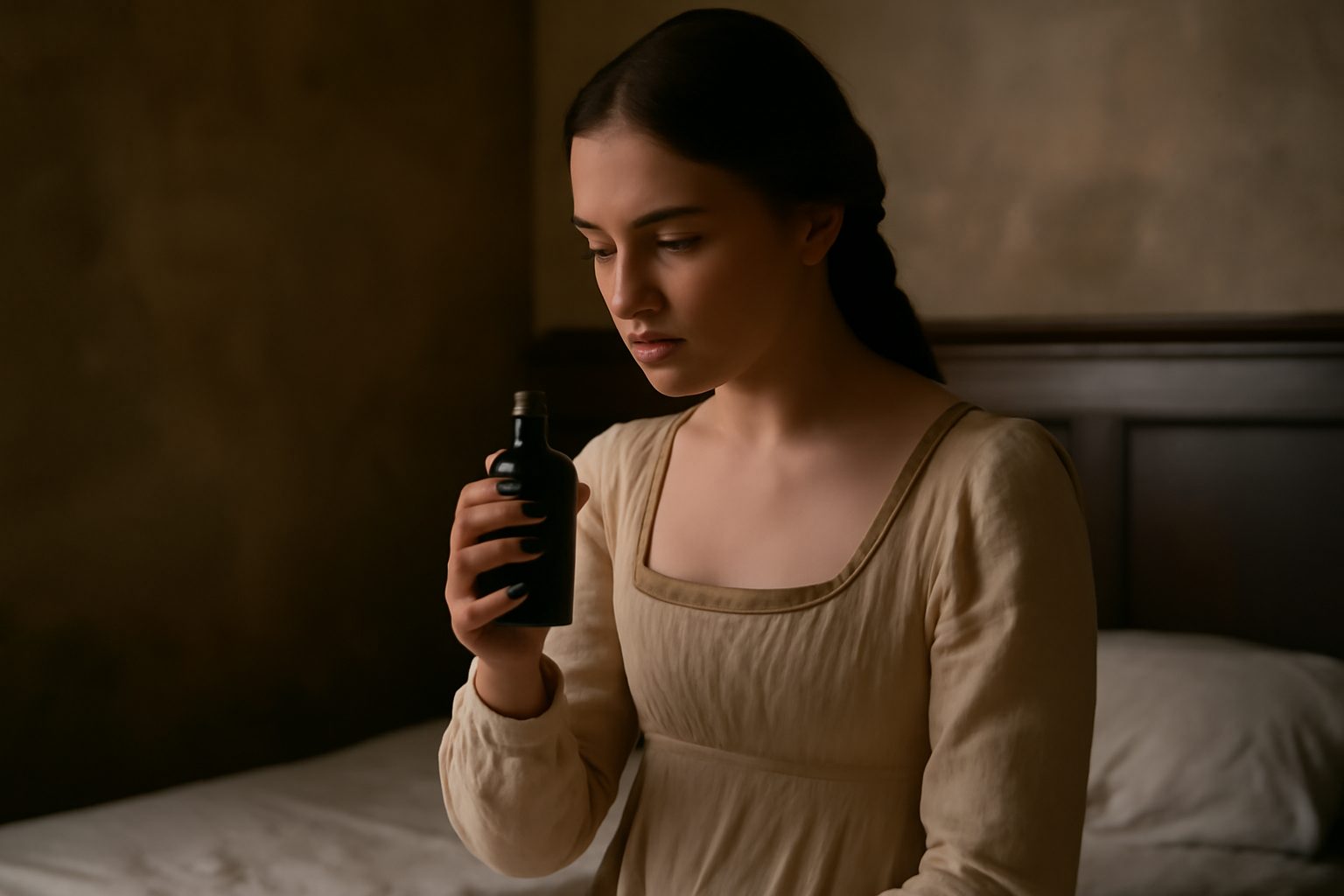
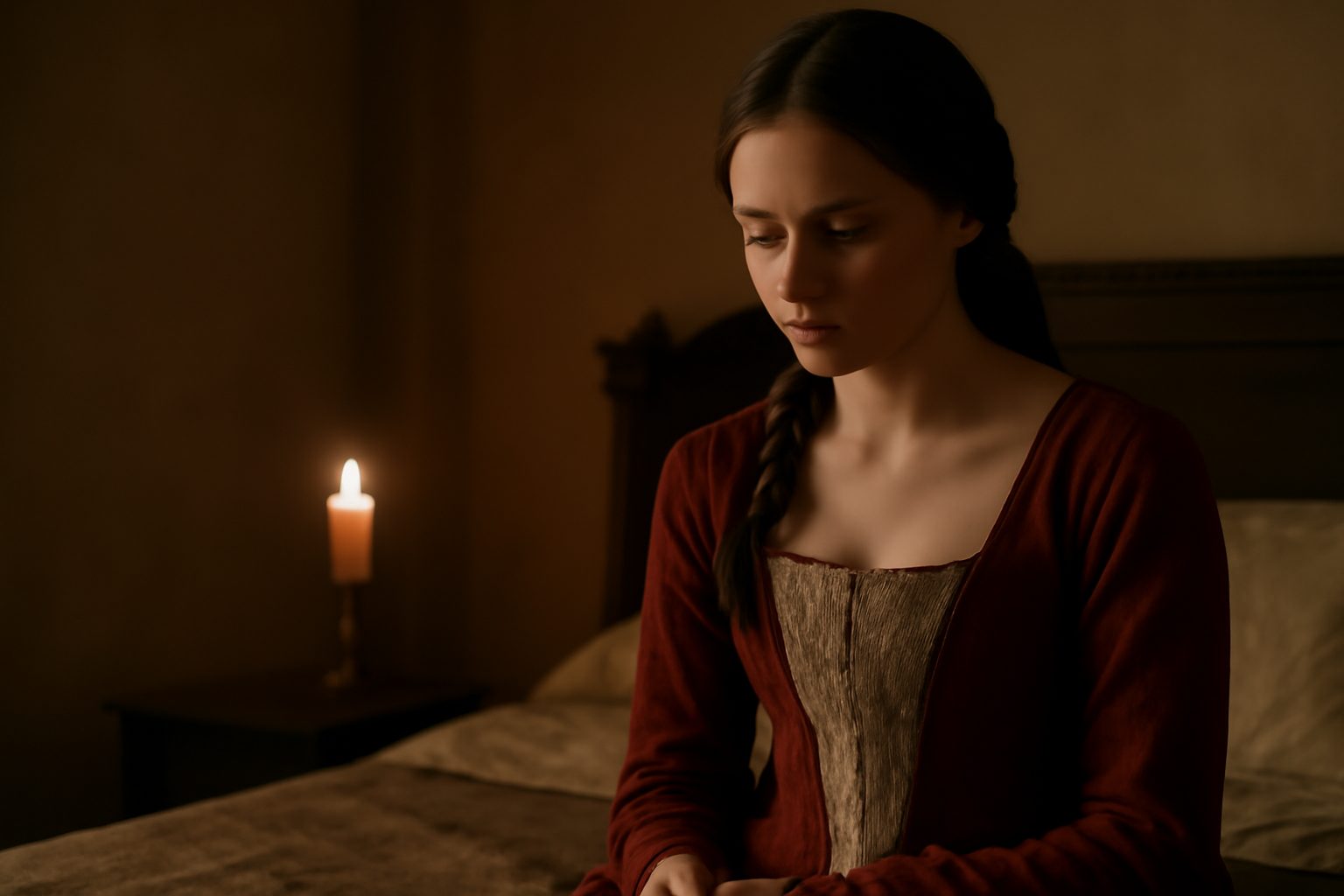
In Act 4, Scene 3 of Romeo and Juliet, Juliet prepares to drink the potion given to her by Friar Laurence, hoping it will allow her to escape her arranged marriage to Paris. As she hesitates, overwhelmed by fear and doubt, she calls out to the Nurse, who has been a constant presence in her life. The line is Juliet's attempt to seek reassurance or assistance, revealing her vulnerability in this perilous moment.
Lady Capulet: "What, are you busy, ho? need you my help?"
In modern day english, we would say:
Are you busy? Do you need my help?
Frequently Asked Questions
Who is speaking in this line from Romeo and Juliet?
Lady Capulet is speaking.
What is Lady Capulet asking in this line?
She is asking if the person is busy and if they need her help.
In which act and scene does this line appear?
This line appears in Act 4, Scene 3.
Connections to other verses:
Connections to "What, are you busy, ho? need you my help?"
Juliet's question, "What, are you busy, ho? need you my help?", serves as a transition from her interaction with her mother and the Nurse to her solitary contemplation. It reflects her attempt to maintain normalcy while concealing her true intentions.
Connection to Preparations and Dismissal
This line directly follows Lady Capulet's instruction in "And let the nurse this night sit up with you;", to which Juliet responds by pretending to cooperate while actually seeking solitude. Her feigned offer of help contrasts with her earlier plea in "I pray thee, leave me to my self to-night,", revealing her strategic deception.
Link to Feigned Piety
Juliet's mention of needing "many orisons" in "For I have need of many orisons" sets up her pious facade, making her question about helping seem part of her devout demeanor, while her true purpose is stated in "My dismal scene I needs must act alone."
Contrast with Inner Turmoil
The calmness of "need you my help?" starkly contrasts with her subsequent fears, such as in "What if this mixture do not work at all?" and the visceral terror described in "I have a faint cold fear thrills through my veins,", highlighting her emotional duality.
Foreshadowing and Resolution
This mundane question precedes her grave doubts about the potion, like in "What if it be a poison, which the friar / Subtly hath minister'd to have me dead,", yet culminates in her resolve shown in "Romeo, I come! this do I drink to thee."