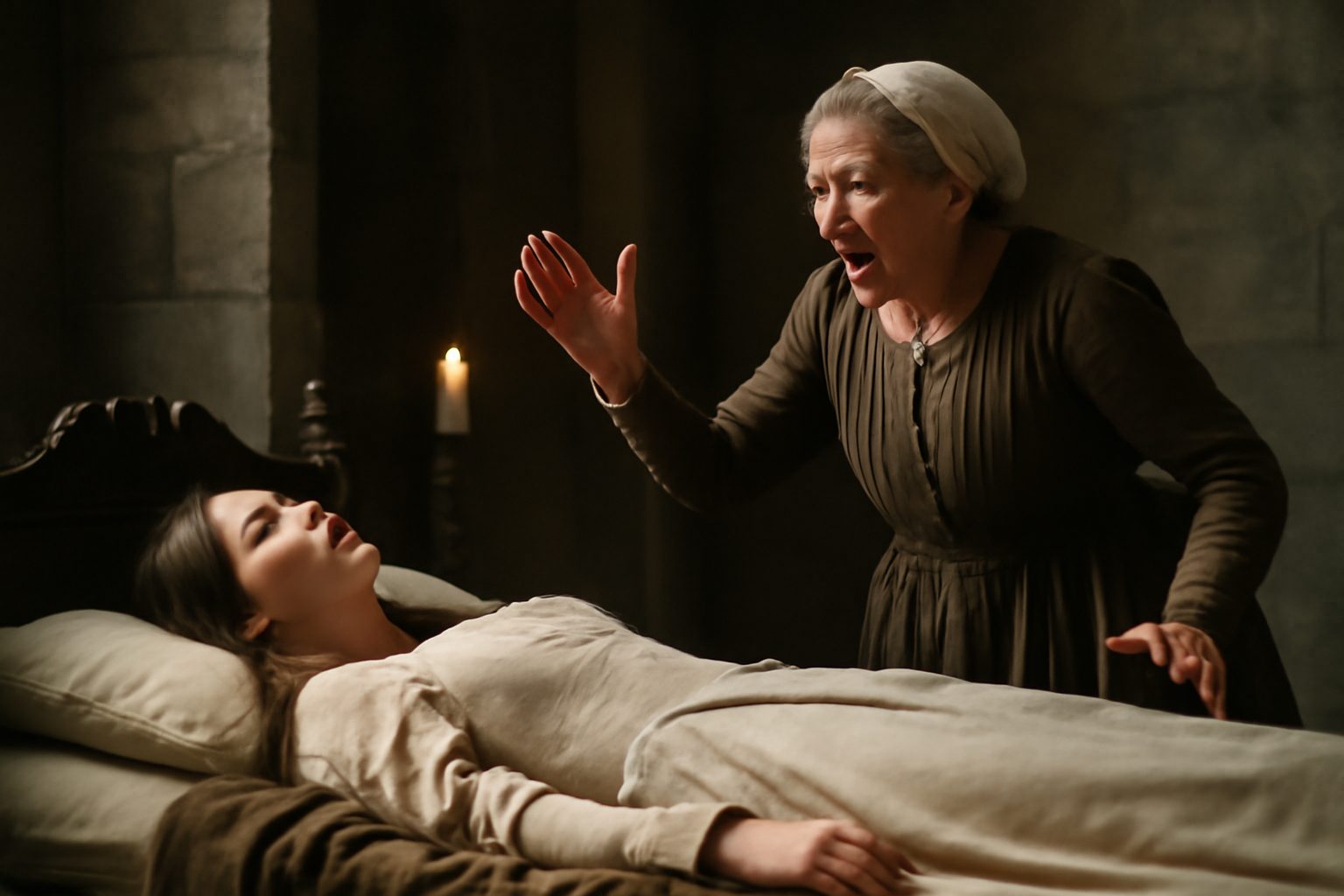
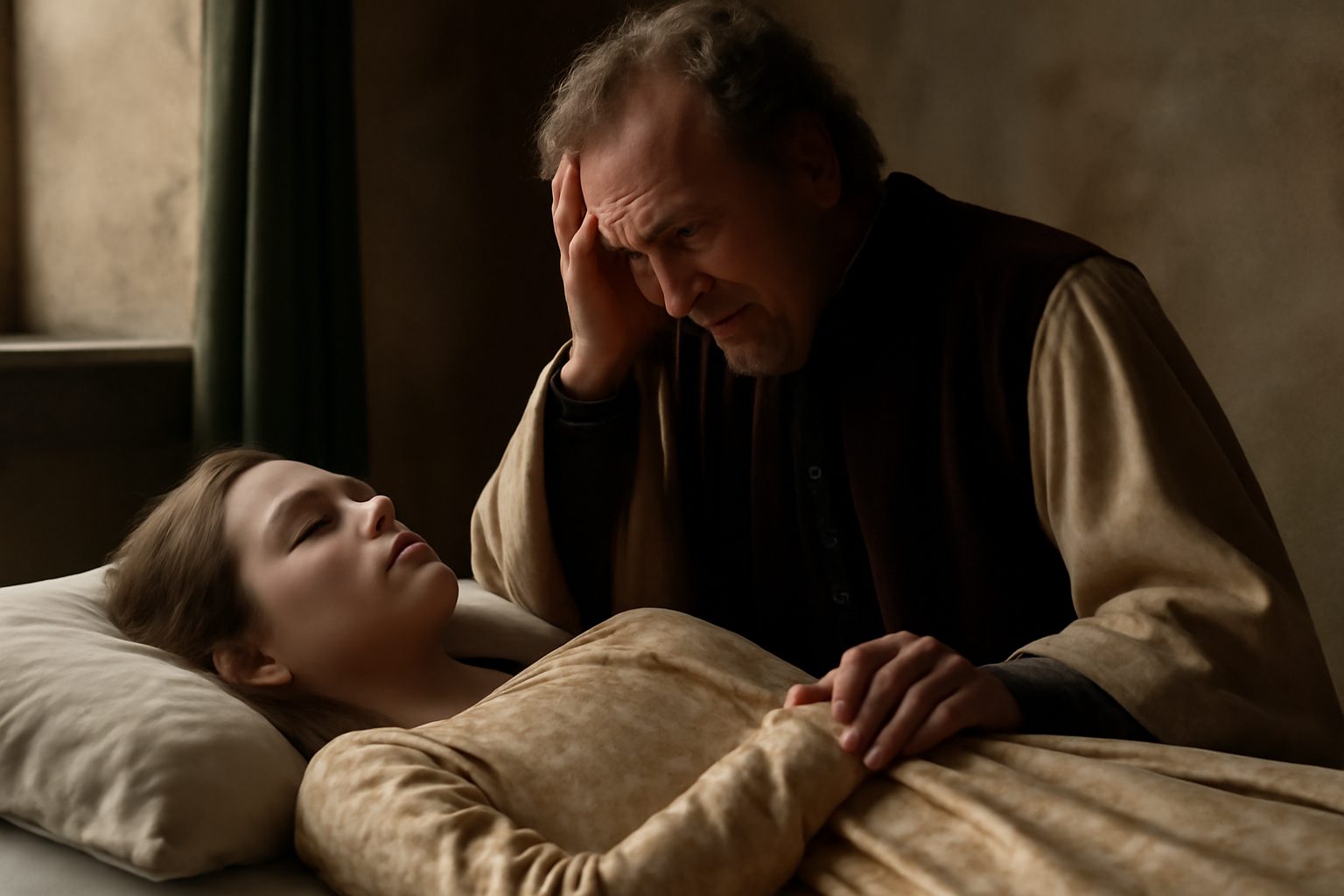
In Act 4, Scene 5 of Romeo and Juliet, the Nurse enters Juliet's chamber to wake her for her wedding to Paris, only to discover her seemingly lifeless body. Distraught, the Nurse cries out in grief, prompting Lady Capulet, Capulet, and others to rush in and ask what has happened. This line is spoken amid the chaos and shock of the moment, as the characters struggle to comprehend the tragic scene before them.
Lady Capulet: "What is the matter?"
In modern day english, we would say:
What's wrong?
Frequently Asked Questions
Who asks 'What is the matter?' in Act 4 Scene 5 of Romeo and Juliet?
Lady Capulet asks this question.
In which scene does Lady Capulet say 'What is the matter?' in Romeo and Juliet?
She says it in Act 4 Scene 5.
Connections to other verses:
Connections to "What is the matter?"
The line What is the matter? is spoken by the Nurse upon discovering Juliet apparently lifeless. It serves as a pivotal moment of confusion and alarm, directly linking to several other verses in the scene that express shock, grief, and the tragic turn of events.
Immediate Reactions and Discovery
This question is immediately preceded by cries for help, such as Alas, alas! Help, help! my lady's dead! and Help, help! Call help., which heighten the sense of urgency. The Nurse's query is answered with exclamations of despair, including Alack the day, she's dead, she's dead, she's dead! and She's dead, deceased, she's dead; alack the day!, confirming the tragic situation.
Expressions of Grief and Loss
The revelation leads to an outpouring of grief from Juliet's parents. Lady Capulet's exclamation, O me, O me! My child, my only life, and Capulet's lament, But one, poor one, one poor and loving child, emphasize their profound sorrow. Capulet further personifies death in Death is my son-in-law, Death is my heir, highlighting the cruel irony of the situation.
Shift from Celebration to Mourning
The scene transitions from anticipated wedding joy to funeral preparations, as noted in All things that we ordained festival and Our wedding cheer to a sad burial feast. Friar Laurence's counsel in Peace, ho, for shame! confusion's cure lives not urges acceptance, while he also notes the transformation in And all things change them to the contrary.
Contrast with the Musicians' Levity
Amidst the tragedy, the musicians provide a stark contrast with their humorous exchange, such as in Faith, we may put up our pipes, and be gone and Not a dump we; 'tis no time to play now, underscoring the dissonance between the household's grief and the outside world's indifference.