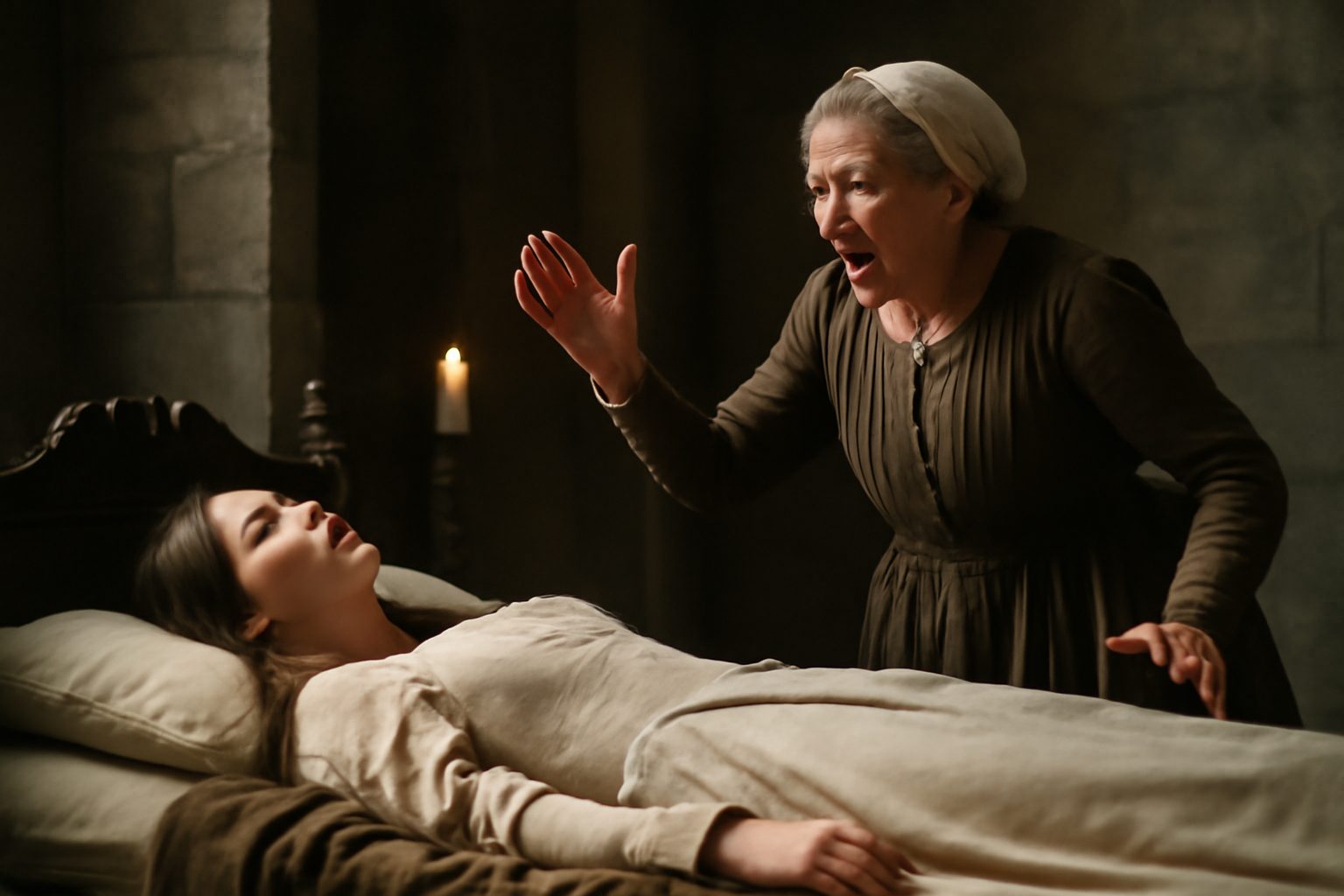
In Act 4, Scene 5 of Romeo and Juliet, the Nurse discovers Juliet seemingly lifeless in her chamber, believing her to be dead. This line is spoken as the Nurse reacts with overwhelming grief, marking a tragic turning point in the scene. The exclamation underscores the shock and despair felt by those who believe Juliet has died, heightening the dramatic irony for the audience, who know she has merely taken a sleeping potion.
Nurse: "Most lamentable day, most woful day,"
In modern day english, we would say:
This is the most heartbreaking and miserable day.
Frequently Asked Questions
What emotion is the Nurse expressing in this line from Romeo and Juliet?
The Nurse is expressing deep sadness and grief.
Connections to other verses:
Connections to "Most lamentable day, most woful day"
The verse "Most lamentable day, most woful day" serves as a powerful expression of collective grief following Juliet's apparent death. This lamentation echoes and amplifies earlier exclamations of despair, such as the Nurse's cry "Alas, alas! Help, help! my lady's dead!" and her repeated declaration "Alack the day, she's dead, she's dead, she's dead!".
Parallel Expressions of Grief
The theme of catastrophic loss is reinforced through multiple characters using similar language. Lord Capulet's "O woe! O woful, woful, woful day!" and "O day! O day! O day! O hateful day!" create a chorus of despair that mirrors the original verse. Lady Capulet contributes to this with her own "Accursed, unhappy, wretched, hateful day!" showing how the entire household shares this profound sorrow.
Contrast with Earlier Expectations
The tragic tone stands in stark contrast to the scene's beginning, where the Nurse cheerfully anticipates Juliet's wedding day with lines like "Why, lamb! why, lady! fie, you slug-a-bed!" and "Marry, and amen, how sound is she asleep!" This dramatic irony heightens the impact of the subsequent lamentations.
Philosophical Reflections
Friar Laurence later contextualizes this grief within larger philosophical frameworks, noting how "all things change them to the contrary" and observing that "nature's tears are reason's merriment", providing a counterpoint to the raw emotion expressed in the lamentable day verses.