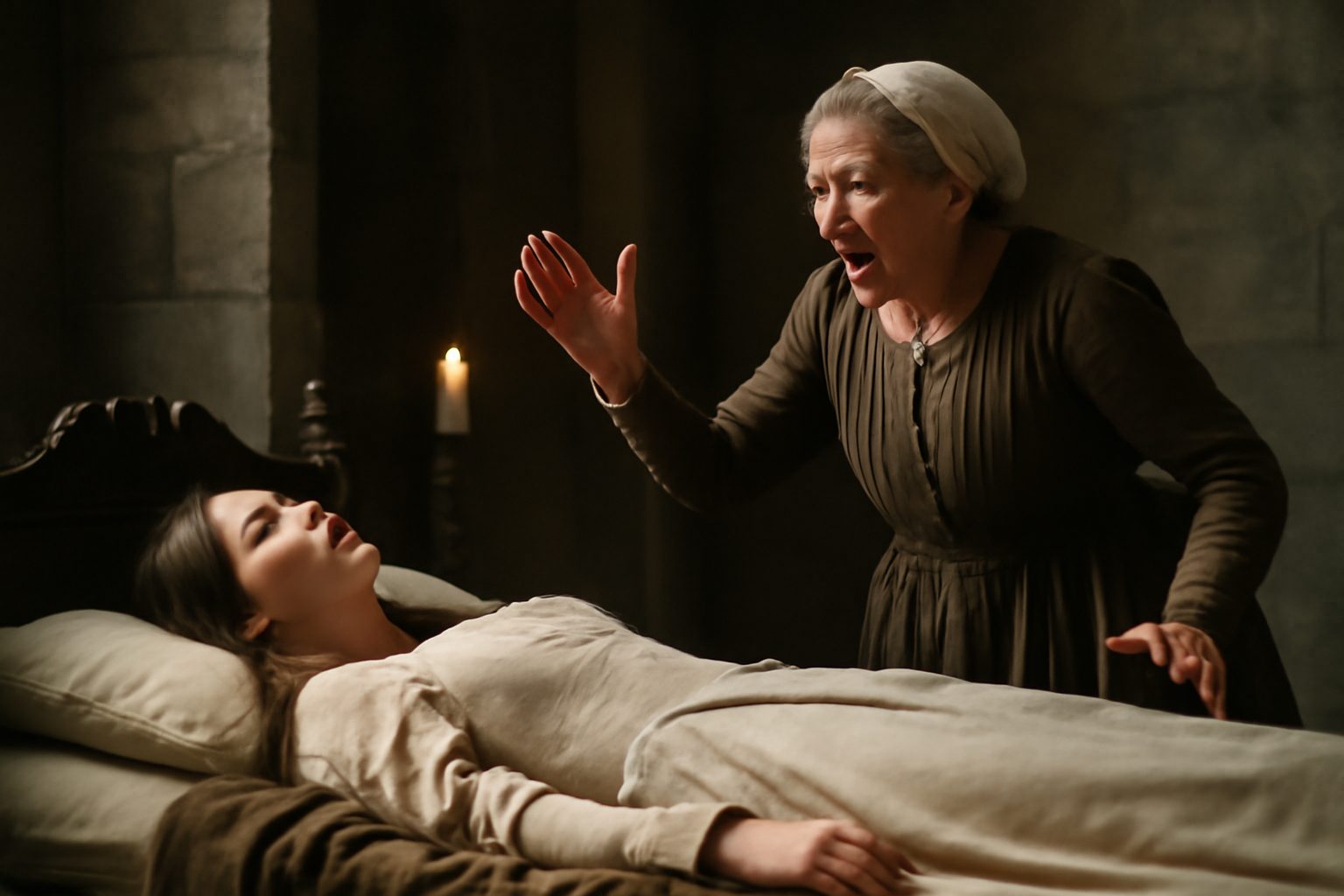
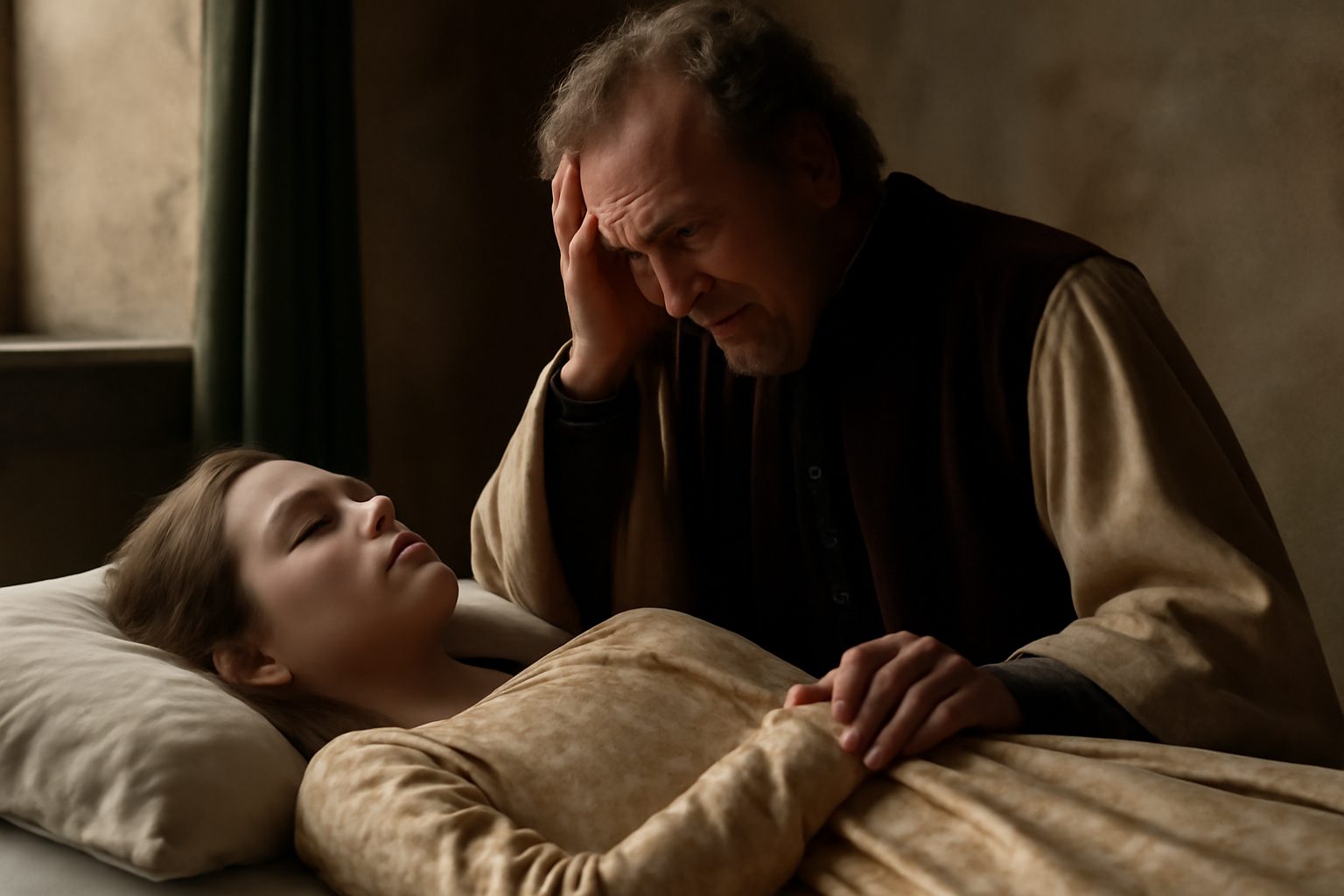
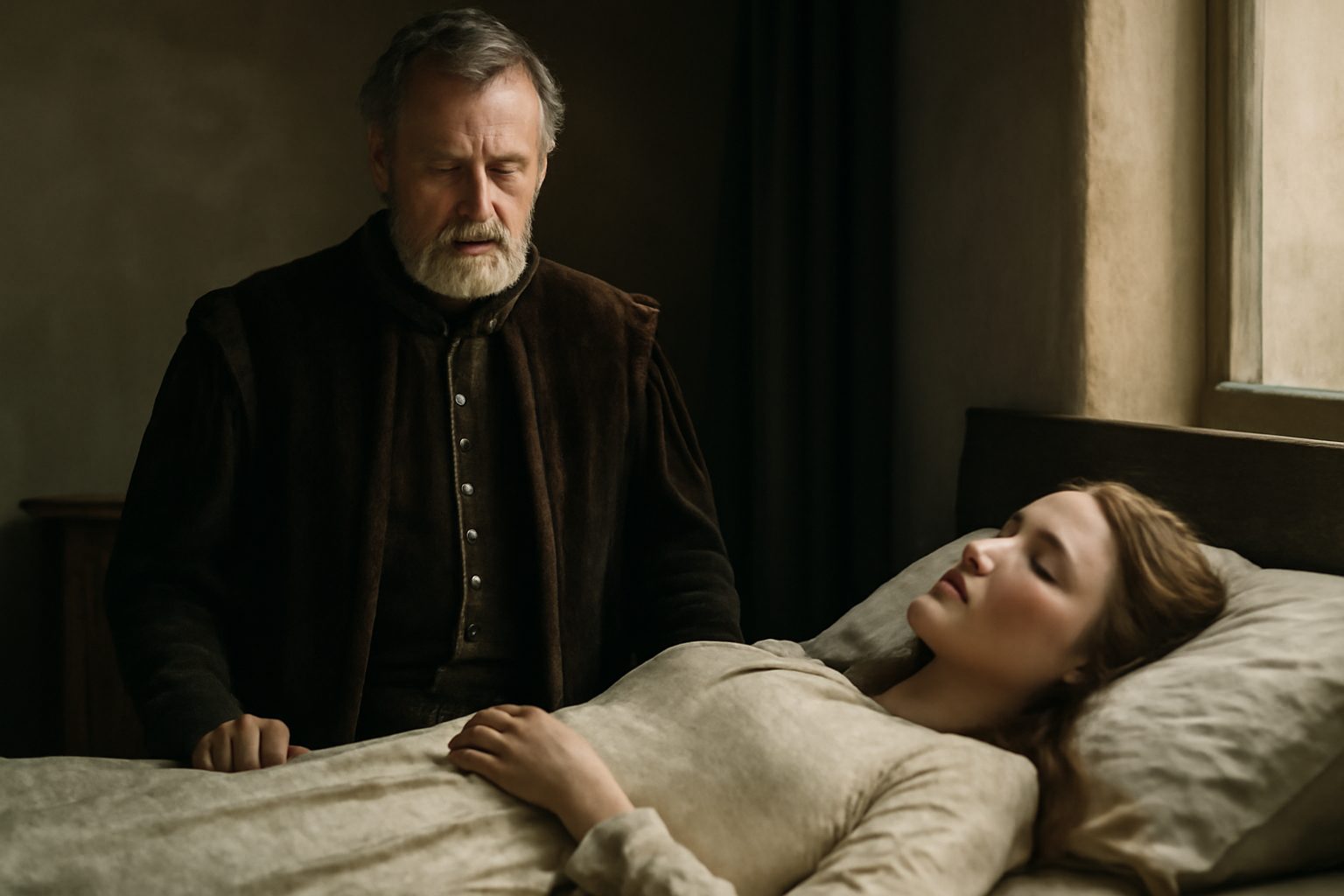
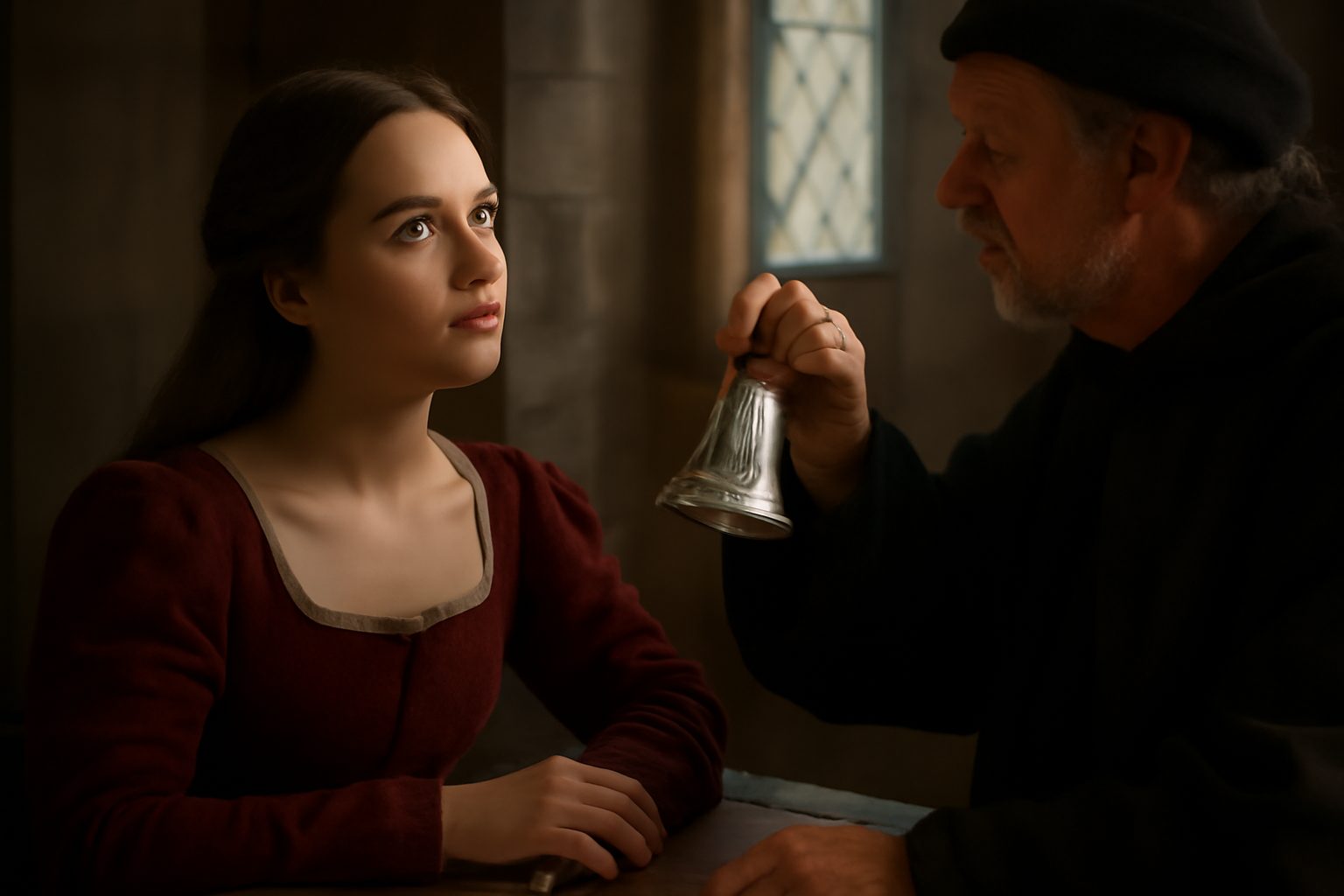
In Act 4, Scene 5 of Romeo and Juliet, the Capulet household awakens to the devastating discovery of Juliet's apparent death. As the family mourns, Friar Laurence speaks these words to comfort them, suggesting that Juliet's fate was beyond their control. The line underscores the inevitability of death and the futility of human efforts to defy it, a recurring theme in the play.
Friar Laurence: "Your part in her you could not keep from death,"
In modern day english, we would say:
You couldn't protect her share of life from death.
Frequently Asked Questions
What does Friar Laurence mean when he says Romeo could not keep Juliet from death?
He means that Romeo could not prevent Juliet from dying, even though he loved her.
Connections to other verses:
Connections to "Your part in her you could not keep from death"
The verse Your part in her you could not keep from death is spoken by Friar Laurence as part of his attempt to console the Capulets after they discover Juliet seemingly dead. It reflects on the limits of human control over life and death, emphasizing that while they had a role in her life, they could not prevent her demise.
Related Themes and Verses
This idea connects thematically with Had part in this fair maid; now heaven hath all, which acknowledges the transition of Juliet from earthly care to divine custody, reinforcing the Friar's message of acceptance.
It also contrasts with the despair expressed in verses like Dead art thou! Alack! my child is dead and O child! O child! my soul, and not my child!, where Lord Capulet's grief highlights his inability to comprehend or accept her death, contrary to the Friar's philosophical perspective.
The notion of life's fragility is echoed in Death lies on her like an untimely frost, which uses metaphor to depict death's sudden and unnatural arrival, aligning with the idea that human efforts are futile against such forces.
Additionally, But heaven keeps his part in eternal life directly follows the referenced verse, offering a counterpoint by affirming that while earthly possession is lost, heaven claims its share, providing a theological consolation.
Contrast with Parental Grief
The Friar's rational approach stands in stark contrast to the raw emotional outbursts from the Nurse and Capulets, such as Alack the day, she's dead, she's dead, she's dead! and Accursed, unhappy, wretched, hateful day!, underscoring the tension between acceptance and despair.
This verse thus serves as a pivotal moment of reflection amid the chaos, linking to broader themes of fate, divine will, and the limits of human agency woven throughout the scene.