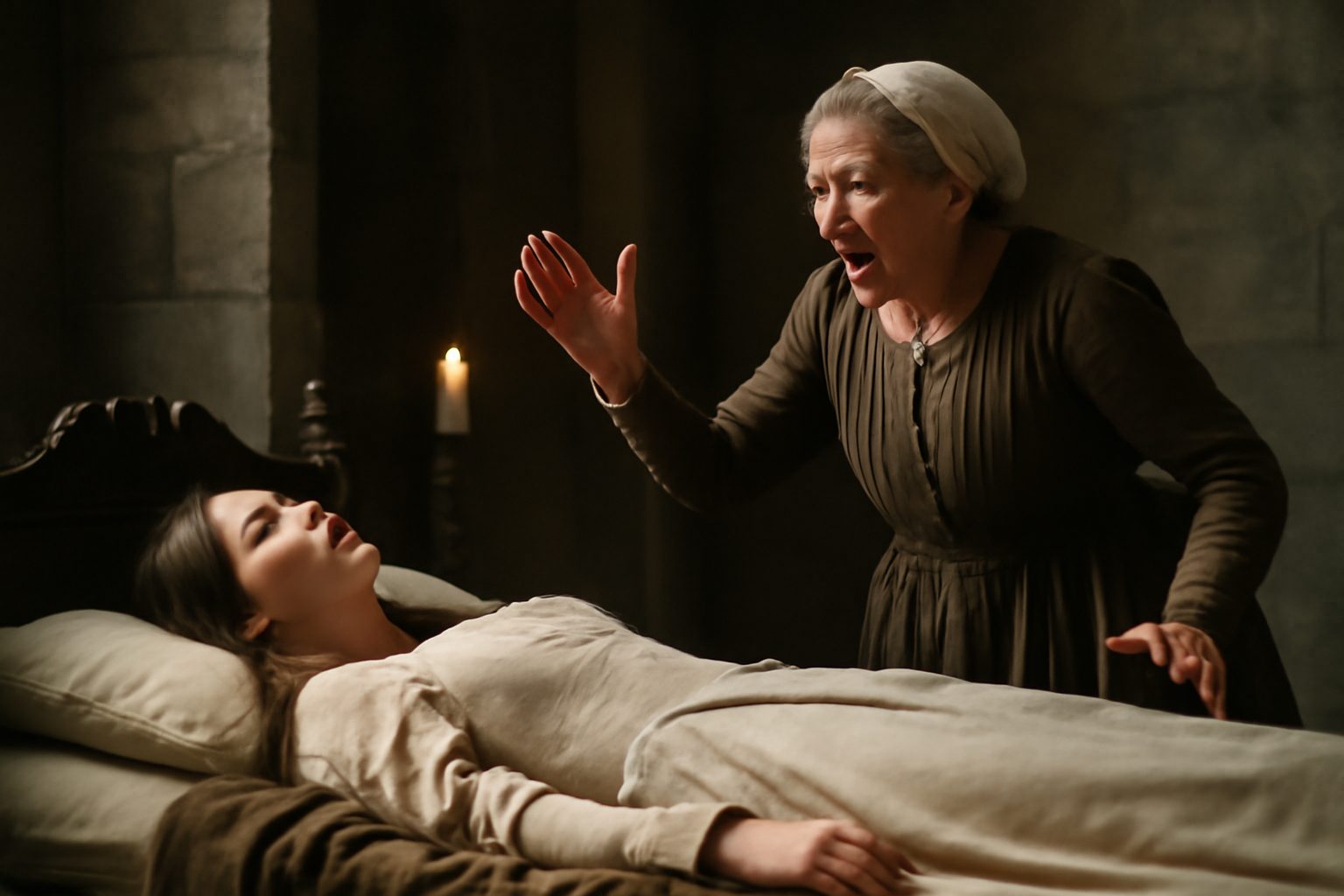
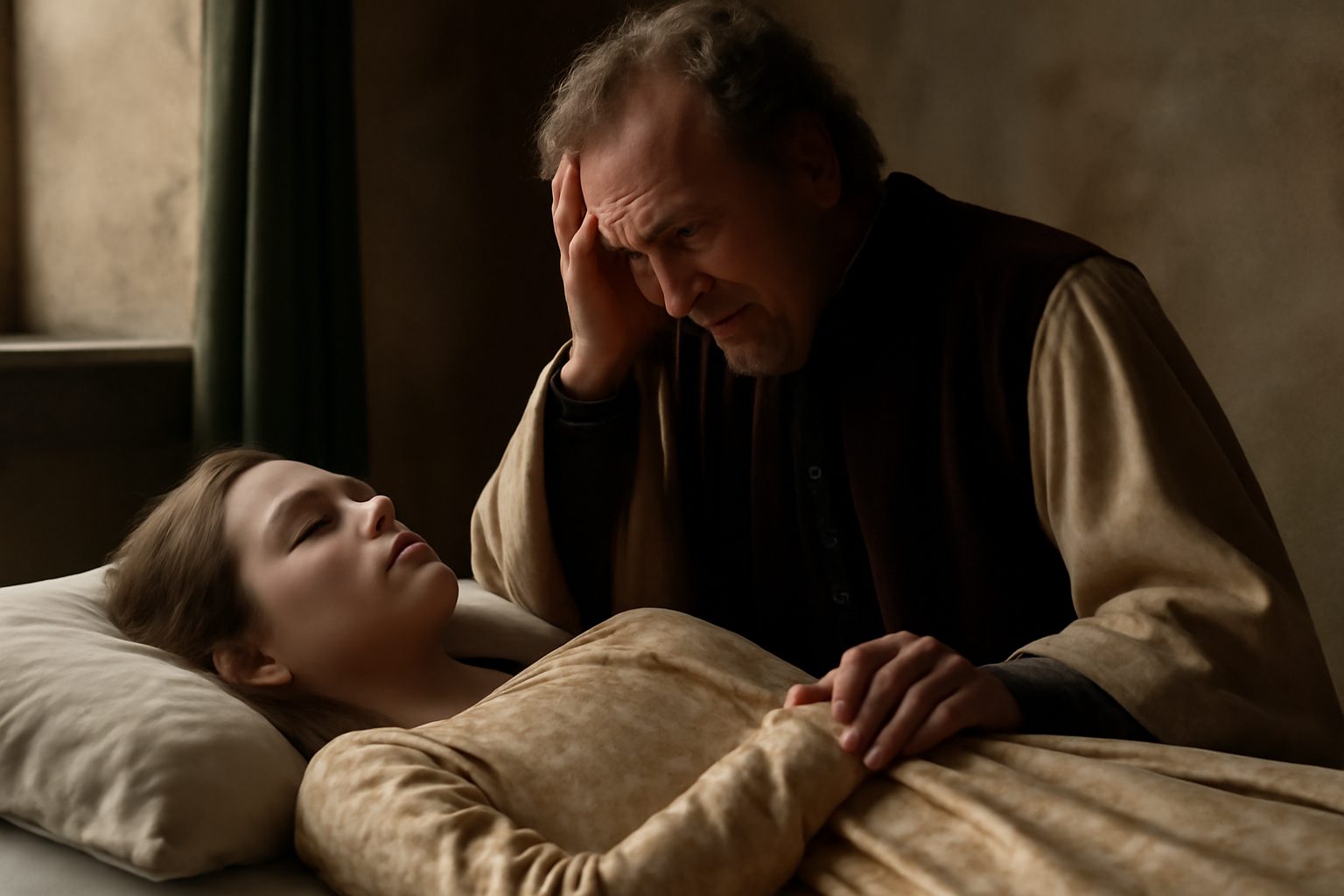
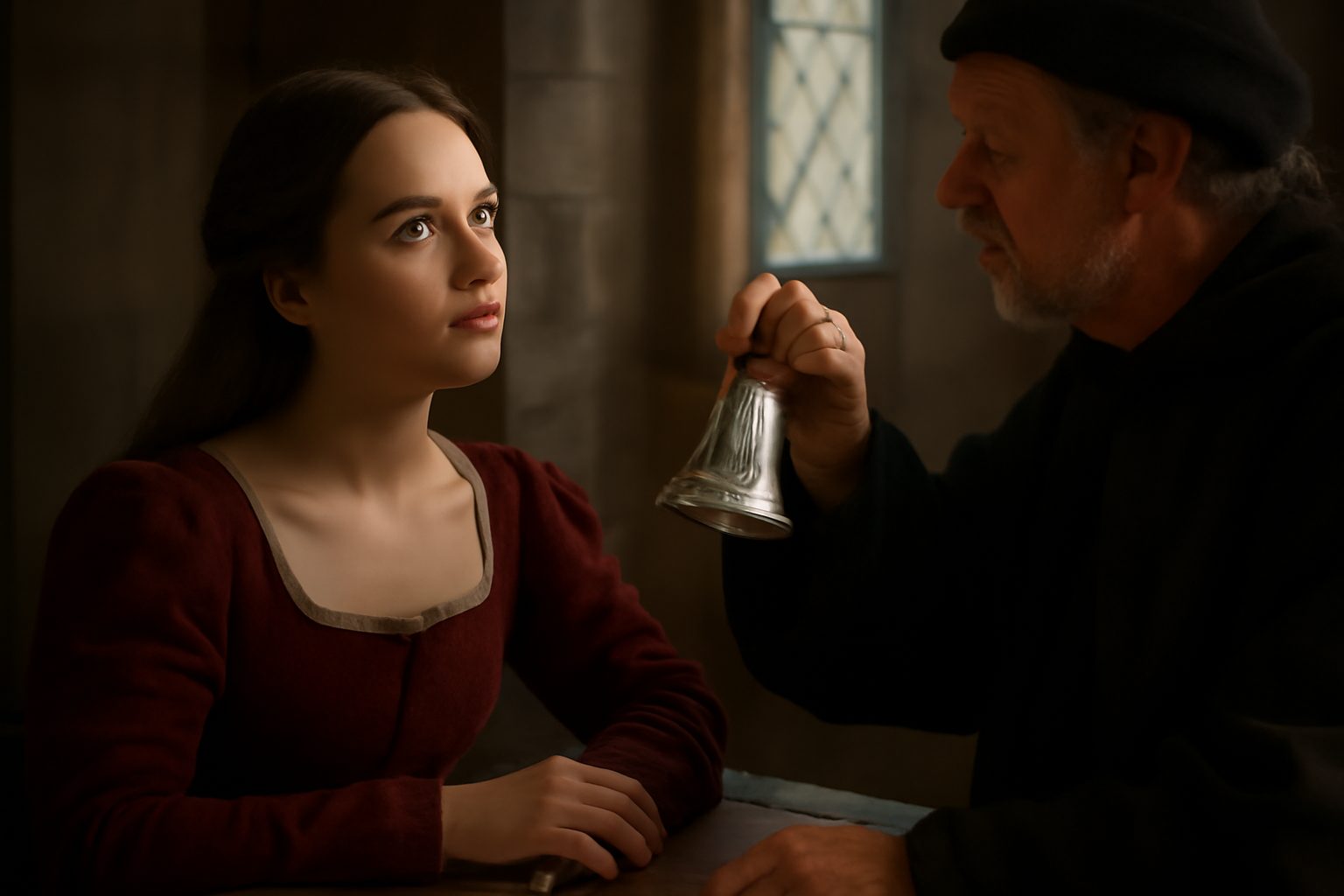
In Act 4, Scene 5 of Romeo and Juliet, the Nurse discovers Juliet seemingly lifeless in her chamber, sparking panic and grief in the household. As the Capulets mourn, Peter, a servant, interacts with musicians who had been hired for Juliet's wedding, now rendered pointless. His words reflect the abrupt shift from celebration to sorrow, urging the musicians to leave as the house descends into chaos.
Nurse: "Honest goodfellows, ah, put up, put up;"
In modern day english, we would say:
Alright, guys, knock it off, put your weapons away.
(Note: This line is spoken by Peter in a scuffle with the musicians after they make jokes about Juliet's "death." The modern version keeps the tone of trying to calm things down.)
Frequently Asked Questions
What is the Nurse asking the musicians to do in this line?
The Nurse is asking the musicians to stop playing their instruments.
Connections to other verses:
Connections to "Honest goodfellows, ah, put up, put up;"
The line "Honest goodfellows, ah, put up, put up;" is spoken by Peter to the musicians, asking them to pack up their instruments in the wake of Juliet's apparent death. This moment of practical, almost comic relief contrasts sharply with the surrounding grief.
Direct Response to the Musicians' Offer
Peter's instruction directly responds to the musicians' earlier offer to play, as seen in "Faith, we may put up our pipes, and be gone.", where they acknowledge the inappropriateness of music at such a sorrowful time.
Contrast with Grief-Stricken Exclamations
The mundane concern with packing instruments stands in stark contrast to the intense expressions of grief, such as "Alack the day, she's dead, she's dead, she's dead!" and "Accursed, unhappy, wretched, hateful day!", highlighting the jarring shift from tragedy to triviality.
Connection to the Theme of Inverted Celebrations
This moment also ties into the broader theme of the scene, where wedding preparations turn funeral, as noted in "All things that we ordained festival," and "Our wedding cheer to a sad burial feast," emphasizing how joy has been overturned by sorrow.
Interaction with the Musicians' Wordplay
Peter's dialogue continues with playful yet tense exchanges with the musicians, such as "I'll fa you; do you note me?", adding a layer of irony where music, a symbol of joy, becomes a subject of conflict in the face of death.
Reflection of Social Hierarchy
The exchange underscores class dynamics, as Peter, a servant, engages with the musicians in a way that mirrors the disconnect between the noble family's grief and the lower classes' pragmatic concerns, a theme also touched in "For, well you know, this is a pitiful case."