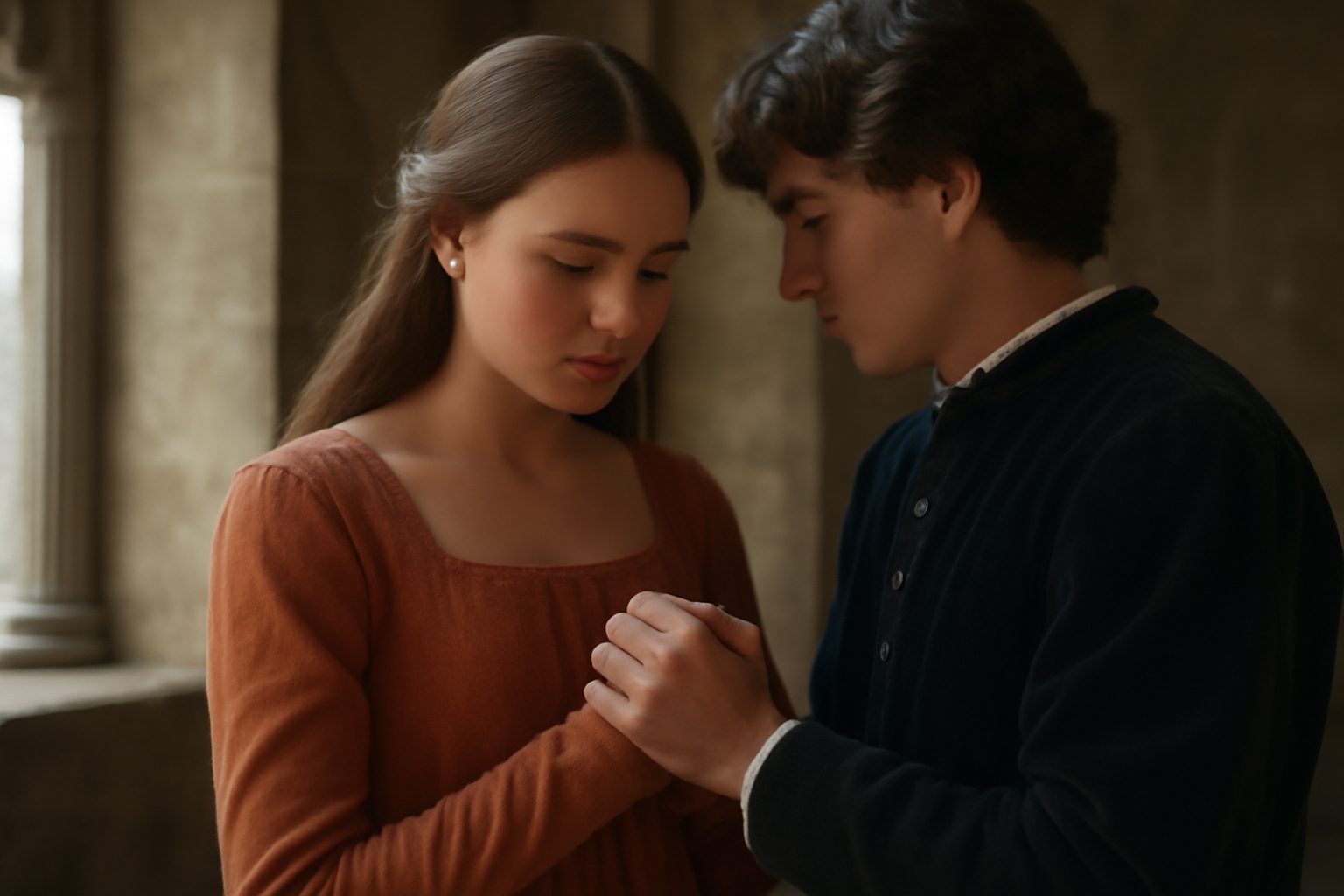
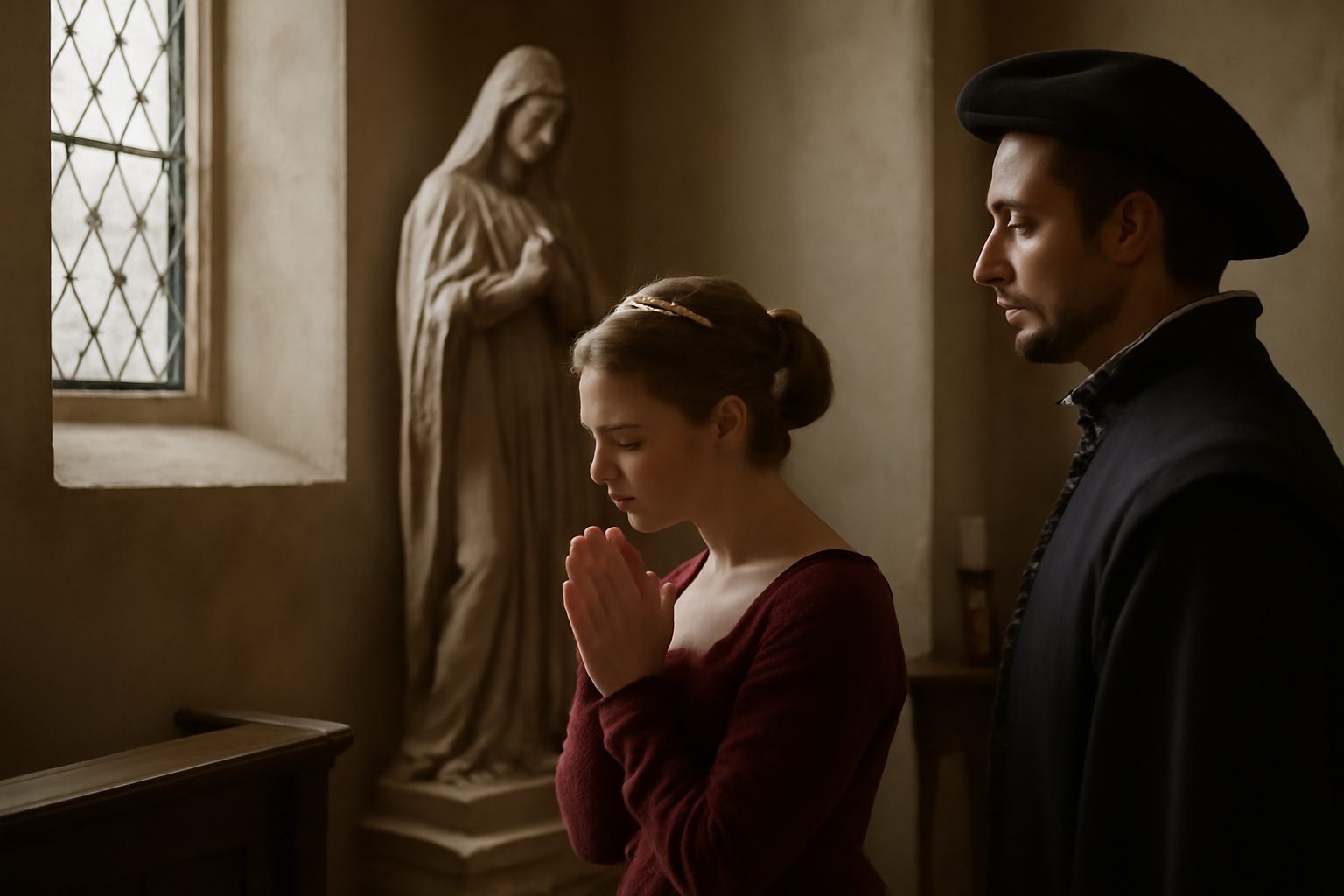
In Act 4, Scene 1 of Romeo and Juliet, Friar Laurence speaks these words to Juliet as she arrives in distress. Having just learned of her forced marriage to Paris, Juliet seeks the Friar's help to avoid the union and reunite with Romeo. The line reflects his understanding of her desperation, as he has already pieced together the cause of her anguish.
Friar Laurence: "Ah, Juliet, I already know thy grief;"
In modern day english, we would say:
Ah, Juliet, I already understand what’s troubling you.
Frequently Asked Questions
What does Friar Laurence mean when he says he already knows Juliet's grief?
He means that he understands the sadness or trouble she is feeling without her having to explain it.
Connections to other verses:
Connections to "Ah, Juliet, I already know thy grief;"
This line, spoken by Friar Laurence, acknowledges Juliet's distress and sets the tone for the desperate measures discussed in the scene. It connects thematically and emotionally to several other verses:
Immediate Context and Juliet's Desperation
Friar Laurence's recognition of Juliet's grief is immediately preceded by her own lament: Come weep with me; past hope, past cure, past…, which underscores her despair. Her urgency is further emphasized in Be not so long to speak; I long to die, showing her willingness to embrace death rather than marry Paris.
Friar Laurence's Plan and Juliet's Resolve
In response to her grief, Friar Laurence devises a risky plan, introduced with And, if thou darest, I'll give thee remedy. Juliet's unwavering courage is captured in Give me, give me! O, tell not me of fear!, highlighting her determination to follow through with the scheme.
Thematic Links to Death and Deception
The plan involves simulating death, as described in And in this borrow'd likeness of shrunk death and No warmth, no breath, shall testify thou livest, which ties back to the initial acknowledgment of her grief as the catalyst for this extreme solution.
Contrast with Paris's Ignorance
Juliet's hidden anguish contrasts with Paris's obliviousness earlier in the scene, such as in Happily met, my lady and my wife!, where he misinterprets her sorrow, reinforcing the isolation that Friar Laurence recognizes.