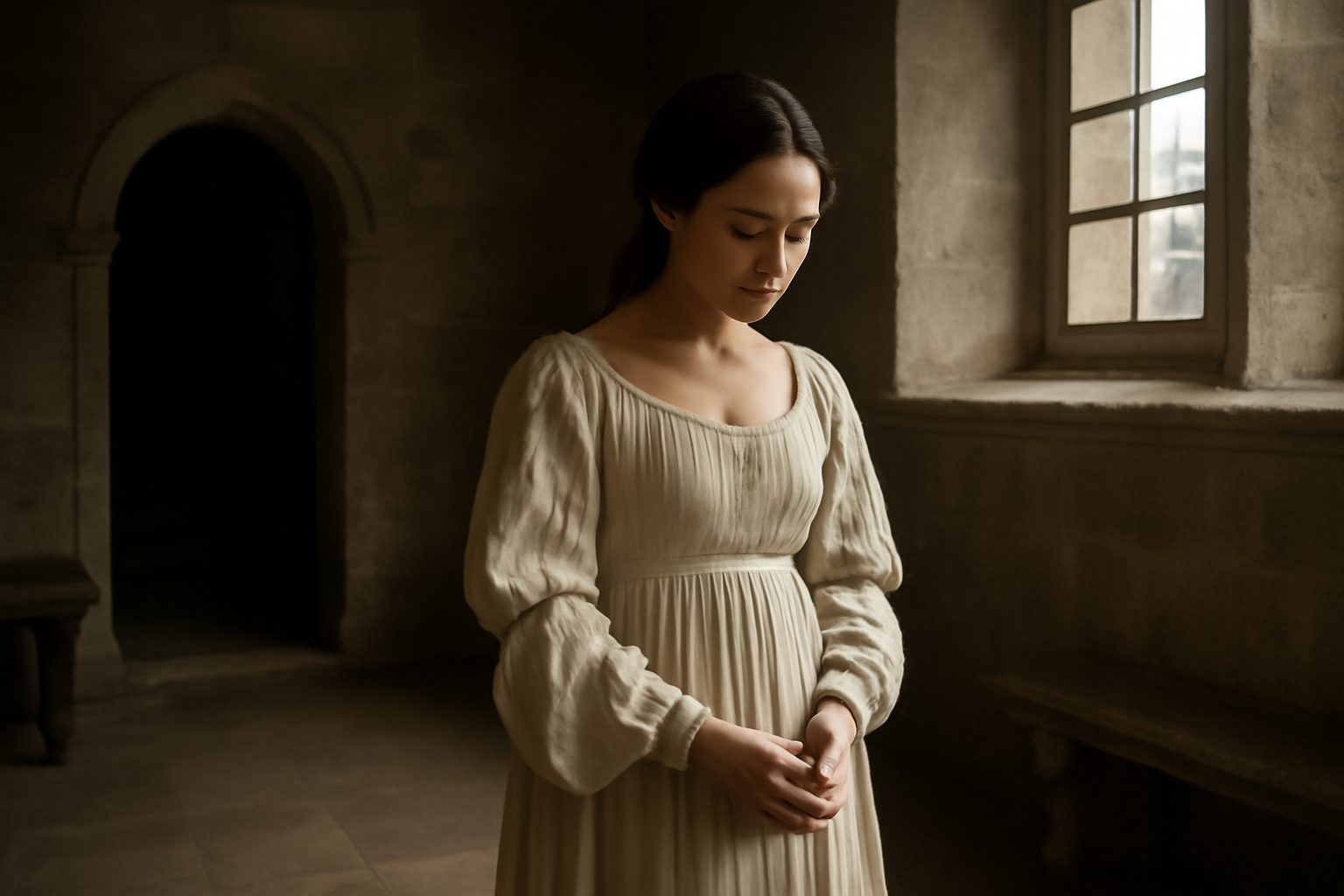
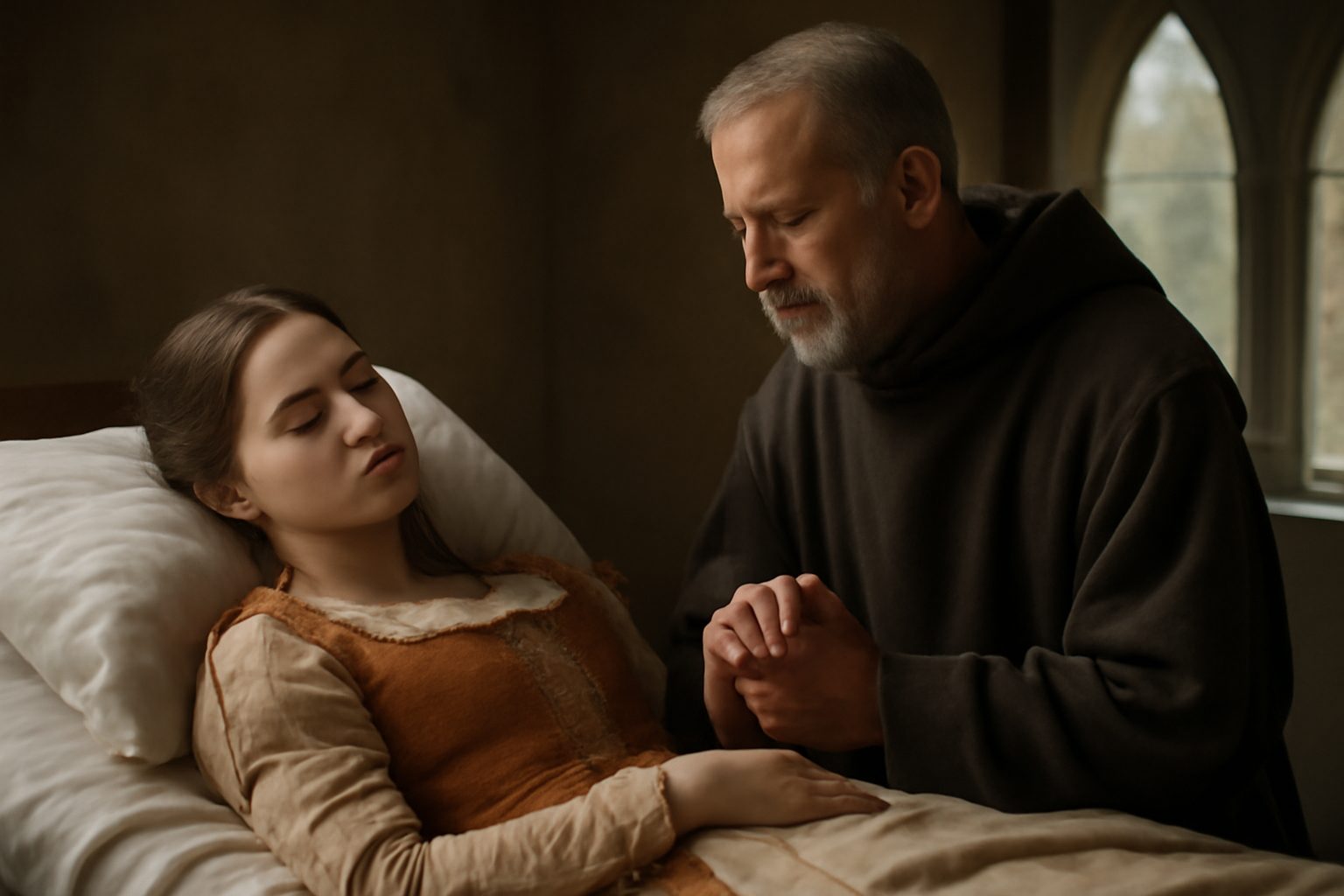
In Act 4, Scene 1 of Romeo and Juliet, Friar Laurence devises a desperate plan to reunite Juliet with Romeo after her forced engagement to Paris. This line is spoken by the Friar as he instructs Juliet to pretend to agree to the marriage, urging her to appear cheerful and compliant to avoid suspicion. His words mark a pivotal moment where deception becomes their only hope to escape the tragic fate closing in around them.
Friar Laurence: "Hold, then; go home, be merry, give consent"
In modern day english, we would say:
Alright, stop there—go home, cheer up, and agree to the marriage.
Frequently Asked Questions
What does Friar Laurence tell Juliet to do in this line from Act 4, Scene 1?
Friar Laurence tells Juliet to go home, act happy, and agree to marry Paris.
Connections to other verses:
Connections to "Hold, then; go home, be merry, give consent"
This line, spoken by Friar Laurence, is a pivotal instruction to Juliet as part of his desperate plan to avoid her marriage to Paris. It connects thematically and dramatically to several other verses in the scene.
Desperation and Resolve
The instruction to "be merry" and "give consent" is deeply ironic, given Juliet's despair. This contrasts with her earlier declaration in "Be not so long to speak; I long to die", showing her willingness to embrace death rather than betray Romeo. Similarly, her resolve is echoed in "And I will do it without fear or doubt", emphasizing her courage in following the Friar's plan.
Friar Laurence's Scheme
The Friar's advice is part of a larger strategy, which includes administering a potion that mimics death. This connects to "And this distilled liquor drink thou off", where he provides the means for Juliet's feigned death. The effects of this potion are described in "A cold and drowsy humour, for no pulse", illustrating the physical state she must endure.
Deception and Hope
The call for Juliet to appear compliant is tied to the Friar's attempt to offer a remedy, as seen in "And, if thou darest, I'll give thee remedy". This plan is meant to provide an escape, as highlighted in "And this shall free thee from this present shame", promising liberation from her forced marriage.
Juliet's Resolute Acceptance
Juliet's readiness to follow the Friar's directive, even in its peril, is foreshadowed in "Thou hast the strength of will to slay thyself", where the Friar acknowledges her determination. Her ultimate goal, expressed in "To live an unstain'd wife to my sweet love", underpins her acceptance of the plan, including the deceptive merriment she must show.