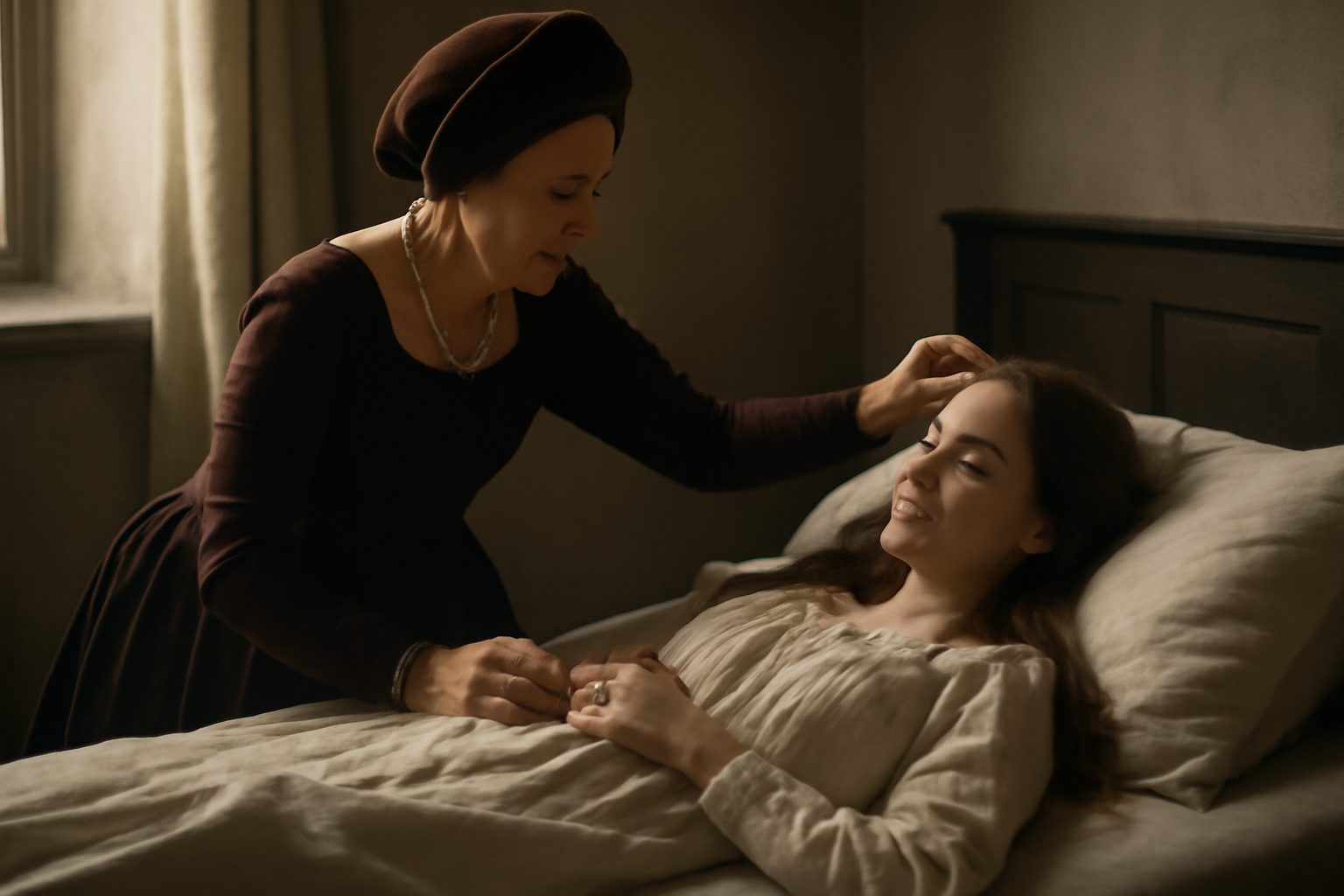
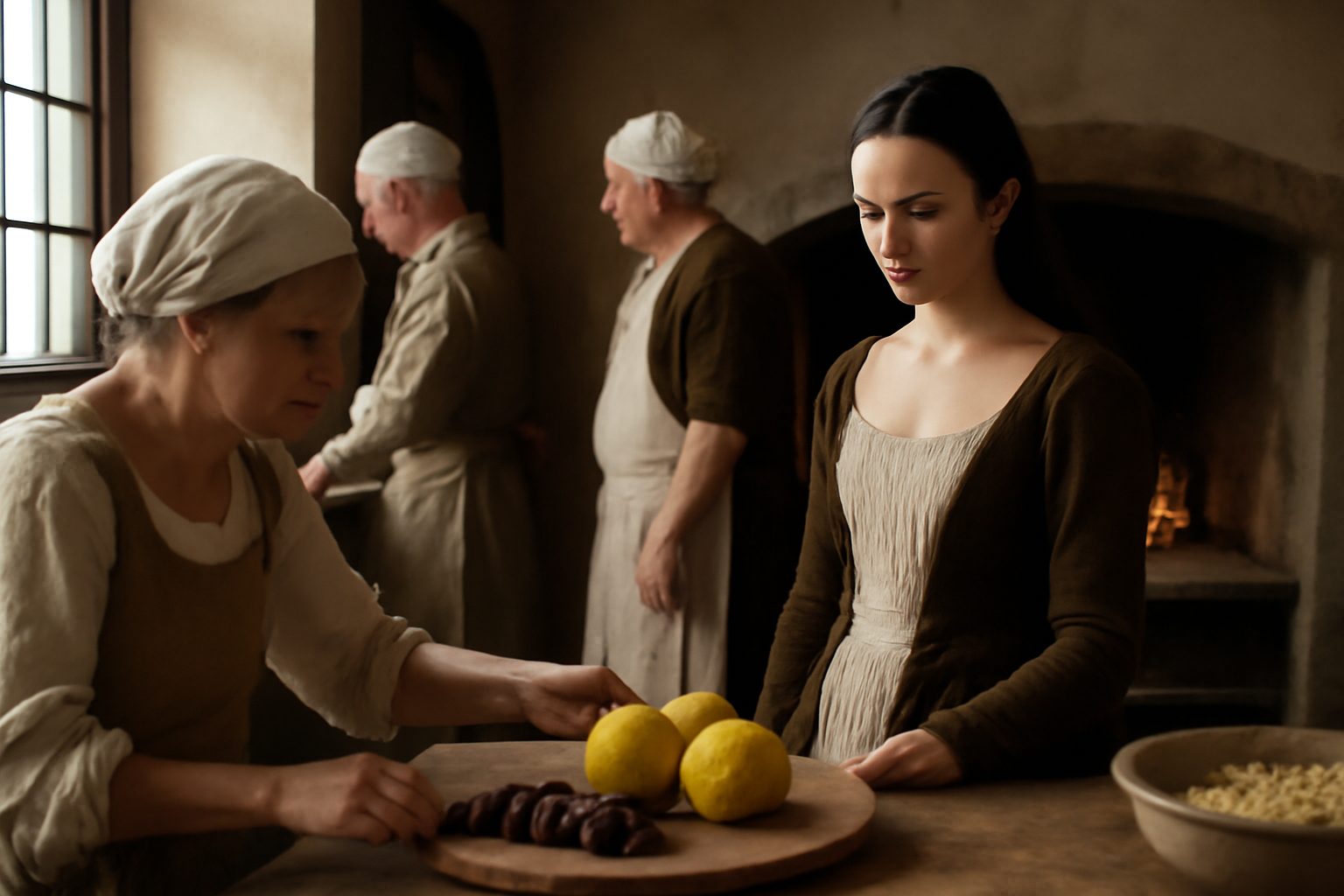
In Act 4, Scene 4 of Romeo and Juliet, the Capulet household is bustling with last-minute preparations for Juliet's wedding to Paris. As the Nurse and Lady Capulet hurry to finish the arrangements, an exhausted servant is told to rest, with the warning that staying up too late will leave him ill by morning. This moment highlights the chaotic yet mundane realities of the household, even as the play hurtles toward tragedy.
Nurse: "Get you to bed; faith, You'll be sick to-morrow"
In modern day english, we would say:
Go to bed; honestly, you’ll feel sick tomorrow if you don’t.
Frequently Asked Questions
What does the Nurse tell Juliet to do in this scene?
The Nurse tells Juliet to go to bed because she will be sick the next day if she does not rest.
Connections to other verses:
Connections to "Get you to bed; faith, You'll be sick to-morrow"
This line, spoken by Lady Capulet, reflects the household's concern for Juliet's well-being and the exhaustion from wedding preparations. It connects thematically and contextually to several other verses in the scene.
Related to Health and Sickness
The warning about potential sickness is directly countered by the Nurse's response in No, not a whit: what! I have watch'd ere now, where she dismisses the concern, claiming she has stayed up all night for lesser reasons without falling ill. This is further supported by her follow-up line in All night for lesser cause, and ne'er been sick, reinforcing her resilience and experience.
Urgency and Wedding Preparations
The urgency implied in getting to bed to avoid sickness contrasts with the frantic activity described elsewhere, such as in Come, stir, stir, stir! the second cock hath crow'd, which emphasizes the early hour and the need to hurry with preparations. Similarly, The curfew-bell hath rung, 'tis three o'clock underscores the late (or early) hour, adding context to why rest is being urged.
Household Dynamics and Tensions
Lady Capulet's concern can be seen as part of the broader domestic tensions, such as Capulet's impatient commands in Go, you cot-quean, go, where he mocks her for meddling, and his later urgency in Make haste; the bridegroom he is come already, highlighting the pressure everyone is under.
Foreshadowing and Irony
Ironically, the concern for Juliet's health is misplaced, as she is feigning illness as part of her plan. This connects to the later call in Go waken Juliet, go and trim her up, where they prepare her for the wedding, unaware of her true state. The entire scene's bustling activity, such as Look to the baked meats, good Angelica and Spare not for the cost, contrasts with the quiet tragedy unfolding in Juliet's chambers.