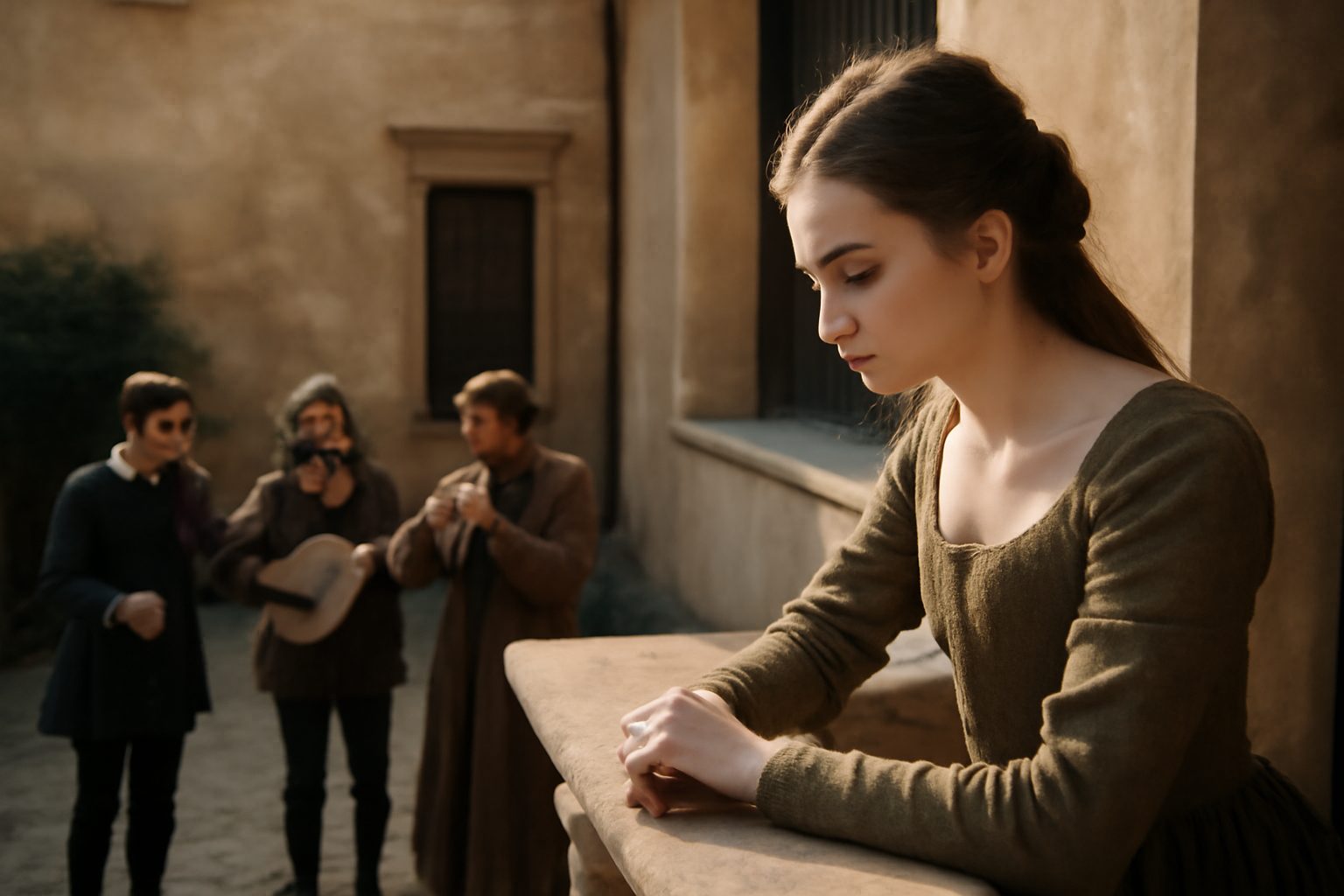
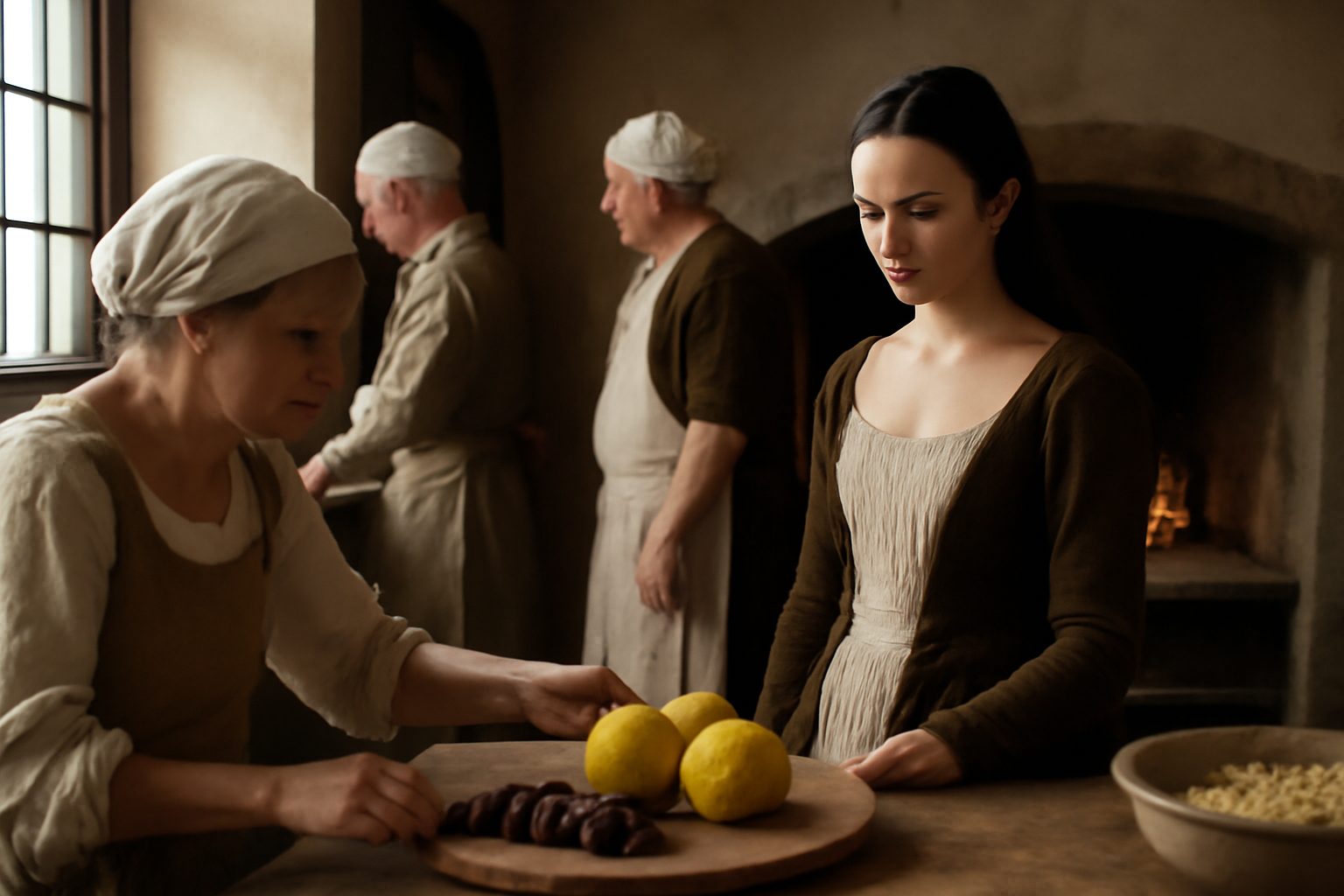
In Act 4, Scene 4 of Romeo and Juliet, the Capulet household is bustling with last-minute preparations for Juliet's wedding to Paris. As dawn approaches, the Nurse remarks on the time, noting the ringing of the curfew-bell at three o'clock, signaling how late—or early—it has become. This moment underscores the urgency and chaos surrounding the forced marriage, while Juliet, unbeknownst to them, lies seemingly lifeless from Friar Laurence's potion.
Capulet: "The curfew-bell hath rung, 'tis three o'clock:"
In modern day english, we would say:
The curfew bell has just struck three in the morning.
Frequently Asked Questions
What time does Capulet say it is when the curfew bell rings?
Three o'clock.
Connections to other verses:
Connections to "The curfew-bell hath rung, 'tis three o'clock:"
The verse "The curfew-bell hath rung, 'tis three o'clock:" establishes the early morning hour, setting a tone of urgency and preparation for Juliet's wedding. This connects thematically and temporally with several other verses in the scene.
Urgency and Time Pressure
The mention of the time directly relates to the repeated calls for haste, such as in "Come, stir, stir, stir! the second cock hath crow'd", which also references the early hour, and "Make haste, make haste." and "Make haste, I say.", emphasizing the frantic pace of the Capulet household.
Wedding Preparations
The time reference underscores the immediacy of the wedding preparations, linking to verses like "Look to the baked meats, good Angelica:" and "They call for dates and quinces in the pastry.", which detail the culinary efforts. It also connects to "Go waken Juliet, go and trim her up;", as the time indicates the need to prepare the bride.
Character Interactions and Tensions
The early hour ties into exchanges about weariness and past experiences, such as Capulet's remark in "All night for lesser cause, and ne'er been sick." and the Nurse's response in "No, not a whit: what! I have watch'd ere now", highlighting the household's fatigue. Lady Capulet's sharp retort in "Go, you cot-quean, go," adds to the tension, fueled by the time-sensitive context.
Logistical Commands
The time reference contextualizes the many logistical commands, such as "Sirrah, fetch drier logs:" and "I have a head, sir, that will find out logs,", which are part of ensuring everything is ready. It also relates to "Call Peter, he will show thee where they are.", as characters delegate tasks under time constraints.
Arrival of the Bridegroom
The time sets the stage for the imminent arrival of Paris, as indicated in "The county will be here with music straight," and "Make haste; the bridegroom he is come already:", heightening the urgency that permeates the scene.