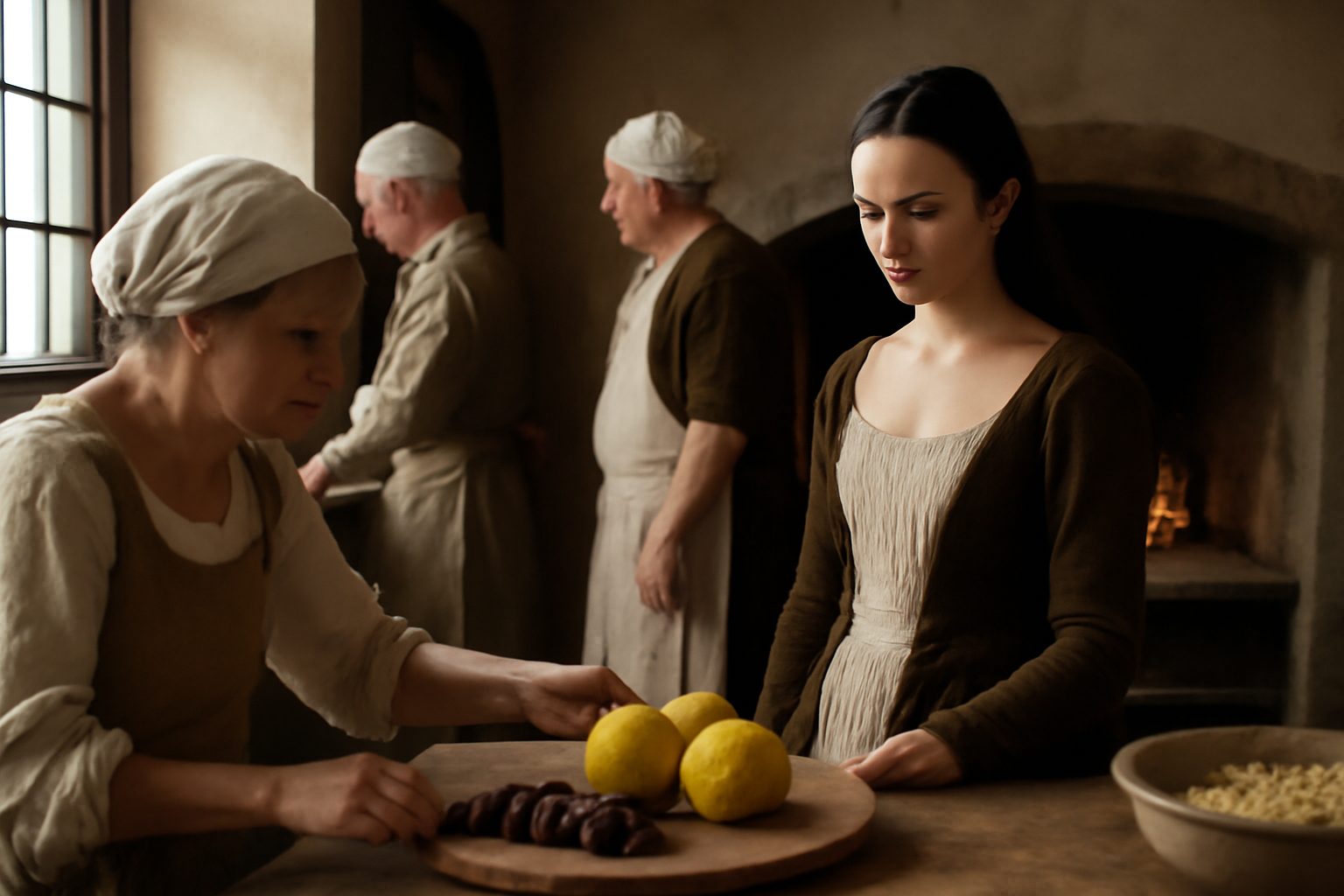
In Act 4, Scene 4 of Romeo and Juliet, the Capulet household is bustling with preparations for Juliet's wedding to Paris. As servants hurry about, one of them notices something amiss and asks the question, reflecting the sudden shift from chaos to curiosity. This moment occurs just before the discovery of Juliet's seemingly lifeless body, heightening the tension before the tragic climax.
Capulet: "What's there?"
In modern day english, we would say:
In Act 4, Scene 4, as the Capulet household prepares for Juliet’s wedding, someone hears a noise and asks what it is.
Frequently Asked Questions
Who is speaking in this line from Romeo and Juliet?
Capulet
In which act and scene does Capulet say this line?
Act 4, Scene 4
Connections to other verses:
Connections to "What's there?" in Act 4 Scene 4
The line "What's there?" is spoken by a servant, likely in response to the bustling preparations for Juliet's wedding. It reflects the confusion and urgency permeating the scene.
Link to Urgency and Task Assignments
This question ties directly to the frantic commands given throughout the scene, such as "Make haste, make haste" and "Make haste, I say", emphasizing the servants' need for clarity amid chaos. It also connects to specific task-related lines like "They call for dates and quinces in the pastry", where servants are inquiring about or confirming items needed for the feast.
Connection to Authority and Instructions
The query "What's there?" may follow or precede orders from authority figures, such as Capulet’s directive "Look to the baked meats, good Angelica" or his command "Call Peter, he will show thee where they are", highlighting the hierarchical structure and the servants' reliance on guidance.
Reflection of Time Pressure
The sense of urgency underscored by "The curfew-bell hath rung, 'tis three o'clock" and the repeated calls to hurry, like "Come, stir, stir, stir! the second cock hath...", contextualizes why a servant might be asking "What's there?"—to prioritize tasks efficiently under time constraints.
Contrast with Domestic Tension
While the servants are occupied with practical questions, the scene also includes moments of domestic jest and tension, such as Lady Capulet’s remark "Ay, you have been a mouse-hunt in your time" and Capulet’s playful yet hurried interjections like "Mass, and well said; a merry whoreson, ha!". "What's there?" serves as a grounding line amid this mix of urgency and casual interaction.