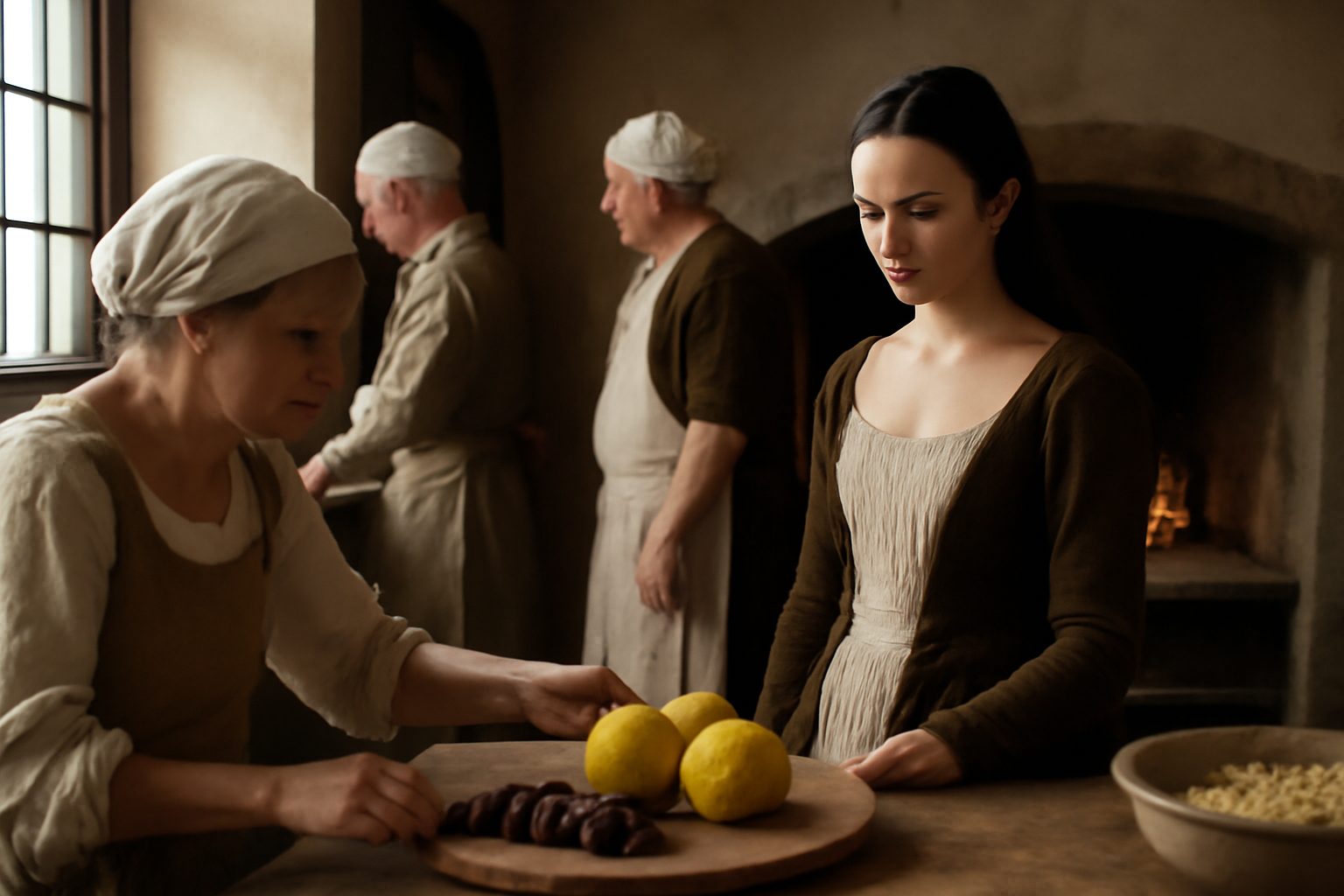
In Act 4, Scene 4 of Romeo and Juliet, the Capulet household is bustling with last-minute preparations for Juliet's wedding to Paris. As the Nurse struggles to rouse Juliet, she calls for Peter, a servant, to help locate certain items or people needed for the festivities. This line reflects the chaotic urgency of the scene, contrasting sharply with the tragic reality of Juliet's feigned death.
Capulet: "Call Peter, he will show thee where they are."
In modern day english, we would say:
Go get Peter, and he’ll take you to where they are.
Frequently Asked Questions
Who does Capulet ask to show someone where to go in Act 4 Scene 4?
Capulet asks Peter to show someone where to go.
Connections to other verses:
Connections to "Call Peter, he will show thee where they are."
The verse "Call Peter, he will show thee where they are." is spoken by Capulet in the midst of frantic wedding preparations. It reflects the urgency and delegation of tasks, a theme echoed throughout the scene.
Urgency and Task Delegation
This line connects with "Come, stir, stir, stir! the second cock hath crowed," where Capulet emphasizes haste, mirroring the hurried tone of calling for Peter. Similarly, "Make haste, make haste." and "Make haste, I say." reinforce this atmosphere of rushed activity, showing Capulet's insistence on efficiency.
Peter's Role and Assistance
The mention of Peter as a guide or helper is contrasted with "And never trouble Peter for the matter," where Capulet dismisses the need for Peter's involvement, highlighting the fluctuating demands placed on servants. Additionally, "I have a head, sir, that will find out logs," shows another servant's self-sufficiency, differing from Peter's directed assistance.
Preparations and Specific Instructions
Capulet's command to call Peter aligns with other specific orders, such as "Look to the baked meats, good Angelica:" and "Go waken Juliet, go and trim her up;" which detail the wedding preparations. The line also relates to "Sirrah, fetch drier logs:" where Capulet gives another task, emphasizing his micromanagement.
Time and Impatience
The urgency in calling Peter is underscored by references to time, like "The curfew-bell hath rung, 'tis three o'clock:" and the impending arrival noted in "Make haste; the bridegroom he is come already:" This creates a sense of pressure, connecting back to the need for quick action through Peter's guidance.