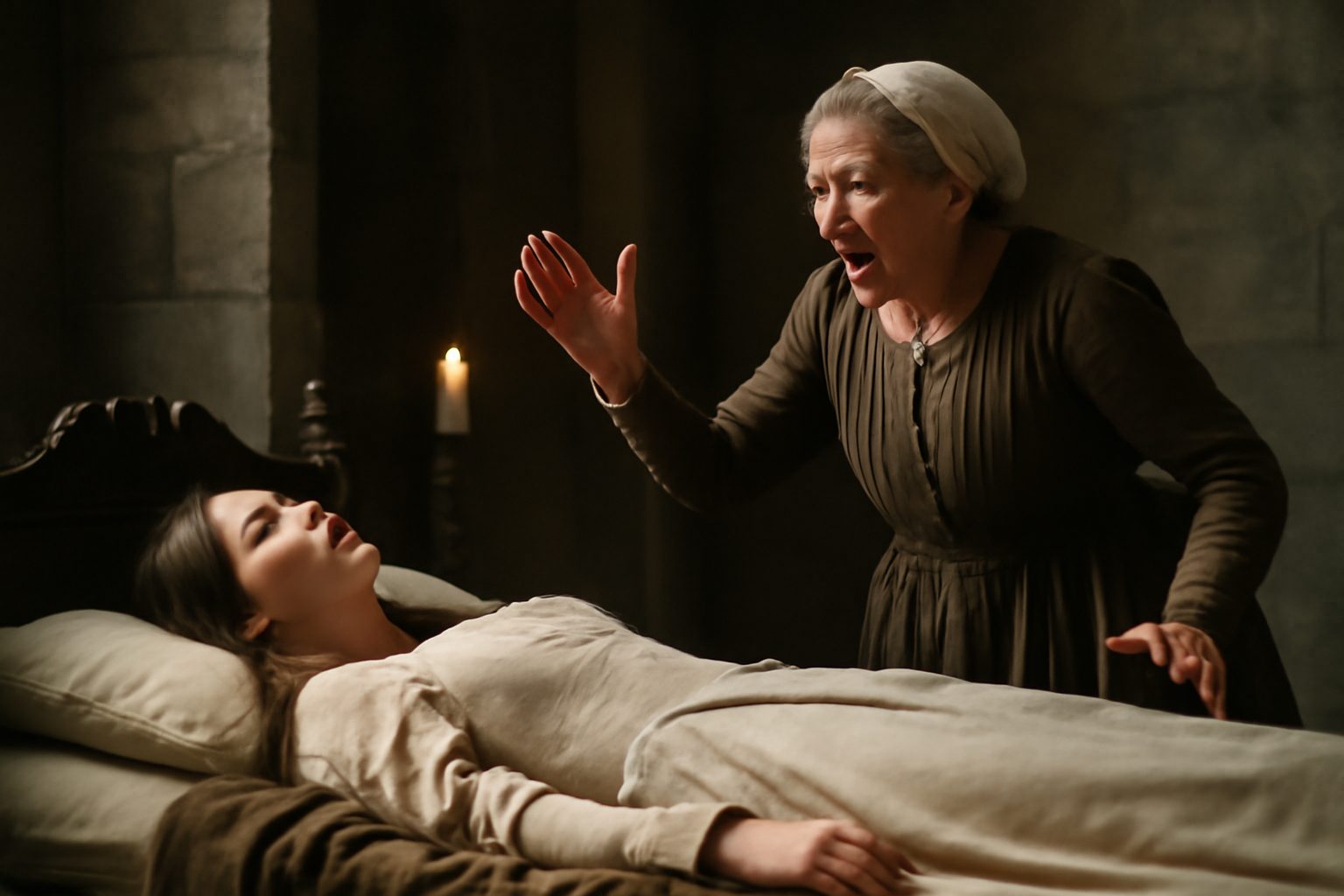
In Act 4 Scene 5 of Romeo and Juliet, the Capulet household is in chaos after Juliet is found seemingly dead. The Nurse and Lady Capulet are overcome with grief, while Peter, the Capulet servant, engages in a tense exchange with the musicians hired for Juliet's wedding. Frustrated by their indifference, Peter threatens them with sharp words, showcasing his quick temper and wit in the face of their mockery.
Peter: "Then have at you with my wit! I will dry-beat you"
In modern day english, we would say:
Alright, now I’ll fight back with my sharp words—I’ll tear into you without even using my fists.
(Note: The context is a heated exchange where Mercutio is threatening to outwit and verbally overpower someone, using playful but aggressive language.)
Frequently Asked Questions
What does Peter mean when he says he will dry-beat someone?
Peter is joking that he will beat them using his wit or clever words, not actually hitting them.
Connections to other verses:
Connections to "Then have at you with my wit! I will dry-beat you"
This line, spoken by Peter in a moment of verbal sparring with the musicians, contrasts sharply with the surrounding grief. While the household mourns Juliet's apparent death, Peter engages in wordplay, highlighting the scene's juxtaposition of tragedy and comedy.
Contrast with Mourning
Peter's threat to "dry-beat" the musicians with his wit stands in stark opposition to the lamentations heard elsewhere, such as the Nurse's cry of "Alas, alas! Help, help! my lady's dead!" and Capulet's despair in "Accursed, unhappy, wretched, hateful day!".
Musical Context
The musicians' refusal to play without payment, as seen in "Faith, we may put up our pipes, and be gone", prompts Peter's retort. His wit challenges their practicality amidst the sorrow, adding a layer of irony to the scene's somber tone.
Wordplay and Tension
Peter's line echoes the musicians' earlier puns, such as in "I'll fa you; do you note me?", creating a subplot of linguistic jousting that underscores the disconnect between the servants' world and the tragedy unfolding around them.
Structural Function
This moment of levity provides brief relief from the intense grief expressed in lines like "Dead art thou! Alack! my child is dead", emphasizing Shakespeare's use of comic relief to heighten the overall tragic impact.