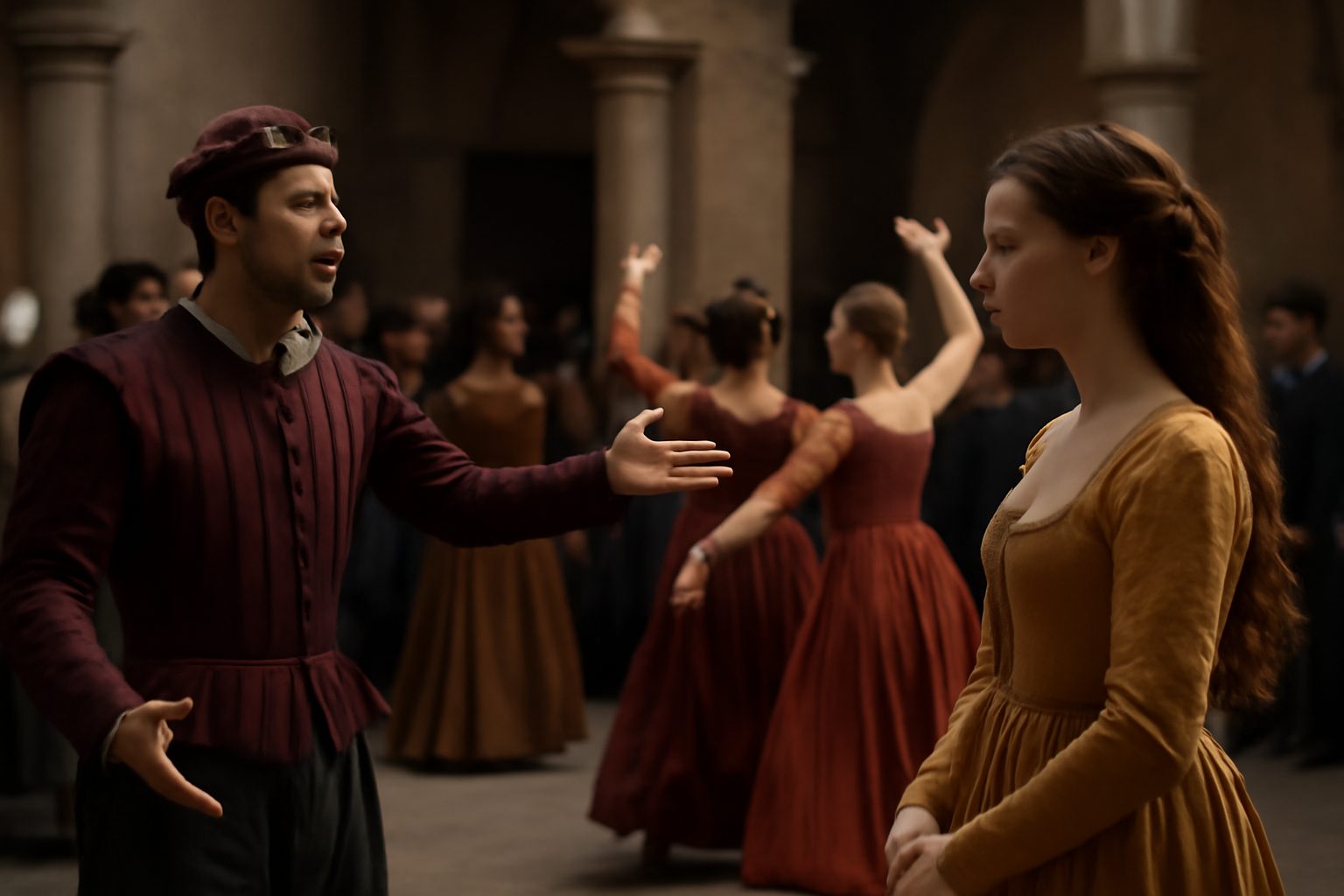
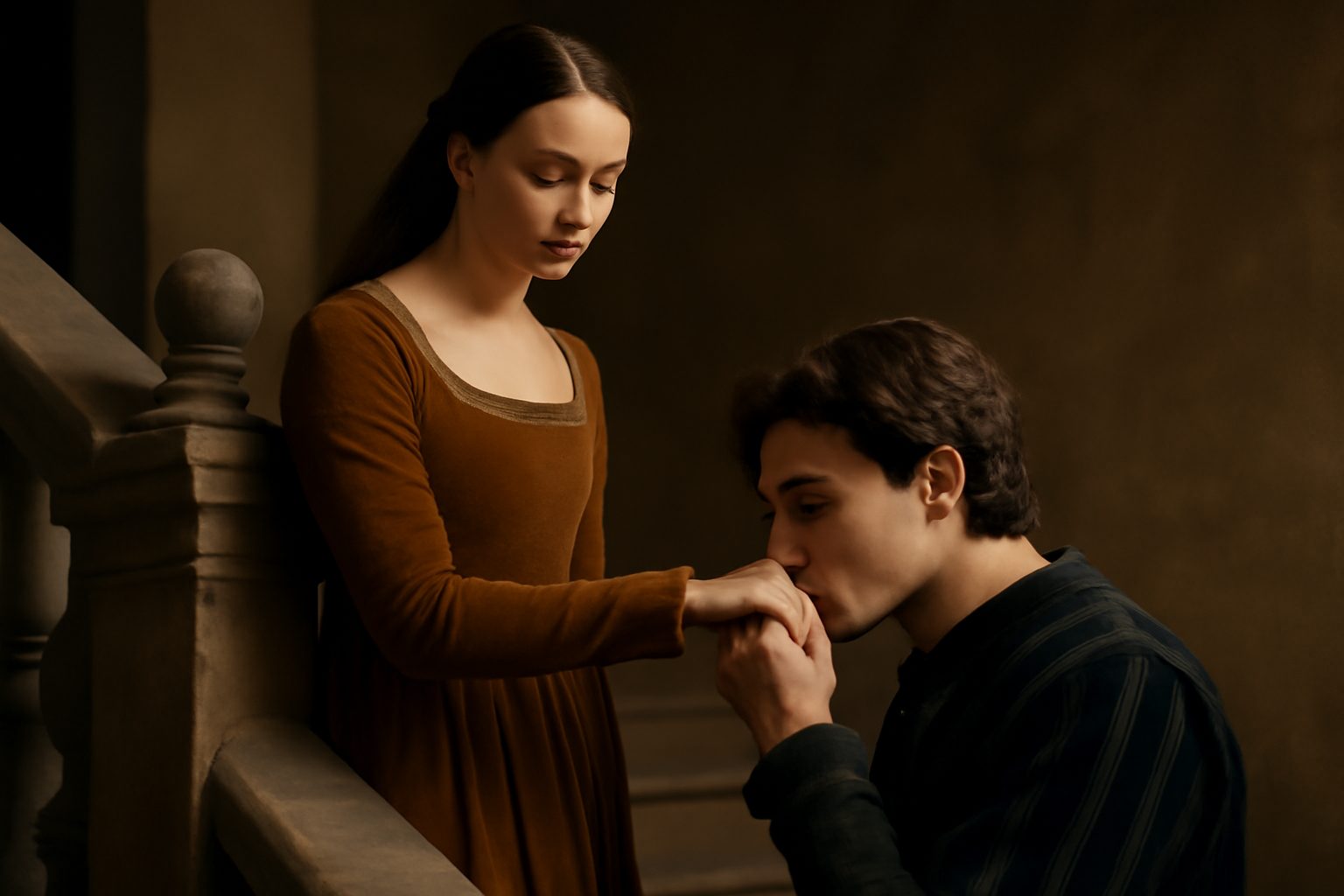
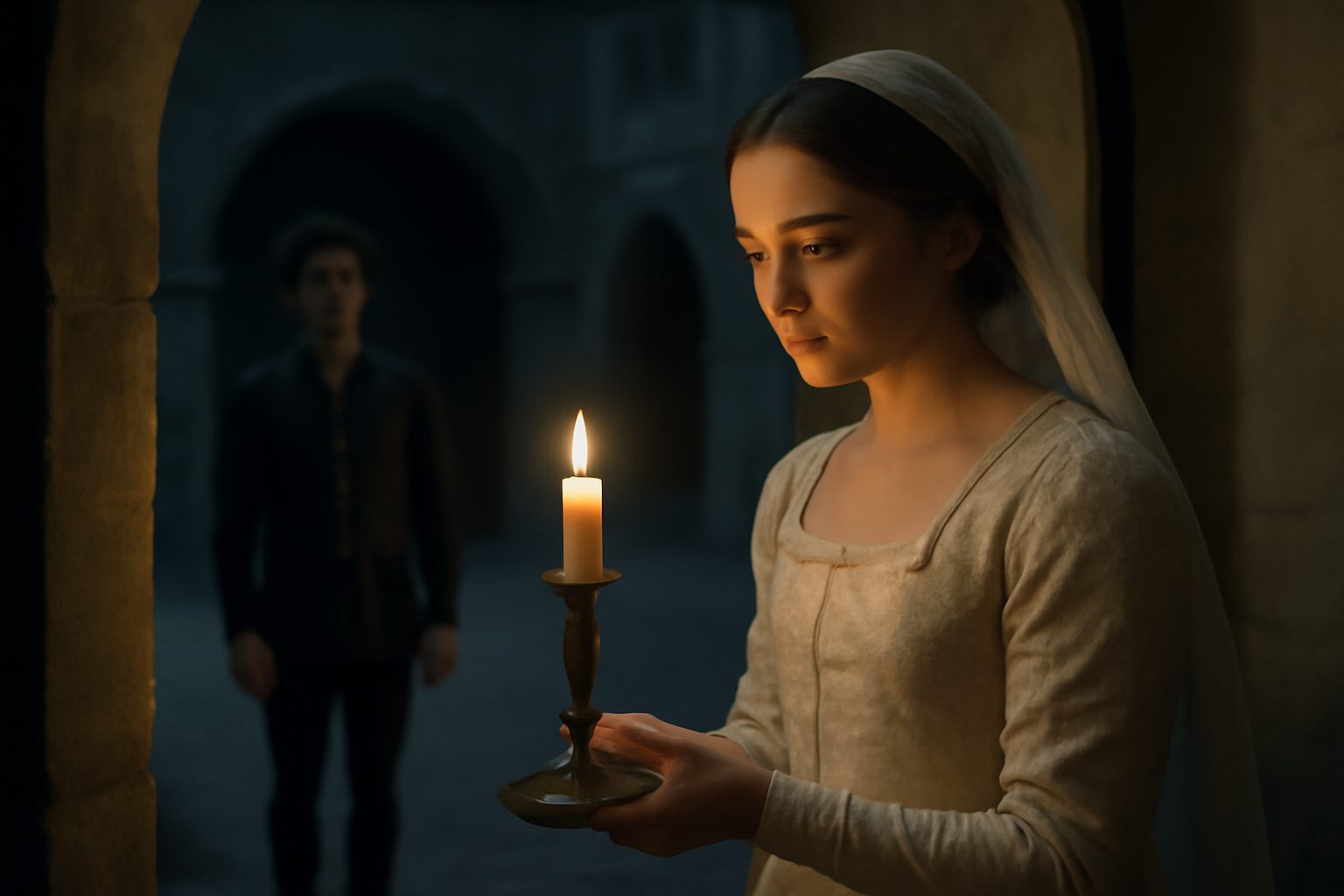
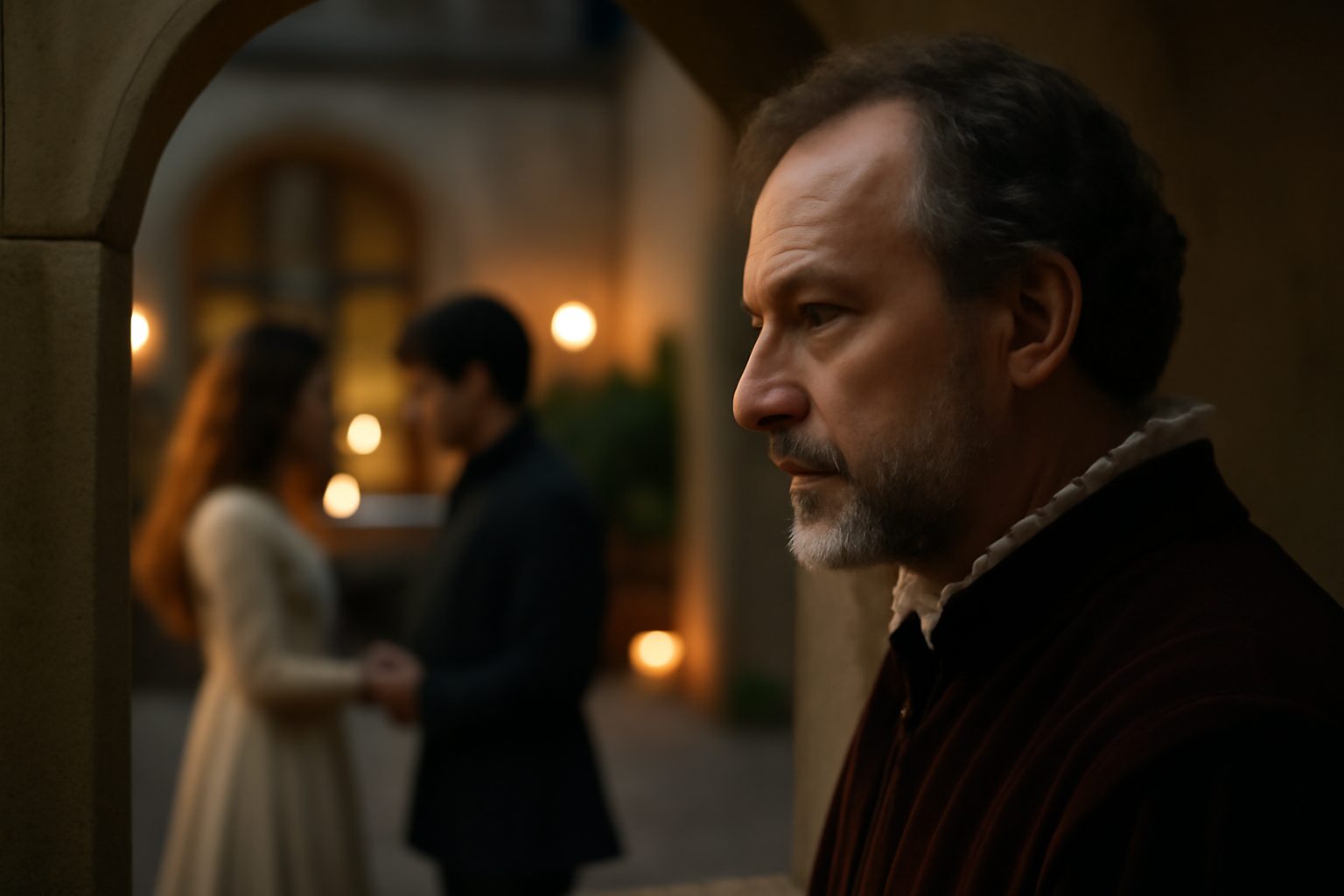
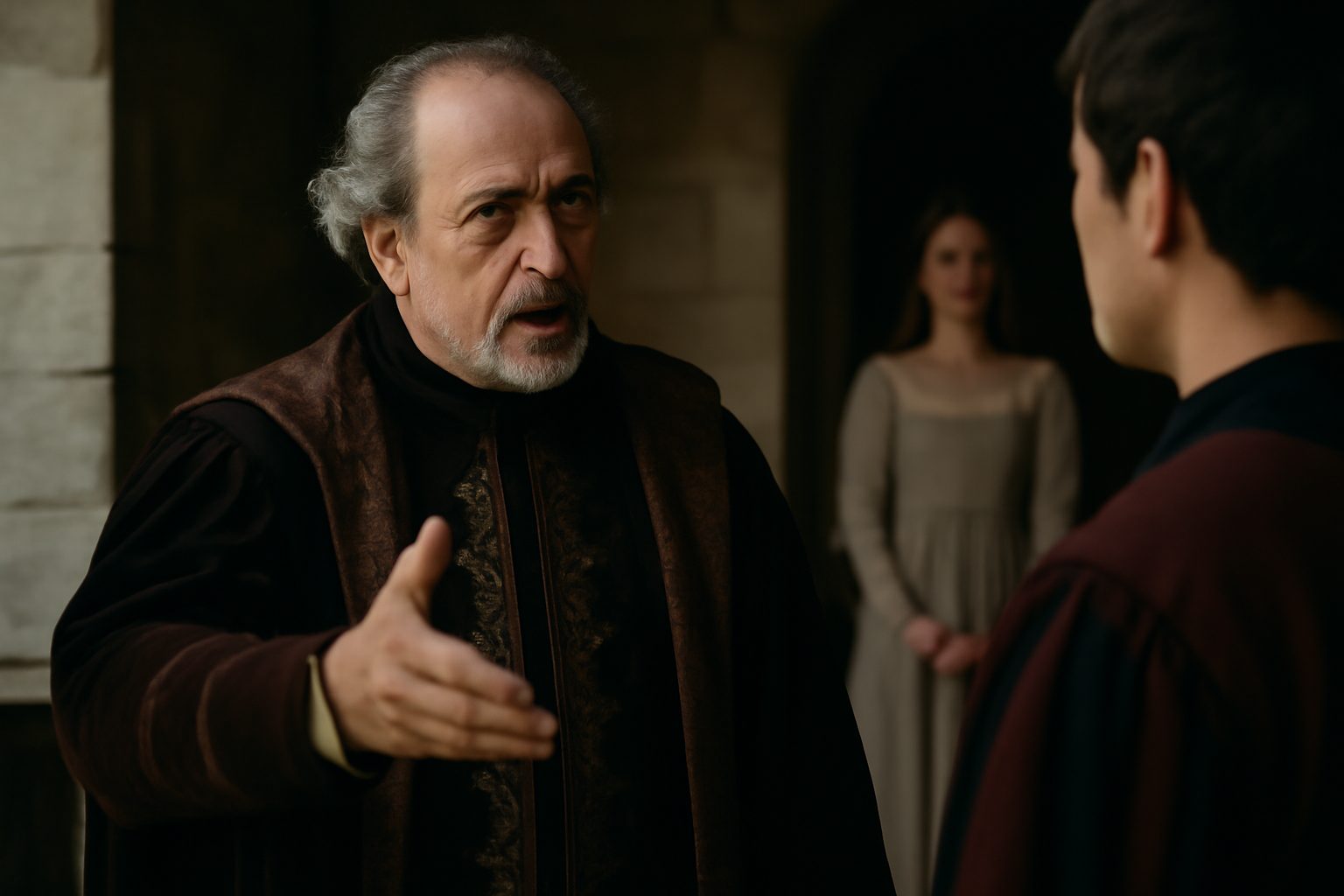
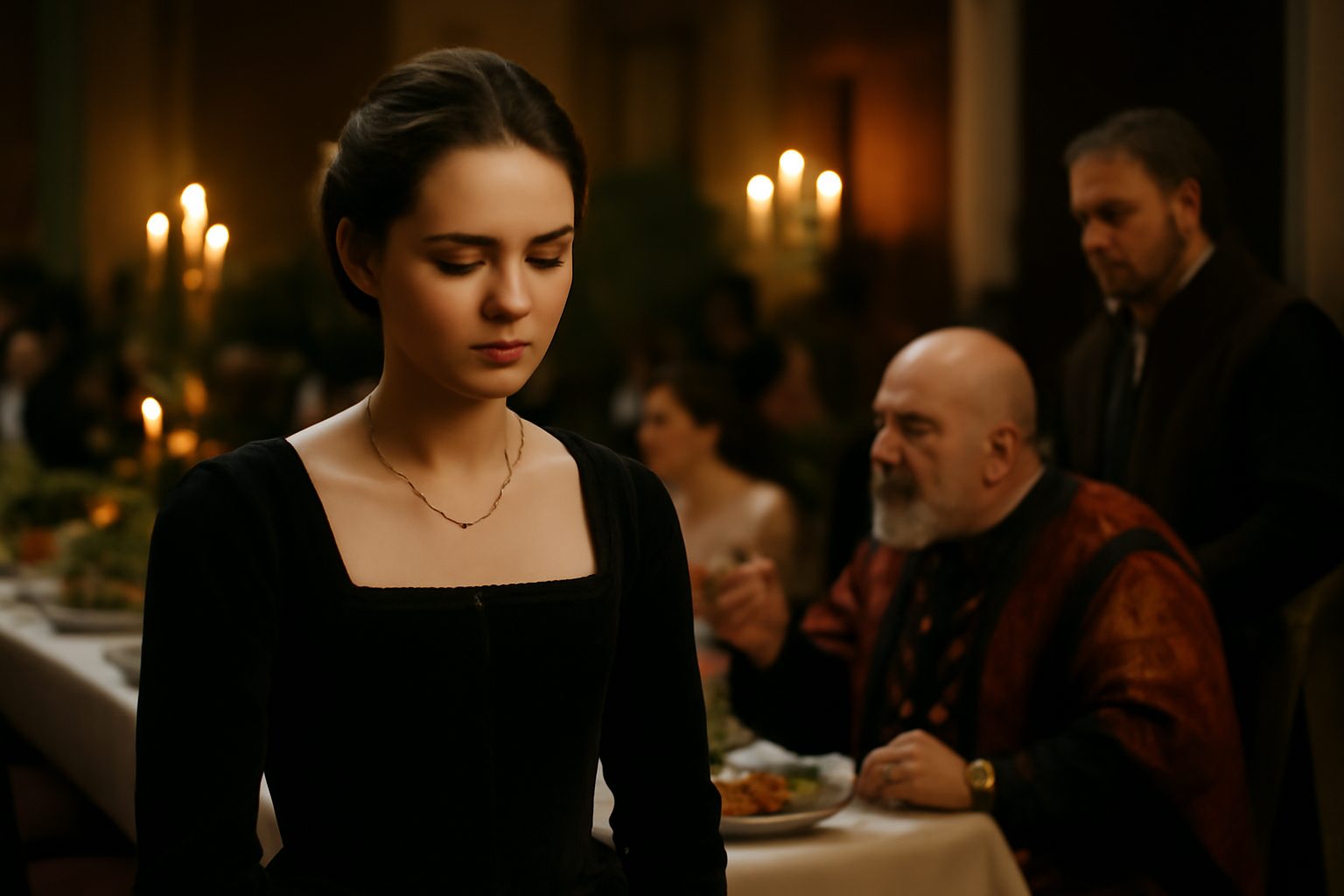
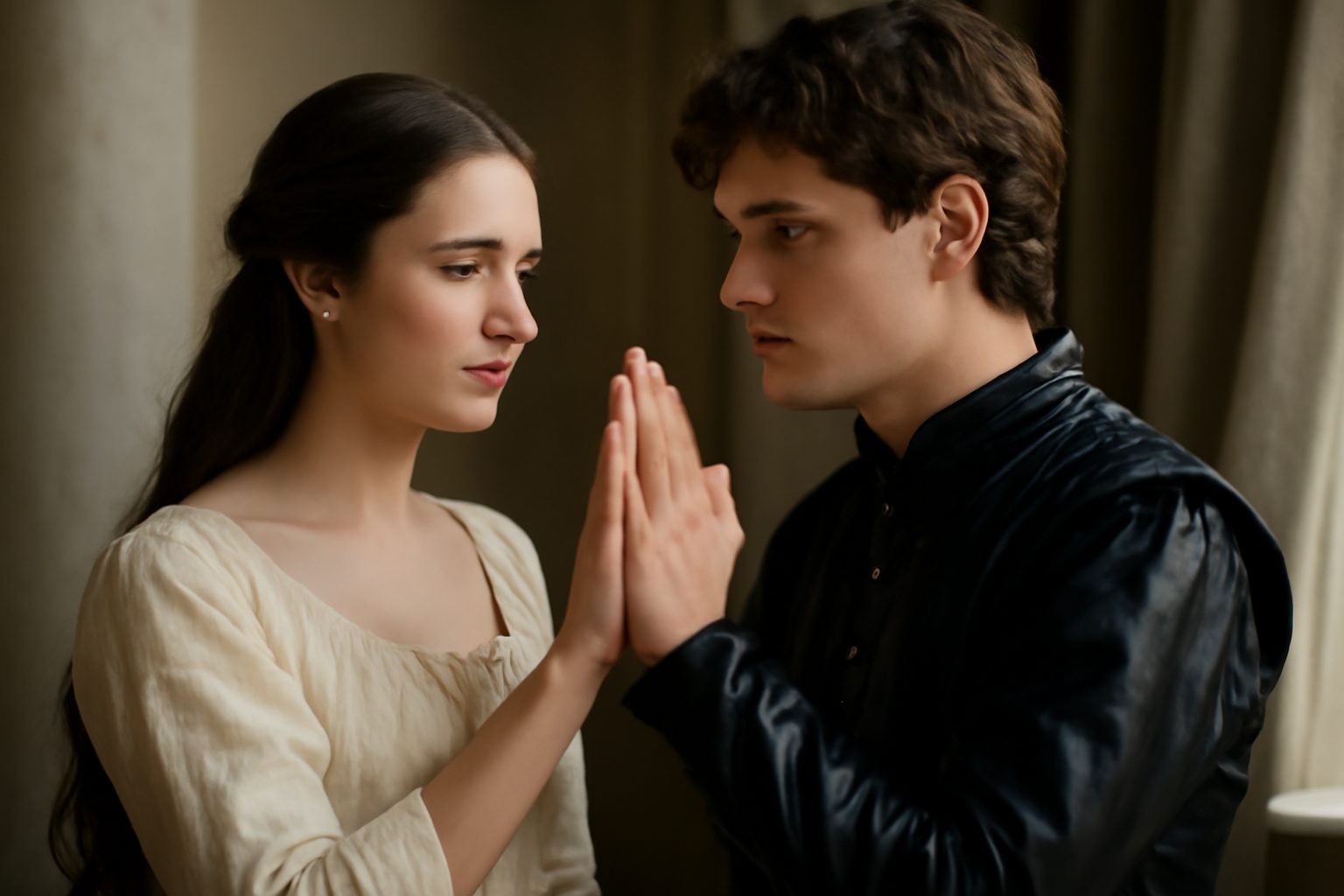
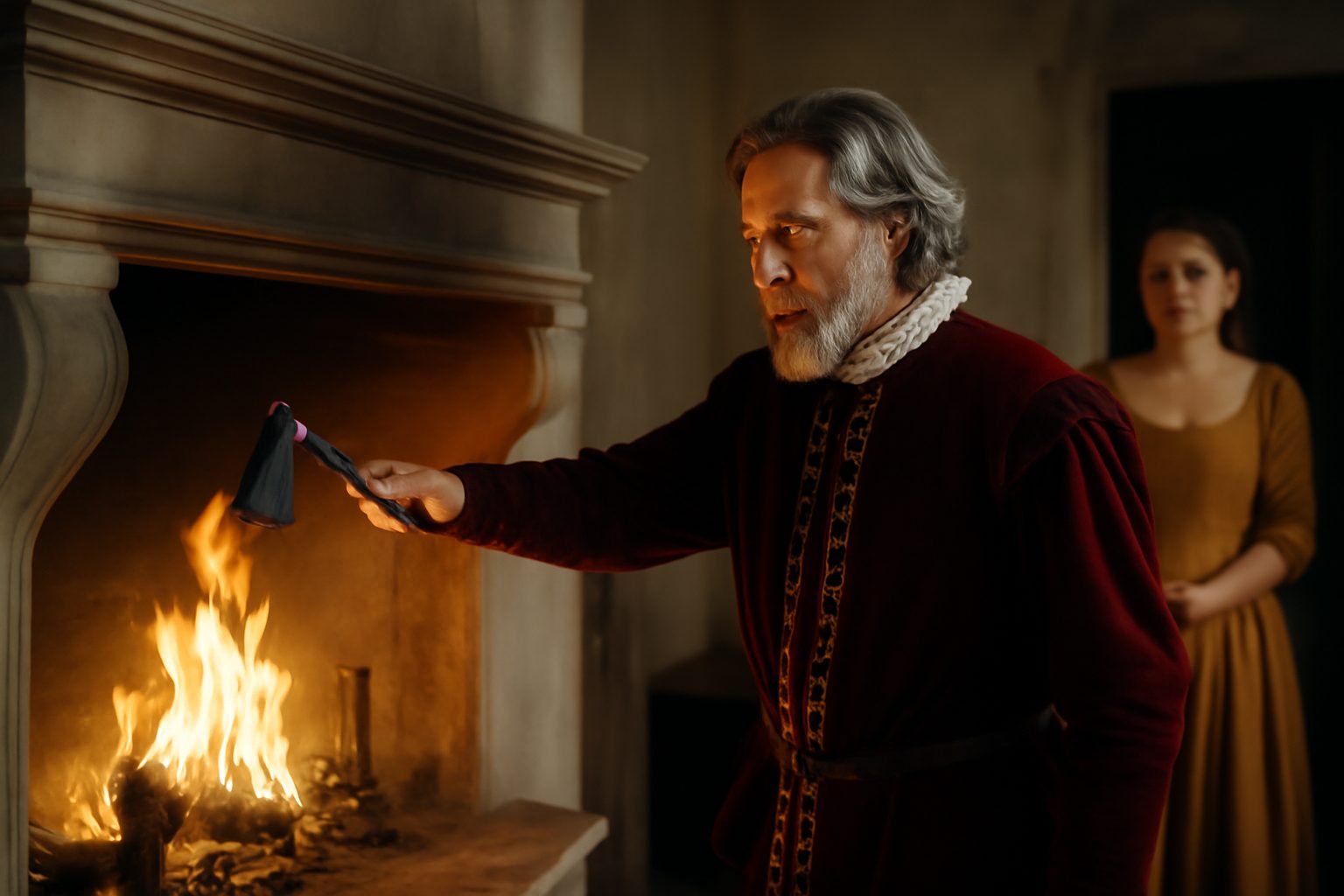
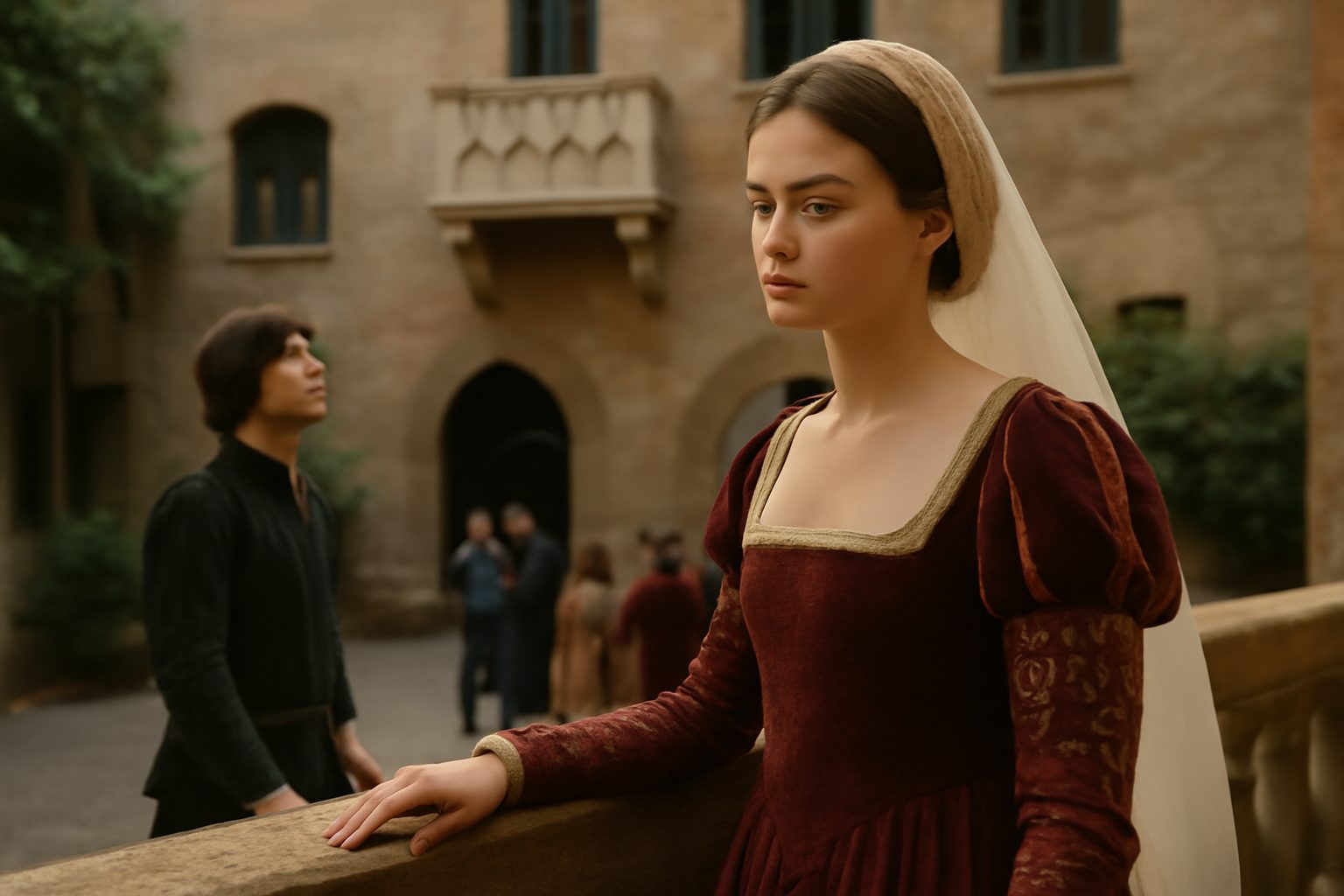
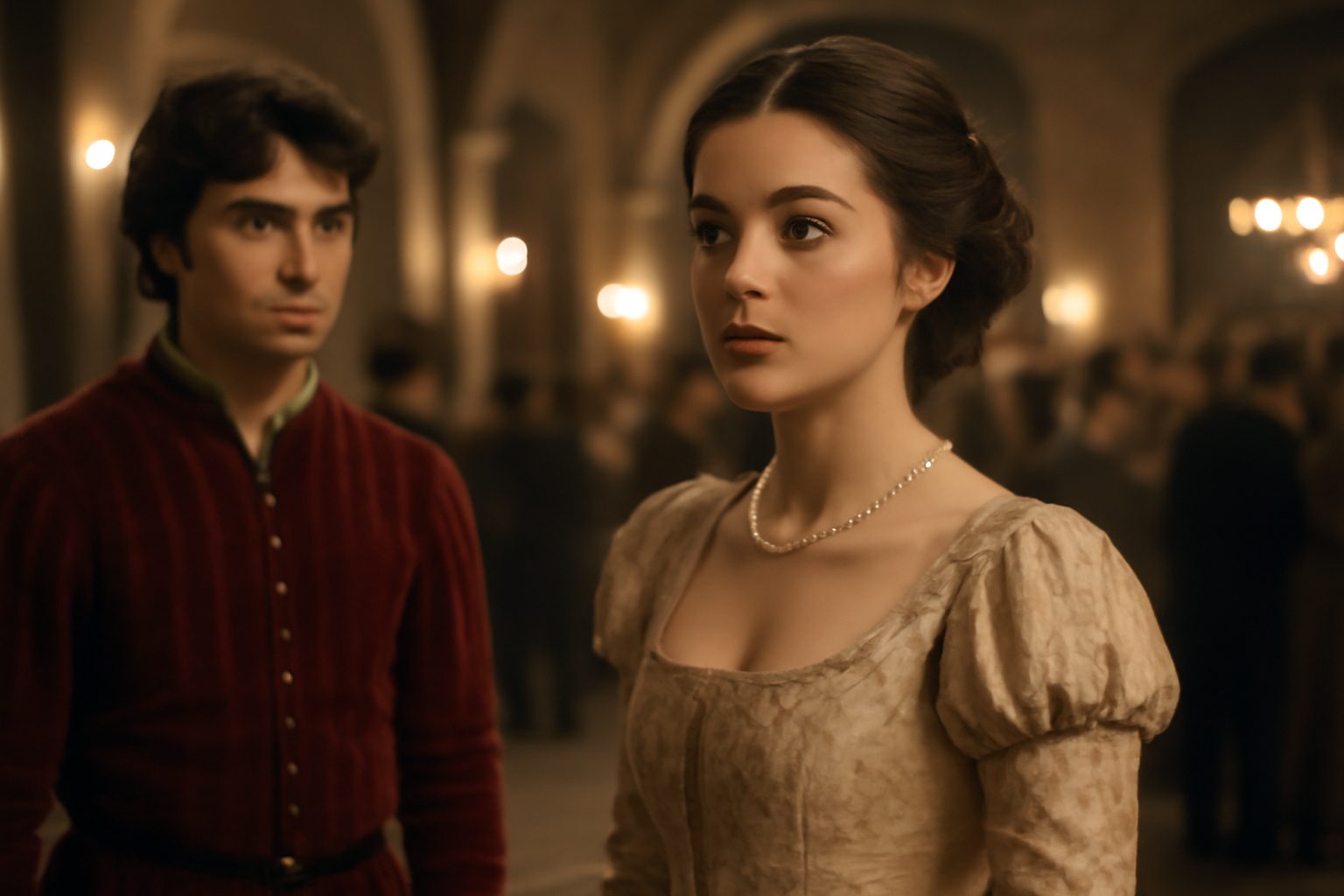
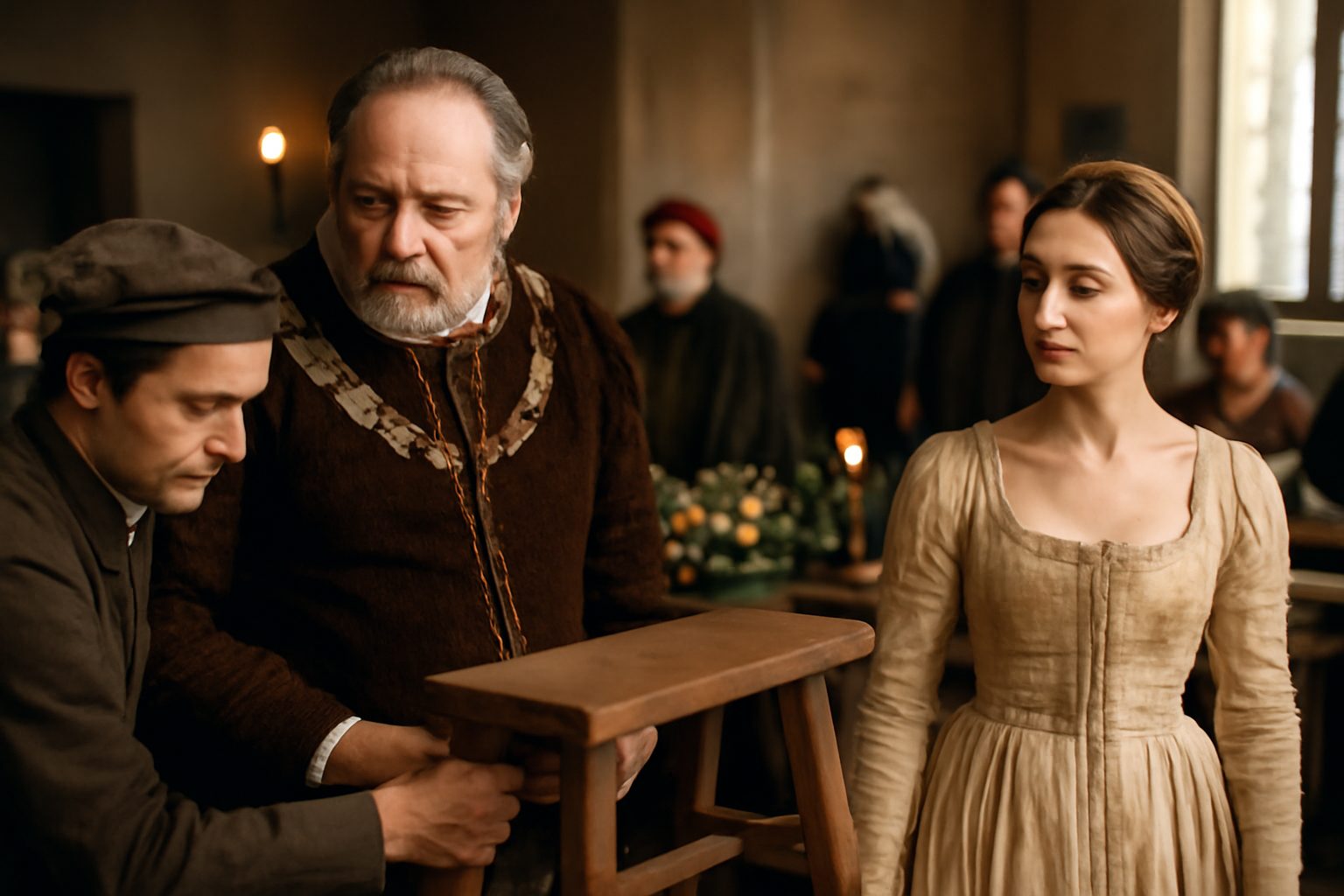
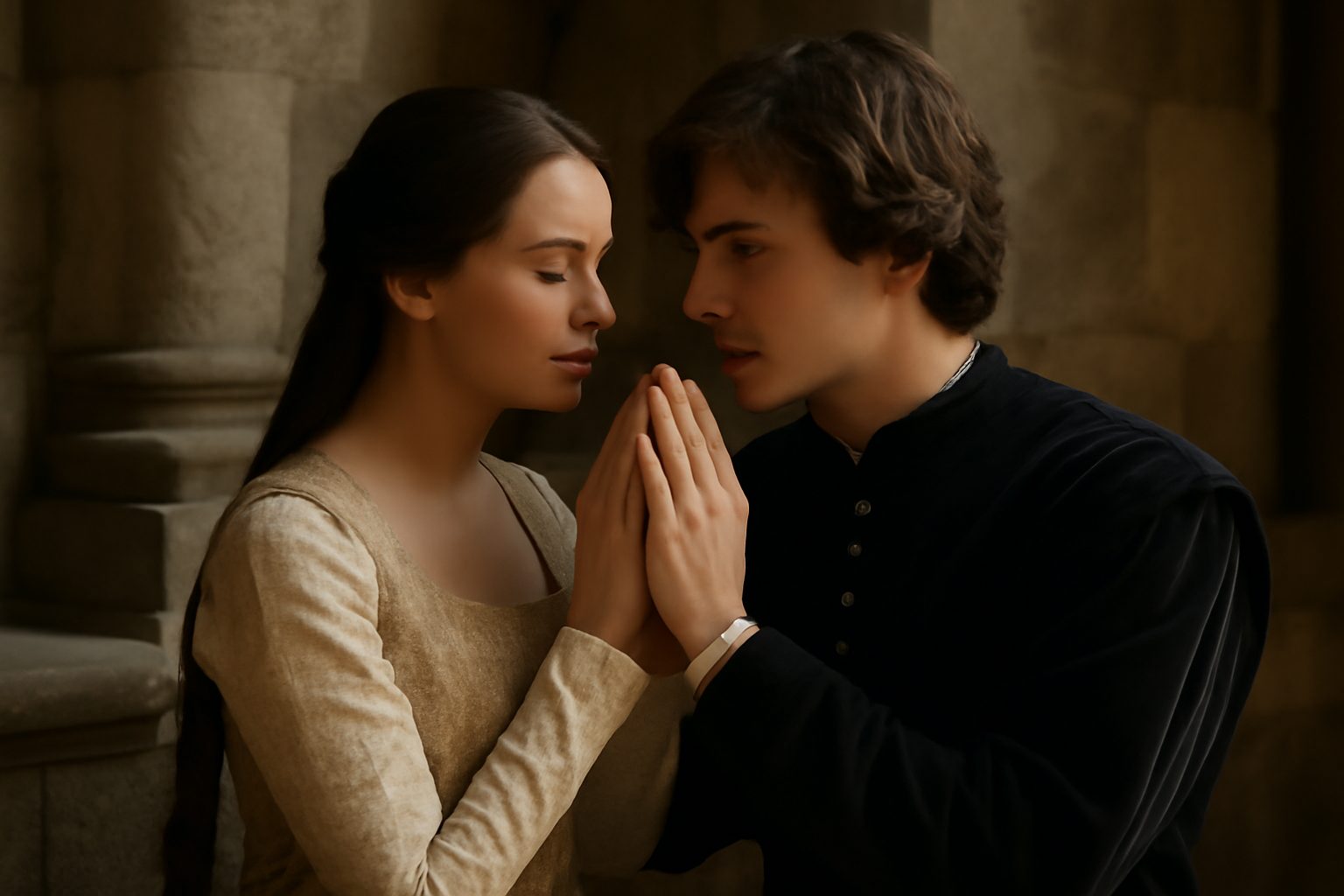
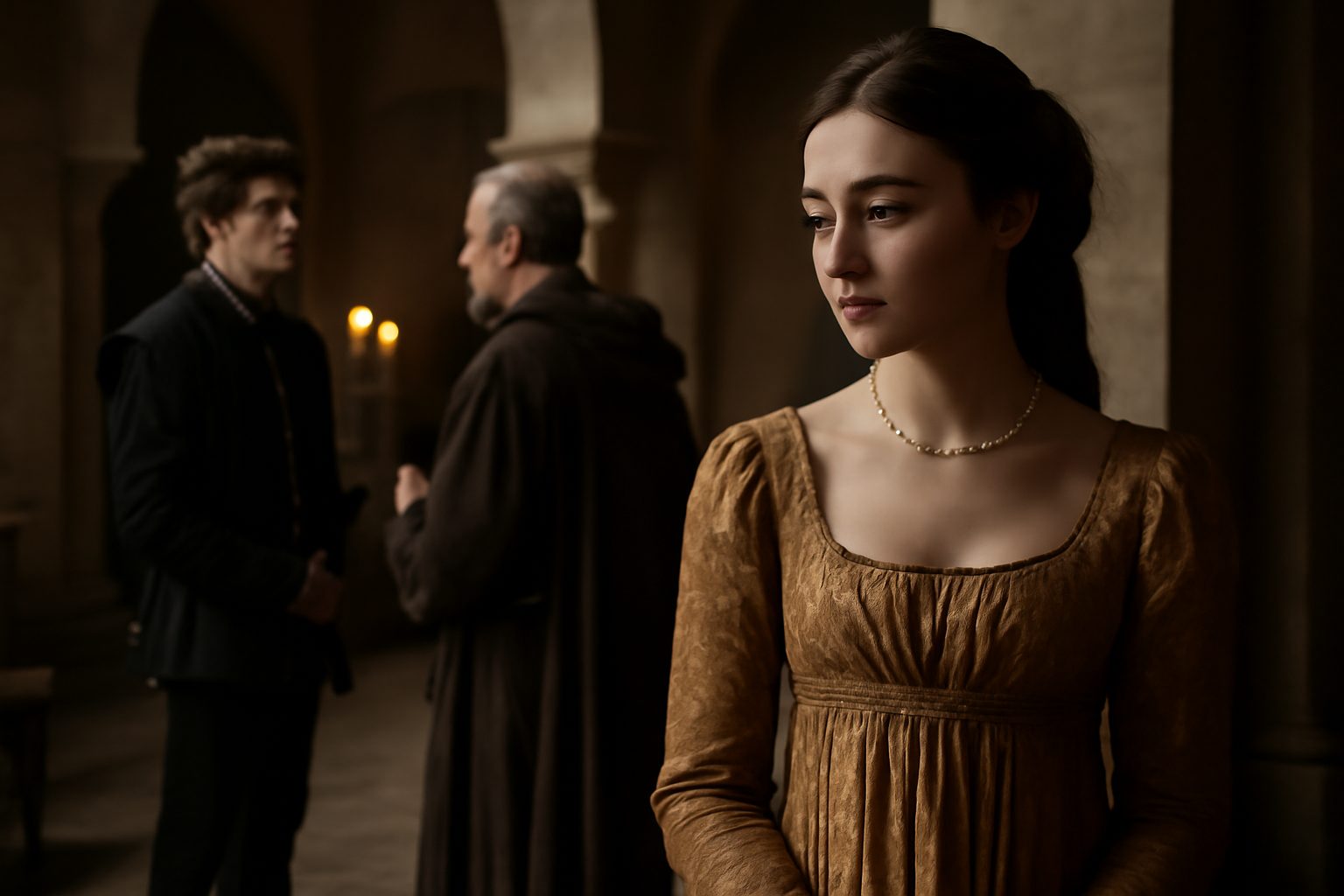
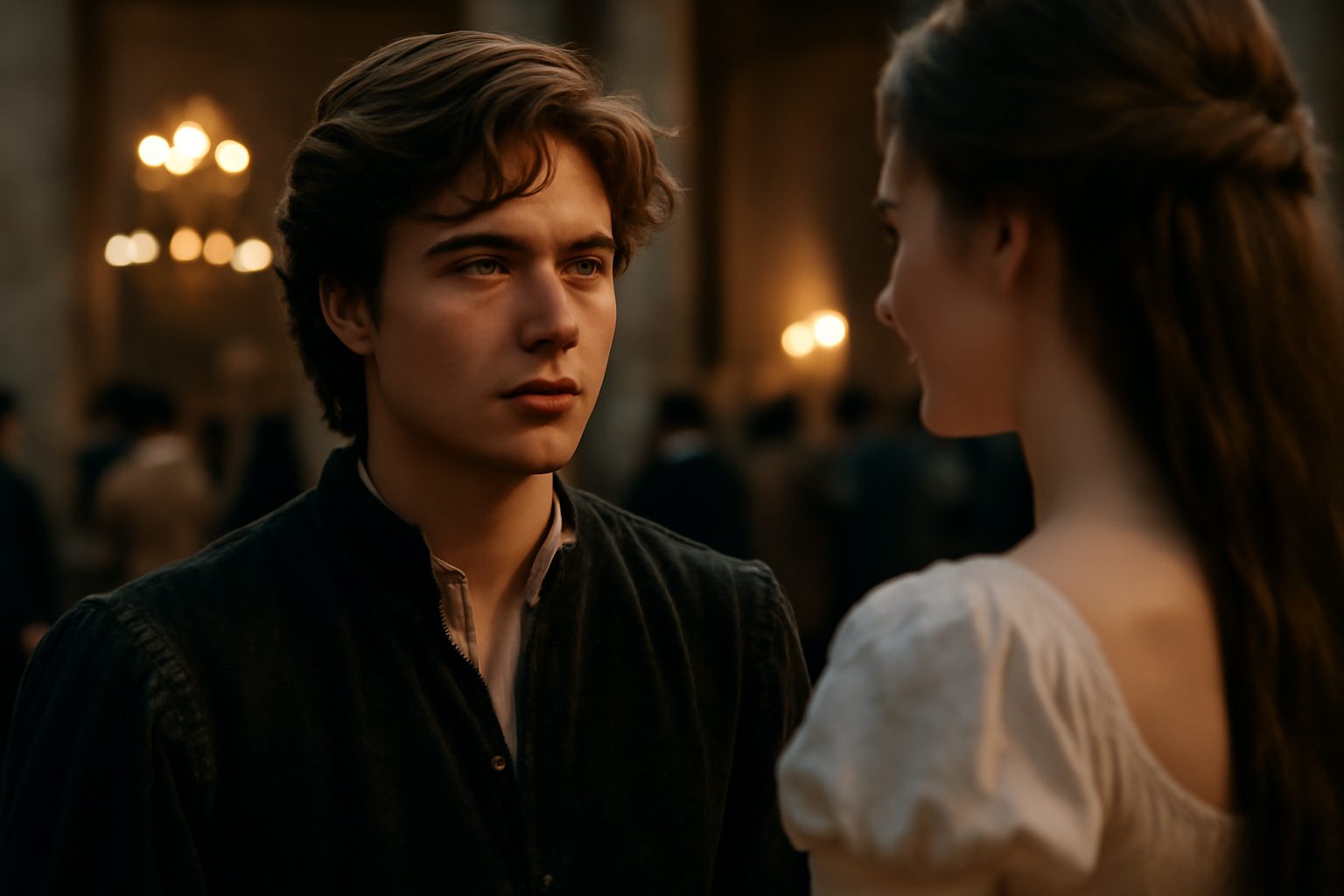
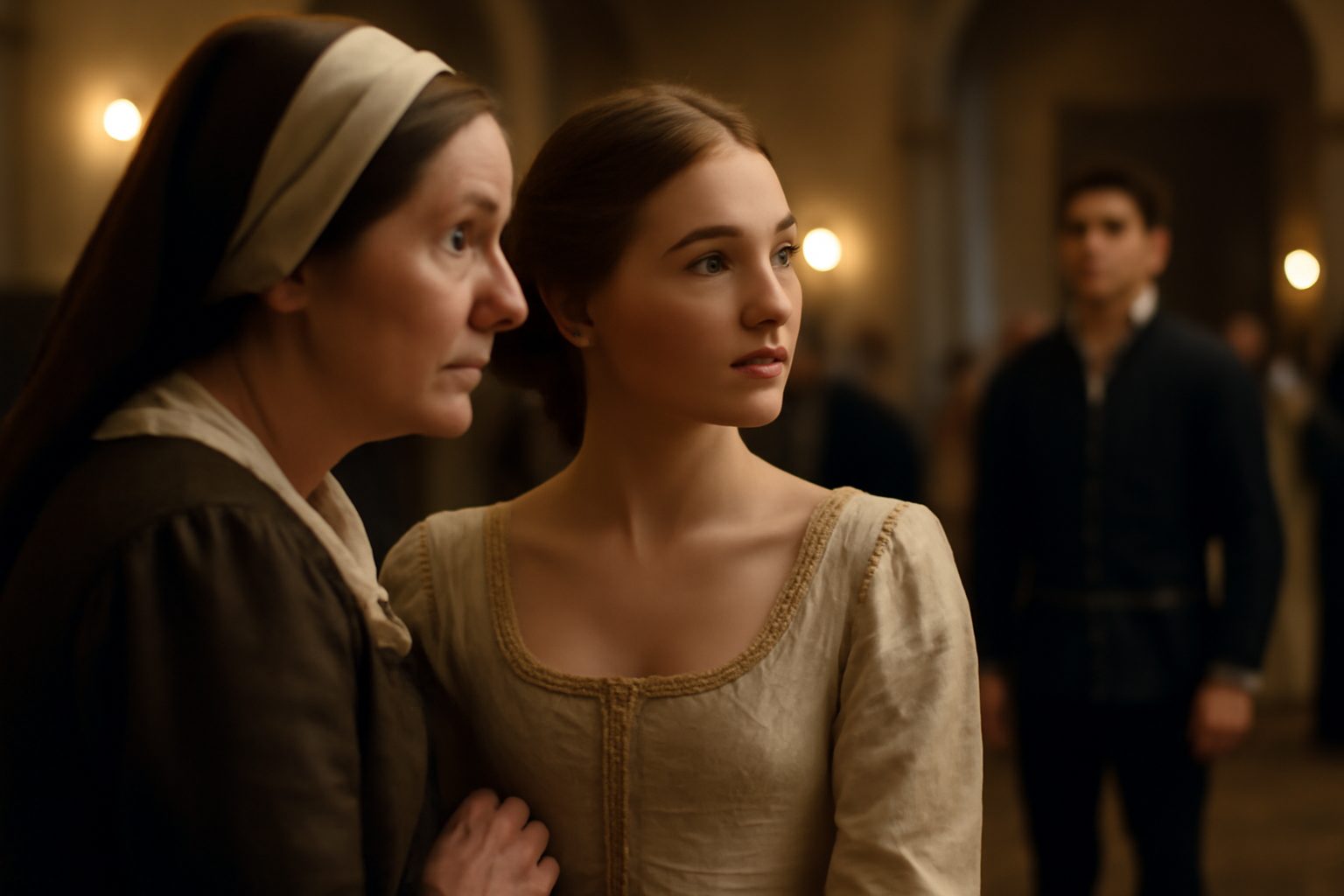
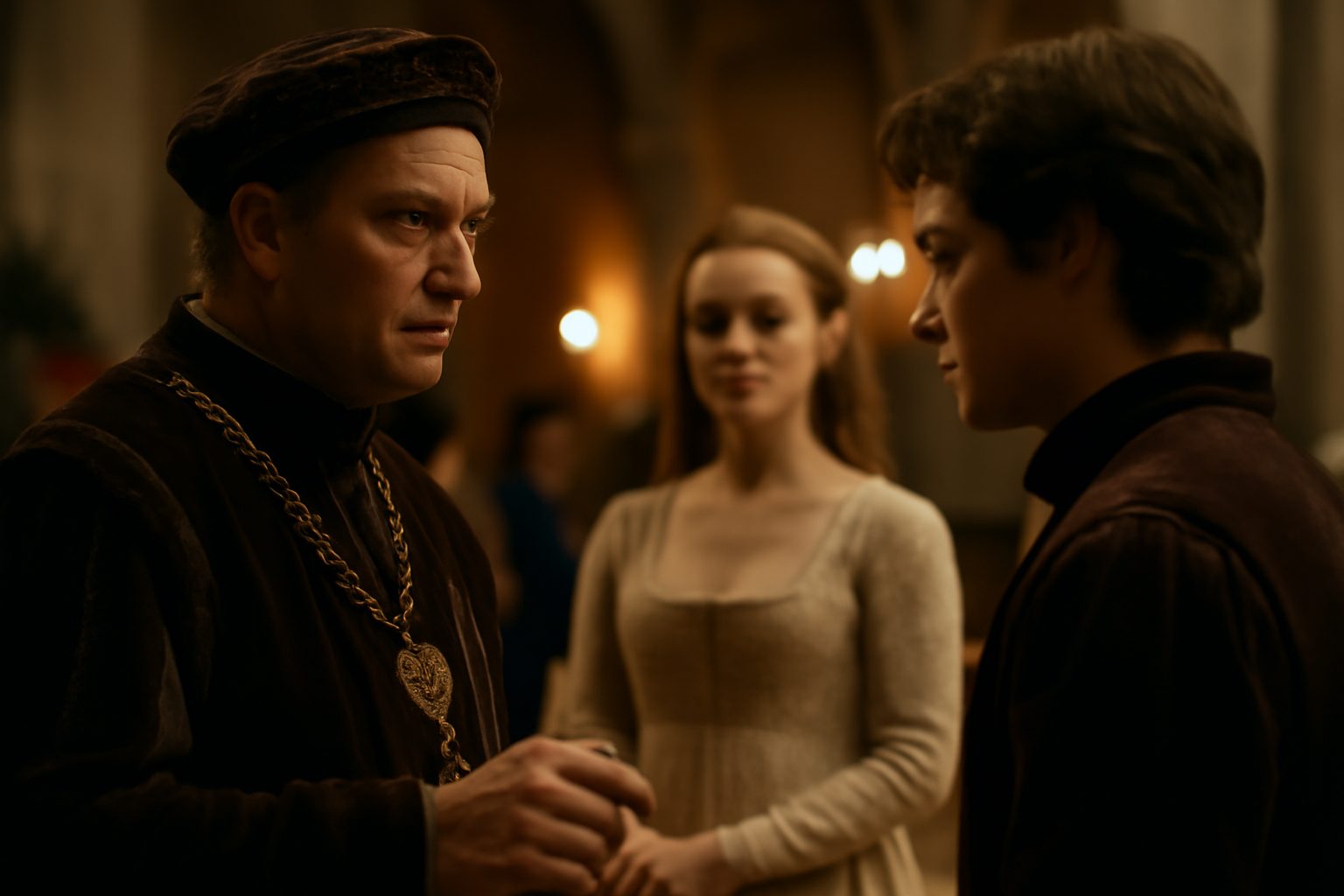
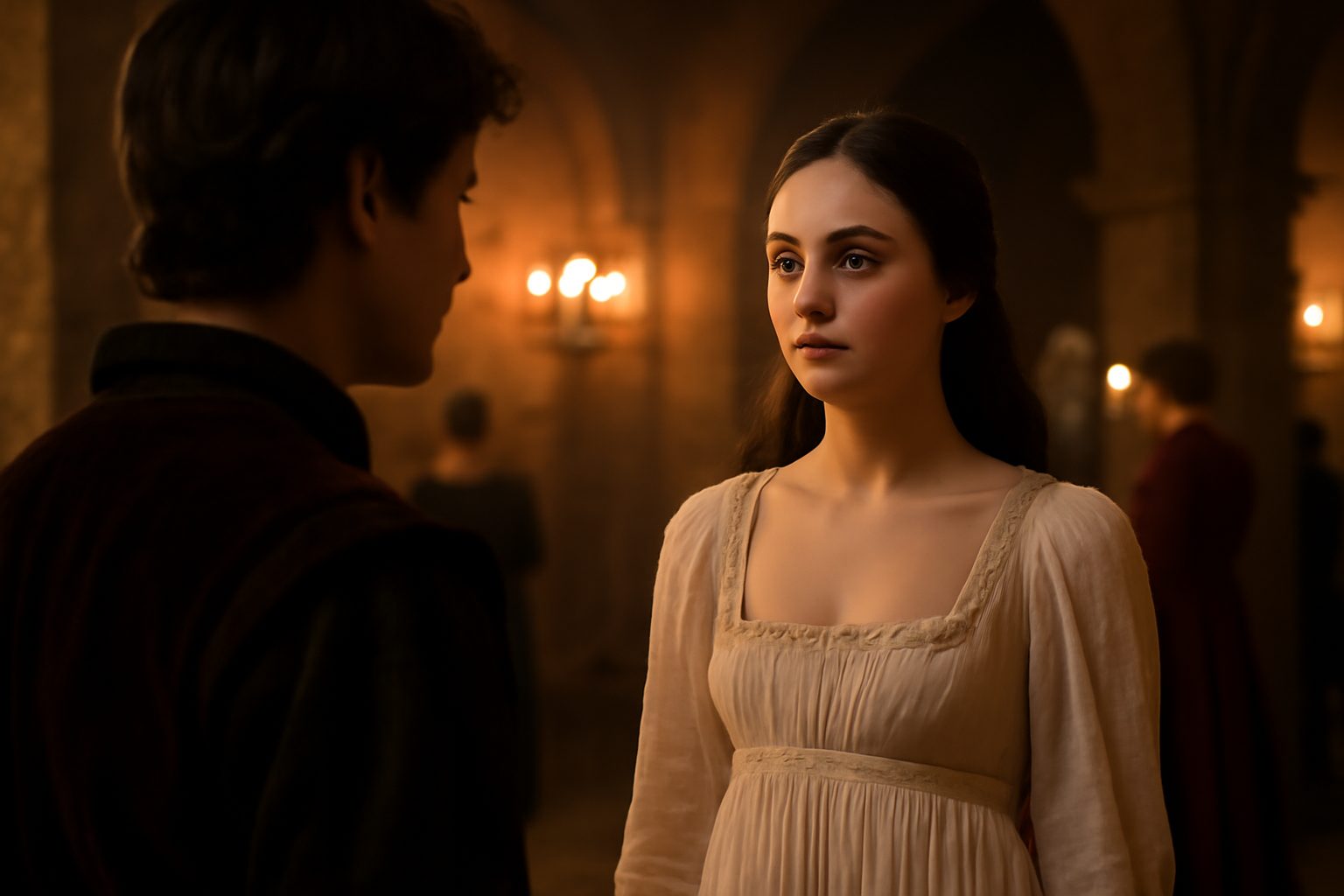
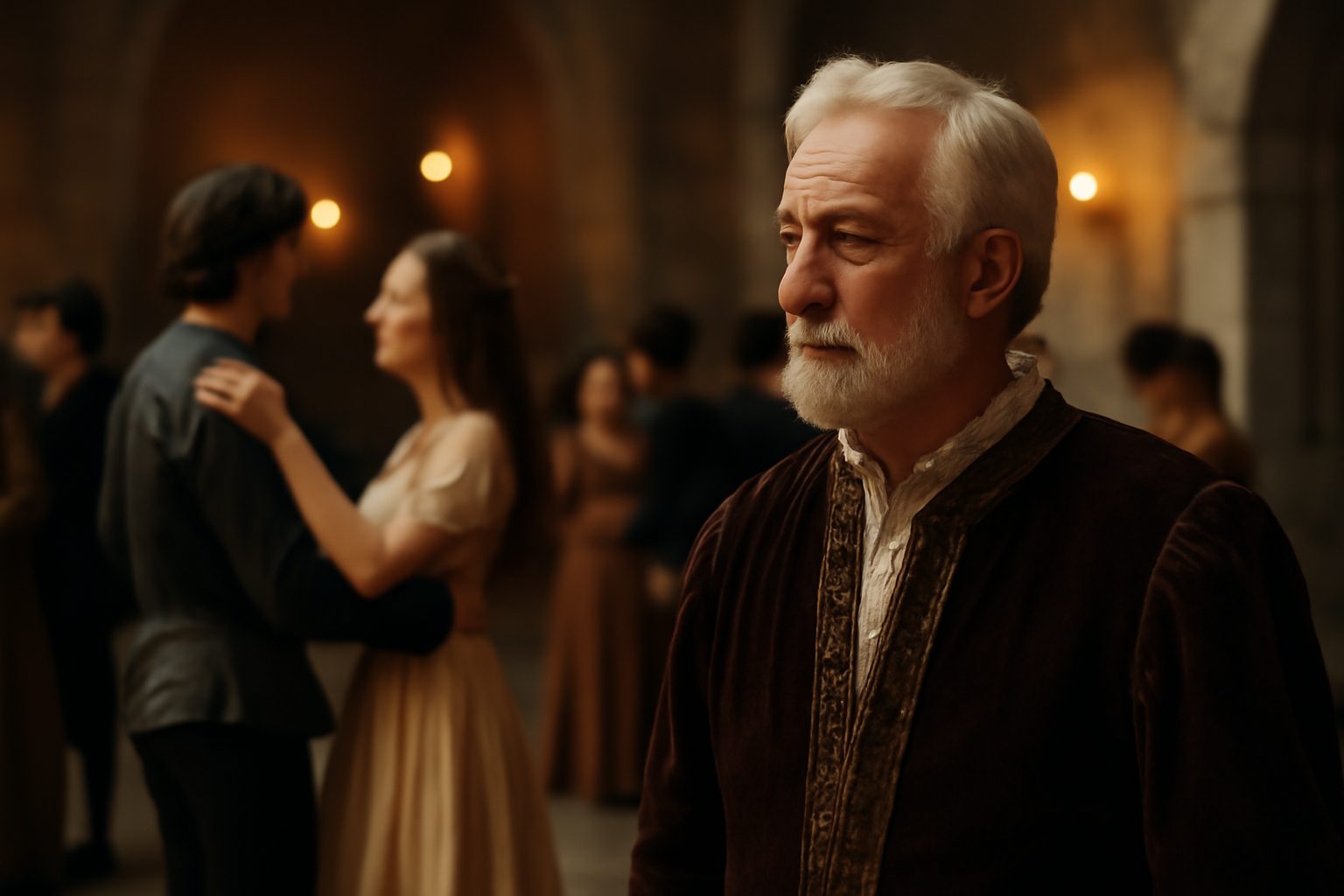
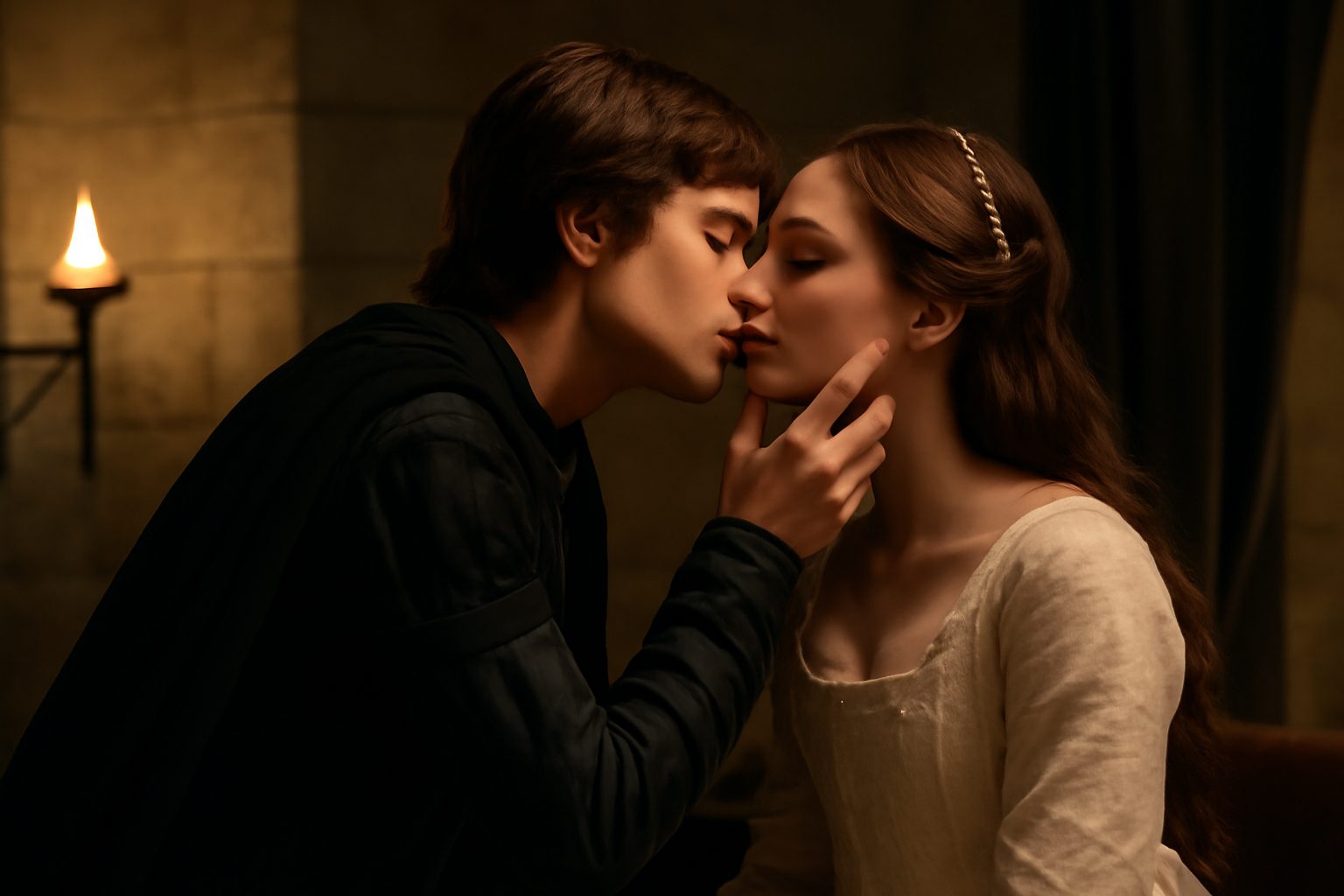
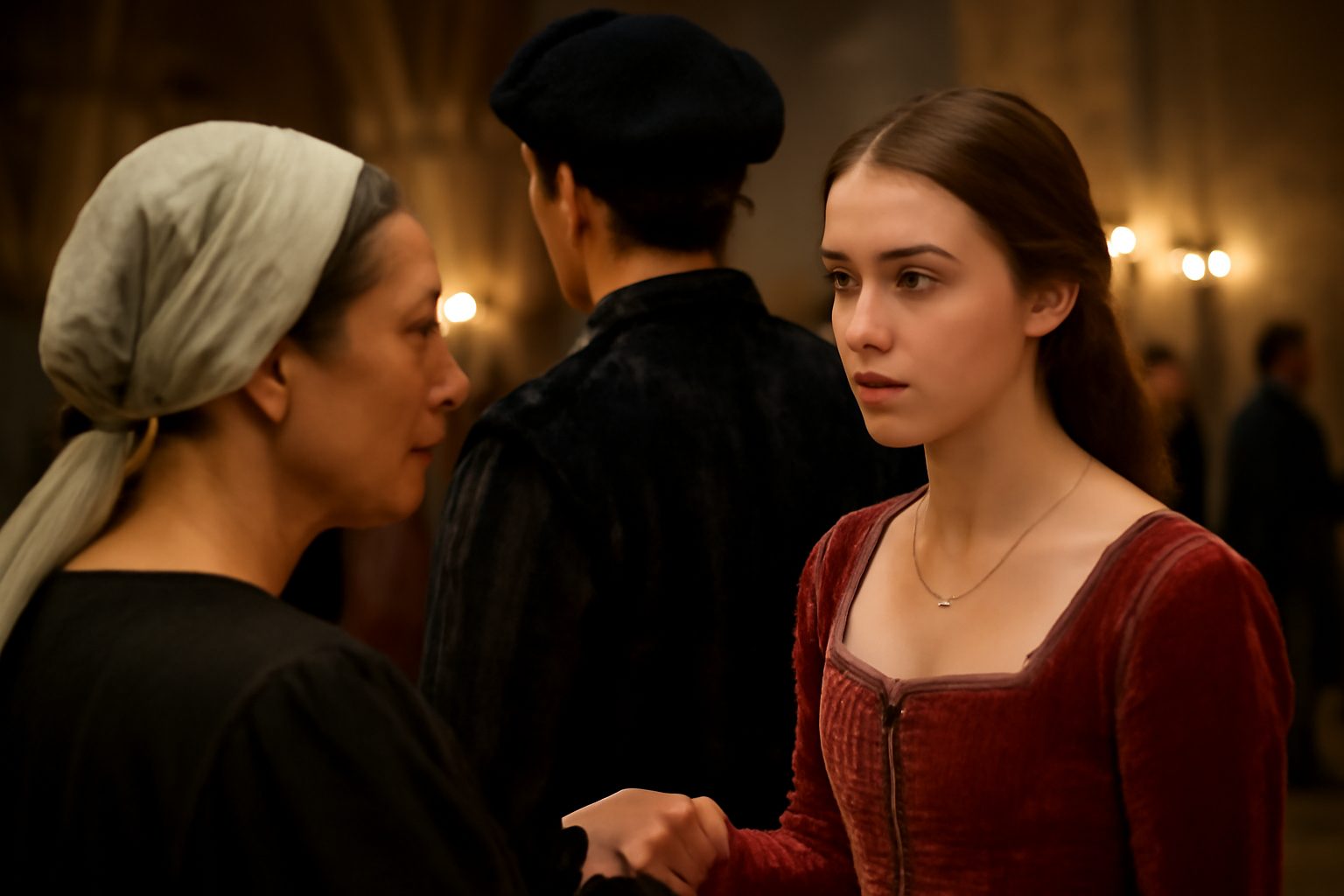
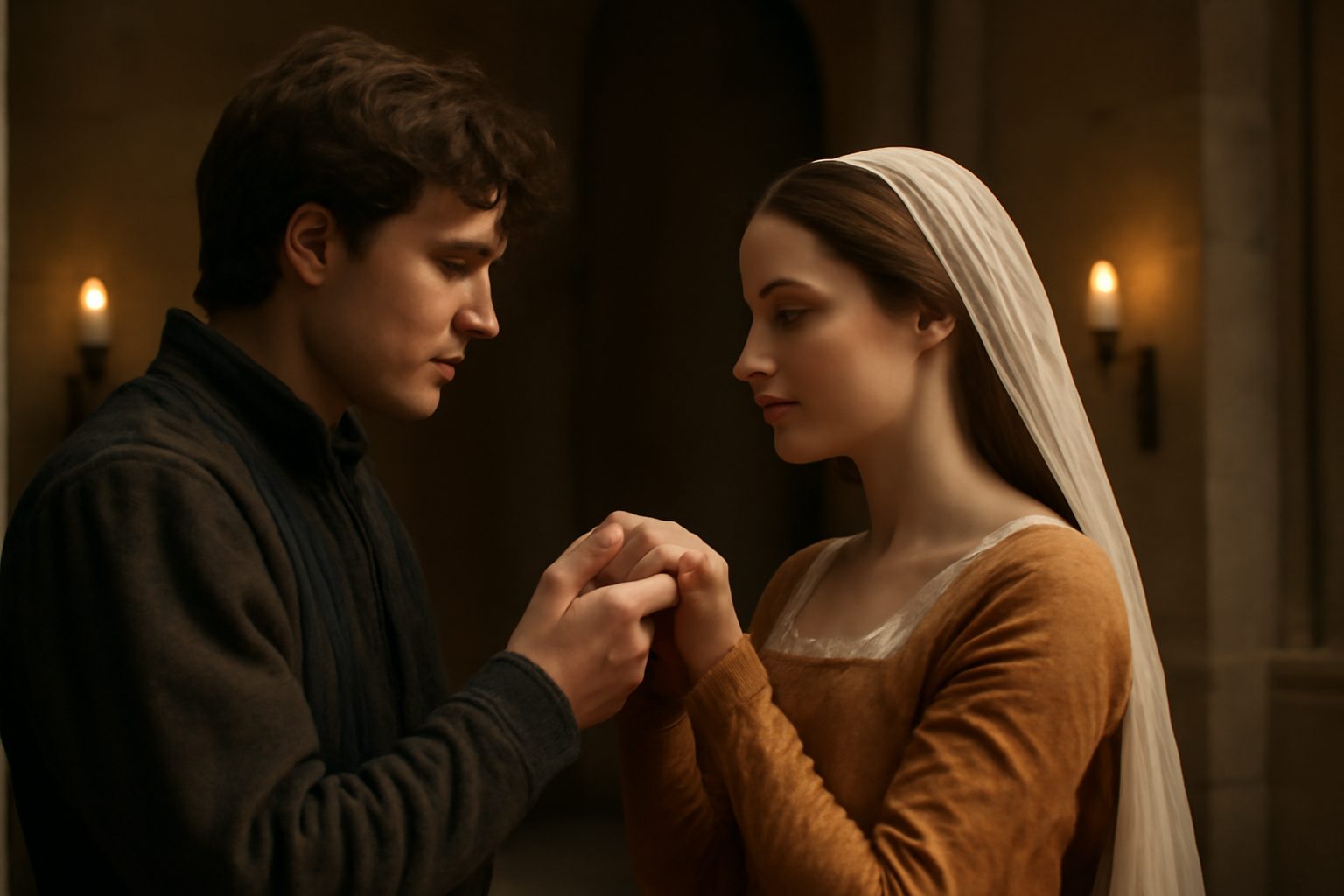
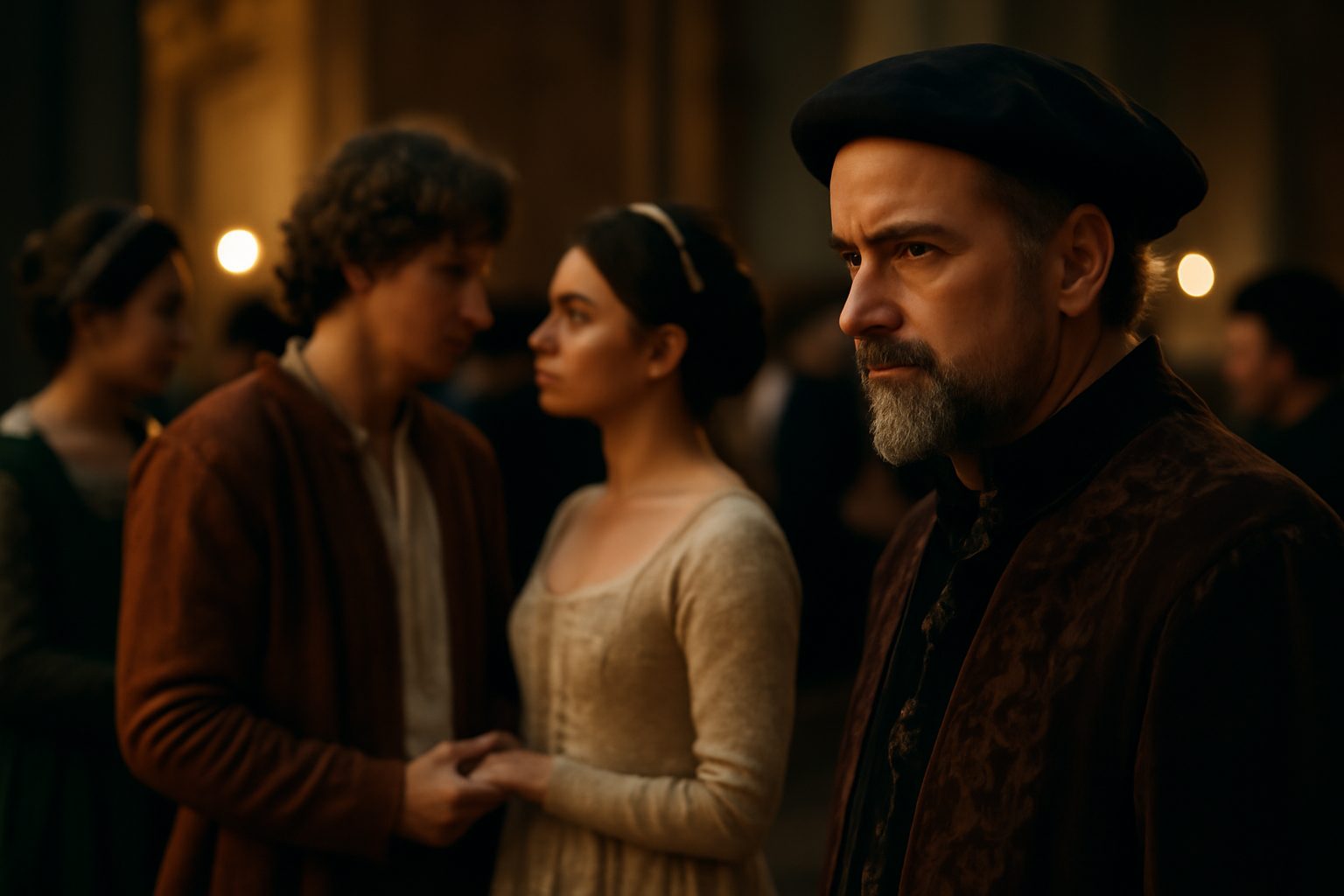
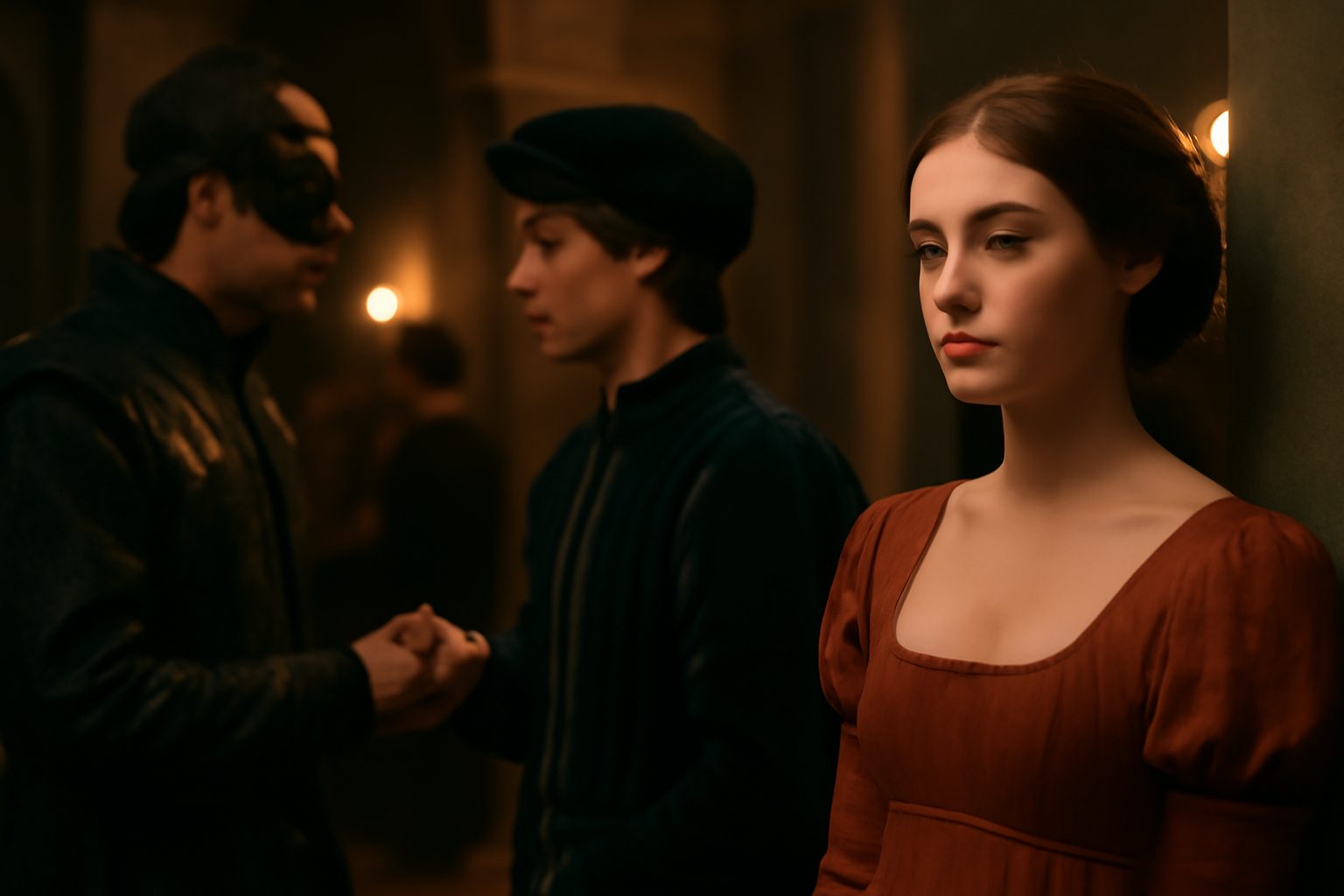
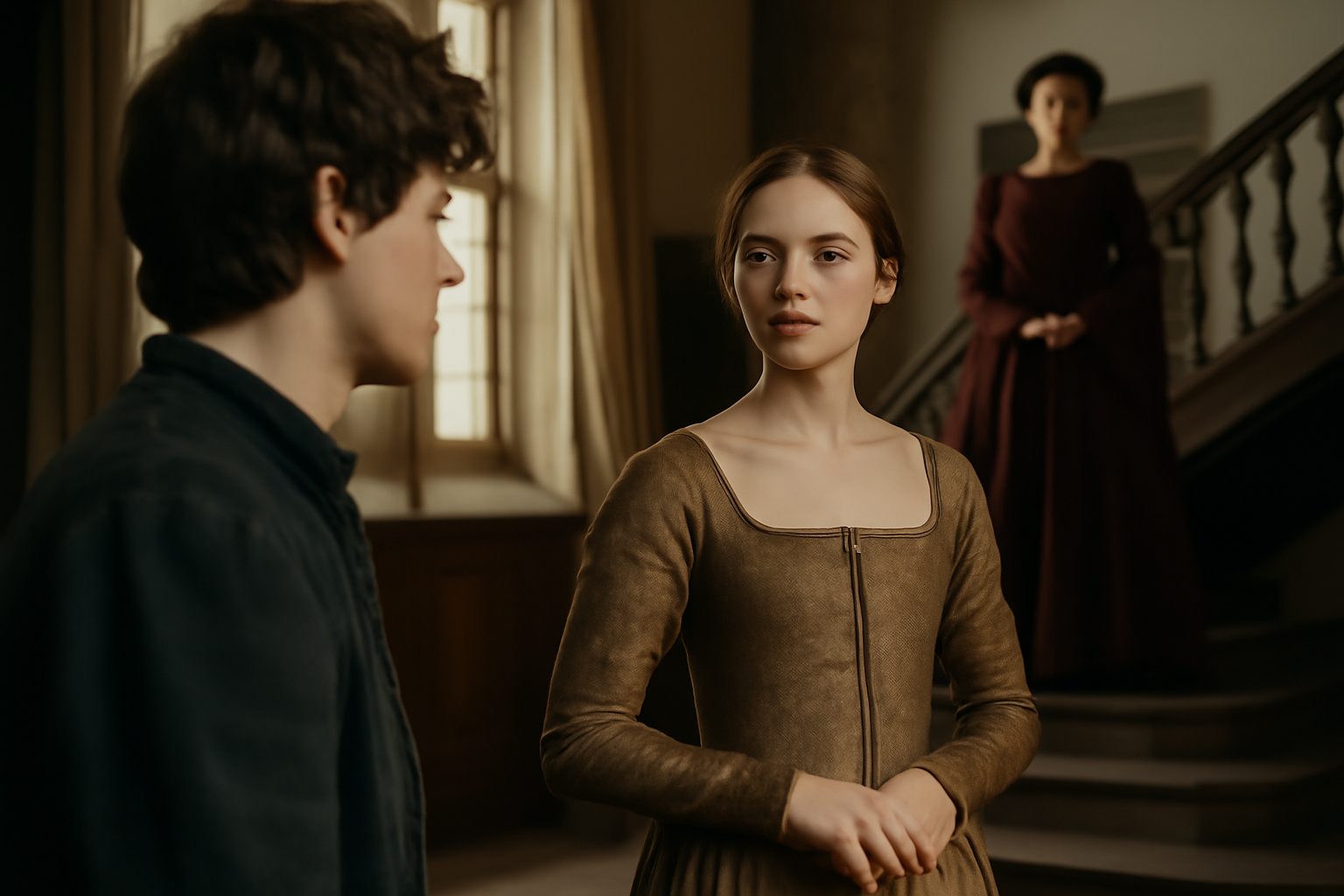
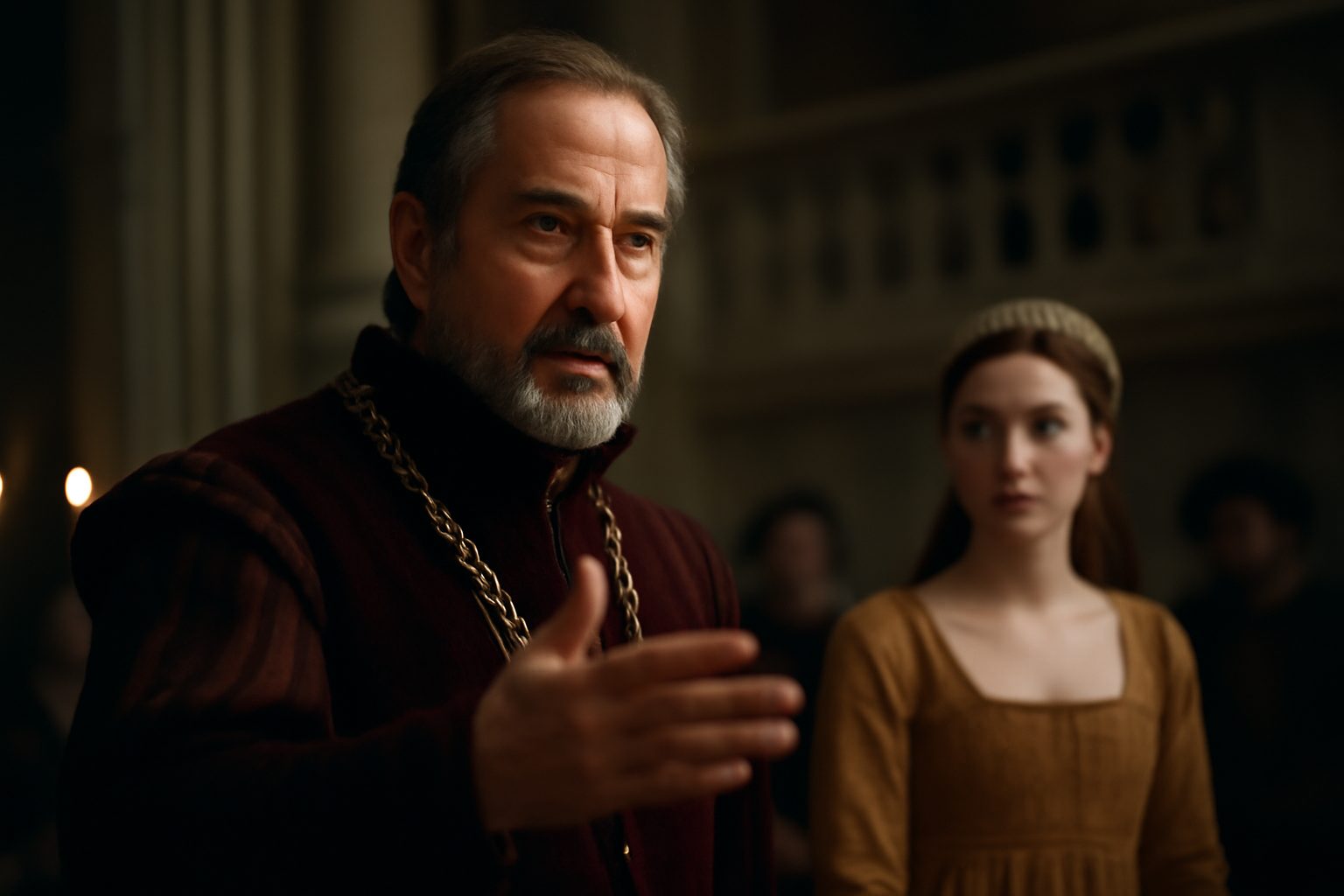
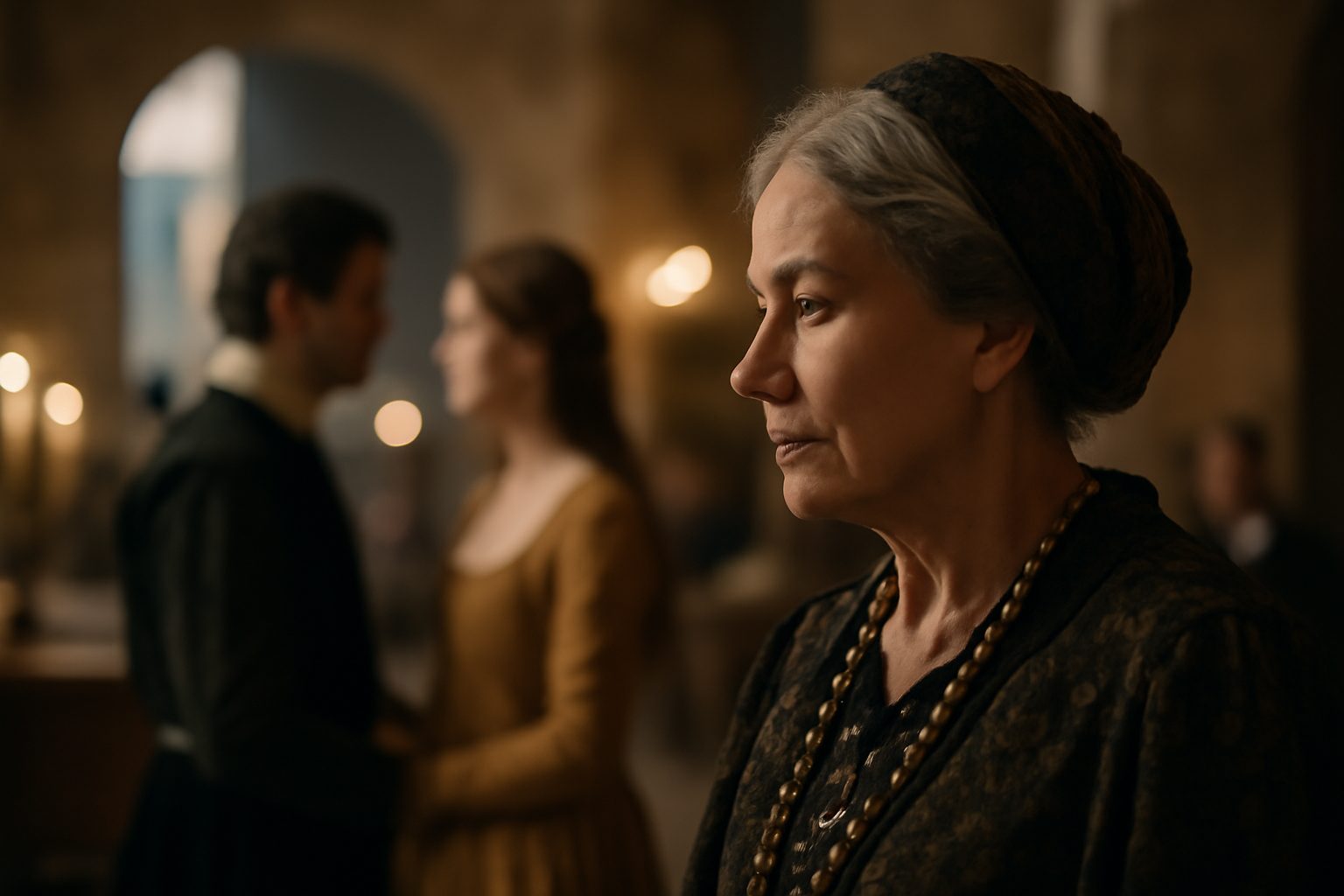
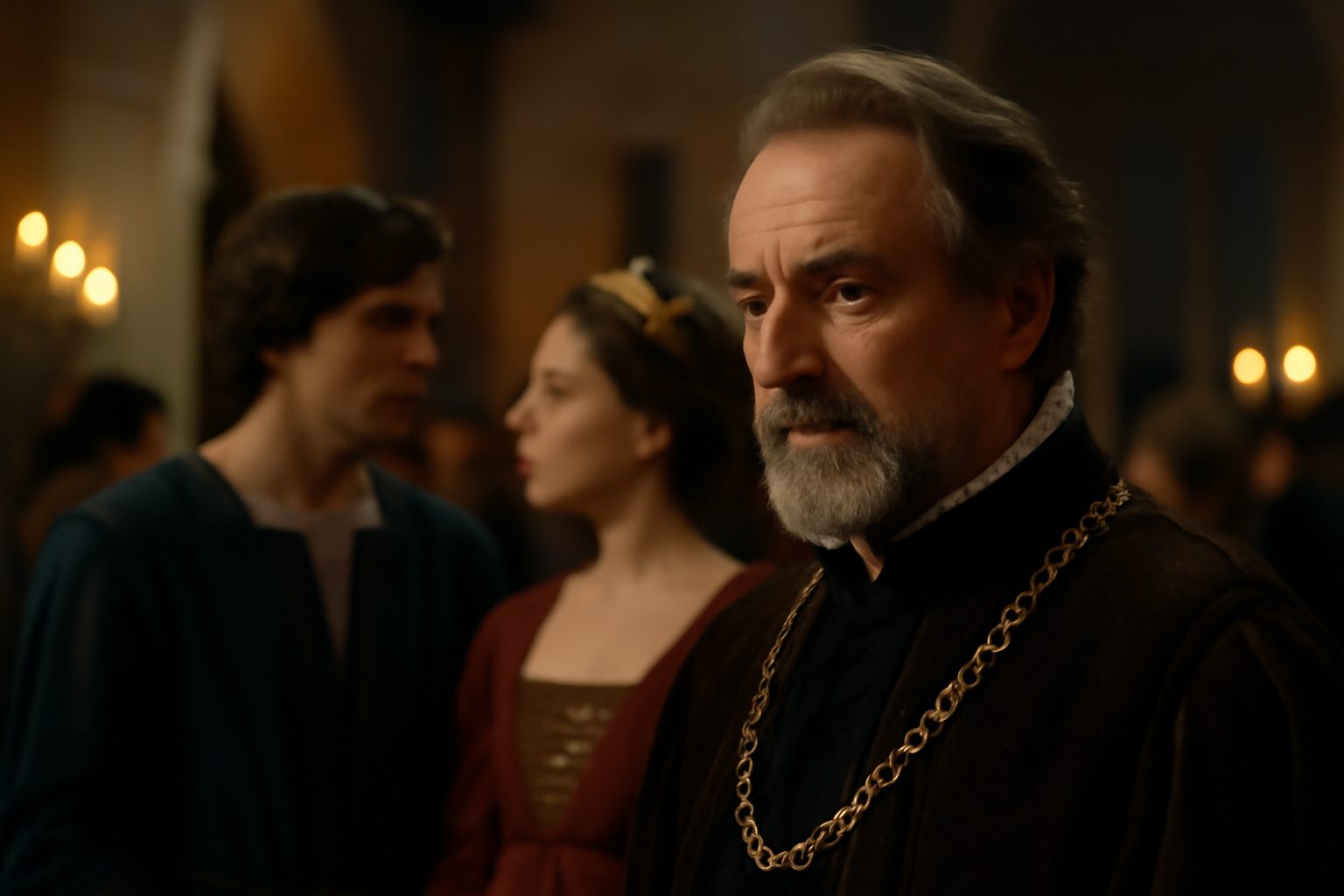
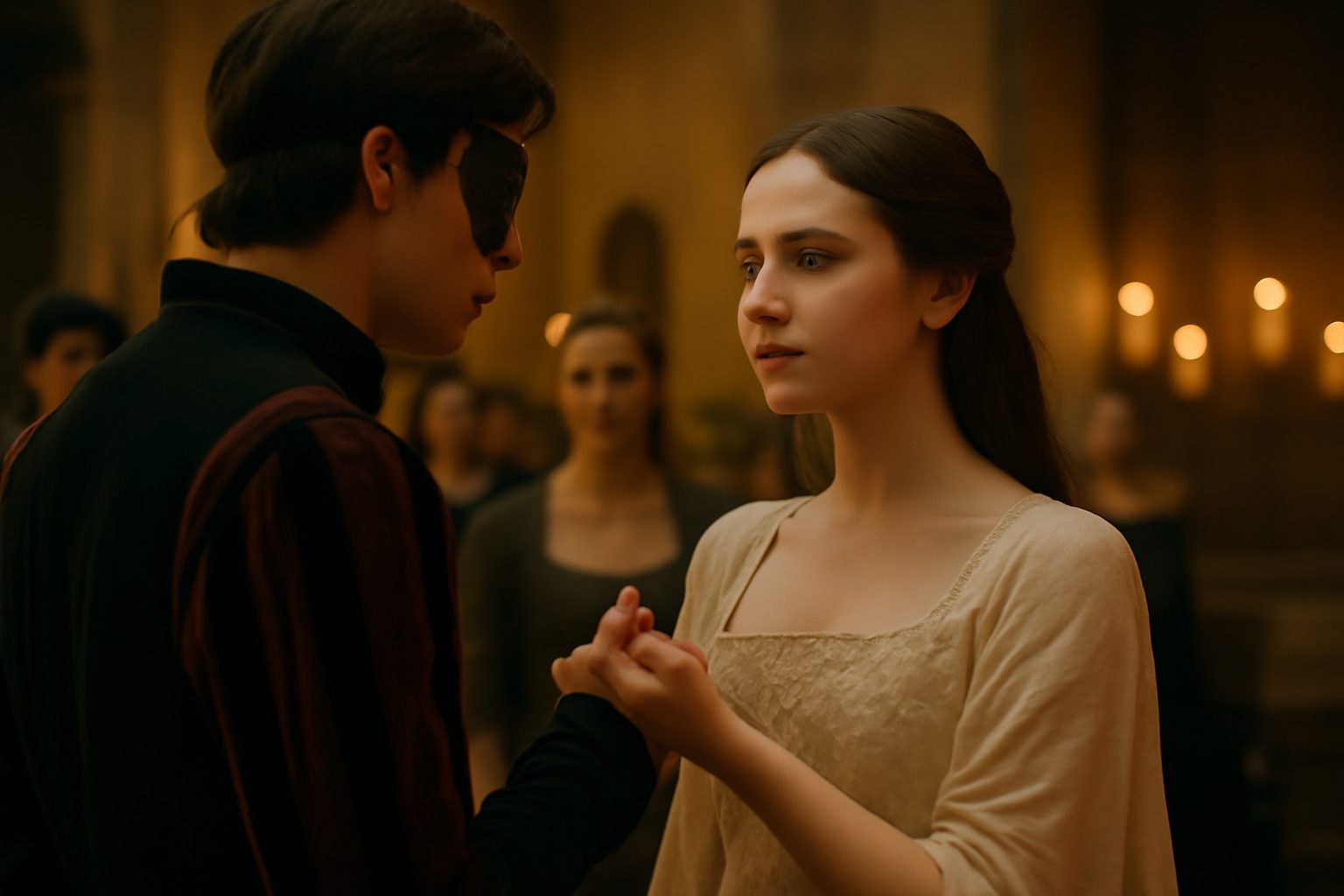
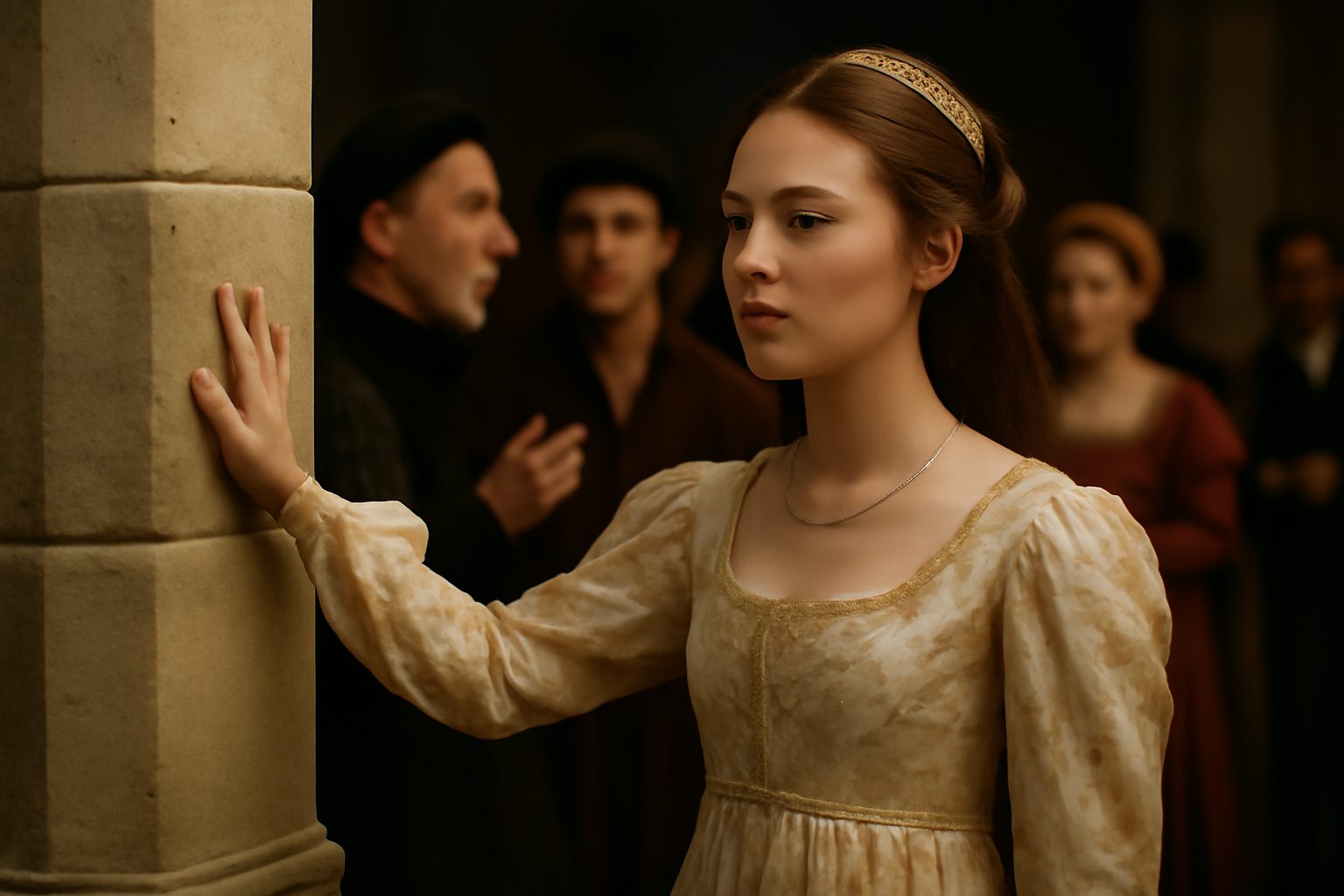
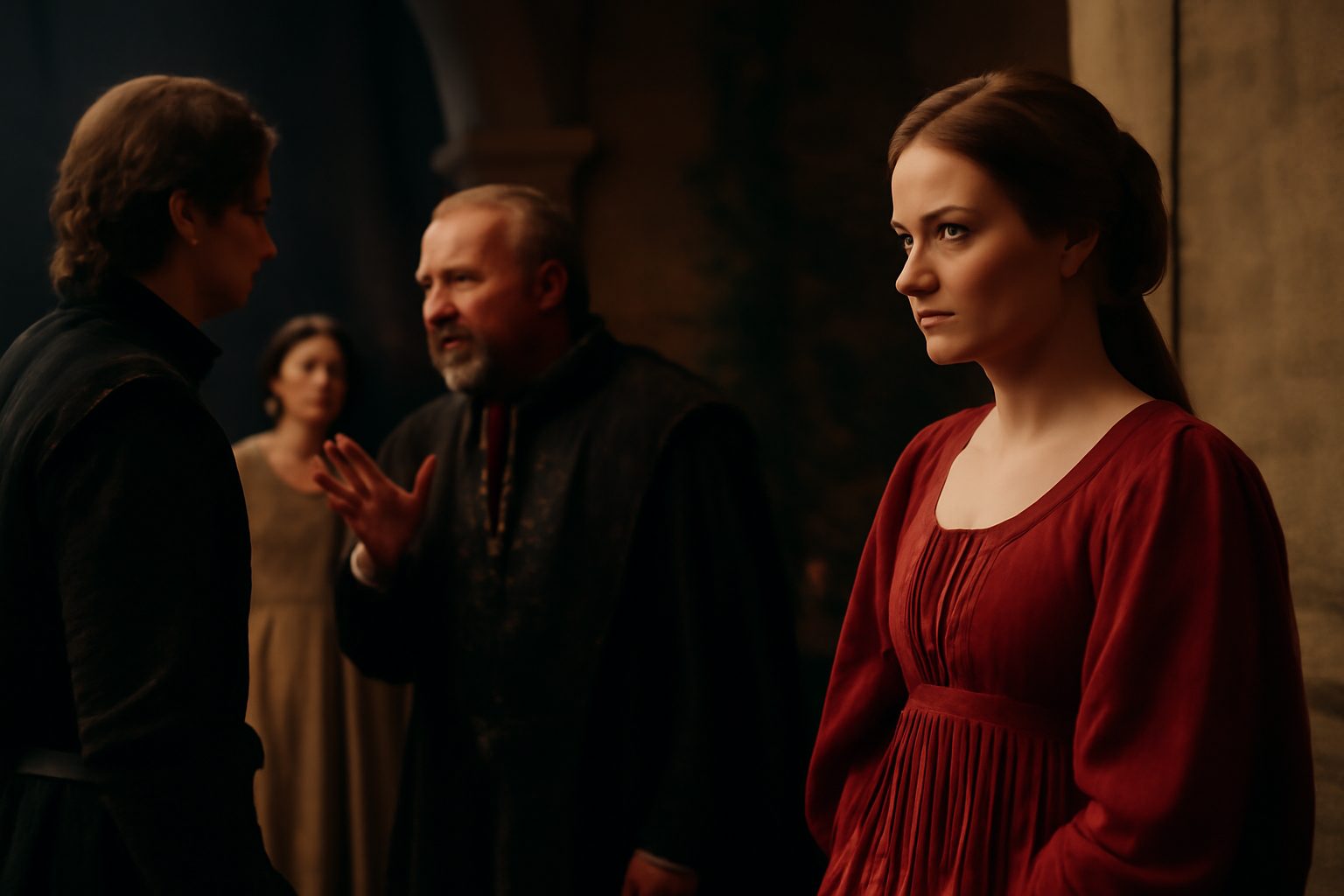
This line is spoken by Lord Capulet near the end of the lively masquerade ball in Act 1, Scene 5. After the festivities begin to wind down, he calls for more light and signals for his guests to depart, unaware that Romeo and Juliet have just met and fallen in love. The moment contrasts the public merriment with the private intensity of the young lovers' first encounter.
Capulet: "More torches here! Come on then, let's to bed."
In modern day english, we would say:
Bring more lights! After this, it's time for everyone to go to bed.
Frequently Asked Questions
What does Capulet ask for at the end of the party in Act 1 Scene 5?
He asks for more torches and suggests everyone should go to bed.
Connections to other verses:
Connections to "More torches here! Come on then, let's to bed."
This line, spoken by Capulet, serves as a closing remark to the scene, signaling the end of the festivities. It connects thematically and structurally to several other verses in Act 1, Scene 5.
Links to Preparatory and Concluding Lines
The call for "More torches here!" echoes earlier instructions for lighting and preparation, such as "More light, you knaves; and turn the tables up", which also emphasizes the need for illumination and order as the event winds down. Similarly, the phrase "let's to bed" aligns with Capulet's earlier remark, "Ah, sirrah, by my fay, it waxes late", acknowledging the late hour and the need to conclude the evening.
Contrast with Urgency and Conflict
This calm, dismissive tone starkly contrasts with the tension earlier in the scene, such as Tybalt's aggressive lines, "Fetch me my rapier, boy. What dares the slave" and Capulet's own attempts to maintain peace with "Therefore be patient, take no note of him". The shift to this closing line underscores the resolution of immediate conflict, albeit temporarily.
Connection to Romantic Developments
While Capulet calls for retirement, this moment follows the pivotal exchange between Romeo and Juliet, including "[To JULIET] If I profane with my unworthiest hand" and Juliet's sorrowful realization in "My only love sprung from my only hate!". The contrast between the public conclusion of the feast and the private turmoil of the lovers heightens the dramatic irony.
Reflection of Capulet's Authority
This line reaffirms Capulet's role as host and patriarch, consistent with his earlier assertions of control, such as "Am I the master here, or you? go to.". It demonstrates his desire to end the event on his terms, despite the underlying discord.