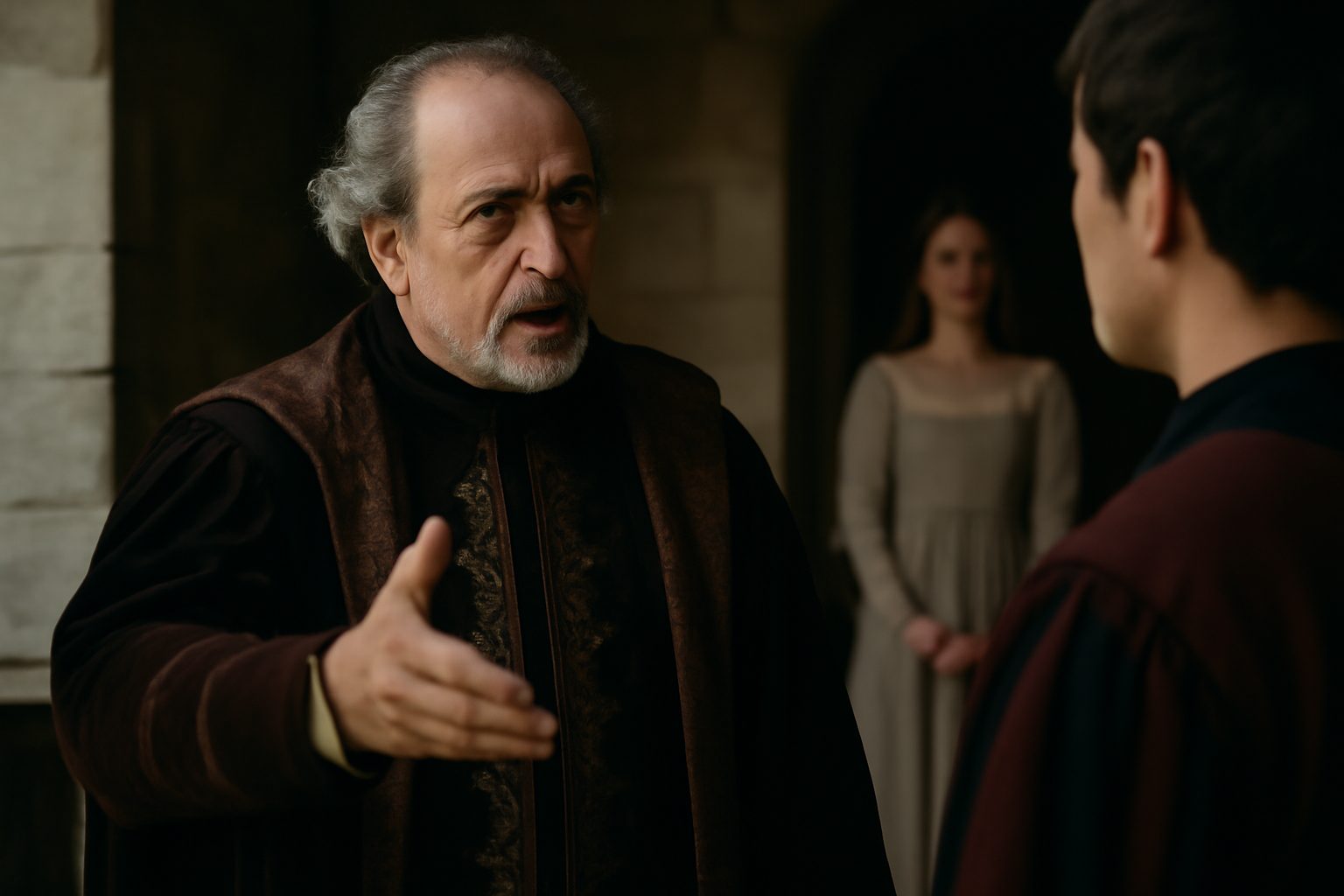
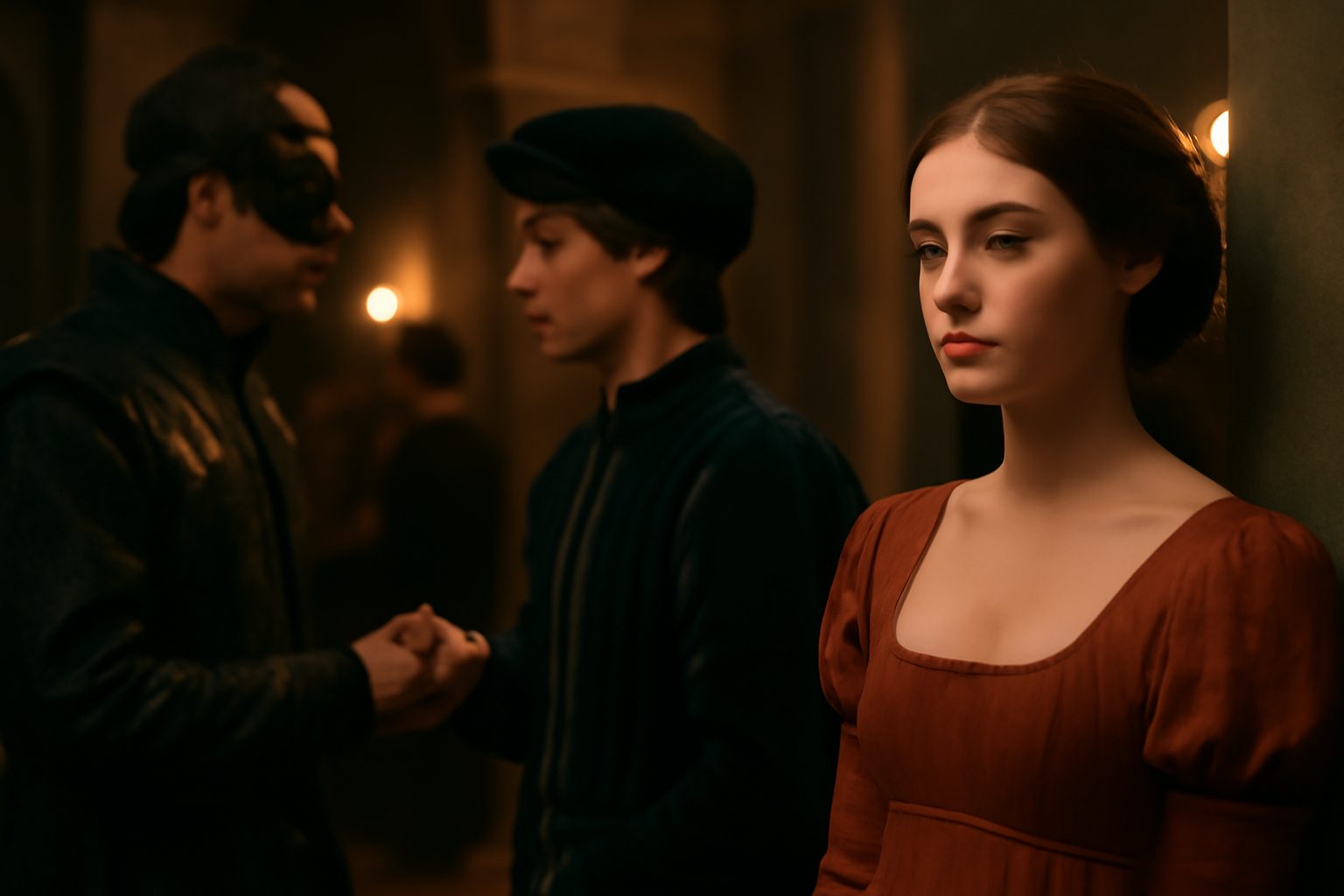
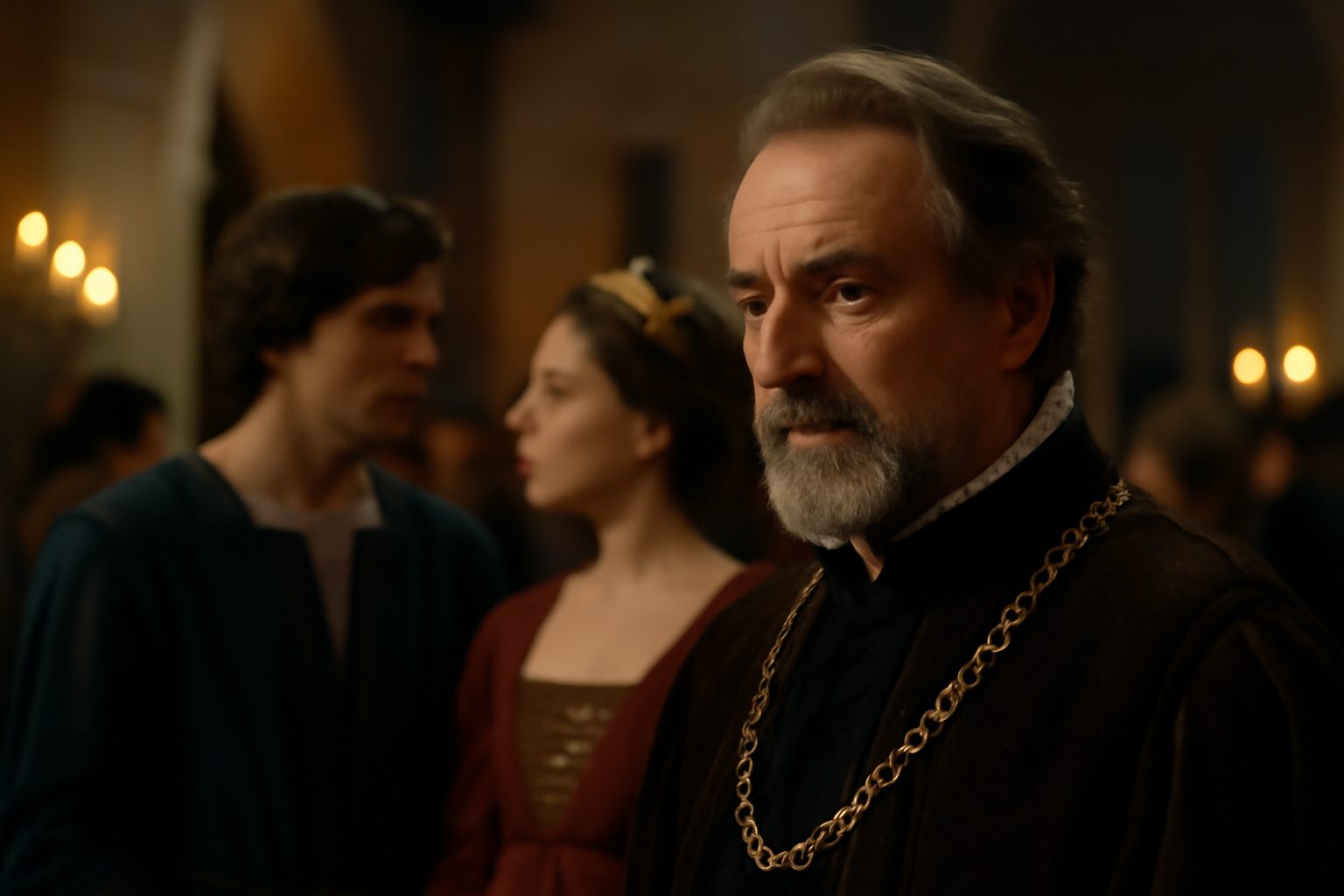
In Act 1, Scene 5 of Romeo and Juliet, Tybalt recognizes Romeo at the Capulet feast and reacts with anger. This line is spoken when Tybalt spots the masked Romeo, a Montague, intruding on the Capulet gathering. His outrage sets the stage for the escalating conflict between the two families.
Tybalt: "Tis he, that villain Romeo."
In modern day english, we would say:
That’s him—that scoundrel Romeo.
Frequently Asked Questions
Who is Tybalt calling a villain in this scene?
Romeo
Connections to other verses:
Connections to "Tis he, that villain Romeo."
The verse "Tis he, that villain Romeo." is spoken by Tybalt upon recognizing Romeo at the Capulet feast. It marks a critical turning point in the scene, introducing conflict and foreshadowing future tragedy.
Direct Identification and Anger
Tybalt's exclamation is immediately preceded by his suspicion, "This, by his voice, should be a Montague.", showing his quick deduction. His rage escalates as he commands, "Fetch me my rapier, boy. What dares the slave", and he vows, "To strike him dead, I hold it not a sin.", emphasizing his lethal intent.
Capulet's Intervention
Capulet's response contrasts sharply; he insists, "He shall be endured:" and urges Tybalt, "Therefore be patient, take no note of him:". This tension peaks when Capulet asserts his authority, "Am I the master here, or you? go to.", quelling the immediate threat but deepening familial strife.
Romeo's Unawareness and Irony
Unaware of the danger, Romeo is simultaneously enchanted by Juliet, marveling, "For I ne'er saw true beauty till this night.". Their poetic exchange, beginning with "[To JULIET] If I profane with my unworthiest hand", starkly contrasts Tybalt's hostility, heightening dramatic irony.
Foreshadowing and Aftermath
Tybalt's unresolved fury is clear as he exits, warning, "I will withdraw: but this intrusion shall / Now seeming sweet convert to bitter gall.", prophesying future conflict. Juliet's later discovery, "His name is Romeo, and a Montague;", leads to her lament, "My only love sprung from my only hate!", tying the villain label to the play's central tragedy.