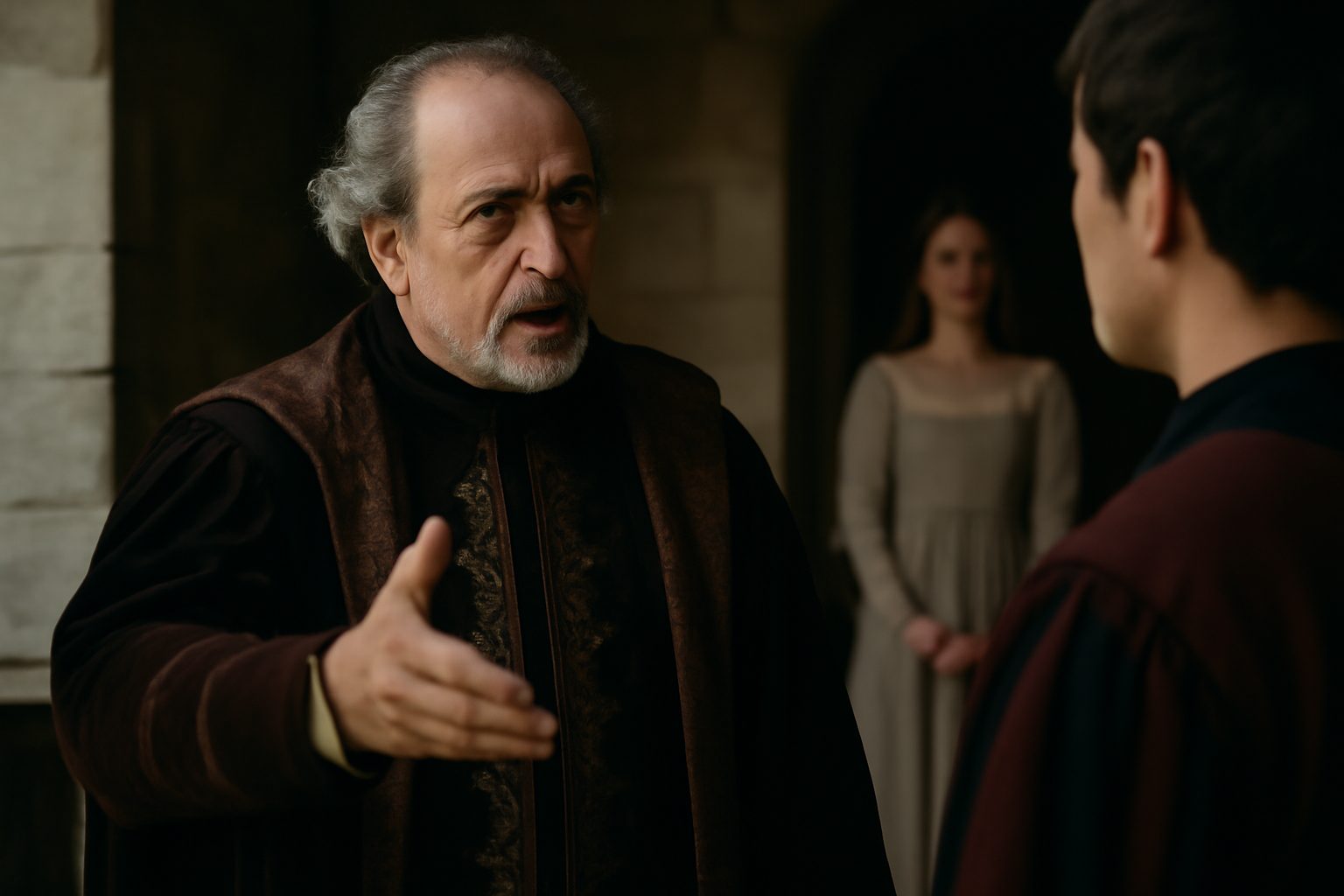
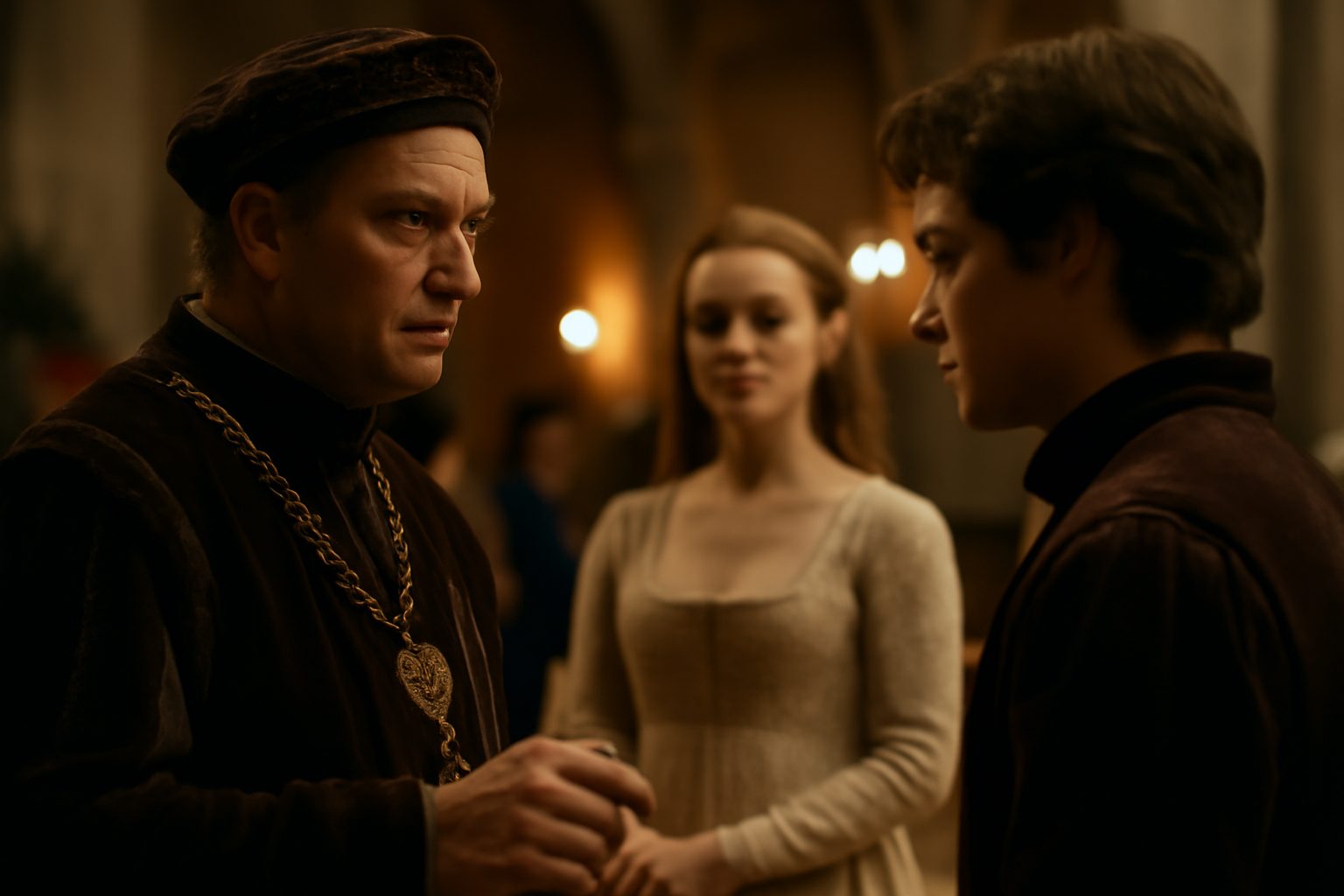
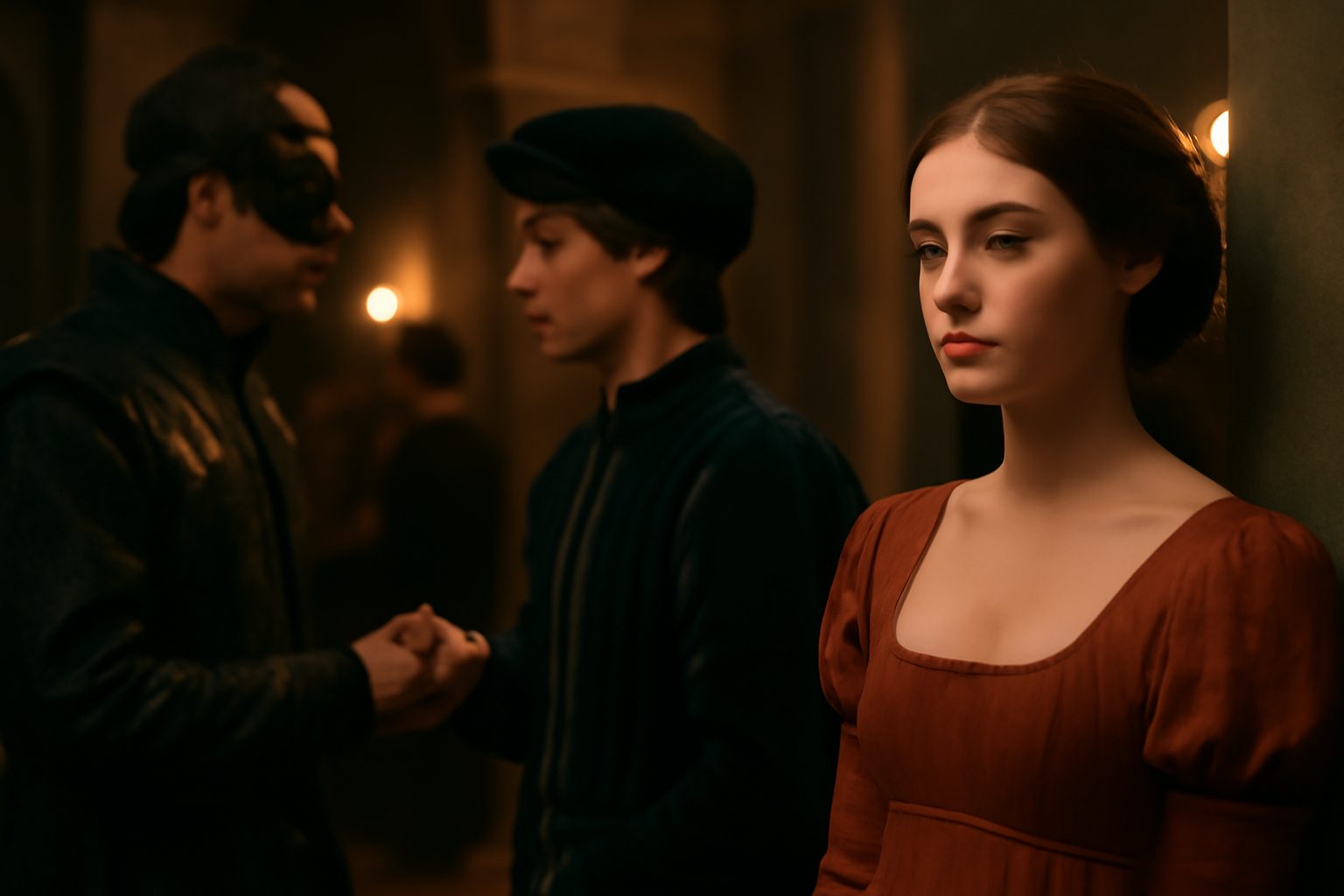
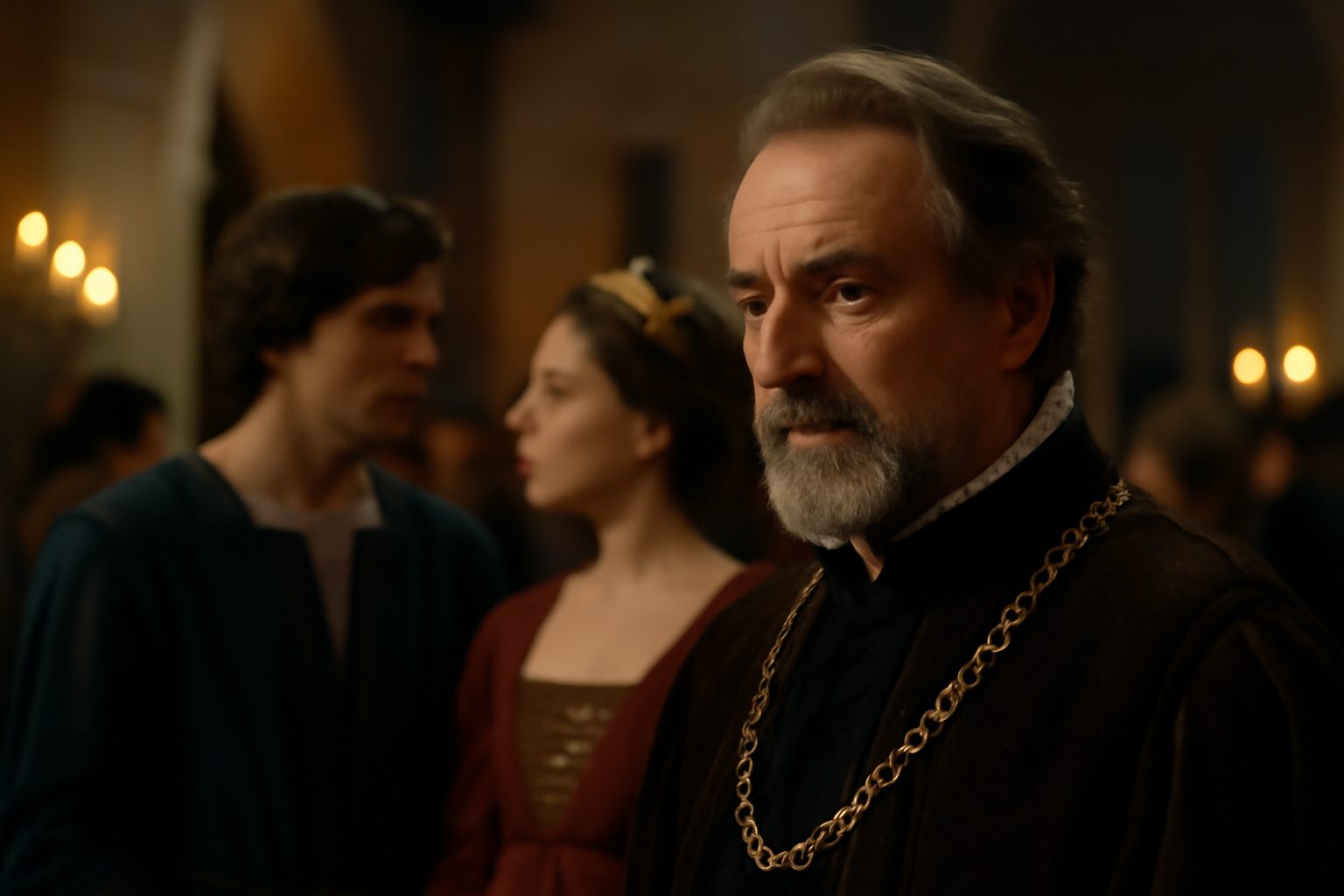
In Act 1, Scene 5 of Romeo and Juliet, Capulet hosts a grand feast where Romeo first sees Juliet. As Tybalt recognizes Romeo as a Montague and demands action, Capulet rebukes him, insisting that Romeo is welcome. This line is part of Capulet's firm command, asserting his authority and dismissing Tybalt's objections.
Capulet: "It is my will, the which if thou respect,"
In modern day english, we would say:
This is what I want, and if you care about me, you’ll honor it.
Frequently Asked Questions
What does Capulet say about his will in this line?
Capulet says that his will should be respected.
Connections to other verses:
Connections to "It is my will, the which if thou respect"
This line, spoken by Capulet to Tybalt, establishes Capulet's authority and his insistence on maintaining peace at his feast. It connects to several other verses in the scene that highlight themes of authority, conflict, and social order.
Authority and Host Responsibilities
Capulet's assertion of his will is part of his broader role as host. He earlier commands the servants to prepare the hall in Away with the joint-stools, remove the and court-cupboard, look to the plate. Good thou, save, showing his control over the event's proceedings. His declaration Am I the master here, or you? go to reinforces his authority when challenged.
Conflict with Tybalt
The verse is a direct response to Tybalt's aggressive intent toward Romeo. Tybalt identifies Romeo as Tis he, that villain Romeo and wants to To strike him dead, I hold it not a sin. Capulet's command to respect his will is an attempt to quell this animosity, urging Tybalt to Therefore be patient, take no note of him.
Social Grace and Reputation
Capulet is concerned with appearances and respectability, as seen when he tells Tybalt to Show a fair presence and put off these frowns. He values Romeo's positive reputation, noting And, to say truth, Verona brags of him and that he is To be a virtuous and well-govern'd youth.
Contrast with Other Interactions
While Capulet demands respect for his will regarding Tybalt's behavior, he is gracious to other guests, such as when he says You are welcome, gentlemen! come, musicians, play. This juxtaposition highlights his dual role as both a strict patriarch and a generous host.