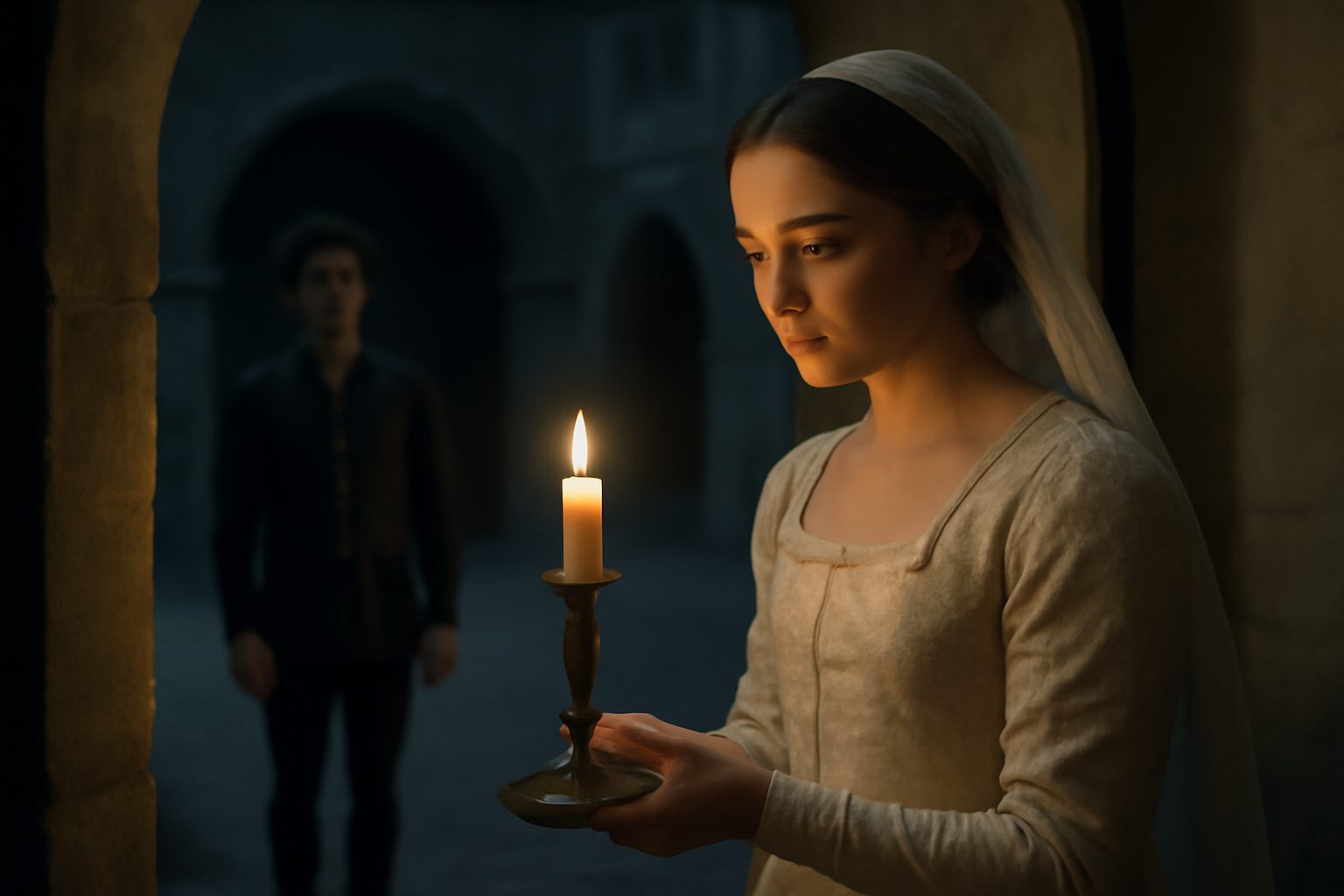
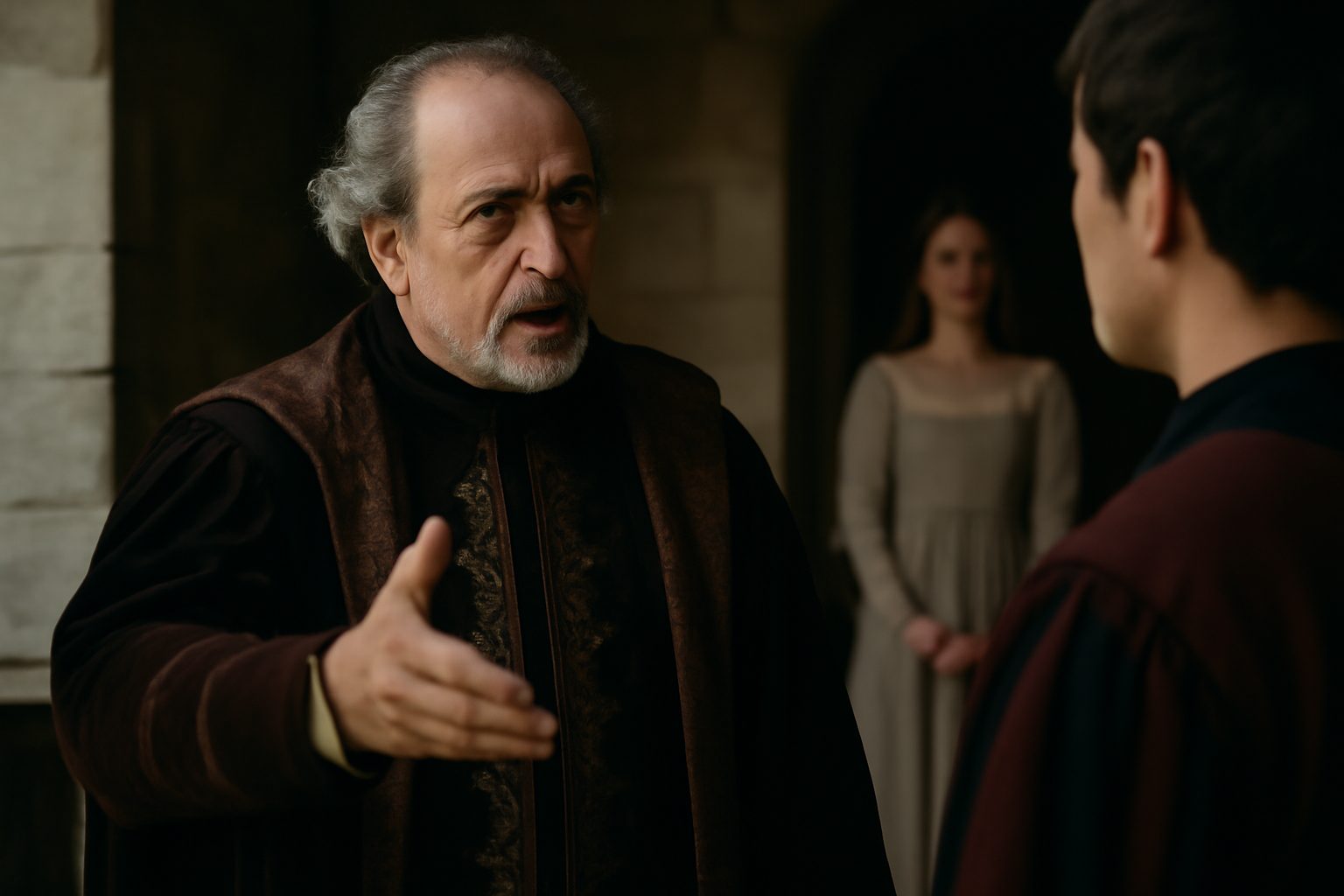
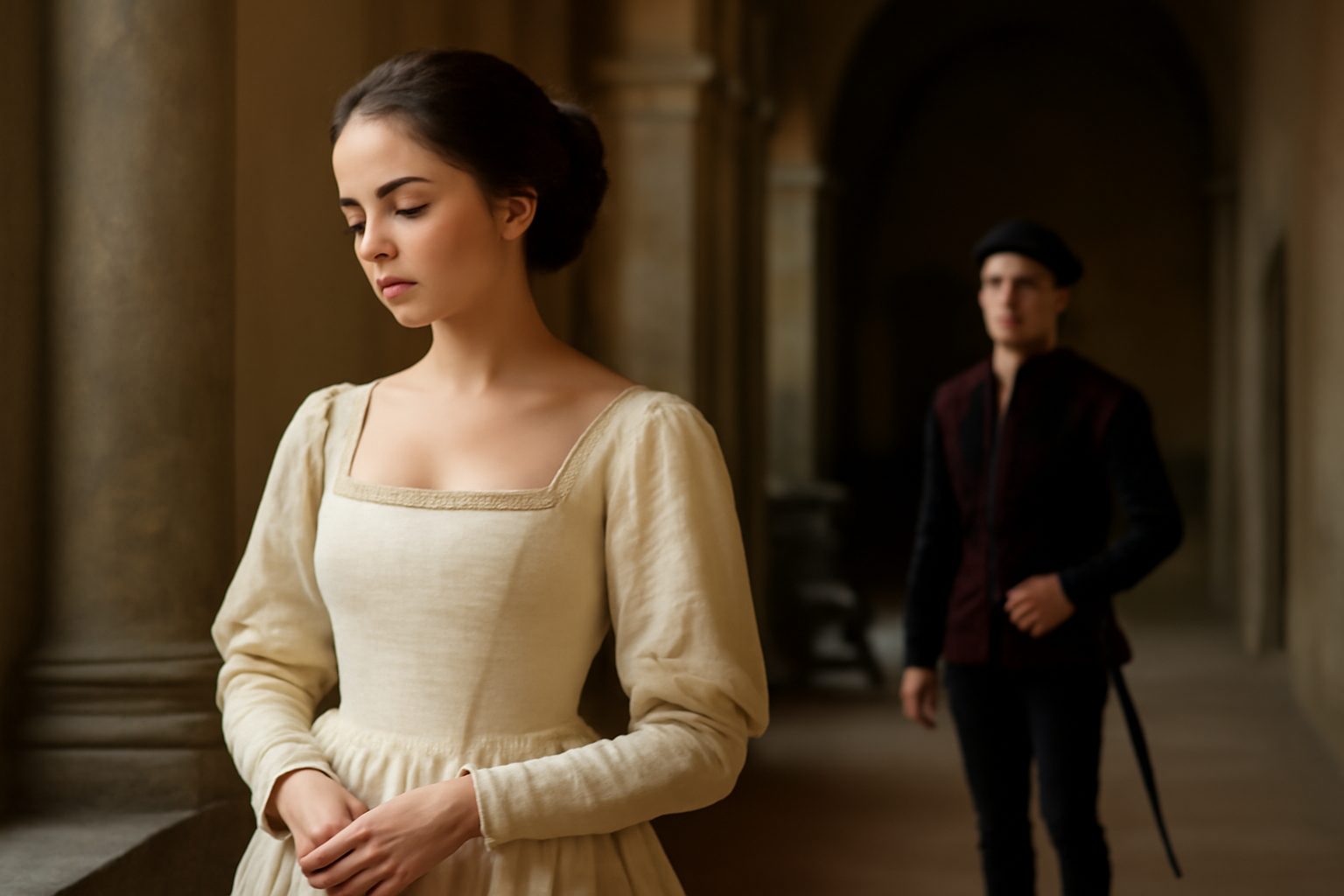
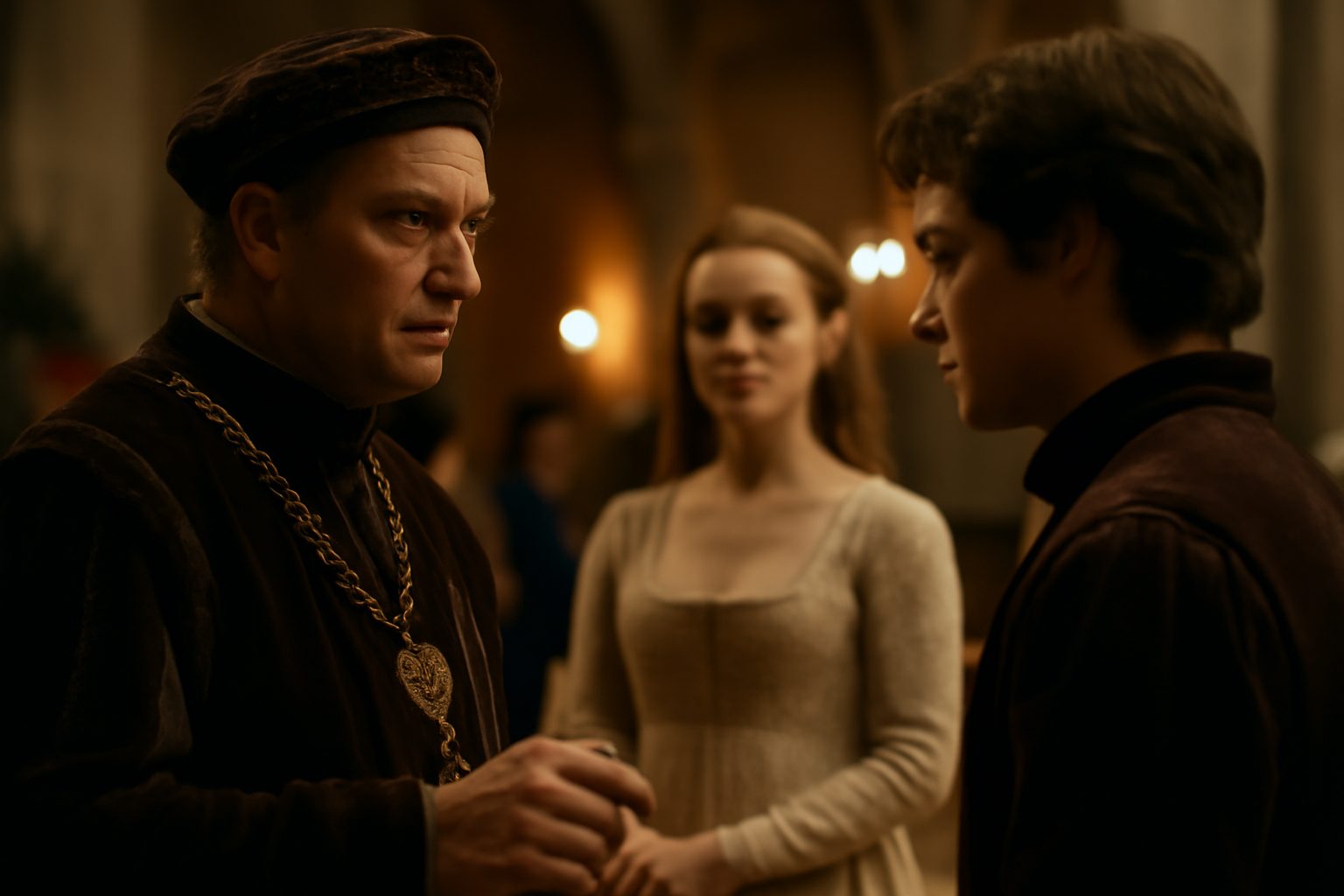
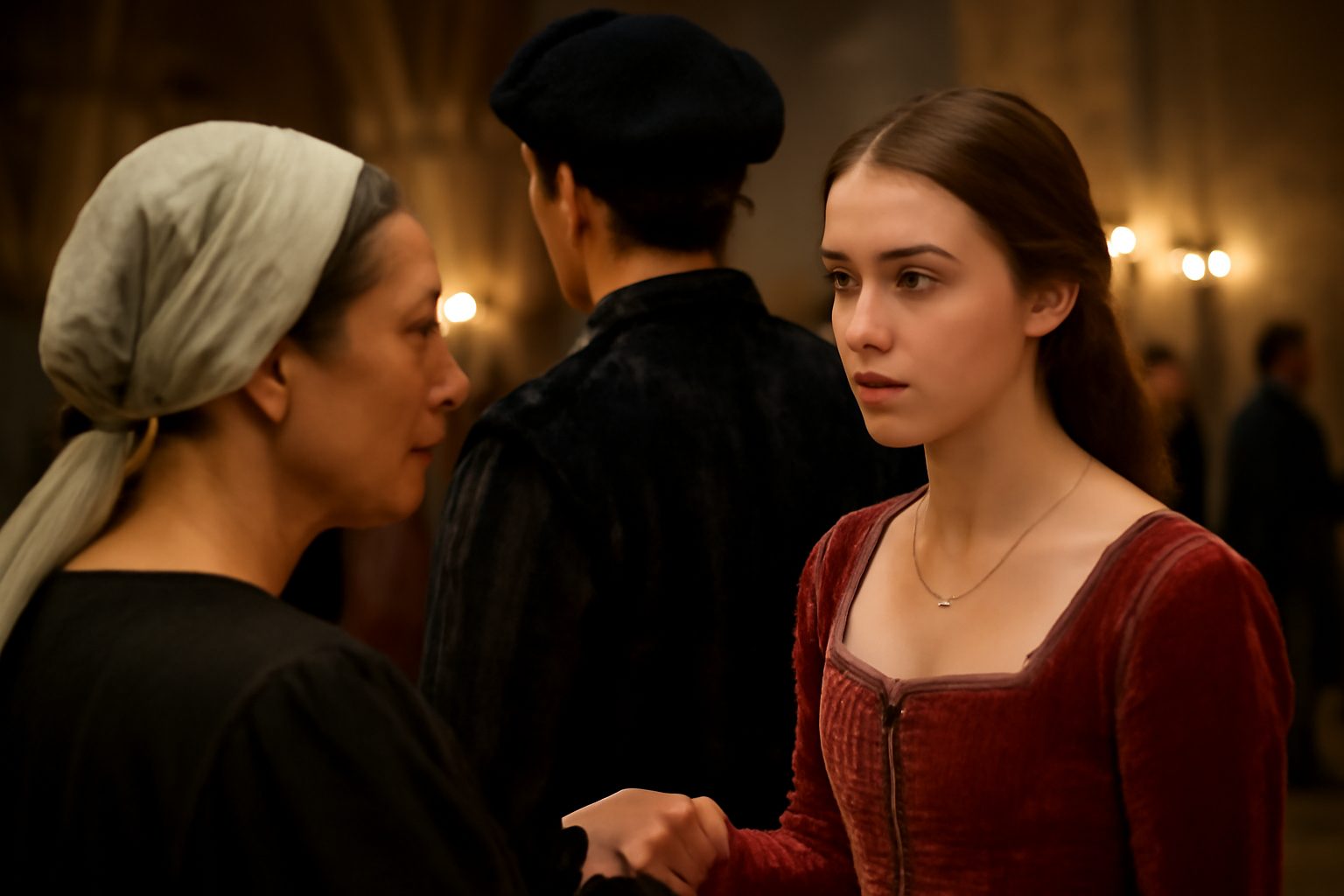
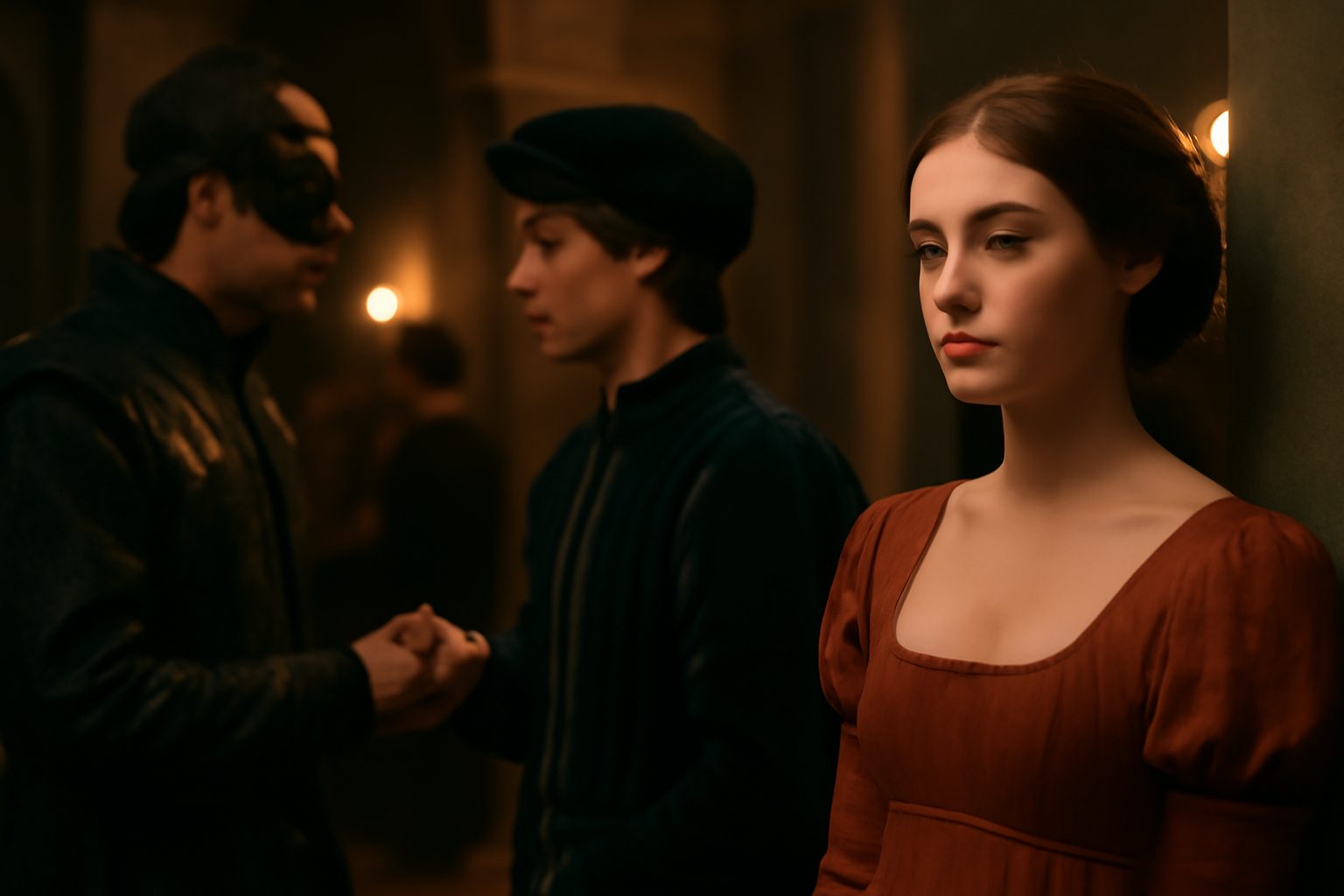
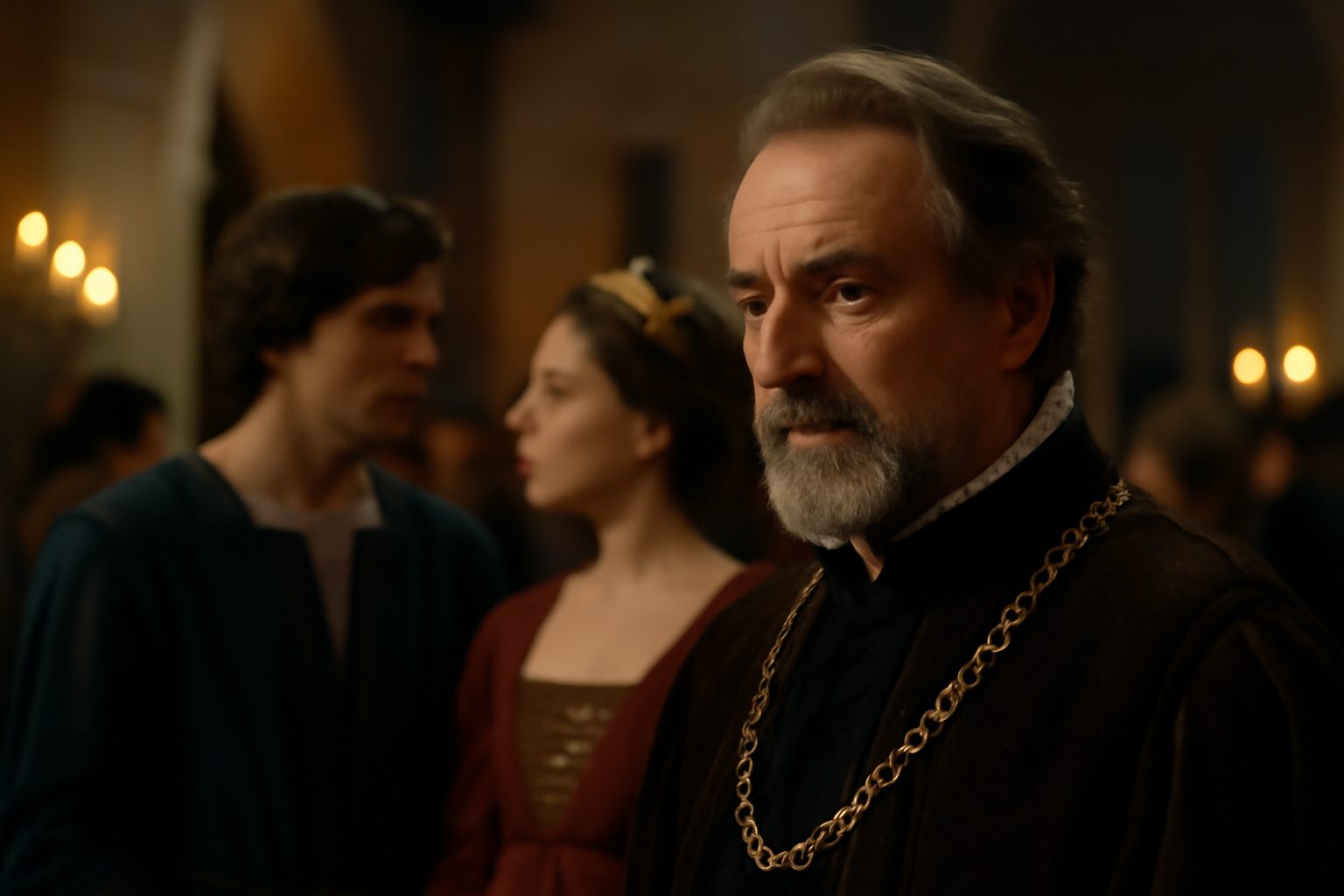
In Act 1, Scene 5 of Romeo and Juliet, the Capulets host a masquerade ball, where Romeo, a Montague, has secretly attended. Tybalt, Juliet's fiery cousin, recognizes Romeo's voice and immediately alerts Lord Capulet, identifying him as their family's enemy. This moment heightens the tension between the feuding houses and foreshadows the conflict to come.
Tybalt: "Uncle, this is a Montague, our foe,"
In modern day english, we would say:
Uncle, this guy is a Montague—one of our enemies.
Frequently Asked Questions
Who is Tybalt talking to in this line?
Tybalt is talking to his uncle, Capulet.
Who does Tybalt recognize in this scene?
Tybalt recognizes Romeo, who is a Montague.
How does Tybalt feel about the Montagues?
Tybalt sees the Montagues as enemies or foes.
Connections to other verses:
Connections to "Uncle, this is a Montague, our foe"
This line, spoken by Tybalt, is a pivotal moment in Act 1, Scene 5, as it directly identifies Romeo as an enemy and sparks the conflict that underlies the scene. It connects to several other verses:
Immediate Recognition and Anger
Tybalt's identification of Romeo is preceded by his suspicion in "This, by his voice, should be a Montague", showing his quick deduction. His rage is further expressed in "Fetch me my rapier, boy. What dares the slave", illustrating his readiness for violence.
Capulet's Intervention and Tension
Capulet's response to Tybalt's anger is evident in "Content thee, gentle coz, let him alone", as he tries to maintain peace. He reinforces his authority in "He shall be endured", directly countering Tybalt's declaration in "I'll not endure him".
Romeo's Unawareness and Love
Contrasting Tybalt's hostility, Romeo is oblivious to the danger, focused instead on Juliet, as seen in "Did my heart love till now? forswear it, sight!". His admiration is clear in "O, she doth teach the torches to burn bright!".
Foreshadowing and Irony
The line foreshadows the central conflict, echoed later when Juliet discovers Romeo's identity in "His name is Romeo, and a Montague" and laments in "My only love sprung from my only hate!".
Social Context and Hostility
Tybalt's view of Romeo as a villain is emphasized in "Tis he, that villain Romeo" and "A villain that is hither come in spite", highlighting the deep-seated animosity between the families.