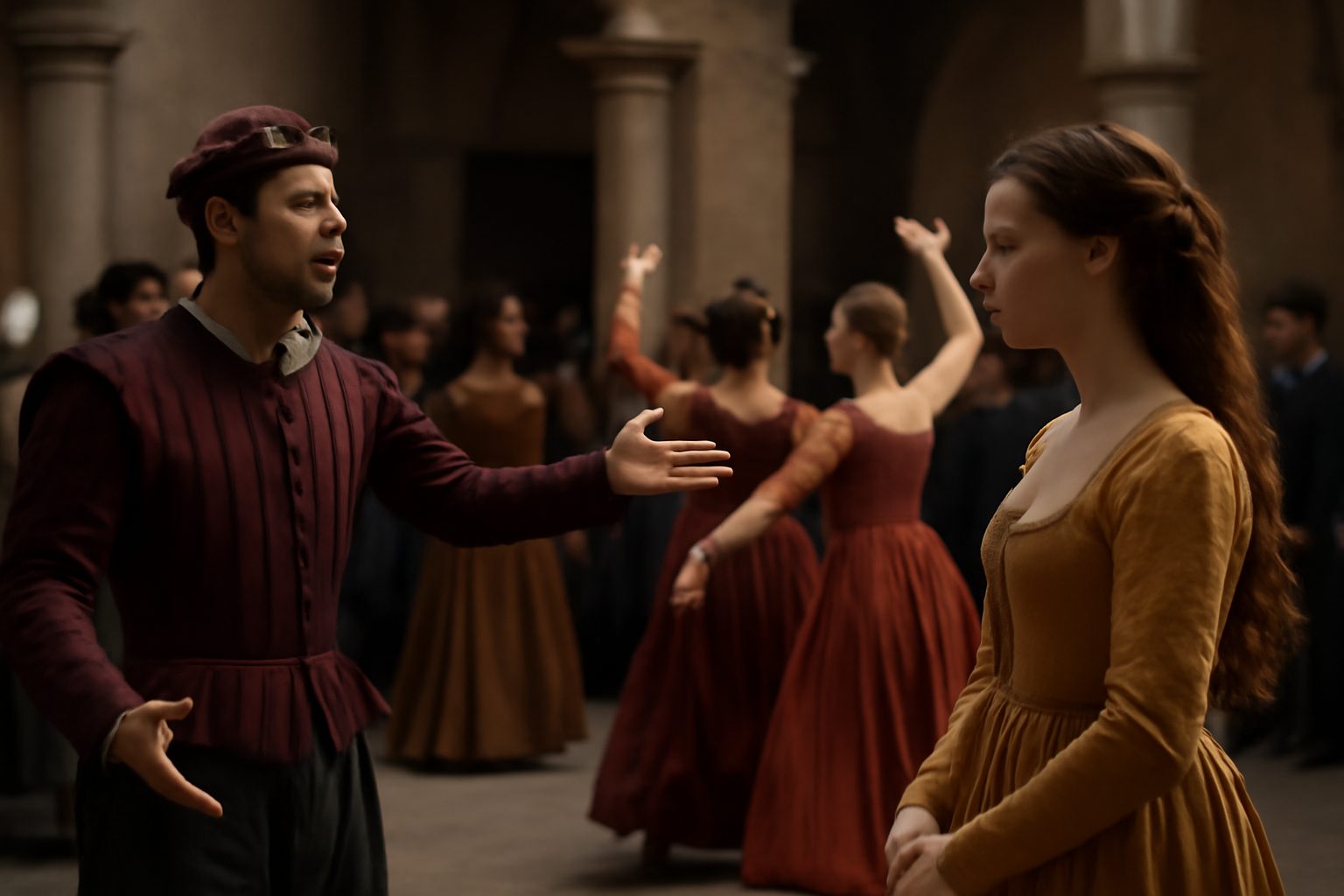
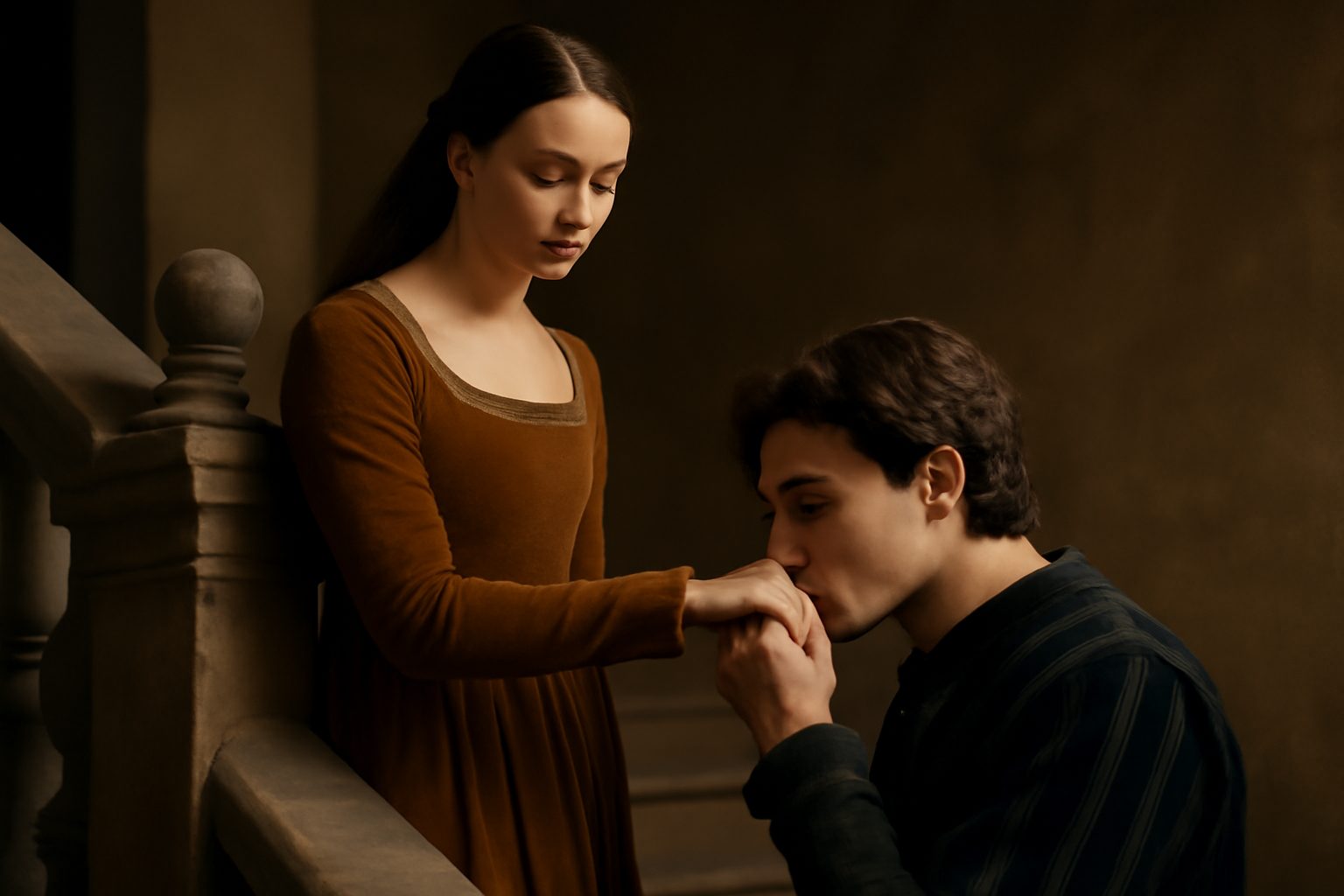
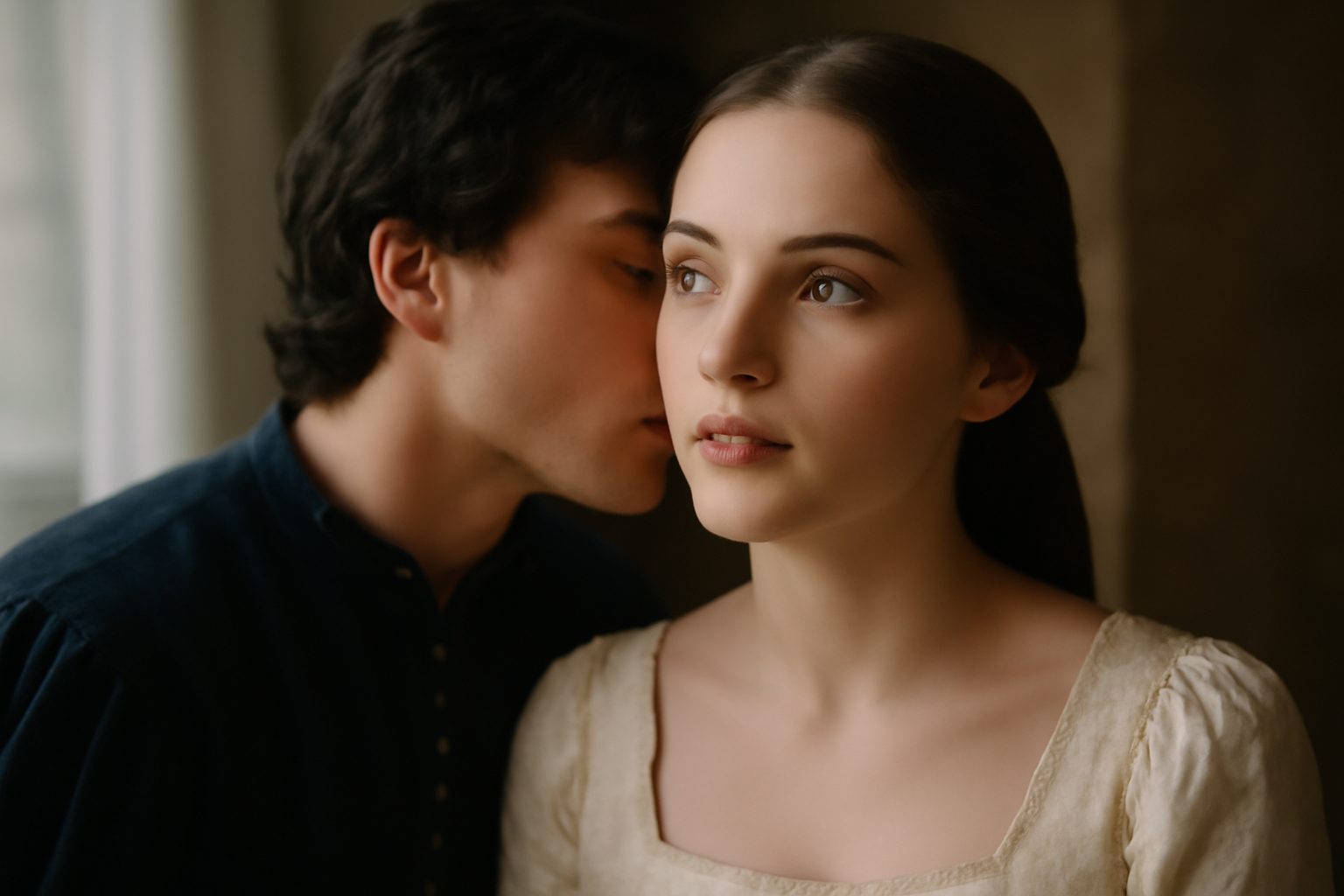
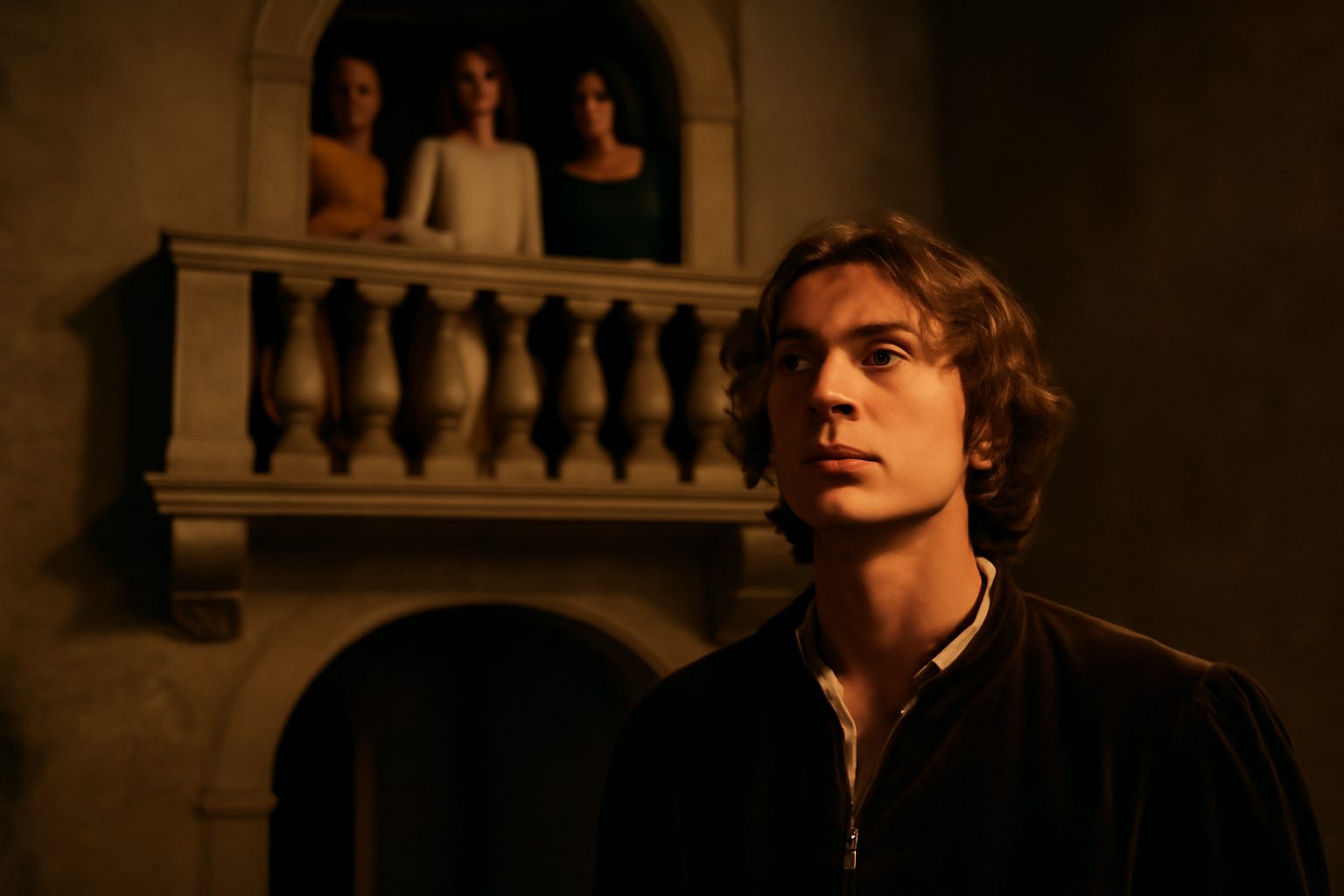
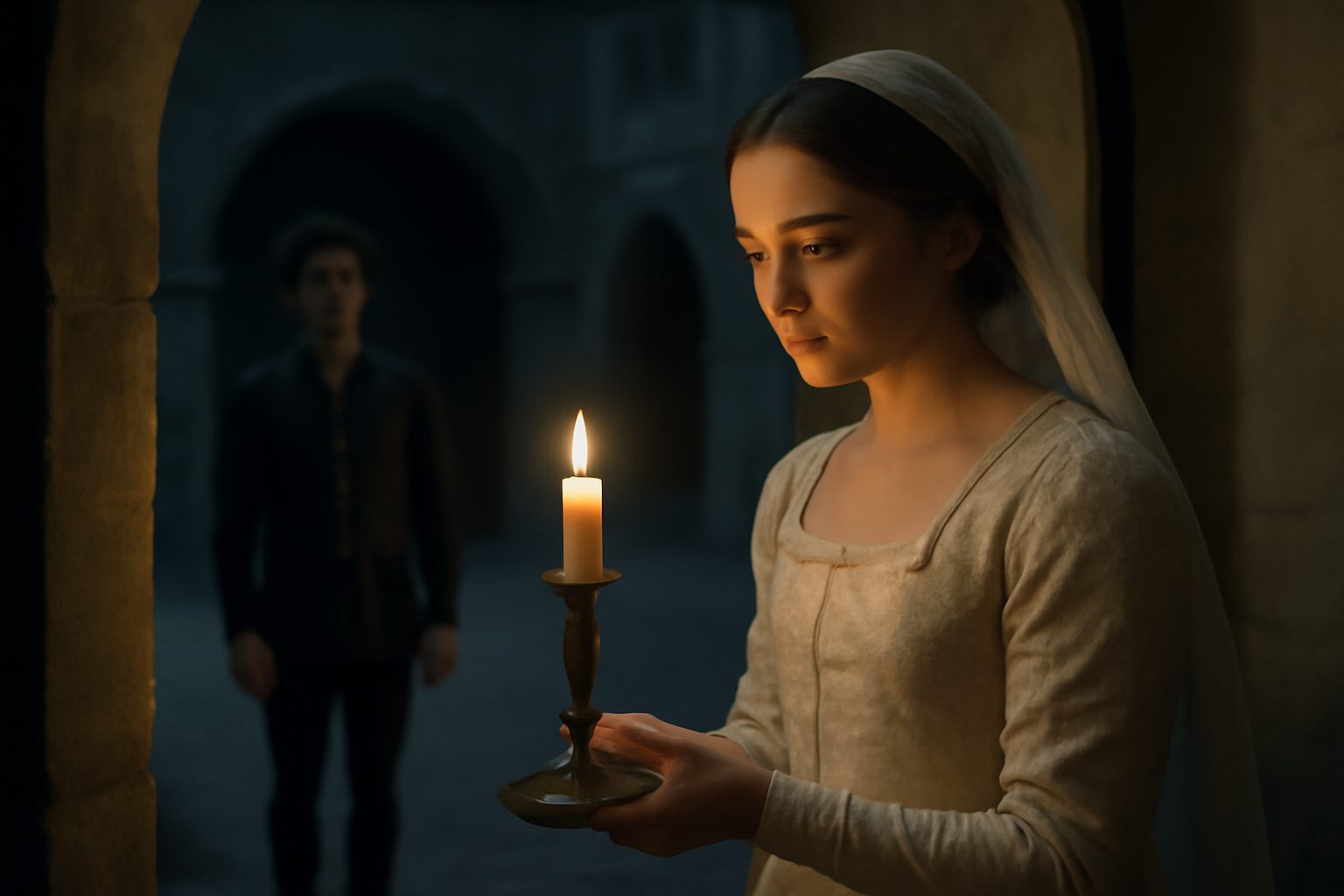
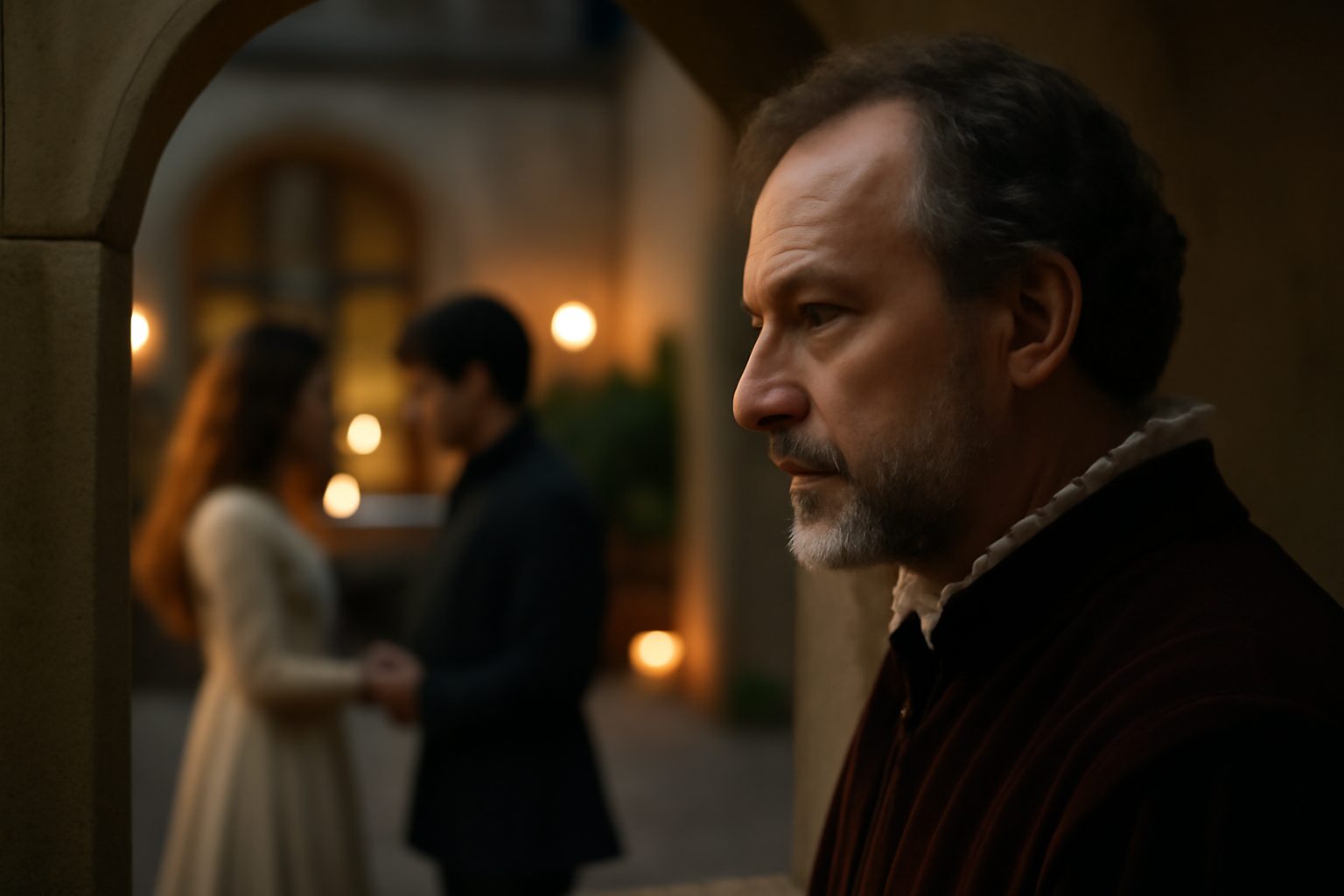
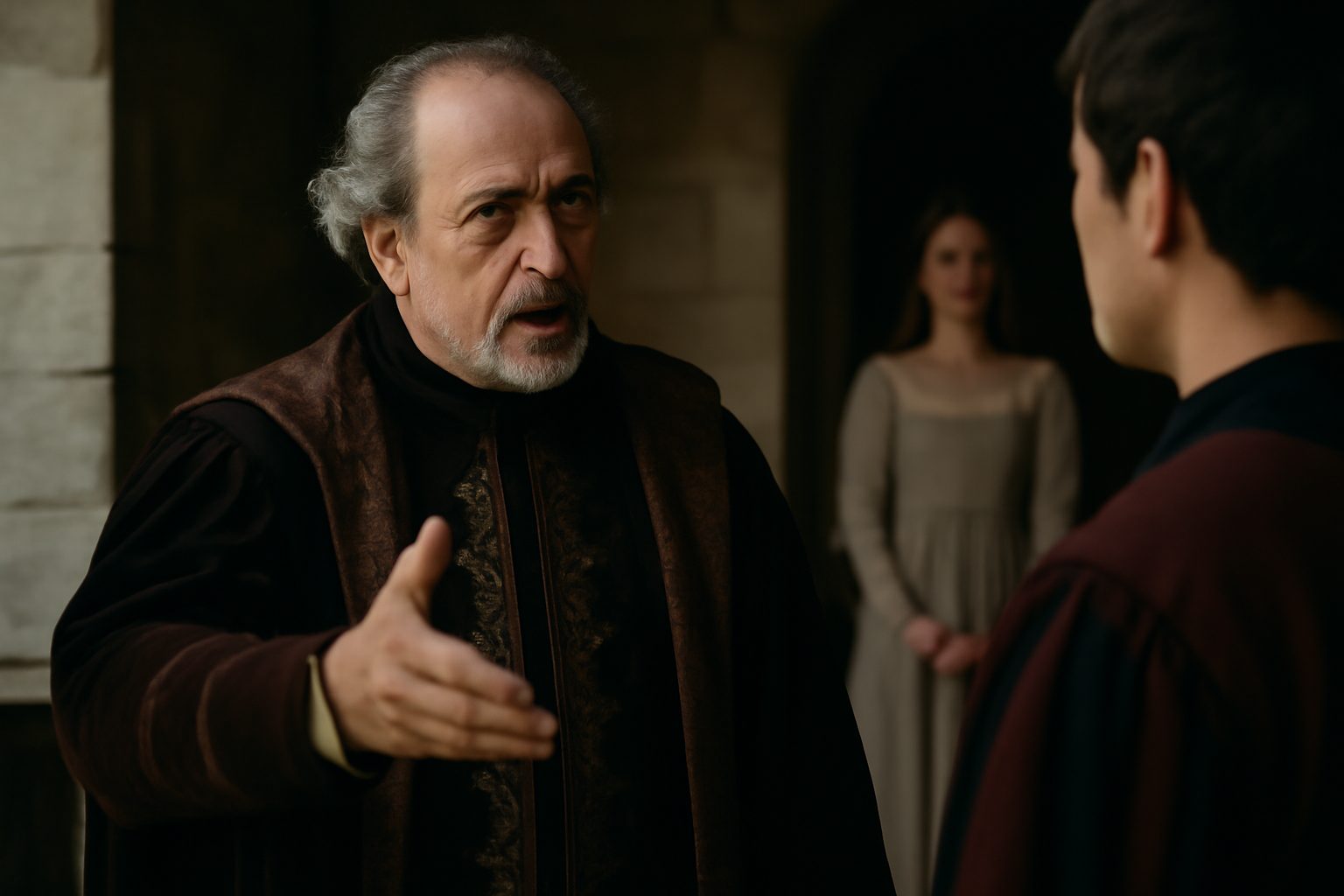
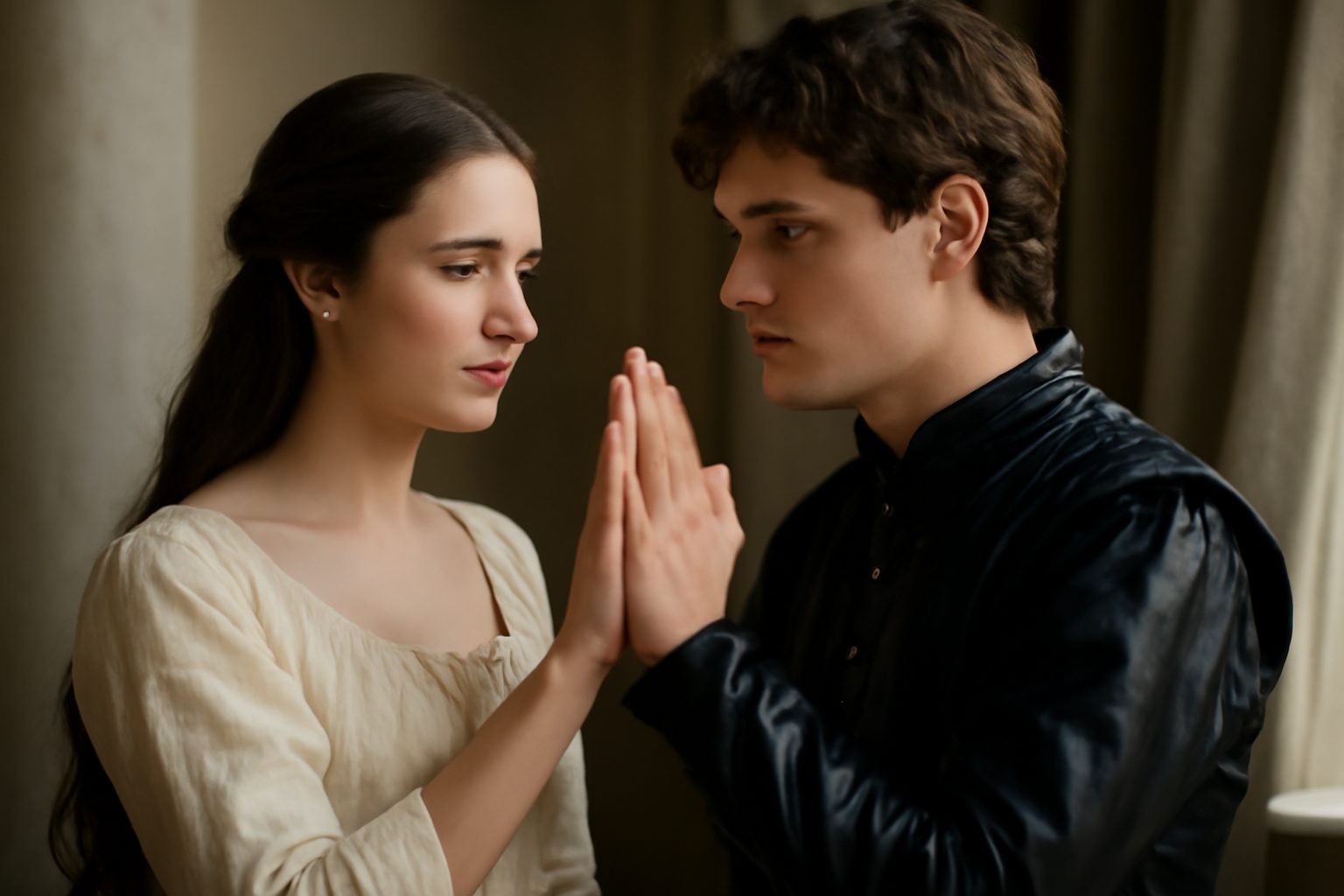
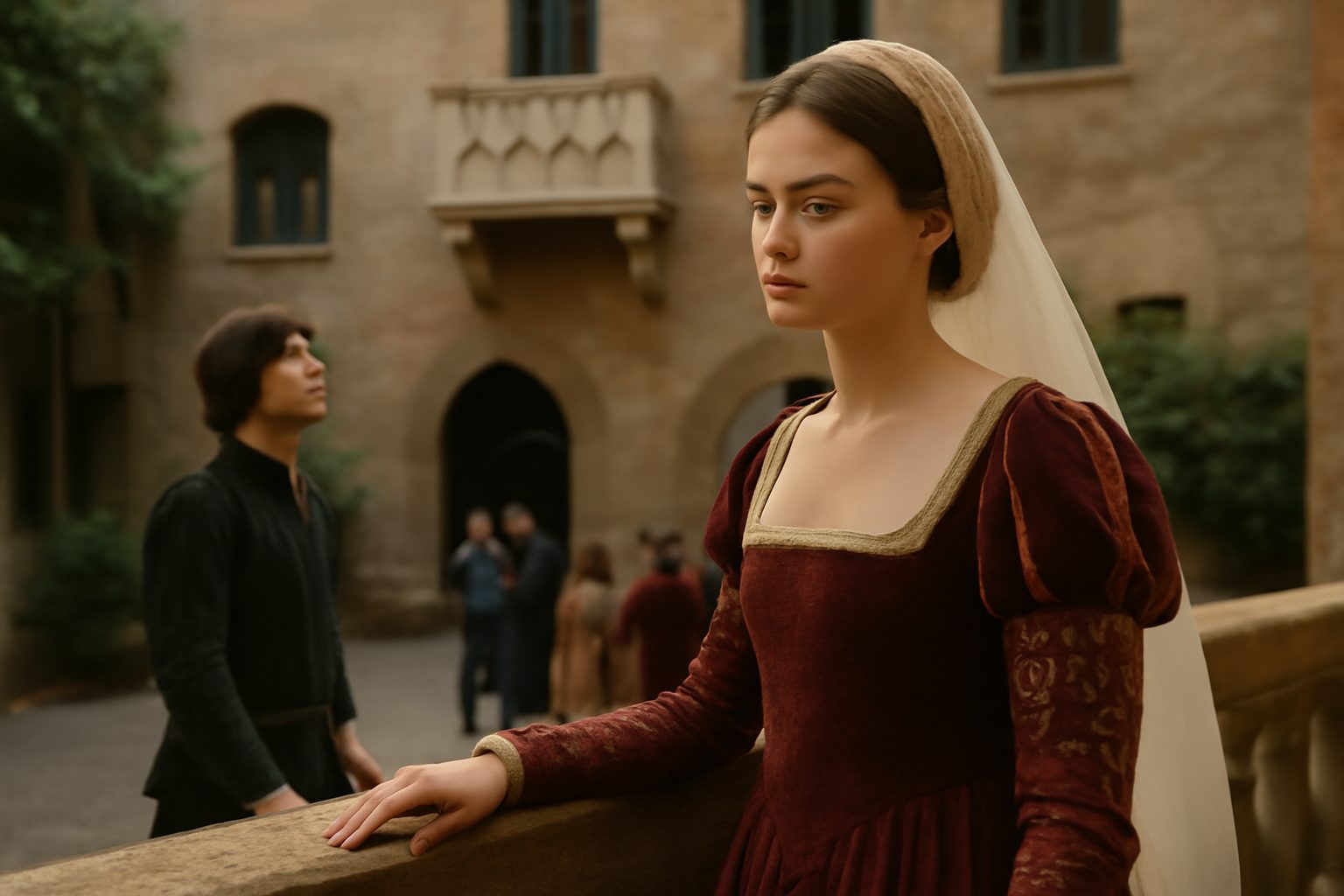
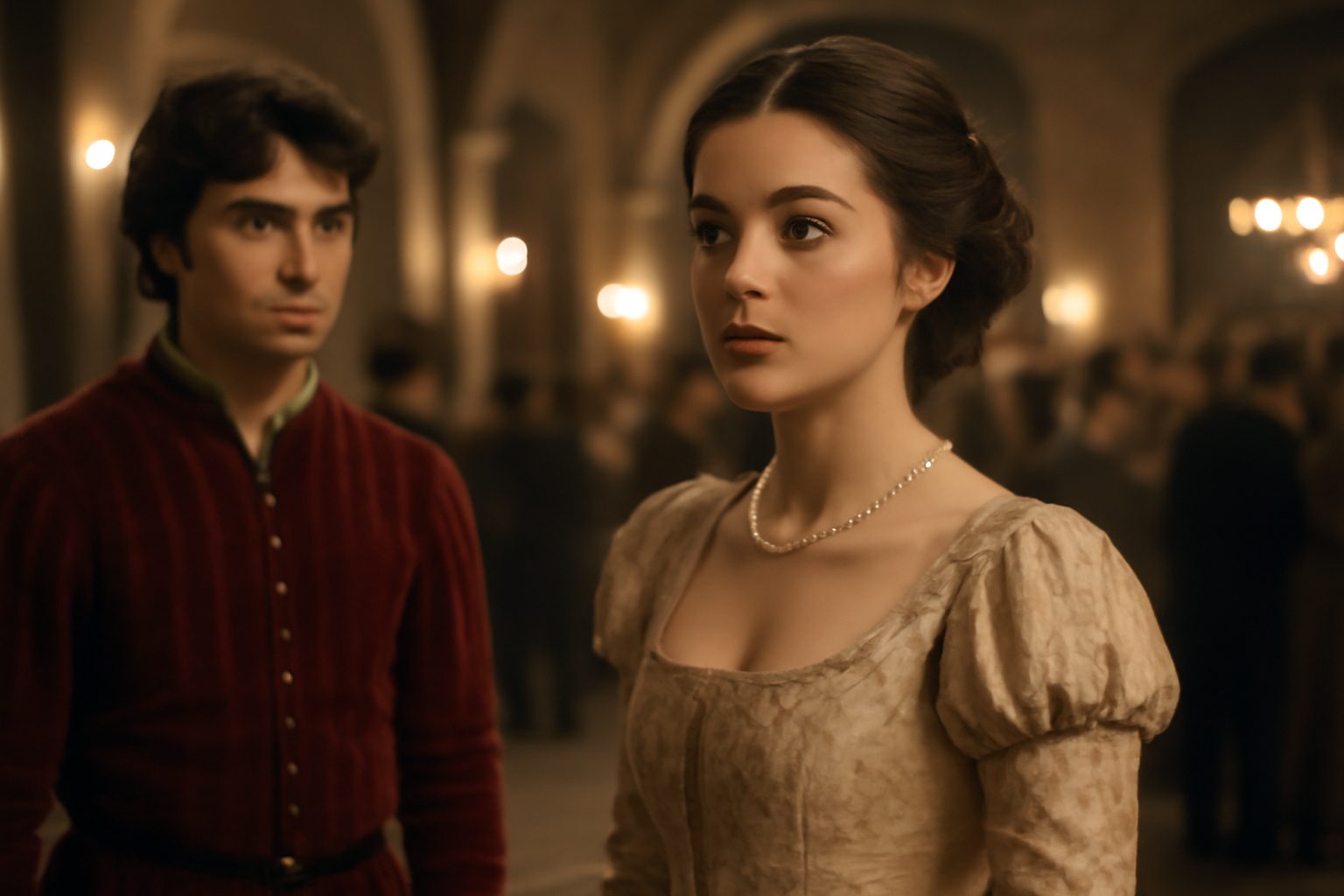
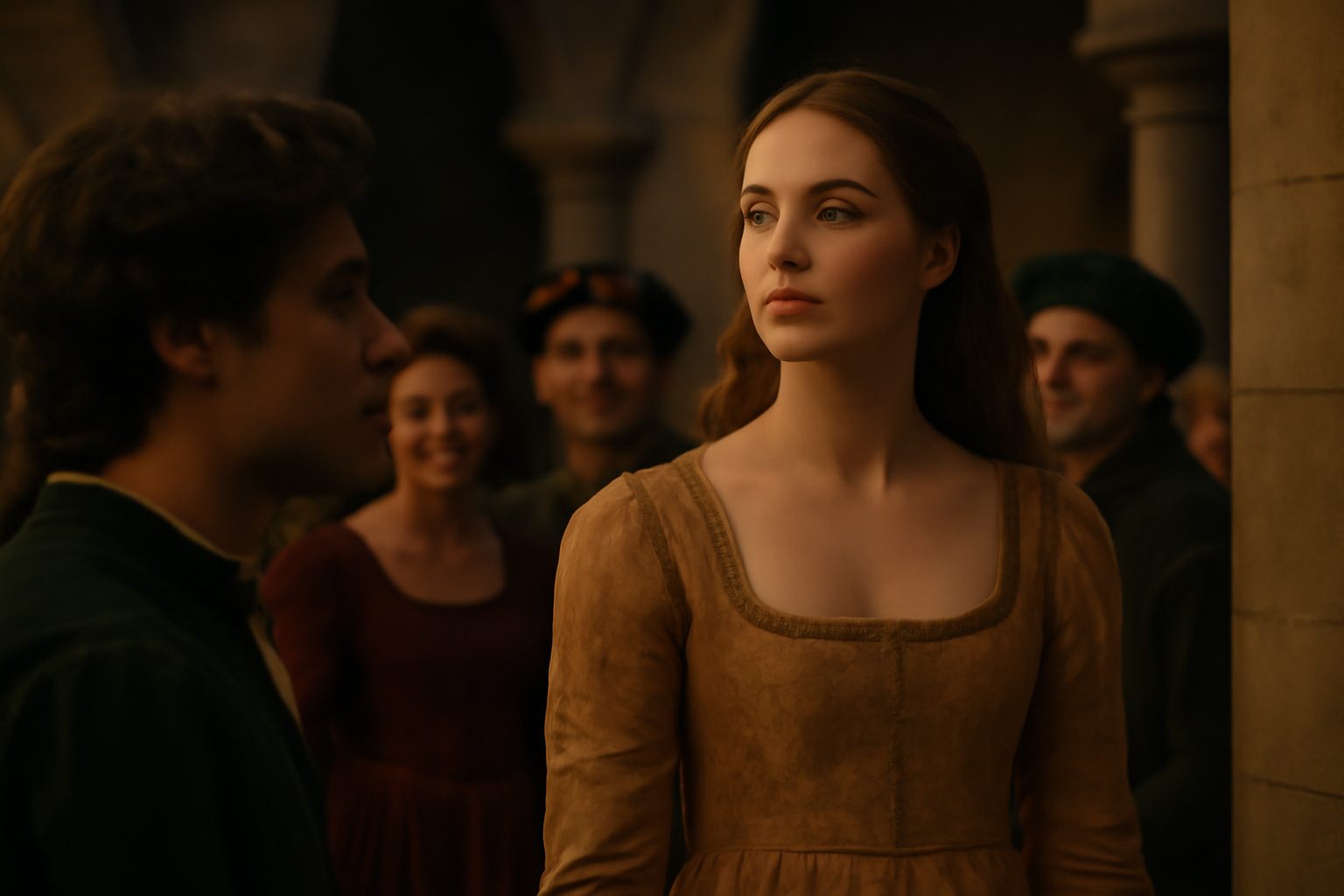
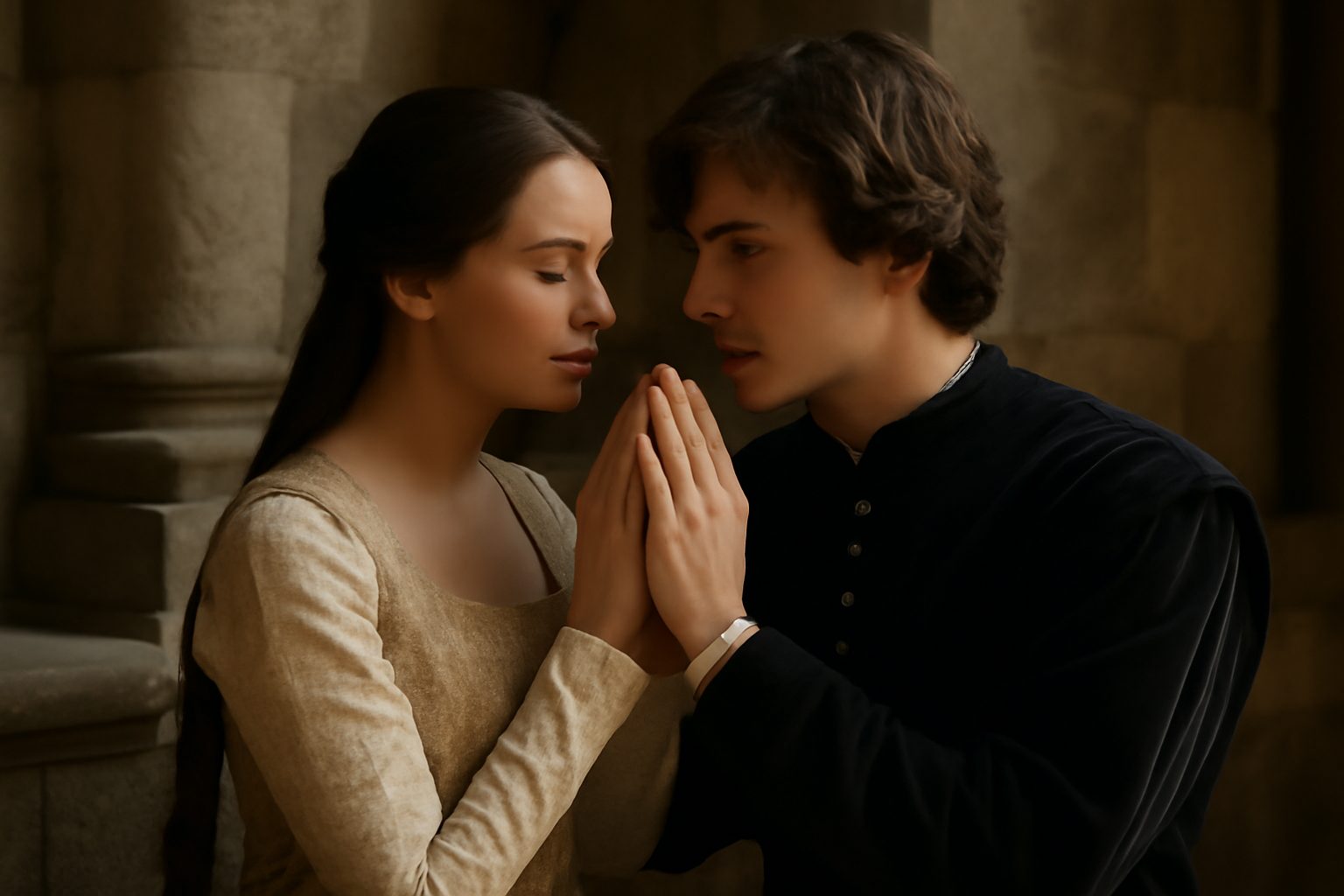
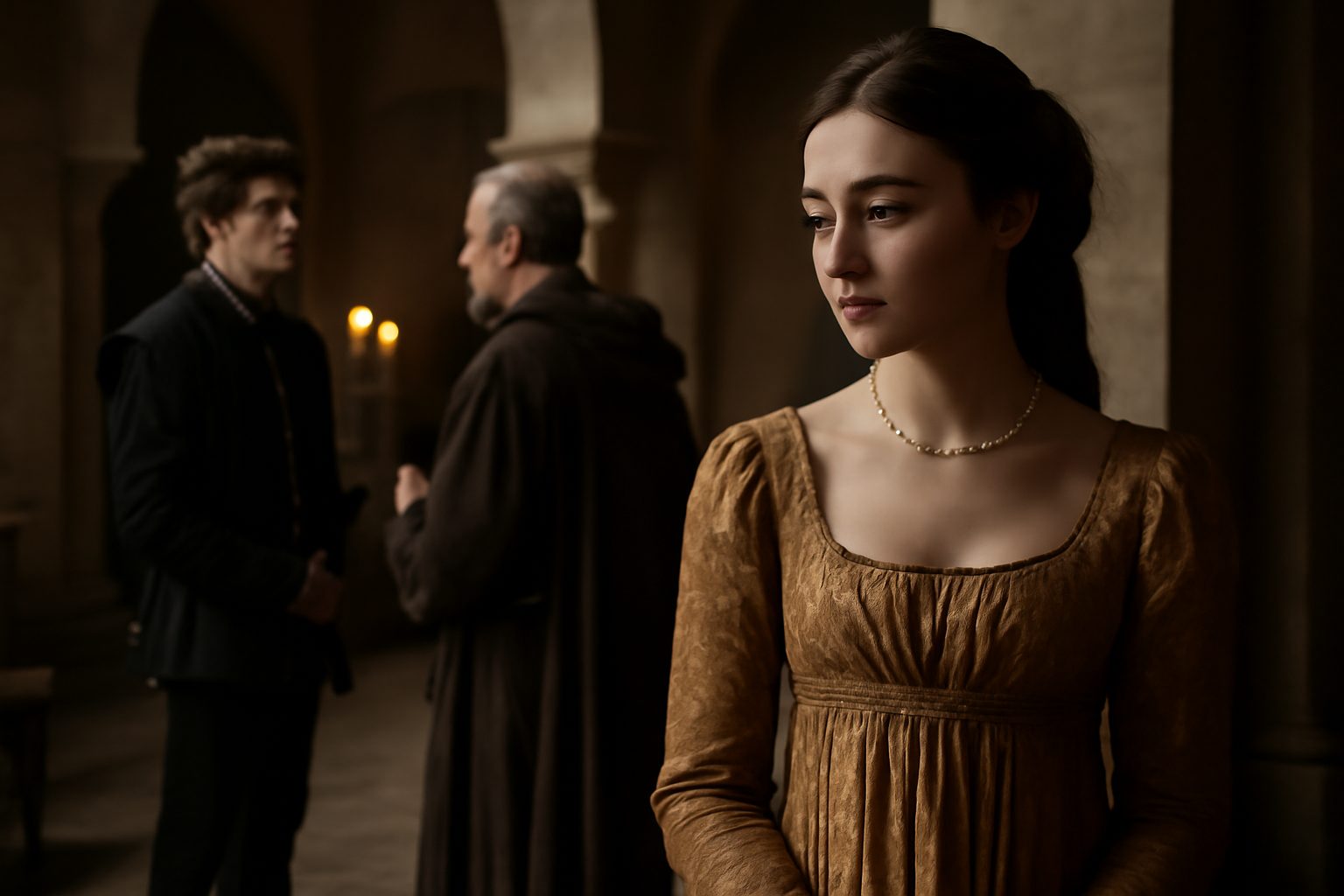
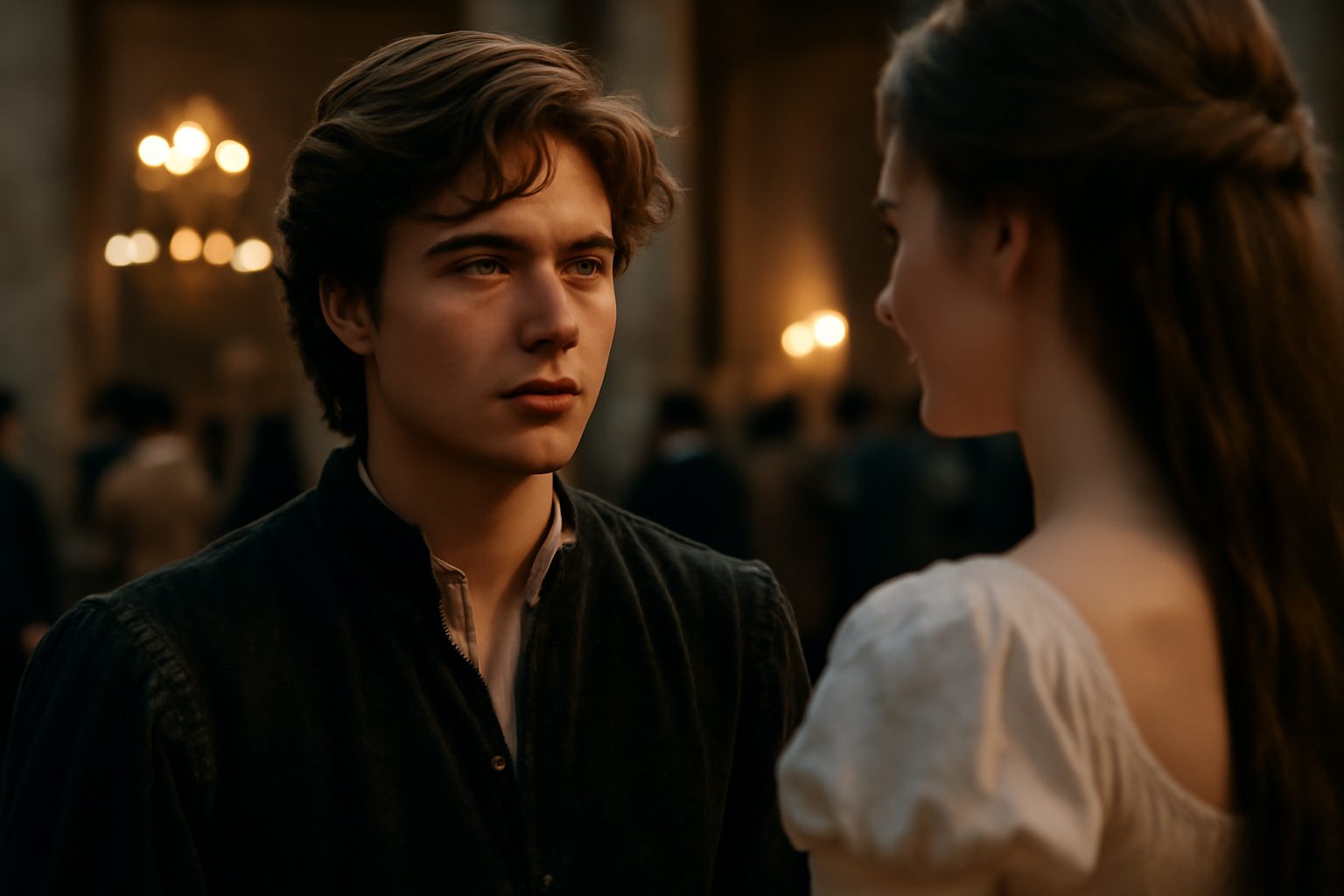
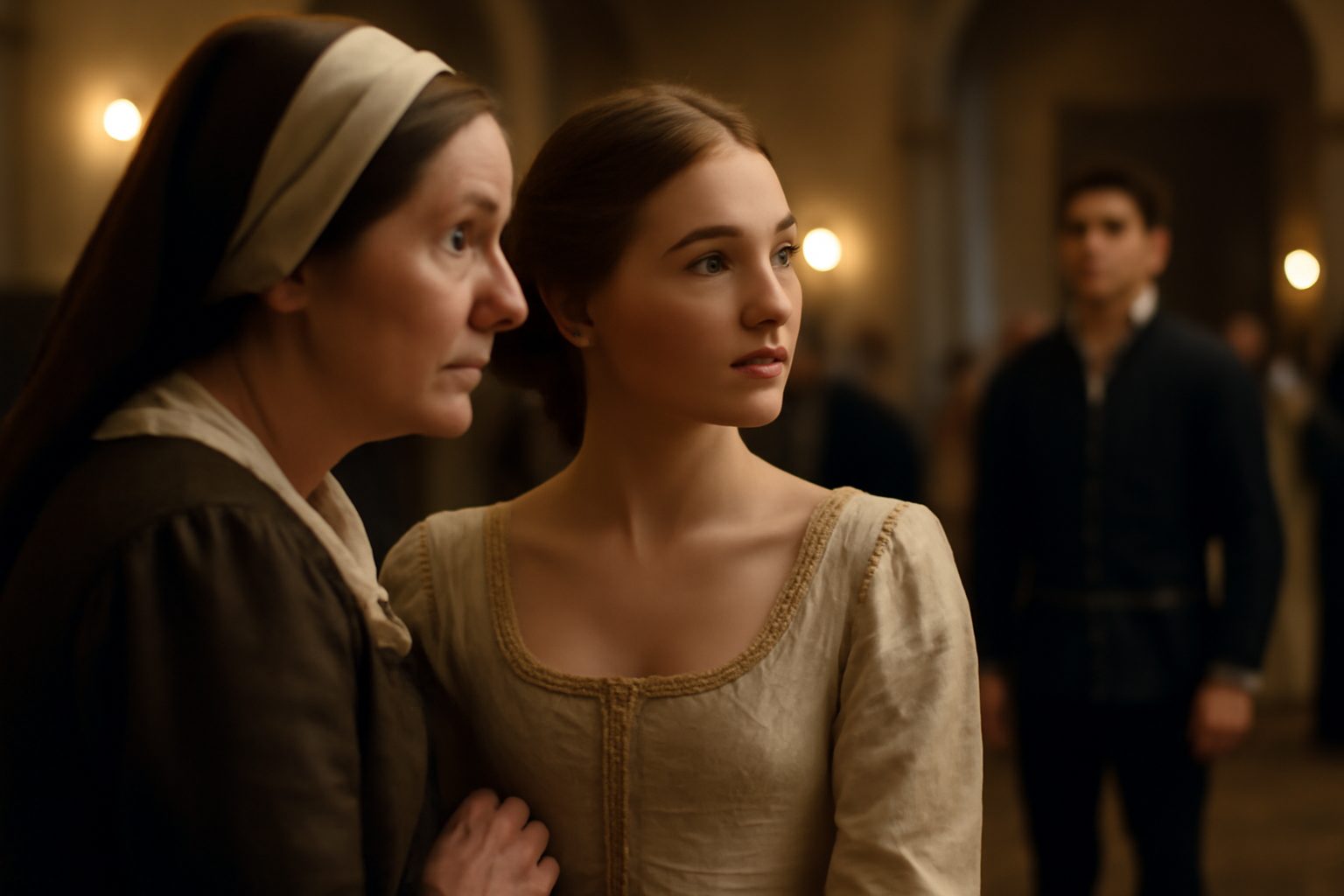
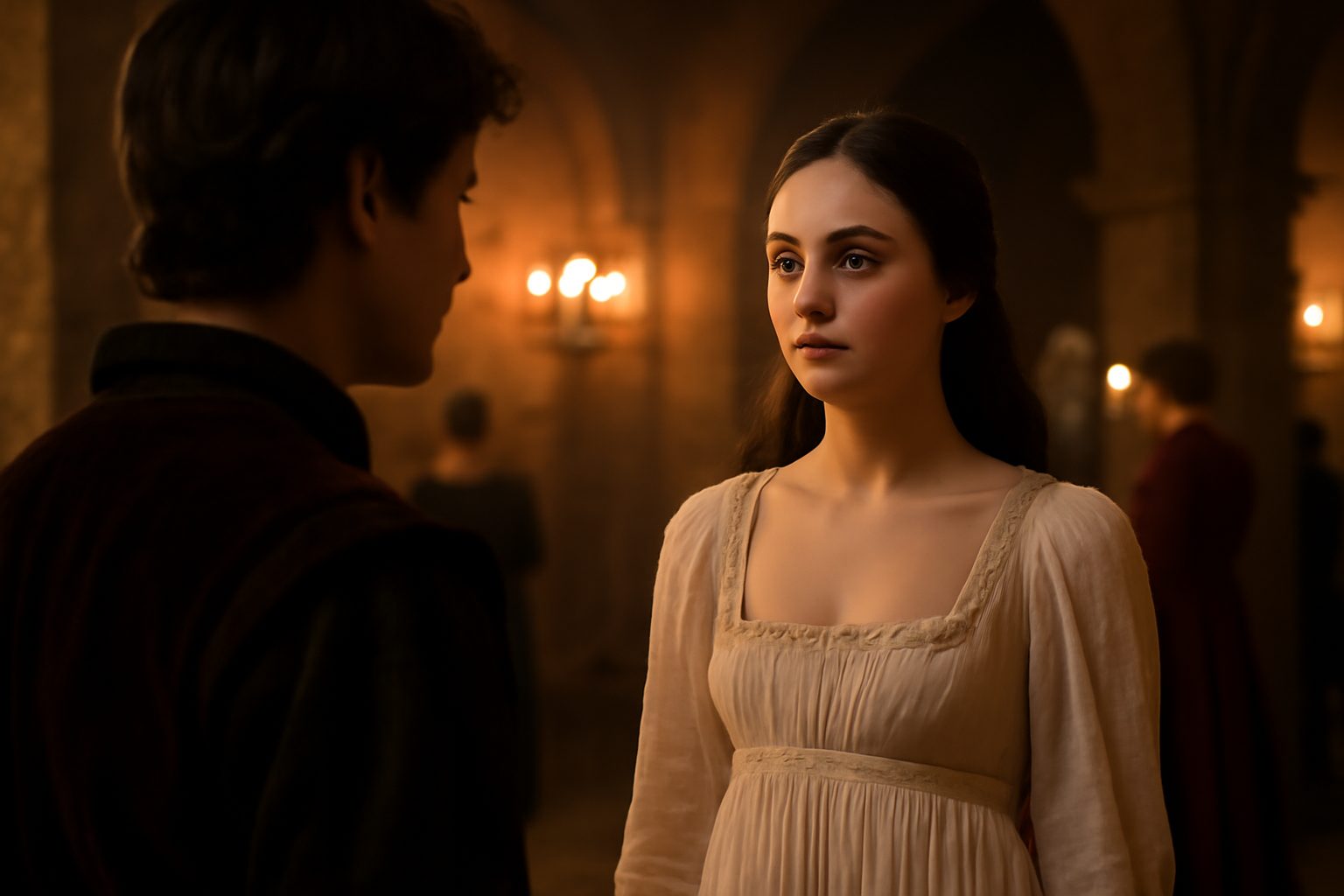
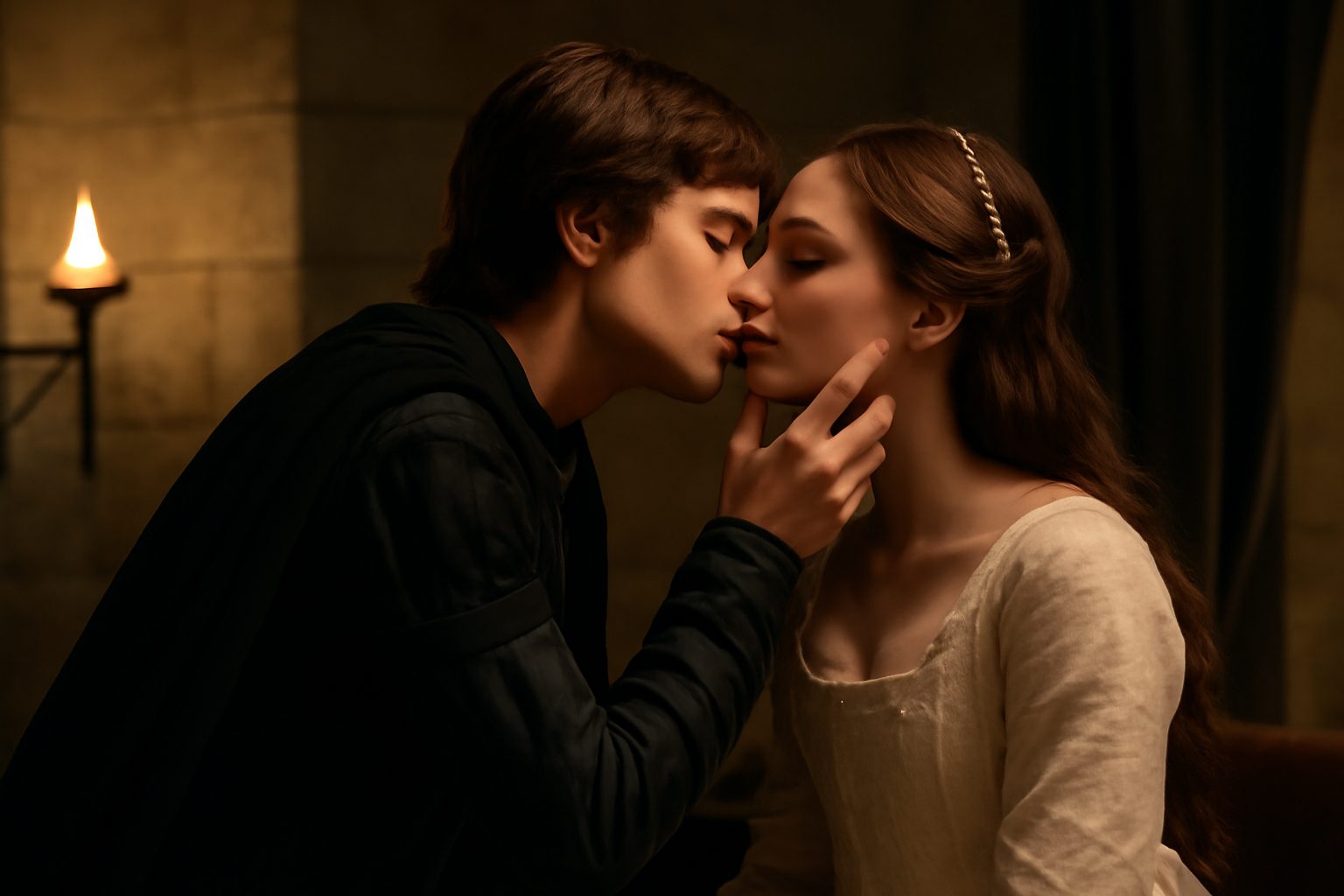
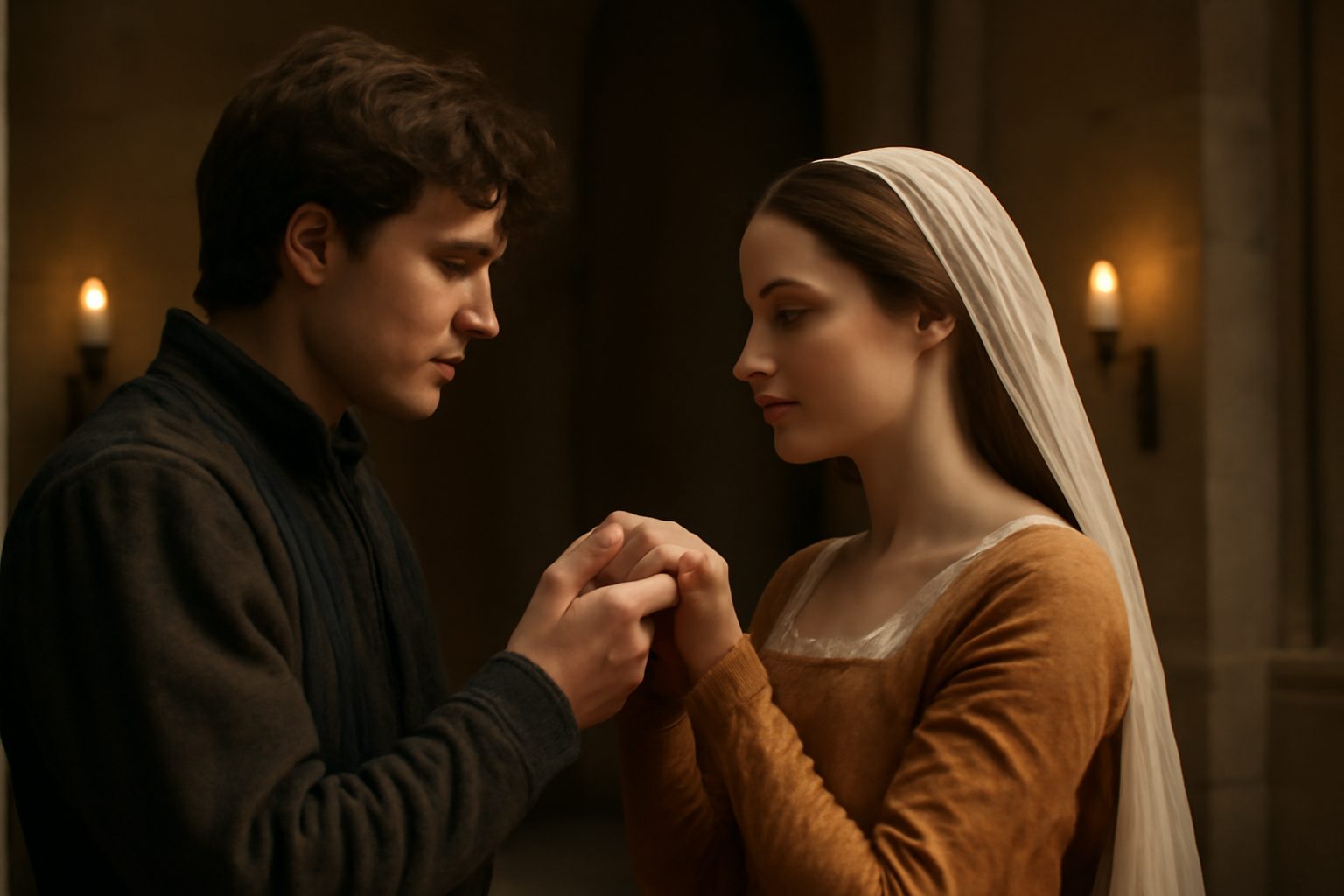
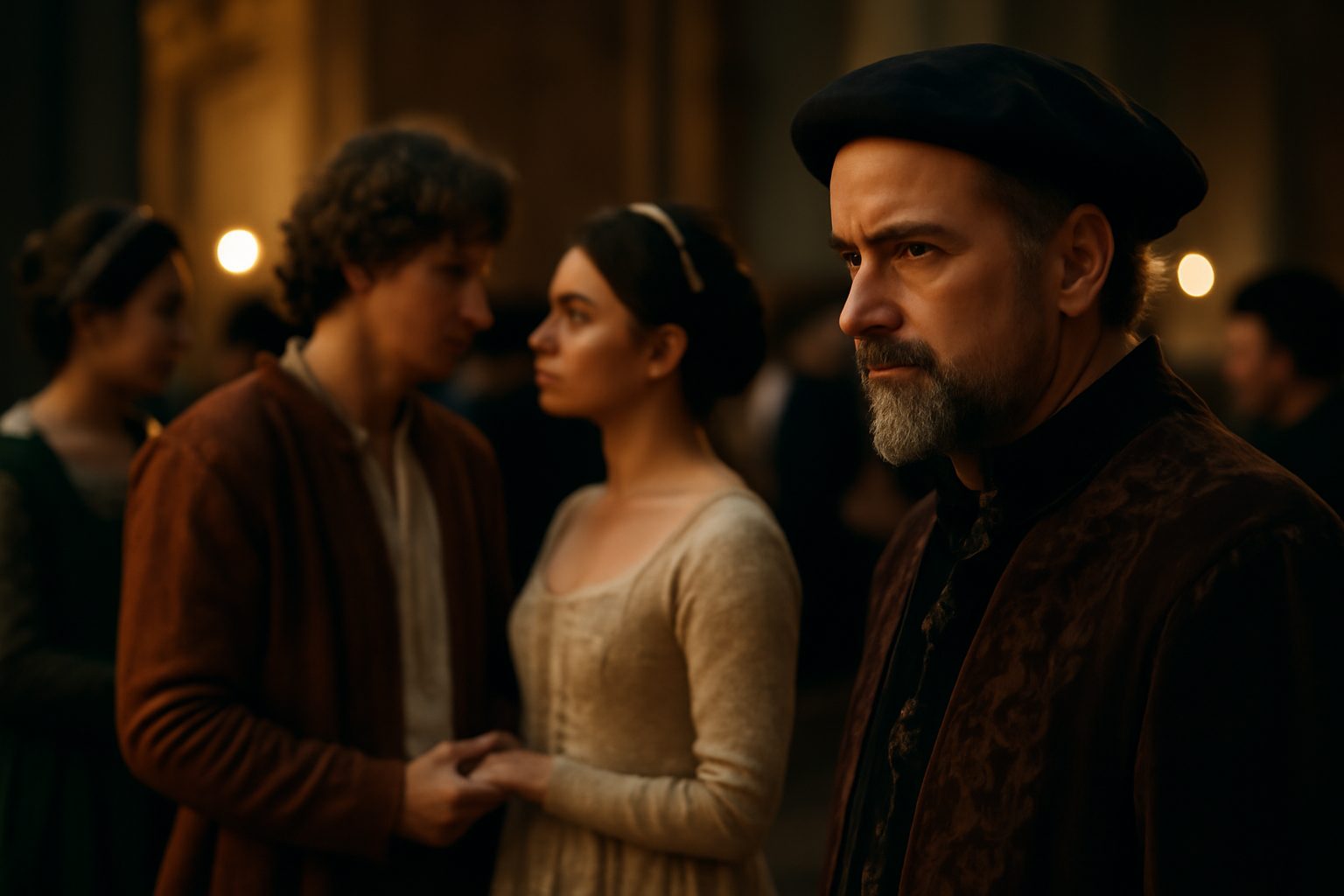
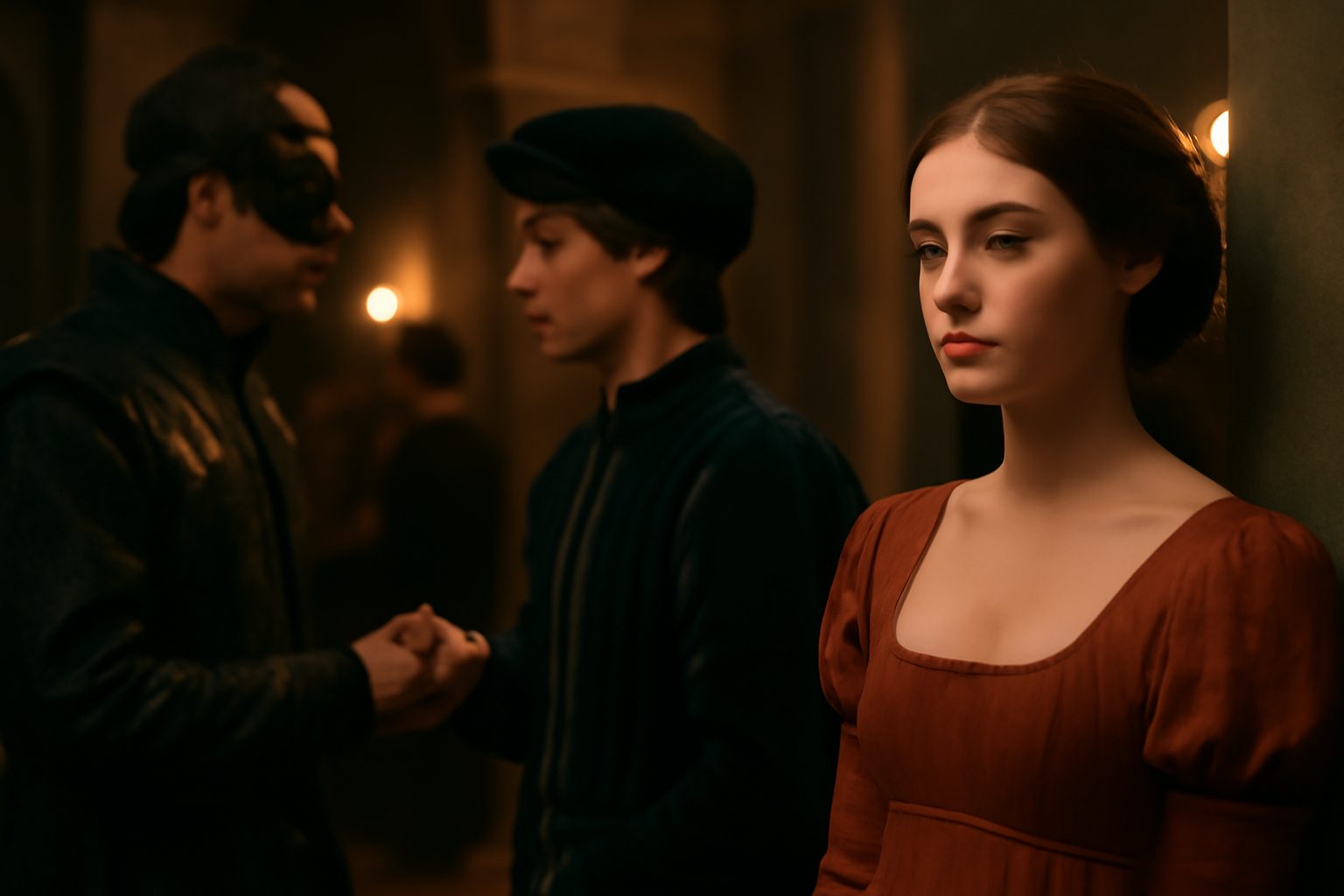
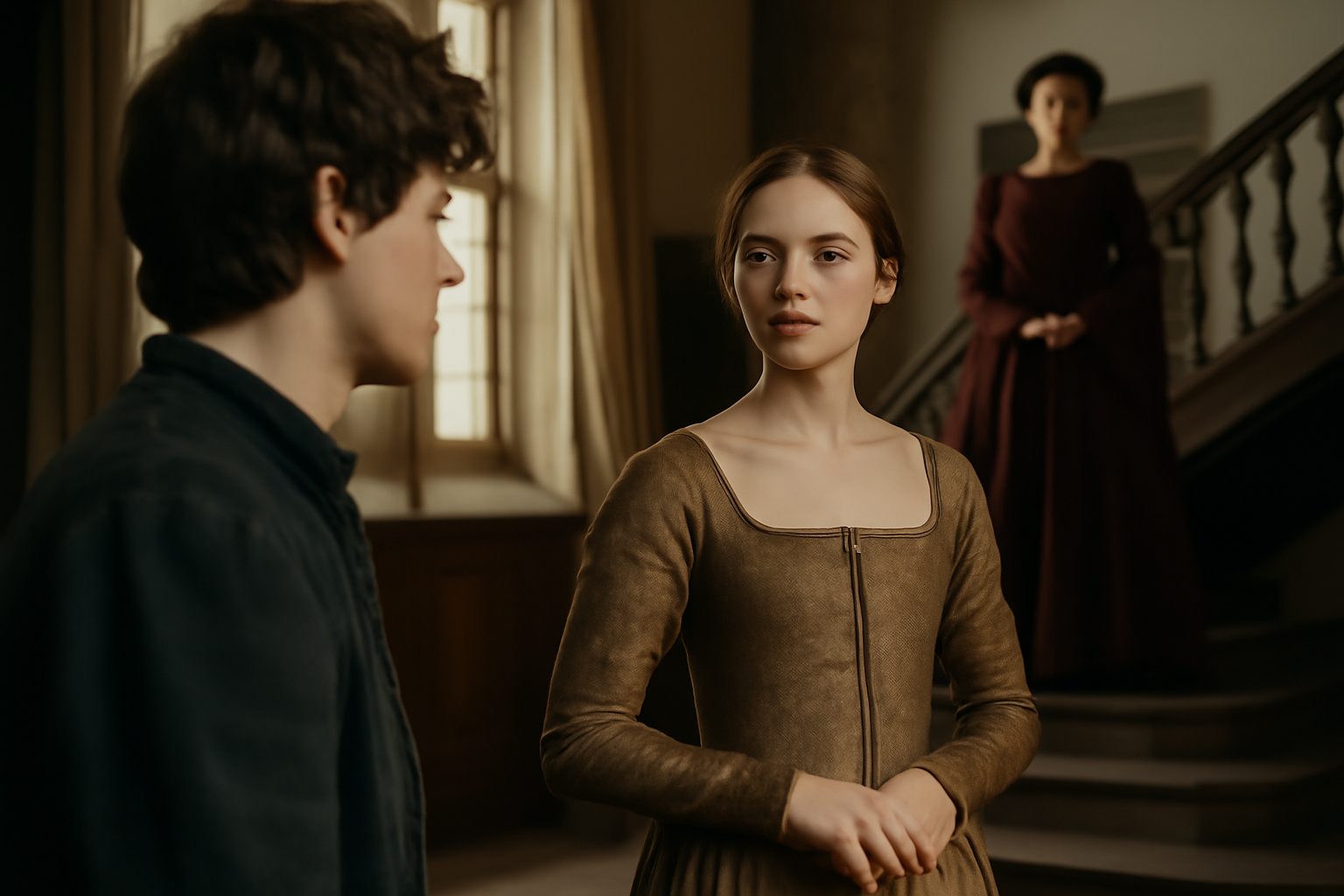
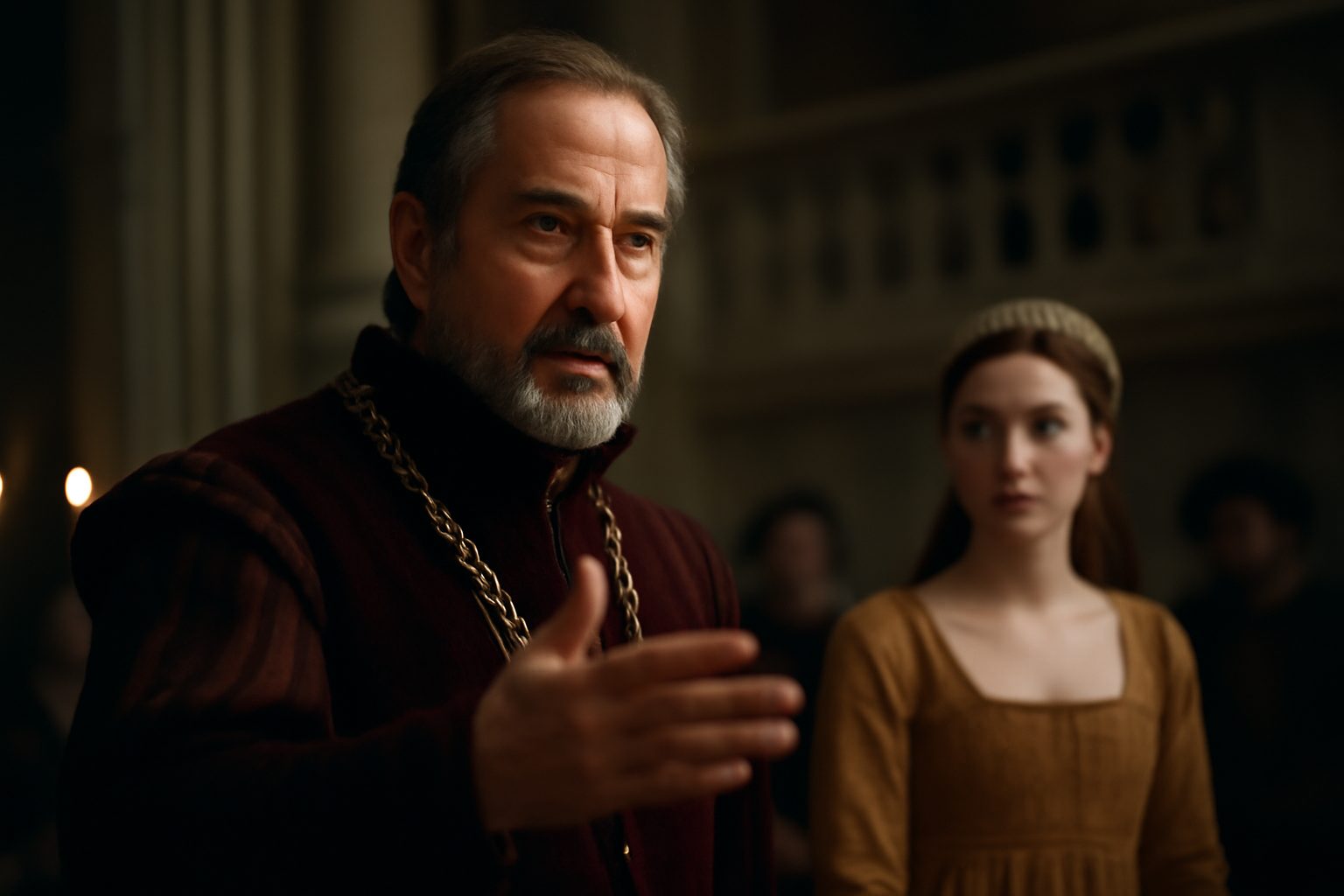
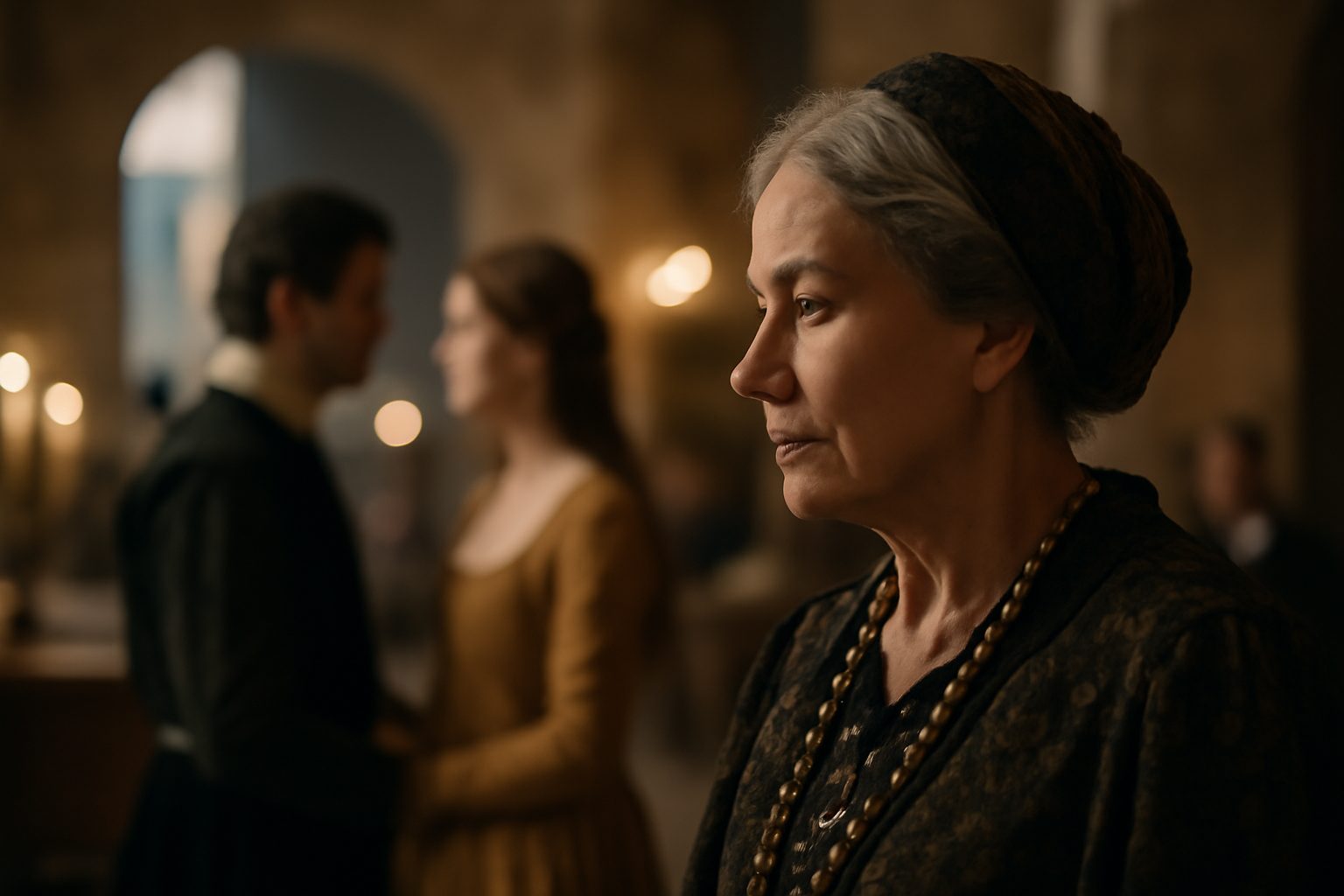
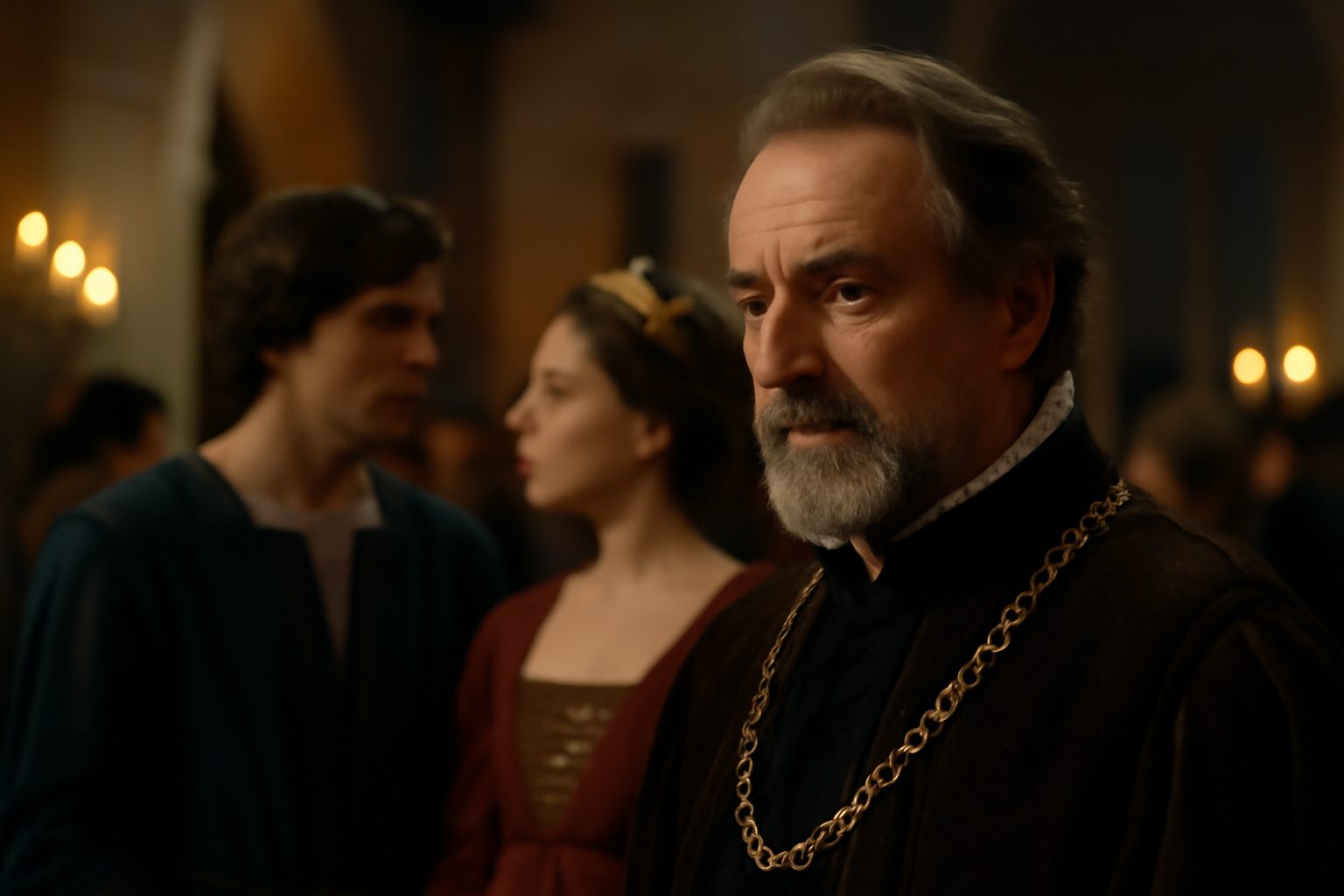
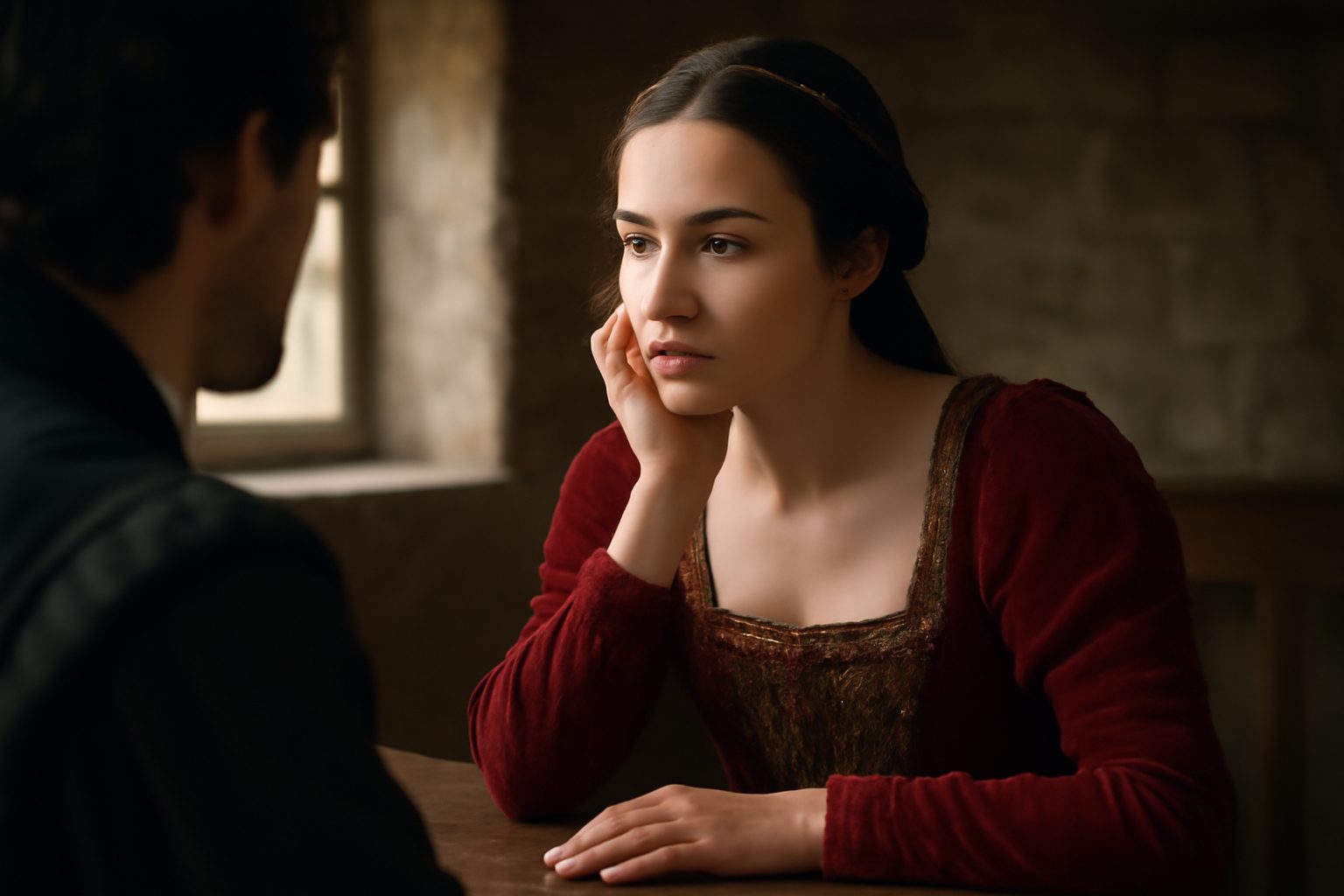
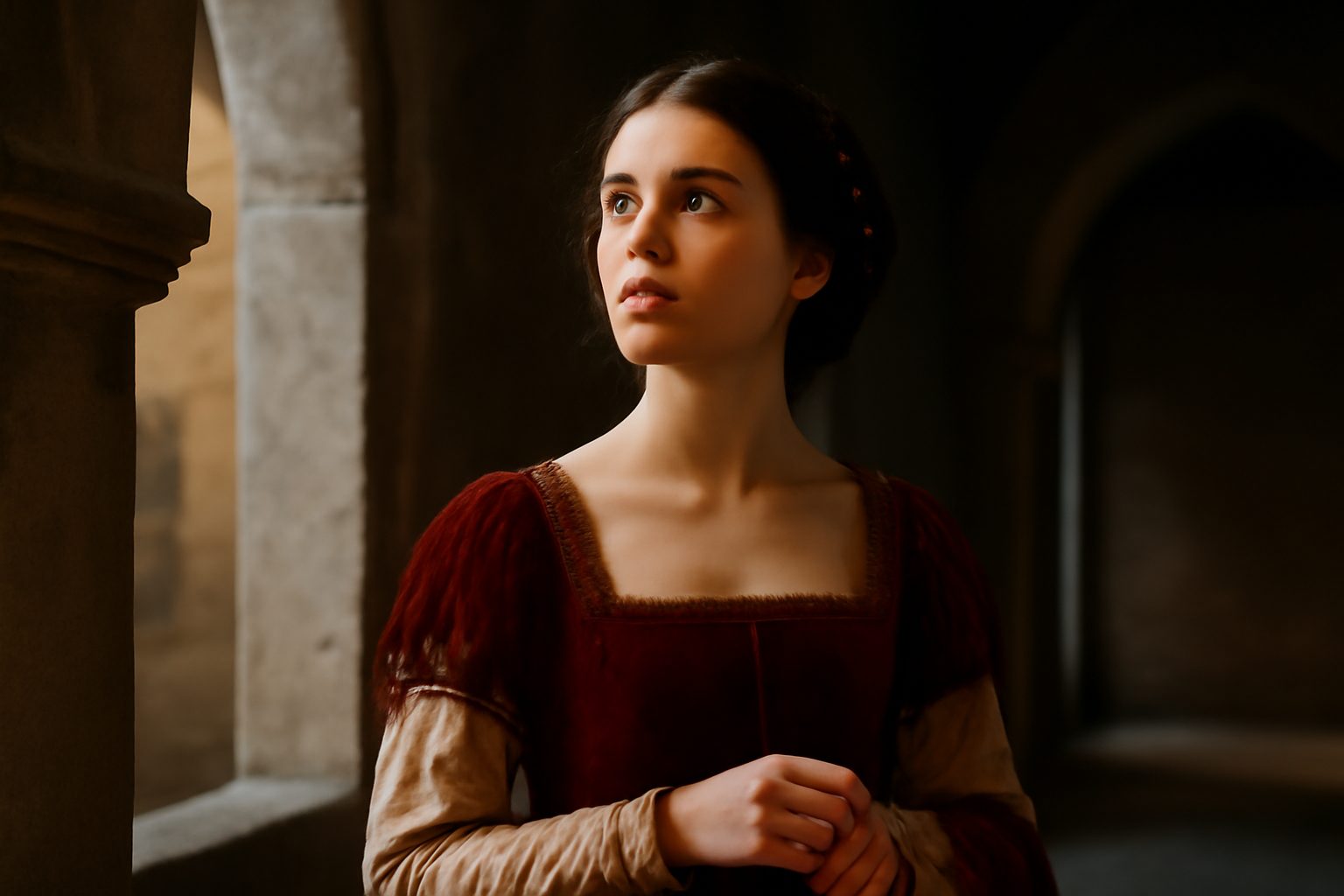
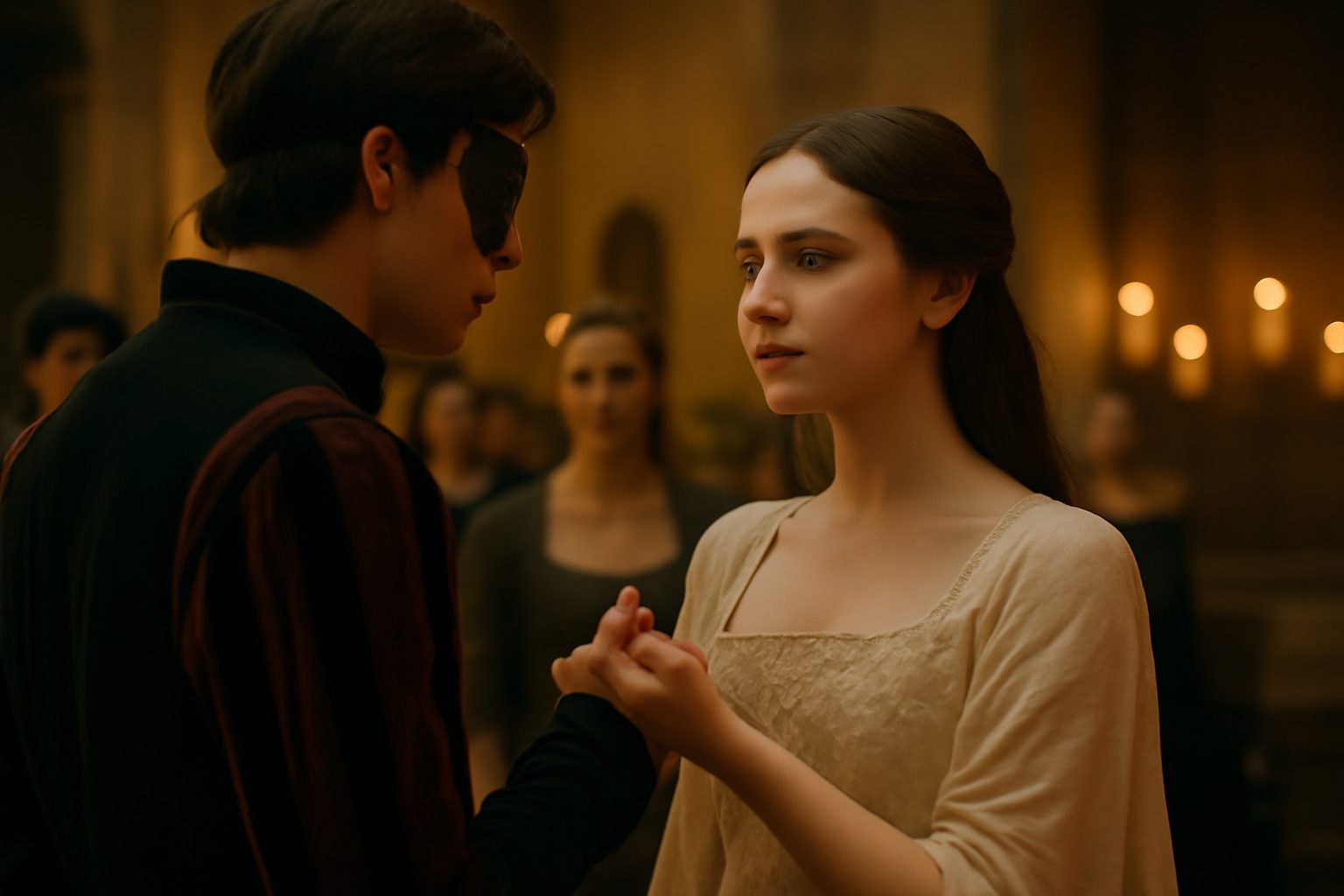
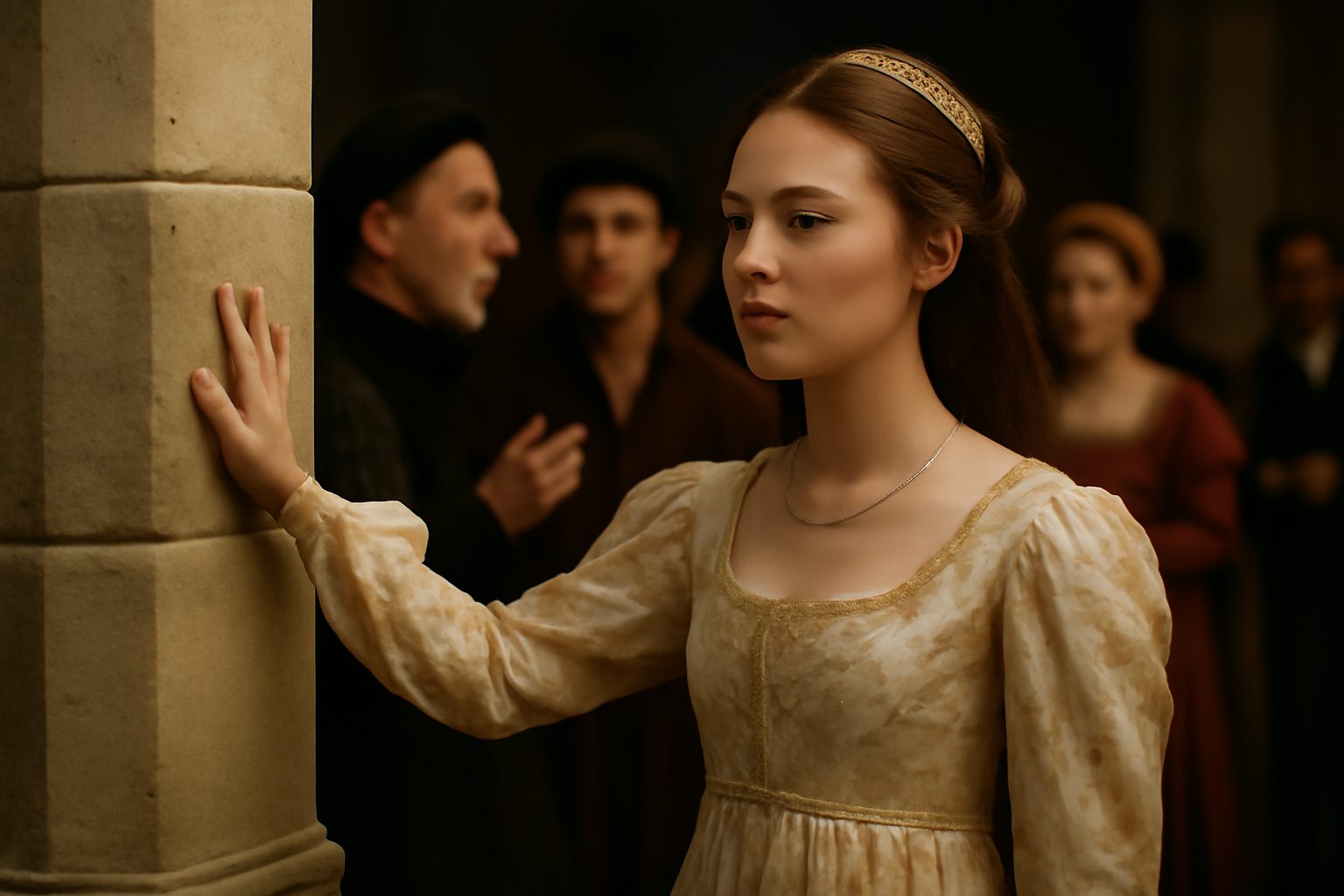
In Act 1, Scene 5 of Romeo and Juliet, Romeo has just seen Juliet for the first time at the Capulet's feast and is instantly captivated by her beauty. As he approaches her, he uses religious imagery to elevate their encounter, comparing her to a saint and himself to a pilgrim seeking divine connection. This line playfully suggests that their lips should meet in a kiss, just as hands might touch in prayer or reverence.
Romeo: "O, then, dear saint, let lips do what hands do;"
In modern day english, we would say:
Then, my love, let our lips meet like our hands have.
Frequently Asked Questions
What is Romeo asking Juliet to do in this line?
He is asking her to kiss him, comparing it to how hands touch when they pray.
Connections to other verses:
Religious Imagery and the Pilgrimage Metaphor
Romeo's plea, "O, then, dear saint, let lips do what hands do," is part of an extended religious metaphor that structures his first conversation with Juliet. This metaphor begins when Romeo approaches Juliet with the line, "If I profane with my unworthiest hand", framing their meeting as a pilgrimage. He refers to his lips as "two blushing pilgrims, ready stand", and Juliet responds by calling him a "good pilgrim" and suggesting that "palm to palm is holy palmers' kiss". The exchange builds to Romeo's question, "Have not saints lips, and holy palmers too?", which directly prompts his request for a kiss. Juliet's reply, "Ay, pilgrim, lips that they must use in prayer", maintains the metaphor while subtly encouraging him, leading to his final plea in this verse.
Contrast with Tension and Conflict
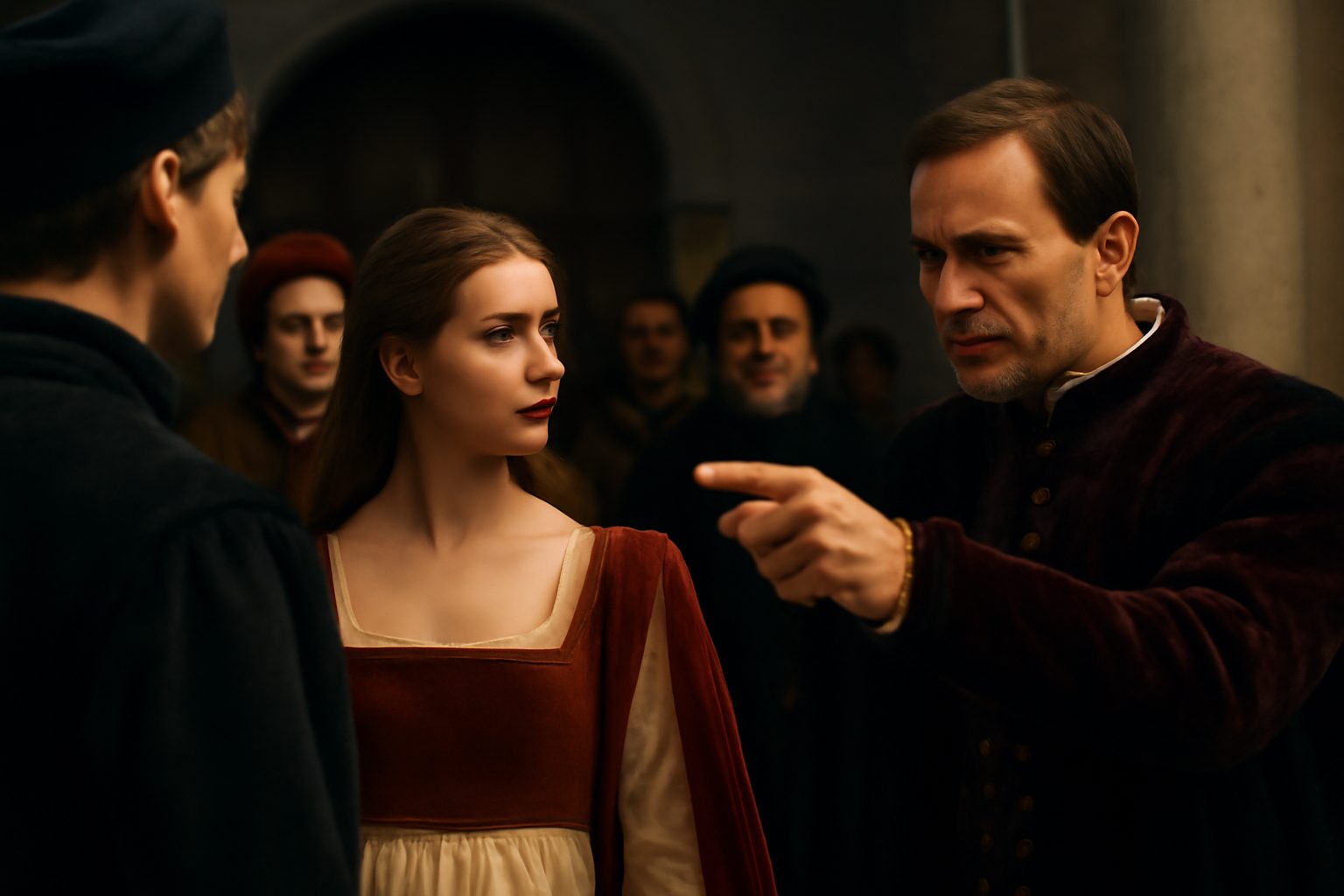
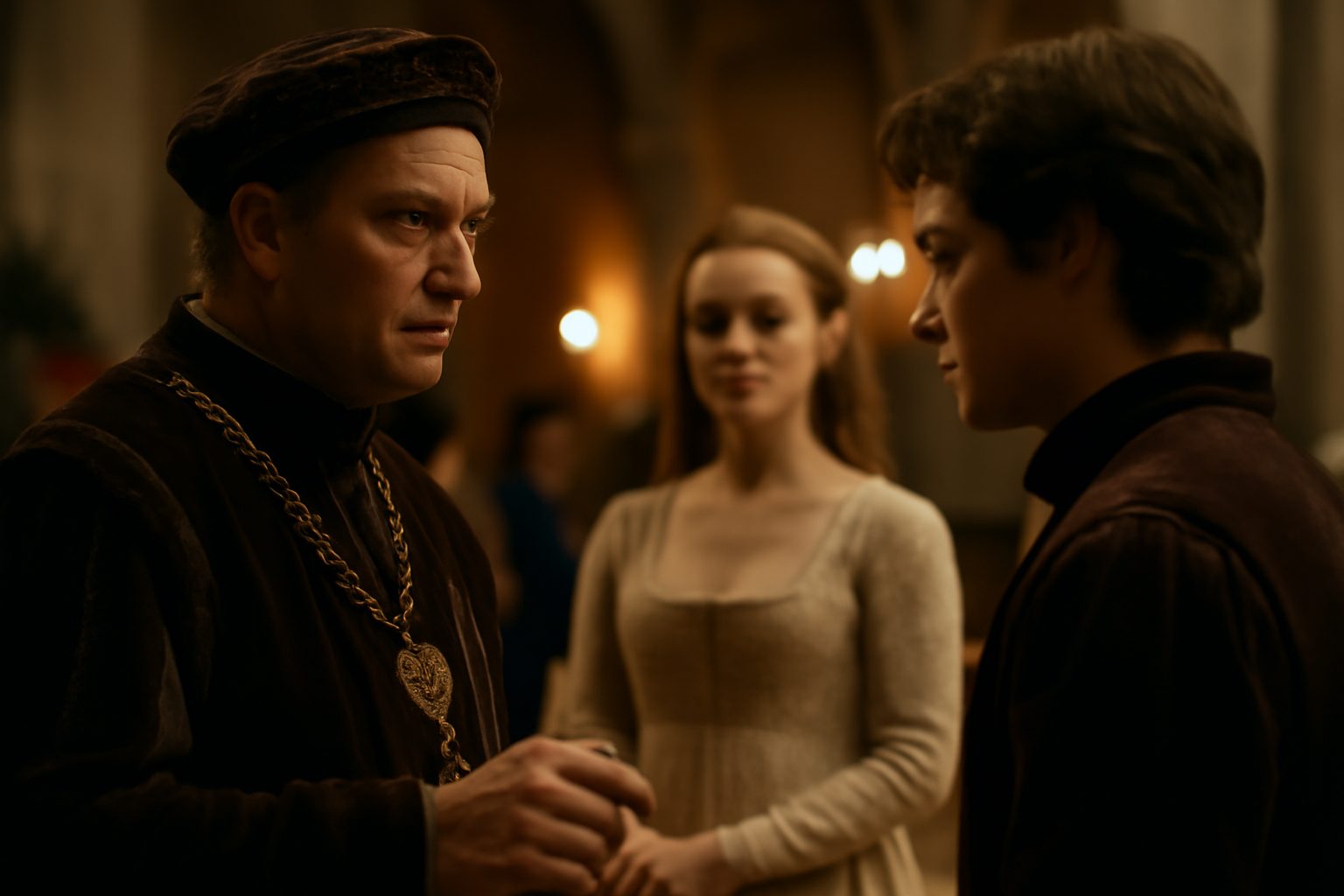
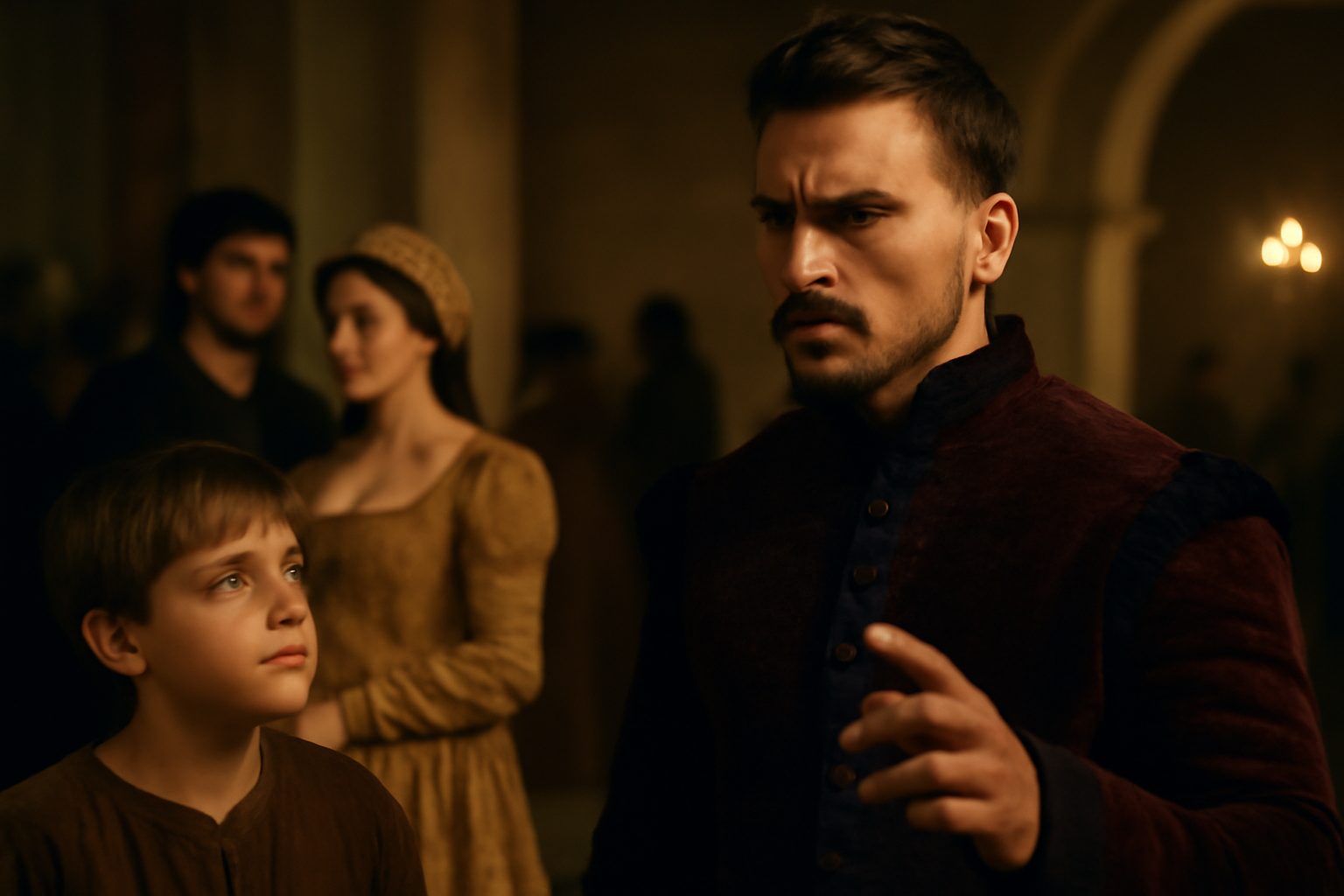
This intimate, poetic exchange starkly contrasts with the underlying tension in the scene. Tybalt recognizes Romeo's voice and identifies him as "that villain Romeo", a "Montague, our foe". His anger is palpable as he exclaims, "Fetch me my rapier, boy. What dares the slave" and vows, "To strike him dead, I hold it not a sin". Capulet's intervention to keep peace, "Therefore be patient, take no note of him", allows Romeo and Juliet's moment to proceed, but the threat of violence looms, making their connection feel both precious and precarious.
Juliet's Realization and Foreshadowing
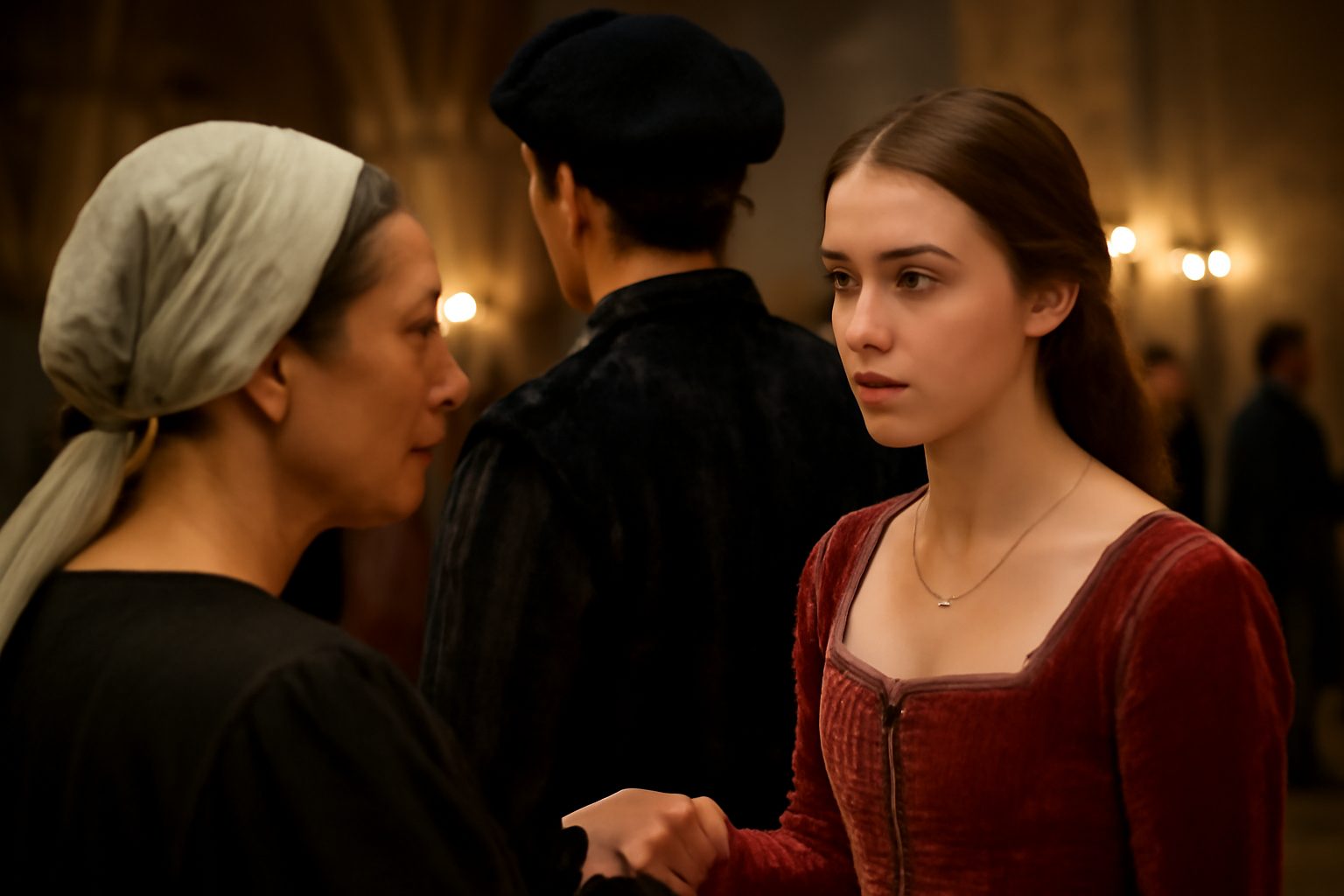
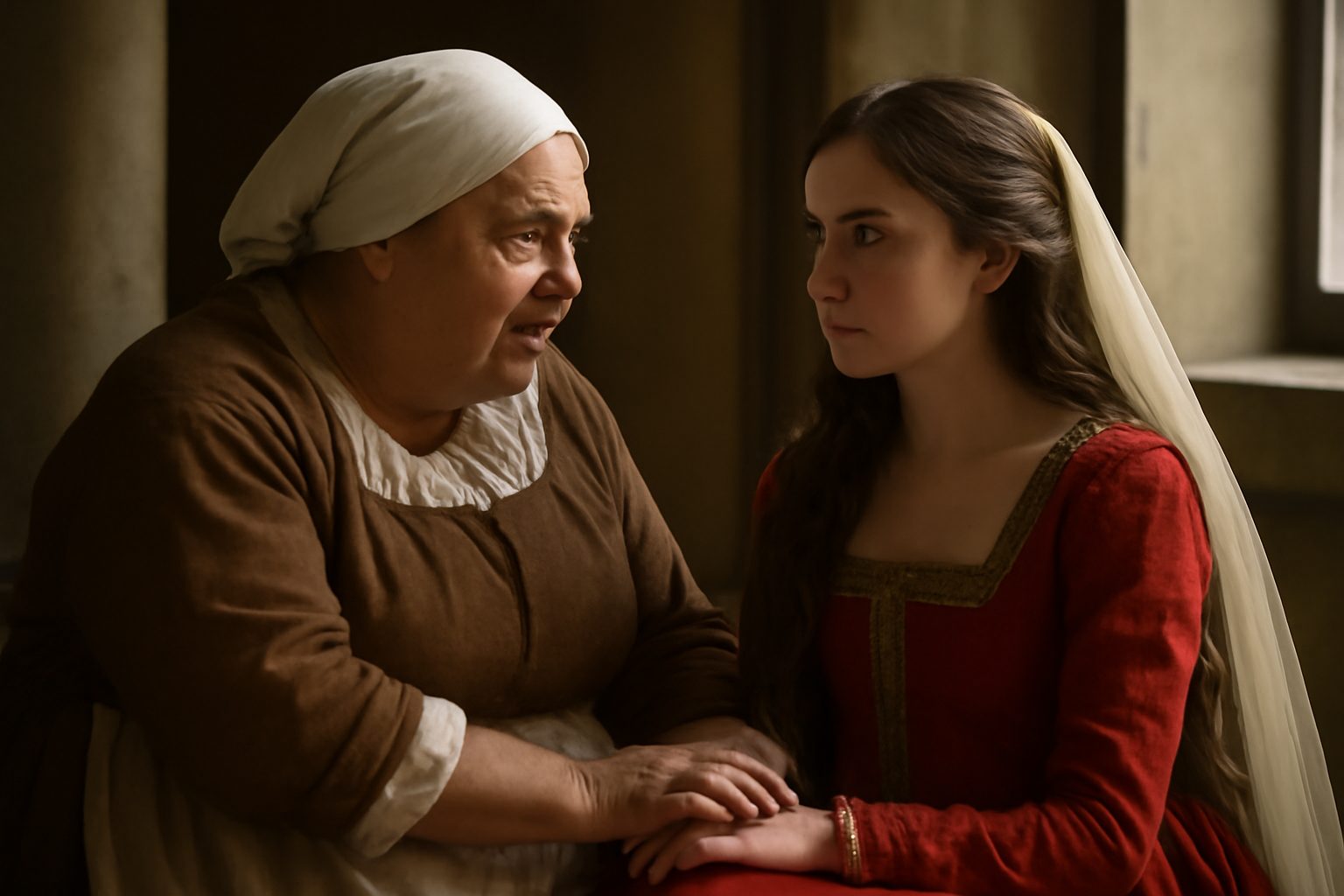
After the kiss, Juliet learns Romeo's identity from the Nurse and reacts with despair: "My only love sprung from my only hate!" and "That I must love a loathed enemy". This realization casts a shadow over their tender exchange, with Juliet’s earlier remark, "My grave is like to be my wedding bed", serving as tragic foreshadowing. The scene’s joyful, romantic beginning thus culminates in the sobering truth of their families' feud.
Structural and Thematic Links
Romeo’s initial awe upon seeing Juliet, "Did my heart love till now? forswear it, sight!" and "For I ne'er saw true beauty till this night", establishes the depth of his instant infatuation, which the kiss consummates. The imagery of light and dark surrounding Juliet, "O, she doth teach the torches to burn bright!" and "So shows a snowy dove trooping with crows", further idealizes her, making Romeo’s request to kiss her a natural progression of his admiration.