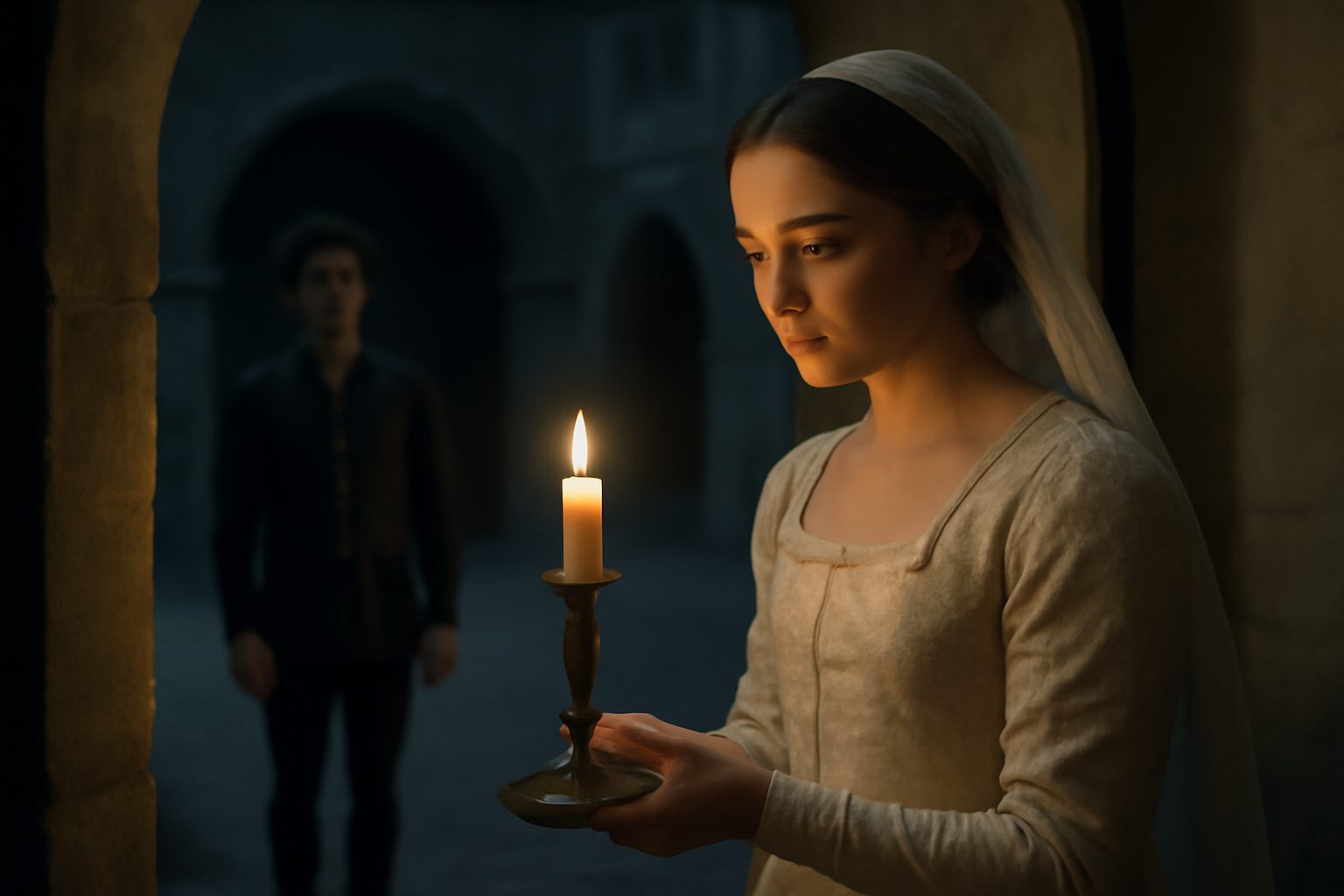
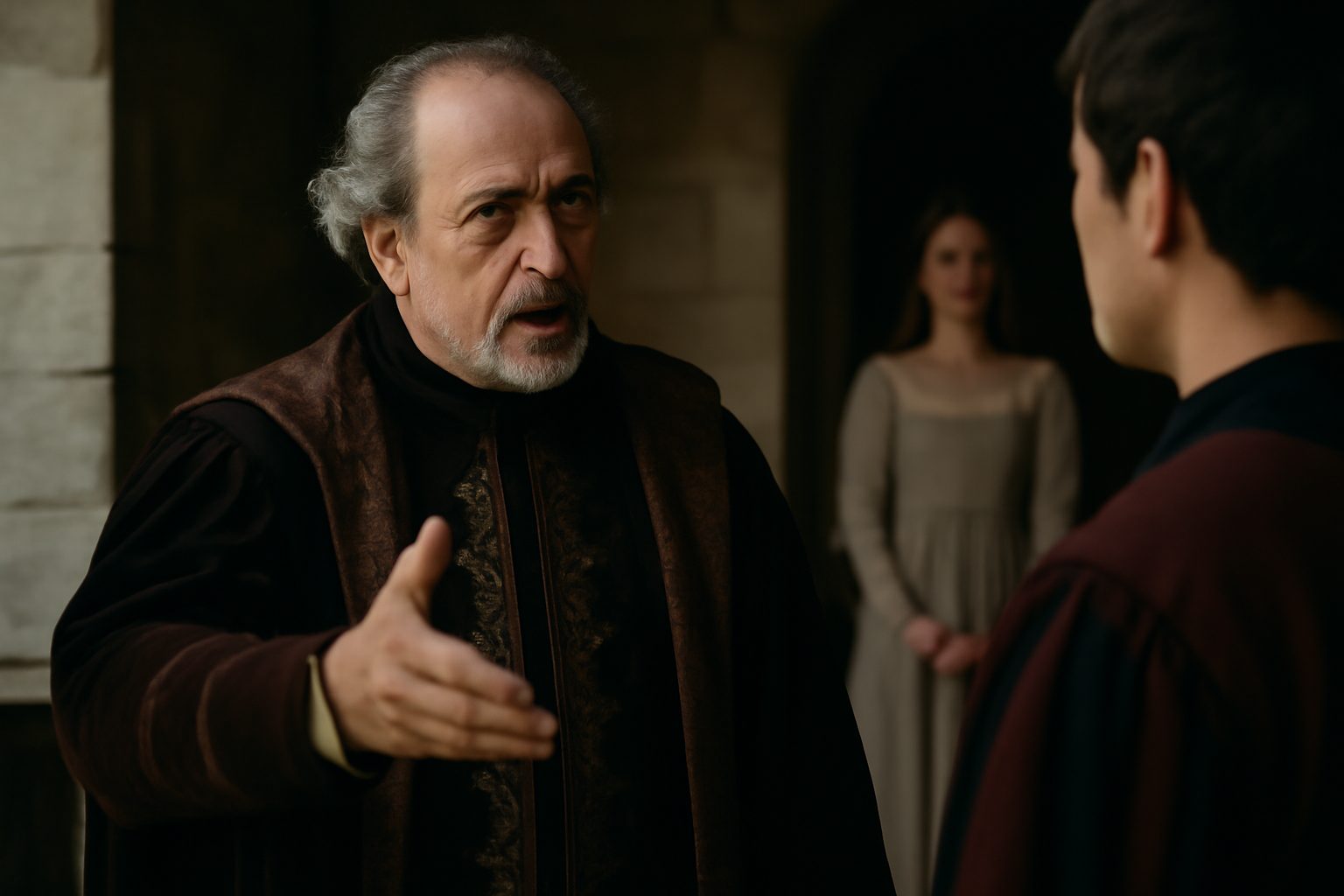
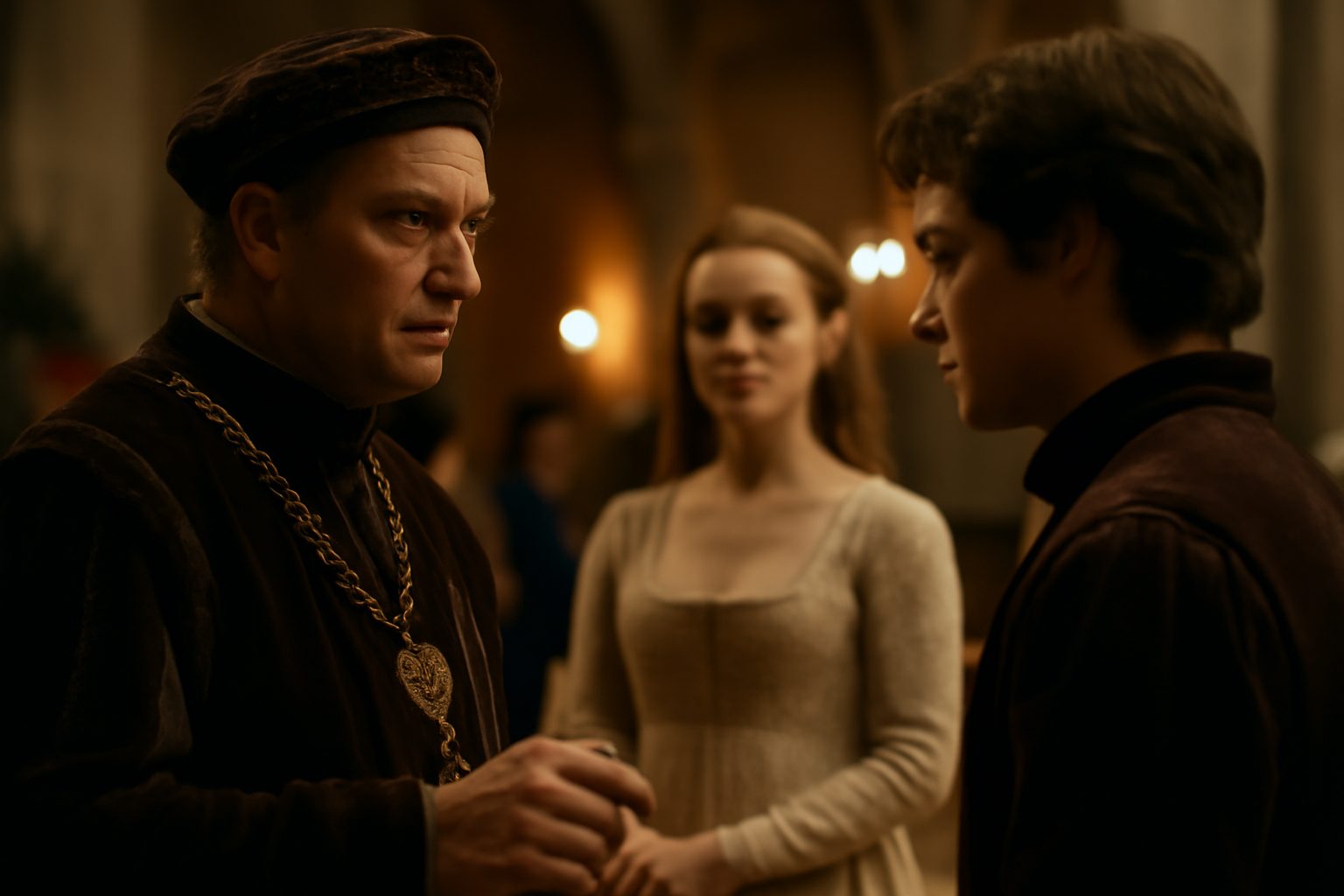
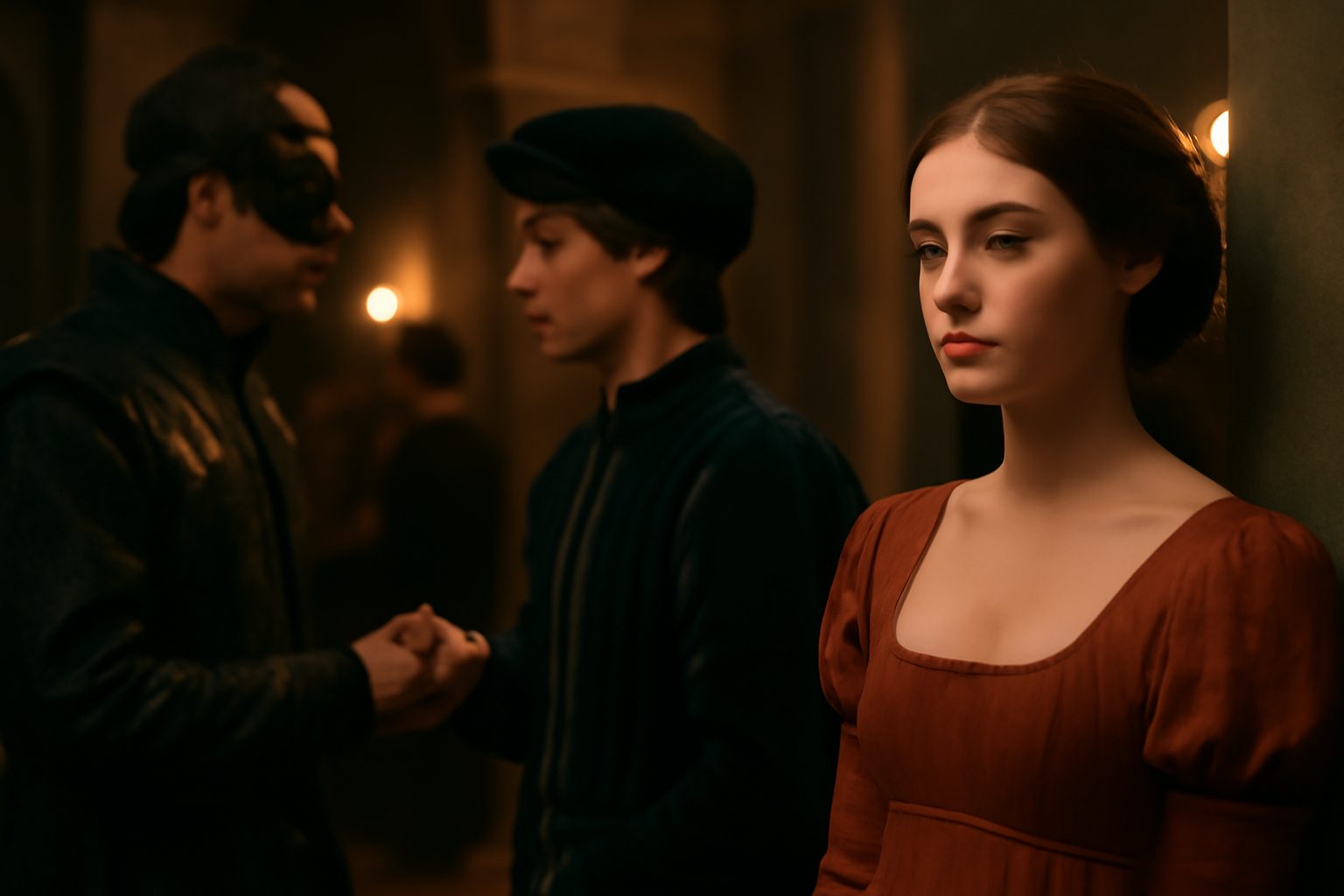
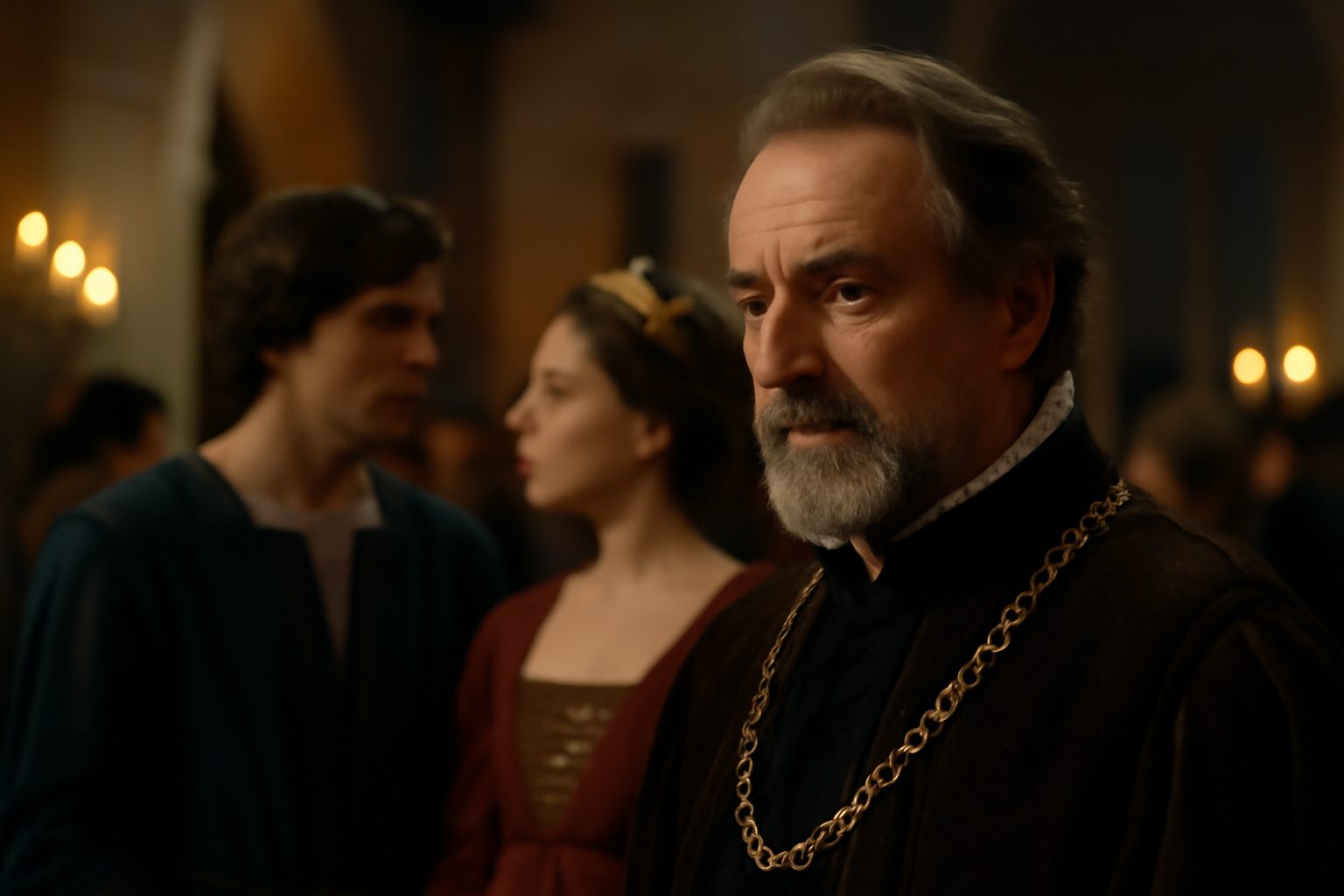
In Act 1, Scene 5 of Romeo and Juliet, Capulet hosts a grand masquerade ball where Romeo, a Montague, has secretly attended. When Tybalt recognizes Romeo's voice and threatens to confront him, Capulet rebukes Tybalt, insisting Romeo be left alone to avoid disrupting the festivities. The line is spoken by Tybalt, who reluctantly obeys Capulet's command but seethes with resentment, foreshadowing future conflict.
Capulet: "Is it e'en so? why, then, I thank you all"
In modern day english, we would say:
Is that really how it is? Well, then, thanks to all of you.
Frequently Asked Questions
Who is speaking in this line from Romeo and Juliet?
Capulet is speaking.
What is Capulet reacting to in this line?
He is reacting to something that has just been told to him.
How does Capulet feel based on this line?
He seems polite and thankful.
Connections to other verses:
Connections to "Is it e'en so? why, then, I thank you all"
This line, spoken by Capulet, serves as a polite yet firm dismissal of his guests, marking the end of the festivities. It connects to several other verses in the scene that highlight the transition from celebration to conclusion.
Transition to Departure
Capulet's gratitude and farewell echo his earlier attempts to maintain order and hospitality, such as when he urges, Nay, gentlemen, prepare not to be gone, showing his initial reluctance to end the event. However, as the party winds down, his tone shifts to resignation, aligning with We have a trifling foolish banquet towards, where he downplays the remaining festivities, subtly encouraging departure.
Reactions to the Evening's End
The line also relates to the servants' actions in clearing the hall, referenced in Away with the joint-stools, remove the court-cupboard, which signals the practical conclusion of the event. Additionally, Capulet's finality is mirrored in More torches here! Come on then, let's to bed, where he explicitly calls for an end to the evening.
Contrast with Earlier Festivity
This verse contrasts sharply with the scene's opening exuberance, such as Capulet's welcoming exclamation, Welcome, gentlemen! ladies that have their toes, emphasizing the shift from lively entertainment to a subdued close. The departure theme is further reinforced by Come, let's away; the strangers all are gone, which marks the final exit of the guests.