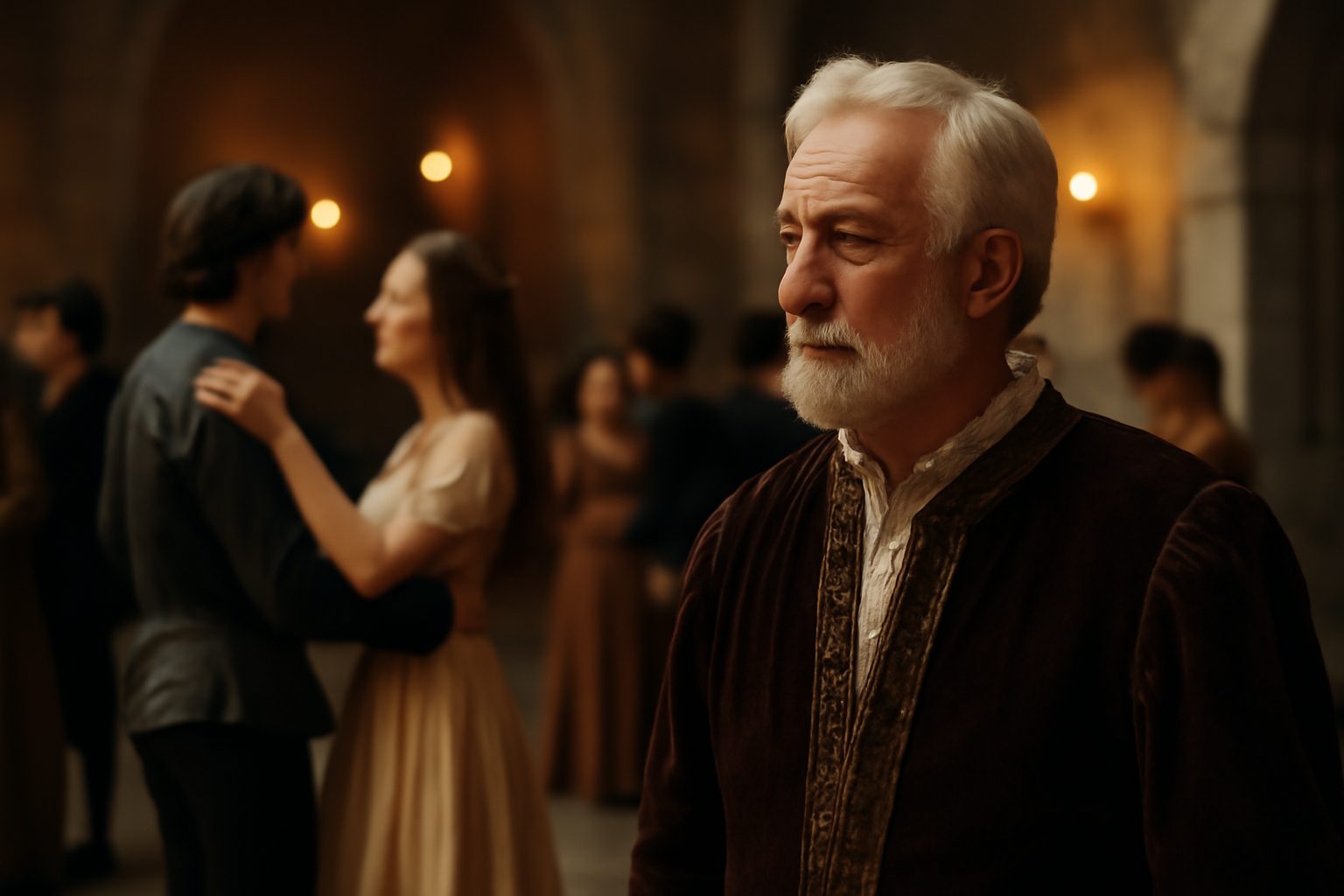
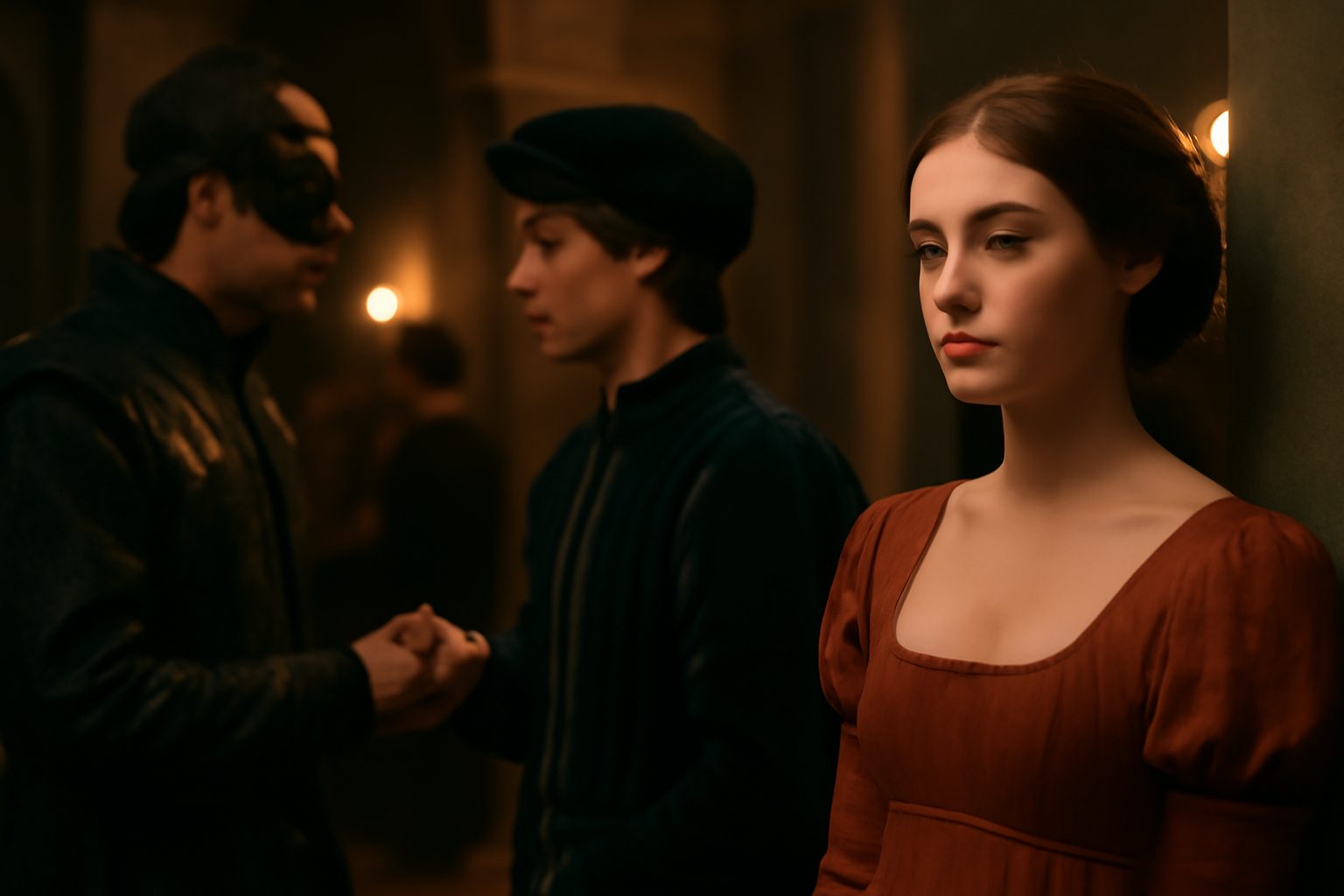
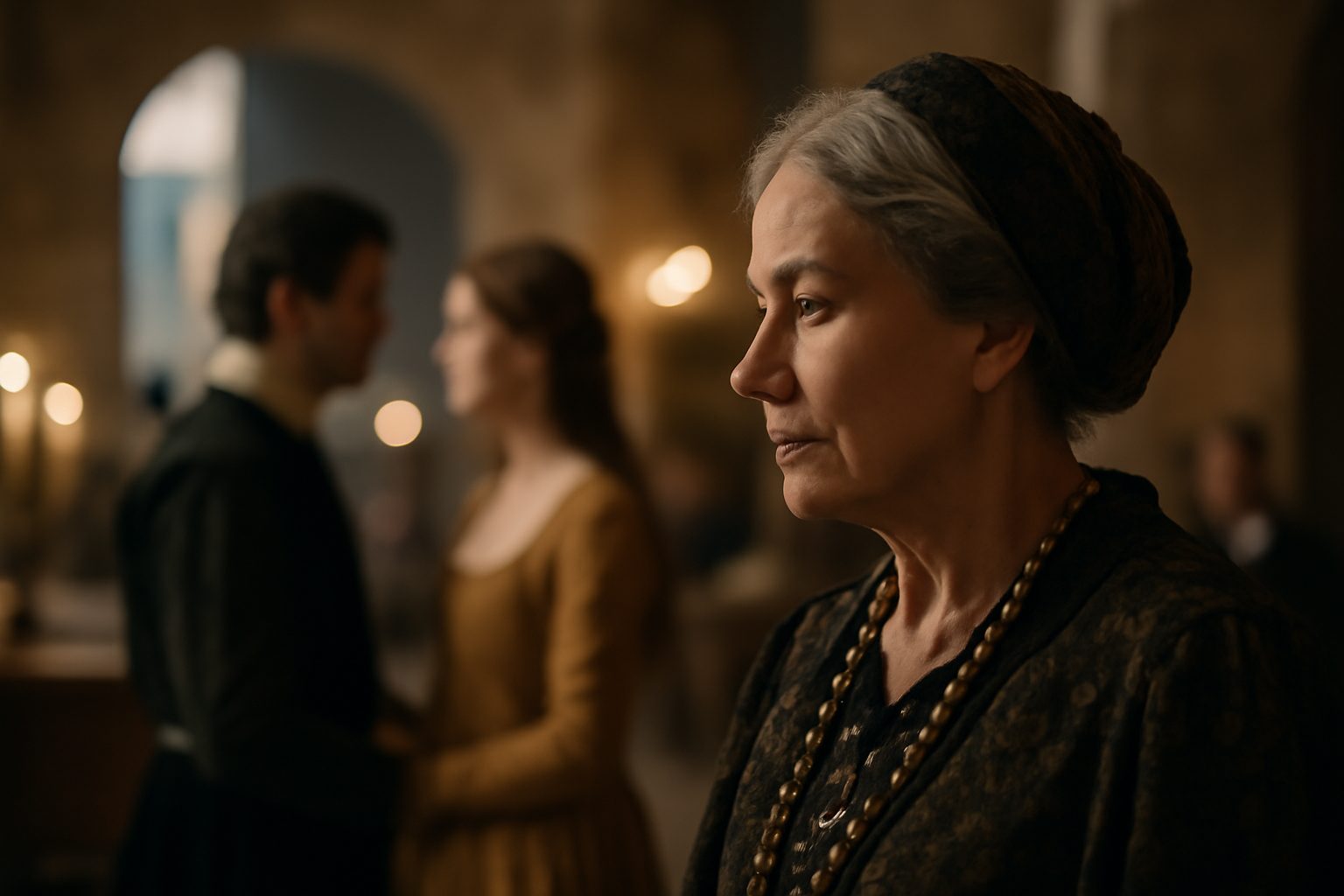
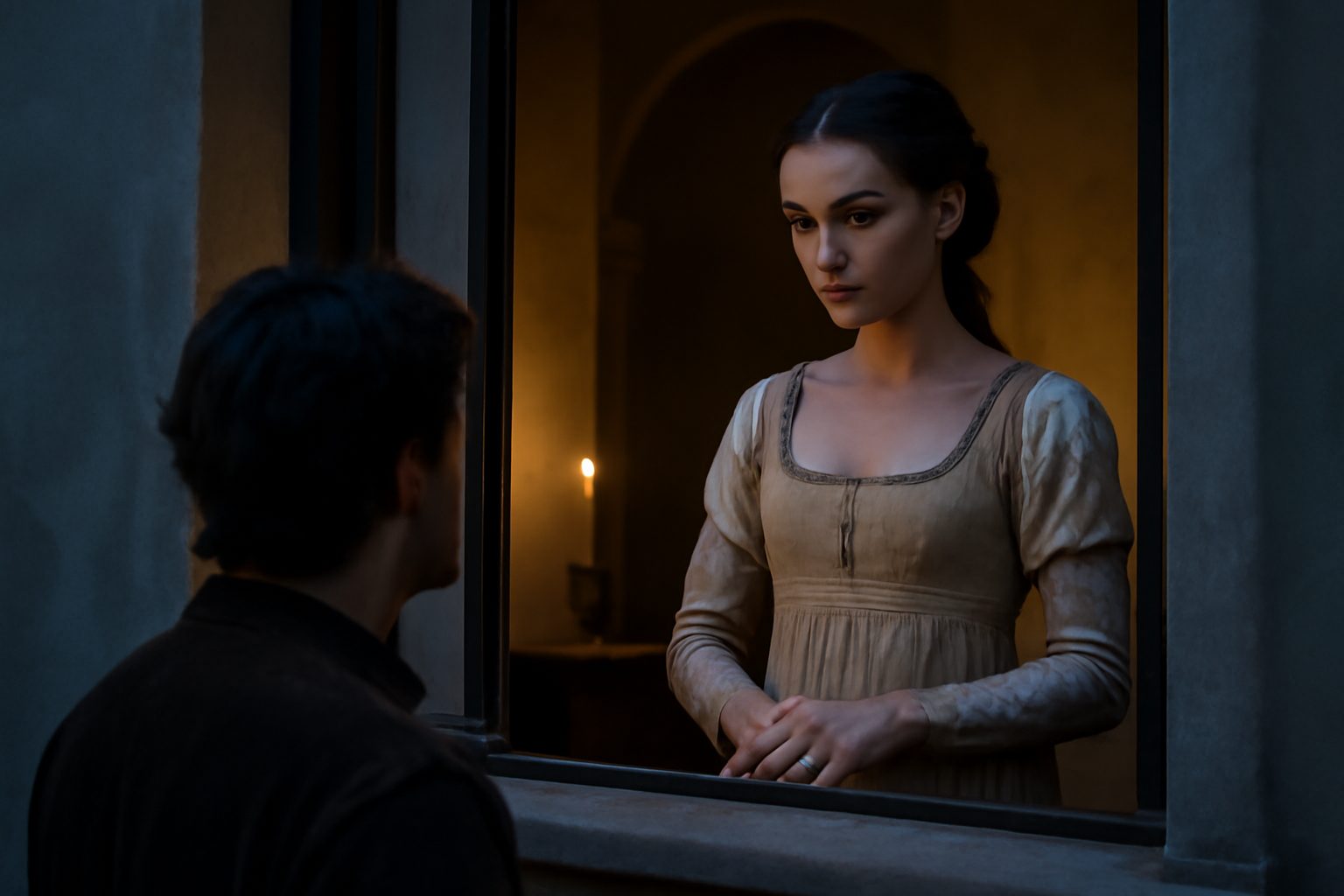
In Act 1, Scene 5 of Romeo and Juliet, the Capulets' grand feast has just ended, and the guests begin to depart. As the revelry winds down, a servant speaks these words, signaling that it is time for the household to retire now that the visitors have left. This moment marks the transition from the public festivities to the more private interactions that follow, including Romeo and Juliet's first meeting.
Nurse: "Come, let's away; the strangers all are gone."
In modern day english, we would say:
Let's go; all the guests have left.
Frequently Asked Questions
What does the Nurse tell the others to do in this line?
She tells them to leave because all the strangers have gone.
Connections to other verses:
Connections to "Come, let's away; the strangers all are gone."
This line, spoken by the Nurse to Juliet, marks the end of the Capulet feast and the departure of the guests. It serves as a transition from the public revelry to a more private, intimate moment, setting the stage for Juliet's subsequent inquiries about Romeo.
Link to the End of the Feast
The call to depart is echoed in earlier lines where Capulet urges his guests to stay, such as in Nay, gentlemen, prepare not to be gone;, showing his hospitality. However, as the event winds down, other servants also signal the conclusion, like in More torches here! Come on then, let's to bed., which similarly indicates the closing of the festivities.
Juliet's Inquiry About Romeo
Directly after this line, Juliet asks the Nurse about Romeo's identity, as seen in Come hither, nurse. What is yond gentleman?. This connection highlights how the departure of the "strangers" allows Juliet to privately seek information, leading to the revelation of Romeo's name and the ensuing tragic realization.
Contrast with Tybalt's Anger
While the Nurse focuses on the guests leaving, Tybalt's earlier outburst, A villain that is hither come in spite,, underscores the tension beneath the surface of the feast. The peaceful departure mentioned in the verse contrasts sharply with the hostility that Romeo's presence incites, foreshadowing future conflicts.
Foreshadowing and Irony
Juliet's line, My grave is like to be my wedding bed., spoken shortly after, adds dramatic irony to the Nurse's innocuous remark about the strangers leaving, as Juliet's love for Romeo—a "stranger" in terms of being unknown to her—will indeed lead to her tragic fate.