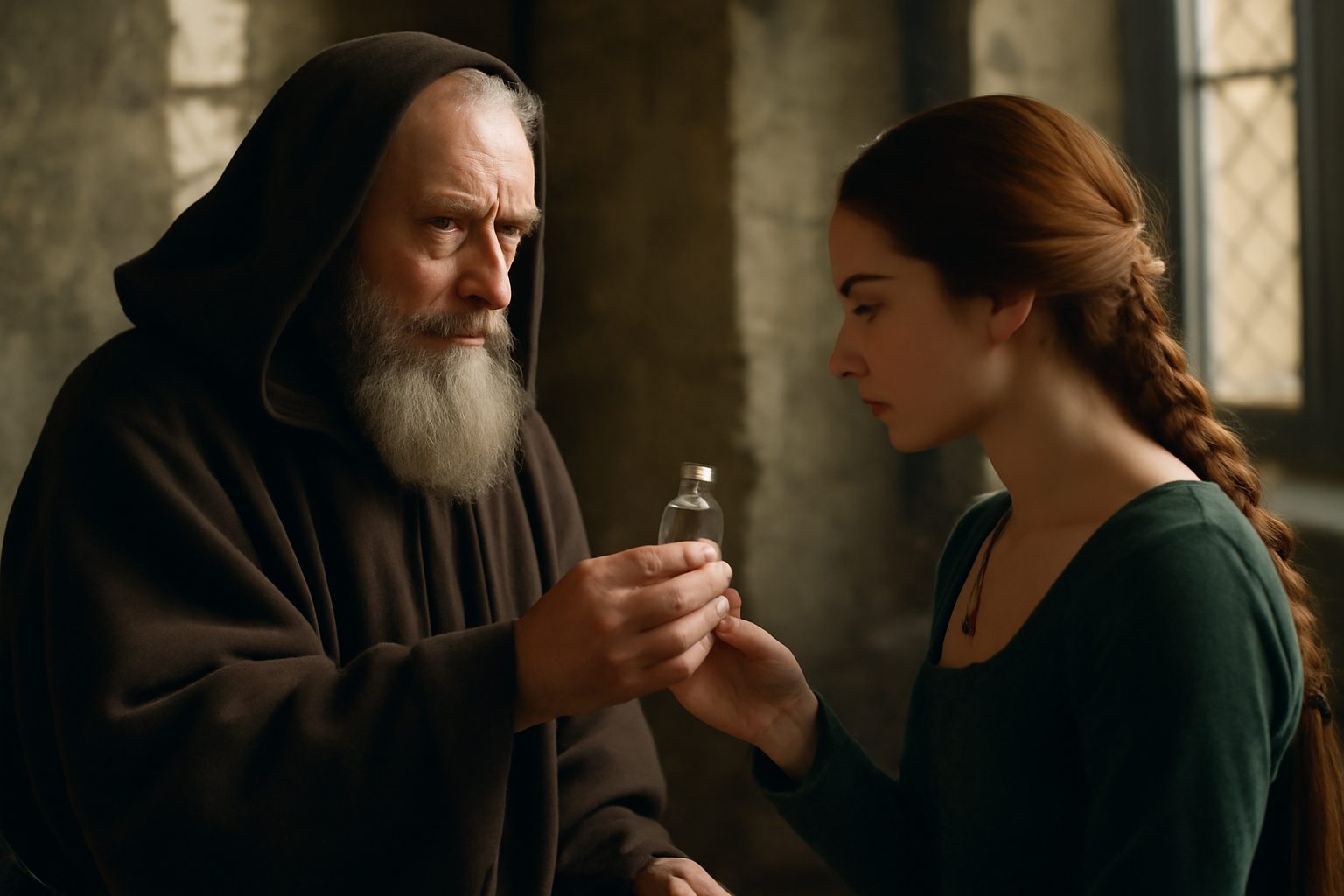
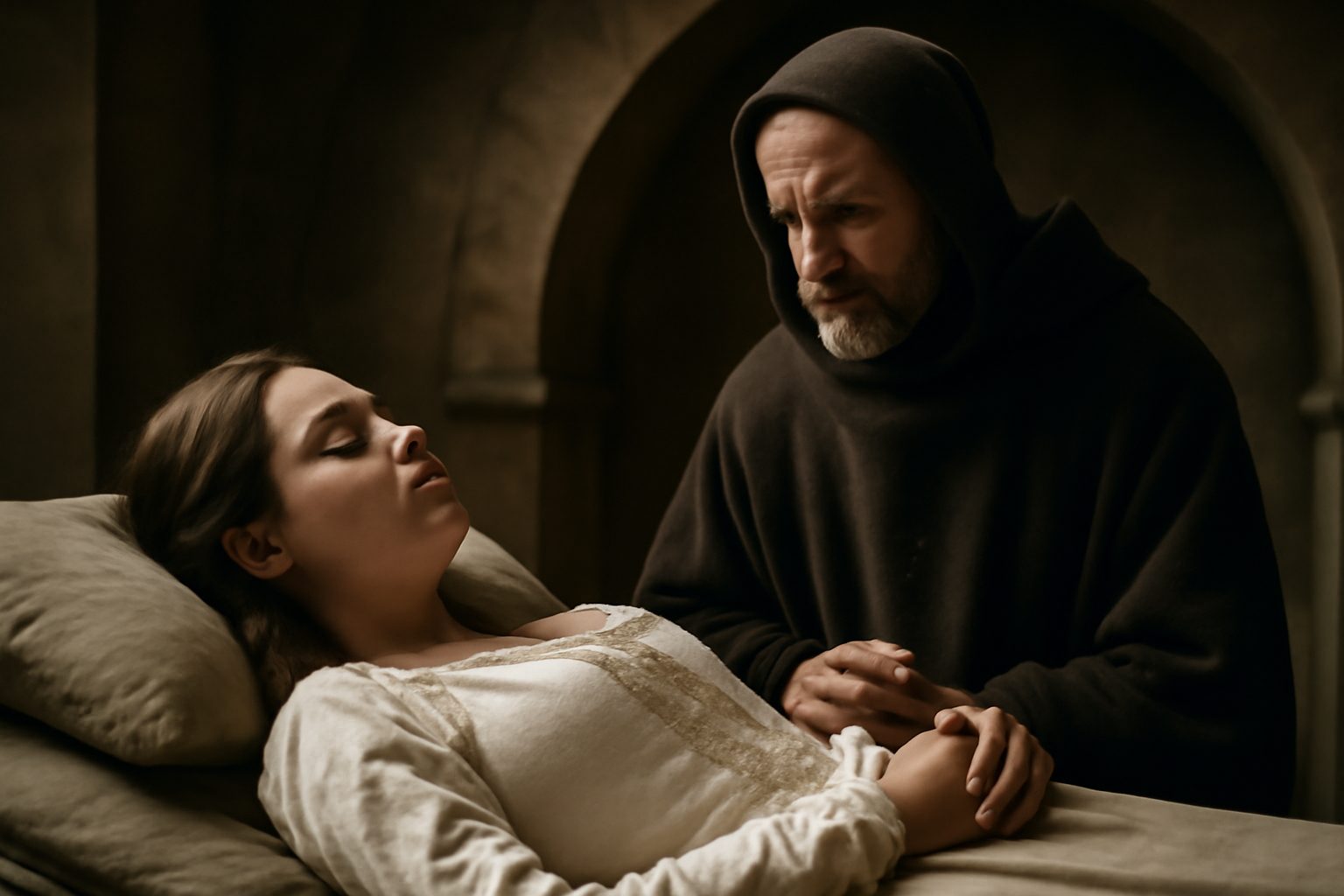
In Act 4, Scene 1 of Romeo and Juliet, Friar Laurence devises a desperate plan to reunite Juliet with her exiled husband, Romeo. As Juliet faces a forced marriage to Paris, the Friar suggests a risky scheme involving a sleeping potion to fake her death. This line refers to his assurance that Romeo will then secretly bring her to Mantua, where they can live together in exile.
Friar Laurence: "Shall Romeo bear thee hence to Mantua."
In modern day english, we would say:
Romeo will take you away to Mantua.
Frequently Asked Questions
What does Friar Laurence plan for Romeo to do in this line?
Friar Laurence plans for Romeo to take Juliet to Mantua.
Connections to other verses:
Connections to "Shall Romeo bear thee hence to Mantua"
The line "Shall Romeo bear thee hence to Mantua" is part of Friar Laurence's plan to reunite Juliet with Romeo after her feigned death. This verse is deeply connected to several others in the scene that outline the details and implications of this desperate scheme.
Planning and Communication
The friar's assurance that Romeo will transport Juliet to Mantua is preceded by his promise to inform Romeo of their plan through letters, as indicated in "Shall Romeo by my letters know our drift". This communication is crucial to ensure Romeo is prepared to retrieve her. Additionally, the friar mentions sending a messenger to Mantua in "To Mantua, with my letters to thy lord", reinforcing the logistical steps involved.
Juliet's Resolve and the Friar's Instructions
Juliet's unwavering determination, expressed in lines like "And I will do it without fear or doubt", underscores her willingness to embrace the friar's dangerous plan, including the eventual journey to Mantua. The friar's detailed instructions, such as drinking the potion ("And this distilled liquor drink thou off") and the simulated death state ("And in this borrow'd likeness of shrunk death"), are all prerequisites to the escape to Mantua.
Escape and Reunion
The verse also ties to the friar's description of Juliet's awakening and Romeo's role, as in "Will watch thy waking, and that very night", which sets the stage for Romeo to bear her away. The ultimate goal of preserving her honor and marriage to Romeo is echoed in "And this shall free thee from this present shame", with the Mantua escape being the means to achieve this.