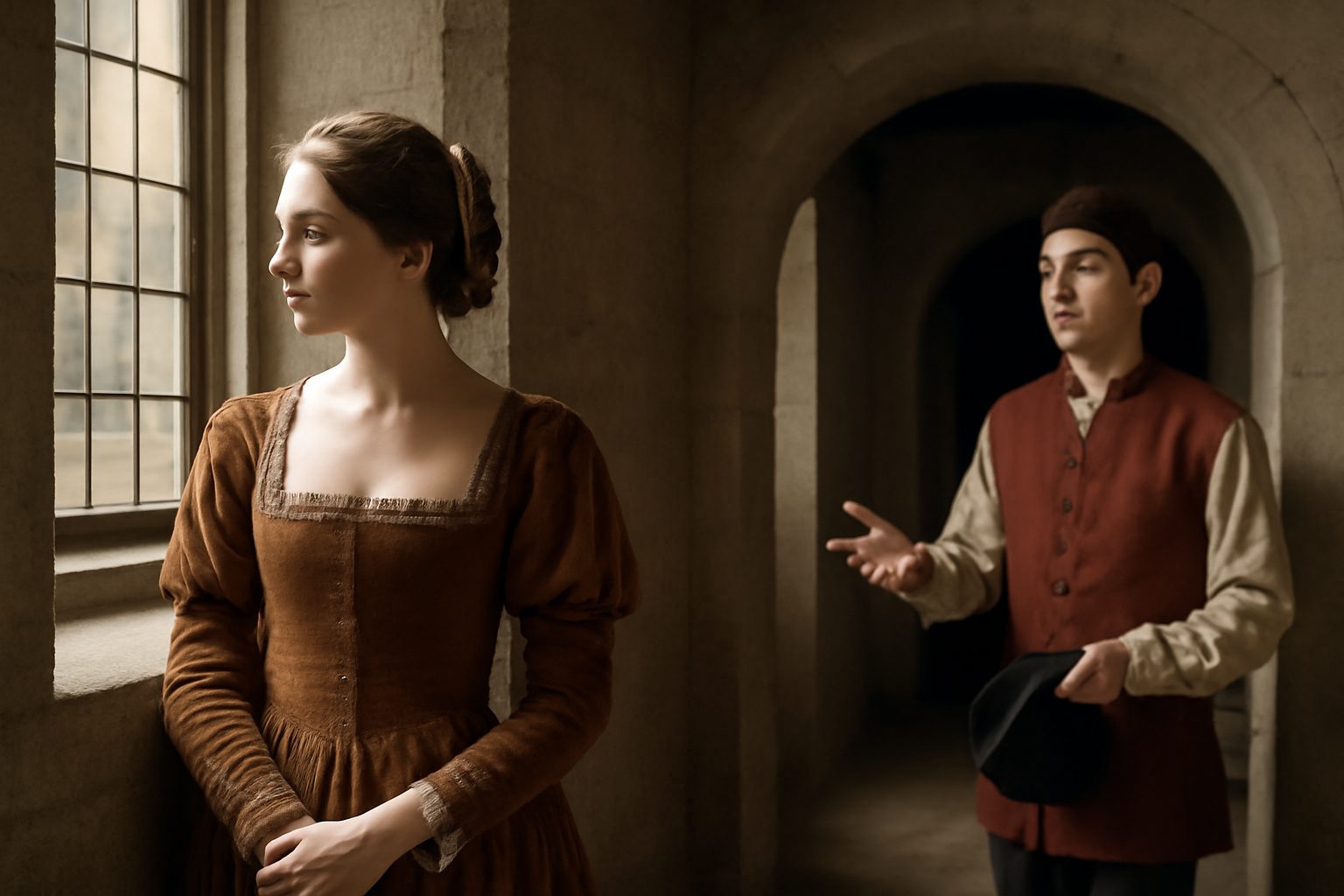
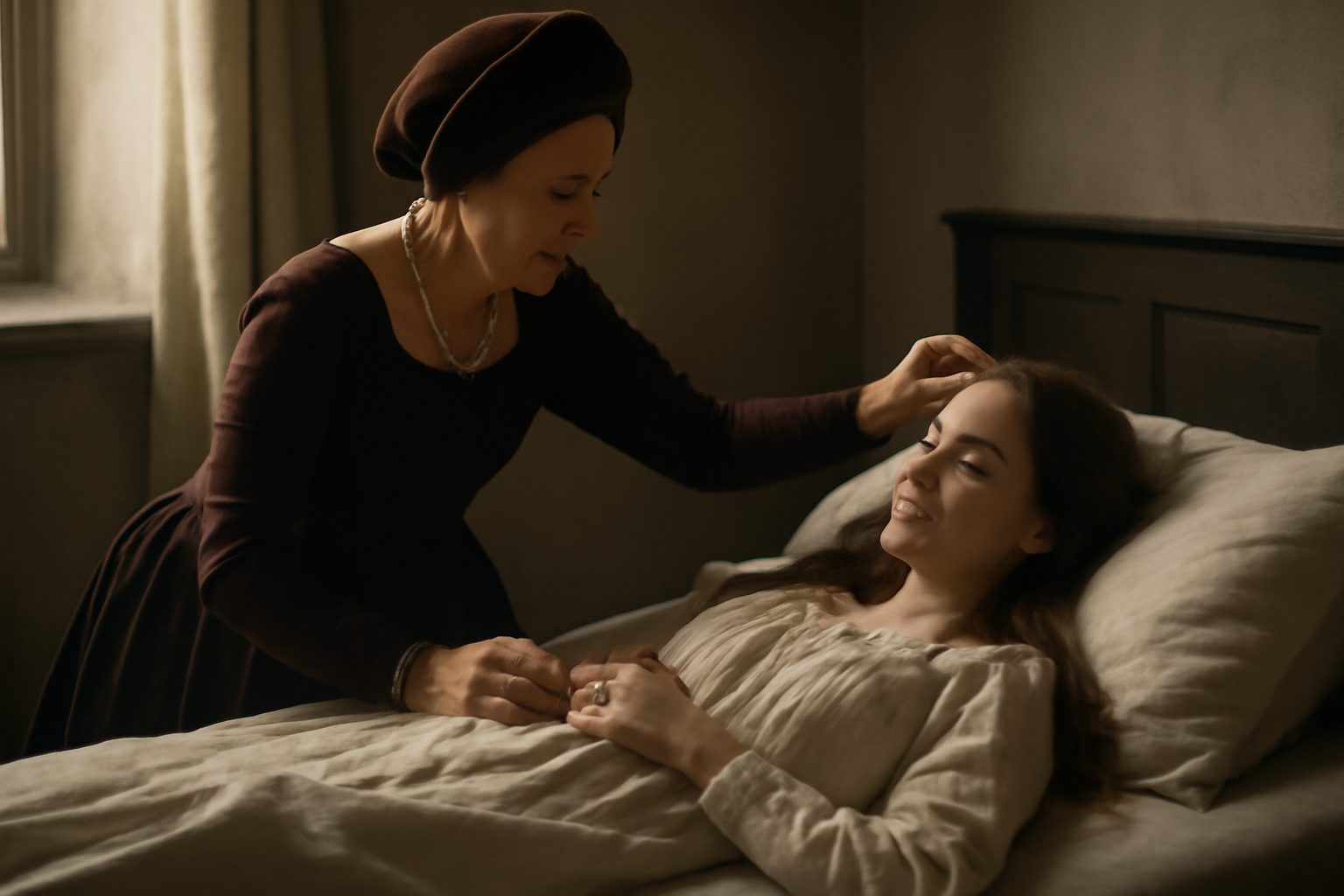
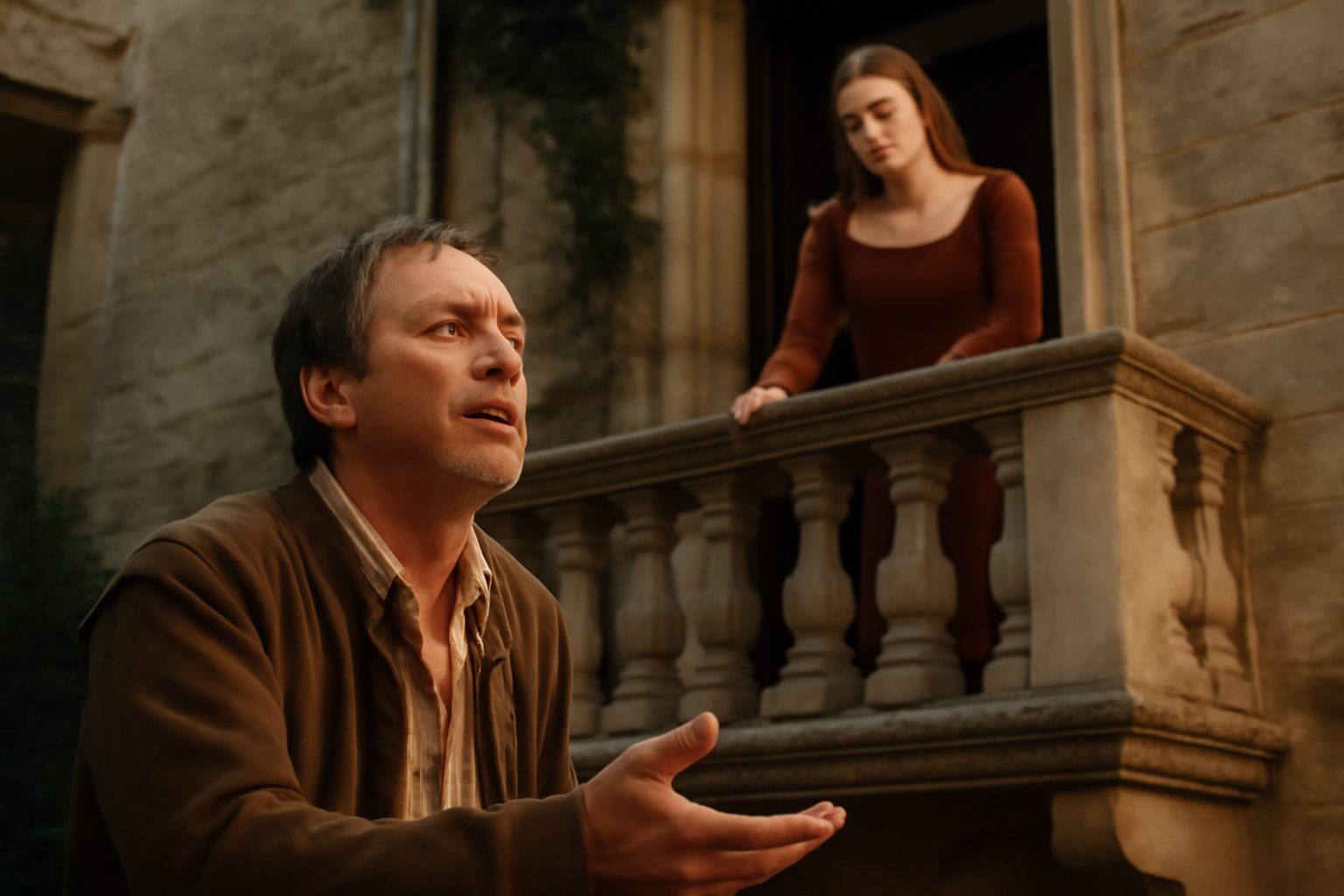
In Act 4 Scene 4 of Romeo and Juliet, the Capulet household is bustling with preparations for Juliet's wedding to Paris. As the Nurse and servants hurry about, Peter, a servingman, mockingly repeats the phrase in response to the frantic and somewhat chaotic energy around him. The line captures the lighthearted yet tense atmosphere on what the audience knows is the morning of Juliet's feigned death.
Capulet: "A jealous hood, a jealous hood!"
In modern day english, we would say:
You’re just being paranoid, so paranoid!
Frequently Asked Questions
What does Capulet mean when he says 'a jealous hood' in this scene?
Capulet is teasing the Nurse for being overly protective or suspicious, like someone wearing a hood that symbolizes jealousy.
Connections to other verses:
Connections to "A jealous hood, a jealous hood!"
The line "A jealous hood, a jealous hood!" is spoken by the Nurse in response to Lady Capulet's teasing remark about her husband's past behavior. This connects to Ay, you have been a mouse-hunt in your time, where Lady Capulet accuses Capulet of being a womanizer in his youth, prompting the Nurse's jest about jealousy.
Related Themes and Context
The playful accusation and the Nurse's response highlight the domestic banter occurring amidst the wedding preparations. This contrasts with the urgency seen in lines like Come, stir, stir, stir! the second cock hath crow'd and Make haste; the bridegroom he is come already, which emphasize the rushed, chaotic atmosphere of the scene.
Additionally, Capulet's defensive retort in But I will watch you from such watching now follows the exchange, showing his humorous attempt to turn the tables, further enriching the jest about jealousy and watchfulness.
Contrast with Serious Undertones
While the "jealous hood" remark adds levity, it exists alongside more somber elements, such as the reference to For this night's watching, which alludes to the fatigue and strain of the overnight preparations, subtly foreshadowing the tragedy to come.