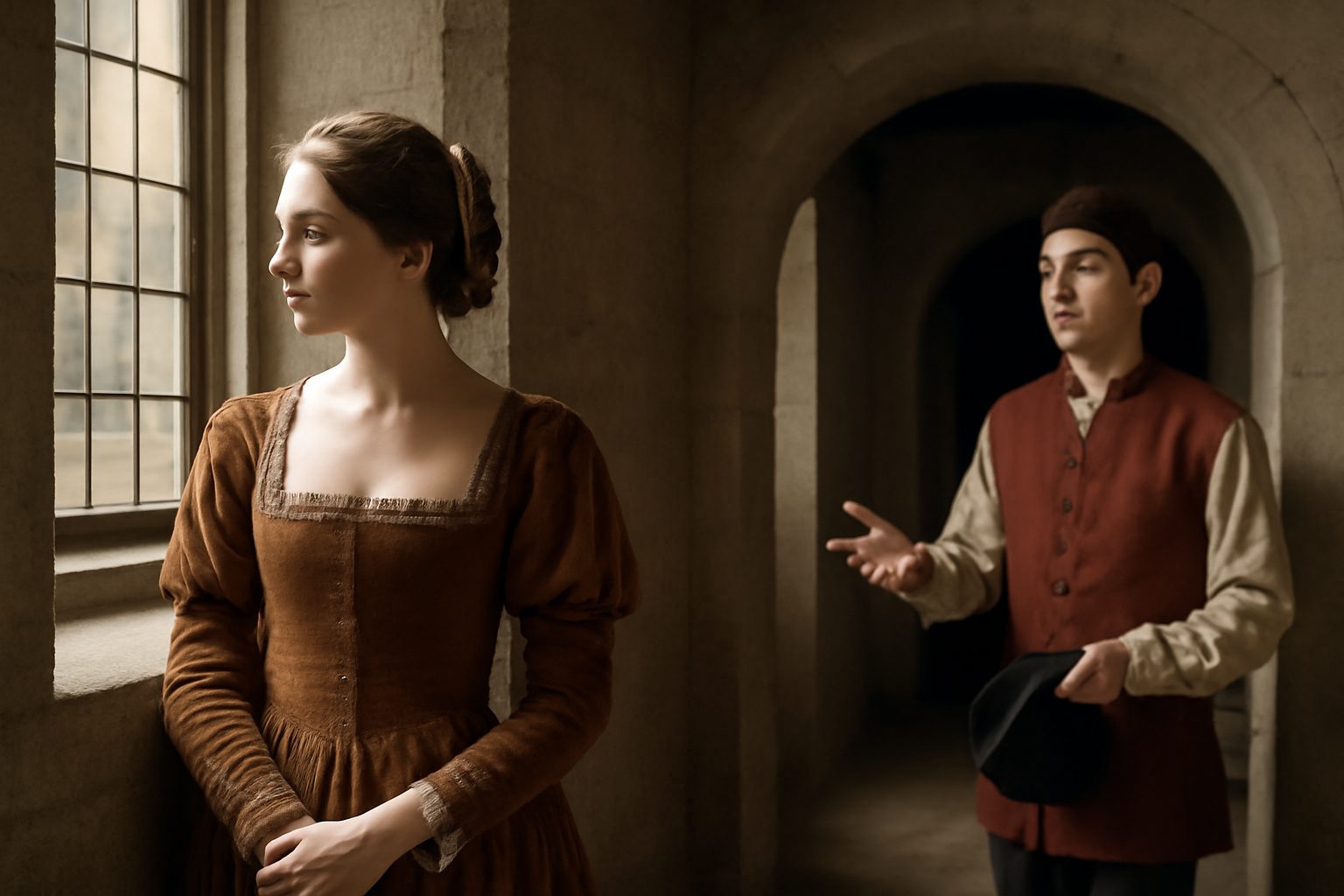
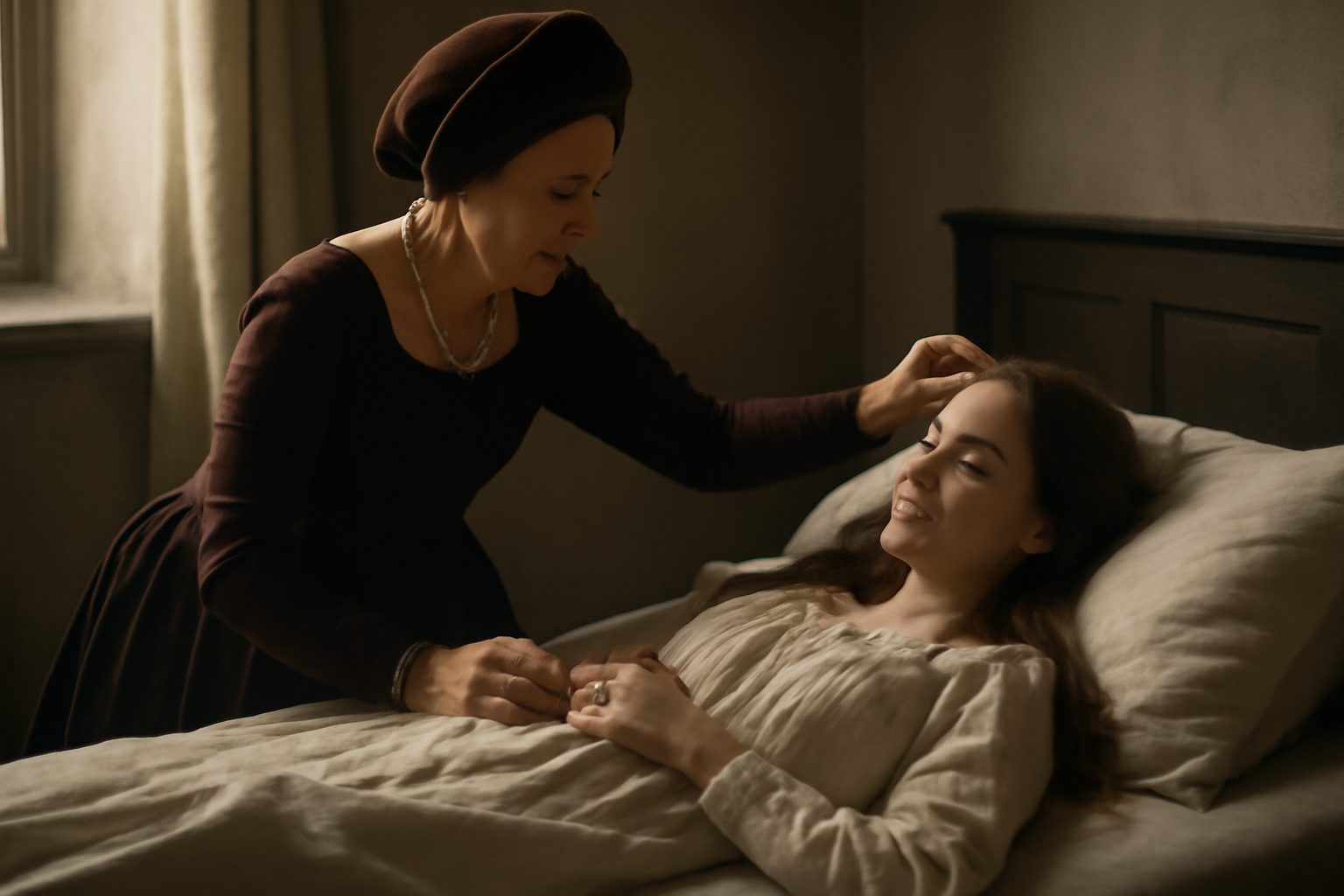
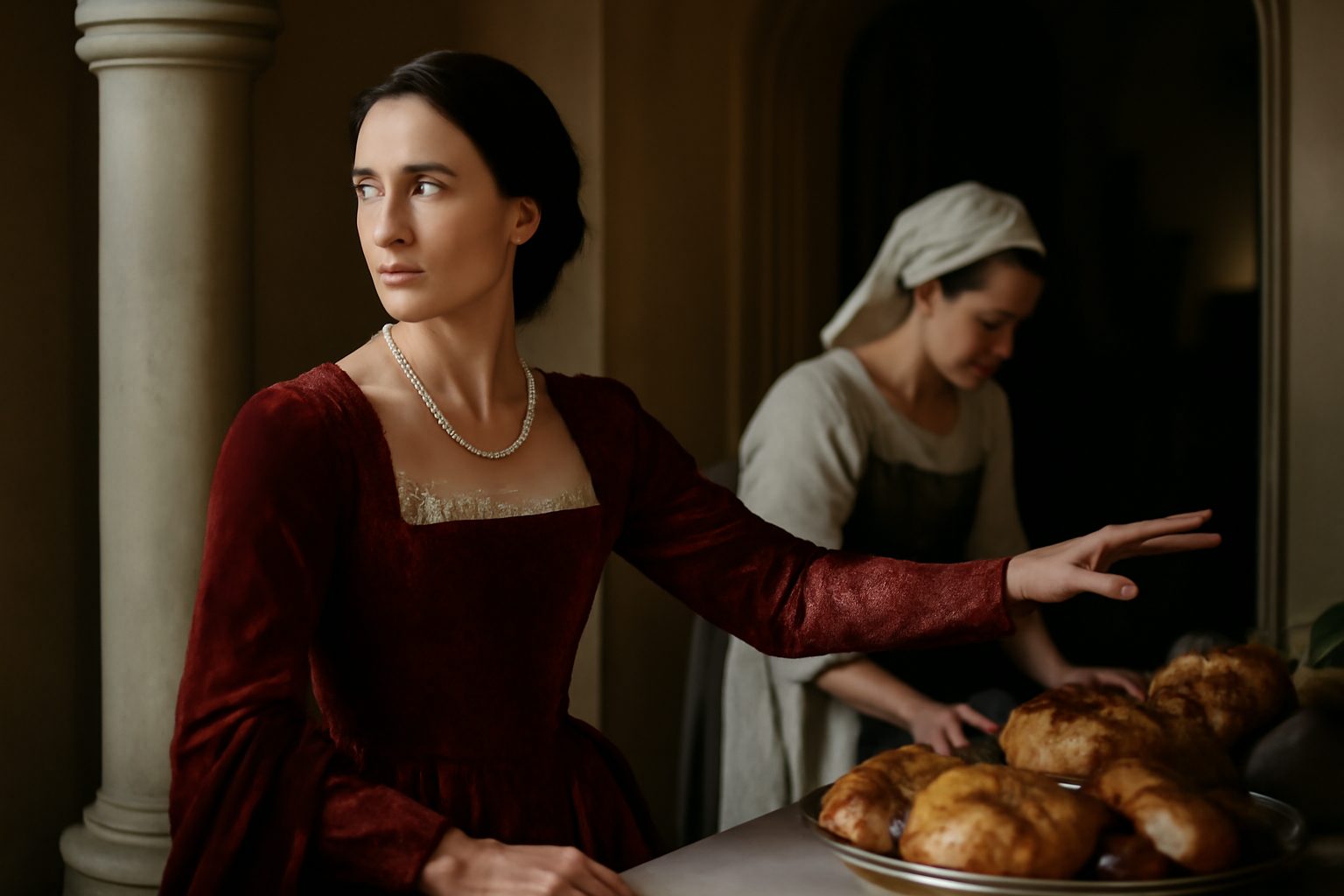
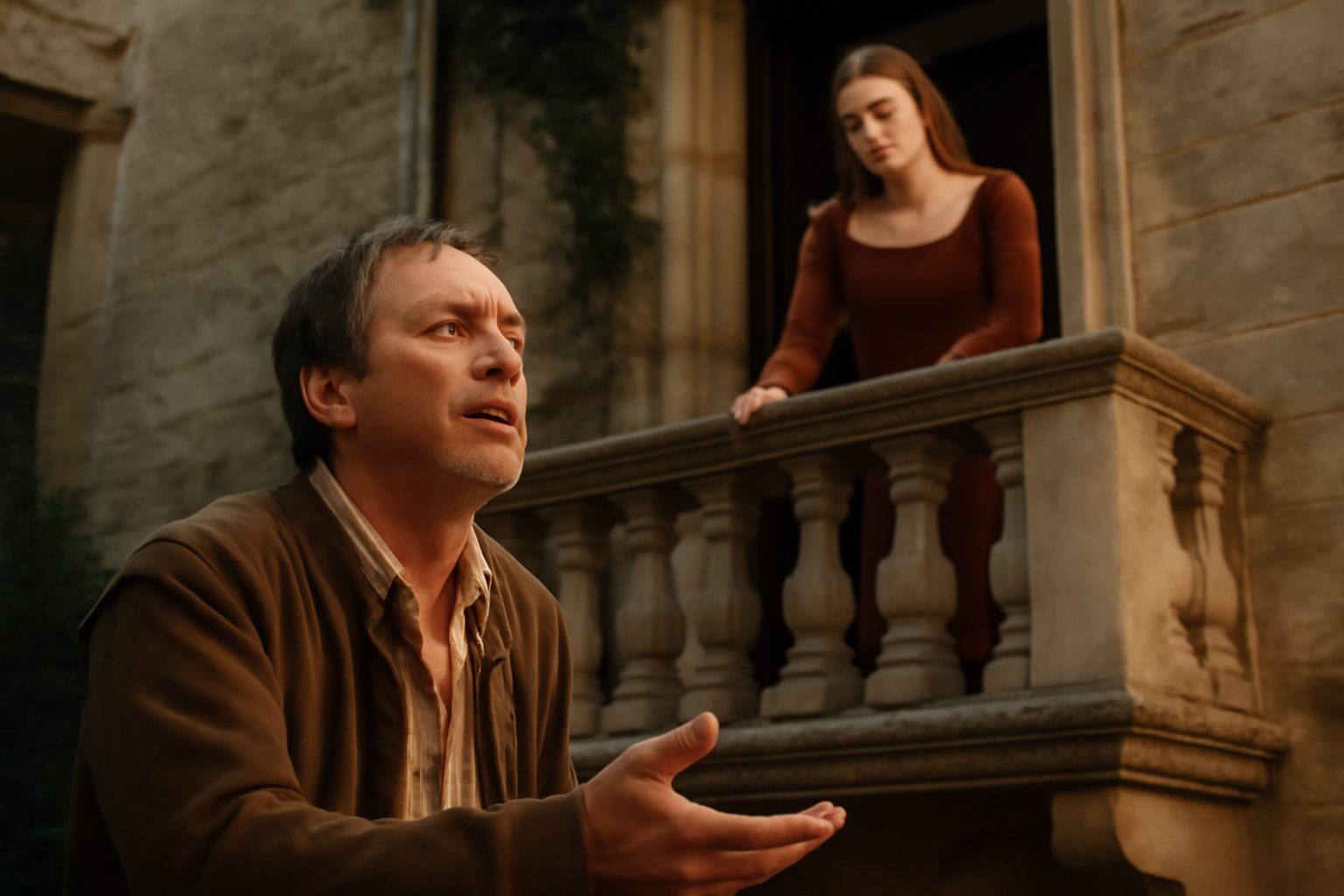
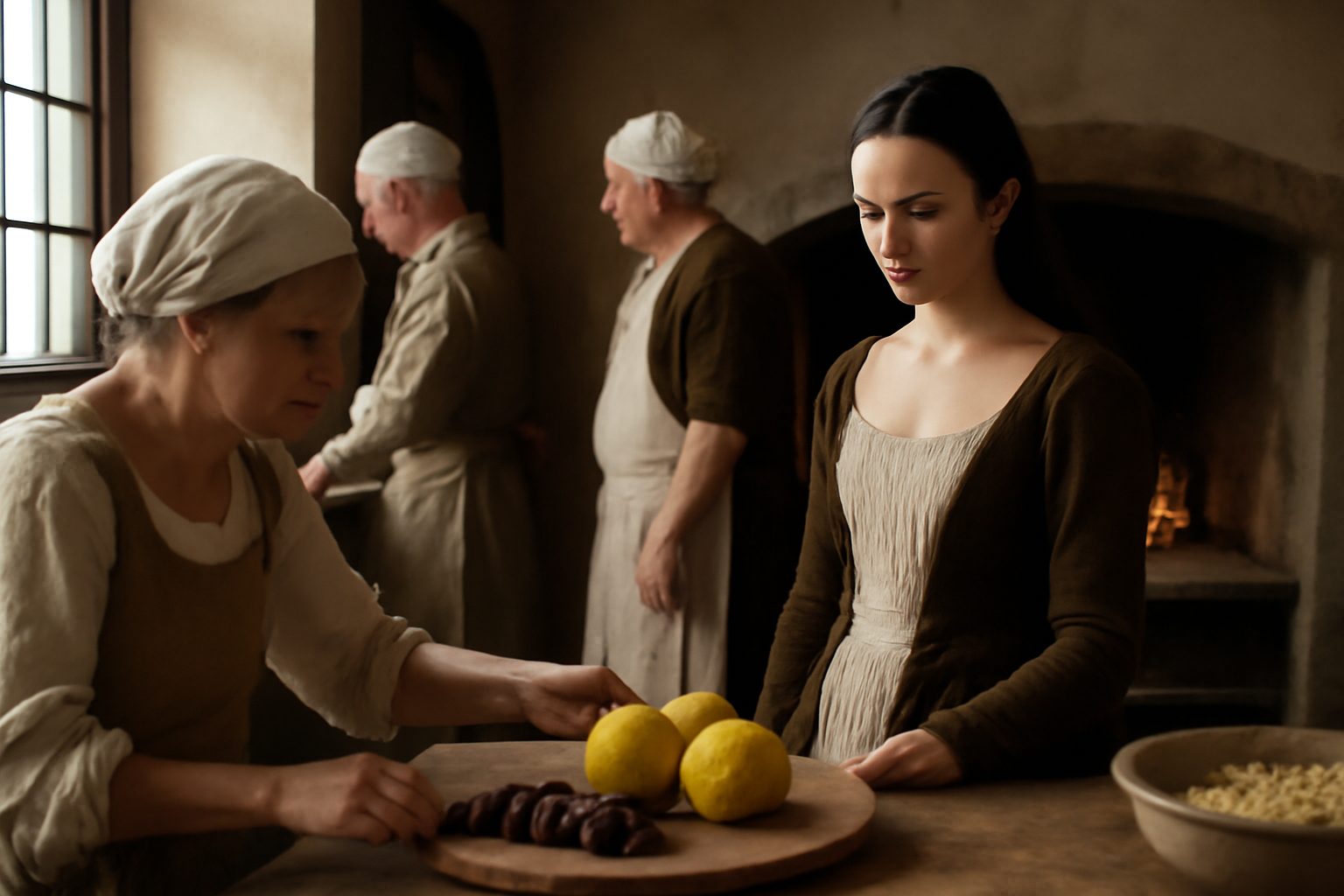
In Act 4, Scene 4 of Romeo and Juliet, the Capulet household is bustling with preparations for Juliet's wedding to Paris. A servant, overwhelmed by the chaos, responds to a request with confusion, admitting he does not recognize some of the items needed for the feast. This brief exchange highlights the frenzied atmosphere as the family unknowingly moves closer to tragedy.
First Servant: "Things for the cook, sir; but I know not what."
In modern day english, we would say:
He's talking about things for the cook, but I don't know exactly what.
Frequently Asked Questions
What does the first servant say he is carrying in Act 4 Scene 4?
The first servant says he is carrying things for the cook, but he does not know exactly what they are.
Connections to other verses:
Connections to "Things for the cook, sir; but I know not what."
The line "Things for the cook, sir; but I know not what." reflects the chaotic and hurried preparations for Juliet's wedding, a theme echoed throughout Act 4, Scene 4. It highlights the servants' confusion and the frantic atmosphere in the Capulet household.
Related Verses on Preparation and Confusion
This sense of disarray is mirrored in "They call for dates and quinces in the pastry.", where specific culinary items are demanded, yet the servants struggle to keep up with orders. Similarly, "Look to the baked meats, good Angelica:" shows Lady Capulet directing tasks, emphasizing the oversight needed amidst the chaos.
Commands and Urgency
The urgency in the scene is palpable in lines like "Come, stir, stir, stir! the second cock hath…" and repeated calls for haste, such as "Make haste, make haste." and "Make haste, I say.". These reinforce the pressure on the servants, contextualizing the speaker's uncertain response about the cook's needs.
Resource Management and Instructions
Capulet’s managerial role is evident in "Spare not for the cost.", indicating no expense is spared, yet the servants still face ambiguity. Commands like "Sirrah, fetch drier logs:" and "Call Peter, he will show thee where they are." show delegated tasks, paralleling the cook's unspecified requirements.
Time and Fatigue
The pre-dawn setting, noted in "The curfew-bell hath rung, 'tis three o'clock:", adds to the tension. Characters express weariness, such as in "Get you to bed; faith, You'll be sick to-morrow" and "For this night's watching.", underscoring the toll of the rushed preparations, which may contribute to the servant's vague reply.
Conclusion of Tasks
As the scene progresses, instructions become more direct, like "Go waken Juliet, go and trim her up;", shifting focus from kitchen chaos to final wedding preparations, leaving the cook's unresolved needs behind in the frenzy.