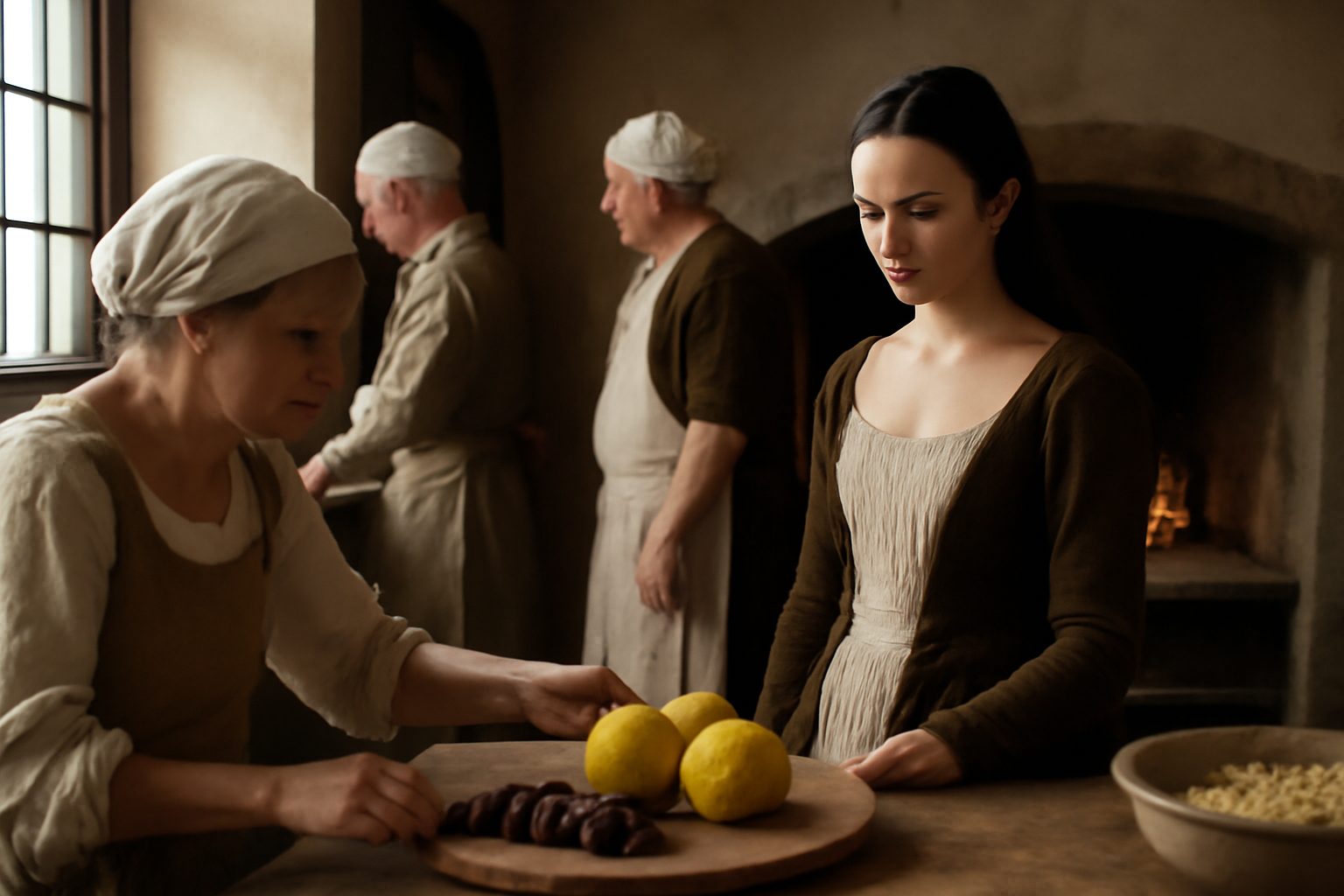
In Act 4, Scene 4 of Romeo and Juliet, the Capulet household is bustling with preparations for Juliet's wedding to Paris. As the servants scramble to complete last-minute tasks, one of them dismissively references Peter, likely the Nurse's servant, suggesting he should not be bothered with trivial matters. This line reflects the chaotic and hurried atmosphere in the house, unaware that Juliet has already taken drastic steps to avoid the marriage.
Second Servant: "And never trouble Peter for the matter."
In modern day english, we would say:
And don’t bother Peter about it.
Frequently Asked Questions
Who is Peter in this line from Romeo and Juliet?
Peter is a servant mentioned by another servant in the scene.
What does the servant mean by never trouble Peter for the matter?
The servant is saying not to bother Peter about whatever issue or task is being discussed.
Connections to other verses:
Connections to "And never trouble Peter for the matter."
The line And never trouble Peter for the matter. is spoken by the First Servant in response to Capulet's bustling commands. It reflects the chaotic, hurried atmosphere of wedding preparations and ties directly to other mentions of Peter, a servant, in the scene.
Direct Reference to Peter
This verse connects to Call Peter, he will show thee where they are., where Capulet specifically instructs someone to seek Peter's assistance. The First Servant's remark suggests that Peter is already occupied or that his help is unnecessary, highlighting the overlapping demands on the household staff.
Atmosphere of Urgency and Confusion
The dismissive tone in "never trouble Peter" aligns with the scene's recurring urgency, such as in Make haste, make haste. and Make haste, I say.. These lines collectively emphasize the pressure and slight disorder as Capulet oversees the preparations.
Servant Interactions and Humor
The servant's witty retort also fits the playful, albeit stressed, exchanges among characters. For instance, Mass, and well said; a merry whoreson, ha! shows Capulet's appreciation for quick humor, which may include the First Servant's remark about Peter. Similarly, Thou shalt be logger-head. Good faith, 'tis day: continues the banter, reinforcing the scene's blend of urgency and lightheartedness among the servants.
Logistical Overlap
References to tasks and resources, like I have a head, sir, that will find out logs, and Sirrah, fetch drier logs:, show the servants managing specific duties. The mention of Peter fits into this context of delegated responsibilities, where avoiding unnecessary requests keeps the workflow efficient.