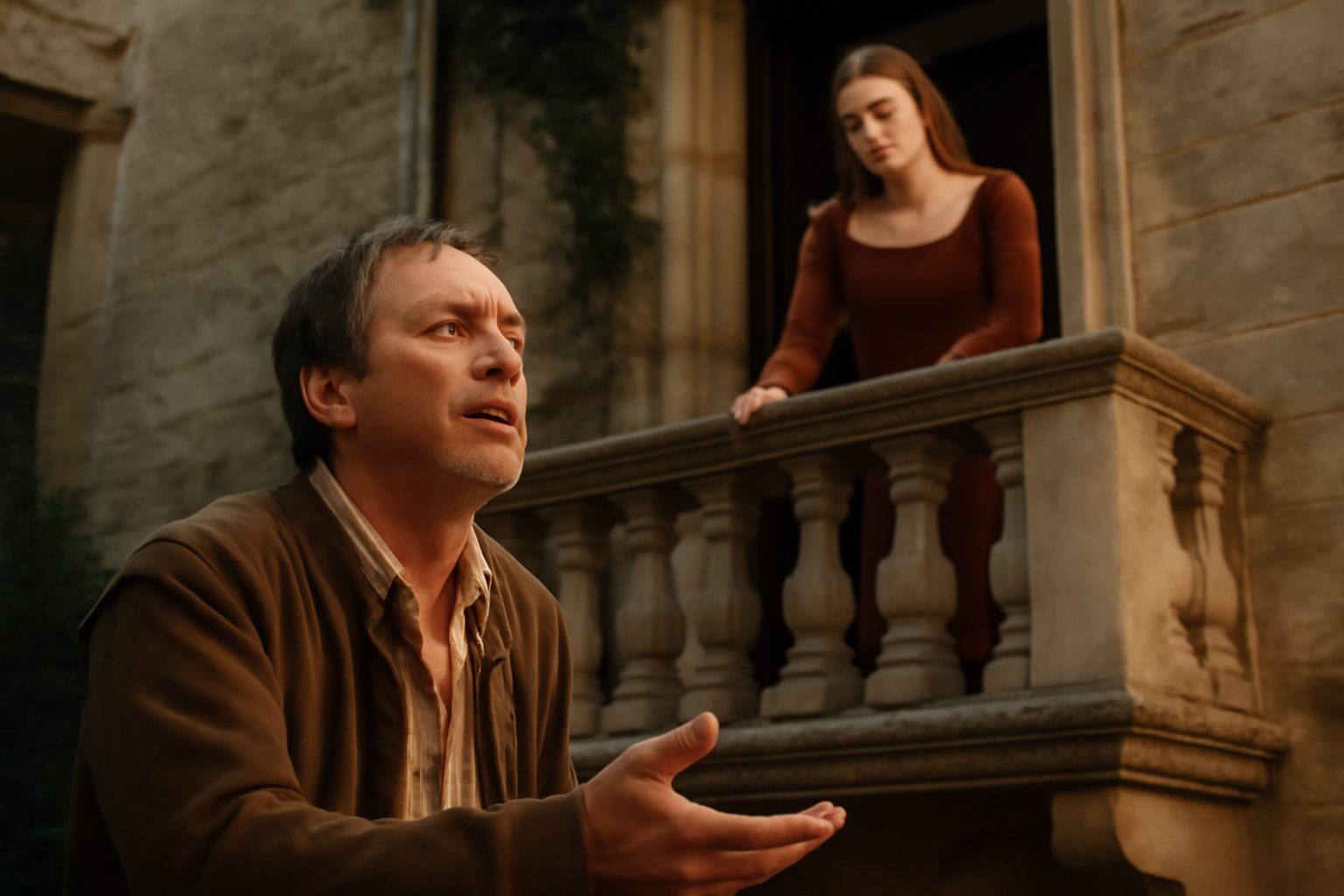
In Act 4, Scene 4 of Romeo and Juliet, the Capulet household is bustling with preparations for Juliet's wedding to Paris, unaware of her secret plan to avoid the marriage. As the scene unfolds, Lord Capulet instructs the Nurse to hurry and fetch Juliet, eager to move forward with the festivities. This line reflects his urgency and excitement, contrasting sharply with the tragic irony of Juliet's impending fate.
Capulet: "I'll go and chat with Paris: hie, make haste,"
In modern day english, we would say:
I'll go talk to Paris—hurry up and get ready.
Frequently Asked Questions
What does Capulet tell someone to do in this line?
He tells someone to hurry and go quickly.
Who is Capulet planning to talk to in this line?
He is planning to talk to Paris.
Connections to other verses:
Connections to "I'll go and chat with Paris: hie, make haste,"
This line spoken by Capulet reflects the urgency and bustling atmosphere of the wedding preparations throughout Act 4 Scene 4. It connects thematically and contextually with several other verses:
Urgency and Commands
Capulet's directive to "make haste" echoes similar urgent commands elsewhere in the scene, such as "Come, stir, stir, stir! the second cock hath crow'd" and "Make haste, I say." These lines collectively emphasize the frantic pace as the household prepares for Juliet's wedding to Paris.
Interaction with Paris
Capulet's intention to "chat with Paris" aligns with the anticipation of Paris's arrival, noted in "Make haste; the bridegroom he is come already:" and "The county will be here with music straight," highlighting the imminence of the wedding and Capulet's role as host.
Delegation and Household Management
This verse also ties into the broader theme of delegation seen in lines like "Call Peter, he will show thee where they are." and "Go waken Juliet, go and trim her up;", showcasing Capulet's coordination of tasks amid the chaos.
Contrast with Earlier Tensions
While not directly opposing, Capulet's busy and seemingly cheerful demeanor here contrasts with earlier tensions in the scene, such as the exchange in "Ay, you have been a mouse-hunt in your time;", adding layers to his character and the scene's dynamics.