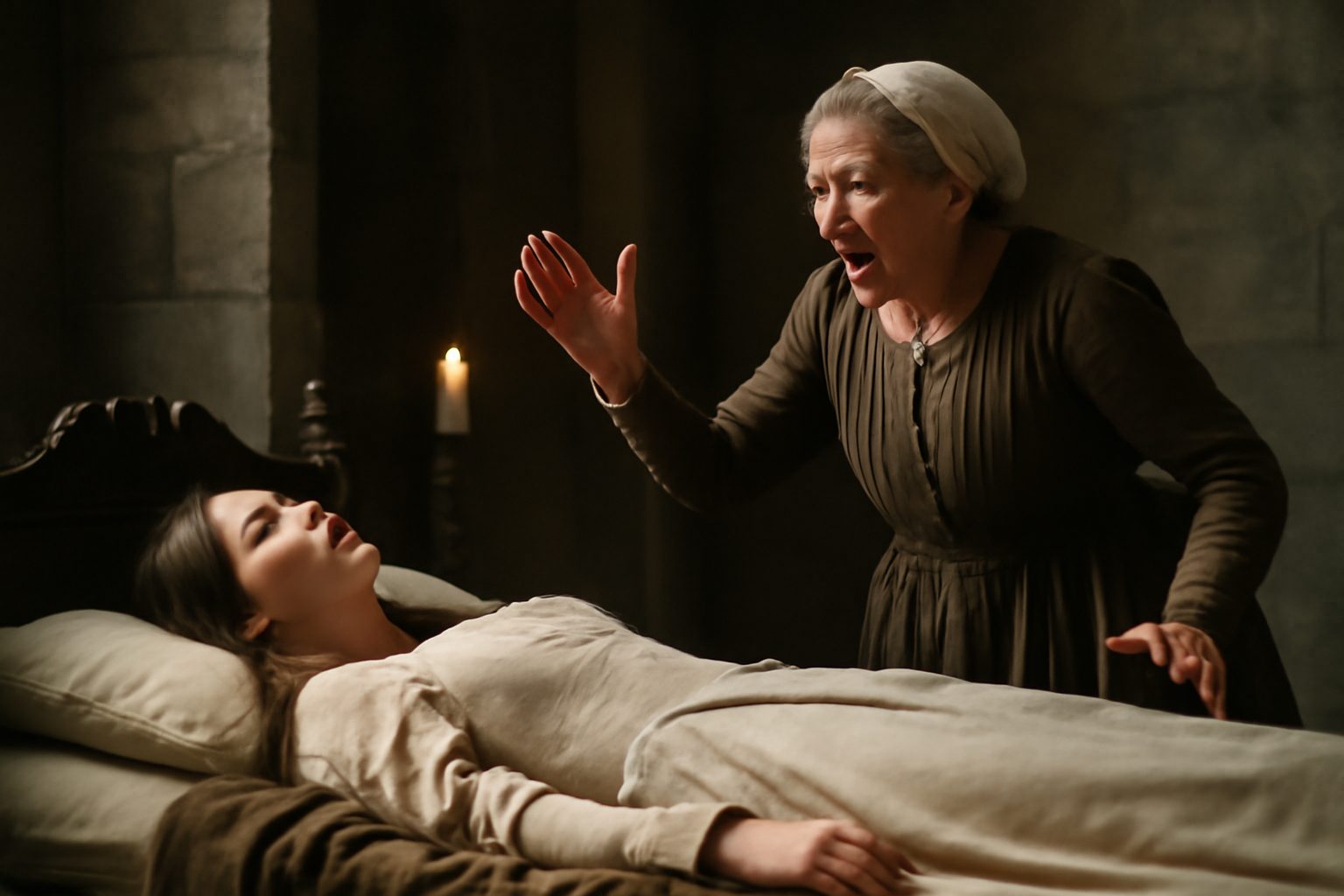
In Act 4 Scene 5 of Romeo and Juliet, the Nurse discovers Juliet seemingly lifeless in her bed on the morning of her wedding to Paris. Distraught and unaware that Juliet has taken a potion to feign death, the Nurse cries out in a desperate attempt to wake her, using a string of affectionate terms. This moment marks the tragic turning point where the Capulet household believes Juliet is dead, heightening the play's dramatic tension.
Nurse: "Why, love, I say! madam! sweet-heart! why, bride!"
In modern day english, we would say:
Hey, my love! My lady! Darling! Wake up, my bride!
Frequently Asked Questions
What is the Nurse doing in this line from Romeo and Juliet?
The Nurse is calling out to Juliet, trying to wake her up with affectionate names like love, madam, sweet-heart, and bride.
Connections to other verses:
Connections to Other Verses in Act 4 Scene 5
The verse "Why, love, I say! madam! sweet-heart! why, bride!" is spoken by the Nurse as she attempts to wake Juliet, who is feigning death. This moment marks the beginning of the scene's tragic discovery and connects thematically and emotionally to several other verses.
Initial Discovery and Alarm
This line directly follows Why, lamb! why, lady! fie, you slug-a-bed!, where the Nurse's tone is still playful and chiding. It precedes her growing concern, leading to I must needs wake her. Madam, madam, madam! and I must needs wake you; Lady! lady! lady!, where her urgency intensifies as she realizes something is wrong.
Transition to Grief
The Nurse's exclamation shifts the mood from anticipation to dread, culminating in the horrified realization in Alas, alas! Help, help! my lady's dead!. This is echoed by Lady Capulet's despair in Alack the day, she's dead, she's dead, she's dead! and Capulet's lament in Dead art thou! Alack! my child is dead;.
Contrast with Wedding Preparations
The verse's reference to "bride" starkly contrasts with the scene's transformation from wedding joy to funeral sorrow, as seen in Come, is the bride ready to go to church? spoken by Paris, unaware of the tragedy. This irony is deepened by Capulet's lines, such as Our bridal flowers serve for a buried corse,, highlighting the sudden reversal of events.
Expressions of Grief
The Nurse's desperate cries initiate a cascade of grief throughout the scene, connecting to exclamations like Accursed, unhappy, wretched, hateful day! and Most lamentable day, most woful day,, emphasizing the collective mourning.
Finality and Acceptance
The failure to wake Juliet leads to acceptance of her death, as in Friar Laurence's counsel in Move them no more by crossing their high will. and the shift to funeral preparations in To follow this fair corse unto her grave:.