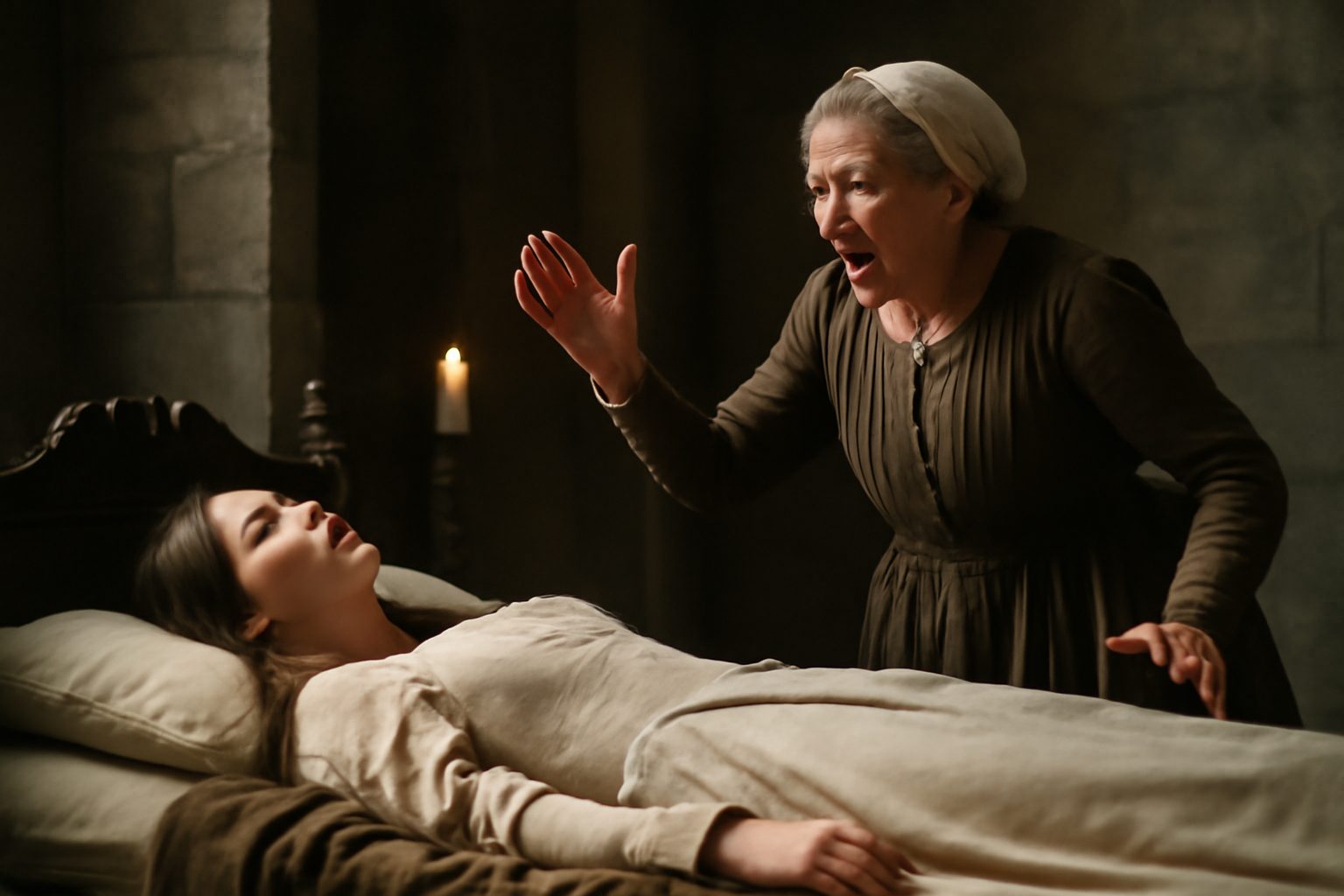
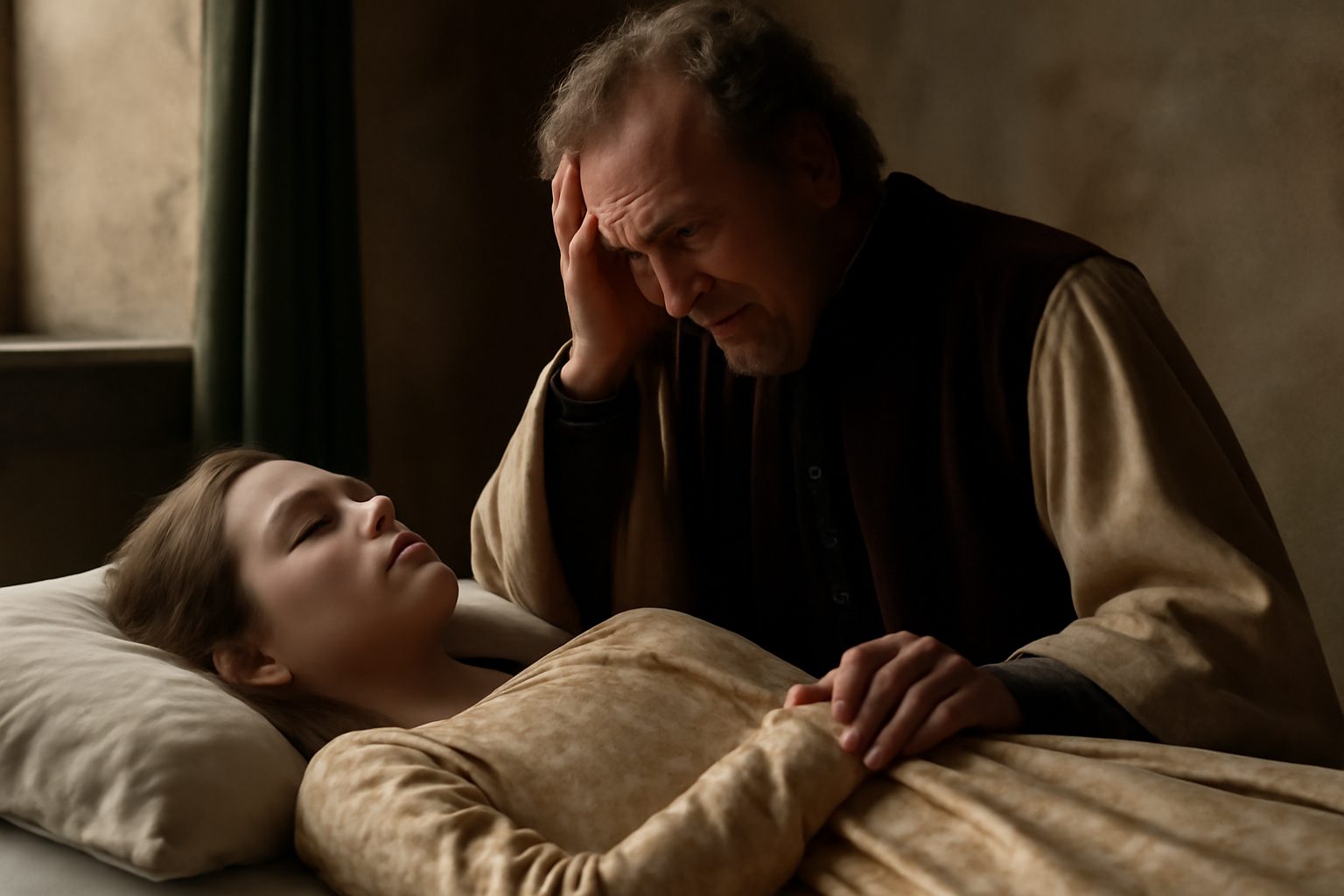
In Act 4, Scene 5 of Romeo and Juliet, the Capulet household is overcome with grief after discovering Juliet seemingly lifeless in her chamber. Paris, who was to marry Juliet that very day, arrives to celebrate but instead finds himself mourning her sudden death. His sorrow is palpable as he resolves to accompany her body to the tomb, expressing his devotion even in tragedy.
Friar Laurence: "To follow this fair corse unto her grave:"
In modern day english, we would say:
To follow her beautiful body to her grave.
Frequently Asked Questions
What does Friar Laurence mean when he says he will follow the beautiful body to her grave?
He means he will attend Juliet's funeral and go with her body to the burial site.
Connections to other verses:
Connections to "To follow this fair corse unto her grave:"
The verse "To follow this fair corse unto her grave:" serves as a directive from Lord Capulet, marking the shift from wedding preparations to funeral rites. This line connects thematically and structurally to several other verses in the scene.
Transformation of Celebration into Mourning
Capulet’s instruction to follow Juliet’s "fair corse" directly contrasts with the earlier festive expectations. For instance, Paris arrives asking, "Come, is the bride ready to go to church?", highlighting the planned celebration. The Nurse’s cheerful remark, "Marry, and amen, how sound is she asleep!", further emphasizes the tragic irony, as Juliet’s sleep is mistaken for death.
The theme of transformation is echoed in Capulet’s own lines: "All things that we ordained festival," and "And all things change them to the contrary." These verses underscore the sudden reversal from joy to sorrow, directly leading to the funeral procession he commands.
Expressions of Grief and Loss
The call to follow Juliet’s body is preceded by intense lamentations. The Nurse’s cries, "Alas, alas! Help, help! my lady's dead!" and "Alack the day, she's dead, she's dead, she's dead!", amplify the scene’s despair. Lady Capulet’s anguish, "O me, O me! My child, my only life," and Capulet’s own grief, "But one, poor one, one poor and loving child,", deepen the emotional context for the funeral directive.
Friar Laurence’s attempt to console the family, "Peace, ho, for shame! confusion's cure lives not,", introduces a note of reason, urging acceptance and preparation for the burial, which aligns with Capulet’s eventual practical command.
Funeral Preparations and Imagery
Capulet’s instruction is part of a broader shift to funeral rites. He earlier states, "On this fair corse; and, as the custom is,", indicating adherence to tradition. The verse "In all her best array bear her to church:" specifically details how Juliet should be presented, linking directly to the procession he orders.
The transformation of wedding elements into funeral symbols is further highlighted in "Our bridal flowers serve for a buried corse," and "Our wedding cheer to a sad burial feast,", reinforcing the somber redirection of events.
Conclusion of the Scene
Capulet’s directive is followed by his command, "And go, Sir Paris; every one prepare,", which transitions the focus fully to the funeral. The musicians’ cynical exchange, such as "Faith, we may put up our pipes, and be gone,", provides a stark, mundane contrast to the tragedy, yet underscores the abandonment of celebration for mourning.