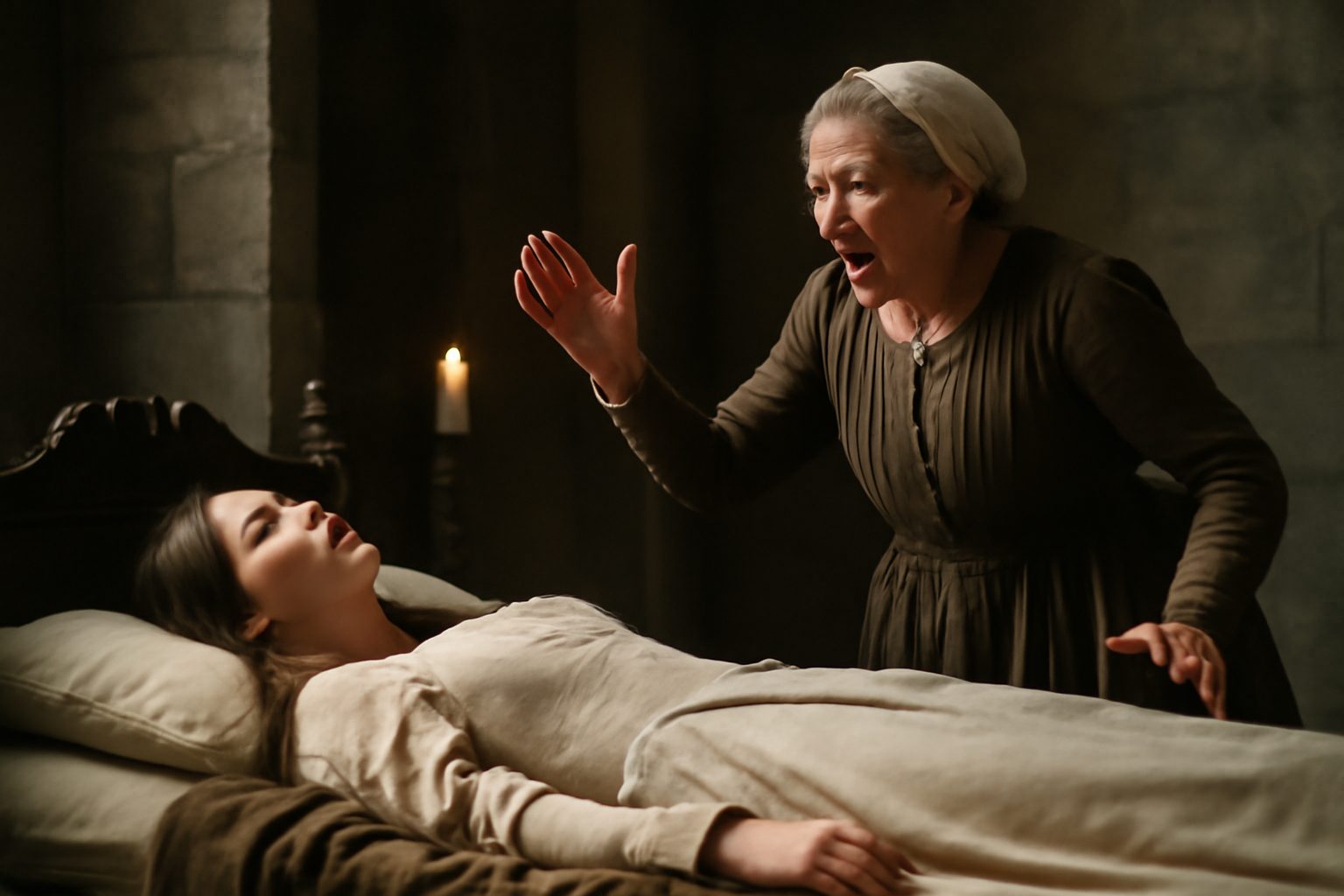
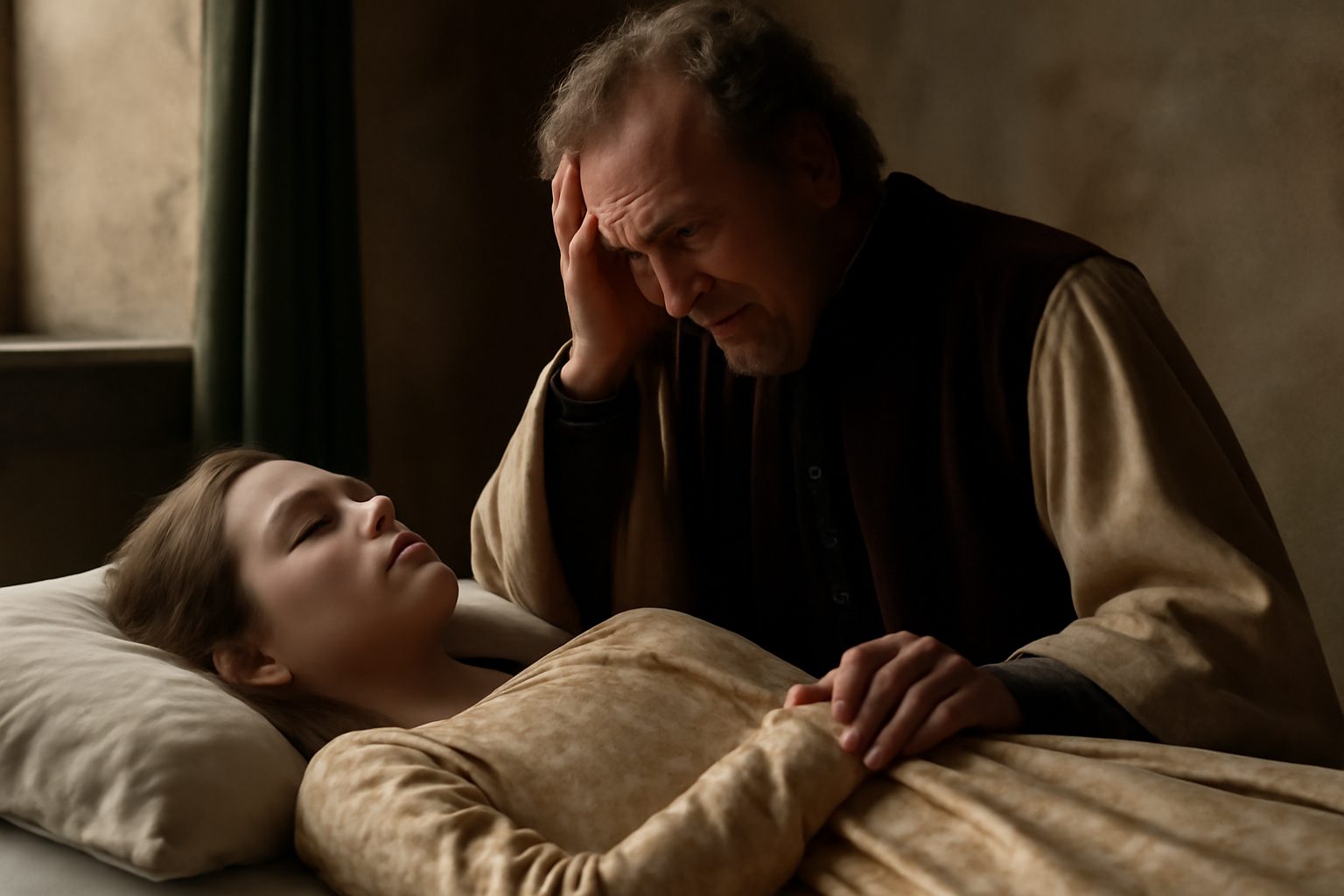
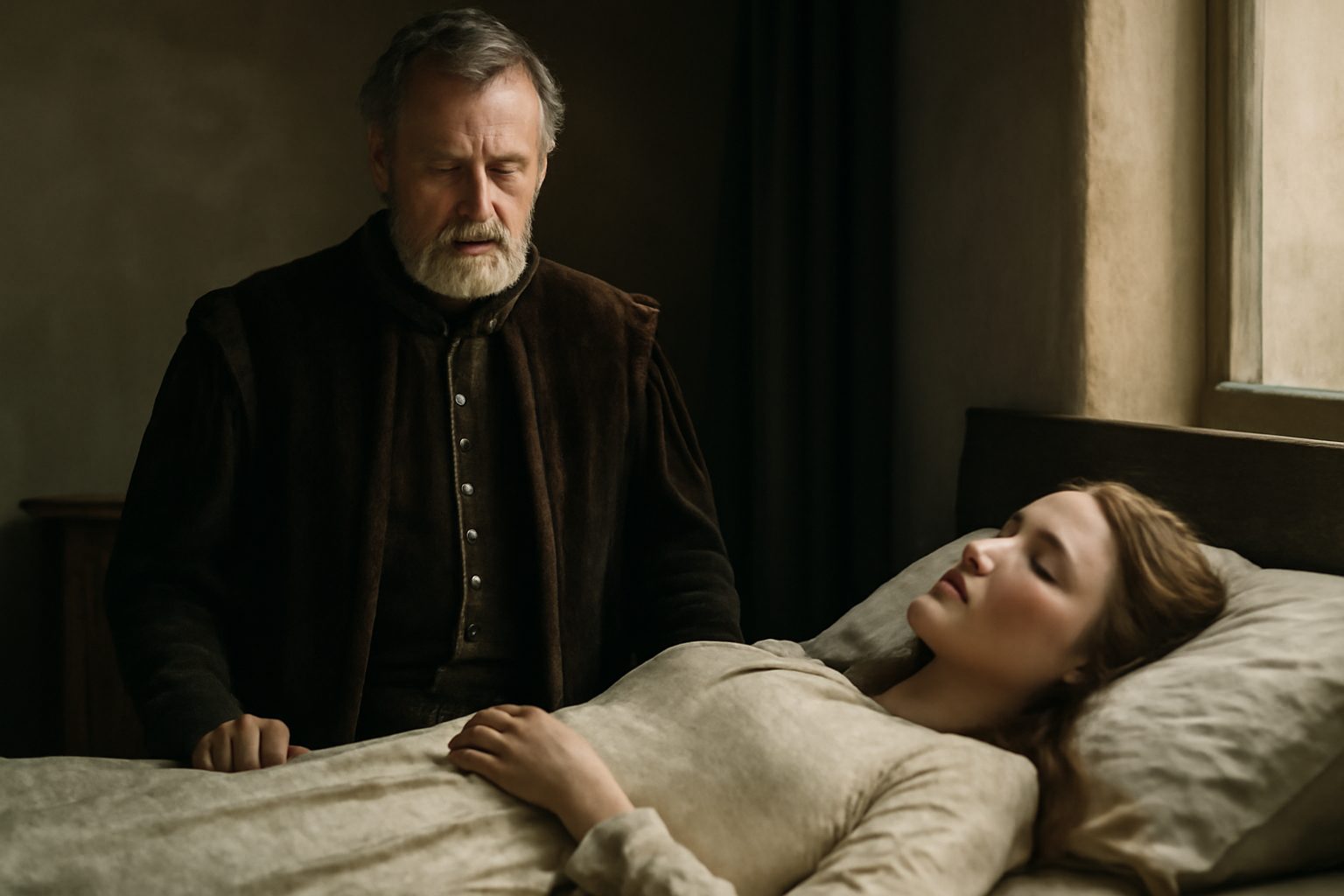
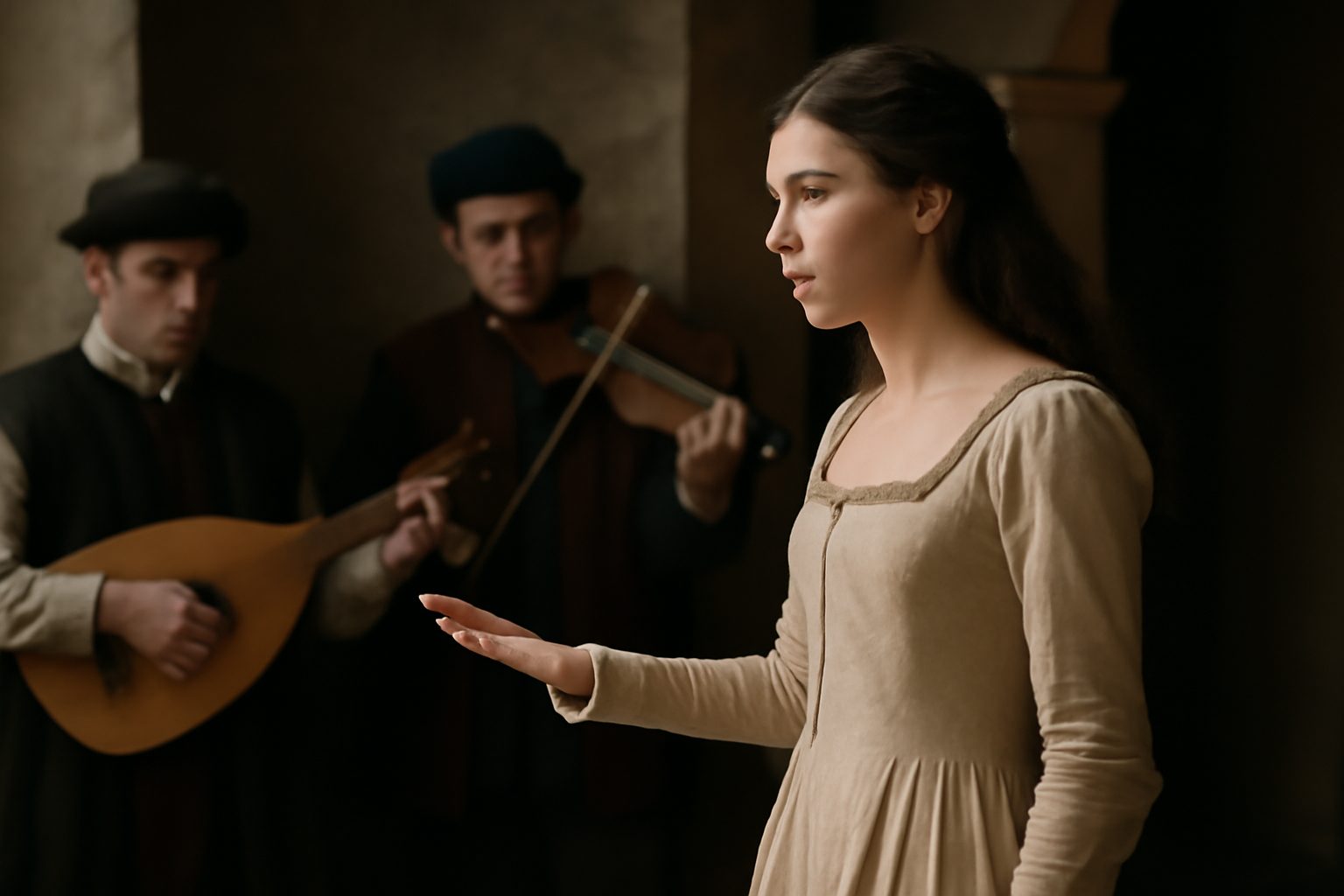
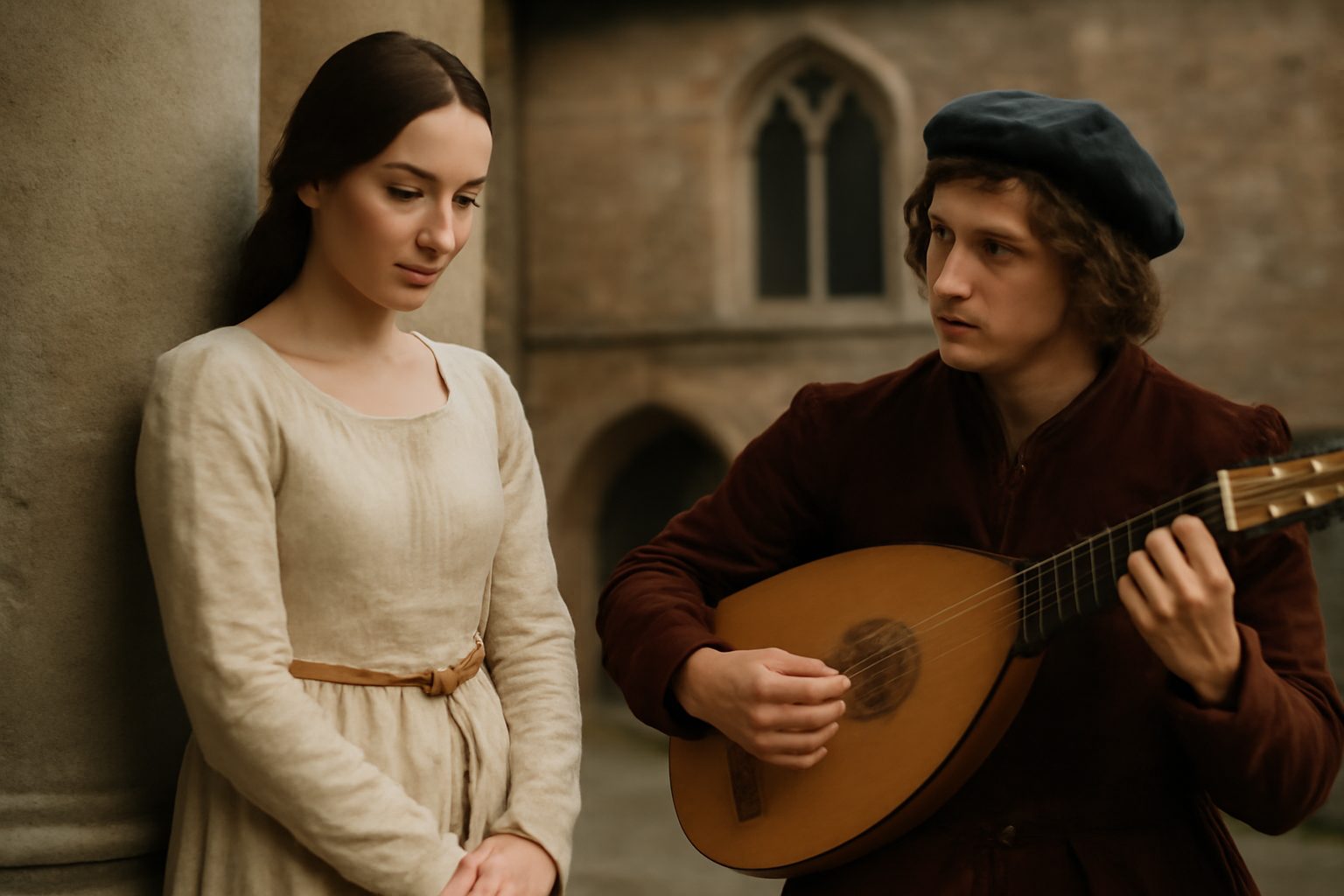
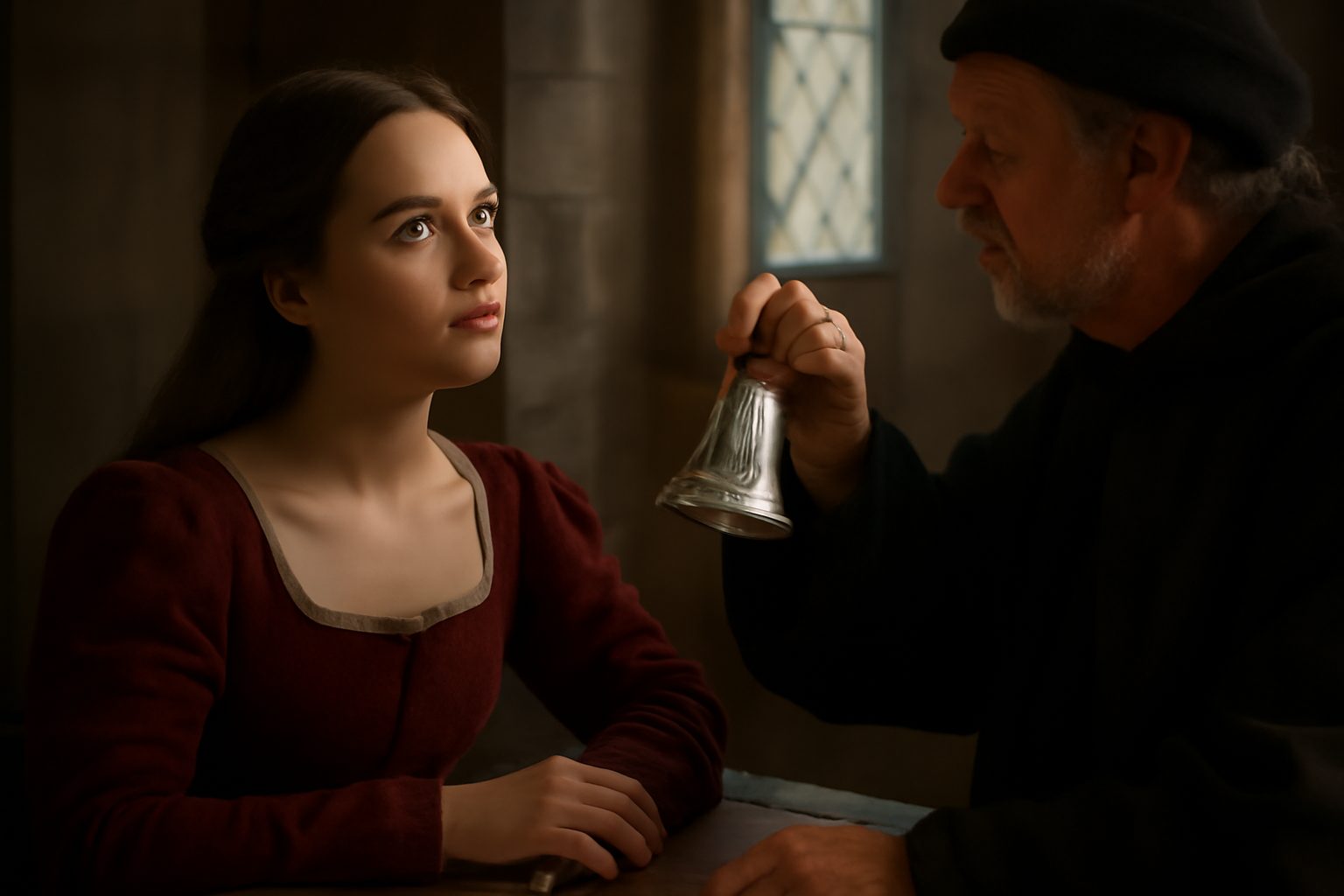
In Act 4, Scene 5 of Romeo and Juliet, the Nurse discovers Juliet seemingly lifeless in her chamber on the morning of her wedding to Paris. The Capulet household erupts into grief, mistaking her drugged slumber for death, as the Friar's plan to reunite her with Romeo unravels. This line is spoken amid the chaos, questioning the violent disruption of what was meant to be a joyful celebration.
Capulet: "To murder, murder our solemnity?"
In modern day english, we would say:
Are you trying to ruin our wedding celebration with death?
Frequently Asked Questions
What is Capulet upset about in this line from Act 4 Scene 5?
Capulet is upset because he thinks someone is ruining the wedding celebration.
Connections to other verses:
Connections to "To murder, murder our solemnity?"
The line "To murder, murder our solemnity?" reflects the abrupt inversion of celebration into tragedy, a theme echoed throughout the scene. It directly questions how death has violently disrupted the wedding preparations, turning joy into mourning.
Transformation of Festivity into Funeral
This idea is expanded in "All things that we ordained festival", where Capulet laments how all festive arrangements are now perverted. The transformation is detailed further in lines like "Our wedding cheer to a sad burial feast", "Our solemn hymns to sullen dirges change", and "Our bridal flowers serve for a buried corse", each emphasizing the grim repurposing of wedding elements for Juliet's funeral.
Expressions of Grief and Loss
The emotional weight of the "murder" of solemnity is mirrored in the characters' outbursts of sorrow. For instance, the Nurse's exclamation "Alack the day, she's dead, she's dead, she's dead!" and Lady Capulet's cry "O me, O me! My child, my only life" amplify the sense of devastating loss. Paris adds to this with "Beguiled, divorced, wronged, spited, slain!", portraying death as a treacherous force that has destroyed happiness.
Personification of Death
Death is depicted as an active destroyer of joy, closely tying into the idea of "murdering" solemnity. Capulet personifies death in "Death is my son-in-law, Death is my heir", suggesting it has usurped Paris's role. Similarly, "Most detestable death, by thee beguil'd" and "Death, that hath ta'en her hence to make me wail" reinforce death as a malevolent actor responsible for shattering the wedding's joy.
Contrast Between Life and Death
The jarring shift from anticipated life to cruel death is captured in lines like "Death lies on her like an untimely frost", which uses natural imagery to highlight life cut short. Friar Laurence's attempt to console the family in "For 'twas your heaven she should be advanced" and "And weep ye now, seeing she is advanced" contrasts their earthly grief with the spiritual elevation of Juliet, adding a layer of irony to the "murdered" solemnity.
Musicians' Ironic Commentary
The scene's dark humor and societal indifference are highlighted through the musicians' interactions, such as "Not a dump we; 'tis no time to play now", underscoring how the solemnity has been indeed murdered—replaced by a context where music is deemed inappropriate. Their pragmatic focus on payment, e.g., "because musicians have no gold for sounding", further trivializes the Capulets' tragedy, emphasizing the theme of perverted expectations.