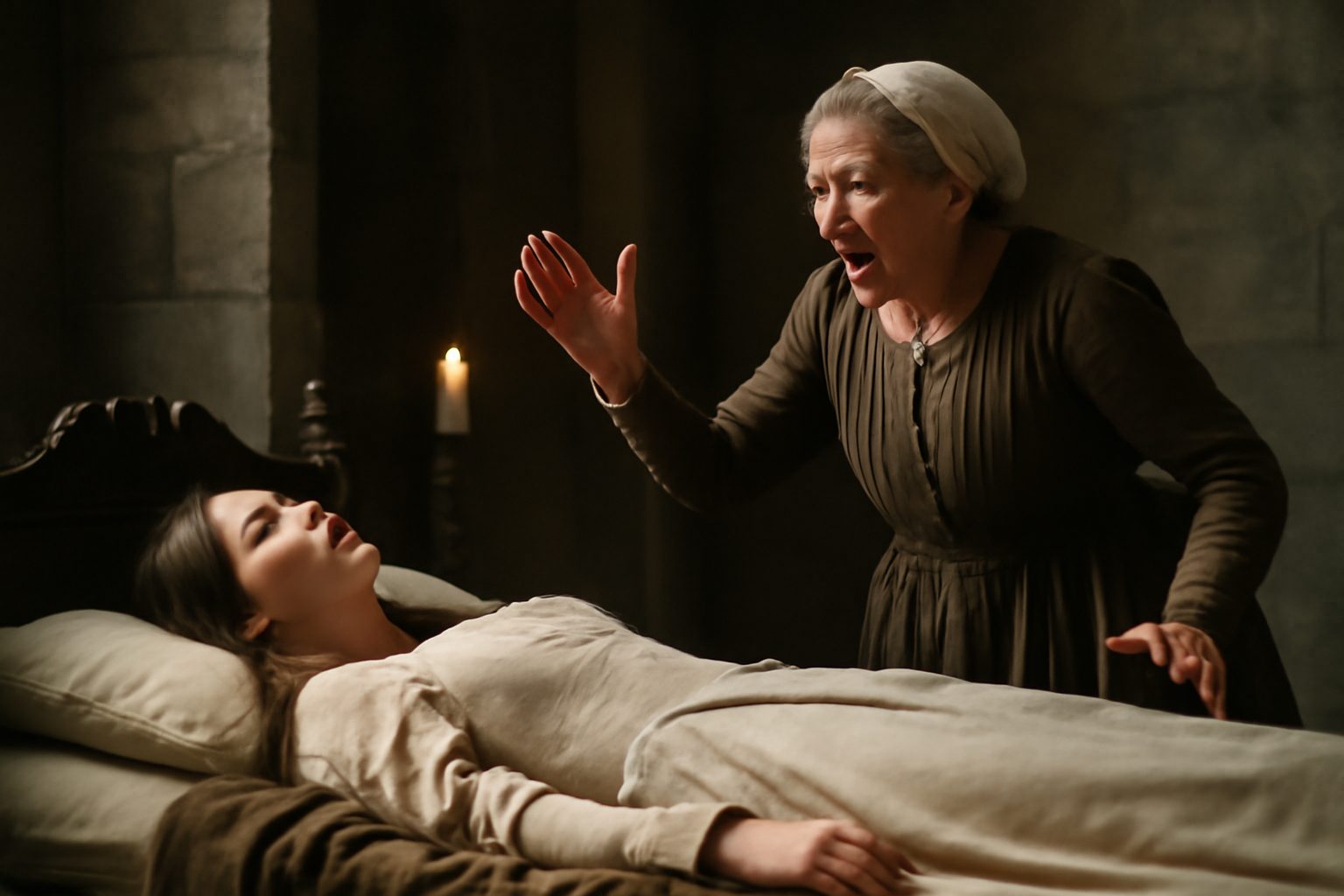
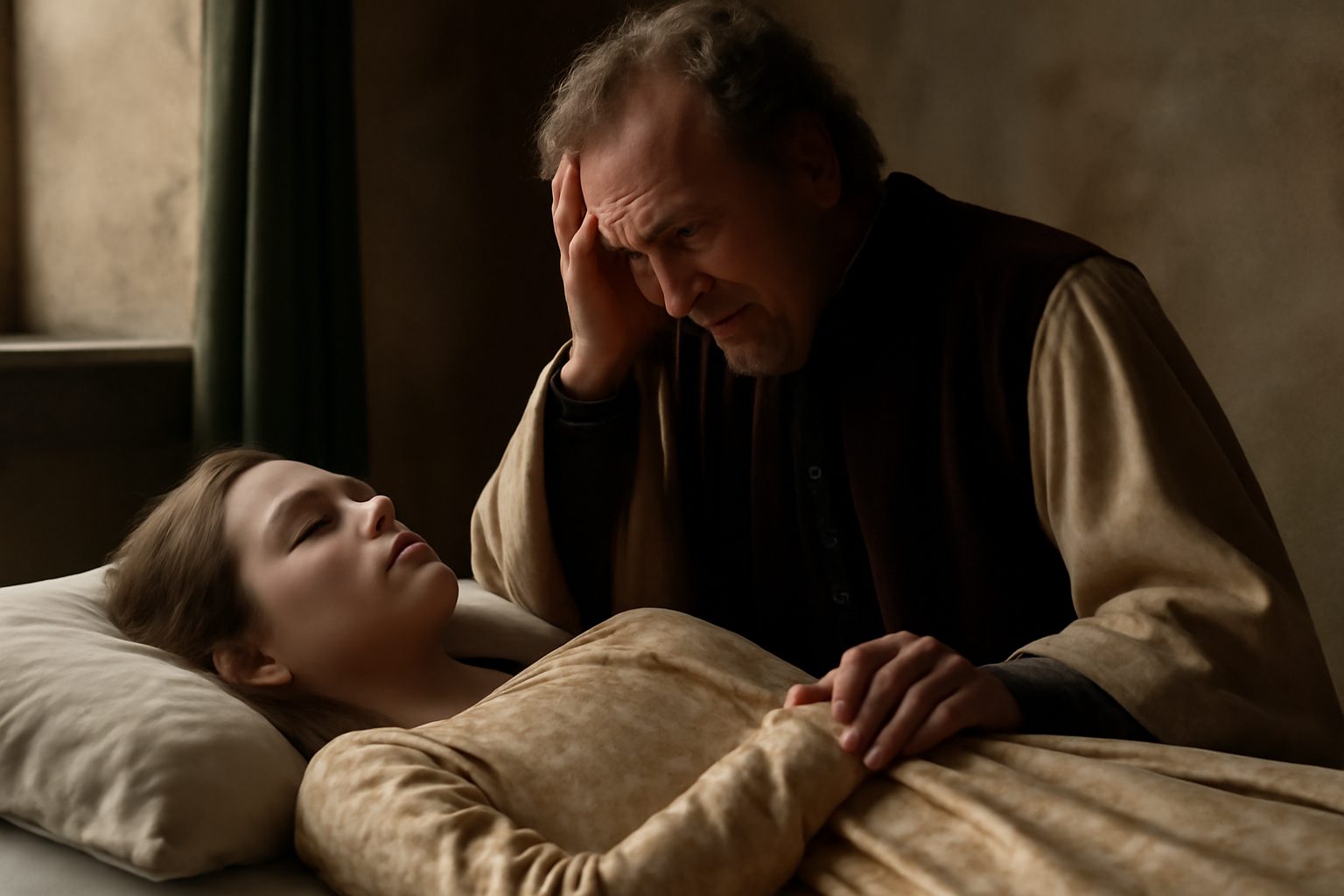
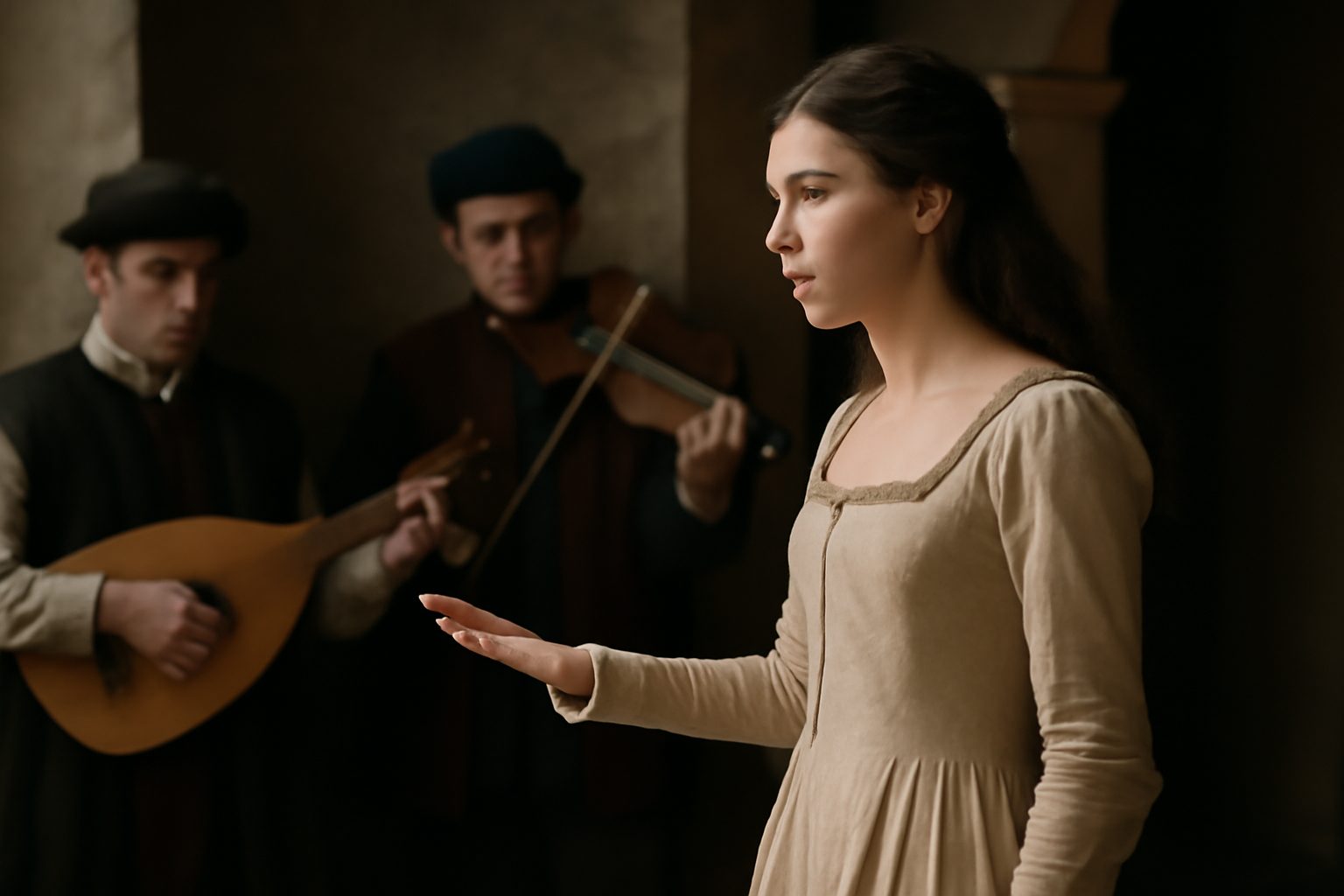
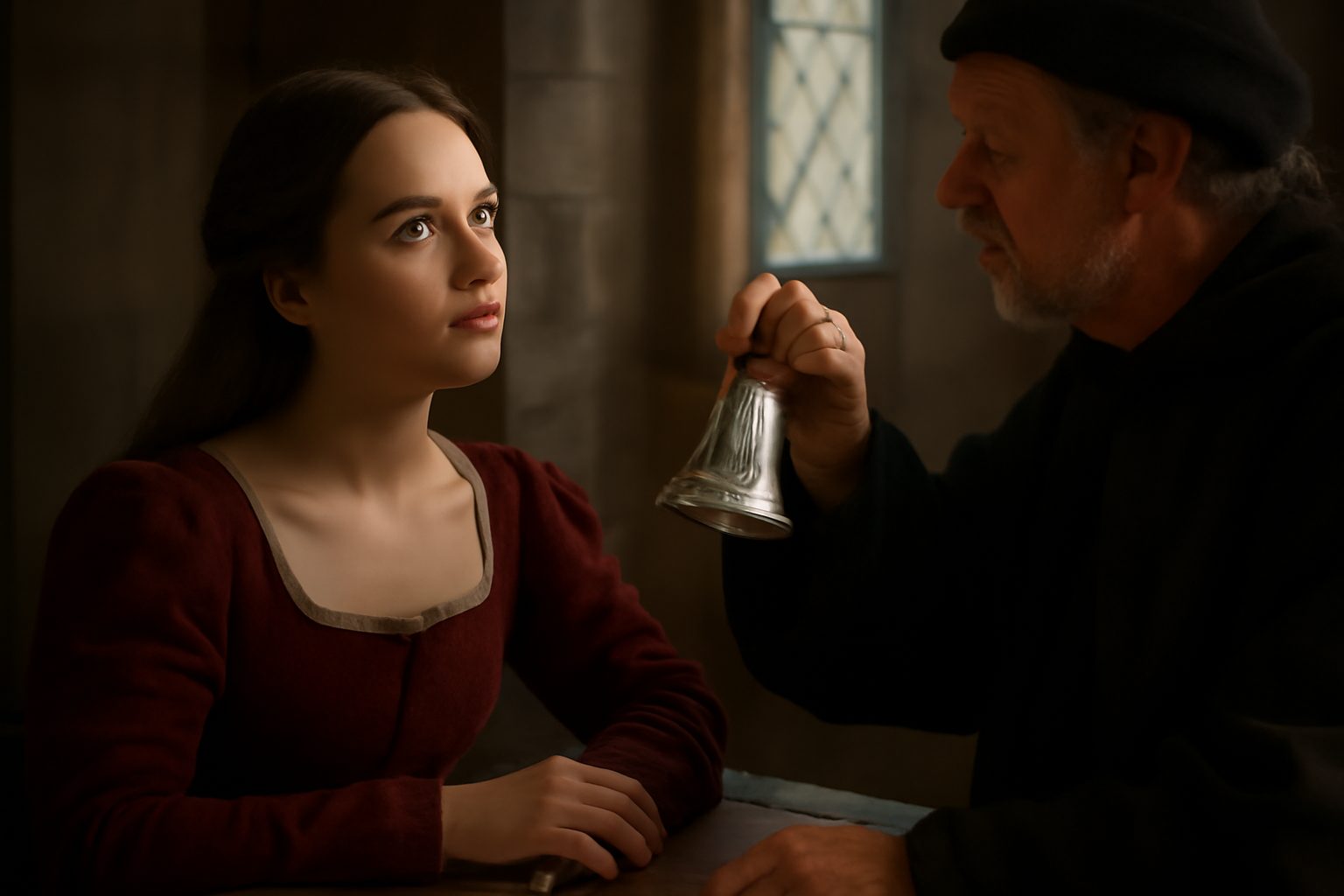
In Act 4, Scene 5 of Romeo and Juliet, the Capulet household believes Juliet is dead, and chaos ensues as they prepare for her funeral. Amid the commotion, Peter, a servant, interacts with musicians hired for Juliet’s wedding, now rendered unnecessary. His remark about musicians lacking gold for playing reflects the abrupt shift from celebration to mourning, highlighting the scene’s bitter irony.
Peter: "because musicians have no gold for sounding:"
In modern day english, we would say:
Musicians won’t play without being paid.
Frequently Asked Questions
Why does Peter say musicians won't play music?
Because they haven't been paid gold for their performance.
Connections to other verses:
Connections to "because musicians have no gold for sounding"
The line "because musicians have no gold for sounding" reflects the mercenary reality of the musicians' trade, contrasting sharply with the emotional turmoil of the scene. This pragmatic concern for payment is directly linked to earlier exchanges where the musicians question their compensation, such as in "What will you give us?" and "No money, on my faith, but the gleek", highlighting their detachment from the tragedy.
Contrast with Mourning and Irony
This focus on financial gain stands in stark opposition to the pervasive grief expressed in verses like "Alack the day, she's dead, she's dead, she's dead!" and "Accursed, unhappy, wretched, hateful day!". The musicians' indifference underscores the scene's irony, where life's mundane concerns persist amid profound loss.
Musical References and Wordplay
The phrase also ties into the musicians' wordplay on "silver sound," explained in "I say 'silver sound,' because musicians sound for silver", reinforcing the connection between art and material reward. Their refusal to play without pay, as seen in "Not a dump we; 'tis no time to play now", further emphasizes this theme.
Structural Role in the Scene
This verse serves as a humorous, almost cynical counterpoint to the dirge-like transformation described in "Our solemn hymns to sullen dirges change", highlighting Shakespeare's use of lower-class characters to provide levity and social commentary amid the tragedy.