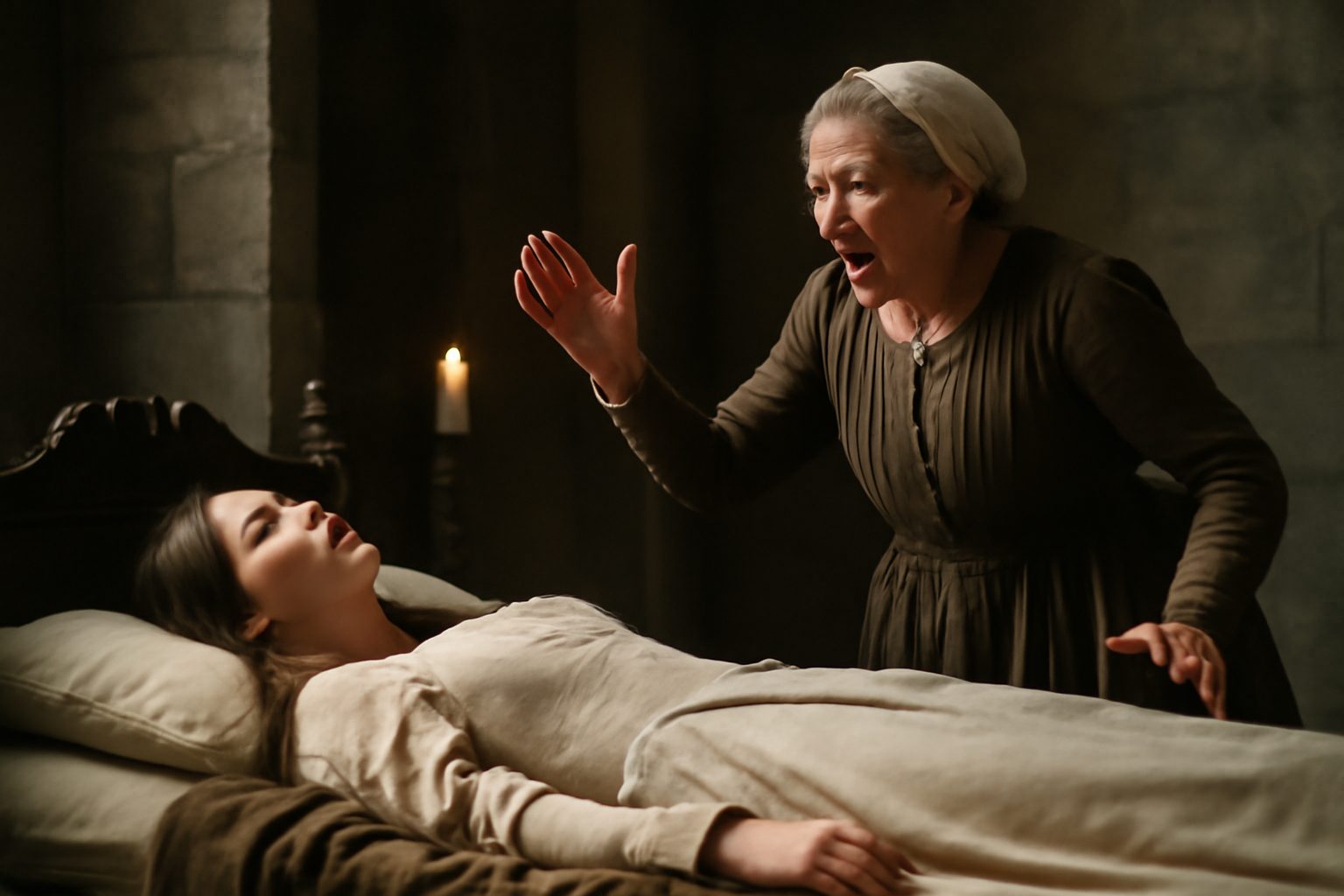
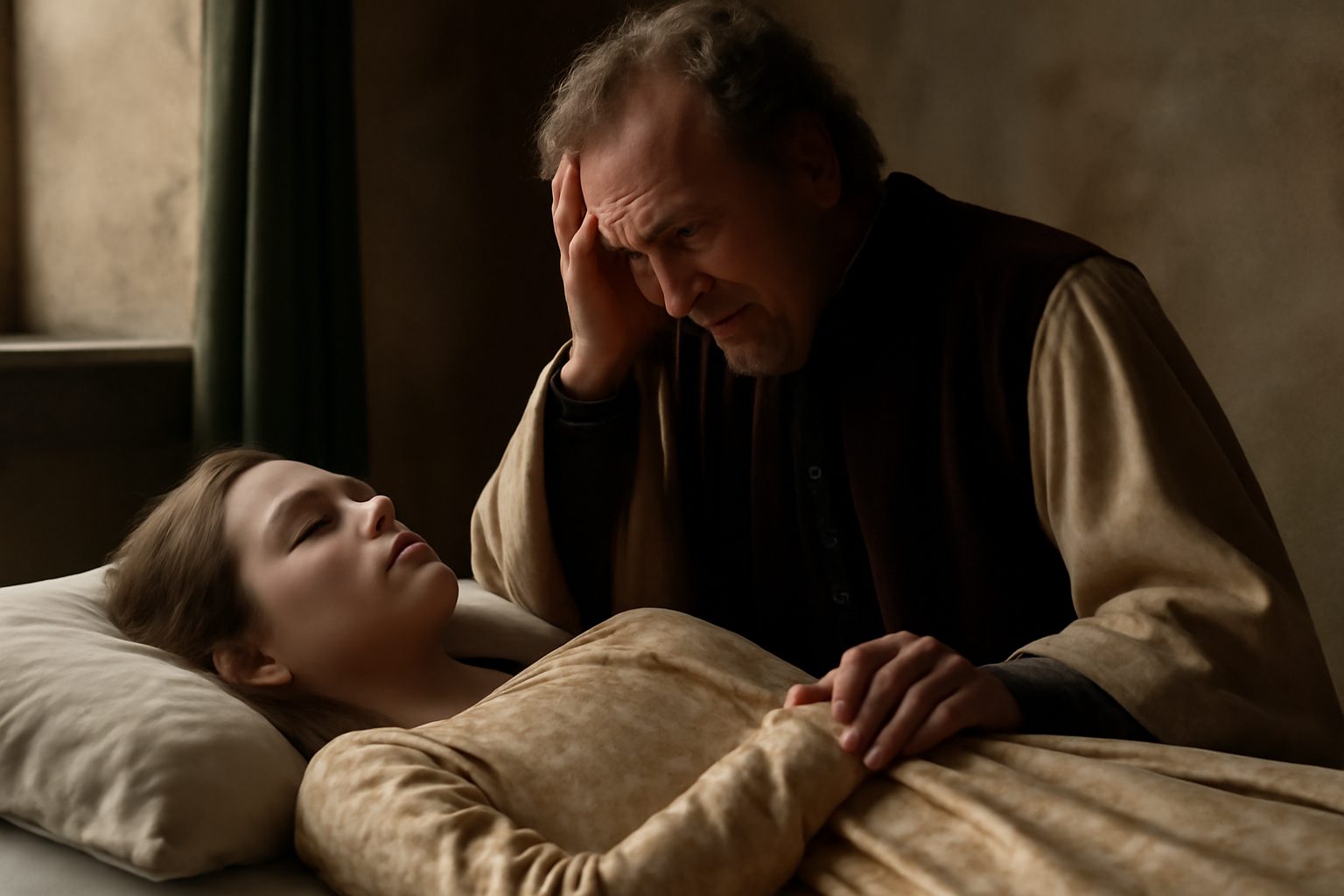
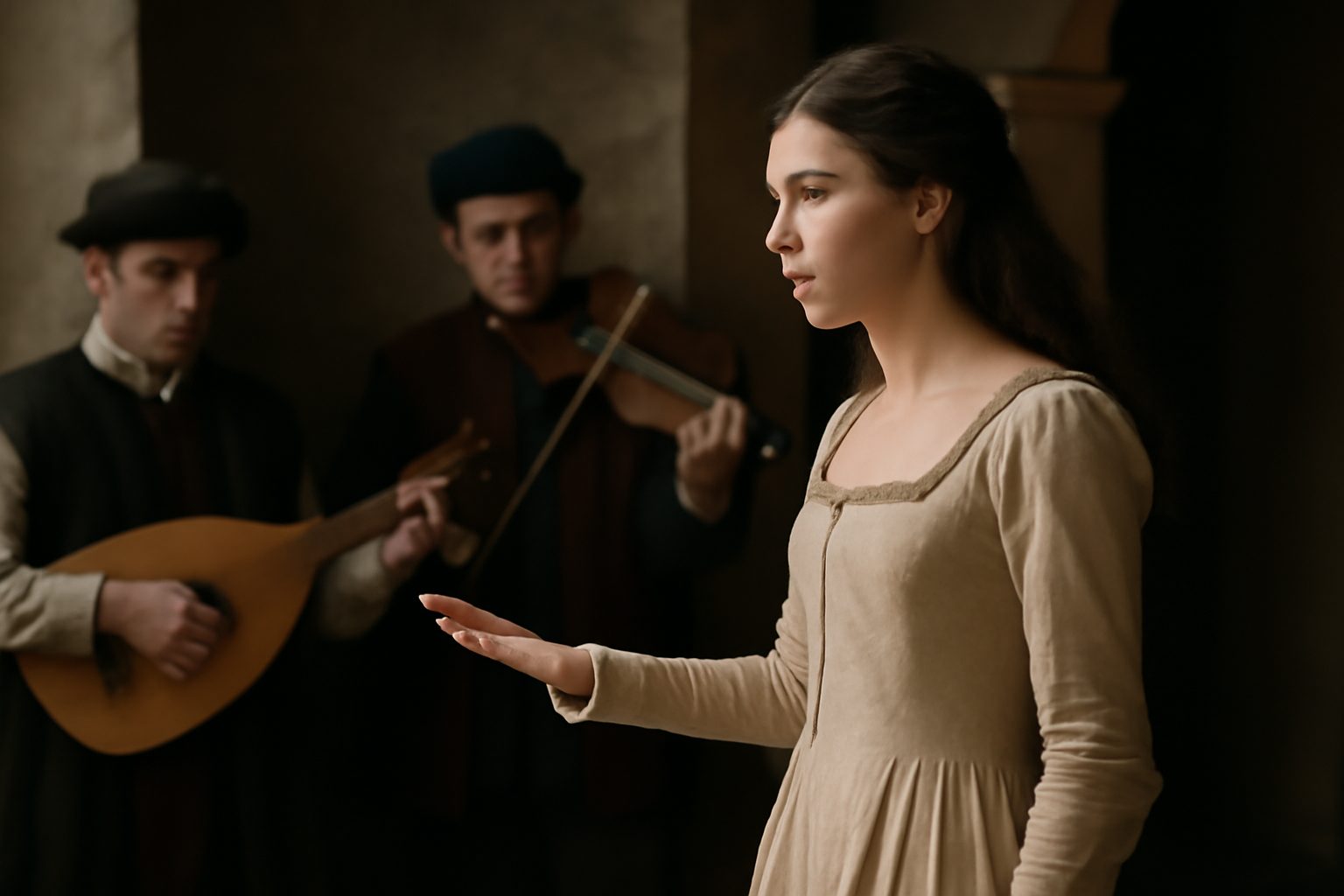
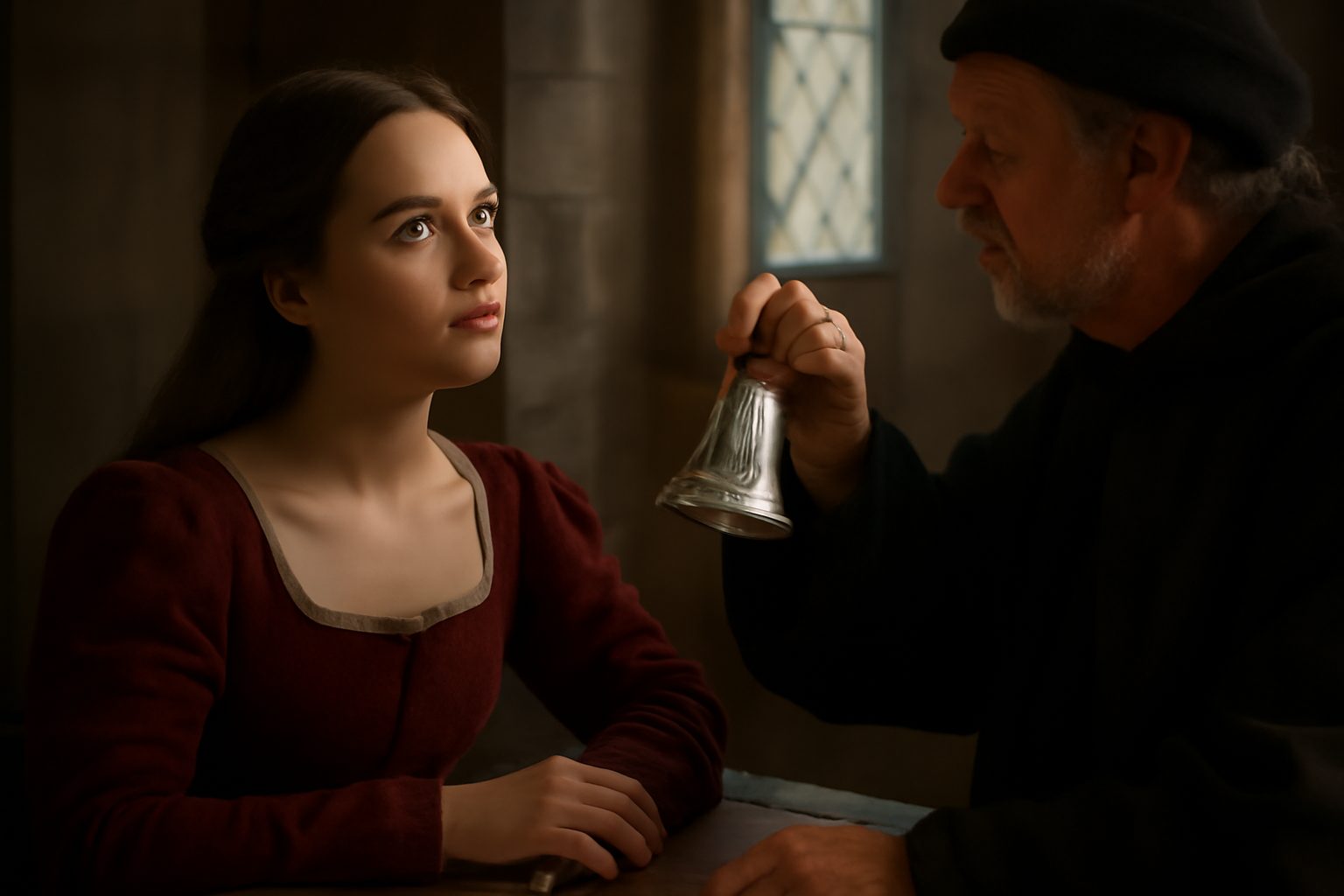
In Act 4, Scene 5 of Romeo and Juliet, the Capulet household is in turmoil after Juliet is found seemingly dead. As the family mourns, Peter, a servant, interrupts the grief-stricken scene by calling for musicians to play a cheerful tune called Heart's Ease, creating a stark contrast to the tragedy unfolding. This moment highlights the disconnect between the servants' lightheartedness and the family's despair.
Peter: "Musicians, O, musicians, 'Heart's ease, Heart's"
In modern day english, we would say:
The musicians are playing a sad tune, and someone calls out for them to play Heart’s Ease instead to lighten the mood.
Frequently Asked Questions
Who is asking for musicians in Act 4 Scene 5 of Romeo and Juliet?
Peter
What song does Peter request from the musicians?
Heart's ease
Connections to other verses:
Connections to "Musicians, O, musicians, 'Heart's ease, Heart's"
The verse Musicians, O, musicians, 'Heart's ease, Heart's is part of a dialogue with the musicians, who are asked to play a cheerful tune to alleviate the grief in the scene. This contrasts sharply with the surrounding verses, which are filled with expressions of sorrow and despair.
Contrast with Mournful Verses
This request for music stands in stark opposition to verses like Alack the day, she's dead, she's dead, she's dead! and Accursed, unhappy, wretched, hateful day!, emphasizing the jarring shift from wedding preparations to funeral lamentations.
Musical References and Wordplay
The mention of "Heart's ease" connects to O, musicians, because my heart itself plays 'My, where the character uses musical metaphors to express inner turmoil. Additionally, the musicians' reluctance to play, as seen in Not a dump we; 'tis no time to play now, highlights the inappropriateness of music in the context of death.
Irony and Futility
The call for "Heart's ease" is ironic given the overwhelming grief expressed in verses such as O child! O child! my soul, and not my child! and And with my child my joys are buried. It underscores the futility of seeking comfort through art in the face of true tragedy.
Transformation of Celebration into Mourning
This verse also ties into the broader theme of the scene, where wedding festivities turn into funeral rites, as indicated by All things that we ordained festival and Our wedding cheer to a sad burial feast. The musicians, meant for celebration, become out of place, mirroring the scene's sudden inversion of joy and sorrow.