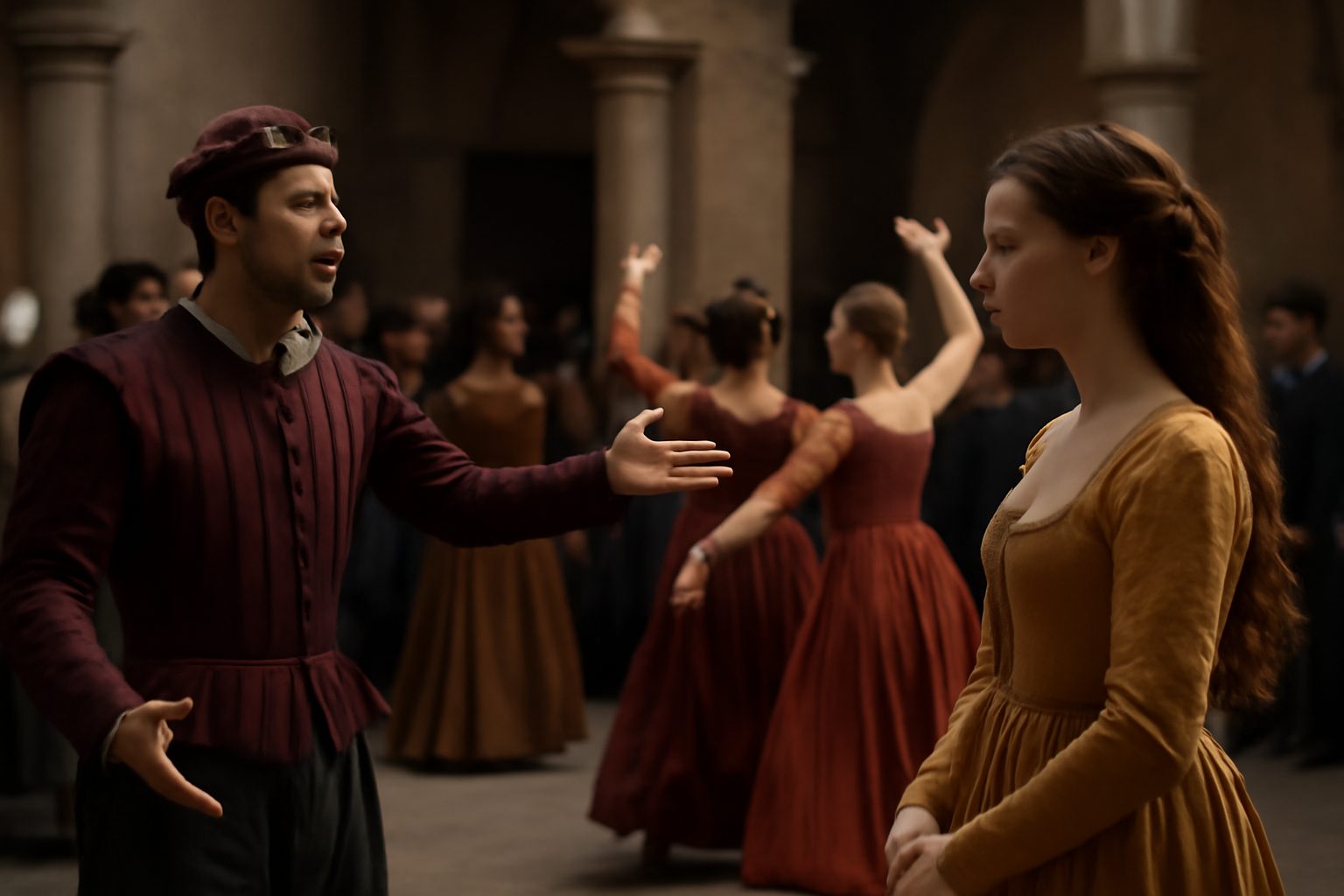
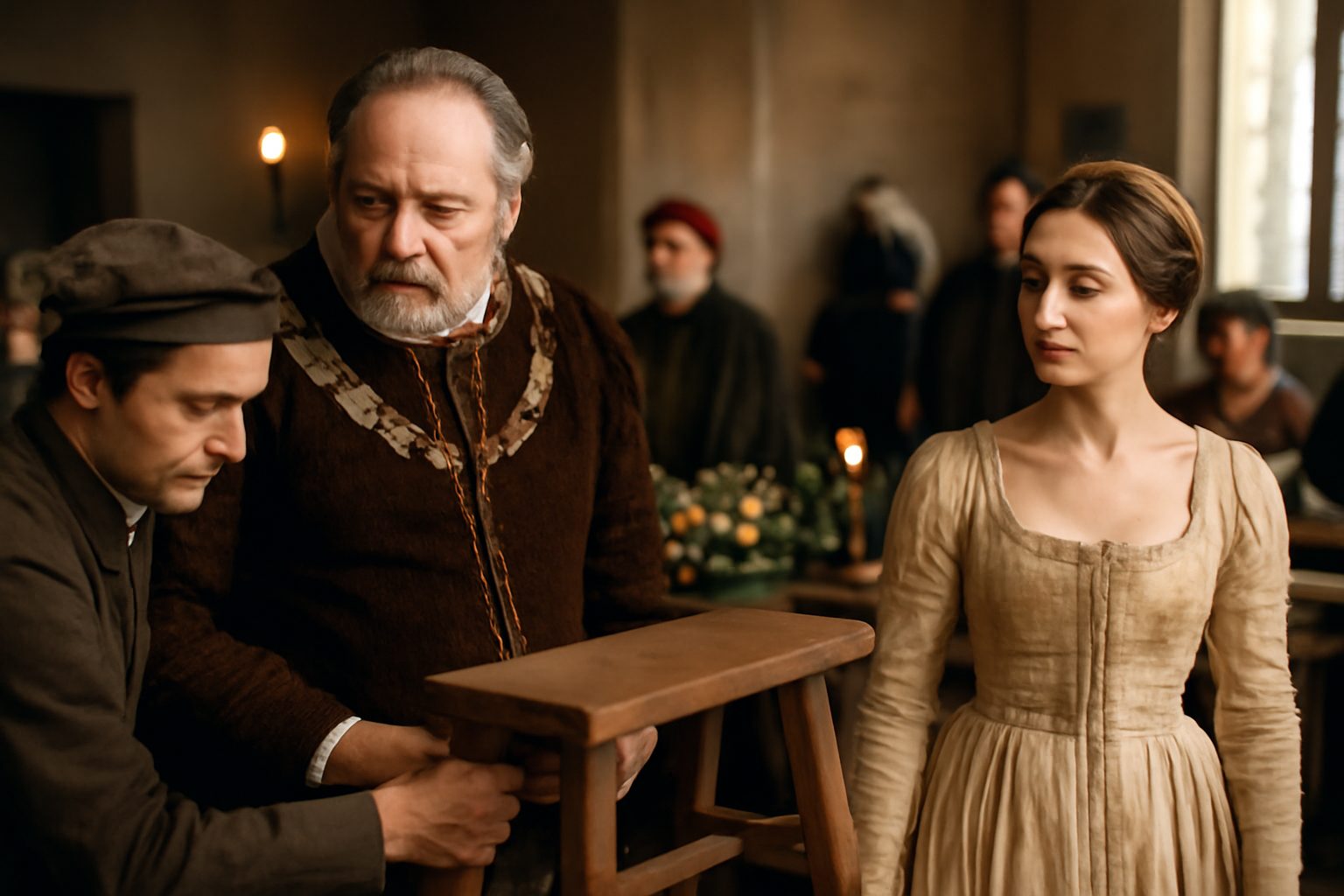
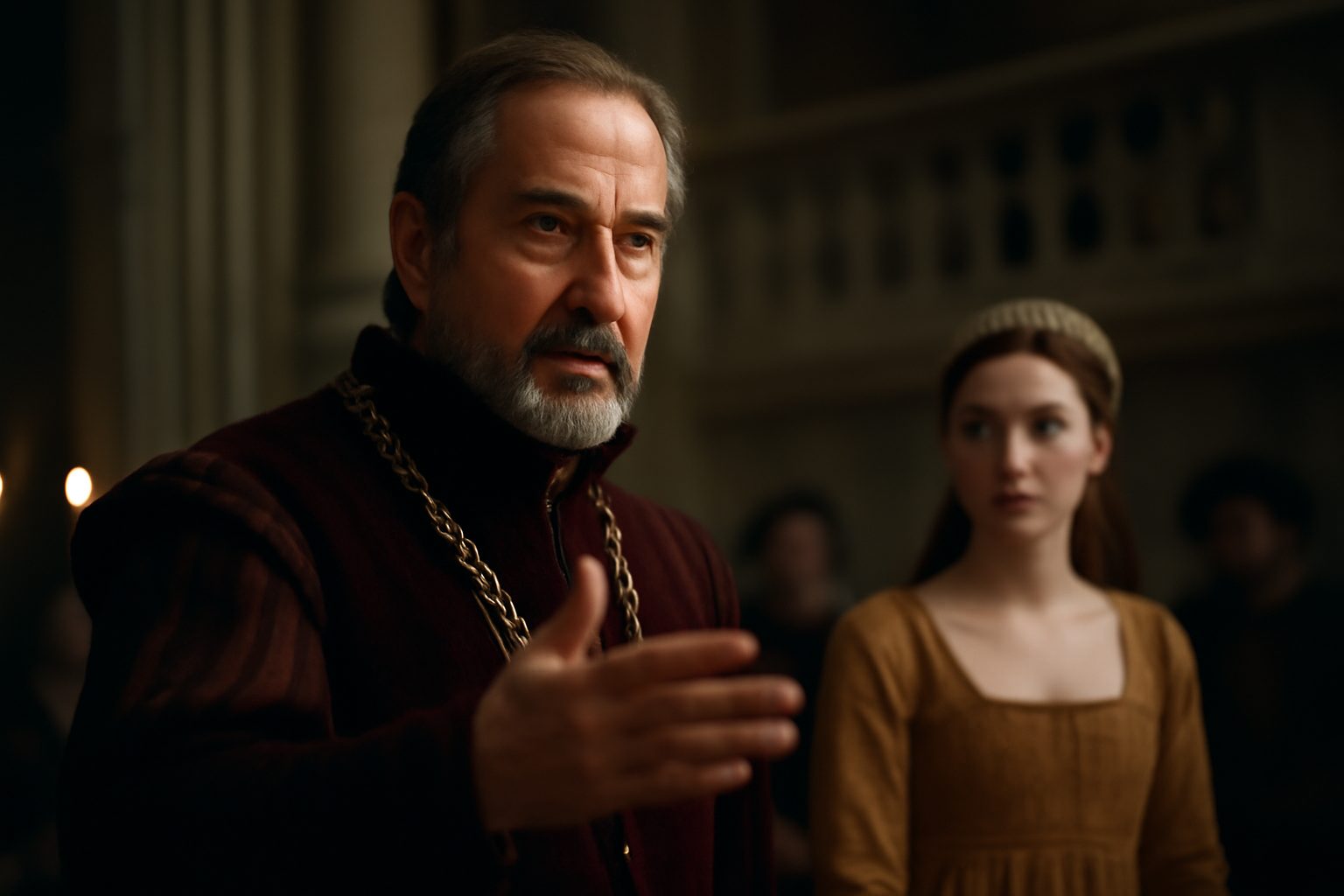
In Act 1, Scene 5 of Romeo and Juliet, the Capulet household is bustling with preparations for a grand masquerade ball. As servants hurry to complete last-minute tasks, one of them urges his fellow workers to stay focused, acknowledging the impossibility of being in two places at once. This brief line captures the chaotic yet lively atmosphere of the scene, where the excitement of the party contrasts with the underlying tensions that will soon unfold.
Second Servant: "We cannot be here and there too. Cheerly, boys; be"
In modern day english, we would say:
We can’t be in two places at once—come on, lads, stay lively.
Frequently Asked Questions
What does the second servant mean when he says they cannot be in two places at once?
The servant is saying that they cannot do everything at the same time, so they should focus on their current task and stay cheerful.
Connections to other verses:
Connections to "We cannot be here and there too. Cheerly, boys; be"
The verse "We cannot be here and there too. Cheerly, boys; be" is spoken by a servant during the bustling preparations for the Capulet feast. It reflects the urgency and multitasking required in the chaotic environment, emphasizing the physical and logistical constraints faced by the staff.
Link to Servants' Duties and Commands
This line connects thematically to other commands given to servants in the same scene, such as "Away with the joint-stools, remove the" and "More light, you knaves; and turn the tables up". These verses collectively illustrate the hectic, ordered chaos of the event setup, where efficiency and obedience are paramount.
Contrast with Festive Invitations
While the servants are dealing with practical constraints, Capulet's welcoming remarks, like "Welcome, gentlemen! ladies that have their toes", highlight the celebratory and inviting atmosphere intended for the guests. This creates a stark contrast between the behind-the-scenes labor and the festive front presented to attendees.
Relation to Urgency in Other Contexts
The phrase "Cheerly, boys; be" encourages briskness and morale, which is echoed in lines like "brisk awhile, and the longer liver take all", further emphasizing the need for lively and prompt action among the serving staff to keep the event moving smoothly.
Connection to Closing of the Feast
As the feast winds down, instructions such as "Away, begone; the sport is at the best" and "Come, let's away; the strangers all are gone" bookend the servant's duties, showing a transition from frantic preparation to orderly conclusion, mirroring the temporary and constrained nature of their roles.