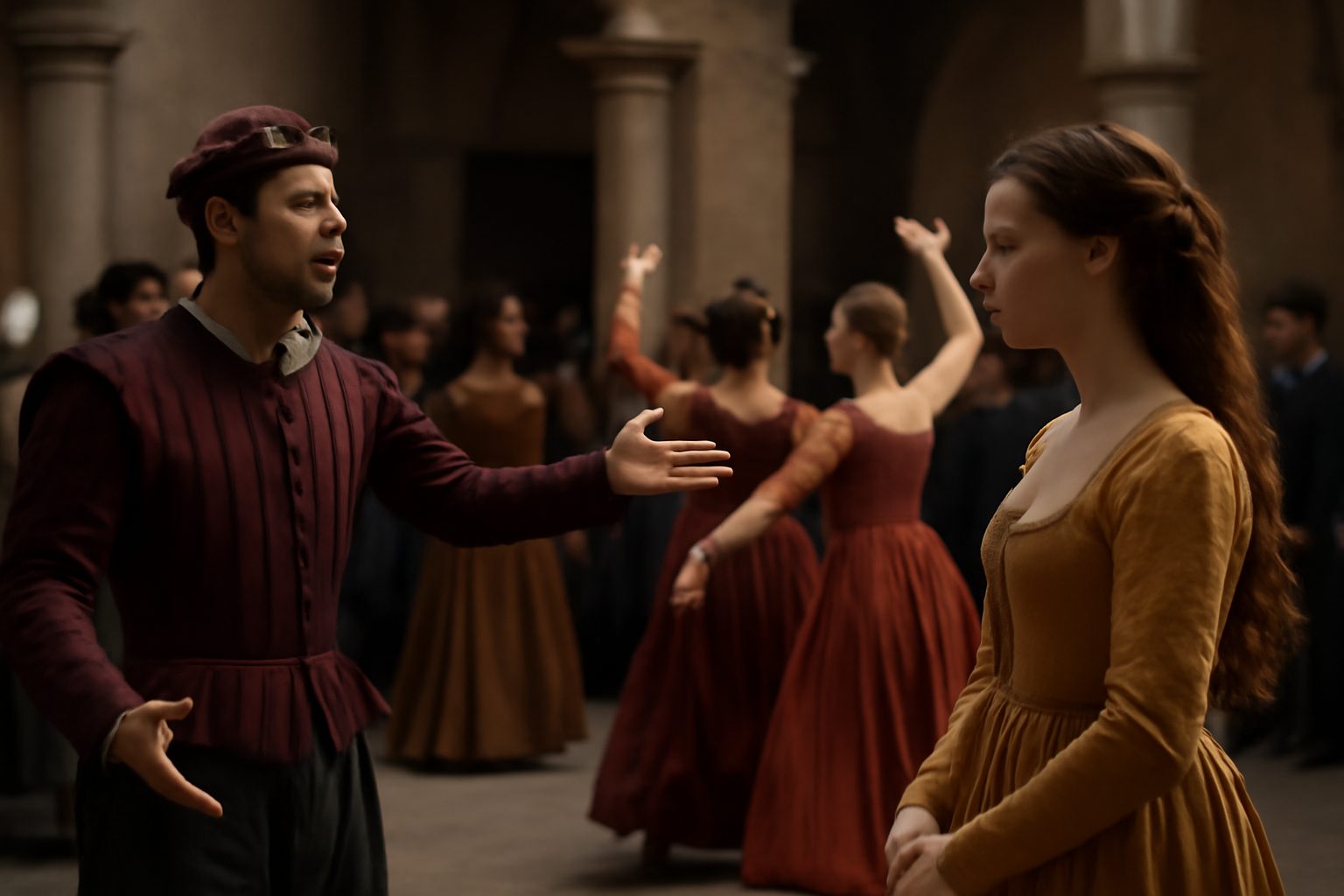
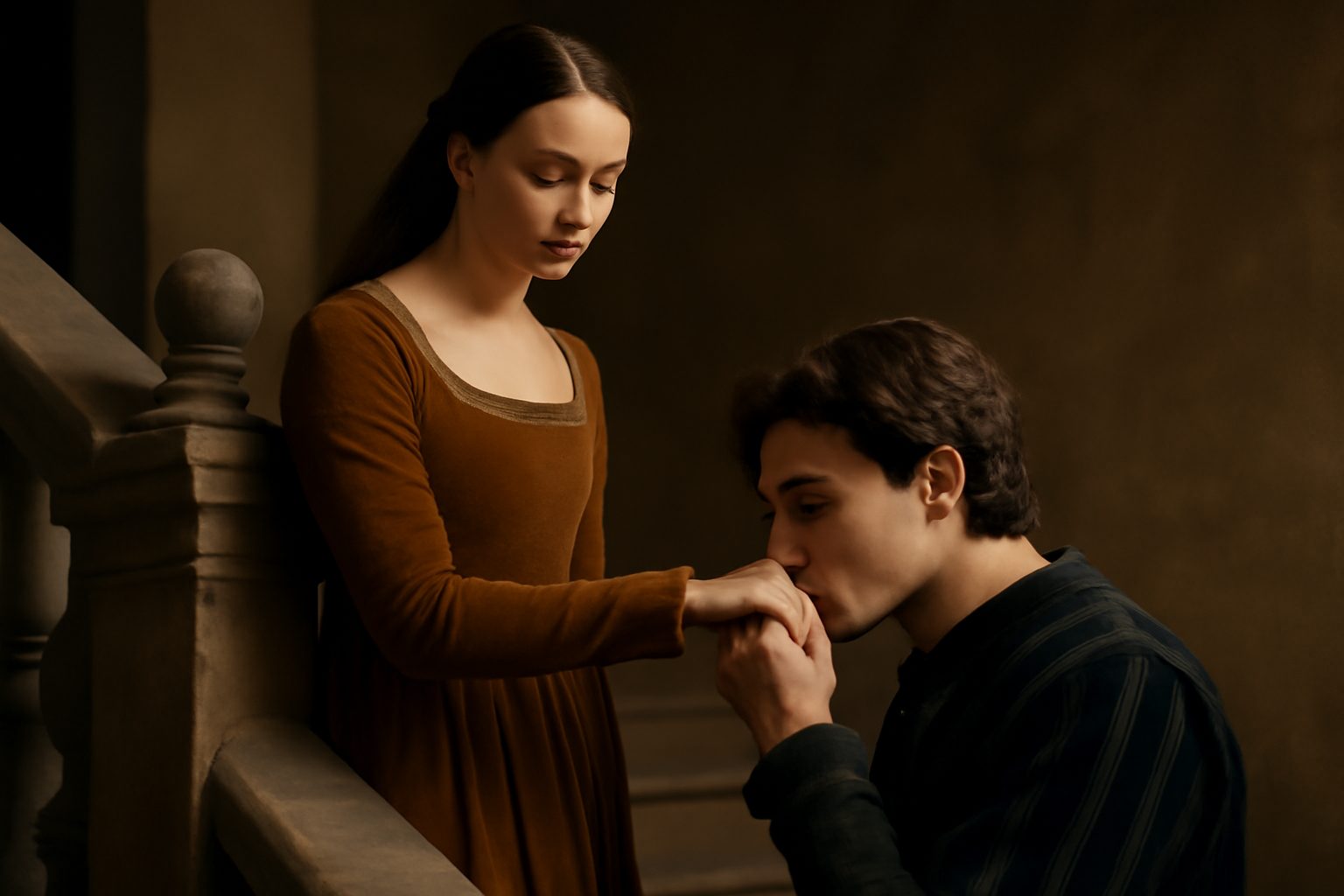
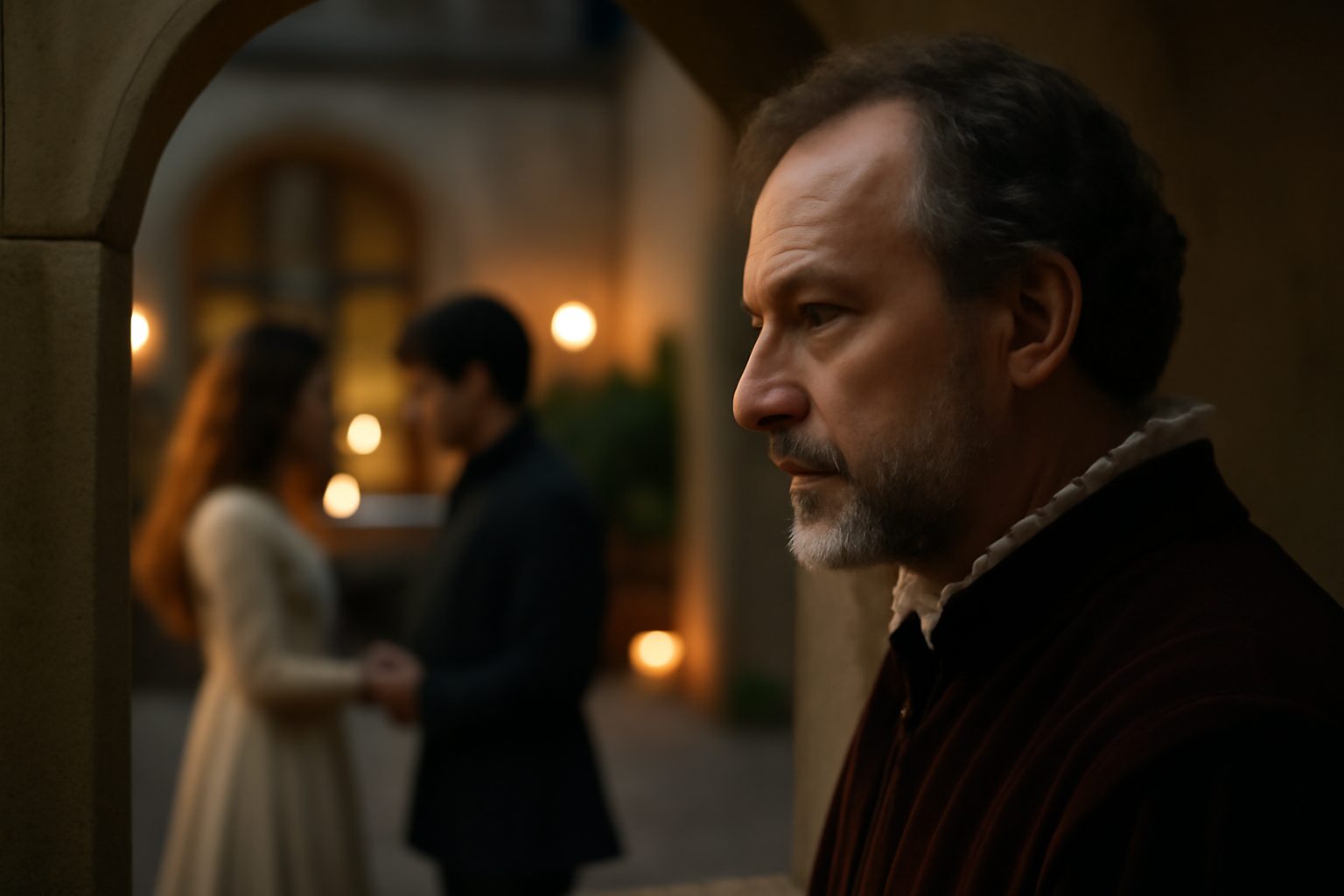
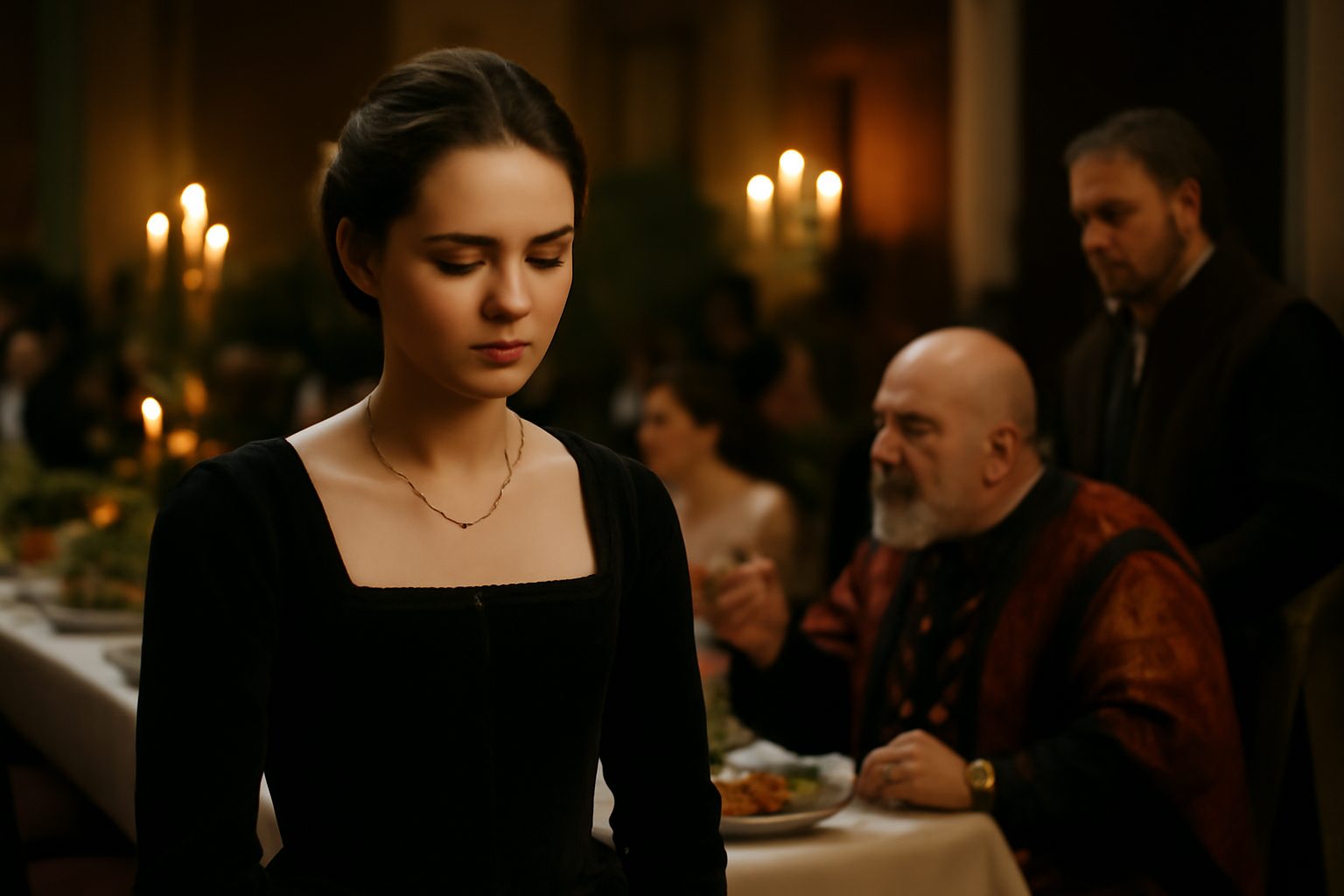
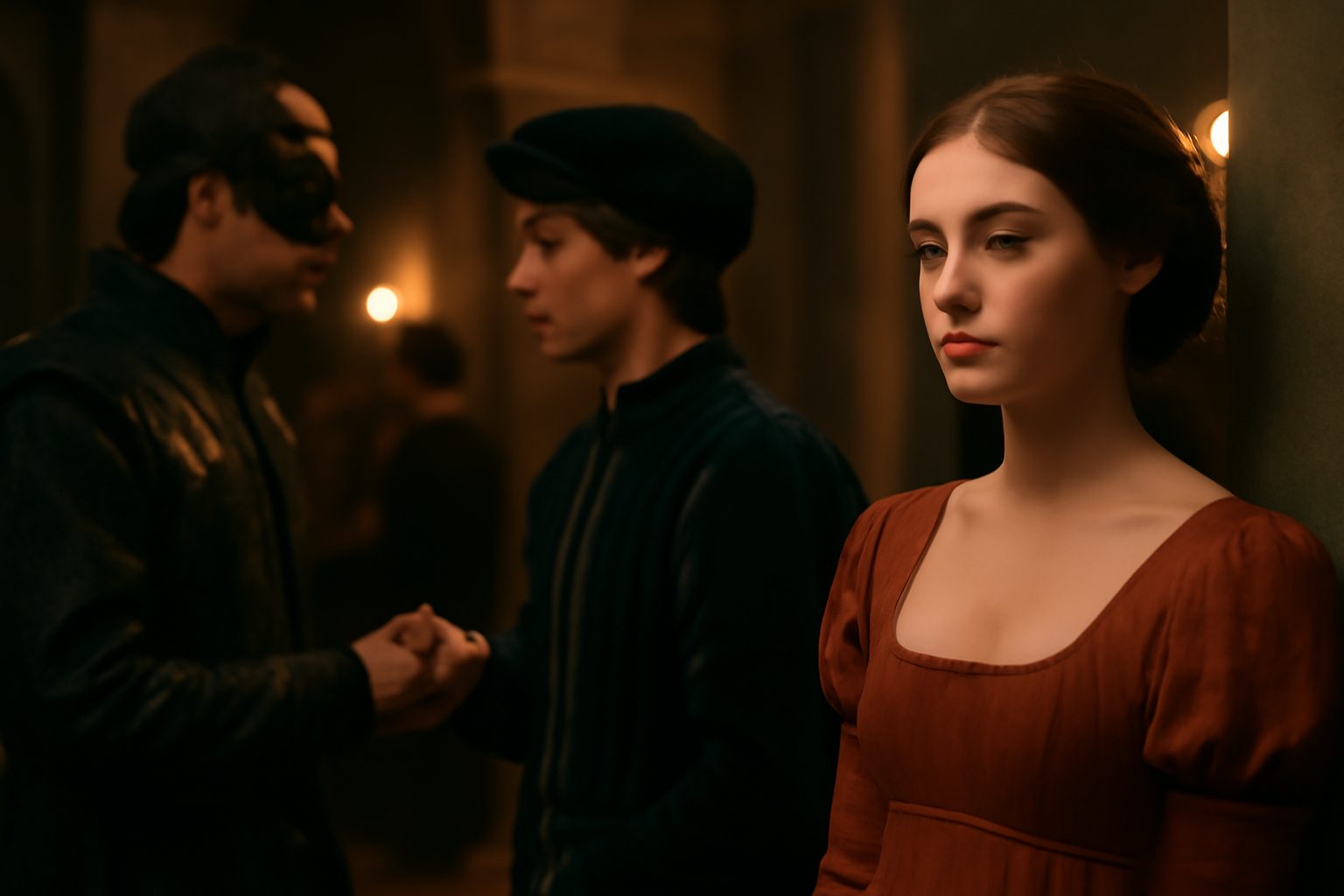
In Act 1, Scene 5 of Romeo and Juliet, the Capulets host a lavish masquerade ball, where Romeo and his friends have secretly entered in disguise. This line is spoken by Tybalt, Juliet’s fiery cousin, who recognizes Romeo’s voice as a Montague despite the mask. His suspicion and anger at the intrusion set the stage for the escalating tension between the two rival houses.
Capulet: "Were in a mask?"
In modern day english, we would say:
Are you wearing a mask?
Frequently Asked Questions
What does Capulet ask when he says 'Were in a mask?' in Romeo and Juliet?
Capulet is asking if someone was wearing a mask at the party.
Connections to other verses:
Connections to "Were in a mask?"
The verse Were in a mask? is part of a conversation between Capulet and his cousin, reminiscing about past festivities. This line directly follows their discussion of how long it has been since they last danced, as seen in How long is't now since last yourself and I, where Capulet recalls, "Some five and twenty years; and then we mask'd" from Some five and twenty years; and then we mask'd. This establishes the tradition of wearing masks at such events, which is crucial context for Romeo and Juliet's meeting, as Romeo is attending the feast in disguise.
Links to Romeo's Disguised Presence
The theme of masking connects to Romeo's uninvited attendance at the Capulet feast. Tybalt identifies him as a Montague in This, by his voice, should be a Montague, highlighting how the mask allows Romeo to blend in initially. Capulet's insistence on tolerance in Therefore be patient, take no note of him underscores the mask's role in preventing immediate conflict.
Contrast with Revelations
While masks provide temporary anonymity, they lead to dramatic revelations. Juliet's query in Come hither, nurse. What is yond gentleman? and the Nurse's response in His name is Romeo, and a Montague show the consequences of hidden identities. Juliet's lament in My only love sprung from my only hate! ties back to the initial deception enabled by the mask.
Symbolic and Thematic Echoes
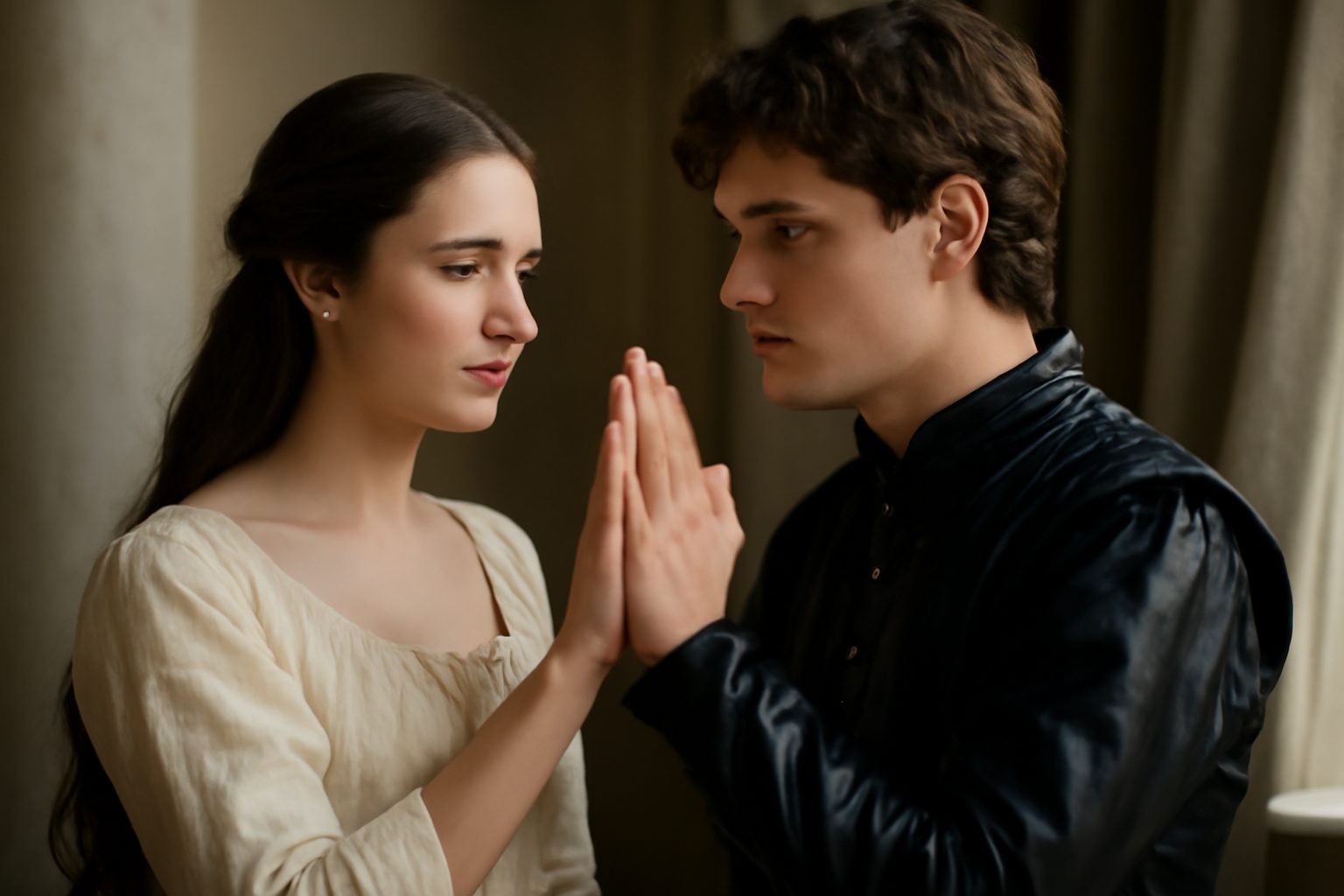
The idea of masking extends metaphorically to other interactions. Romeo and Juliet's first exchange uses religious imagery as a "mask" for their flirtation, as in [To JULIET] If I profane with my unworthiest hand, where Romeo adopts the persona of a pilgrim. This mirrors the physical masks worn, both serving to conceal true intentions or identities in a tense social setting.