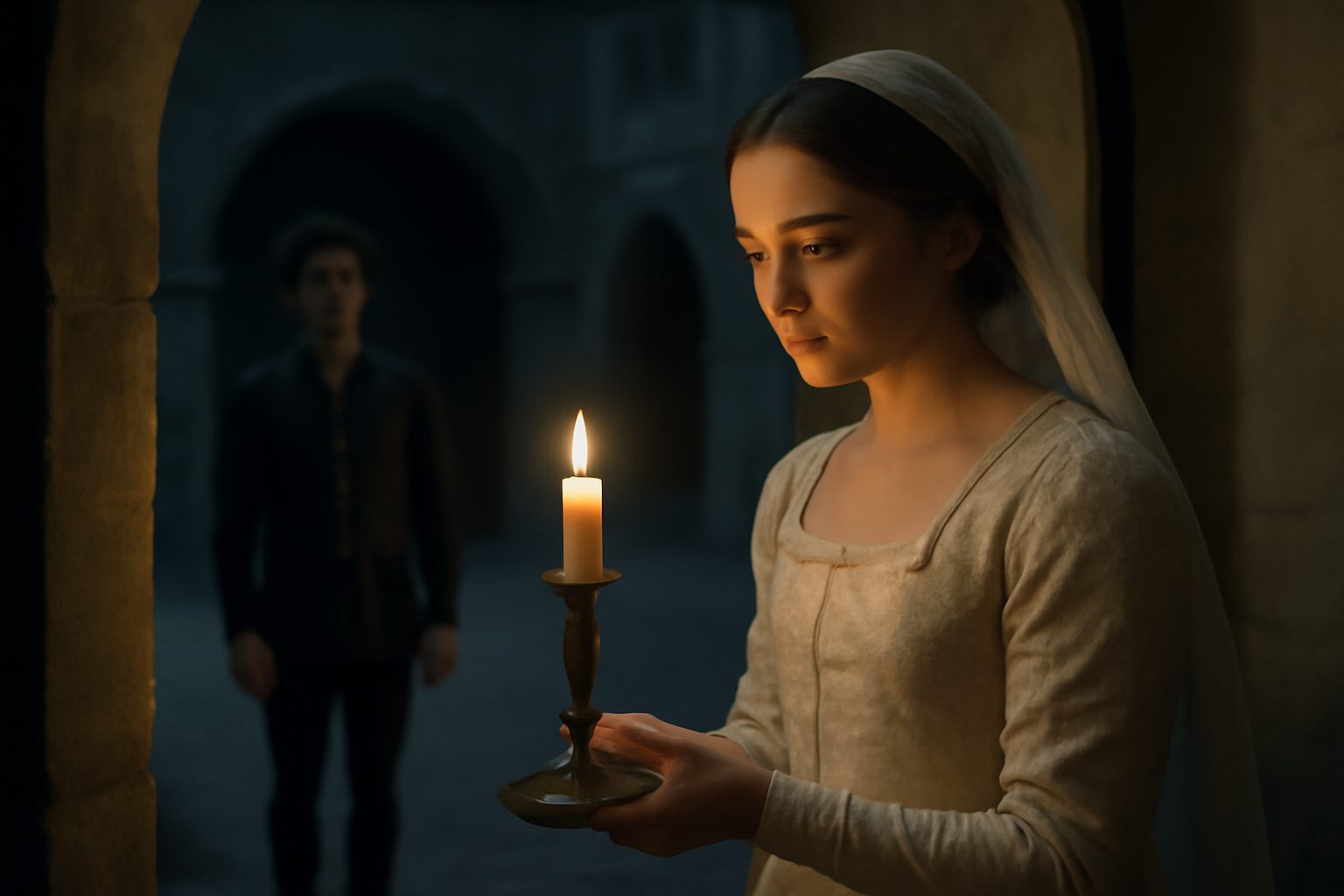
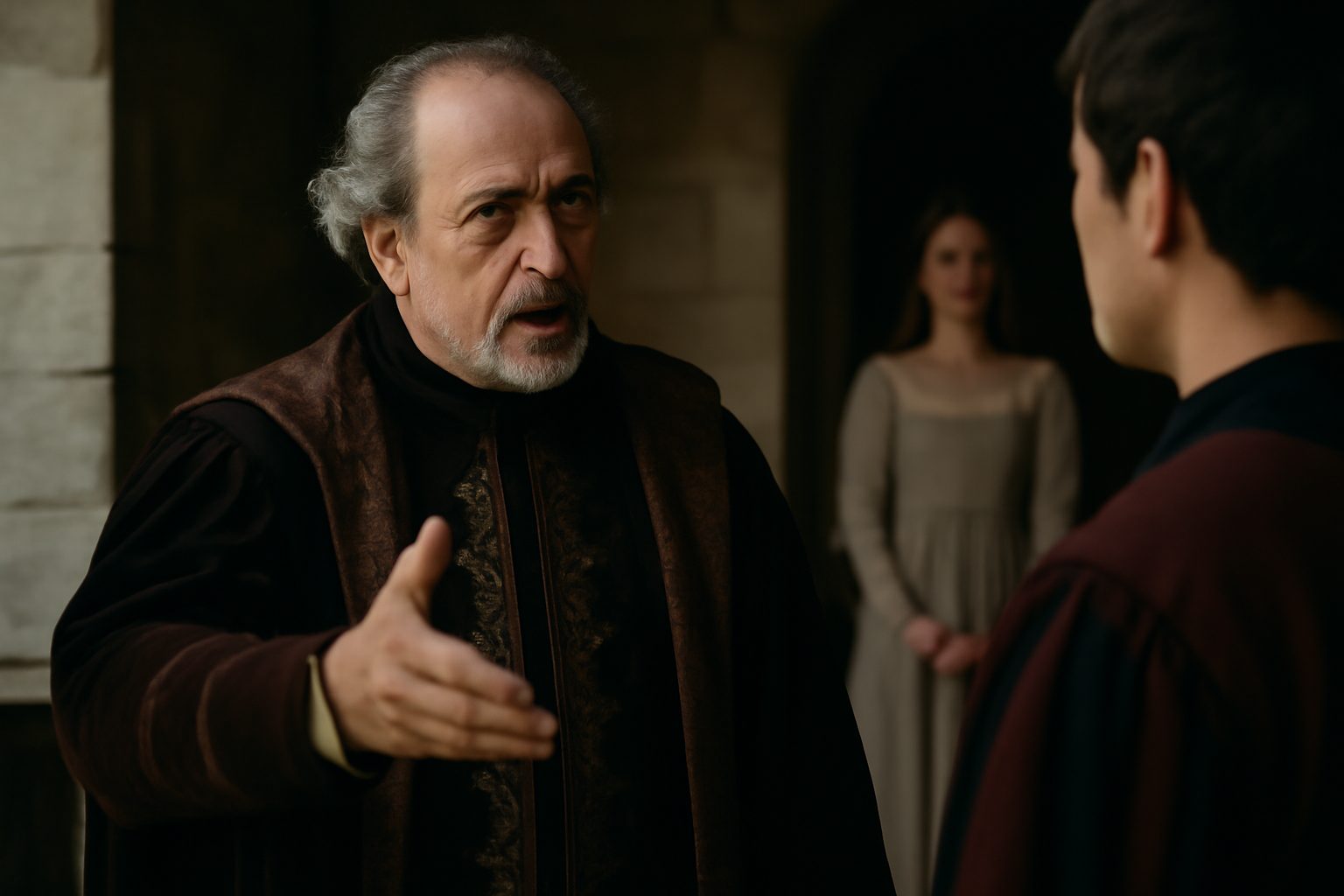
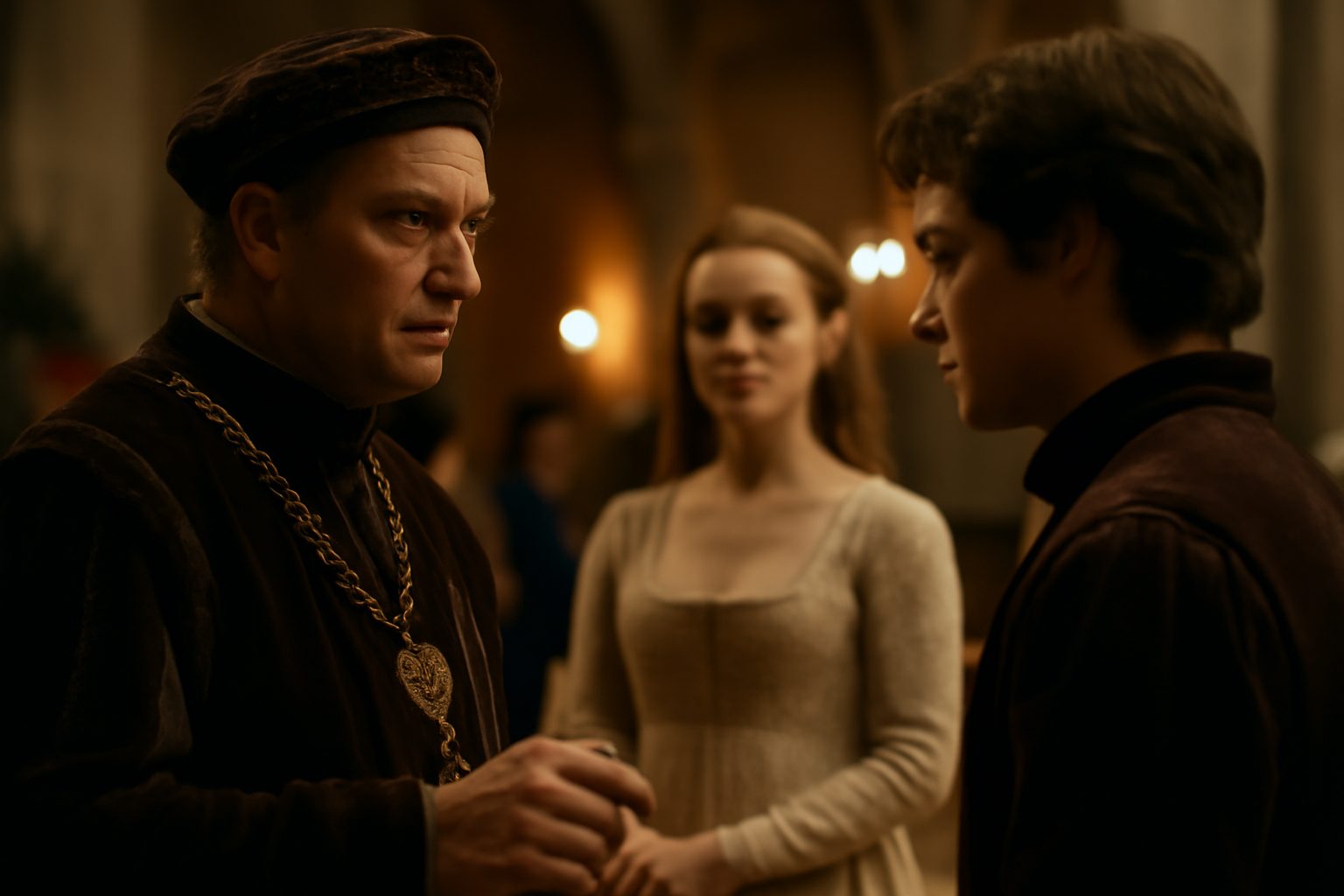
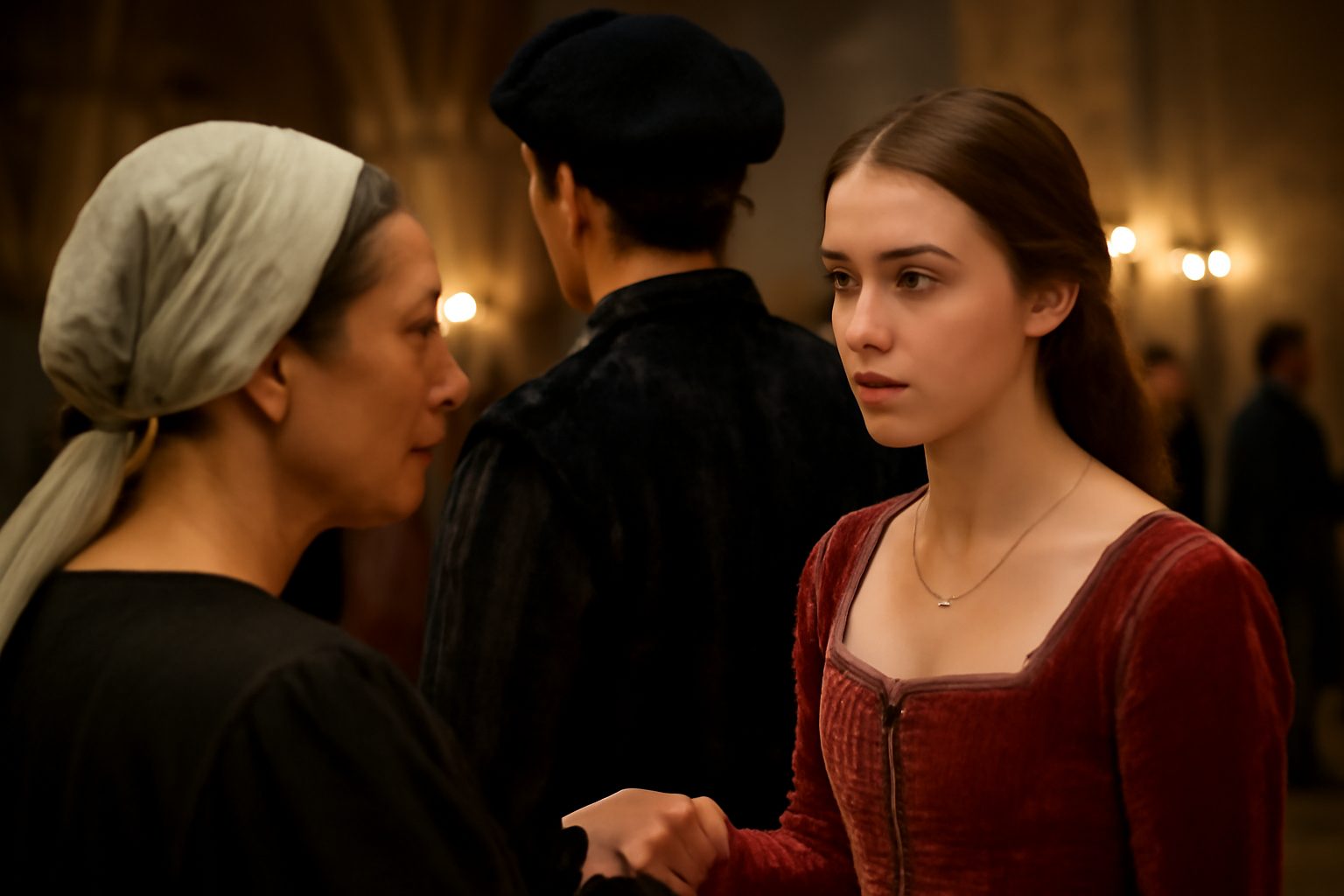
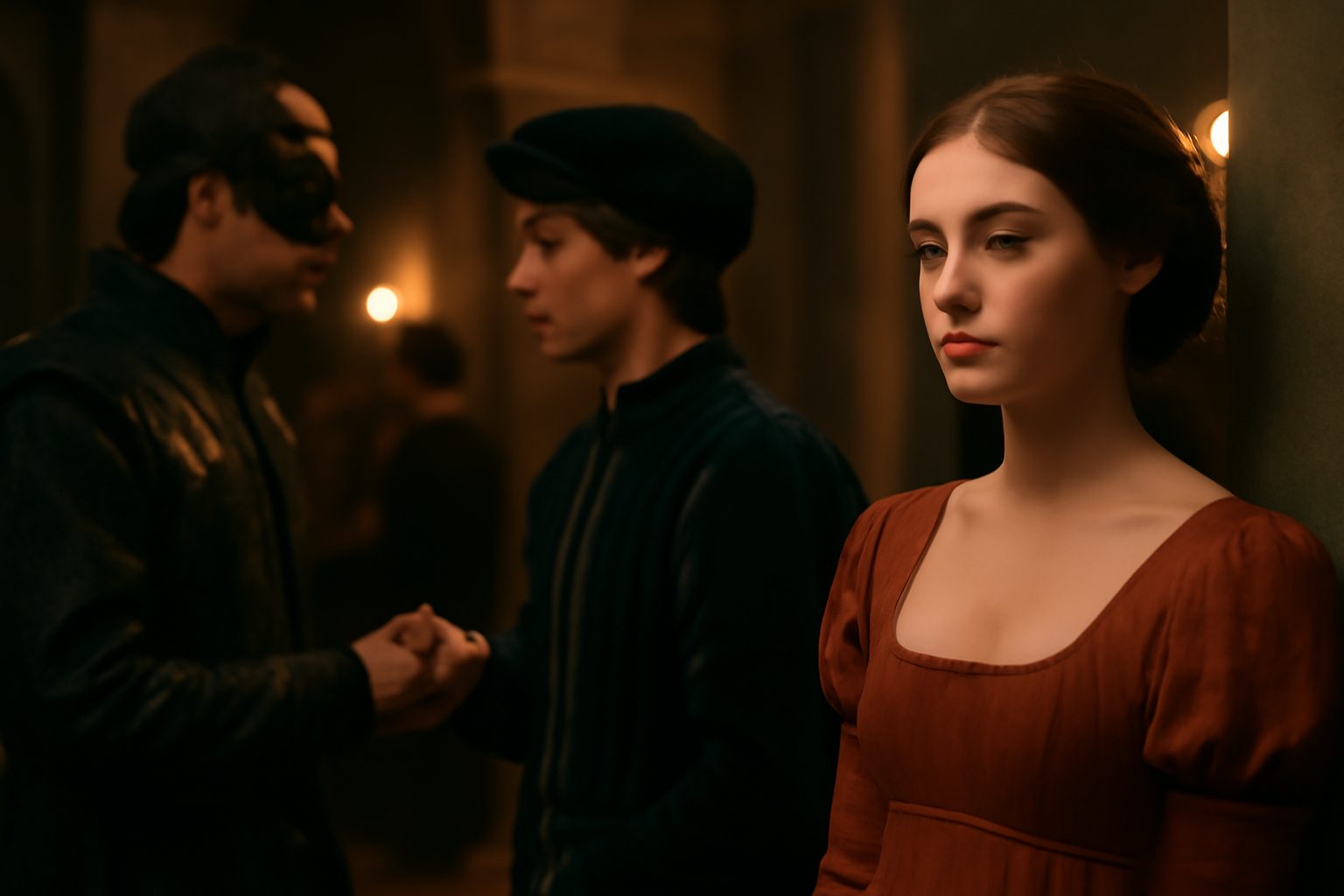
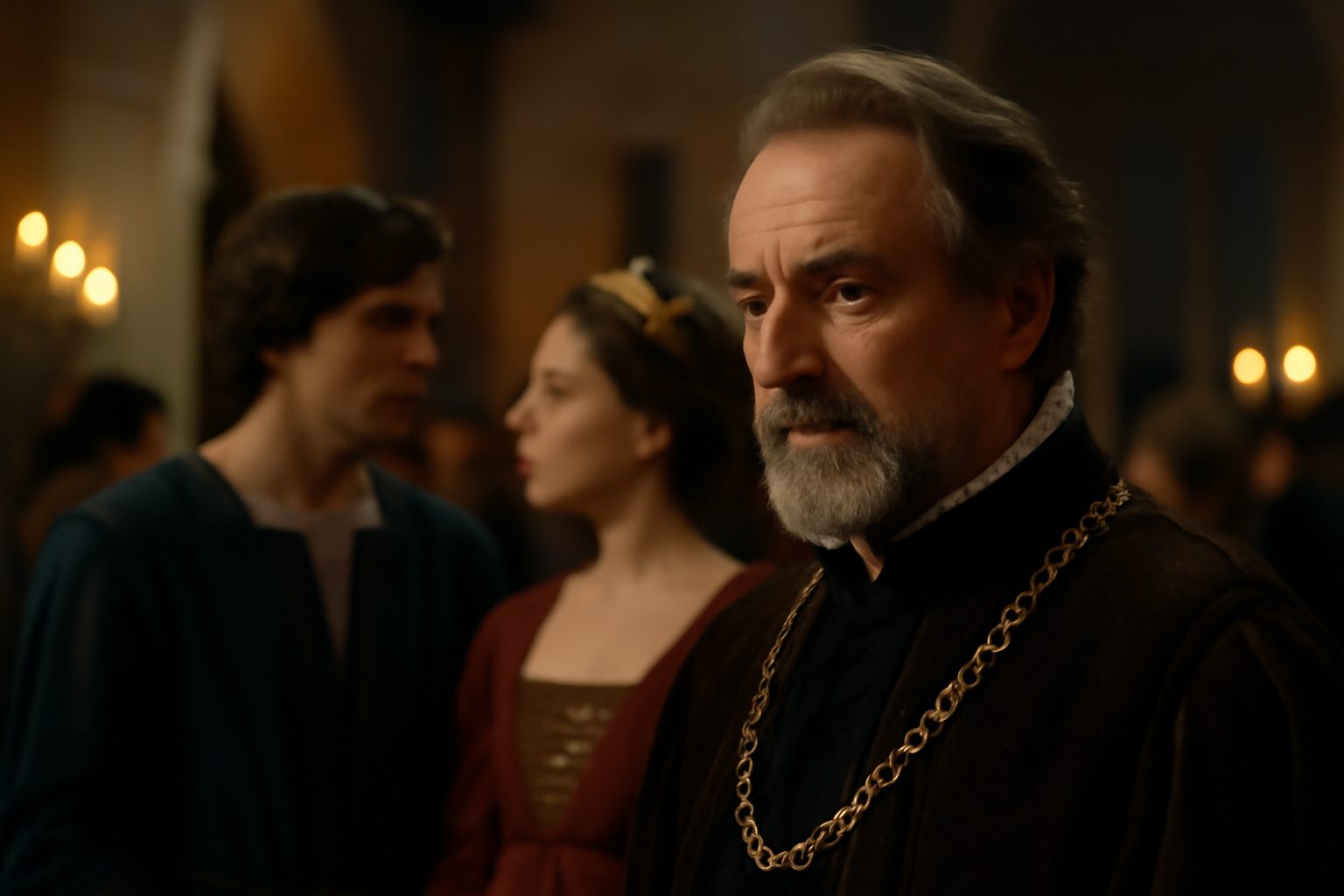
In Act 1, Scene 5 of Romeo and Juliet, the Capulets' feast is in full swing when Tybalt recognizes Romeo, a Montague, among the guests. Furious at the intrusion, he complains to Lord Capulet, who dismisses his anger and insists Romeo be left alone. Tybalt's defiant response reveals his pride and temper, as he resents being chastised and vows not to tolerate the insult.
Capulet: "You will set cock-a-hoop! you'll be the man!"
In modern day english, we would say:
You’ll go wild and show off, acting like you’re the top man around.
Frequently Asked Questions
What does Capulet mean when he says someone will set cock-a-hoop in Romeo and Juliet?
Capulet is teasing someone, saying they will act recklessly or show off, thinking they are the most important person.
Connections to other verses:
Connections to "You will set cock-a-hoop! you'll be the man!"
This line, spoken by Capulet to Tybalt, reflects the escalating tension and foreshadows conflict. It connects thematically and dramatically to several other verses in the scene.
Direct Conflict and Authority
Capulet's warning "You will set cock-a-hoop! you'll be the man!" is a direct response to Tybalt's defiance. It follows Tybalt's exclamation "I'll not endure him", showcasing the clash between youthful impulsiveness and Capulet's authority. Capulet reinforces his control with "Am I the master here, or you? go to.", emphasizing his role as the head of the household who will not tolerate disruption.
Foreshadowing and Consequences
The phrase hints at the chaos Tybalt's actions could cause, linking to Capulet's earlier concern about maintaining order: "You'll make a mutiny among my guests!". This tension is juxtaposed with the romantic and serene moments, such as Romeo's awe at Juliet's beauty in "Beauty too rich for use, for earth too dear!", highlighting the contrast between love and conflict.
Character Dynamics
Capulet's frustration with Tybalt is further evident when he dismisses him with "Well said, my hearts! You are a princox; go:", reinforcing the generational and temperamental divide. This dynamic underscores the scene's exploration of honor, pride, and the consequences of unchecked emotion, themes that resonate throughout the play.