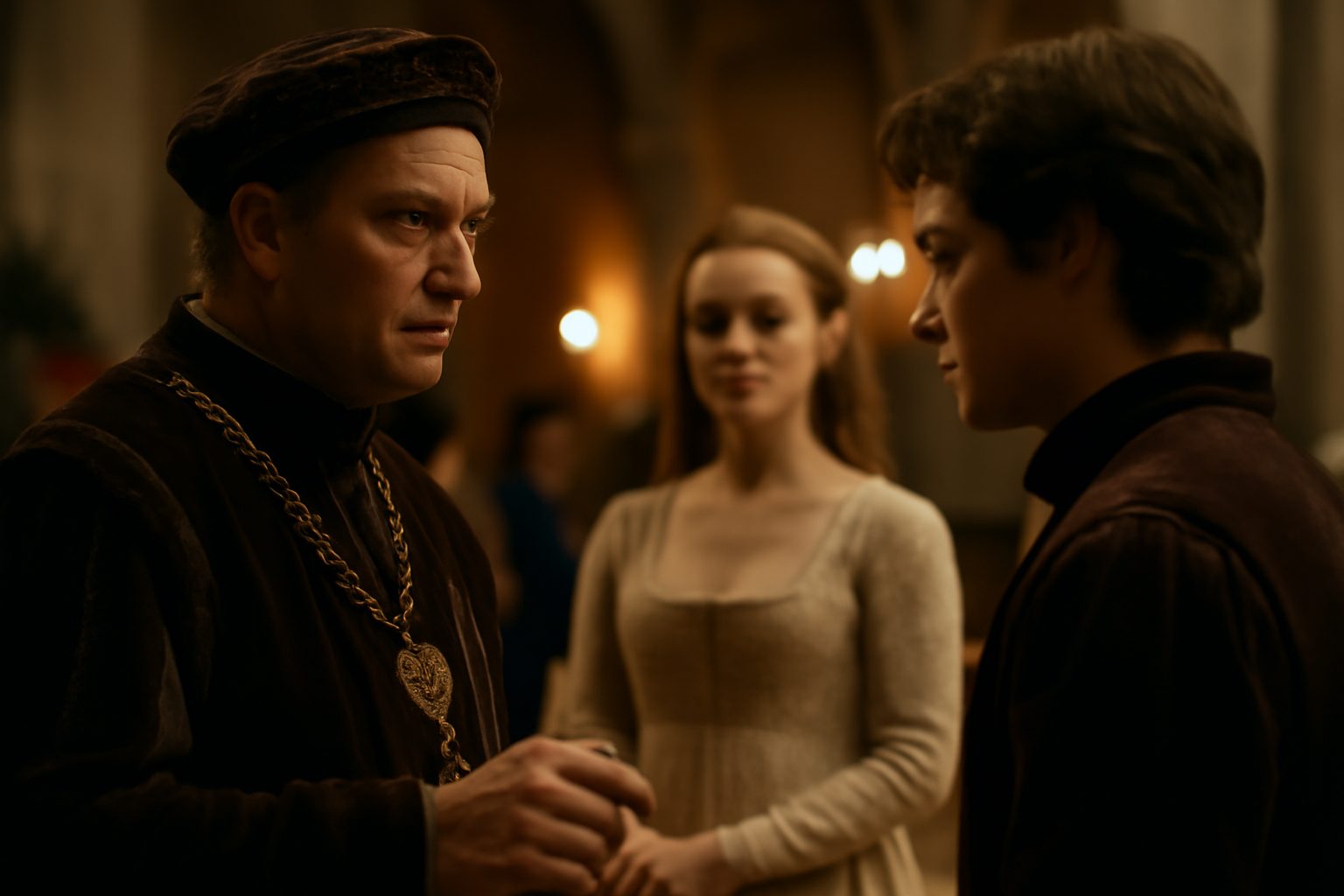
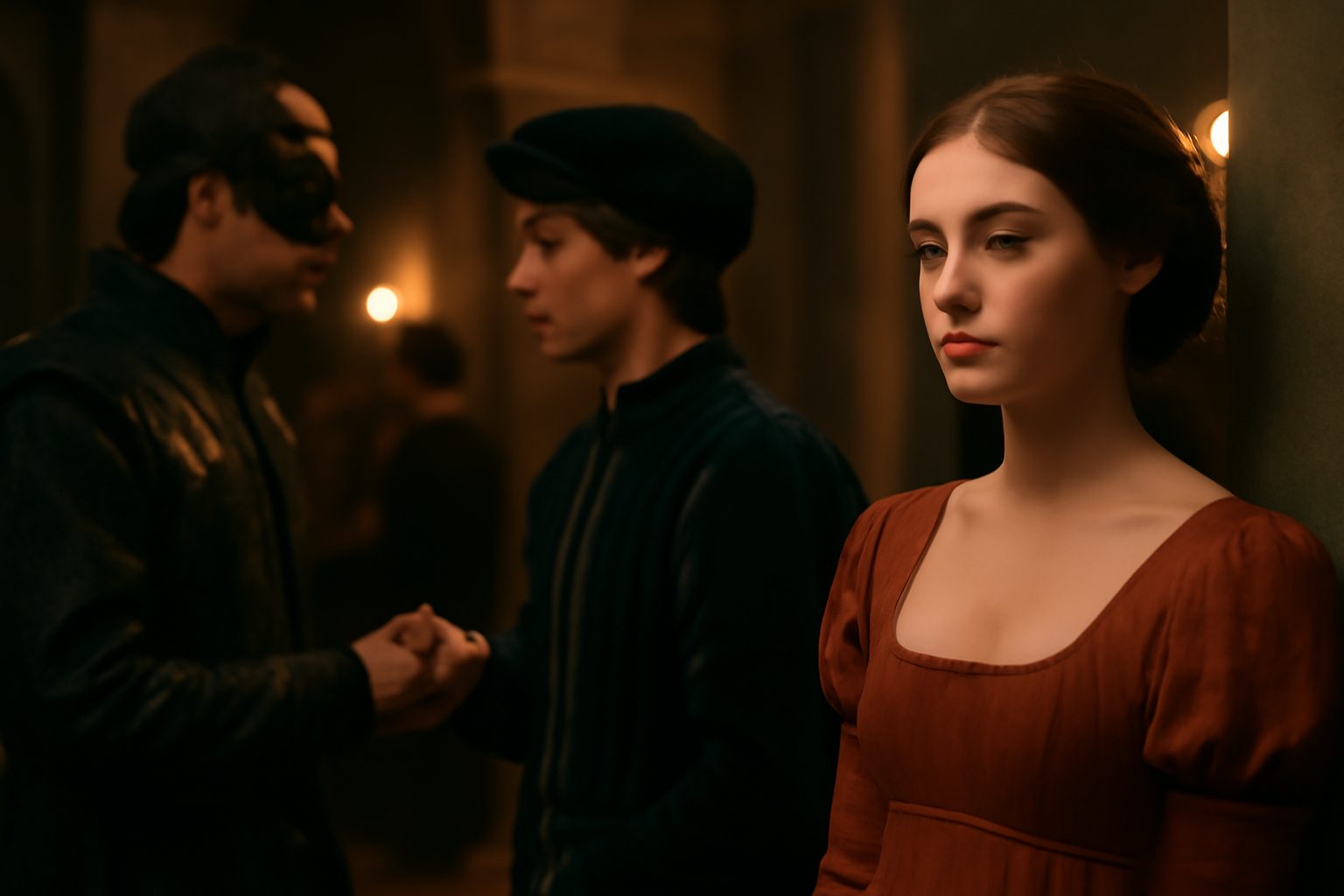
In Act 1, Scene 5 of Romeo and Juliet, Lord Capulet is speaking to his cousin during the lively feast at the Capulet household. The line refers to a young man, likely a guest at the party, whom Capulet recalls as being under legal guardianship just two years earlier. This casual remark highlights the passage of time and the social dynamics among the youth in Verona.
Capulet: "His son was but a ward two years ago."
In modern day english, we would say:
His son was only under legal guardianship two years ago.
Frequently Asked Questions
How long ago was Capulet's son considered a ward?
Two years ago.
Connections to other verses:
Connections to "His son was but a ward two years ago"
The line "His son was but a ward two years ago" is spoken by Capulet during a conversation about age and time, specifically in response to a query about how long it has been since he last attended a masquerade. This verse connects thematically and contextually to several others in the scene.
Conversation on Age and Time
This line is part of a larger exchange where Capulet and another character discuss the passage of time. It directly follows "Tis more, 'tis more, his son is elder, sir", which corrects or adds to the previous statement about someone's age. It also relates to "His son is thirty", providing contrasting information about maturity and youth, highlighting how quickly time passes and children grow.
Capulet's Reflective Mood
Capulet's nostalgic tone here is echoed in other parts of the scene, such as when he says "Welcome, gentlemen! I have seen the day", reflecting on his younger years. Similarly, his remark "For you and I are past our dancing days" reinforces this theme of aging and reminiscence.
Contrast with Youthful Energy
While Capulet dwells on the past, the scene is filled with youthful exuberance, particularly from Romeo and Juliet. Romeo's exclamation "Did my heart love till now? forswear it, sight!" underscores the immediacy and passion of youth, contrasting with Capulet's measured reflections on time.
Social Context and Identity
Discussions of lineage and age, like in this verse, tie into the broader context of family identity and conflict. For instance, Tybalt's recognition of Romeo as "that villain Romeo" and the subsequent revelation of "His name is Romeo, and a Montague" show how age, status, and family names are interwoven in the social fabric of the play.