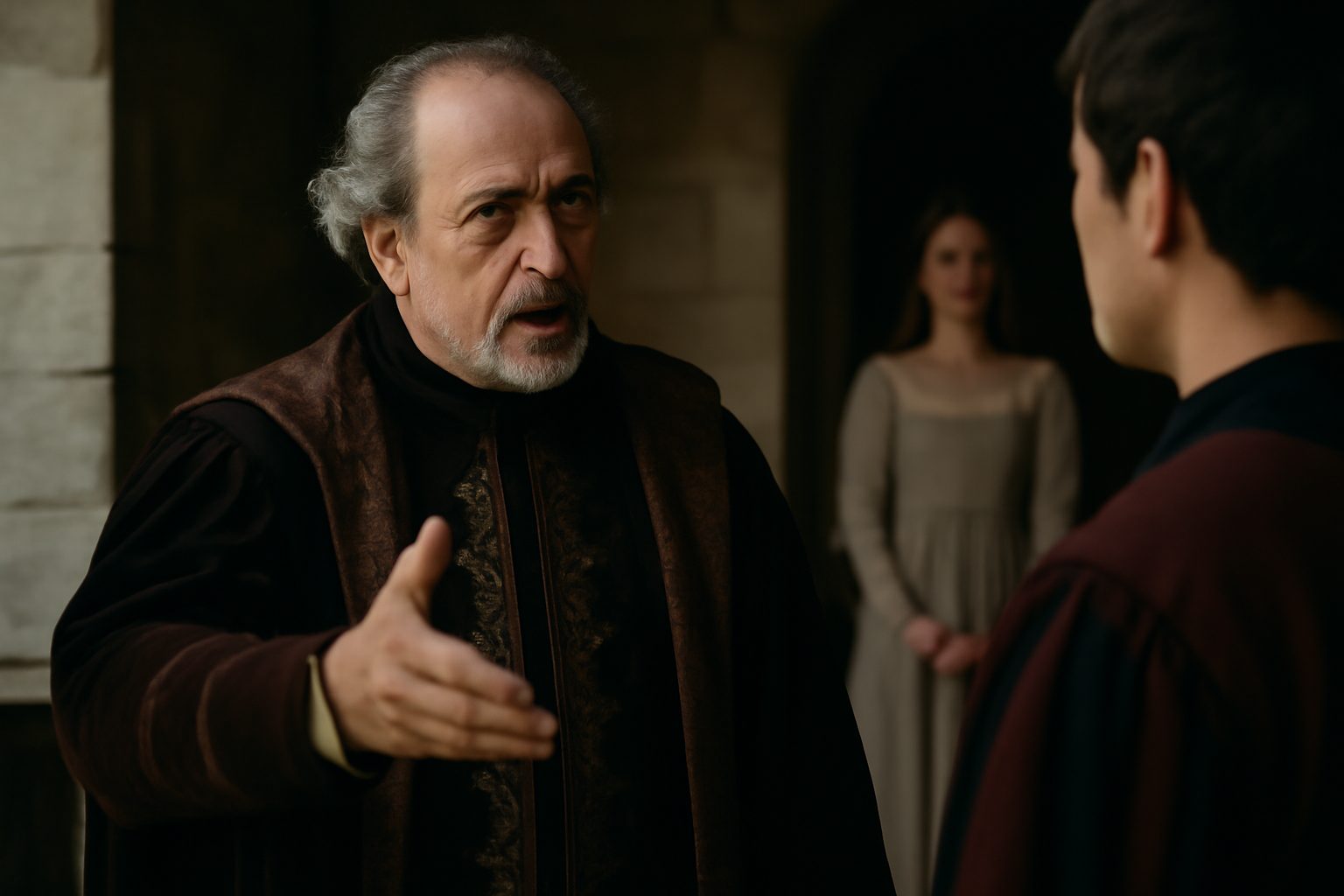
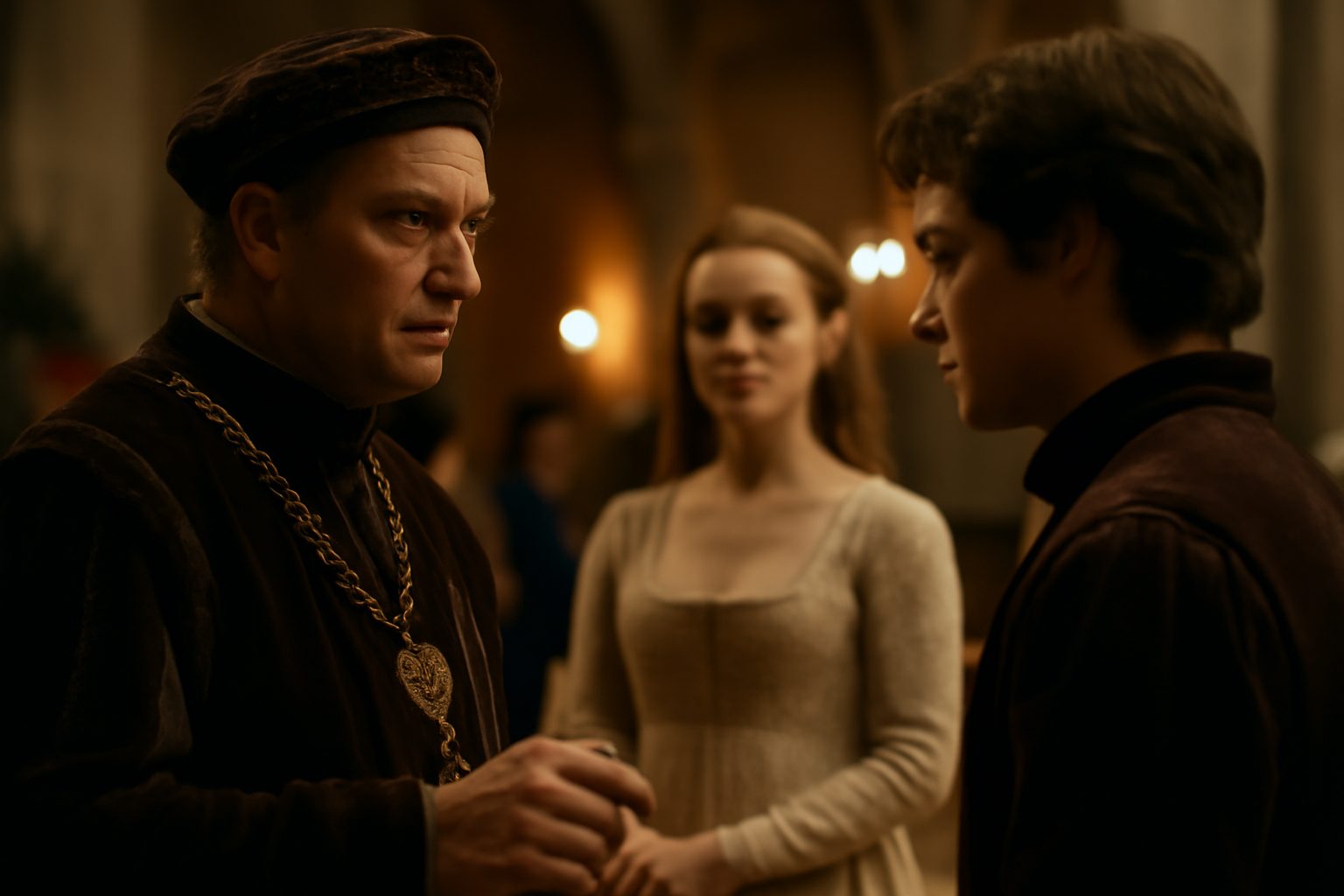
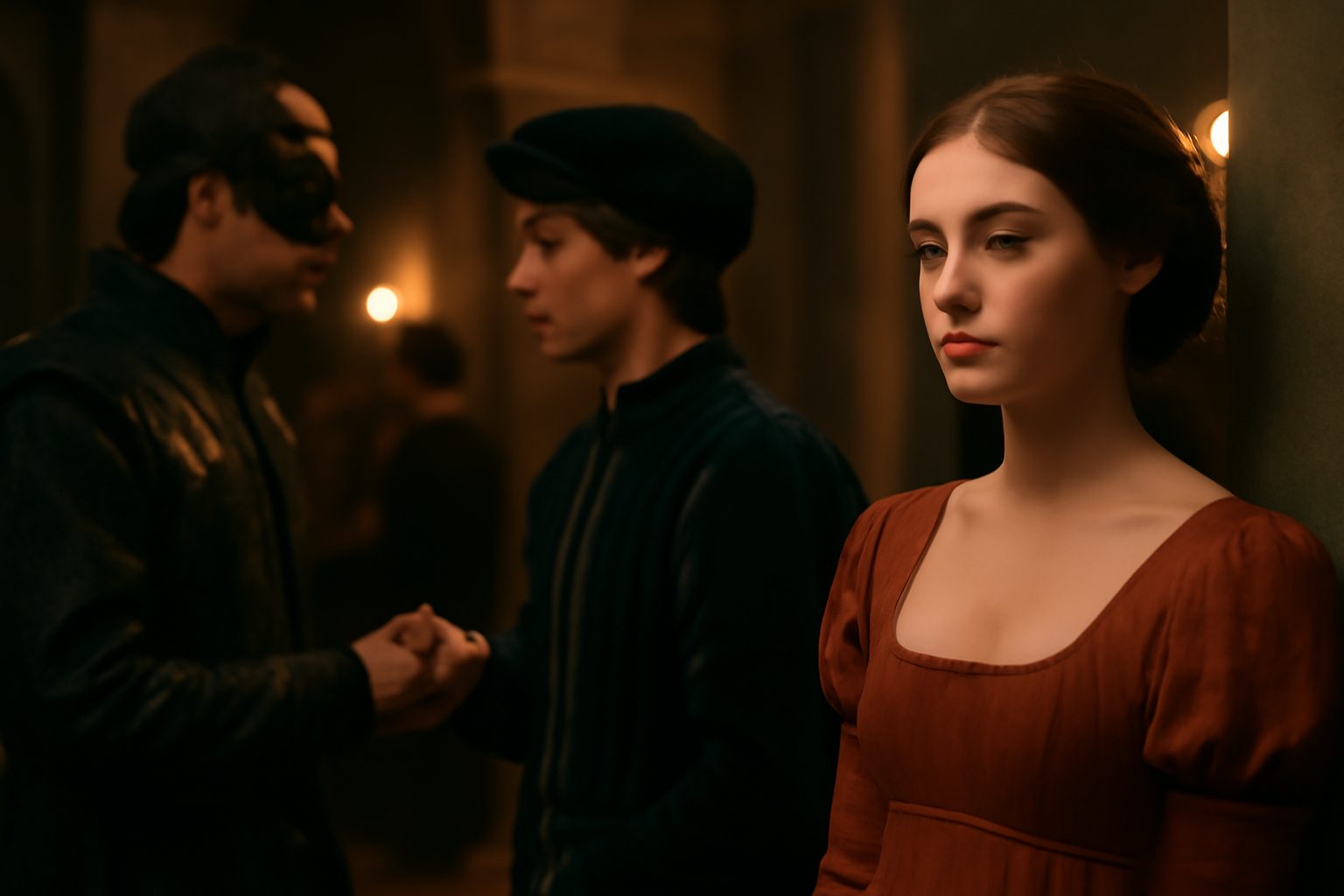
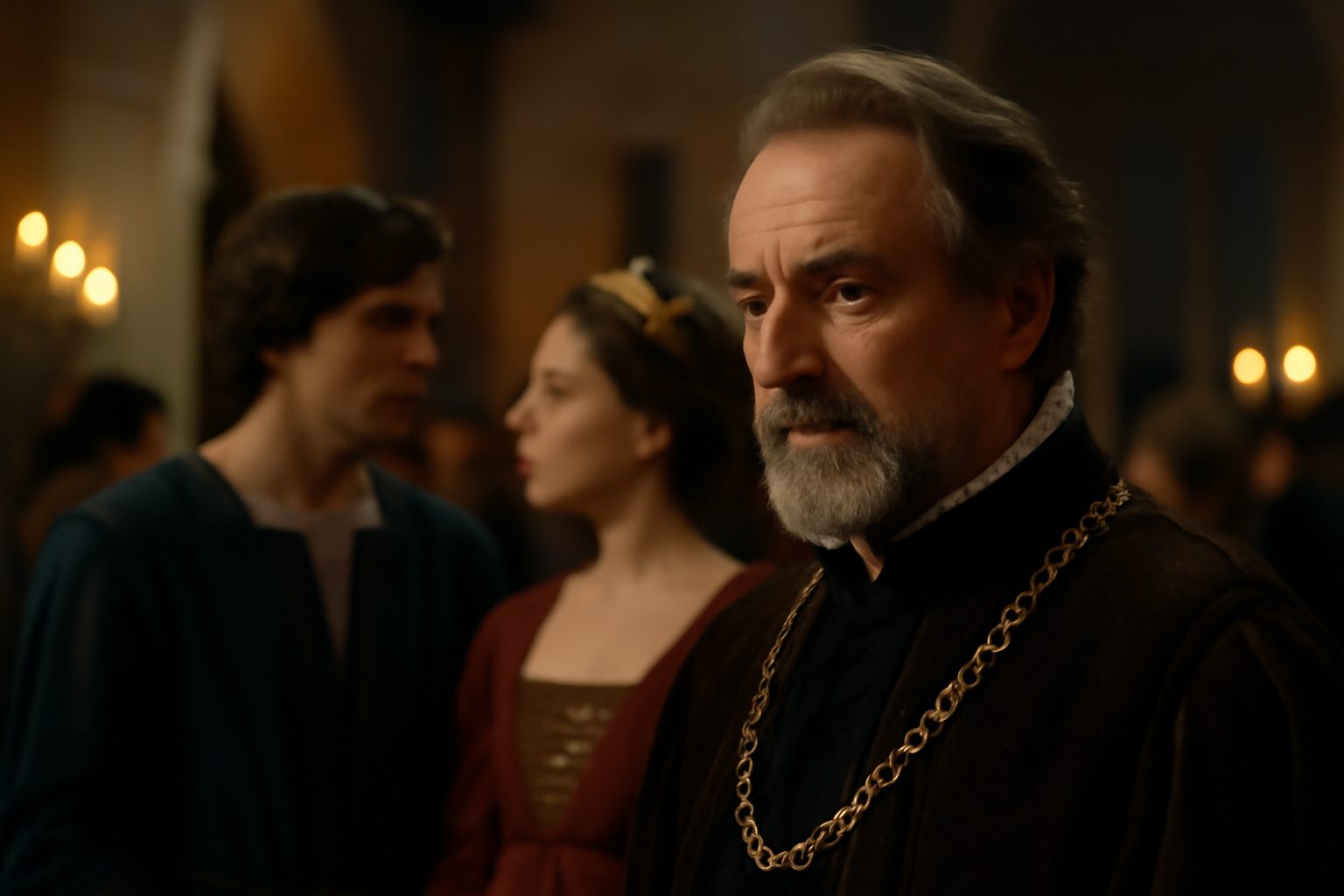
In Act 1, Scene 5 of Romeo and Juliet, Romeo has just encountered Juliet for the first time at the Capulet feast and is instantly captivated by her. When he takes her hand and then kisses her, he playfully suggests that his lips, now touched by hers, have been cleansed of sin. This moment marks the beginning of their passionate and fateful connection, filled with religious imagery and youthful ardor.
Romeo: "Thus from my lips, by yours, my sin is purged."
In modern day english, we would say:
When you kiss me, my lips are cleansed of their sin.
Frequently Asked Questions
What does Romeo mean when he says his sin is purged by Juliet's lips?
Romeo is saying that kissing Juliet has cleansed him of his past sins, implying that their love is pure and redeeming.
Connections to other verses:
Religious Imagery and the Pilgrim Metaphor
Romeo's line, Thus from my lips, by yours, my sin is purged, is part of an extended religious metaphor that structures his first exchange with Juliet. This begins with [To JULIET] If I profane with my unworthiest hand, where Romeo frames their meeting in terms of a pilgrim (himself) approaching a saint (Juliet). Juliet picks up on this metaphor in Good pilgrim, you do wrong your hand too much, showing her willingness to engage in this playful, courtly banter.
Development of the Kiss
The metaphor evolves as Romeo requests a kiss to absolve his "sin." In O, then, dear saint, let lips do what hands do, he suggests that lips can pray just as hands do in pilgrimage. Juliet teasingly responds in Saints do not move, though grant for prayers' sake, playing the part of the immovable saint, which prompts Romeo's witty reply in the line in question. After the kiss, Juliet asks in Give me my sin again, showing her own desire to continue the exchange, and Romeo's final line in this sequence, You kiss by the book, suggests she recognizes his skill but also perhaps a certain conventionality in his approach.
Contrast with the Party's Atmosphere
This intimate, poetic exchange stands in stark contrast to the bustling, sometimes chaotic atmosphere of the Capulet feast. The scene opens with servants preparing for the party in lines like Away with the joint-stools, remove the and Antony, and Potpan!, and Capulet himself encourages the revelry in Welcome, gentlemen! I have seen the day. The contrast highlights how Romeo and Juliet's connection transcends the social event around them.
Tension and Foreshadowing
While Romeo and Juliet's meeting is filled with light and love, it is shadowed by the feud between their families. Tybalt recognizes Romeo and expresses his rage in Fetch me my rapier, boy. What dares the slave and Tis he, that villain Romeo. Capulet's insistence that Romeo be tolerated (He shall be endured) only temporarily contains the conflict. This tension foreshadows the tragedy to come, making the purity of Romeo's "purged sin" ironically poignant against the backdrop of familial hatred.
Juliet's Realization and Despair
After the party, Juliet discovers Romeo's identity, and her exclamation in My only love sprung from my only hate! directly contrasts with the earlier bliss of their kiss. Her sense of foreboding is captured in My grave is like to be my wedding bed, which tragically inverts the joy of their meeting. The purging of sin through a kiss becomes, in this light, not a redemption but a prelude to sorrow.