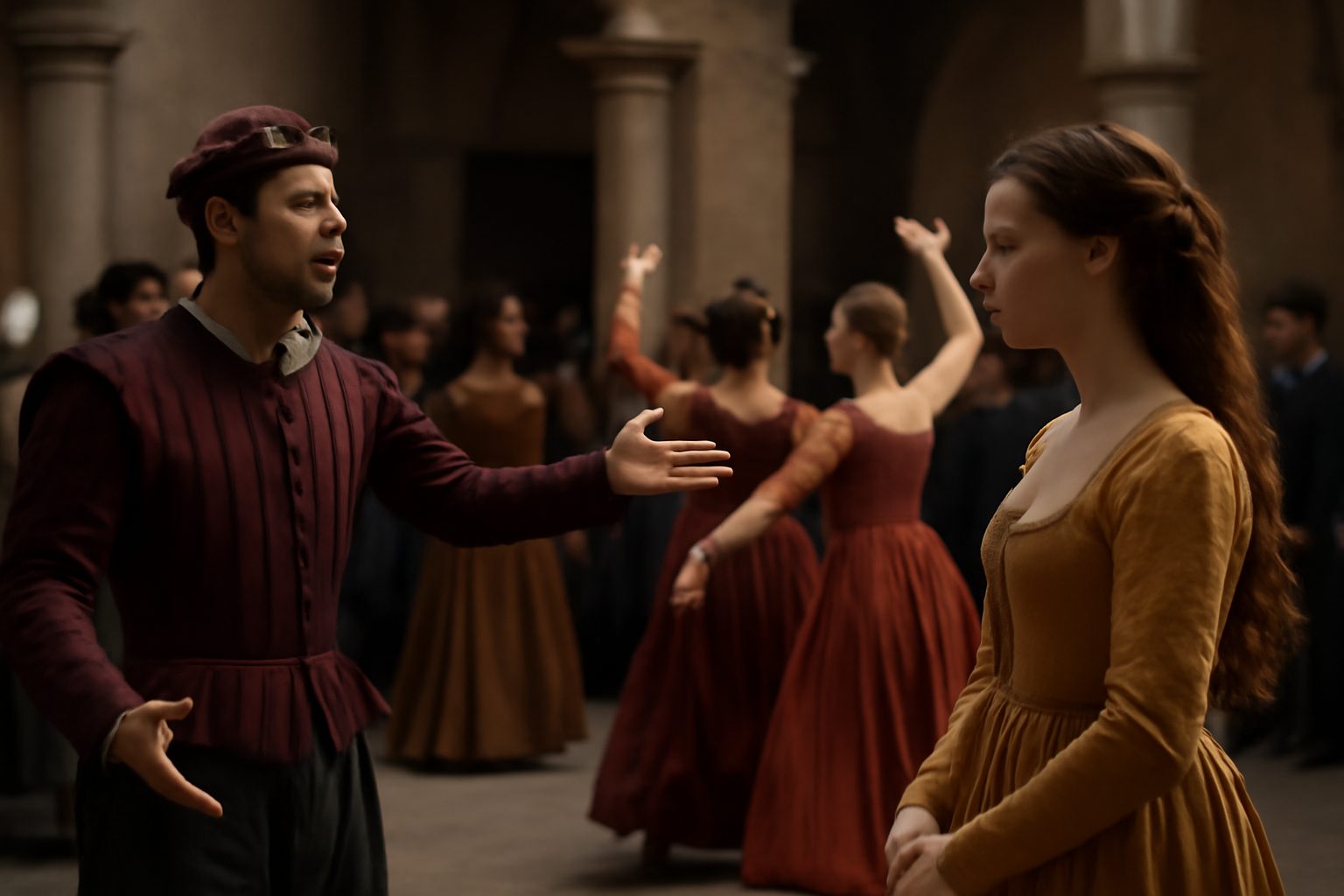
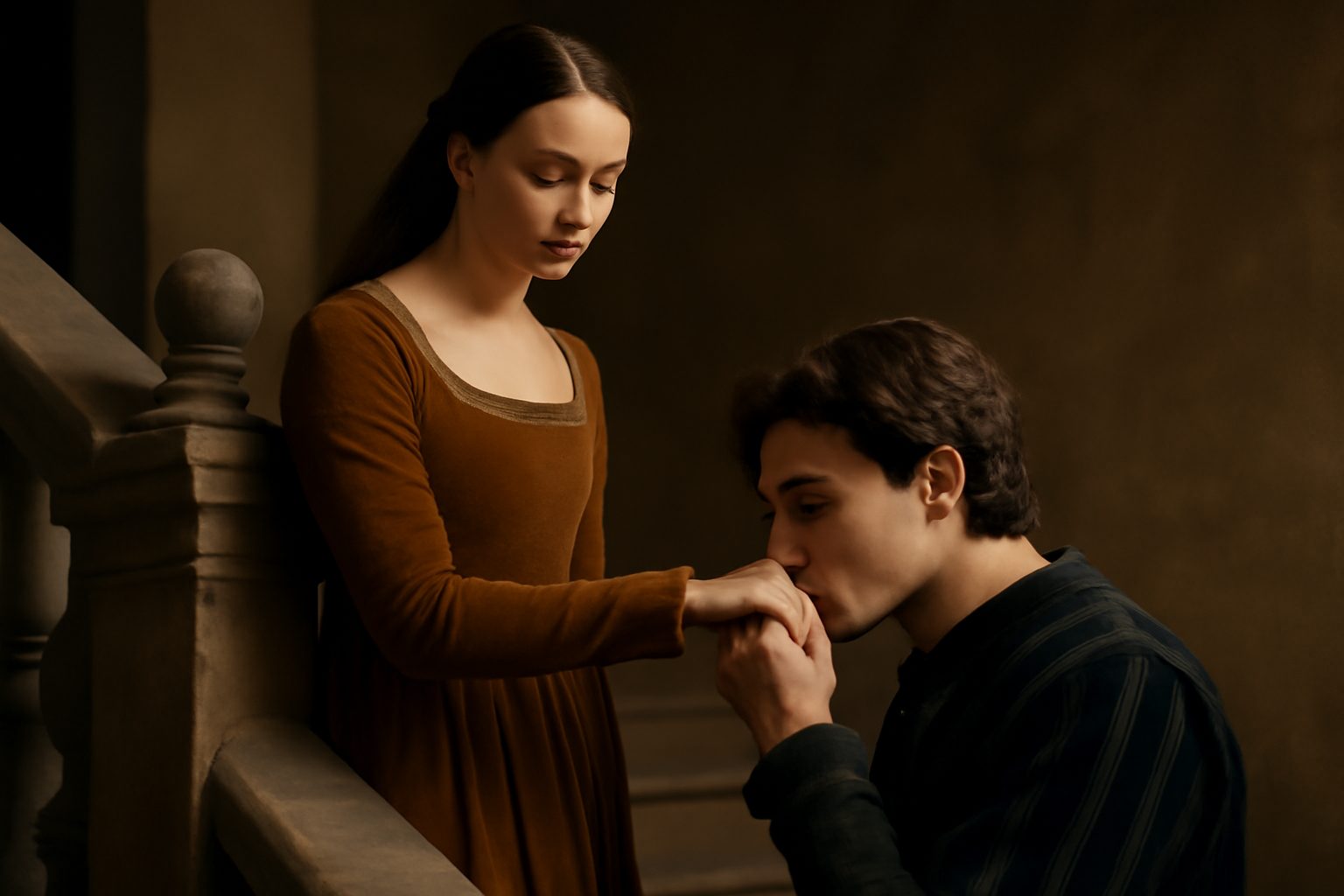
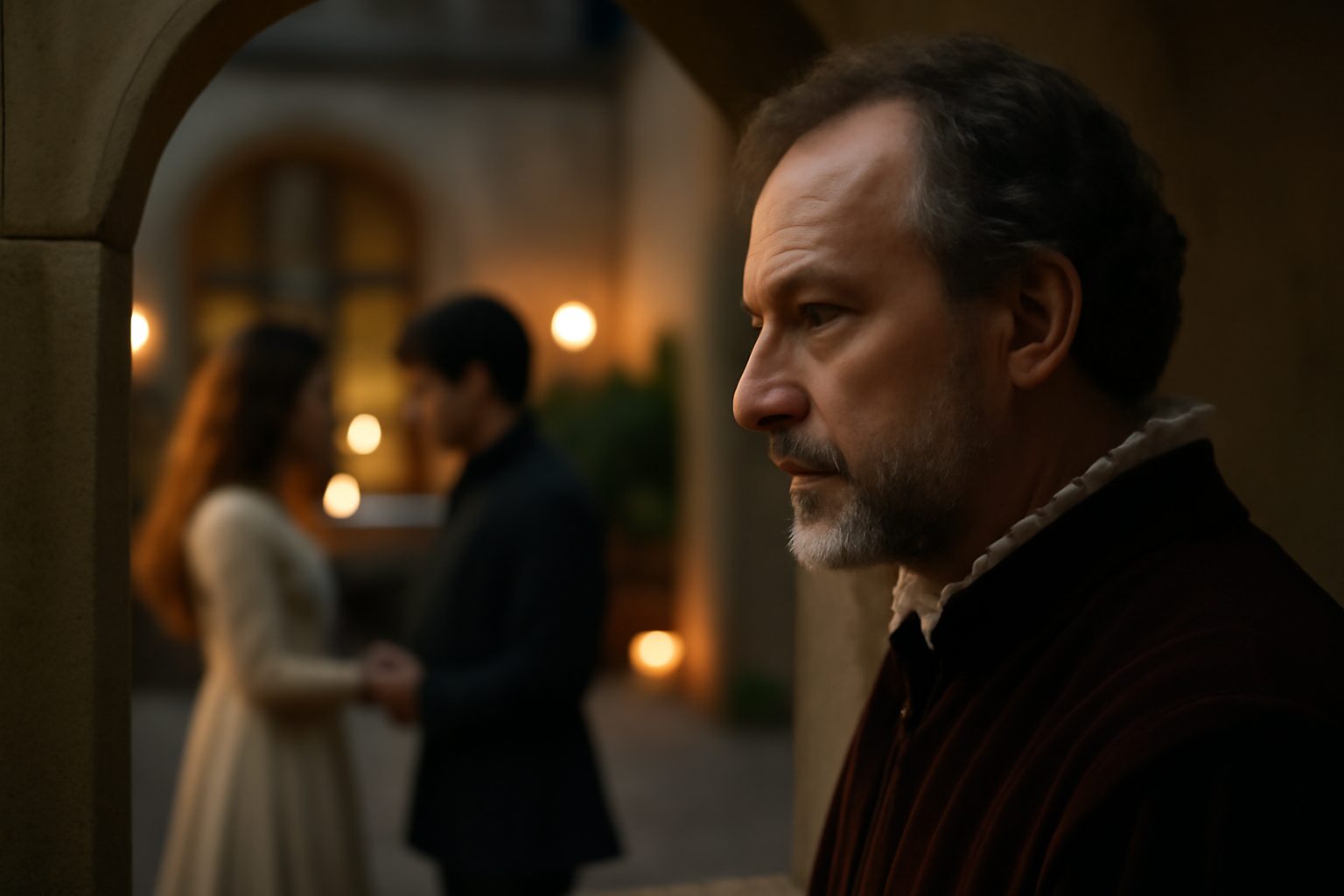
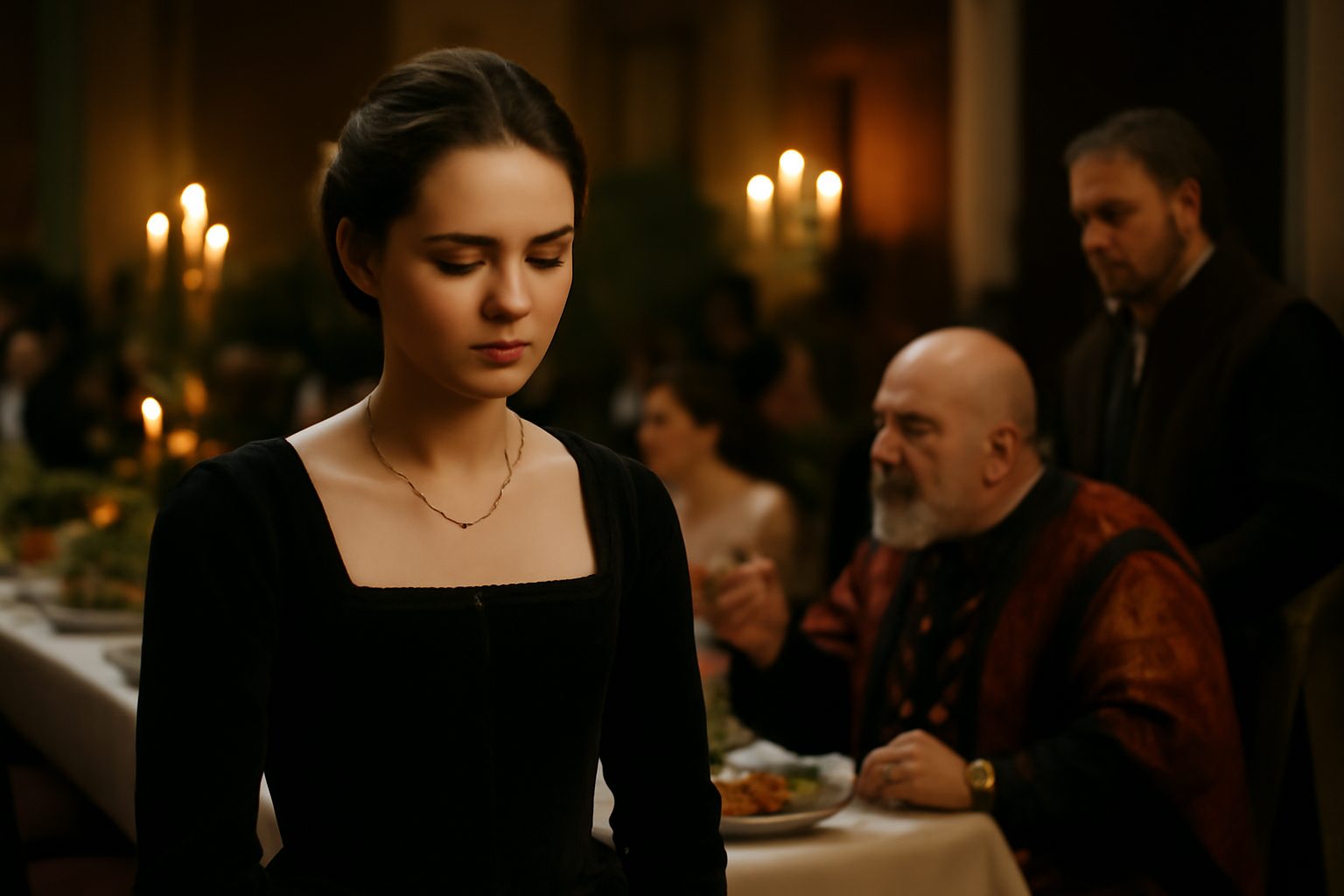
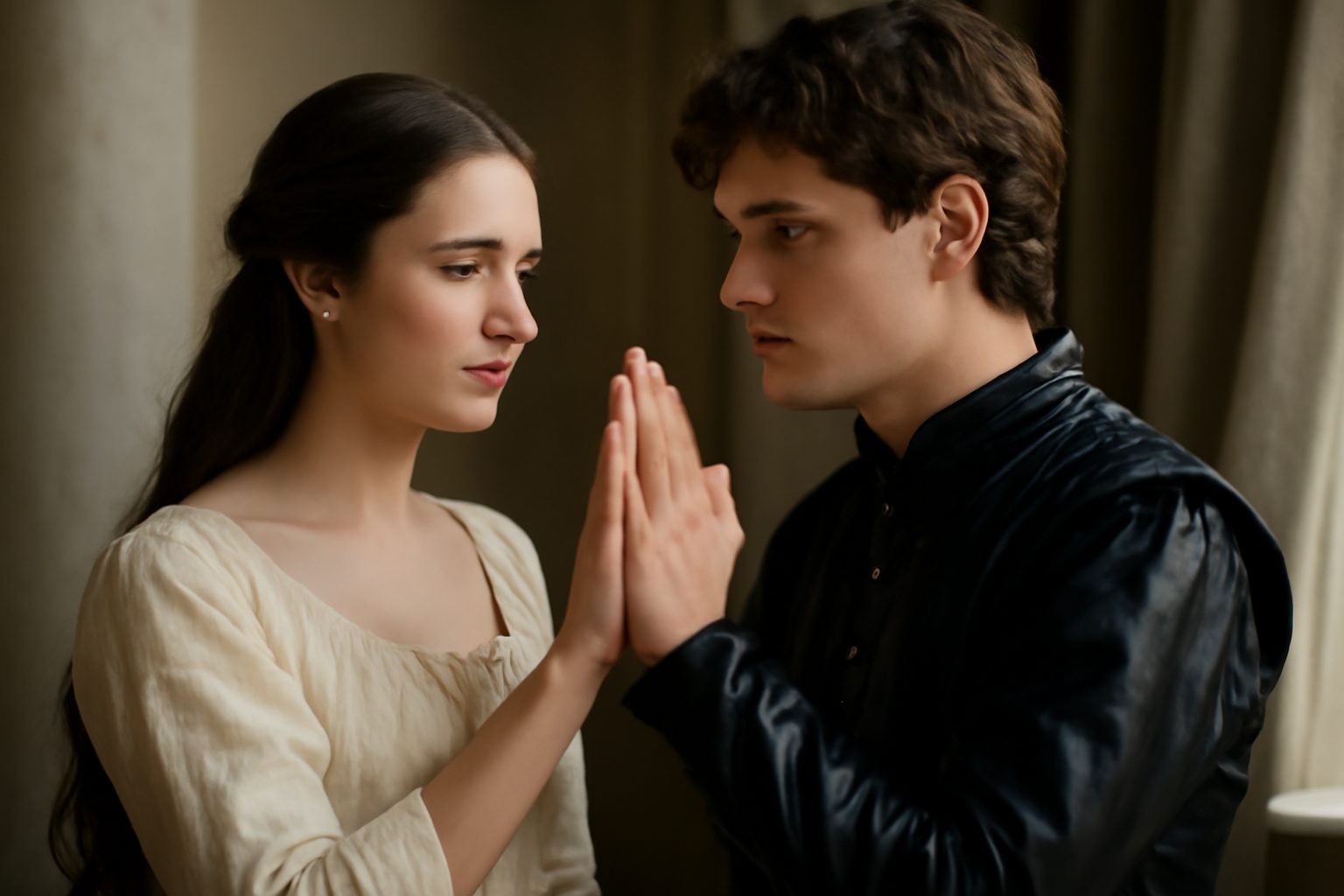
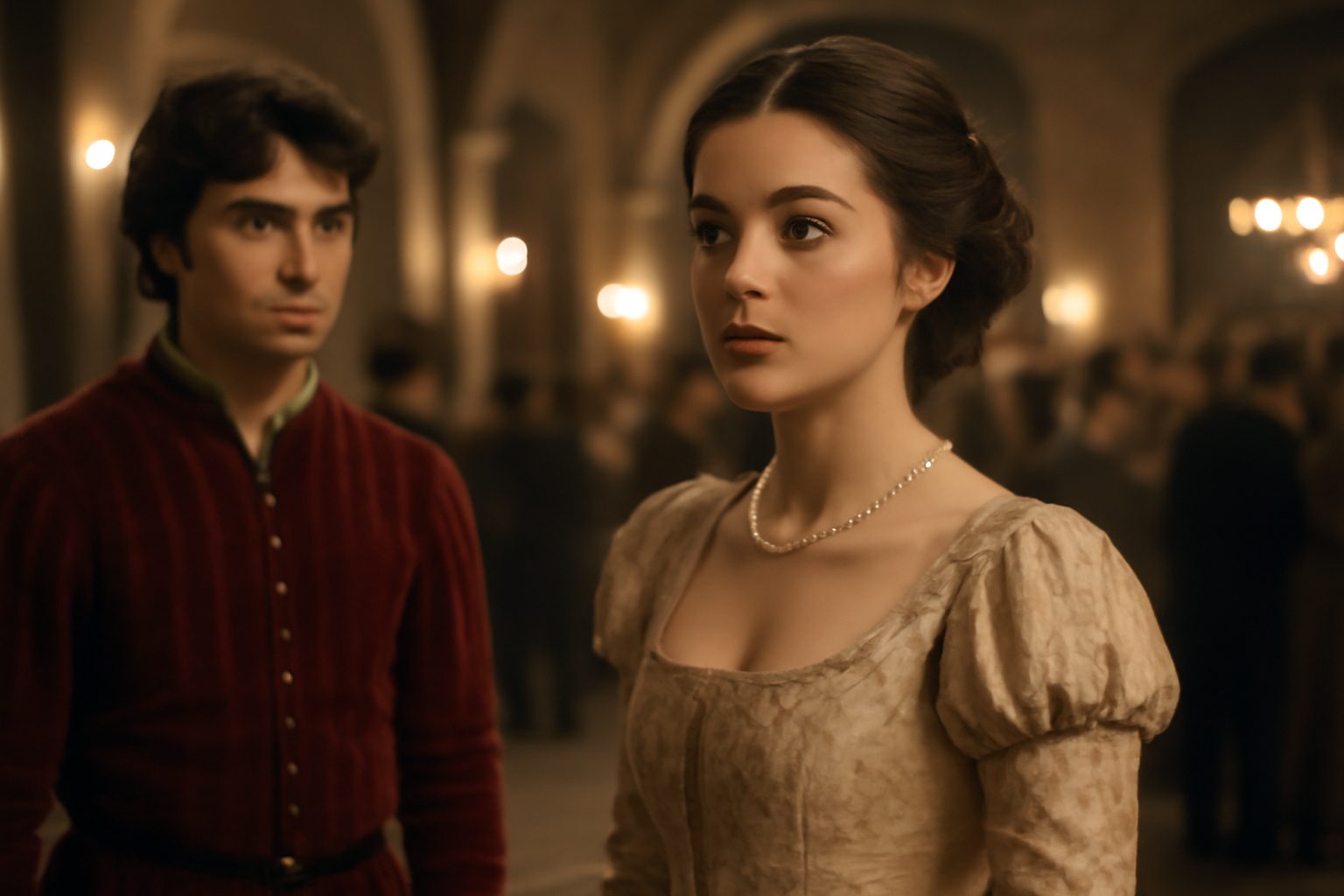
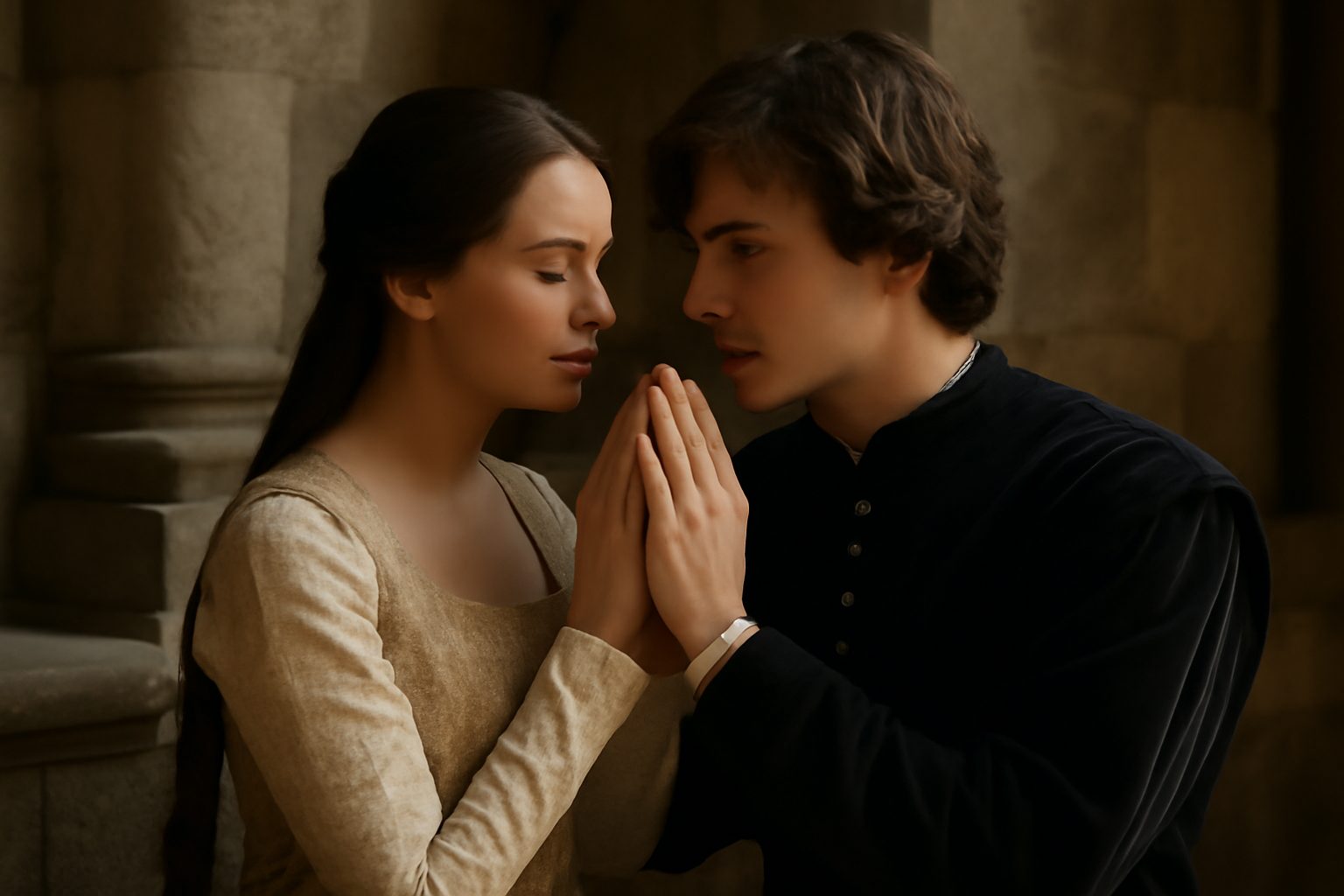
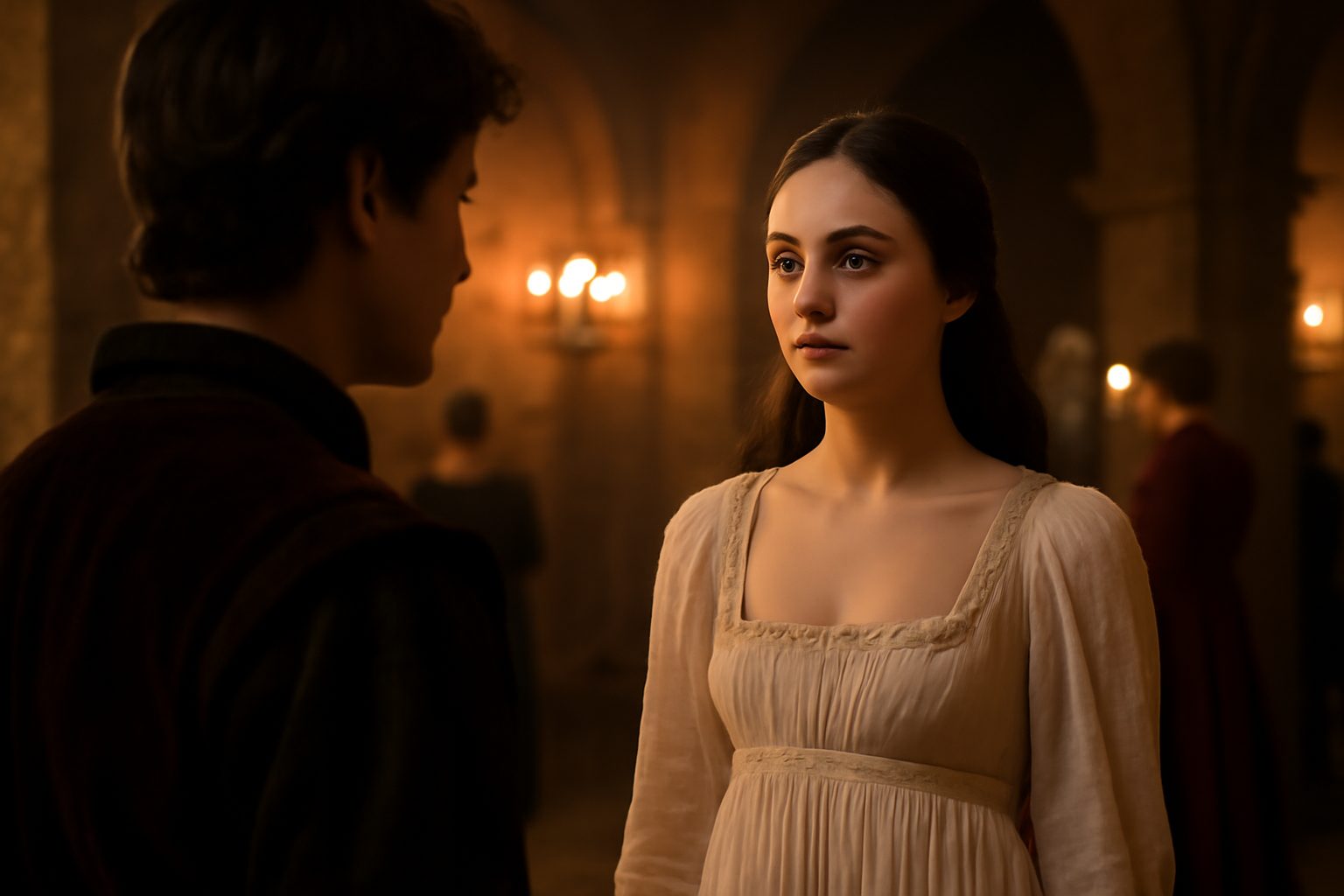
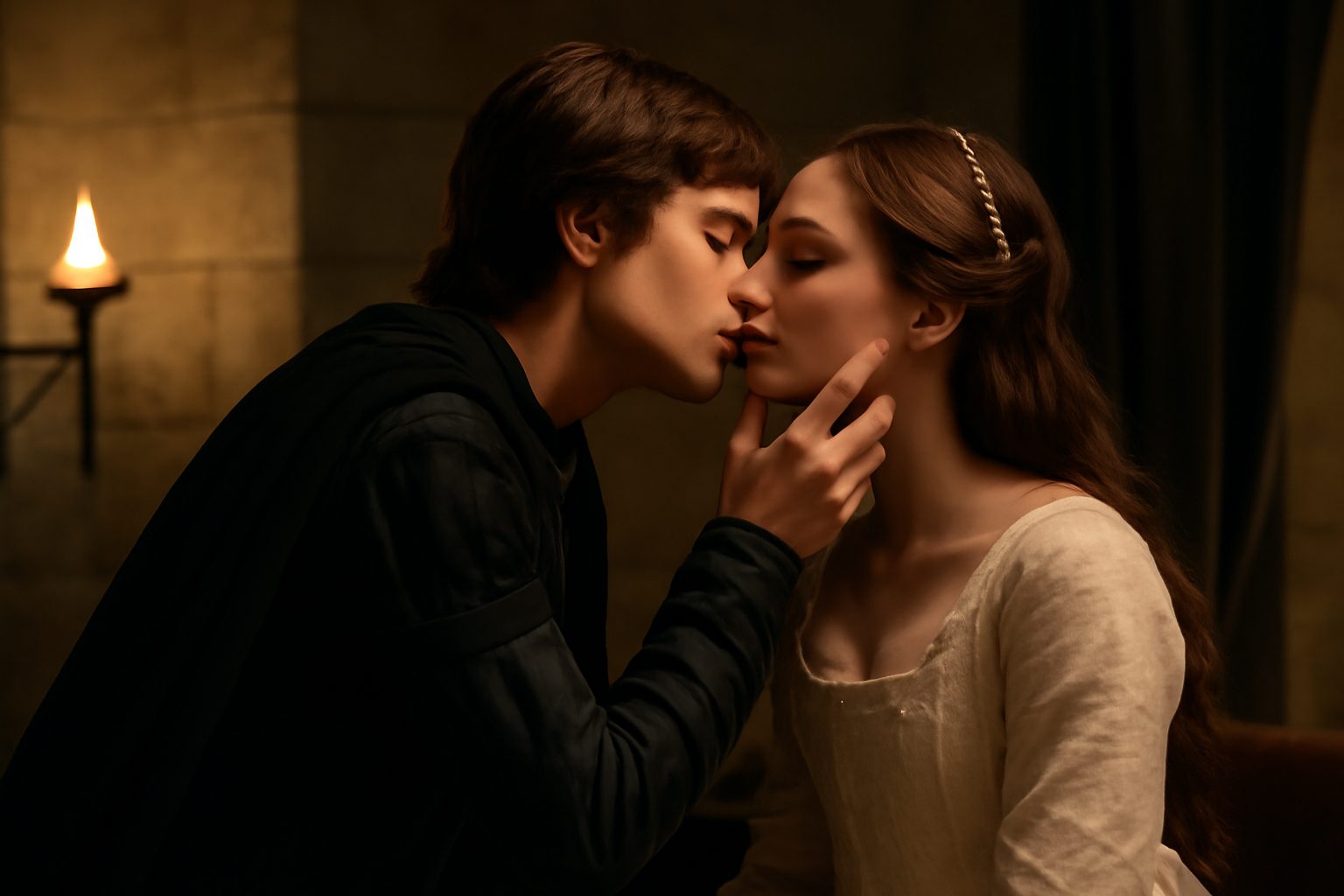
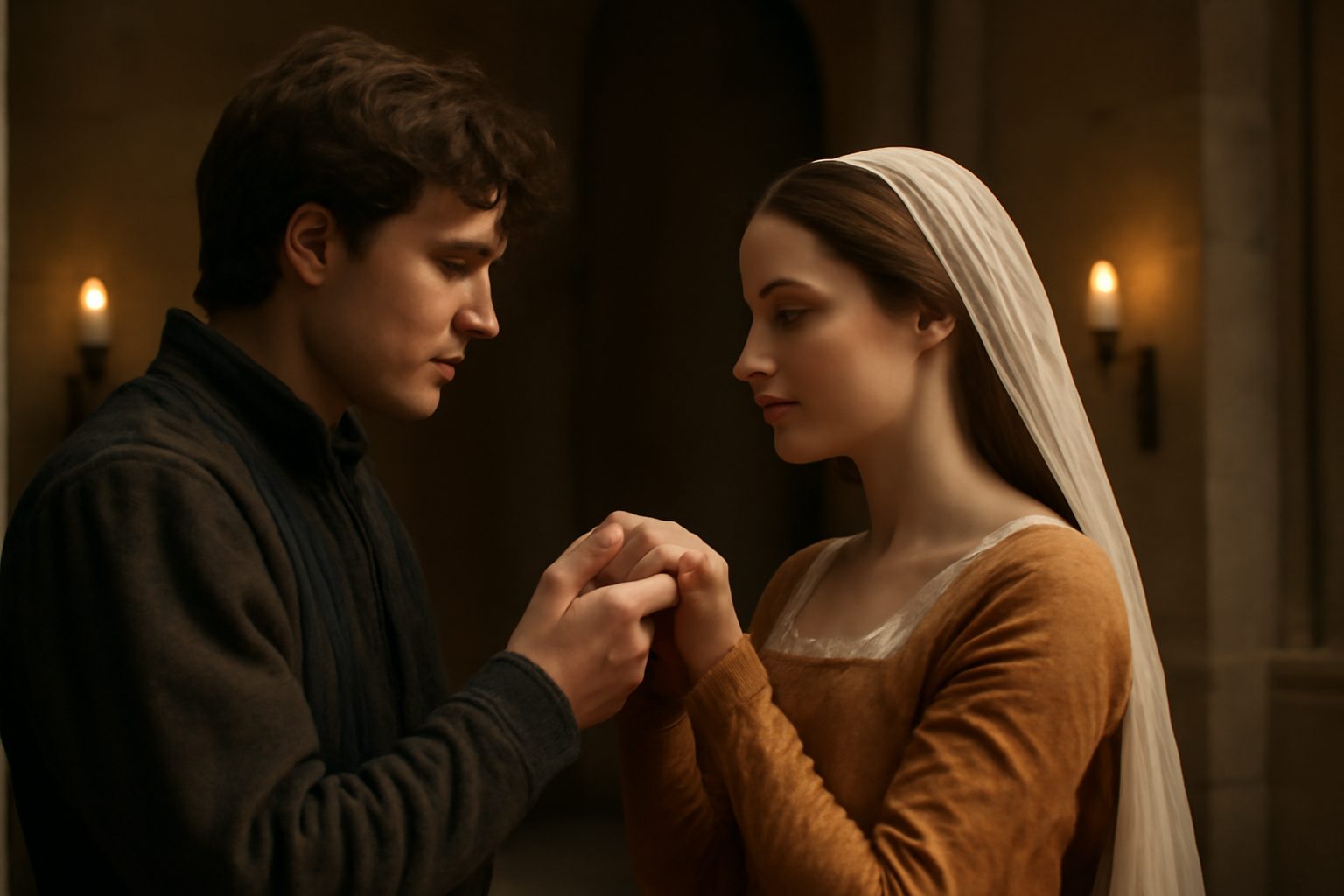
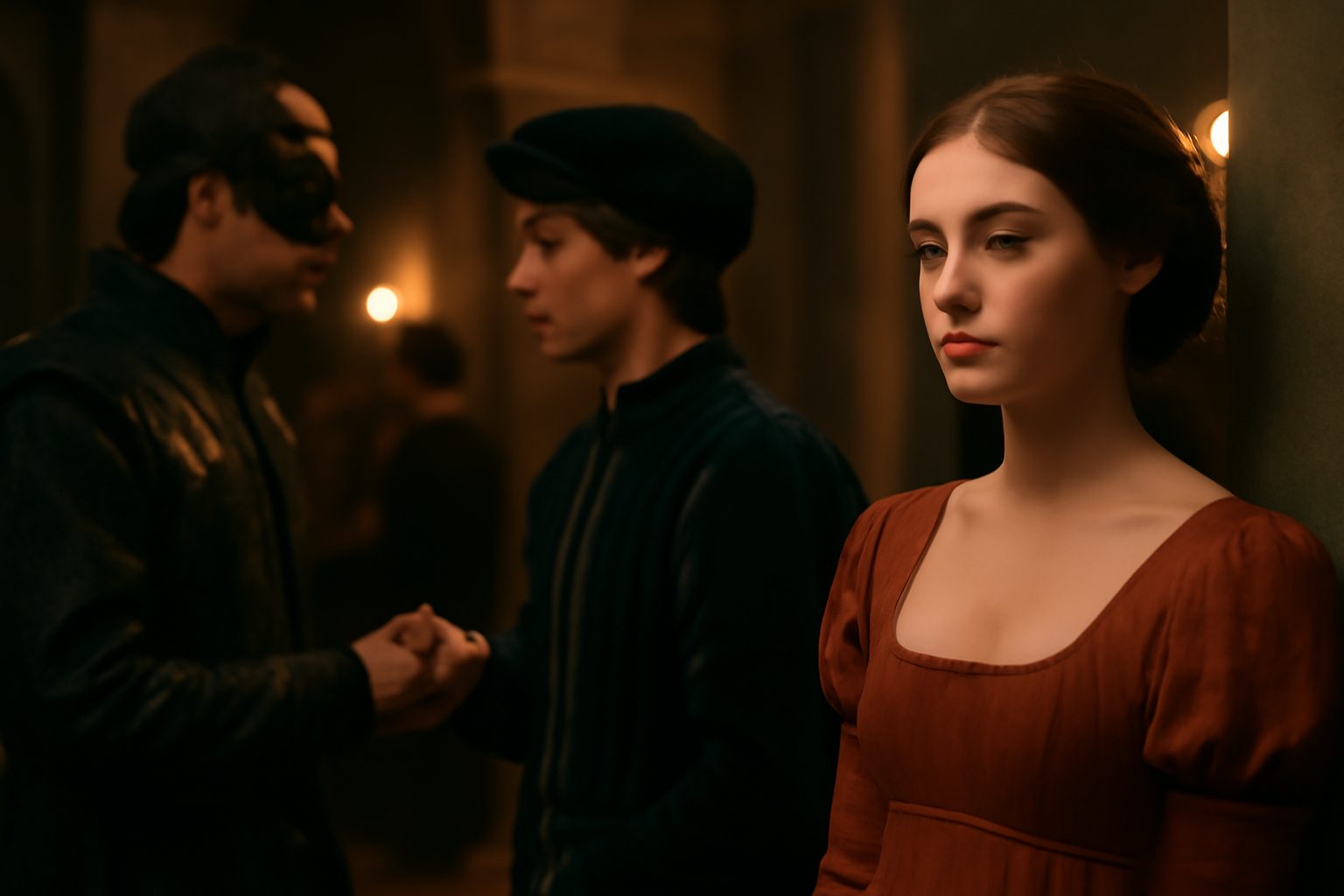
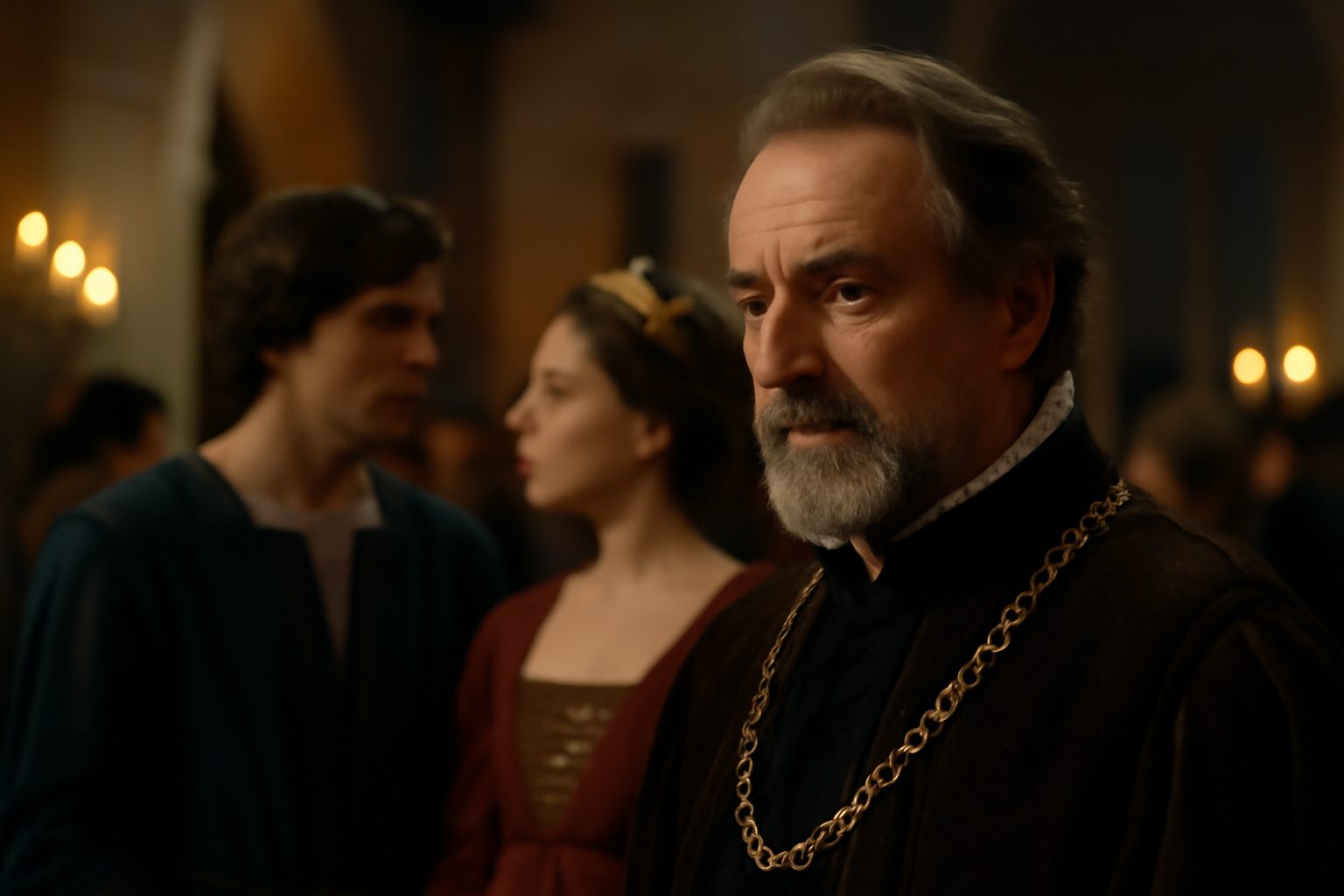
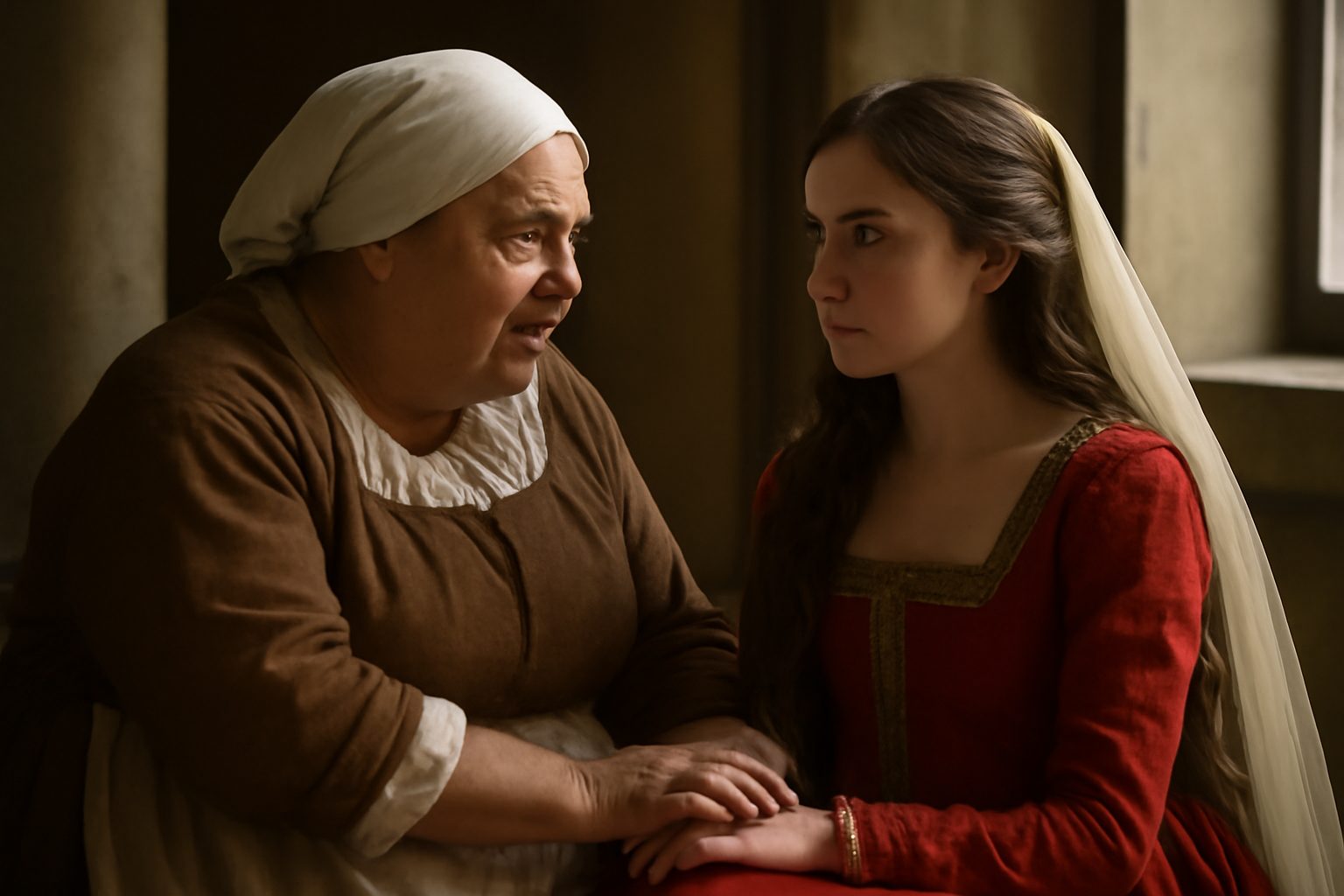
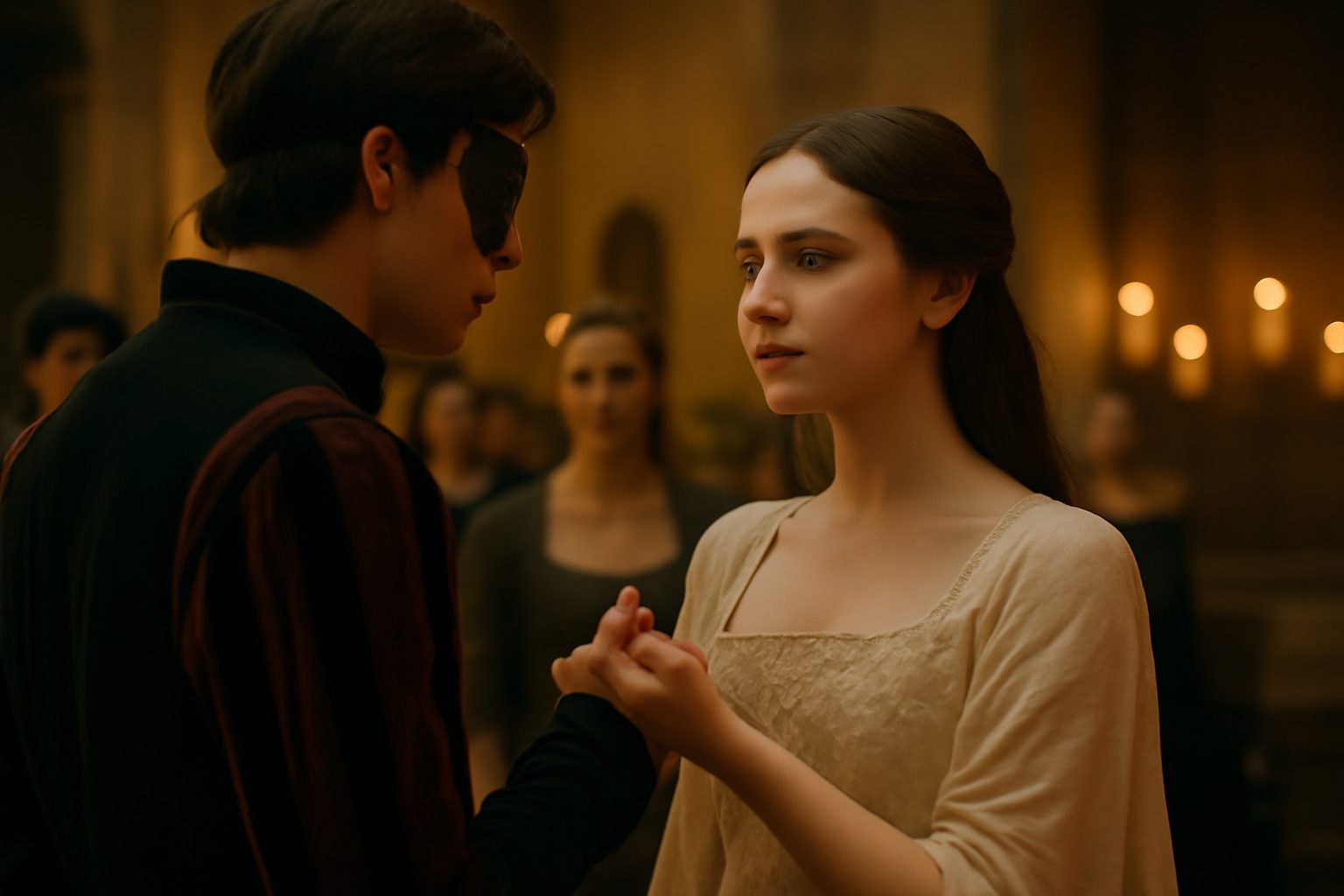
In Act 1, Scene 5 of Romeo and Juliet, the two lovers meet for the first time at the Capulet's masquerade ball. Romeo, disguised by his mask, approaches Juliet and they share a flirtatious exchange, culminating in a kiss. When Juliet playfully remarks that he kisses by the book, she suggests he follows convention expertly, blending wit with the immediate chemistry between them.
Juliet: "You kiss by the book."
In modern day english, we would say:
You kiss like you’ve studied how to do it perfectly.
Frequently Asked Questions
What does Juliet mean when she says Romeo kisses by the book?
She means that Romeo kisses perfectly, as if following instructions from a manual on how to kiss.
Connections to other verses:
Connections to "You kiss by the book"
Juliet's line, "You kiss by the book", serves as a witty and perceptive response to Romeo's elaborate, religiously-infused flirtation. It suggests that Romeo kisses according to learned rules or conventions rather than from spontaneous passion, subtly mocking his formulaic approach to romance.
Religious Imagery and Wordplay
This verse connects thematically to the preceding exchange where Romeo and Juliet use the metaphor of pilgrims and saints. Romeo initiates this with "If I profane with my unworthiest hand", framing their interaction as a holy encounter. Juliet picks up on this imagery in "Good pilgrim, you do wrong your hand too much", and Romeo escalates it with "Have not saints lips, and holy palmers too?". Juliet's "by the book" remark cleverly deflates Romeo's overly rehearsed performance, implying he follows a script rather than expressing genuine emotion.
Contrast with Tybalt's Aggression
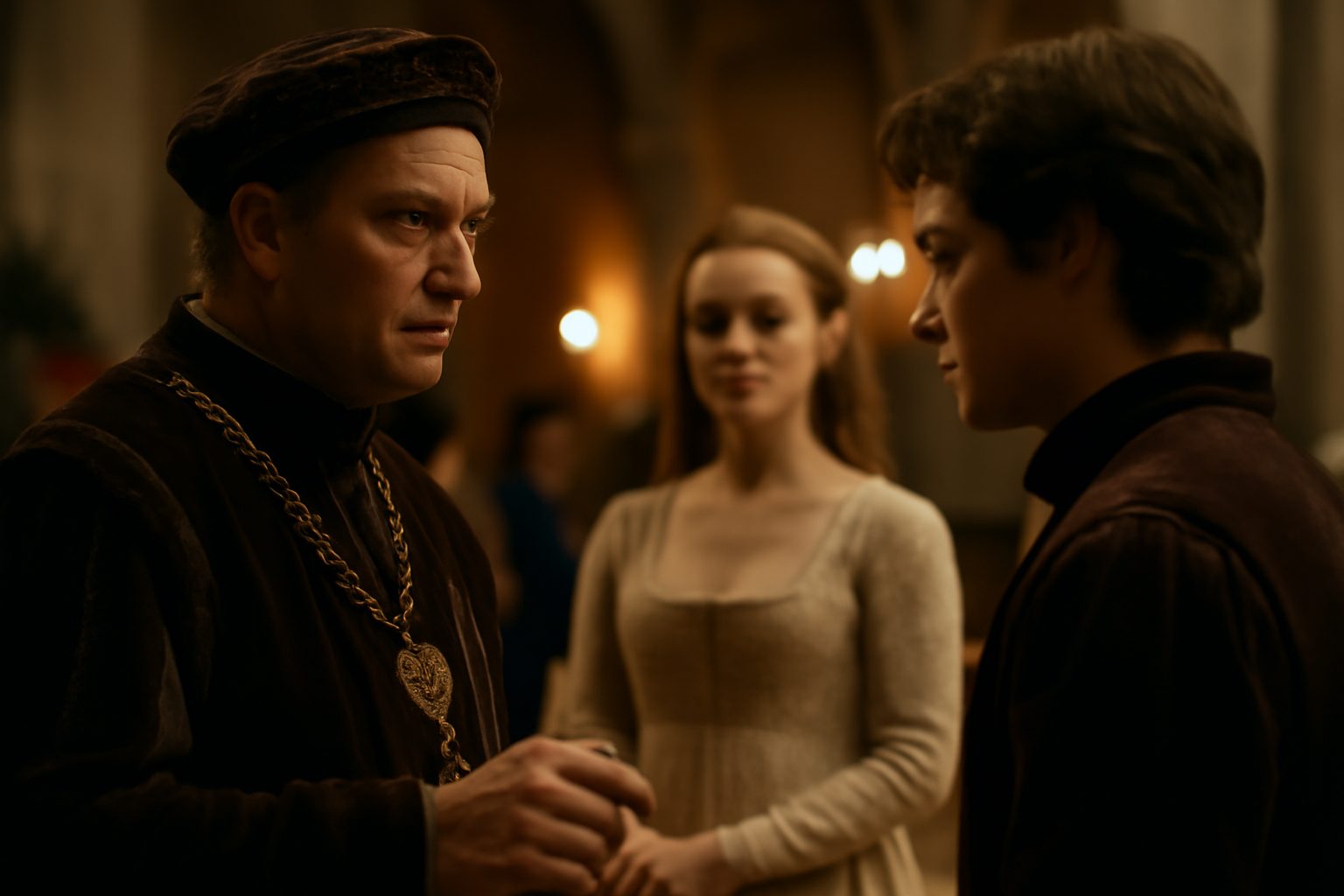
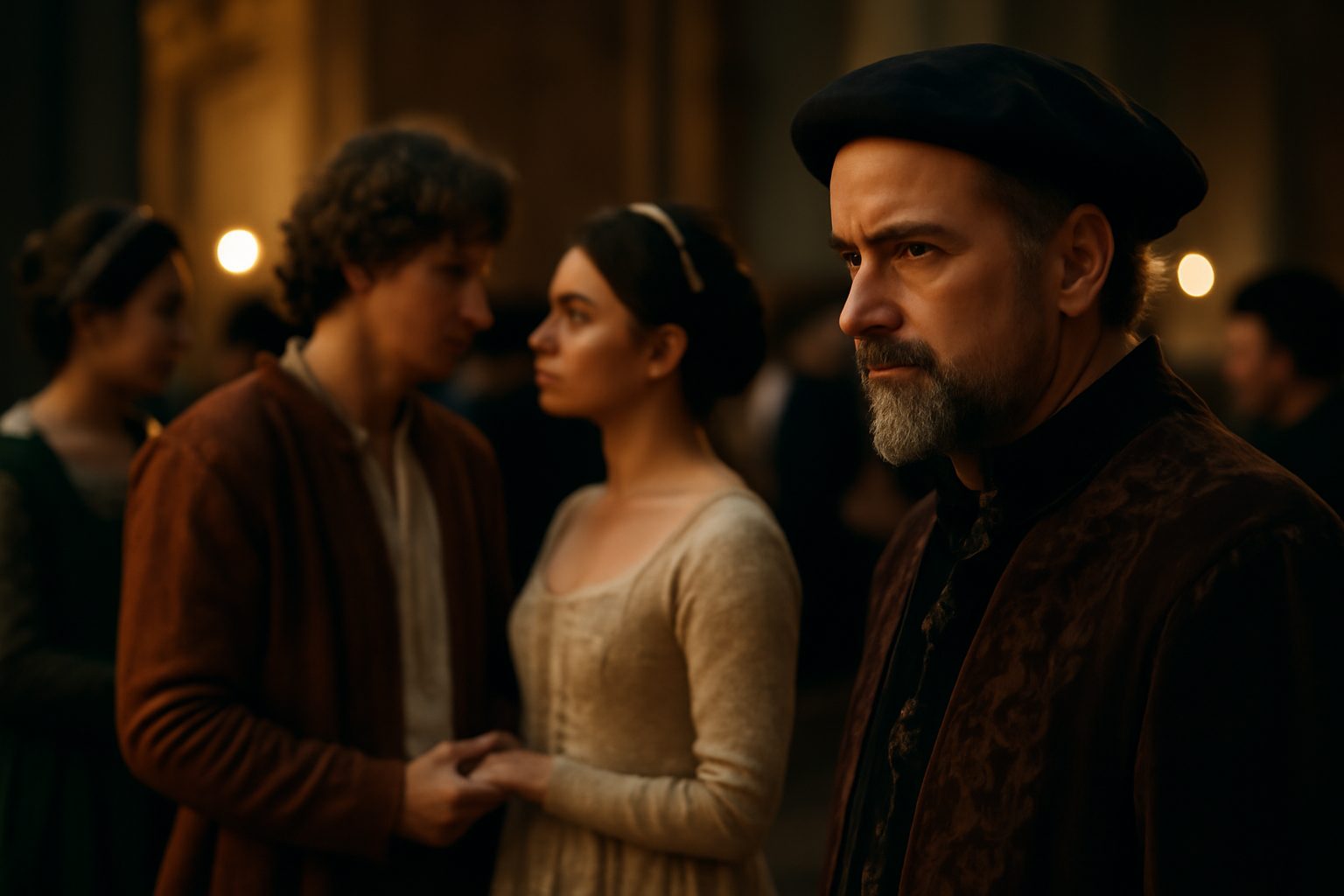
While Romeo and Juliet engage in their poetic and tender exchange, Tybalt's recognition of Romeo sparks hostility. His line, "Tis he, that villain Romeo", and his threat, "To strike him dead, I hold it not a sin", create a stark contrast to the lovers' delicate wordplay. Juliet's phrase, though lighthearted, hints at the performative and constrained nature of their society, where even love is governed by rules—much like the feud that dictates their enmity.
Foreshadowing and Irony
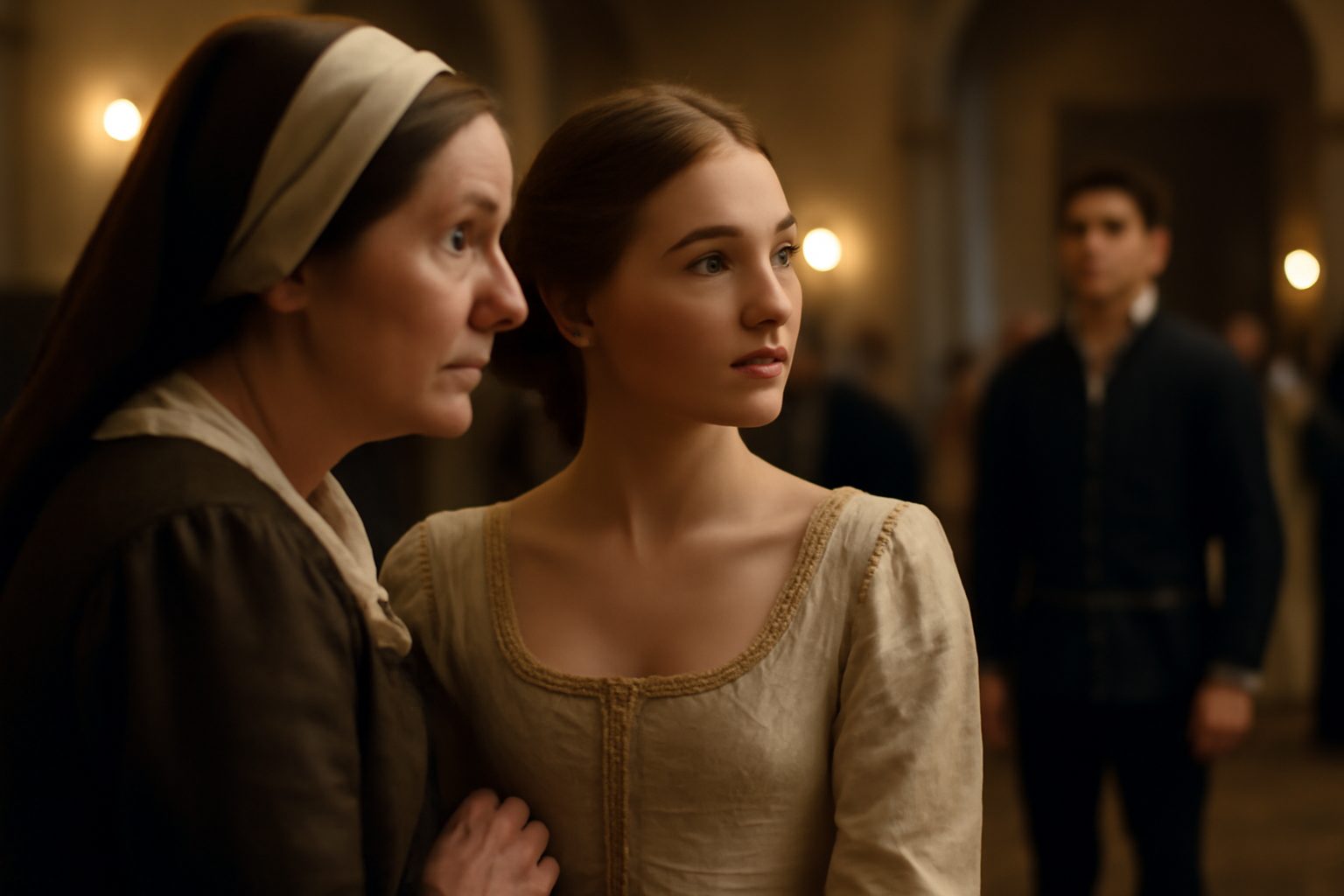
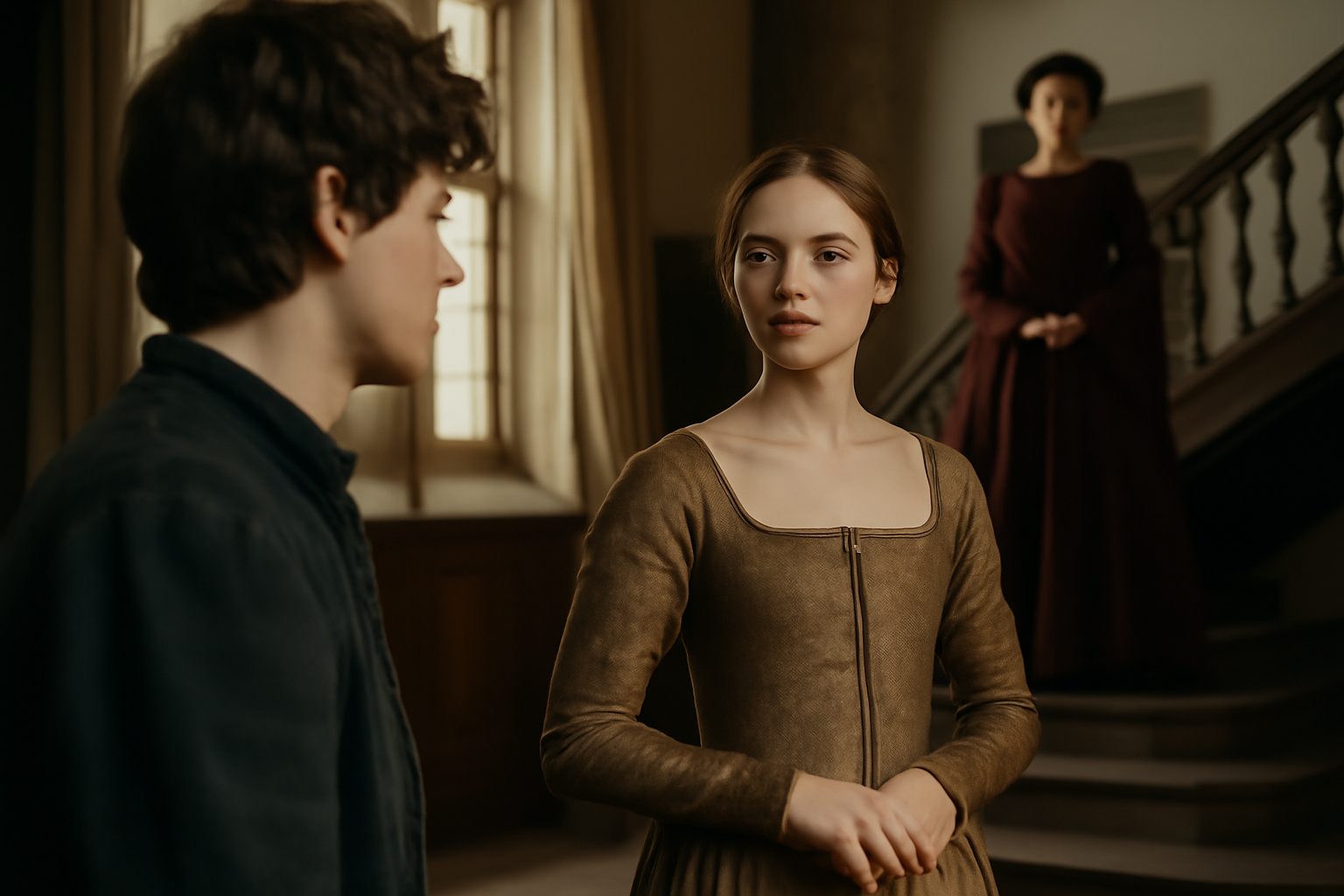
Juliet's comment also carries ironic weight in light of her later realization of Romeo's identity. When she learns from the Nurse that Romeo is "a Montague" and "the only son of your great enemy", her earlier remark gains depth. The "book" she references could symbolize the societal rules that forbid their love, making their kiss both a fulfillment and a transgression of prescribed behavior.
Connection to Capulet's Authority
Capulet's insistence on maintaining order at the feast, such as in "Show a fair presence and put off these frowns" when calming Tybalt, underscores the theme of performed behavior. Juliet's observation that Romeo kisses "by the book" aligns with this idea—their entire interaction occurs within a framework of social expectations, soon to be violently disrupted.