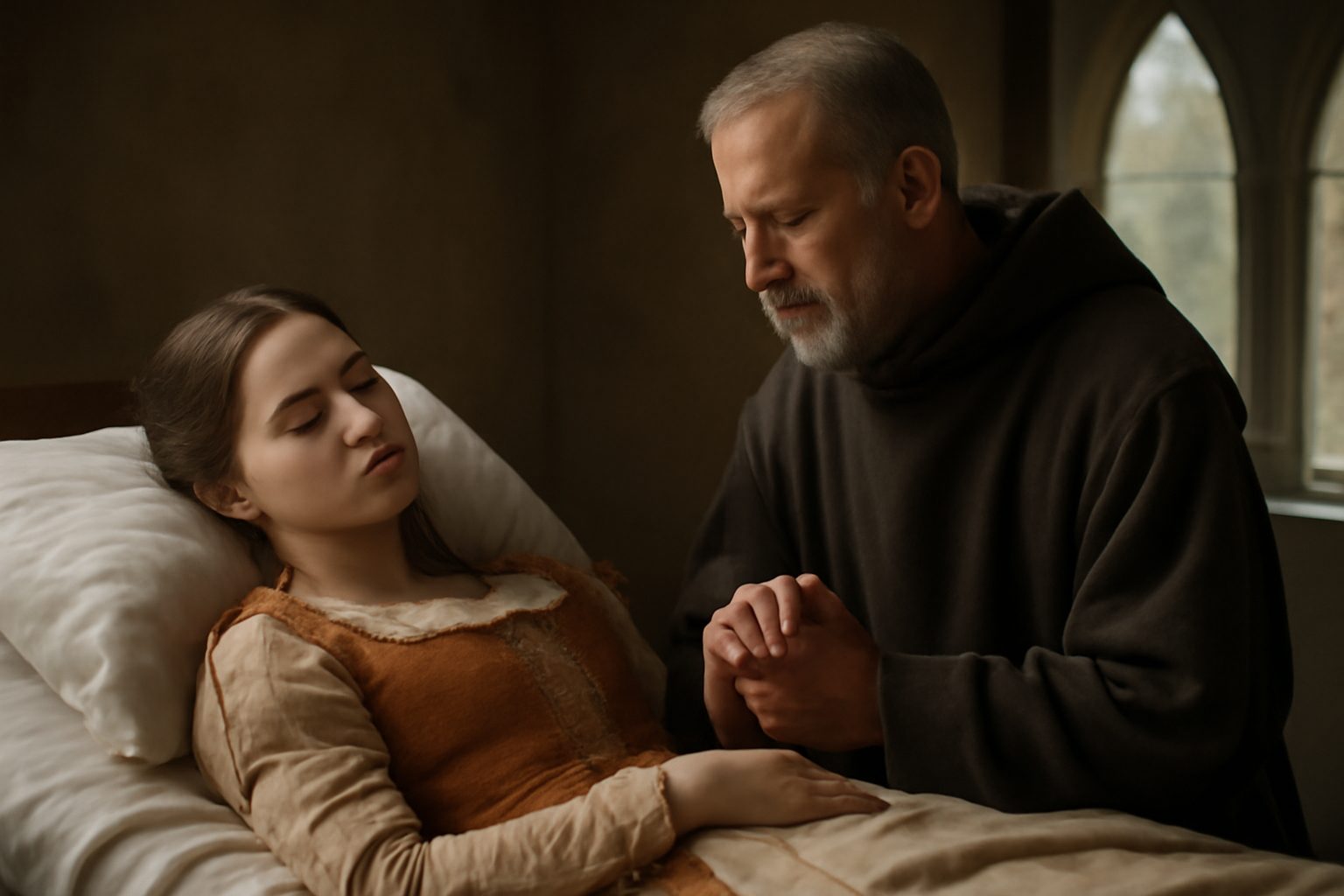
In Act 4 Scene 1 of Romeo and Juliet, Friar Laurence is devising a desperate plan to help Juliet avoid her arranged marriage to Paris. When Juliet insists on a solution, no matter how dangerous, the Friar responds with a resigned acceptance of fate, acknowledging that some outcomes are inevitable. This moment underscores the tension between human agency and the forces of destiny in the play.
Juliet: "What must be shall be."
In modern day english, we would say:
What needs to happen will happen.
Frequently Asked Questions
What does Juliet mean when she says what must be shall be?
Juliet is accepting that certain events are destined to happen and cannot be changed.
Connections to other verses:
Connections to "What must be shall be"
The fatalistic declaration What must be shall be resonates throughout Act 4 Scene 1, reflecting the characters' acceptance of seemingly inevitable outcomes. This phrase connects to several other verses that explore themes of destiny, desperation, and resignation.
Fate and Resignation
Paris expresses a similar sentiment of inevitability when he states That may be must be, love, on Thursday next, showing how both characters view the marriage to Paris as unavoidable. Juliet's earlier line My father Capulet will have it so further establishes this sense of predetermined fate that characters feel powerless to change.
Desperate Measures
The phrase connects to Juliet's extreme desperation when she declares O, bid me leap, rather than marry Paris, showing how she views death as preferable to the inevitable marriage. Her willingness to embrace death himself to scape from it demonstrates how the "what must be" of her situation drives her to consider extreme solutions.
Friar Laurence's Intervention
The Friar recognizes the desperate nature of their circumstances, noting Which craves as desperate an execution when devising his plan. His scheme to create this borrow'd likeness of shrunk death represents an attempt to alter what appears to be inevitable, showing that while "what must be shall be," human intervention can sometimes reshape destiny.
Juliet's Resolve
Juliet's determination to face whatever comes is captured in her declaration And I will do it without fear or doubt, showing her acceptance of the Friar's dangerous plan as the only alternative to the inevitable marriage. This resolve echoes the fatalistic acceptance of "what must be shall be" while demonstrating agency in choosing which inevitable path to follow.