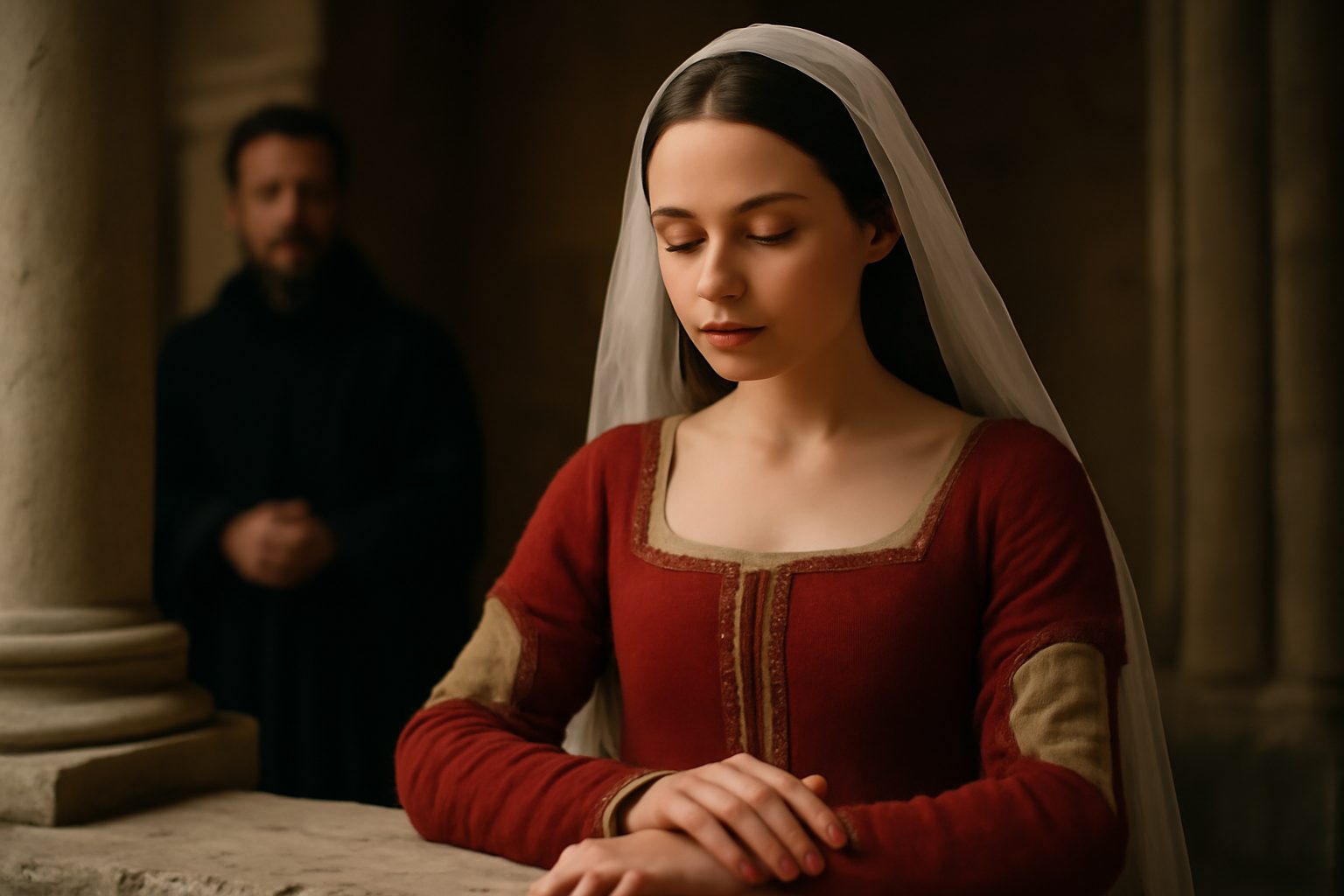
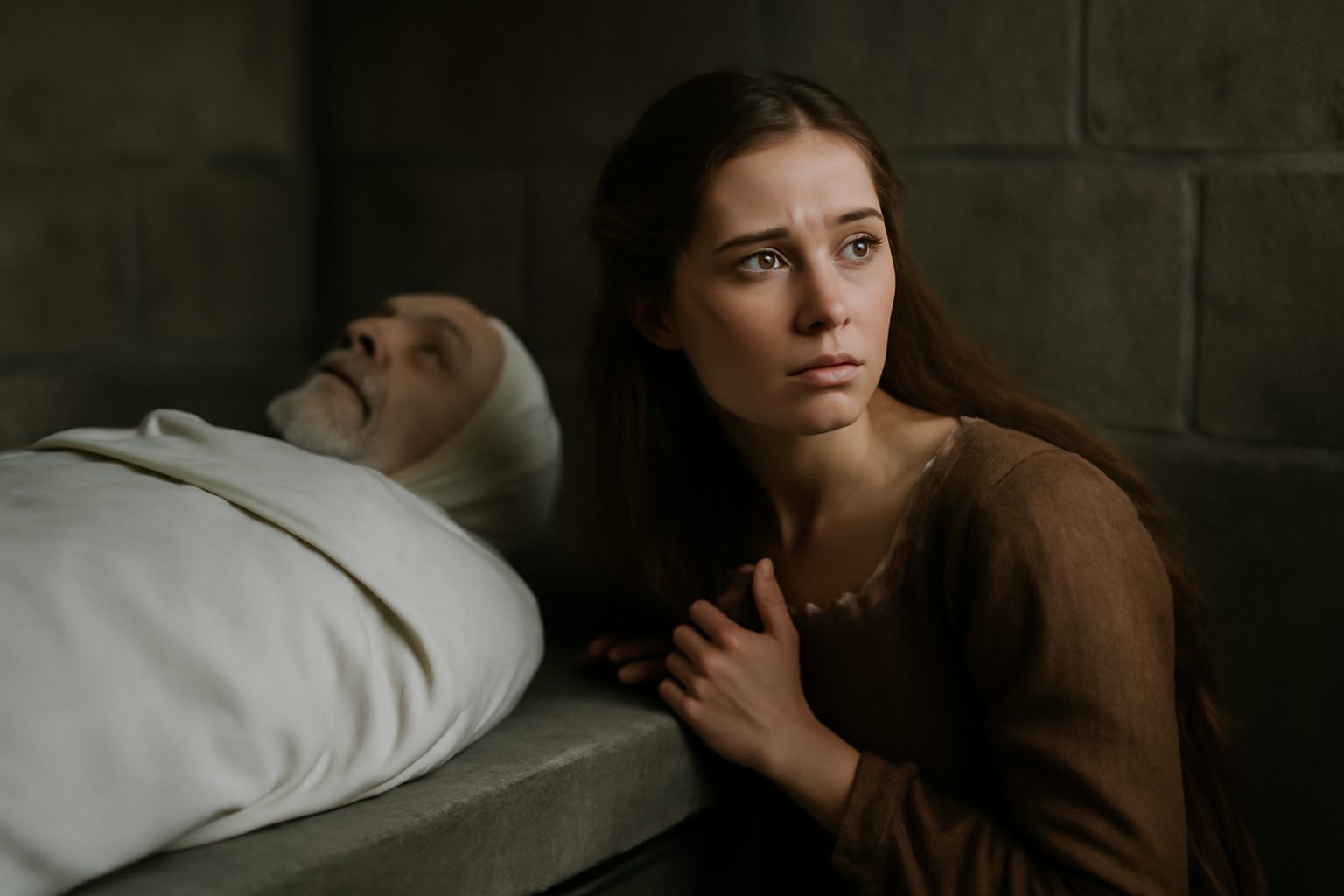
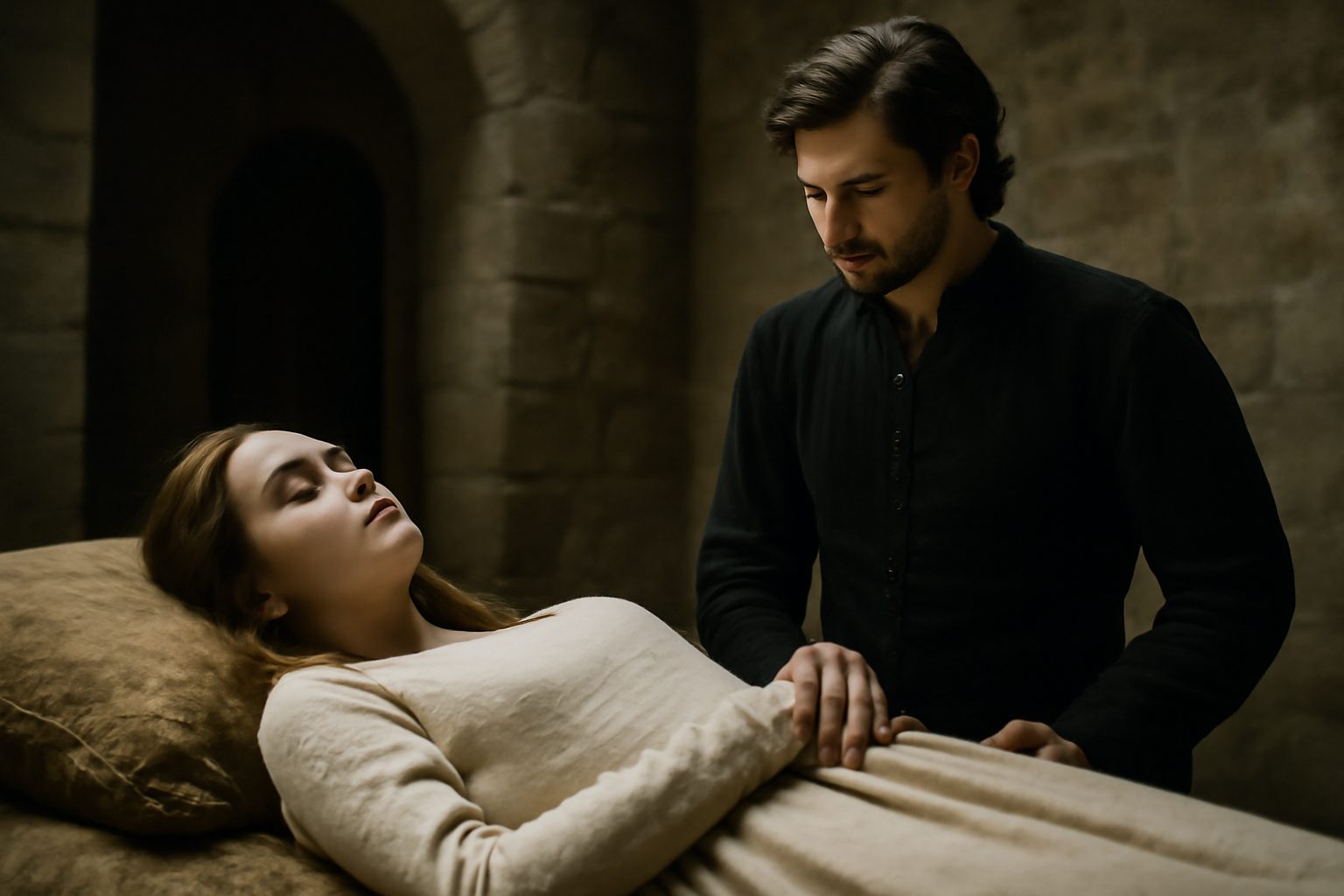
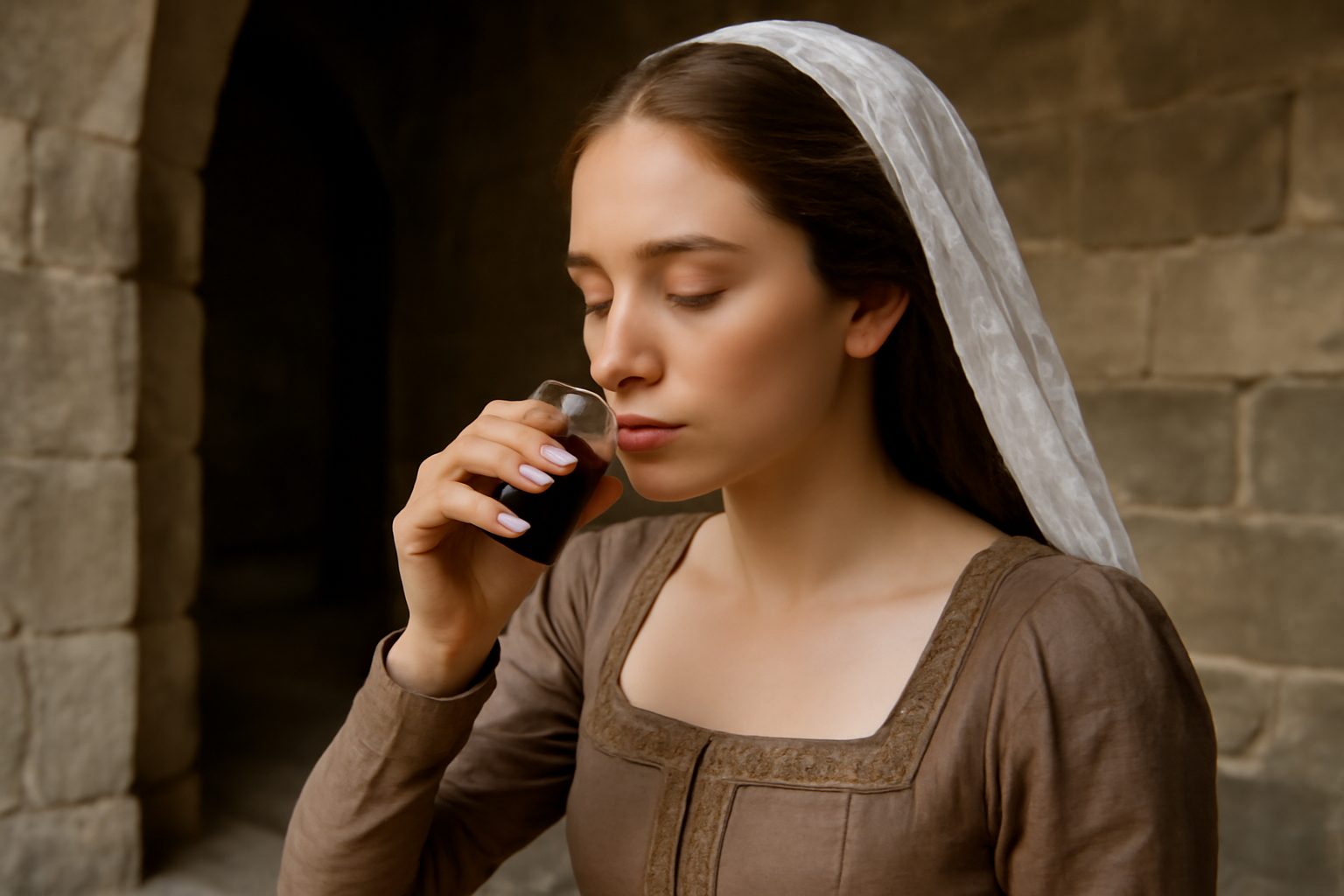
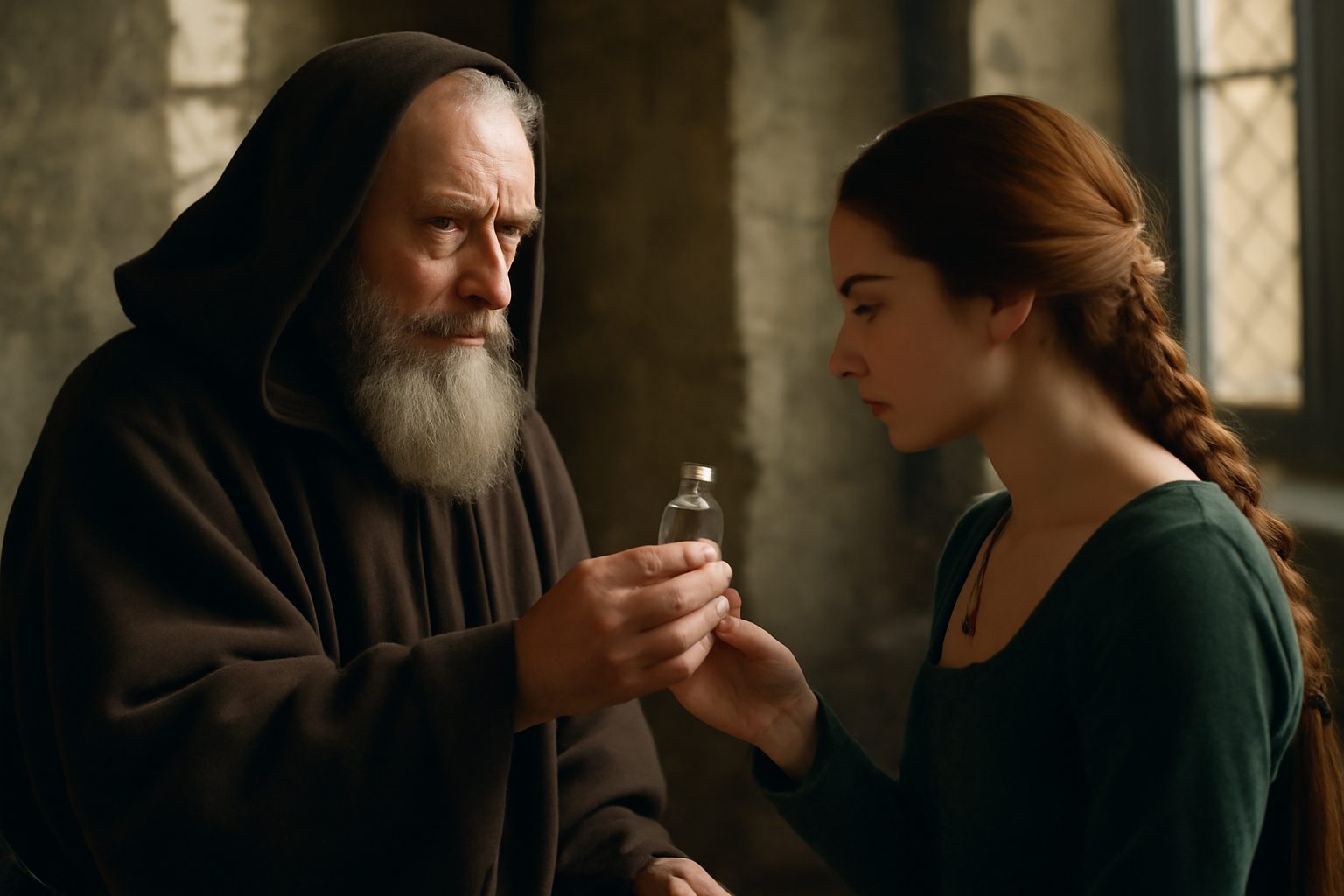
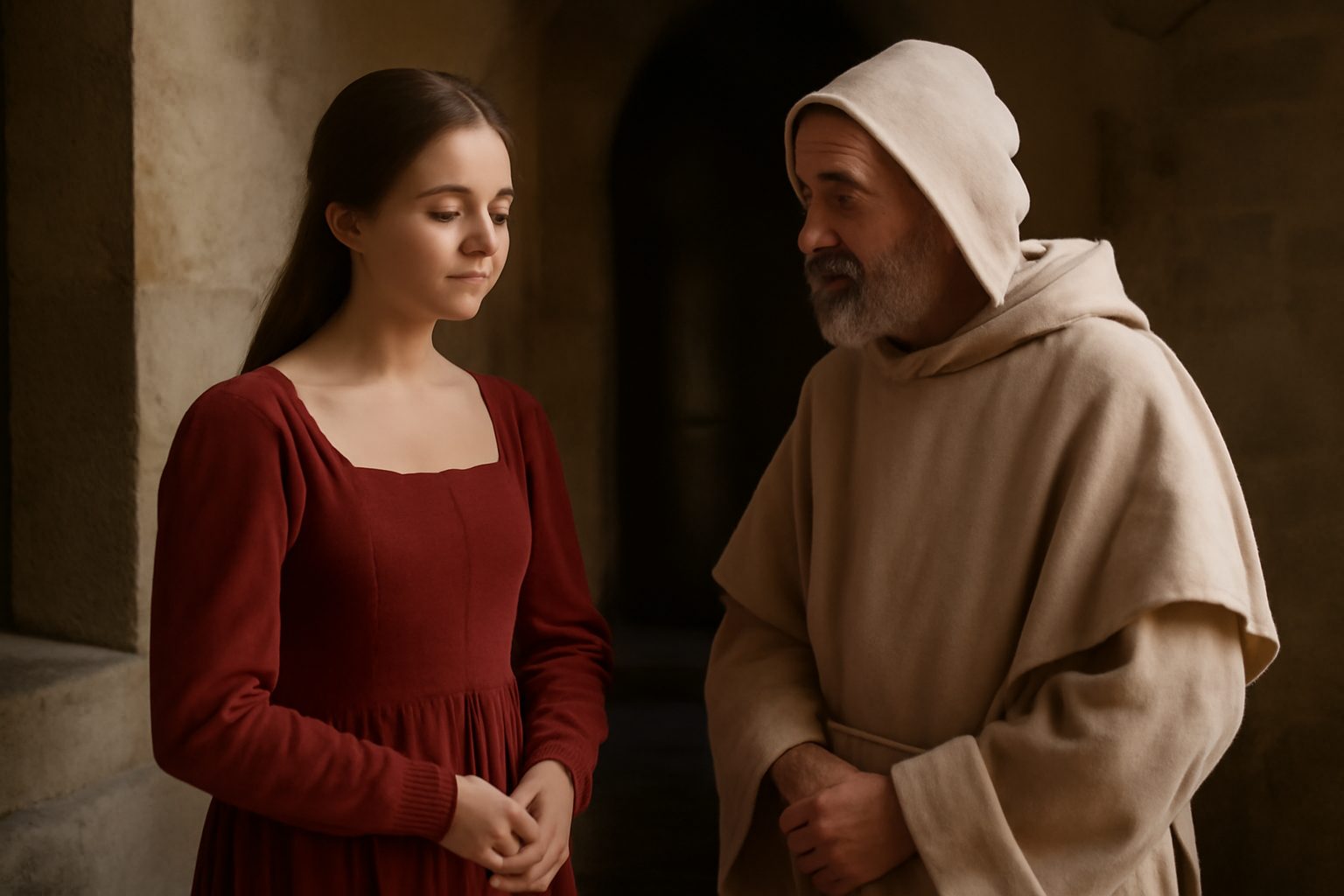
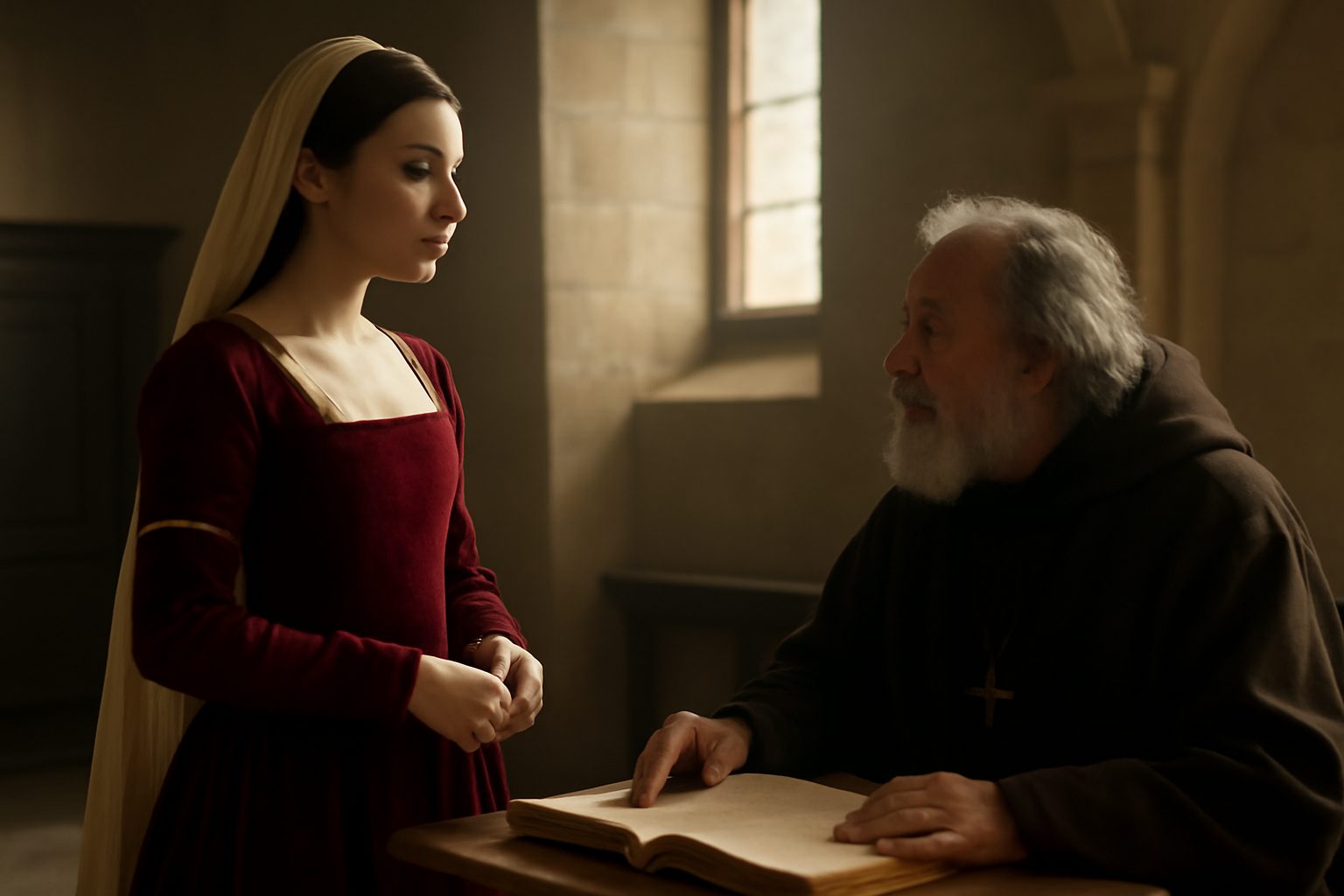
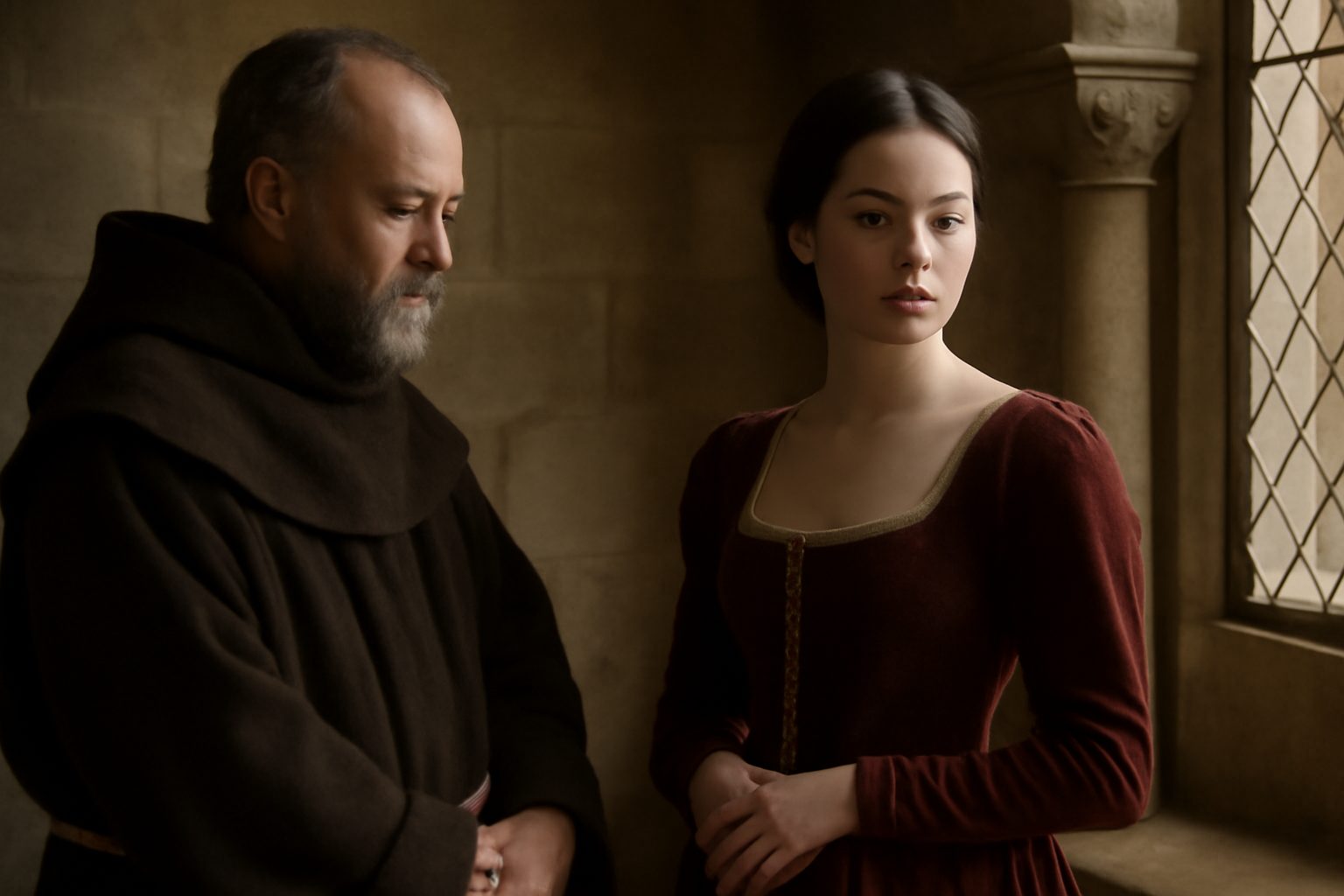
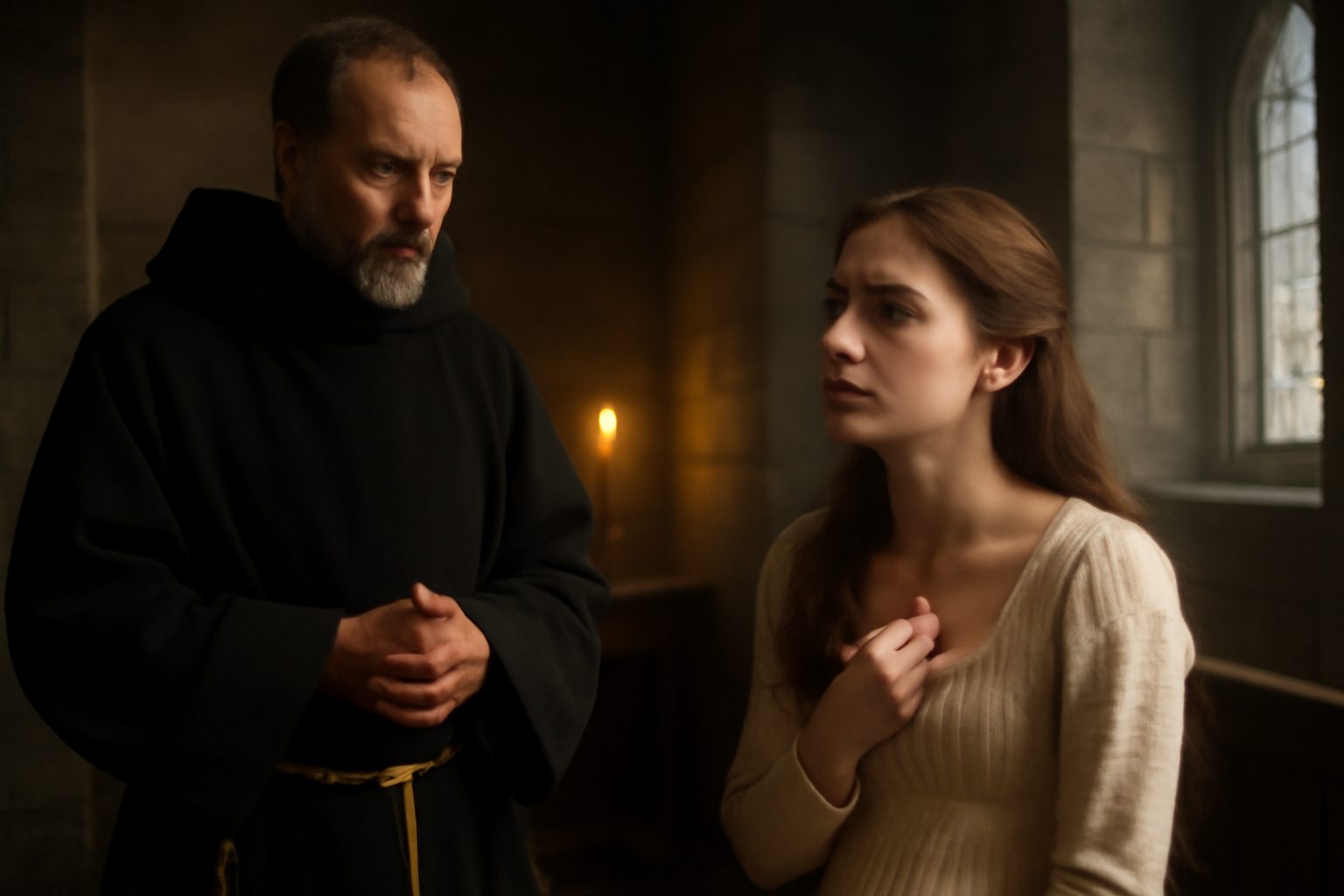
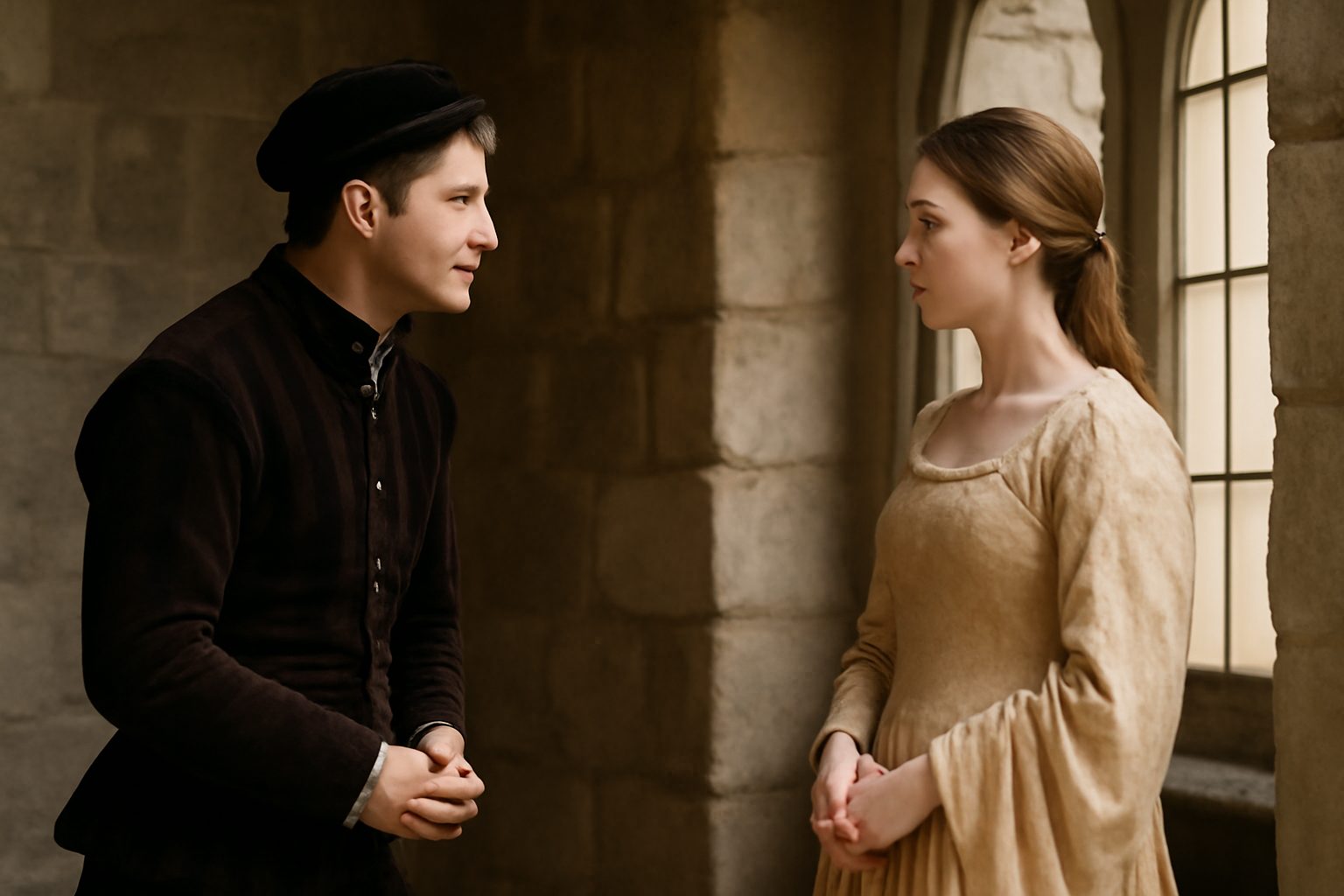
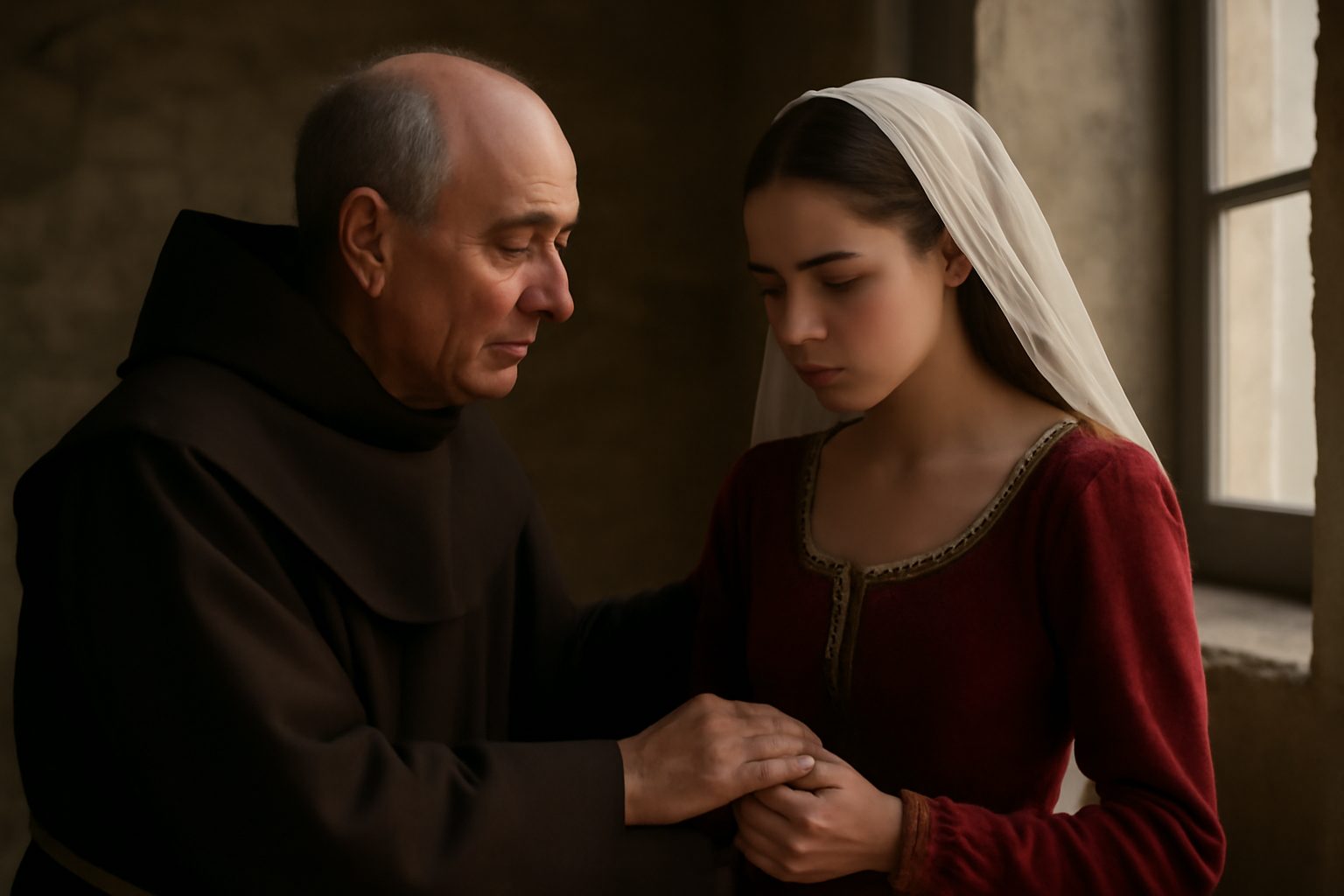
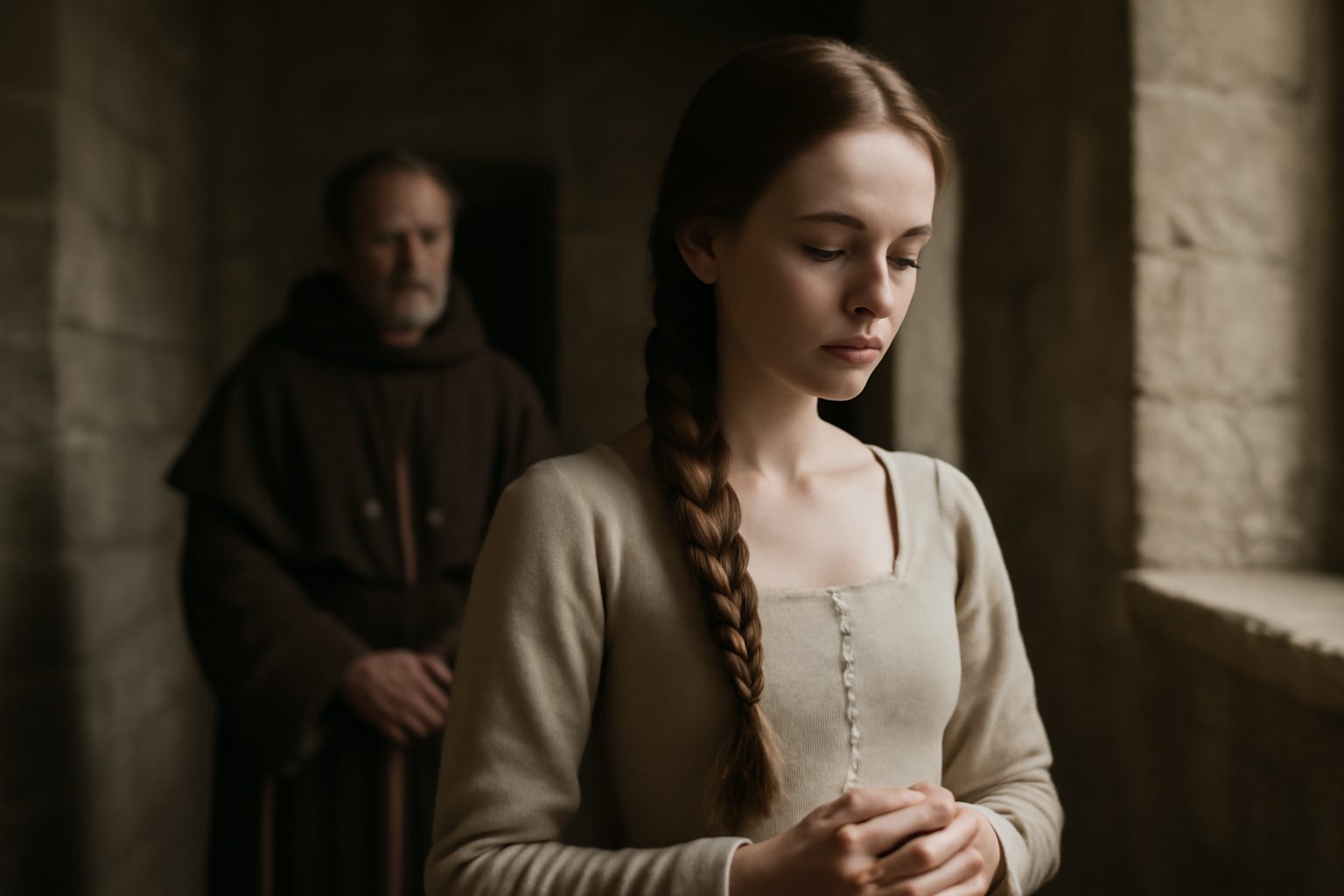
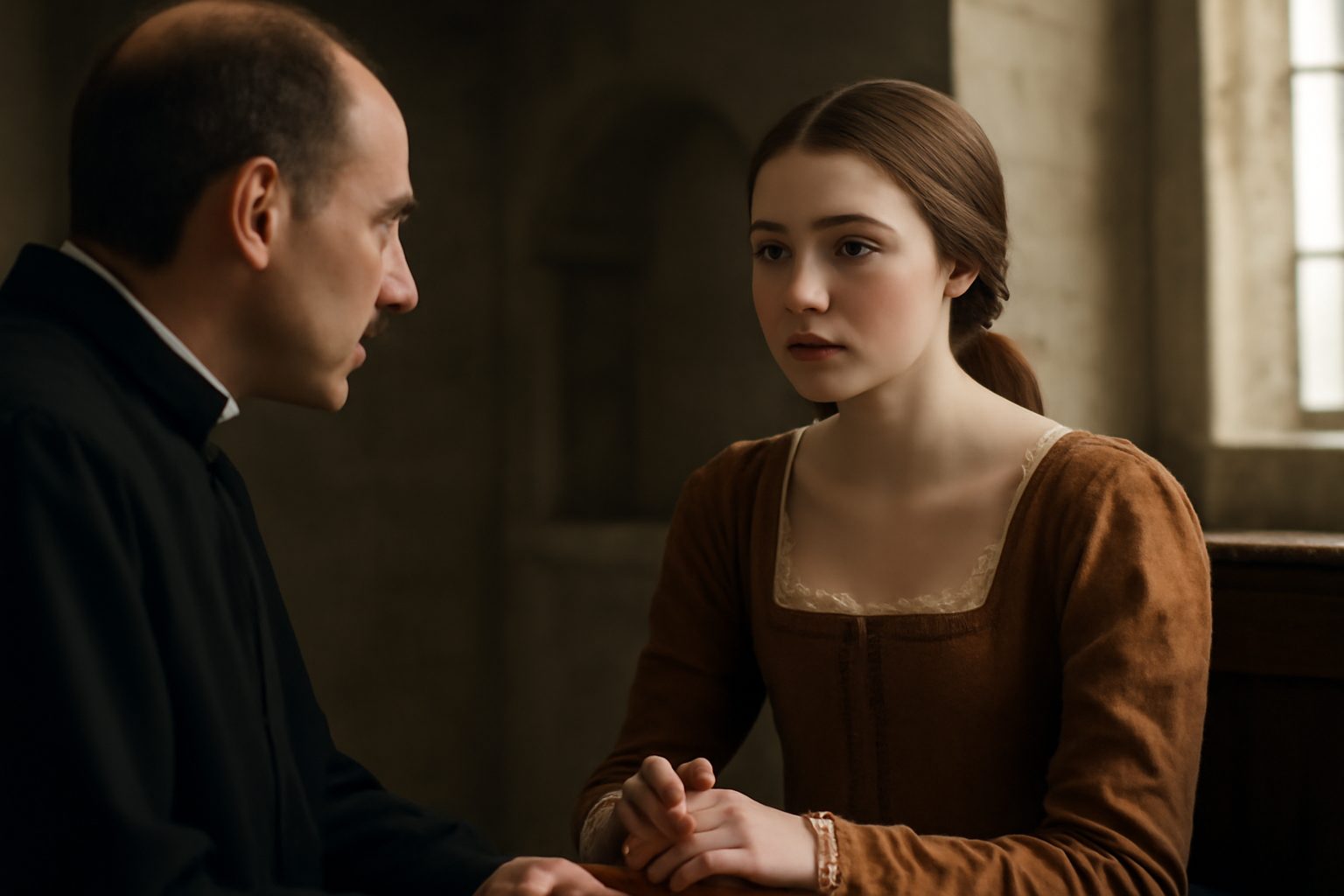
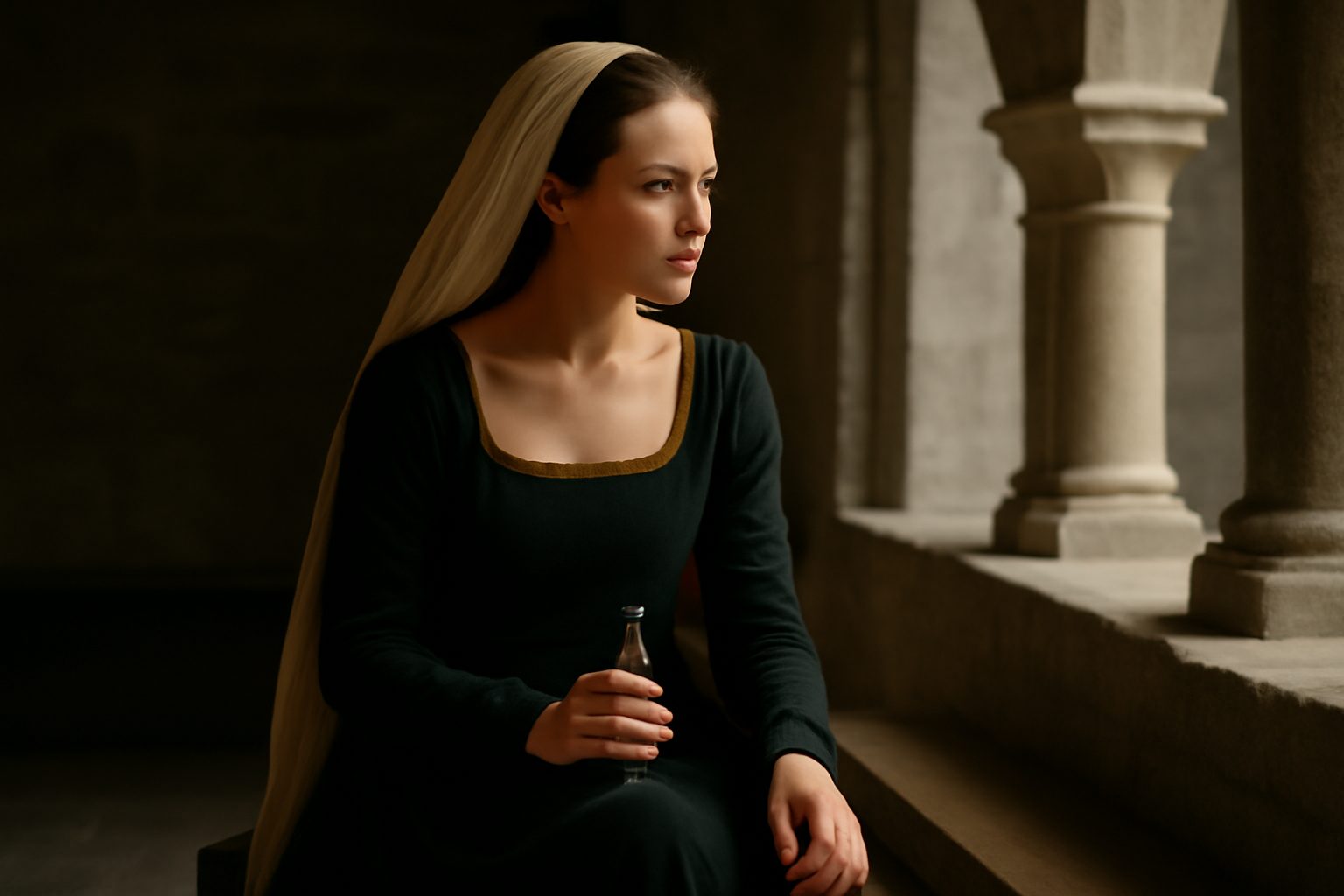
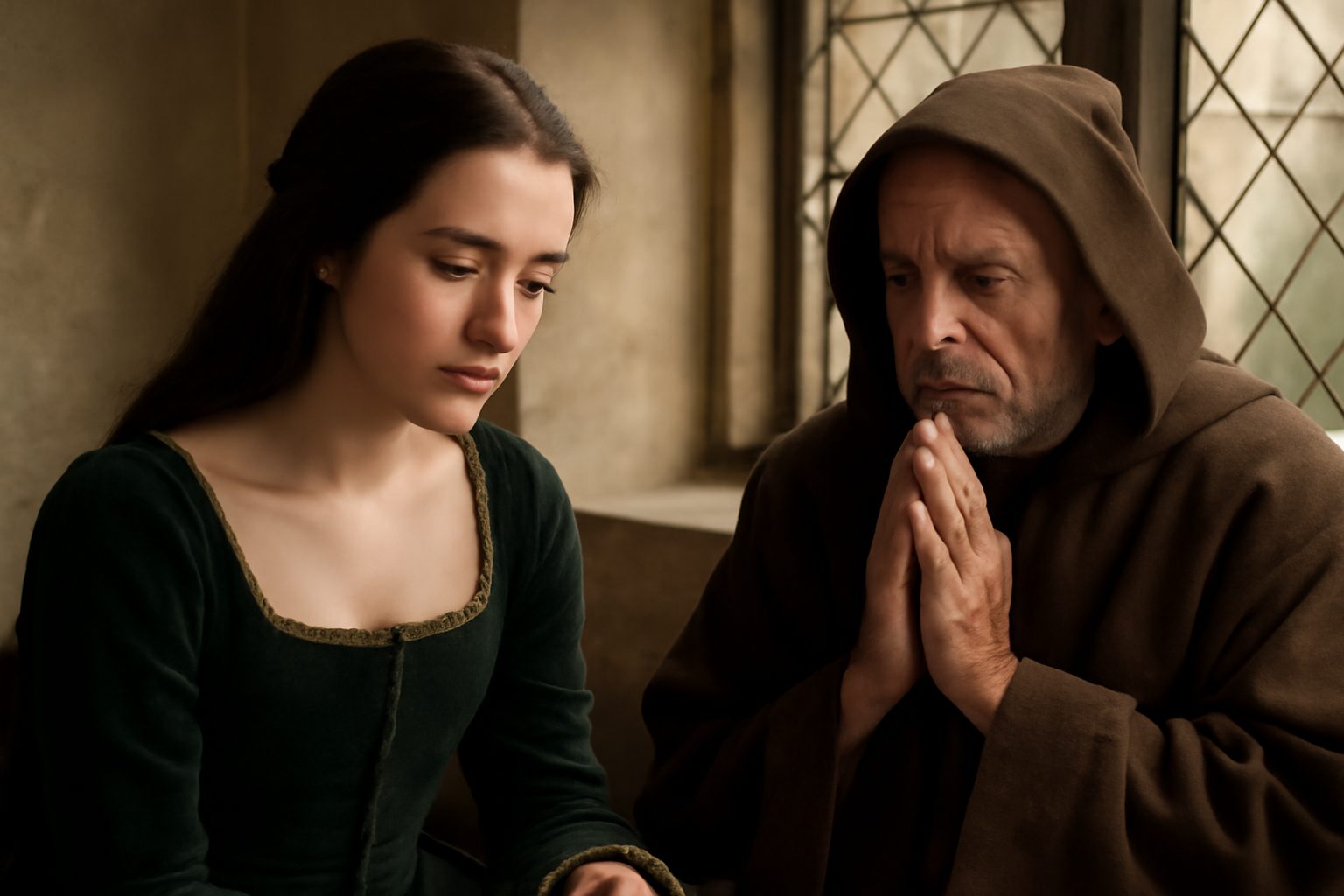
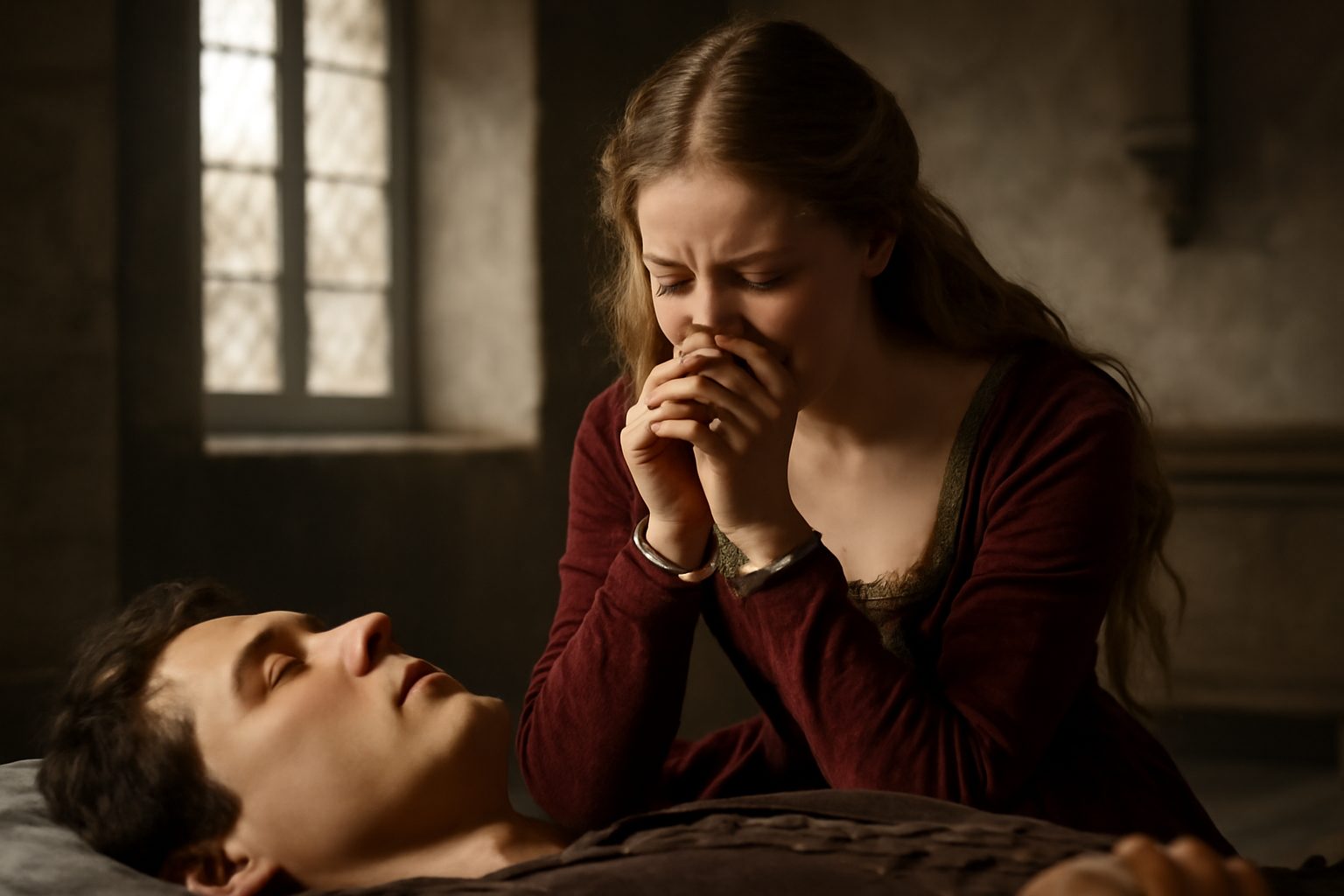
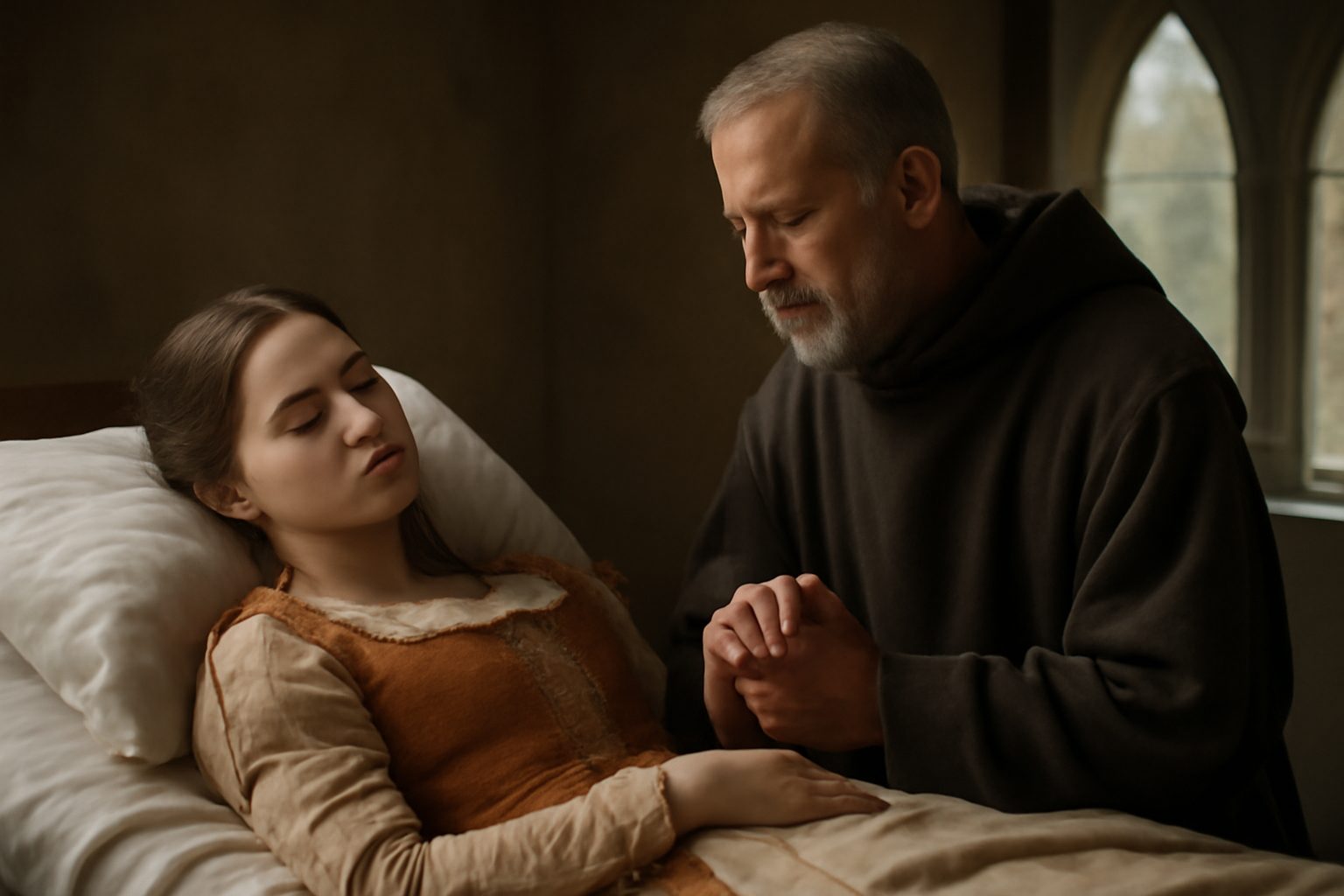
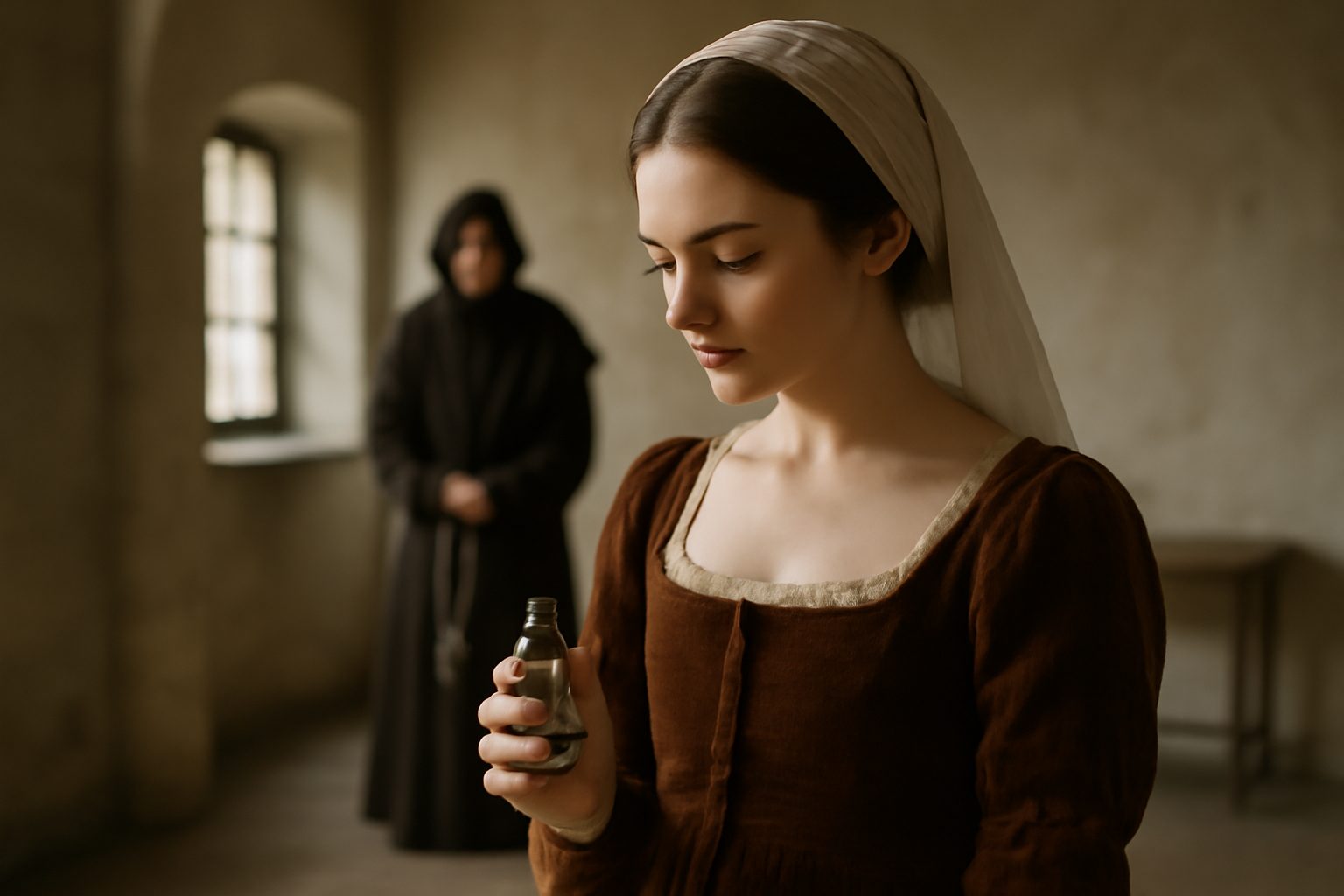
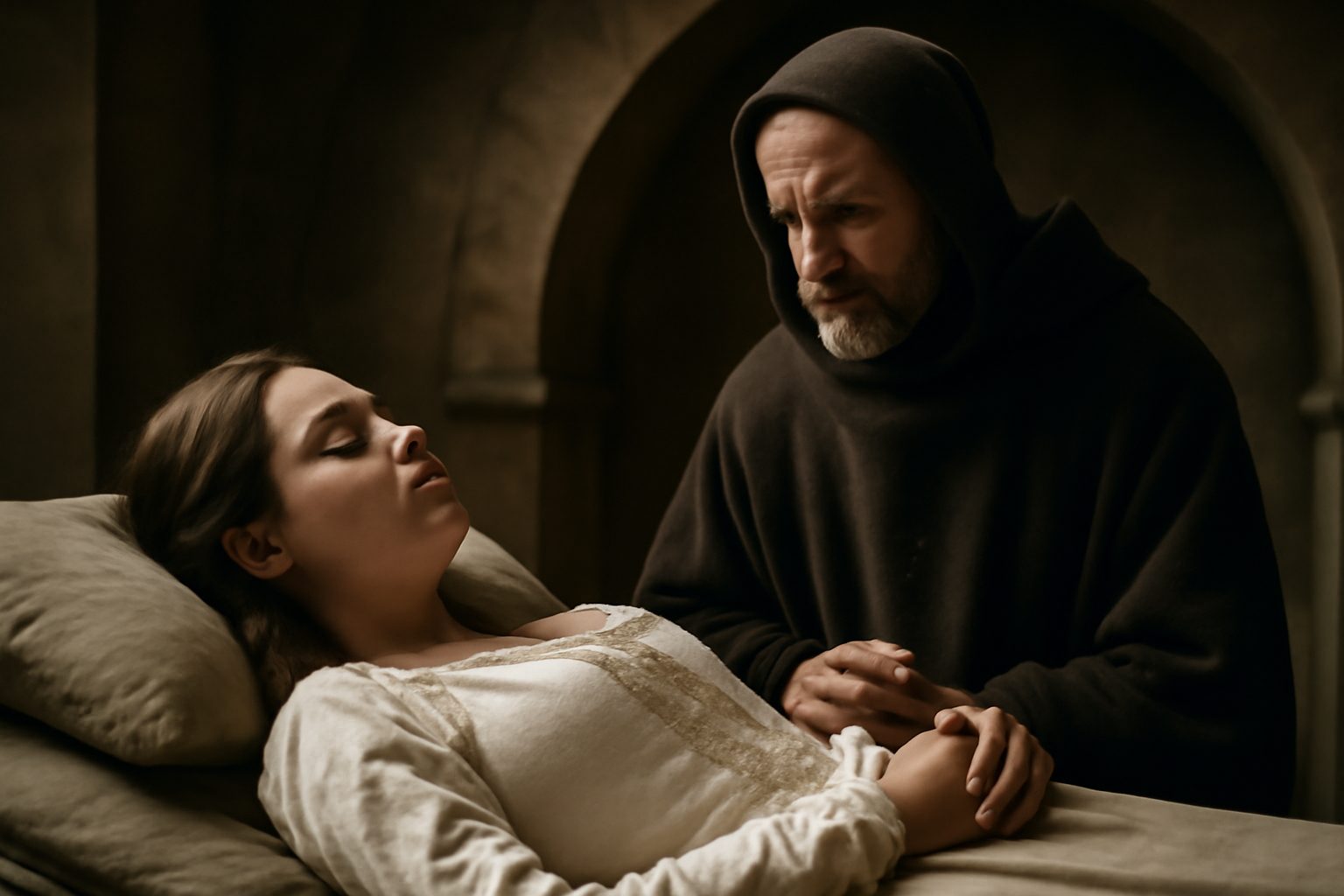
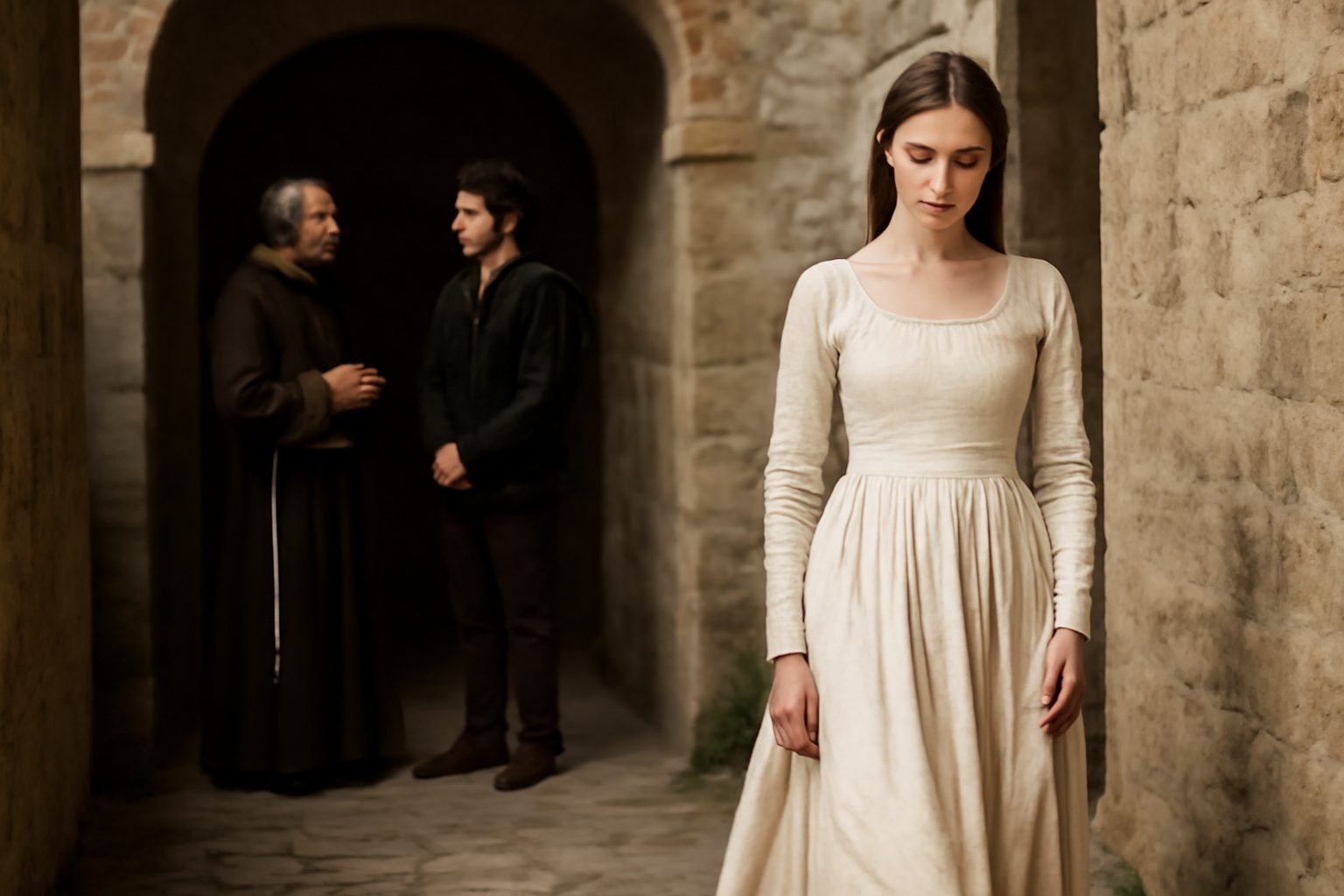
In Act 4, Scene 1 of Romeo and Juliet, Friar Laurence speaks these words to Juliet as she desperately seeks a way to avoid marrying Paris. The friar has just proposed a risky plan involving a sleeping potion, and this line reflects his acknowledgment of the extreme measures Juliet is willing to take—even confronting death itself—to escape her dire situation.
Friar Laurence: "That copest with death himself to scape from it:"
In modern day english, we would say:
You’re fighting against death itself to escape from it.
Frequently Asked Questions
What does Friar Laurence mean when he says someone is trying to escape death by facing it?
He means that the person is taking a risky action, like pretending to be dead, to avoid a worse fate or actual death.
Connections to other verses:
Connections to "That copest with death himself to scape from it"
The verse "That copest with death himself to scape from it" is spoken by Friar Laurence, acknowledging Juliet's willingness to confront death to avoid a fate worse than death—marriage to Paris. This line directly responds to Juliet's desperate declarations earlier in the scene.
Juliet's Desperation and Resolve
Juliet's extreme resolve is evident in verses like "O, bid me leap, rather than marry Paris" and "Or bid me go into a new-made grave", where she expresses a preference for death over betrayal of Romeo. Her determination is further emphasized in "Thou hast the strength of will to slay thyself", which Friar Laurence uses to introduce his plan, recognizing her courage.
Friar Laurence's Plan Involving Death
The friar's scheme to fake Juliet's death connects thematically, as seen in "A thing like death to chide away this shame", where he proposes a death-like state to escape dishonor. Details of the potion's effects, such as "No warmth, no breath, shall testify thou livest" and "Shall, stiff and stark and cold, appear like death", illustrate the literal engagement with death that Juliet must endure.
Juliet's Acceptance of the Risk
Juliet's fearless acceptance is captured in "And I will do it without fear or doubt", reinforcing her readiness to "cope with death." This resolve is echoed in her plea "Give me, give me! O, tell not me of fear!", showing her unwavering commitment to the plan despite its dangers.
Symbolic and Literal Confrontations with Death
Other verses, like "And hide me with a dead man in his shroud" and references to the Capulet tomb in "Where all the kindred of the Capulets lie", highlight the physical and symbolic proximity to death that Juliet must brave, tying back to the friar's observation of her coping with mortality to achieve freedom.